

OBD-II Code C1560: Chassis Control System Fault
What C1560 means, why it triggers, and how to fix it
- Code C1560 is manufacturer-specific, meaning you must look up your exact make and model to determine if it points to a $300 electronic parking brake failure or a power steering fault.
- Always test your battery to ensure it reads above 12.4V and inspect the rear axle wiring harness for corrosion before buying a replacement $500 actuator motor.
- Owners of 2013-2021 Citroen and Peugeot models should check for TSB B3FW011JQ0, as a 30-minute dealer software update permanently fixes this code without replacing any parts.
- Never manually force a rear brake caliper piston back on a vehicle with an electronic parking brake; failing to use a scan tool's 'Service Mode' destroys the internal gears.
What Does C1560 Mean?
C1560 is a manufacturer-specific code, meaning its definition changes depending on your vehicle. It signals a problem in a chassis-related system, most commonly the Electronic Parking Brake (EPB) or a speed-sensitive power steering system. The vehicle's computer has detected a circuit failure, an incorrect signal, or a total loss of communication with one of these components.
Technical definition: The official SAE/OBD-II definition for C1560 varies by manufacturer. Common definitions include: Progressive Power Steering (PPS) Solenoid Circuit Malfunction (Toyota/Lexus), Electronic Parking Brake (EPB) Actuator or Circuit Fault (Citroen/Peugeot/Ford/Hyundai/VW), or Vehicle Speed Data Time-Out/CAN Bus Malfunction (Mitsubishi).
Can I Drive With C1560?
No — Do Not Drive. Do not drive. If the fault involves the electronic parking brake (EPB), it can engage unexpectedly at speed, causing a loss of control, or fail to hold when parked, creating a rollaway hazard. Driving with a dragging EPB destroys brake pads, rotors, and calipers, adding $500-$1500 per wheel to your repair bill. If the code relates to power steering, steering effort becomes dangerously heavy or unpredictable.
Common Causes
- Damaged Wiring, Corroded Connectors, or Water Intrusion (Very Common) — Wiring and connectors for chassis components are exposed to road salt, moisture, and vibration. Water entering poorly sealed connectors causes corrosion and broken wires, especially in harnesses flexing near the rear axle. This is the single most common cause and is frequently misdiagnosed as a failed module.
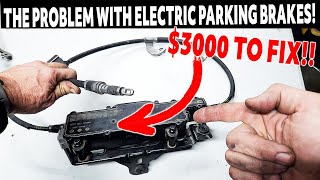
- Failed Electronic Parking Brake (EPB) Actuator/Motor (Common) — The small electric motors that apply the rear parking brakes burn out, seize from moisture, or fail electrically. The code usually points to a specific side of the vehicle (Left or Right).
- Low Battery Voltage (Common) — Brake and steering control modules are highly sensitive to voltage drops. A weak battery (below 12.4V), a faulty alternator, or voltage spikes from improper jump-starting cause these modules to set false fault codes.
- Control Module Software Glitch (Common) — On certain vehicles, particularly Citroen and Peugeot, this code triggers due to a known software bug in the stability control module. The only fix is a software update from a dealer (TSB B3FW011JQ0).
- Improper Brake Service Procedure (Less Common) — EPB systems must be put into 'service mode' with a scan tool before replacing rear brake pads. Forcibly pushing the caliper piston back without this step destroys the internal motor gears and triggers the fault.
- Failed Wheel Speed Sensor (Less Common) — EPB and stability control systems rely on data from wheel speed sensors. A faulty sensor provides erratic or missing data, forcing the control module to set a fault code as a precaution.
- Faulty Yaw Rate / G-Sensor (Less Common) — On some vehicles, C1560 points to a fault with the yaw rate sensor, which tells the Electronic Stability Program (ESP) if the car is rotating. Without this input, the ESP system disables itself.
- Faulty Control Module (Rare) — The control module (ABS, EPB, or Power Steering module) is the most expensive part but the least likely cause. Replace it only after exhausting all wiring and software possibilities.
Symptoms
- "PARKING BRAKE FAULT" or "SERVICE PARKING BRAKE" Message — A direct warning message appears on the instrument cluster display.
- Illuminated Warning Lights — The red BRAKE, amber ABS, or traction control (ESC/VSC) warning lights illuminate on the dashboard.
- Parking Brake Inoperative or Stuck — The electronic parking brake refuses to engage when pressing the button, or it sticks in the applied position and refuses to release.
- Grinding or Whirring Noise from Rear Wheels — A loud mechanical grinding or struggling electric motor noise emits from the rear wheels when applying or releasing the parking brake.
- Heavy or Unpredictable Steering — On Toyota and Lexus models, steering feels excessively heavy at low speeds or dangerously light at high speeds due to variable-assist failure.
Diagnostic Flowchart
Tap your situation to follow the diagnostic path that matches what you're seeing on this code.
Common Fixes & Costs
- Repair Damaged Wiring or Connector — Parts: $5-$20, Labor: $120-$250, ~1.5 hr book time (Intermediate)
- Replace Electronic Parking Brake Actuator/Motor — Parts: $150-$500, Labor: $150-$250, ~1.5 hr book time (Intermediate)
- Update Control Module Software at Dealer — Parts: $0, Labor: $150-$250, ~1.0 hr book time (Professional)
- Replace Progressive Power Steering (PPS) Solenoid — Parts: $100-$250, Labor: $150-$350, ~2.0 hr book time (Intermediate)
- Replace ABS / Chassis Control Module — Parts: $600-$2000, Labor: $150-$300, ~2.5 hr book time (Professional)
DIY vs Professional
- Repair Damaged Wiring or Connector — Beginner:
- Replace Electronic Parking Brake Actuator/Motor — Beginner:
- Update Control Module Software at Dealer — Beginner:
- Replace Progressive Power Steering (PPS) Solenoid — Beginner:
- Replace ABS / Chassis Control Module — Beginner:
Used vs. New Parts: Buying Guide
When a used part is worth it: For expensive electronic modules or assemblies like a Hyundai EPB winch or Lexus PPS valve assembly, a used part from a low-mileage vehicle offers significant savings. Avoid used parts for simple wear items.
Donor-vehicle mileage cap: roughly under 60000 miles for the part to have meaningful remaining life.
Donor quality checklist:
- Verify the donor vehicle's VIN to ensure part number compatibility.
- Avoid parts from flood-damaged or rust-belt vehicles; corrosion is a primary failure mode.
- Check photos for corrosion on connectors and signs of physical damage.
Decision logic:
- If The part is an EPB actuator/motor for a common vehicle (VW, Ford, Citroen) → Buy a new aftermarket part. They are widely available, affordable, and carry a better warranty.
- If The part is an expensive, dealer-only assembly (Lexus PPS valve, Hyundai EPB winch) → A used part from a reputable salvage yard is a reasonable choice to save money.
- If The fault is a known software bug (Citroen/Peugeot) → Neither new nor used parts help; the only fix is a dealer software update.
Warranty tradeoff: Used parts from salvage yards typically offer a 30-90 day warranty. New aftermarket parts come with a 1-year to limited lifetime warranty. New OEM parts carry a 1-2 year warranty.
Worst-case if a used part fails: $300-$600 if a used part fails shortly after installation, requiring a second labor charge and another replacement part.
What Happens If You Wait — Timeline
- 0-2 weeks: Code sets, warning light on. The brake sticks partially engaged ('dragging'). Noises are intermittent. (MPG impact: 1-5%% · Added cost: $0-$50)
- 2 weeks - 2 months: Constant dragging generates significant heat. Rear brake pads wear down rapidly. The brake rotor discolors and develops hot spots. (MPG impact: 5-10%% · Added cost: $250-$450)
- 2-6 months: Extreme heat cooks the brake caliper. Piston seals fail, and the caliper piston seizes. The brake rotor warps from metal-on-metal contact. (MPG impact: 10-15%% · Added cost: $500-$900)
- 6+ months: Catastrophic failure. The seized caliper overheats the wheel hub, destroying the wheel bearing. The EPB actuator motor burns out. The vehicle is unsafe to drive. (MPG impact: 15-25%% · Added cost: $1000-$2000)
Cost of Not Fixing It
- Immediate: Safety risk. The EPB fails to hold on an incline, causing a rollaway, or engages while driving, causing a loss of control. Power steering failure makes the vehicle extremely difficult to steer. (Added cost: Potential for accident-related costs.)
- 0-1 Month: If the EPB is stuck partially engaged, it causes rapid wear of the rear brake pads and rotors, and overheats the caliper. (Added cost: $500 - $1500)
- 1-6 Months: Continued driving with a dragging EPB destroys the pads, rotors, and seizes the caliper. The heat damages the wheel bearing, and the EPB actuator motor burns out completely. (Added cost: $1000 - $2500)
Diagnosis Steps
- Identify Your Specific System
Determine what C1560 means for your exact vehicle. Search online for '[Your Car Make/Model/Year] C1560' to confirm if you are diagnosing a power steering, electronic parking brake, or CAN bus communication issue.
Tools: Computer or smartphone (Beginner) - Check Battery Voltage and Fuses
Measure battery voltage with the engine off; it must be above 12.4V. Start the engine and verify voltage is between 13.7V and 14.7V. Check all fuses related to 'Electronic Parking Brake,' 'ABS,' 'VSC,' or 'Power Steering'.
Tools: Multimeter, Owner's Manual (Beginner) - Scan for Accompanying Codes
Use an OBD-II scanner to check for other fault codes. Codes like C1561 (opposite side fault) or U-series communication codes provide critical clues. Always diagnose communication codes (U-codes) before C-codes.
Tools: OBD-II Scanner (Intermediate) - Check for Technical Service Bulletins (TSBs)
Search for TSBs related to code C1560 for your vehicle. Manufacturers frequently release bulletins for known issues, such as the software glitch on Citroen/Peugeot models or the wiring harness recall on Ford F-150s.
Tools: Computer or smartphone (Intermediate) - Perform a Visual Inspection
Safely raise the vehicle. Inspect the wiring harnesses going to the rear brake calipers or the power steering rack. Look for chafing, breaks, melting, or green/white corrosion on connectors. Pay close attention to areas where the harness flexes near the suspension.
Tools: Jack, Jack Stands, Flashlight (Intermediate) - Test the Component Circuit
Follow the vehicle's specific repair manual to test the suspect circuit. For a Toyota PPS, unplug the solenoid and verify resistance is 6-11 Ohms. For an EPB actuator, check for proper voltage and ground at the actuator's connector during operation.
Tools: Multimeter, Vehicle-Specific Repair Manual (Advanced) - Pro Tip: Perform an Active Actuator Test
Use a bi-directional scan tool to command the EPB actuator to engage and disengage. Listen for a whirring sound at the caliper. If you hear the motor but the brake doesn't apply, the caliper is mechanically jammed. If you hear nothing, the motor or circuit is dead.
Tools: Bi-Directional Scan Tool (Professional) - Pro Tip: Perform a Voltage Drop Test
Command the EPB to apply using a scan tool. While the motor tries to run, measure the voltage between the power pin at the control module and the power pin at the actuator. A reading over 0.5V indicates excessive resistance (a bad wire) in the power circuit. Repeat for the ground side (limit: 0.2V).
Tools: Multimeter, Bi-Directional Scan Tool, Wiring Diagram (Professional) - Pro Tip: Measure EPB Motor Current Draw
Clamp a DC current meter around one of the motor's power wires and command the EPB to apply. A healthy motor draws a steady 2-5 amps, spiking briefly to 17 amps when fully applied. Erratic or excessively high/low readings indicate a failing motor.
Tools: DC Current Clamp, Bi-Directional Scan Tool (Professional) - Advanced Test: CAN Bus Health Check
If C1560 indicates a communication issue (e.g., Mitsubishi), disconnect the battery. Measure resistance between Pin 6 and Pin 14 at the OBD-II port. A healthy reading is 60 Ohms. 120 Ohms means a module or terminating resistor is offline. 0 Ohms means the CAN lines are shorted together.
Tools: Multimeter, Vehicle Wiring Diagram (Advanced)
When This Code Triggers (Freeze-Frame Conditions)
- Vehicle Speed: 0 mph (The fault logs during the system's power-on self-test (POST) immediately after turning the ignition on, before the vehicle moves.)
- System Voltage: <12.0V or >15.0V (Sets during engine cranking with a weak battery or if the alternator has a fault, causing a voltage spike or drop.)
- EPB Switch Status: Commanded ON/OFF (Triggers when the driver presses the EPB switch, and the control module does not see the expected electrical response from the actuator motor.)
- Ignition Status: Key-On, Engine-Off (EPB and steering module self-tests run as soon as the ignition turns to 'ON', setting a code if a circuit fault is detected immediately.)
Related Codes
- C1561 — The direct sibling to C1560, referring to the exact same fault on the opposite side of the vehicle. If both appear simultaneously, suspect a systemic issue like a software glitch, low battery voltage, or a central module fault.
- U1213 — A communication code indicating a loss of connection with the ABS/ESP module. Always diagnose U-codes first. C1560 is the symptom, while U1213 is the root cause.
- C1201 — A generic informational code telling the engine computer that a fault exists in the chassis system. Fixing the root cause of C1560 automatically clears C1201.
- C1206 — Indicates a wheel speed sensor fault. Because the EPB relies on wheel speed data, a faulty sensor circuit triggers related chassis codes like C1560. Diagnose C1206 first.
Climate & Environmental Factors
- Cold Climates with Road Salt: Road salt and brine solutions are highly corrosive, accelerating the deterioration of wiring insulation and connector pins on exposed harnesses near the rear axle. This leads to open circuits and triggers the code.
- High Humidity and Moisture: Constant exposure to moisture wicks into connectors and modules that are not perfectly sealed, causing intermittent shorts or permanent electrical damage.
- Vibration and Mechanical Stress: Wiring harnesses routed near moving suspension components suffer constant vibration. Over time, wires fatigue and break internally, even if the outer insulation appears intact.
How to Talk to a Mechanic About This Code
Say this: "I have a C1560 chassis code and a 'Service Parking Brake' warning. Based on my research, the most common causes are wiring issues near the rear axle or a known software TSB. Please start by inspecting the wiring harness and checking for TSBs before recommending a new actuator or module."
This signals you are an informed consumer. It directs the technician to perform a proper diagnosis of the cheapest faults first, preventing unnecessary upselling.
Avoid saying:
- 'Just fix whatever's wrong'
- 'My parking brake light is on, can you look at it?'
- 'I think I need a new parking brake motor.'
Questions to ask before authorizing the repair:
- What were the specific results of the electrical tests on the actuator circuit?
- Can you show me the broken wire or corroded connector you found?
- If recommending a module replacement, what steps ruled out all other possibilities?
- Does this repair require module programming, and is that included in the quote?
- What is the warranty on the parts and labor for this specific repair?
Where to Take It: Dealer vs Independent vs Chain
- Dealer:
Best for: Vehicles under warranty., Known manufacturer-specific software glitches requiring proprietary tools (e.g., Citroen TSB B3FW011JQ0)., Complex module replacement requiring programming and calibration.
Downsides: Highest labor rates, typically 20-40% more than independent shops., May be quicker to replace a large assembly than to explore nuanced wiring repairs. (Typical cost: +40% vs. baseline) - Independent Shop:
Best choice for hardware-related C1560 faults (wiring, actuator) if you choose a well-equipped shop. For known software bugs, the dealer is the only option.
Best for: Out-of-warranty vehicles where cost is a factor., Common hardware failures like wiring harness repairs or actuator replacement., Shops specializing in your vehicle's brand.
Downsides: Equipment varies; ensure they have a modern, bi-directional scan tool capable of ABS/EPB functions., May lack access to the latest manufacturer software updates. (Typical cost: +0% vs. baseline) - Chain Shop:
AVOID for C1560 diagnosis and repair. The risk of misdiagnosis or causing further damage is high.
Best for: Simple, unrelated maintenance like oil changes or new tires.
Downsides: Technicians are less experienced with complex electrical diagnostics., Unlikely to have bi-directional scan tools for EPB service mode, increasing the risk of causing damage., High pressure to meet sales targets leads to misdiagnosis. (Typical cost: -10% vs. baseline)
When to Walk Away From the Repair
If the estimated repair cost for the C1560 fault exceeds 50% of your car's current private-party value, seriously consider selling it as-is or trading it in.
- Car worth $8000, fix is $2200: Borderline. Get a second opinion to confirm the diagnosis and cost before proceeding.
- Car worth $15000, fix is $450: Fix it. The repair cost is low relative to the vehicle's value and is critical for safety.
- Car worth $3500, fix is $2000: Walk away. The repair cost is nearly 60% of the car's value. Put the money towards a replacement vehicle.
What Scan Tool You Need for This Code
Minimum: A scanner that reads and clears Chassis (C) codes from the ABS/SRS/EPB system. A basic engine-only code reader will not see the C1560 code.
A standard $20-$50 OBD-II reader only communicates with the engine control unit for emissions 'P' codes. C1560 is a chassis code stored in a different module, making it invisible to basic scanners.
Rent vs buy: Auto parts stores offer free loaner tools, but they are almost always basic engine code readers that CANNOT read the C1560 code. You must buy a capable scanner or pay for a professional diagnosis ($110-$160).
How to Clear the Code After You Fix It
- Fix the underlying hardware or software fault.
- Use an OBD-II scan tool with chassis system (ABS/EPB) capabilities to clear the C1560 code.
- For EPB repairs, use the scan tool to exit 'Service Mode' and perform the 'Calibration' or 'Installation' procedure.
- Disconnecting the battery for 15 minutes clears the code on older vehicles but fails to perform the necessary recalibration.
Drive cycle (~15 minutes): After clearing the code, perform a functional test. With the vehicle safely parked, cycle the EPB switch on and off 3-5 times, holding for 5 seconds in each position. Drive the vehicle for 5-10 minutes with several stops to confirm the warning light stays off.
Readiness monitors affected: This is a chassis code (C-code) and does not affect emissions-related readiness monitors.
Watch out for:
- Using a basic code reader that only sees powertrain (P-codes) and cannot access or clear chassis (C-codes).
- Failing to perform the required EPB calibration procedure with a scan tool after replacing an actuator.
- Clearing the code without fixing the root cause, resulting in the code returning immediately.
Will This Fail Emissions / State Inspection?
No — by itself this code doesn't fail OBD inspection (but it can keep readiness monitors from setting, which causes a separate fail).
- California: C1560 does NOT cause a failure of the OBD-II Smog Check, which focuses on powertrain codes. However, if the ABS light is on, a technician refuses to test the vehicle for safety reasons.
- New York: An illuminated red 'BRAKE' warning light or amber 'ABS' warning light is an automatic failure of the annual safety inspection.
- Texas: An illuminated red 'BRAKE' warning light causes a failure of the safety inspection. An illuminated amber 'ABS' light does not cause a failure.
Most Commonly Affected Vehicles
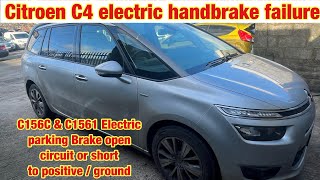
- Citroen C4 Picasso / Grand Picasso (2013-2018) — Extremely prone to C1560 due to wiring harness failures near the rear axle and a known software glitch in the ESP module requiring a dealer update (TSB B3FW011JQ0).
- Hyundai Santa Fe (2012-2019) — The Electronic Parking Brake (EPB) 'winch' module assembly frequently seizes. The dealer part is over $1900, but aftermarket motors are available.
- Ford F-150 (2021-2023) — Subject to recall (NHTSA #23V-509) for single-exhaust models where the rear axle wiring harness rubs through on the axle housing, causing the EPB to engage while driving.
- Peugeot 308 (2014-2021) — Suffers from EPB faults related to actuators and wiring. The software TSB (B3FW011JQ0) also applies to these models.
- Volkswagen Tiguan / Passat / CC (2010-2020) — Prone to EPB faults triggered after a battery replacement or failing to use 'service mode' for brake work. Faulty console switches are also common.
- Lexus LS430 (2001-2006) — C1560 points exclusively to a failure of the Progressive Power Steering (PPS) solenoid or its circuit. Diagnosis requires testing the solenoid's resistance (spec: 6-11 Ohms).
- Honda Civic / CR-V (2016-2022) — A recall exists for 2016 Civics (NHTSA #16V-725) for a software bug preventing the EPB from engaging if applied right after turning the ignition off.
- Subaru Legacy / Outback (2015-2017) — C1560 indicates 'Sensor Blinded,' meaning the EyeSight driver assist sensor is obstructed, or points to specific EPB module communication issues.
Manufacturer-Specific Notes
- Toyota / Lexus: C1560 is exclusively for the Progressive Power Steering (PPS) solenoid circuit. It does not relate to the parking brake. Test the solenoid for a resistance between 6-11 Ohms.
- Citroen / Peugeot: TSB B3FW011JQ0 addresses C1560 caused by a software glitch in the stability program (ESP) module. Always check if this TSB applies before replacing hardware.
- Hyundai / Kia: The EPB module is a winch-like assembly pulling brake cables. Dealers sell the complete assembly ($1900+), but aftermarket replacements for just the internal motor are available ($200-$400).
- Mitsubishi: C1560 indicates the power steering computer is not receiving the vehicle speed message over the CAN bus. Diagnosis requires checking CAN bus resistance (60 Ohms) at the OBD-II port.
- Ford: Recall 23S35 addresses 2021-2023 F-150s where the rear axle wiring harness chafes against the axle housing, shorting the EPB circuit.
- Honda: Recall KC6 addresses a software fault in the Vehicle Stability Assist (VSA) module preventing the EPB from engaging. The fix is a dealer software update.
Real Owner Stories
2015 Citroen C4 Grand Picasso - Wiring Failure
Owner reported a 'PARKING BRAKE FAULT' message. Scan tool showed code C1560 for the left-hand actuator.
What they tried:
- Initially suspected the EPB actuator motor.
- Inspected the wiring harness based on forum advice.
- Found a broken wire near the rear axle exposed to weather.
Outcome: Spliced the broken wire using solder and heat shrink. The EPB system functioned normally. The repair cost under $20.
Lesson: Always perform a visual inspection of the rear wiring harness for breaks or corrosion before replacing the expensive actuator motor.
2016 Citroen C4 Picasso - Software Glitch Misdiagnosis
After fixing broken wires, code C1560 appeared, and the fault persisted.
What they tried:
- Prepared to replace the left-side EPB actuator.
- Checked for Technical Service Bulletins before buying parts.
Outcome: The dealer confirmed the vehicle was eligible for TSB B3FW011JQ0. A 30-minute software update permanently fixed the fault without replacing parts.
Lesson: If you own a 2013-2018 Citroen or Peugeot and get a C1560 code, check for TSB B3FW011JQ0. A software update saves hundreds on unnecessary parts.
2003 Lexus LS430 - Power Steering Solenoid
Owner experienced heavy steering at low speeds and a C1560 code.
What they tried:
- Suspected a failing power steering pump.
- Learned the code points to the Progressive Power Steering (PPS) solenoid.
- Tested the solenoid's resistance and found it outside the 6-11 Ohm specification.
Outcome: Replaced the PPS solenoid assembly. Power steering assist returned to normal.
Lesson: On a Toyota or Lexus, C1560 points to the PPS solenoid circuit, not the parking brake. Start with a simple resistance test.
2018 Hyundai Santa Fe - DIY Repair Mistake
A DIYer replaced rear brake pads without putting the EPB into service mode. The 'SERVICE PARKING BRAKE' light came on with code C1560.
What they tried:
- Tried to clear the code, but it returned immediately.
- Attempted to manually retract the EPB motor using a power probe.
Outcome: Forcibly compressing the caliper piston destroyed the internal gearing of the EPB actuator. The repair required a new $250 aftermarket actuator motor and scan tool calibration.
Lesson: Never perform rear brake service on a vehicle with an EPB without activating 'Service Mode'. Forcing the piston back destroys the actuator.
How to Prevent This Code From Triggering
- Clean and lubricate EPB connectors. (Every 2 years or during brake service.) — Cleaning connectors with electrical contact cleaner and applying dielectric grease prevents moisture and road salt from causing corrosion.
- Always use 'Service Mode' for rear brake work. (Every time rear brake pads or rotors are replaced.) — Using a scan tool to retract the EPB motors electronically prevents catastrophic damage to the actuator's internal gears.
- Inspect and secure wiring harnesses near the rear axle. (Annually.) — Securing loose sections with zip ties prevents wires from rubbing through and shorting out against suspension components.
- Maintain a healthy battery and charging system. (Ongoing; test battery seasonally.) — Chassis control modules are extremely sensitive to low voltage. Ensure battery voltage is consistently above 12.4V with the engine off.
- Cycle the electronic parking brake regularly. (Weekly.) — Regularly engaging and disengaging the EPB prevents the small actuator motors and caliper mechanisms from seizing due to inactivity.
Frequently Asked Questions
What is the most common misdiagnosis for C1560?
The biggest mistake is replacing an expensive Electronic Parking Brake (EPB) actuator without inspecting the wiring harness first. In many cases, the problem is simply a broken wire or corroded connector pin near the rear axle. This simple electrical repair saves hundreds of dollars.
I just replaced my rear brakes or battery and now I have a C1560 code. What happened?
Your Electronic Parking Brake (EPB) system likely needed to be put into 'Maintenance Mode' using a scan tool before the brake service. Forcing the piston back damages the actuator. Alternatively, a voltage drop during a battery swap causes the module to lose its calibration.
Can a bad battery really cause this code?
Yes. Electronic modules controlling brakes and steering are highly sensitive to voltage. A weak battery providing unstable power (below 12.4V) causes the module to malfunction and incorrectly report a circuit fault.
What is the CAN bus and how does it relate to C1560?
The Controller Area Network (CAN) bus allows different computers in your car to communicate. On a Mitsubishi, C1560 means the power steering computer isn't receiving the vehicle speed message over this network. A healthy CAN bus shows about 60 Ohms of resistance between pins 6 and 14 of the diagnostic port.
Is it safe to drive with a C1560 code active?
No. The parking brake can engage while driving, causing a loss of control, or the power steering can fail, making the car difficult to steer.
What is 'service mode' for an electronic parking brake?
'Service mode' is a scan tool setting that fully retracts the electronic parking brake motor. This creates the clearance needed to replace brake pads without destroying the electronic components.
My scanner says C1560 is the 'Right Hand Actuator'. Which side is that?
In the automotive industry, 'Right Hand' and 'Left Hand' are determined from the driver's seat perspective. Therefore, the 'Right Hand' side is the passenger side of the vehicle in North America.
Will clearing the C1560 code fix the problem?
No. Clearing the code only temporarily turns off the warning light. If the underlying hardware or software fault remains, the code returns immediately when the control module runs its self-test.
Key Takeaways
- Code C1560 is manufacturer-specific, meaning you must look up your exact make and model to determine if it points to a $300 electronic parking brake failure or a power steering fault.
- Always test your battery to ensure it reads above 12.4V and inspect the rear axle wiring harness for corrosion before buying a replacement $500 actuator motor.
- Owners of 2013-2021 Citroen and Peugeot models should check for TSB B3FW011JQ0, as a 30-minute dealer software update permanently fixes this code without replacing any parts.
- Never manually force a rear brake caliper piston back on a vehicle with an electronic parking brake; failing to use a scan tool's 'Service Mode' destroys the internal gears.
Helpful Videos
Shop the Parts Behind C1560
Below are the parts most often responsible for code C1560, ranked by how frequently each one is the actual culprit (per the diagnosis above). Tap any to see what we have for your vehicle.



The information in this article is provided for general reference and educational purposes only. Vehicle specifications, procedures, and part compatibility can vary by production date, trim level, and region. Always consult your vehicle's factory service manual and verify part numbers before purchasing or performing repairs. Safety-critical components such as airbags, seat belts, and braking systems should be installed by a qualified professional.
- 🧭 Diagnostic Flowchart
- 🎬 Helpful Videos
- 🛍️ Shop This Part
- What Does C1560 Mean?
- Can I Drive With C1560?
- Common Causes
- Symptoms
- Common Fixes & Costs
- DIY vs Professional
- Used vs. New Parts: Buying Guide
- What Happens If You Wait — Timeline
- Cost of Not Fixing It
- Diagnosis Steps
- When This Code Triggers (Freeze-Frame Conditions)
- Related Codes
- Climate & Environmental Factors
- How to Talk to a Mechanic About This Code
- Where to Take It: Dealer vs Independent vs Chain
- When to Walk Away From the Repair
- What Scan Tool You Need for This Code
- How to Clear the Code After You Fix It
- Will This Fail Emissions / State Inspection?
- Most Commonly Affected Vehicles
- Manufacturer-Specific Notes
- Real Owner Stories
- 2015 Citroen C4 Grand Picasso - Wiring Failure
- 2016 Citroen C4 Picasso - Software Glitch Misdiagnosis
- 2003 Lexus LS430 - Power Steering Solenoid
- 2018 Hyundai Santa Fe - DIY Repair Mistake
- How to Prevent This Code From Triggering
- Frequently Asked Questions
- What is the most common misdiagnosis for C1560?
- I just replaced my rear brakes or battery and now I have a C1560 code. What happened?
- Can a bad battery really cause this code?
- What is the CAN bus and how does it relate to C1560?
- Is it safe to drive with a C1560 code active?
- What is 'service mode' for an electronic parking brake?
- My scanner says C1560 is the 'Right Hand Actuator'. Which side is that?
- Will clearing the C1560 code fix the problem?
- Key Takeaways
- 🎟️ Get 5% Off