

OBD-II Code C1562: Pump/Motor Performance Issue
What C1562 means, why it triggers, and how to fix it
- Code C1562 indicates a failing air suspension compressor on Jeep/Ram trucks or a failing electronic brake booster pump on Toyota/Lexus hybrids.
- Stop driving immediately; this code signals a severe safety hazard involving either a 100% loss of power braking (Toyota/Lexus) or unpredictable suspension handling (Jeep/Ram).
- On Jeep and Ram vehicles, an undetected air leak causes 90% of C1562 codes by forcing the compressor to overheat and burn out.
- Owners of 2015-2016 Ram 1500s experiencing this code in freezing temperatures should request TSB 08-051-16, a software update that fixes the issue without replacing parts.
- Toyota and Lexus owners facing a $3,000+ brake actuator replacement must call a dealer with their VIN to check for active Customer Support Programs (like ZG1 or ZKC) before paying out of pocket.
What Does C1562 Mean?
C1562 indicates a performance failure in a critical pump motor. On Jeep and Ram trucks, the air suspension compressor is overheating. On Toyota and Lexus hybrids, the brake booster pump (part of the brake actuator assembly) is failing to maintain hydraulic pressure.
Technical definition: The official SAE/OBD-II definition varies by manufacturer. For Ram and Jeep, it is 'Ride Height Air Pump Control - Component Or System Over Temperature' or 'Performance Or Incorrect Operation'. For Toyota, it indicates internal malfunctions of the Brake Actuator Assembly and Brake Booster Pump Assembly.
Can I Drive With C1562?
No — Do Not Drive. No. If this code relates to your brake system (Toyota/Lexus), you have a significantly reduced ability to stop, creating a severe safety hazard. If it relates to air suspension (Jeep/Ram), vehicle handling becomes unpredictable, especially at speed or over bumps, increasing the risk of losing control. Continuing to drive causes the primary failure (like a small air leak) to cascade into a much more expensive compressor or control module failure.
Common Causes
- Leaking Air Suspension System or Valve Block (Jeep/Ram) (Very Common) — This is the most frequent cause on vehicles with air suspension. Small leaks in the air springs, plastic air lines, valve block, or front strut top elbows force the compressor to run constantly to maintain vehicle height, causing it to overheat and trigger the code.
- Failing Brake Actuator / Booster Pump Assembly (Toyota/Lexus) (Very Common) — On many Toyota and Lexus hybrids, the brake actuator and pump assembly is a known failure point. An internal leak or a failed accumulator forces the pump to run excessively to maintain brake pressure, triggering the code.
- Failing Air Suspension Compressor (Jeep/Ram) (Common) — The compressor fails due to age or from being overworked by an undetected air leak. The compressor failure is usually the result of a leak, not the initial cause.
- Moisture Contamination / Frozen System Components (Jeep/Ram) (Less Common) — In cold climates, moisture naturally accumulating in the air system freezes, causing blockages in the air lines or valve block. This prevents the system from adjusting correctly and causes pressure buildups that overwork the compressor.
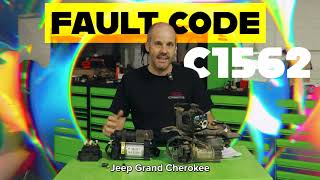
- Faulty Air Suspension Compressor Temperature Sensor (Jeep/Ram) (Less Common) — The compressor uses a temperature sensor to prevent overheating. If this sensor fails, it sends an erroneously high temperature reading (e.g., 266°F when cold) to the control module, falsely triggering the C1562 code 🎬 Watch: Diagnosing a Grand Cherokee compressor overheat fault code. even if the compressor functions normally.
- Faulty Air Suspension Relay (Jeep/Ram) (Less Common) — The electronic relay sending power to the air suspension compressor fails, causing it to run continuously or not at all, triggering control issues and fault codes.
- Wiring or Connector Issues (All Vehicles) (Rare) — Damaged, corroded, or loose wiring connected to the pump motor, its temperature sensor, or its control module interrupts the signal, causes high resistance, or leads to an open circuit.
Symptoms
- Vehicle Sits Low or is Uneven (Jeep/Ram) — The truck or SUV sits lower than its normal ride height, or one corner sags, often after being parked overnight.
- Brake, ABS, and VSC Warning Lights On (Toyota/Lexus) — The dashboard illuminates with multiple brake-related warning lights, often accompanied by a loud, continuous beeping alarm.
- Pump Motor Runs Constantly — A buzzing or humming sound from the pump motor (suspension or brakes) continues to run for a long time, even after the vehicle is turned off.
- Hard Brake Pedal or Change in Feel (Toyota/Lexus) — The brake pedal feels much harder to press, or spongy, and the vehicle's stopping ability is noticeably reduced.
- 'Service Air Suspension' Message (Jeep/Ram) — A warning message appears on the instrument cluster telling you to service the system.
- Suspension Inoperative in Cold Weather (Jeep/Ram) — The vehicle fails to change ride height when commanded in very cold conditions, indicating a software issue or frozen components.
- Loud 'Whoosh' Sound from Air System (Jeep/Ram) — After the compressor runs for an extended period, a loud 'whoosh' is heard as the system vents excess pressure, indicating a blockage or valve issue.
Diagnostic Flowchart
Tap your situation to follow the diagnostic path that matches what you're seeing on this code.
Common Fixes & Costs
- Find and Repair Air Suspension Leak (Jeep/Ram) — Parts: $20-$600, Labor: $200-$500, ~2.5 hr book time (Intermediate)
- Replace Brake Actuator and Booster Pump Assembly (Toyota/Lexus) — Parts: $1100-$1800, Labor: $600-$1000, ~4.5 hr book time (Professional)
- Replace Air Suspension Compressor (Jeep/Ram) — Parts: $400-$1800, Labor: $250-$450, ~2.0 hr book time (Intermediate)
- Update Air Suspension Control Module (ASCM) Software (Ram) — Parts: $0, Labor: $150-$250, ~0.5 hr book time (Professional)
- Replace Air Suspension Compressor Relay — Parts: $15-$50, Labor: $30-$100, ~0.2 hr book time (Beginner)
Used vs. New Parts: Buying Guide
When a used part is worth it: For a Jeep/Ram air compressor, a used part from a low-mileage vehicle is a viable budget option if the root air leak is fixed. For the Toyota/Lexus brake actuator, a used part is extremely risky due to the high failure rate of these components and the critical safety function they perform.
Donor-vehicle mileage cap: roughly under 60000 miles for the part to have meaningful remaining life.
Donor quality checklist:
- Verify the part number matches exactly.
- For brake actuators, avoid used parts entirely if possible; the failure is internal and not visible.
- For air compressors, check for signs of corrosion or moisture damage around the ports.
Decision logic:
- If The part is a Toyota/Lexus brake actuator → Buy new OEM. The risk of a used or even remanufactured part failing is too high for this critical safety component.
- If The part is a Jeep/Ram air compressor AND the budget is very tight → A used part is a gamble, but acceptable if you have confirmed and repaired ALL air leaks first. Otherwise, the used part burns out quickly.
- If The vehicle is a keeper and reliability is paramount → Buy new OEM or a reputable aftermarket brand (like Dorman or Arnott for suspension) for a longer service life and better warranty.
Warranty tradeoff: Used parts typically have a 30-90 day warranty at best, which does not cover repeat labor costs. New aftermarket parts offer 1-year to limited lifetime warranties. New OEM parts carry a 12-month/12,000-mile warranty.
Worst-case if a used part fails: $600-$1500 if a used part fails after installation, as you pay for the labor a second time plus the cost of another part.
What Happens If You Wait — Timeline
- 0-1 month (Jeep/Ram): A small, new air leak develops. The compressor runs slightly longer (e.g., 45-60 seconds) after startup to level the vehicle. No codes are set yet, but the vehicle may be slightly lower after sitting overnight. (MPG impact: 0%% · Added cost: $0)
- 1-3 months (Jeep/Ram): The leak worsens. The compressor now runs for over 90-120 seconds, causing it to overheat and trigger the C1562 code. The 'Service Air Suspension' message appears. The vehicle noticeably sags when parked. (MPG impact: 0%% · Added cost: $200-$600 (Cost to fix the leak now before the compressor is destroyed).)
- 3-6 months (Jeep/Ram): The compressor motor burns out from constant overheating. It no longer runs, and the vehicle is stuck at a low ride height, resulting in a harsh, bouncy ride and poor handling. (MPG impact: 1-3%% · Added cost: $1,200-$2,500 (Cost to replace the now-failed compressor IN ADDITION to fixing the original leak).)
- 0-2 weeks (Toyota/Lexus): An internal leak begins in the brake actuator. The pump runs for a few extra seconds after a stop. A faint buzzing is heard. No codes are set. (MPG impact: 0-2% (If regenerative braking is affected)% · Added cost: $0)
- 2 weeks - 2 months (Toyota/Lexus): The internal leak is significant. The pump runs constantly, creating a loud buzz. C1562 and other brake codes (C1252, C1256) are triggered, and multiple warning lights illuminate on the dash. (MPG impact: 3-5% (Regenerative braking is compromised)% · Added cost: $0)
- Immediate after Stage 5 (Toyota/Lexus): The system enters fail-safe mode. The pump shuts down, and all hydraulic assistance is lost. The brake pedal becomes extremely hard to press, and stopping distances increase dramatically. The car is unsafe to drive. (MPG impact: 5-10% (No regenerative braking)% · Added cost: $2,000-$3,500 (Full cost of brake actuator replacement is now unavoidable).)
Cost of Not Fixing It
- Immediate: For Toyota/Lexus, severe reduction in braking ability, creating an extreme safety hazard. The vehicle enters a 'fail-safe' mode, disabling ABS and stability control. (Added cost: N/A)
- 0-1 month: For Jeep/Ram, an initial small air leak causes the compressor to run excessively, leading to premature wear and eventual burnout of the compressor motor. (Added cost: $1000-$3000)
- 1-6 months: Continued operation with a failed pump motor causes damage to associated control modules or relays due to constant high current draw. On Toyota hybrids, a non-functional regenerative braking system strains the hybrid battery. (Added cost: $500-$1500)
- 6+ months: On Jeep/Ram, driving with a sagging suspension causes abnormal tire wear, poor handling, and potential damage to other suspension components like shocks and bushings. (Added cost: $400-$1000)
Diagnosis Steps
- Identify Your Vehicle's System
Determine if the code refers to the air suspension (Ram 1500, Jeep Grand Cherokee) or the electronic braking system (Toyota/Lexus hybrids). This dictates your entire diagnostic path.
Tools: Owner's Manual (Beginner) - Scan for Related Fault Codes
Use an advanced OBD-II scanner to read manufacturer-specific codes from the ABS and suspension control modules. On a Ram, C15A1 ('Unable To Obtain Desired Ride Height') or C15AA ('Air Leak During Vent') guarantees an air leak. On a Toyota, C1252, C1256, or C1391 point directly to the brake actuator assembly.
Tools: Advanced OBD-II Scanner (Intermediate) - Perform Soapy Water Leak Test (Jeep/Ram)
Mix soap and water in a spray bottle. With the system trying to build pressure, spray the airbags, all air line connections, the valve block, and the small elbow fittings at the top of the front struts. Look for bubbles indicating a leak. This is the most crucial step for these vehicles.
Tools: Soapy Water Spray Bottle, Flashlight (Intermediate) - Listen for the Pump
With the vehicle on, listen for the associated pump. If it runs for more than 60-90 seconds at a time or cycles on and off frequently without you using the controls, it confirms a leak (suspension) or internal failure (brakes).
Tools: None (Beginner) - Inspect Brake Actuator (Toyota/Lexus)
Visually inspect the brake actuator assembly for brake fluid leaks. Check the brake fluid reservoir; a low level without visible external leaks indicates an internal failure within the actuator.
Tools: Flashlight (Intermediate) - Check Fuses and Relays
Consult your owner's manual to find the fuse and relay for the Air Suspension Compressor or ABS Motor. Pull them out and visually inspect for damage or burn marks. A failed relay causes the pump to run continuously.
Tools: Fuse Puller or Pliers (Beginner) - Pro Tip: Analyze Compressor Temperature Data (Jeep/Ram)
Using an advanced scan tool, view live data for 'Air Suspension Compressor Temperature'. If the sensor reads an impossibly high value (e.g., over 250°F) immediately at cold startup, the temperature sensor itself has failed. A normal reading on a cold engine should match ambient air temperature.
Tools: Advanced OBD-II Scanner (Advanced) - Pro Tip: Test Brake Accumulator Pressure Drop (Toyota/Lexus)
Using Toyota Techstream, access the ABS/VSC/TRC Data List and monitor 'Accumulator Sensor' voltage. After the pump pressurizes the system and shuts off, voltage should be stable (3.2V to 4.0V). A voltage drop of more than 0.55V within 30 seconds (without applying brakes) confirms a significant internal pressure leak.
Tools: Advanced OBD-II Scanner (Toyota Techstream recommended) (Advanced) - Pro Tip: Test the Compressor Relay Circuit (Jeep/Ram)
Remove the relay and disconnect the Air Suspension Control Module (ASCM) C2 connector. Using a multimeter, check the resistance on the compressor relay signal and return circuits between the ASCM connector and the relay socket. Resistance should be below 5.0 Ohms. Higher readings indicate an open or high-resistance wire.
Tools: Multimeter, Vehicle Wiring Diagram, Service Manual (Advanced)
When This Code Triggers (Freeze-Frame Conditions)
- Pump Motor Run Time: > 120 seconds (The ECU logs this code when the pump motor for either the air suspension or brake booster runs continuously for an excessive period (e.g., over 2-3 minutes) trying to build pressure.)
- Compressor Temperature (Jeep/Ram): > 260°F (The code is set when the air suspension compressor temperature sensor reports a value exceeding the manufacturer's threshold, indicating overheating.)
- Accumulator Pressure (Toyota/Lexus): Low or Dropping Rapidly (The code is often triggered alongside C1256 (Accumulator Low Pressure) when the brake system cannot maintain stored hydraulic pressure, forcing the pump to run constantly.)
- Vehicle Speed: 0 mph (The fault often occurs when the vehicle is first started or is stationary, as the system performs a self-check and attempts to pressurize or level itself.)
Related Codes
- C15A1 — Often appears on a Jeep or Ram with C1562. C15A1 ('Unable To Obtain Desired Ride Height') indicates the system failed to lift the vehicle. C1562 indicates the compressor overheated during the attempt. Seeing them together is a strong sign of a significant air leak.
- C15AA — Specific to Jeep/Ram, this code for 'Air Leak During Vent' is a direct confirmation from the control module that it has detected a leak during a self-test. This code points to the root cause, while C1562 is the resulting symptom.
- C1252 / C1256 / C1391 — This trio of Toyota/Lexus codes is a classic sign of brake actuator failure. C1256 ('Accumulator Low Pressure') and C1391 ('Abnormal Leak in Accumulator') indicate the loss of stored pressure, which forces the pump to run too long, triggering C1252 ('Brake Booster Pump Motor On Time Abnormally Long'). C1562 is also set in this scenario.
- C156E — On Ram trucks, this code for 'Ride Height System Calibration Not Set' appears after components have been replaced or if the module has lost its memory. It requires a capable scan tool to perform a ride height calibration procedure and is not directly a pump failure code.
Climate & Environmental Factors
- Cold Weather: Very significant for Jeep/Ram air suspension. In freezing temperatures, moisture in the air lines freezes, causing blockages that prevent the system from adjusting height and lead to compressor over-pressurization. It also makes existing air leaks worse as seals contract. Ram issued TSB 08-051-16 specifically to improve the system's software logic in cold conditions for 2015-2016 models.
- High Humidity: Affects Jeep/Ram air suspension. In humid climates, the system's air dryer becomes saturated more quickly. If the desiccant is spent, excess moisture is sent through the system. This leads to corrosion in the valve block and freezing issues in winter, contributing to compressor failure.
- Altitude: Minor effect. At higher altitudes, the air is less dense, which theoretically makes the air suspension compressor work slightly harder to achieve the same pressure. However, this is not considered a primary cause of failure compared to leaks or moisture.
How to Talk to a Mechanic About This Code
Say this: "For a Jeep/Ram: "I have a C1562 code and my truck is sagging. I'd like to schedule a diagnostic, but please perform a comprehensive soapy water leak test on the entire air suspension system before quoting a compressor replacement. I want to find the root cause, not just replace the overheated part." For a Toyota/Lexus: "I have a C1562 code, my brake warning lights are on, and a pump is buzzing. I suspect a failed brake actuator. I'd like a diagnostic to confirm, and can you please also check my VIN for any open warranty extensions or customer support programs for the brake assembly?""
This language shows you've done your research. For Jeep/Ram, it forces the shop to diagnose the actual problem (the leak) and prevents the common misdiagnosis of simply replacing the compressor. For Toyota/Lexus, it directs them to the known failure point and proactively asks about potential cost-saving programs.
Avoid saying:
- 'My 'Service Air Suspension' light is on, fix it.' (Too vague, invites a simple compressor swap without a leak test.)
- 'My brake light is on and there's a noise.' (This could be anything; being specific saves diagnostic time and money.)
- 'Just replace the part for the C1562 code.' (This is asking for a misdiagnosis, as the code points to a symptom, not the root cause.)
Questions to ask before authorizing the repair:
- For Jeep/Ram: "Can you show me exactly where the air leak is? Did you find any other potential leak points?"
- For Toyota/Lexus: "Did you confirm the internal leak in the actuator with a pressure drop test? What is the total cost including the electronic brake bleed procedure?"
- For both: "What is the warranty on the parts and your labor? Will I get the old parts back?"
Where to Take It: Dealer vs Independent vs Chain
- Dealer:
Recommended for Toyota/Lexus due to special tool requirements. A good, but expensive, choice for Jeep/Ram, especially for software updates.
Best for: Toyota/Lexus vehicles needing brake actuator replacement, as they have the required Techstream software for the critical post-repair brake bleed., Checking for eligibility under TSBs (like the Ram cold weather update) or warranty extensions., Complex electrical or module-related issues.
Downsides: Highest labor rates and part markups., Dealers often replace the entire compressor assembly without definitively proving the root cause (the leak) is fixed. (Typical cost: +50% vs. baseline) - Independent Shop:
Best fit for Jeep/Ram repairs. Risky for Toyota/Lexus unless they can prove they have the specific tools and experience for hybrid brake systems.
Best for: Jeep/Ram air suspension leak diagnosis and repair. An experienced independent mechanic is often more thorough in hunting for leaks than a dealer., Out-of-warranty vehicles where cost is a major factor.
Downsides: Quality and experience vary greatly; find one specializing in domestic trucks or suspension work., May not have the expensive, specialized scan tools required for the Toyota/Lexus electronic brake bleed procedure. (Typical cost: +0% vs. baseline) - Chain Shop:
AVOID for this code. The complexity of both the Jeep/Ram and Toyota/Lexus systems is beyond the scope of most chain shops.
Best for: Simple, unrelated maintenance like oil changes or tires.
Downsides: Technicians often lack the specialized knowledge for complex air suspension or hybrid brake systems., High likelihood of misdiagnosing the C1562 on a Jeep/Ram and selling an unnecessary compressor, leading to repeat failures. (Typical cost: -10% vs. baseline)
When to Walk Away From the Repair
If the estimated repair cost exceeds 50% of the car's private-party value, you should seriously consider selling the vehicle as-is or trading it in.
- Car worth $4500, fix is $3100: Walk away. The repair cost is nearly 70% of the car's value. It's not financially sound to proceed.
- Car worth $17000, fix is $2500: Fix it. The repair cost is less than 15% of the truck's value, making it a worthwhile investment to keep a capable vehicle on the road.
What Scan Tool You Need for This Code
Minimum: A tool that can read manufacturer-specific Chassis ('C') codes and view live sensor data for the ABS or suspension module.
A basic $20 code reader will not see a 'C' code at all, or it won't be able to access the necessary live data streams (like compressor temperature or accumulator pressure) that are essential for diagnosing the root cause vs. the symptom.
Budget: BlueDriver Pro / JScan App (~$90) — Reads enhanced chassis codes (ABS, Airbag, Suspension) on many domestic and Asian vehicles. It displays live data, which is crucial for monitoring the Jeep/Ram compressor temperature or Toyota brake pressure sensor voltage. The JScan app paired with a cheap OBD adapter is also a powerful option for Jeep/Ram owners.
Mid-range: Foxwell NT510 Elite / iCarsoft CR Pro (~$180) — Offers deeper manufacturer-specific diagnostics. For Jeep/Ram, they access more system PIDs. For Toyota/Lexus, some include basic special functions, but may not have the full, automated brake bleed procedure. They are a significant step up for diagnosis but fall short on the repair side for Toyota.
Professional: Autel MaxiCOM MK808 / Launch CRP129X (~$500-800) — This is the level required for a confident DIY repair on a Toyota/Lexus. These scanners have bidirectional control to perform the automated ABS/brake bleeding procedure and linear valve offset calibration. For Jeep/Ram, they allow the user to command the compressor and valves directly to aid in diagnostics.
Rent vs buy: For a one-time diagnosis, a budget pick like BlueDriver is a good investment. For the actual repair on a Toyota/Lexus, the cost of a pro-level scanner ($500+) is hard to justify unless you plan to do many advanced DIY repairs. No auto parts stores rent out the high-end bidirectional scanners needed for the Toyota brake bleed.
How to Clear the Code After You Fix It
- For Toyota/Lexus, a specialized scan tool (like Techstream) is required to perform the computerized brake bleeding procedure, followed by clearing codes.
- For Jeep/Ram, use an OBD-II scan tool to clear the code. A manual reset is sometimes performed by disconnecting the battery for 15 minutes or holding the suspension up/down buttons.
- Perform system calibration/re-learn procedure if prompted by the scan tool after component replacement.
Drive cycle (~20 minutes): After clearing the code, a drive cycle is about system function. For air suspension, command the vehicle to cycle through all height settings. For brakes, drive for 10-15 minutes with several normal stops to allow the system to verify pressure is holding. A cold start and warm-up is recommended.
Readiness monitors affected: This is a chassis code ('C') and does not directly affect emissions readiness monitors like the Catalyst or O2 sensor monitors.
Before emissions retest: drive at least 10 miles to fully set monitors.
Watch out for:
- For Toyota/Lexus, failing to perform the electronic brake bleed procedure with a compatible scan tool results in a non-functional and dangerous brake system; the code returns immediately.
- For Jeep/Ram, clearing the code without fixing the underlying air leak causes the code to return as soon as the compressor overheats again.
- Simply disconnecting the battery clears the code but does not perform necessary system calibrations required after replacing a major component like a compressor or actuator.
Will This Fail Emissions / State Inspection?
Yes — this code typically fails an OBD-II emissions inspection.
- California: An illuminated ABS or Brake warning light, which is a symptom of C1562, causes the vehicle to fail the safety portion of the inspection. The OBD-II scan also detects the chassis fault code.
- New York: An illuminated ABS or brake warning light is grounds for failing the state safety inspection.
- Texas: While most personal vehicles are exempt from safety inspections as of 2025, an illuminated ABS warning light would have been cause for rejection. In the 17 counties still requiring emissions testing, an active fault code causes a failure during the OBD-II scan.
Most Commonly Affected Vehicles
- Jeep Grand Cherokee (WK2) (2011-2021) — The Quadra-Lift air suspension system is highly prone to leaks from the front strut top fittings and air springs, causing the compressor to overheat and fail, triggering code C1562.
- Ram 1500 (2013-2018) — Equipped with 4-Corner Air Suspension, these trucks frequently develop leaks that overwork the compressor. Models from 2015-2016 are subject to TSB 08-051-16 for a software update to fix cold weather performance issues that set this code.
- Toyota Highlander Hybrid (2008-2010) — These vehicles were subject to Customer Support Program (ZKC) from Toyota for internal failures of the brake actuator assembly.
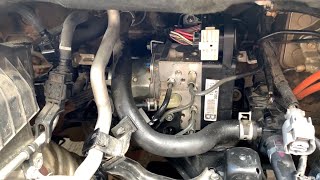
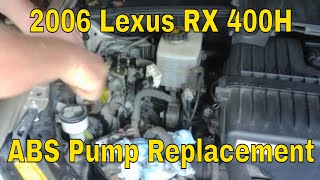
- Lexus RX400h (2006-2008) — Features a similar electronic braking system to the Highlander Hybrid and is well-known for failures of the expensive brake actuator assembly, causing a constant buzzing, warning lights, and this code.
- Toyota Prius (2004-2009) — The Gen 2 Prius is famous for brake actuator failures with the exact same symptoms. Toyota issued a warranty extension (ZG1) for this part, but coverage was time/mileage limited and is likely expired for most vehicles.
- BMW X5 (E70, F15) (2007-2018) — These models with rear air suspension are notorious for leaks in the rear air springs. This leads to compressor burnout, a failure pattern identical to that seen in Jeep/Ram vehicles, though it sets different BMW-specific codes.
- Mercedes-Benz GL-Class (X164), ML-Class (W164) (2006-2012) — The Airmatic suspension system in these SUVs frequently develops leaks in the struts and valve block. This overworks the Airmatic compressor, leading to failure and a 'Visit Workshop' message, mirroring the C1562 cause on Stellantis vehicles.
- Toyota Sienna (2005-2010) — Some Sienna models, particularly those with Vehicle Stability Control (VSC), experience failure of the ABS/Brake actuator assembly, presenting with a buzzing pump motor and multiple warning lights, similar to the hybrid models.
Manufacturer-Specific Notes
- Jeep / Ram: The C1562 code is almost always a symptom, not the cause. The true cause is an air leak elsewhere in the suspension. Simply replacing the expensive compressor without first finding and fixing the leak causes the new compressor to fail quickly.
- Ram: TSB 08-051-16 was released for 2015-2016 Ram 1500s that set C1562 and other codes, especially with symptoms of the suspension not working in cold weather. The fix is a software update for the Air Suspension Control Module (ASCM), which must be performed before replacing parts.
- Toyota / Lexus: Toyota issued Customer Support Programs and Warranty Extensions for the brake actuator on several models (Prius, Highlander Hybrid, Camry Hybrid). For example, program ZG1 for the 2004-2009 Prius offered primary coverage until Dec. 31, 2017, and secondary coverage for 10 years/150,000 miles. These programs are now expired for most vehicles, but owners should still contact a dealer with their VIN to confirm eligibility.
- Jeep: On the Grand Cherokee (WK2), the small plastic elbow fittings for the air lines on top of the front struts are a notoriously common and inexpensive failure point that leads to a very expensive compressor replacement if not caught early.
Real Owner Stories
2015 Ram 1500 with C1562 - The Classic Misdiagnosis
Owner noticed the 'Service Air Suspension' light was on and the truck was sagging after being parked. A local shop diagnosed code C1562 and replaced the air compressor for over $2,000.
What they tried:
- Replaced the air suspension compressor based on the C1562 code.
Outcome: The fix only lasted a few days before the light came back on and the new compressor failed. The root cause, a leak in the rear air springs, was never addressed. The second repair required another new compressor AND new air springs, doubling the cost.
Lesson: C1562 is a symptom (overheating compressor), not the cause. You MUST find and fix the air leak first. Replacing only the compressor guarantees a repeat failure.
2008 Toyota Prius with 137k miles - The Expensive Brake Fix
While driving, the brake, ABS, and VSC lights came on, accompanied by a loud, constant buzzing from the engine bay. The brake pedal became very hard to press, and stopping power was dangerously low.
What they tried:
- Owner did online research and found this is a classic symptom of brake actuator failure.
- Contacted a Toyota dealer and provided the VIN.
Outcome: The dealer confirmed the vehicle was covered under Toyota's Warranty Enhancement Program (ZG1) for the brake actuator assembly. The part was replaced for free. The owner noted the original part lasted about 137,000 miles.
Lesson: For Toyota/Lexus vehicles, this is a known issue. Always check with a dealer for any active warranty extensions or customer support programs, even if the vehicle is old.
2016 Jeep Grand Cherokee - The Temperature Sensor Ghost
The 'Service Air Suspension' light appeared, and the scanner showed code C1562 for compressor over-temperature, but the owner hadn't noticed any sagging or heard the compressor running excessively.
What they tried:
- Using an advanced scan tool, a mechanic monitored the live data for the 'Air Suspension Compressor Temperature'.
- Immediately after a cold start, the sensor read 266°F, an impossible value.
Outcome: The diagnosis was a failed temperature sensor, not an overheating compressor. The sensor is integrated into the compressor assembly, so the entire unit had to be replaced. However, this avoided a pointless and frustrating search for a non-existent air leak.
Lesson: If symptoms don't perfectly match the common cause (an air leak), use an advanced scan tool to check live data. An erroneous sensor reading mimics a mechanical failure and leads to misdiagnosis.
2016 Ram 1500 in Cold Climate - The Software Fix
Owner in a cold climate (New Hampshire) found that the air suspension refused to change height and set the C1562 code only during winter months.
What they tried:
- The owner first suspected frozen moisture in the lines.
- A trip to the dealer revealed the truck was eligible for a software update under Technical Service Bulletin (TSB) 08-051-16.
Outcome: The dealer flashed the Air Suspension Control Module (ASCM) with new software. This update changed the system's operating logic in cold weather, resolving the problem without replacing any expensive hardware.
Lesson: If your C1562 issue is strictly related to cold weather on a 2015-2016 Ram 1500, ask a dealer about TSB 08-051-16. A simple software update is often the entire fix.
How to Prevent This Code From Triggering
- Perform regular visual inspections of air springs (Jeep/Ram) (Every 6 months or 7,500 miles) — Look for cracks, chafing, or weathering on the rubber air springs. Catching a potential leak before it fully develops prevents the compressor from overworking and failing.
- Keep air suspension components clean (Jeep/Ram) (During every car wash) — Rinsing dirt, mud, and road salt from the air springs and lines prevents abrasive wear and corrosion that leads to premature leaks.
- Perform regular brake fluid flushes (Toyota/Lexus) (Every 2-3 years or 30,000 miles) — Using the correct, high-quality brake fluid and flushing it regularly prevents internal corrosion and contamination within the complex brake actuator assembly, which contributes to internal seal failure.
- Avoid overloading the vehicle (Jeep/Ram) (Daily habit) — Exceeding the vehicle's payload or towing capacity puts excessive stress on the air springs and forces the compressor to work harder, accelerating wear on all system components.
- Cycle the air suspension system periodically (Jeep/Ram) (Once a month) — Manually cycling the suspension through all its settings keeps valves and mechanical parts moving freely and helps distribute moisture in the system to be removed by the dryer.
Frequently Asked Questions
Why do I see information about brakes when my Ram truck has an air suspension problem?
Code C1562 is a generic chassis code that different manufacturers use for different systems. On a Ram or Jeep, it correctly points to the air suspension compressor. On a Toyota or Lexus hybrid, it points to the electronic brake booster pump.
My mechanic says the air compressor is bad, but the code came back after he replaced it. What went wrong?
This is a classic misdiagnosis where the root cause—an air leak—was never fixed. The leak forces any new compressor to overwork and burn out. The mechanic must perform a thorough leak test on the entire system to find and fix the original hole.
Is it safe to drive with code C1562?
No, it is not safe. If the fault is in your brake system (Toyota/Lexus), your ability to stop is dangerously reduced. If it is in your air suspension (Jeep/Ram), the vehicle handles unpredictably and sags to one side, especially at highway speeds.
The repair for my Lexus is over $3,000. Can I use a cheaper used part?
You can, but it is very risky. Used brake actuators from this era have a high failure rate, and you may end up paying for the same labor-intensive repair twice. For a critical safety system like brakes, a new OEM or high-quality remanufactured part is strongly recommended.
My air suspension only acts up in the winter. What could it be?
This is a common complaint on Ram 1500 trucks caused by moisture freezing in the air lines or a software logic issue. Ram issued TSB 08-051-16 to address this exact problem with a software update. Your first step is to see if your vehicle needs this update before replacing expensive hardware.
I hear a loud 'whoosh' of air after the compressor runs for a long time. Is this a problem?
Yes, that sound is the system's pressure relief valve venting because the compressor ran too long and built up excessive pressure. This happens when there is a blockage or a faulty valve that prevents air from reaching the springs. It is a clear indicator of an underlying issue causing the C1562 code.
Can I just delete the air suspension on my Ram 1500?
Yes, many owners choose to replace the factory air suspension with a conversion kit that uses conventional coil springs and struts. This permanently eliminates the complex and failure-prone air system. Kits are available from aftermarket companies and are often cheaper than replacing a single OEM air strut.
Key Takeaways
- Code C1562 indicates a failing air suspension compressor on Jeep/Ram trucks or a failing electronic brake booster pump on Toyota/Lexus hybrids.
- Stop driving immediately; this code signals a severe safety hazard involving either a 100% loss of power braking (Toyota/Lexus) or unpredictable suspension handling (Jeep/Ram).
- On Jeep and Ram vehicles, an undetected air leak causes 90% of C1562 codes by forcing the compressor to overheat and burn out.
- Owners of 2015-2016 Ram 1500s experiencing this code in freezing temperatures should request TSB 08-051-16, a software update that fixes the issue without replacing parts.
- Toyota and Lexus owners facing a $3,000+ brake actuator replacement must call a dealer with their VIN to check for active Customer Support Programs (like ZG1 or ZKC) before paying out of pocket.
Helpful Videos
Shop the Parts Behind C1562
Below are the parts most often responsible for code C1562, ranked by how frequently each one is the actual culprit (per the diagnosis above). Tap any to see what we have for your vehicle.



The information in this article is provided for general reference and educational purposes only. Vehicle specifications, procedures, and part compatibility can vary by production date, trim level, and region. Always consult your vehicle's factory service manual and verify part numbers before purchasing or performing repairs. Safety-critical components such as airbags, seat belts, and braking systems should be installed by a qualified professional.
- 🧭 Diagnostic Flowchart
- 🎬 Helpful Videos
- 🛍️ Shop This Part
- What Does C1562 Mean?
- Can I Drive With C1562?
- Common Causes
- Symptoms
- Common Fixes & Costs
- Used vs. New Parts: Buying Guide
- What Happens If You Wait — Timeline
- Cost of Not Fixing It
- Diagnosis Steps
- When This Code Triggers (Freeze-Frame Conditions)
- Related Codes
- Climate & Environmental Factors
- How to Talk to a Mechanic About This Code
- Where to Take It: Dealer vs Independent vs Chain
- When to Walk Away From the Repair
- What Scan Tool You Need for This Code
- How to Clear the Code After You Fix It
- Will This Fail Emissions / State Inspection?
- Most Commonly Affected Vehicles
- Manufacturer-Specific Notes
- Real Owner Stories
- 2015 Ram 1500 with C1562 - The Classic Misdiagnosis
- 2008 Toyota Prius with 137k miles - The Expensive Brake Fix
- 2016 Jeep Grand Cherokee - The Temperature Sensor Ghost
- 2016 Ram 1500 in Cold Climate - The Software Fix
- How to Prevent This Code From Triggering
- Frequently Asked Questions
- Why do I see information about brakes when my Ram truck has an air suspension problem?
- My mechanic says the air compressor is bad, but the code came back after he replaced it. What went wrong?
- Is it safe to drive with code C1562?
- The repair for my Lexus is over $3,000. Can I use a cheaper used part?
- My air suspension only acts up in the winter. What could it be?
- I hear a loud 'whoosh' of air after the compressor runs for a long time. Is this a problem?
- Can I just delete the air suspension on my Ram 1500?
- Key Takeaways
- 🎟️ Get 5% Off