

OBD-II Code C1567: Control Module Matching Error
What C1567 means, why it triggers, and how to fix it
- Code C1567 disables your power steering because the Power Steering Control Module (PSCM) detects an incompatible or uncalibrated component.
- Over 80% of C1567 codes trigger after a battery replacement, wheel alignment, or steering part installation that wasn't followed by a mandatory software recalibration.
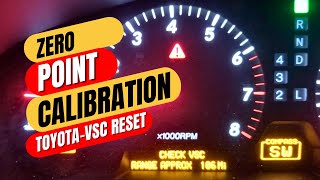
- Clearing the code with a basic scanner will not work; you must perform a 'Zero Point Calibration' using a bi-directional scan tool like Toyota Techstream.
- On 2003-2007 Toyota Land Cruisers and Lexus LX470s, this code often indicates a failed Variable Gear Ratio Steering (VGRS) actuator, a repair costing upwards of $4,000.
What Does C1567 Mean?
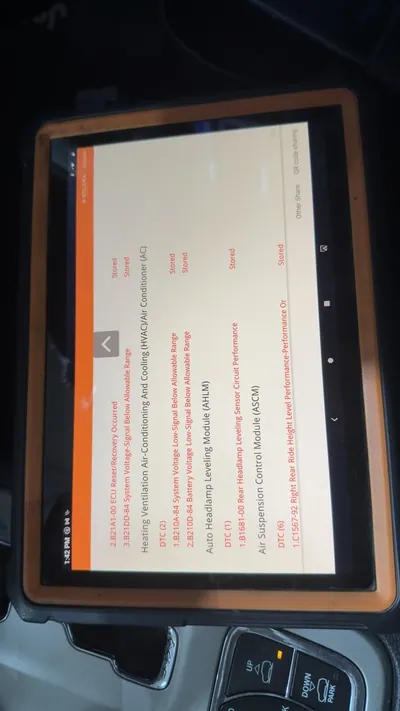
Code C1567 indicates the Power Steering Control Module (PSCM) detects a critical mismatch with another electronic control unit (ECU). This occurs when a component is the wrong part number, belongs to a different vehicle, or lost its software calibration. To prevent unpredictable steering behavior, the PSCM shuts down power assist as a non-negotiable safety measure.
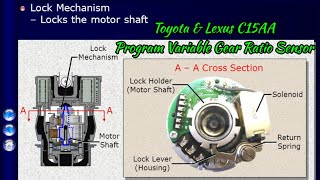
Technical definition: The SAE/ISO definition for C1567 is "Error in Matching of ECUs." The Power Steering Control Module verifies the unique identification of other critical modules (ECM, ABS, Steering Sensor). If an incompatible or uncalibrated unit is detected, C1567 is stored. On Toyota/Lexus models with Variable Gear Ratio Steering (VGRS), it also defines a "Lock Mechanism Insertion Malfunction," indicating a mechanical failure within the VGRS actuator.
Can I Drive With C1567?
Yes, But With Caution. You can physically drive, but it is strongly discouraged. The steering becomes extremely heavy and difficult to turn, making emergency maneuvers dangerous. While short-term driving won't damage other components, the physical effort required is unsafe for normal traffic.
Common Causes
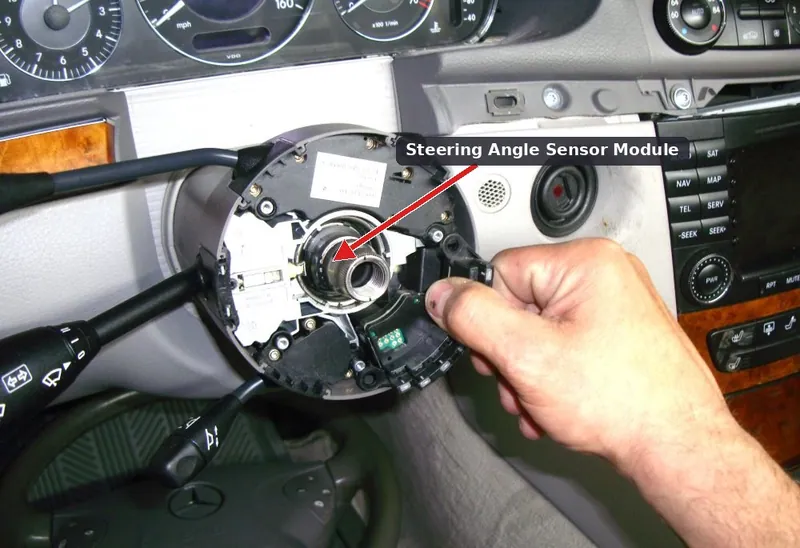
- Low Battery Voltage or Improper Jump Start (Very Common) — A weak battery, recent battery replacement, or a faulty jump-start causes a voltage drop that corrupts communication between modules. The system loses its calibration memory and requires a software reset to restore functionality.
- Wheel Alignment Not Followed by Sensor Reset (Very Common) — After a wheel alignment, the steering angle sensor must be recalibrated to establish the new straight-ahead position. Skipping this step feeds conflicting data to the Power Steering ECU 🎬 Watch: How to reset your steering angle sensor after an alignment, which flags a component error and sets C1567.
- Unprogrammed or Incorrect Replacement Part (Common) — Installing a new steering rack, steering angle sensor, or control module without electronically 'introducing' it to the vehicle's network triggers this code. This also occurs if a used ECU from another vehicle is installed without being reprogrammed to match the current vehicle's VIN.
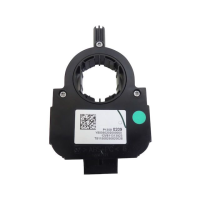
- Faulty Steering Angle Sensor (Common) — The steering angle sensor reports the precise angle and speed of the steering wheel. If it fails or sends irrational data, the Power Steering ECU rejects the input and disables the system.
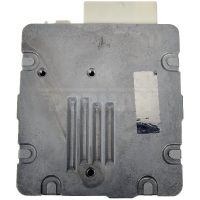
- Failed Power Steering ECU (Less Common) — The Power Steering ECU, often integrated into the steering rack assembly, can fail internally. If no parts were recently replaced and communication lines test good, the module itself requires replacement.
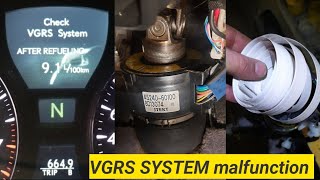
- Failed VGRS Actuator or ECU (Less Common) — On specific Toyota and Lexus models equipped with Variable Gear Ratio Steering (VGRS), a mechanical malfunction in the VGRS actuator's internal lock mechanism triggers this code. 🎬 Watch: Diagnosing VGRS system malfunctions on Lexus and Toyota models This is a known, expensive failure point.
- Wiring Harness or Connector Issues (Rare) — Corrosion, impact damage, or a loose connection in the CAN bus communication lines between the Power Steering ECU and other modules prevents data transfer, causing a mismatch error.
Symptoms

- Power Steering Warning Light & Dash Messages — The 'EPS', 'P/S', or 'Check VGRS System' light illuminates, often accompanied by dashboard messages like 'Check Power Steering System' or 'Steering Power Low'.
- Complete Loss of Power Steering — The steering wheel becomes exceptionally heavy and difficult to turn, mimicking a vehicle with the engine turned off. This is highly noticeable at low speeds.
- Multiple Warning Lights (VSC, TRAC, ABS) — Because steering data is integral to vehicle stability, warning lights for Vehicle Stability Control (VSC), Traction Control (TRAC), and Anti-lock Braking System (ABS) frequently illuminate simultaneously.
- Steering Wheel is Off-Center — On vehicles with VGRS, a system failure causes the steering wheel to sit crooked by a large margin (e.g., 45-100 degrees) even when the vehicle tracks straight.
Diagnostic Flowchart
Tap your situation to follow the diagnostic path that matches what you're seeing on this code.
Common Fixes & Costs
- ECU Programming / System Recalibration — Parts: $0, Labor: $150-$300, ~1.5 hr book time (Professional)
- Replace Steering Angle Sensor — Parts: $150-$400, Labor: $150-$300, ~1.5 hr book time (Intermediate)
- Replace Power Steering Control Module/ECU — Parts: $800-$2500, Labor: $300-$600, ~4.0 hr book time (Professional)
- Replace VGRS Actuator — Parts: $2500-$4000, Labor: $400-$800, ~4.5 hr book time (Professional)
- Repair Damaged Wiring or Connectors — Parts: $10-$50, Labor: $200-$600, ~3.0 hr book time (Advanced)
Used vs. New Parts: Buying Guide
When a used part is worth it: For purely mechanical parts like a steering shaft, used components are cost-effective. For electronic components (ECUs, Sensors), buying used is highly risky and requires specialized reprogramming tools.
Donor-vehicle mileage cap: roughly under 60000 miles for the part to have meaningful remaining life.
Donor quality checklist:
- Match the part number exactly, including sub-revisions. Parts from different trim levels (AWD vs. RWD) are incompatible.
- Avoid parts from flood-damaged vehicles due to unseen corrosion.
- Verify the donor VIN is available, as specialists require it for reprogramming.
Decision logic:
- If The faulty part is an electronic module (Power Steering ECU, VGRS ECU). → Buy new OEM. Used modules are VIN-locked and trigger C1567 unless professionally 'virginized' and reprogrammed.
- If The faulty part is a Steering Angle Sensor. → Buy new OEM. Cheap aftermarket sensors have a high failure and incompatibility rate.
- If The faulty part is the entire steering rack assembly. → Buy a new OEM or professionally remanufactured unit. Used racks carry ECU programming risks and unknown mechanical wear.
Warranty tradeoff: Used parts offer 30-90 day warranties. Remanufactured parts offer 1-year to lifetime warranties. New OEM parts carry a 1-year warranty.
Worst-case if a used part fails: $500-$1200 if a used electronic part fails or is incompatible, requiring repeat labor and a new part purchase.
What Happens If You Wait — Timeline
- Immediate (0 seconds): Code C1567 sets during the initial power-on self-test. The Power Steering warning light illuminates, and power assist is completely disabled. (MPG impact: 0%% · Added cost: $75-$200 (Potential towing fee).)
- 0-1 month: The vehicle remains drivable but requires significant physical effort to steer. This poses a major safety risk in emergencies. No direct damage to other components occurs. (MPG impact: 0%% · Added cost: $0)
- 1-6 months: Continued manual steering puts sustained high stress on mechanical steering parts (U-joints, rack gears) not designed for that load. (MPG impact: 0%% · Added cost: $200-$500 (Premature wear on steering column intermediate shaft or tie rods).)
- 6+ months: Excessive mechanical wear causes the steering rack's internal gears to develop play or fail completely, requiring a mandatory mechanical replacement. (MPG impact: 0%% · Added cost: $1500-$3000 (Cost to replace a mechanically failed steering rack assembly).)
Cost of Not Fixing It
- Immediate: Complete loss of power steering assist makes the vehicle extremely difficult to steer. This is a severe safety hazard during parking or emergency maneuvers. (Added cost: Potential accident costs or towing fees.)
- Short-Term (Weeks to Months): The physical strain on the driver is significant. While electronic systems don't suffer immediate secondary damage, driving is strenuous and unsafe. (Added cost: $0)
- Long-Term (6+ Months): Continued operation without power assist causes premature wear on mechanical steering components (rack gears, bushings) not designed for high manual forces. This turns a software issue into a mechanical rack replacement. (Added cost: $1500-$3000)
Diagnosis Steps

- Scan for All Trouble Codes
Use a professional-grade OBD-II scanner to read codes from all modules (Engine, ABS, VSC, EPS). C1567 is often a secondary code. Codes like C1582 (Assist Map Mismatch) or U0126 (Lost Communication With Steering Angle Sensor) pinpoint the exact root cause.
Tools: Professional OBD-II Scanner (Beginner) - Verify Battery and Charging System Health
Use a multimeter to check battery voltage with the car off (must be >12.4V). Start the engine and check alternator output (must be 13.5-14.5V). Unstable voltage below 12V causes modules to malfunction and drop calibration.
Tools: Multimeter (Beginner) - Attempt System Recalibration
If the battery is healthy, the system likely lost calibration. Use a bi-directional scan tool to perform a 'Torque Sensor Zero Point Calibration' and 'Assist Map Writing'. This forces the modules to synchronize and is the most common fix.
Tools: Professional OBD-II Scanner with Bi-Directional Controls (Advanced) - Check Recent Repair and Service History
Determine if any parts were replaced recently (battery, steering components, electronic modules) or if a wheel alignment was performed. C1567 overwhelmingly appears immediately following uncalibrated service work.
Tools: Service Records (Beginner) - Verify Part Number Compatibility
If a part was recently replaced, visually inspect it. Compare the part number on the component to the OEM part number specified for the vehicle's exact VIN. An incorrect part always causes this code.
Tools: Basic Hand Tools, Flashlight (Intermediate) - Check Torque Sensor Live Data
Using a scan tool, monitor the Power Steering ECU's torque sensor PIDs. With the steering wheel centered, Torque Sensor 1 and 2 must read 2.3V to 2.7V. Turning the wheel should cause one voltage to increase and the other to decrease. Stuck values indicate a failed sensor.
Tools: Professional OBD-II Scanner with Live Data (Advanced) - Perform a CAN Bus Resistance Check
Disconnect the 12V battery. Measure resistance between OBD-II Pin 6 (CAN High) and Pin 14 (CAN Low). A healthy network reads 60 Ohms. 120 Ohms indicates an open circuit; 0 Ohms indicates a short.
Tools: Multimeter (Advanced) - Perform a CAN Bus Voltage Check
Reconnect the battery and turn the ignition ON. Measure DC voltage between Pin 6 and ground (expect ~2.6V), then Pin 14 and ground (expect ~2.4V). Significant deviations point to a module pulling the network down or a wiring short.
Tools: Multimeter (Advanced) - Isolate and Replace the Faulty Component
If calibration fails and wiring is intact, a component failed internally. Replace the module indicated by secondary codes (e.g., Steering Angle Sensor for U0126). If C1567 is the only code, replace the Power Steering ECU. Programming is mandatory after replacement.
Tools: Professional Tools, Service Manual (Professional)
When This Code Triggers (Freeze-Frame Conditions)
- Vehicle Speed: 0 mph (The code sets during the initial power-on self-test (POST) when the ignition is turned on, before the vehicle moves.)
- Engine Status: Key On, Engine Off (KOEO) (The Power Steering Control Module checks for communication and compatibility with other ECUs immediately upon power-up.)
- Battery Voltage: 10.5V - 15V (The fault triggers if voltage drops significantly during startup, but the code logs under normal operating voltage.)
Related Codes
- C1582 — Indicates an 'Assist Map Number Mismatch'. This confirms the software profile inside the Power Steering ECU is incorrect for the vehicle. The fix is always programming the correct map.
- C1515 — Indicates 'Torque Sensor Zero Point Adjustment Undone'. The system lost its straight-ahead calibration, causing it to distrust the sensor and flag a C1567 mismatch. Calibrating the sensor clears both codes.
- U0126 — Indicates 'Lost Communication With Steering Angle Sensor Module'. If present with C1567, the steering angle sensor, its connector, or its dedicated wiring is the definitive root cause.
- U-series codes (e.g., U0100, U0129) — Indicates a communication failure on the CAN bus network. Multiple U-codes point to a broader network problem, such as a wiring short or major ECU failure, rather than a single component mismatch.
Climate & Environmental Factors
- Cold Weather: Extreme cold causes weak batteries to provide insufficient voltage on startup, triggering communication errors between modules and dropping system calibration.
- High Humidity / Water Intrusion: Moisture and road salt cause corrosion on ECU connectors and pins. This increases resistance and disrupts sensitive CAN bus communication signals, leading to mismatch codes.
How to Talk to a Mechanic About This Code
Say this: "I have a C1567 code and no power steering. It happened right after [a battery change / an alignment]. I'd like to book a diagnostic to attempt a zero-point calibration and check for communication codes before replacing parts."
Frames the issue as a likely calibration problem, directing the technician to start with the simplest, cheapest solution instead of jumping to expensive hardware replacements.
Avoid saying:
- 'My power steering is broken, I think I need a new rack.'
- 'My steering warning light is on, can you just fix it?'
- 'Just do whatever it takes to get the light off.'
Questions to ask before authorizing the repair:
- Did you attempt a 'Zero Point Calibration' and 'Assist Map Writing' with a scan tool first? What was the result?
- If recommending a part replacement, did you verify the part number against my vehicle's VIN?
- Were there any 'U' codes or a C1582 present alongside the C1567?
Where to Take It: Dealer vs Independent vs Chain
- Dealer:
A reliable choice. They guarantee access to manufacturer-specific software (Techstream). For complex cases, especially with VGRS, they are the best bet.
Best for: Vehicles under warranty., Complex VGRS-related failures on Lexus/Toyota 4x4s., When an independent shop fails to fix the issue.
Downsides: Highest labor rates., May default to replacing an entire assembly when only programming is needed. (Typical cost: +50% vs. baseline) - Independent Shop:
The best value option IF you vet the shop. Ask directly: 'Do you have a scan tool that can perform a zero-point calibration and write an assist map for my vehicle?'
Best for: Post-alignment or post-battery change calibration issues., Out-of-warranty vehicles with a trusted mechanic.
Downsides: MUST specialize in your vehicle brand., General mechanics lack the expensive bi-directional scan tools required for calibration. (Typical cost: +0% vs. baseline) - Chain Shop:
AVOID. They are not equipped to properly diagnose or repair a C1567 code. Taking your vehicle here wastes time and money.
Best for: Tire sales and wheel alignments (ensure they perform the calibration).
Downsides: Lack required diagnostic tools for calibration., High likelihood of misdiagnosis, leading to unnecessary part replacements. (Typical cost: -10% vs. baseline)
When to Walk Away From the Repair
If the estimated repair cost exceeds 50% of the car's private-party value, seriously consider selling or trading it in.
- Car worth $15000, fix is $300: Fix it. This is a simple calibration cost and a tiny fraction of the car's value.
- Car worth $8000, fix is $2500: Borderline. The repair is 30% of the car's value. Get a second opinion to confirm the steering rack is truly the issue.
- Car worth $10000, fix is $5000: Walk away. The repair (likely a VGRS actuator) is half the car's value. This is a classic 'money pit' scenario.
What Scan Tool You Need for This Code

Minimum: A scanner with bi-directional control capable of performing manufacturer-specific steering system calibrations.
A basic $20-$50 code reader only reads the code. It CANNOT perform the 'Zero Point Calibration' or 'Assist Map Writing' required to fix the problem.
Budget: Toyota Mini-VCI Cable with Techstream Software (~$35) — A clone of the dealer tool providing full access to Toyota/Lexus-specific functions, including mandatory calibrations. Requires a dedicated Windows laptop and technical setup.
Mid-range: Foxwell NT530 (with specific manufacturer software) (~$199) — A handheld tool offering bi-directional controls, including Steering Angle Sensor calibration. Easier to use than Techstream and great for serious DIYers.
Professional: Autel MaxiCOM MK808S (~$450) — Provides professional-grade, bi-directional control for all vehicle systems. Easily performs zero-point calibrations and resets on a wide variety of makes and models.
Rent vs buy: You cannot rent a tool with calibration capability from an auto parts store. For a one-time fix, pay a shop for 1 hour of labor. For serious DIYers, buying a mid-range tool is a worthwhile investment.
How to Clear the Code After You Fix It
- Perform required calibrations (Torque Sensor Zero Point Calibration, Assist Map Writing) with a professional scan tool.
- Use the scan tool to clear the C1567 code from the Power Steering ECU.
- Turn the ignition off, wait 30 seconds, then start the vehicle to confirm the power steering warning light is off.
Drive cycle (~10 minutes): After a successful repair and code clear, drive straight for at least 10 seconds at a speed above 25 mph to allow the steering angle sensor to finalize self-calibration.
Readiness monitors affected: This is a chassis code ('C') and does not affect emissions readiness monitors.
Watch out for:
- Clearing the code with a basic OBD-II reader fails; the code returns instantly because it is a hard fault detected on startup.
- Attempting a 'paper clip' reset clears related codes like C1515 but fails to fix the C1567 mismatch if software is incorrect.
- Failing to perform mandatory calibration steps after replacing a part guarantees the code persists.
Will This Fail Emissions / State Inspection?
Yes — this code typically fails an OBD-II emissions inspection.
- California: An illuminated power steering warning light fails the safety portion of the inspection. If it triggers the main Check Engine Light, it is an automatic OBD-II failure.
- New York: The NYS inspection explicitly checks power steering function. An illuminated warning light or non-functional power steering guarantees a safety inspection failure.
- Texas: The steering system is a required inspection point. A malfunctioning power steering system indicated by a warning light results in a safety inspection failure.
Most Commonly Affected Vehicles
- Toyota RAV4 (2019-2025) — Gasoline models check for a match with the ECM and Skid Control ECU, while Hybrid models check the Hybrid Vehicle Control ECU. Part compatibility is highly specific.
- Toyota Camry (2018-2024) — Commonly occurs after part replacement. Often appears with C1582 (Assist Map Number Mismatch), confirming a software programming issue.
- Lexus LS460 (2007-2017) — Prone to this code due to mismatches with the steering angle sensor or VGRS ECU. A weak battery is a frequent trigger for EPS issues on this chassis.
- Lexus GS Series (GS300, GS350, GS460) (2006-2011) — The code is often defined as 'Lost Communication between EPS ECU and VGRS ECU', pointing to a local CAN bus breakdown between the two modules.
- Toyota Land Cruiser / Lexus LX470 (2003-2007) — Defined as 'Lock Mechanism Insertion Malfunction' within the VGRS actuator. This is a known, extremely expensive failure point.
- Toyota C-HR (2018-2024) — A simple battery replacement triggers a cascade of dashboard warning lights including 'Abnormal Voltage' and 'Steering Power Low', requiring a system recalibration.
Manufacturer-Specific Notes
- Toyota/Lexus: This code is overwhelmingly found on Toyota and Lexus vehicles. The specific modules the Power Steering ECU checks for a match vary between gasoline and hybrid models of the exact same car.
- Toyota/Lexus (with VGRS): On models with Variable Gear Ratio Steering (VGRS), this code is triggered by a mechanical failure inside the VGRS actuator. A popular enthusiast fix is replacing the entire VGRS steering shaft with a standard, non-VGRS shaft.
- General: On virtually any modern car with electric power steering, a weak or recently replaced battery causes temporary steering faults. A simple recalibration resolves the issue without parts replacement.
Real Owner Stories
2020 Toyota 4Runner after lift kit and alignment
Immediately after installing a lift kit and getting an alignment, the VSC and Pre-Collision lights illuminated with codes C120A and P1578.
What they tried:
- Clearing the codes with a basic scanner, but they returned instantly.
Outcome: The owner purchased a Techstream cable and performed a 'Yaw Rate and Zero Point Calibration'. A 10-second drive above 25 mph cleared all lights.
Lesson: After suspension or alignment work on a modern Toyota, a Zero Point Calibration is mandatory. It is a software fix achievable with affordable tools like Techstream.
2007 Lexus LS460 with intermittent VGRS error
The VGRS light illuminated and the steering wheel went off-center after hitting a pothole. The dealer diagnosed a damaged internal actuator and quoted a full steering rack replacement.
What they tried:
- A wheel alignment temporarily helped but didn't solve the root cause.
- An independent mechanic could not calibrate the system.
Outcome: The owner insisted the dealer investigate further. They found a corrupt script in the Auto-Parking module. A software re-boot fixed the issue completely, avoiding a multi-thousand dollar repair.
Lesson: A VGRS error code pointing to rack replacement is sometimes a software glitch in a related system. Insist on a full diagnostic of all control modules before approving hardware replacement.
2006 Lexus LX470 with VGRS and VSC lights on
At 121,000 miles, the VGRS and VSC lights illuminated. The dealer diagnosed a catastrophic failure of the VGRS actuator and quoted $3,800.
What they tried:
- The owner contacted Lexus Customer Care directly, referencing the high cost of the 'rare' failure.
Outcome: Lexus and the dealership agreed to share the cost, with the owner paying only $680 in labor. When the ECU failed immediately after, they covered the new ECU as well.
Lesson: For known, expensive failures like the VGRS actuator, contact the manufacturer's customer care line. Well-maintained vehicles often receive goodwill assistance.
How to Prevent This Code From Triggering
- Test battery health during every oil change (Every 6 months / 5,000 miles) — Low voltage during startup is a primary cause of module communication errors. Proactive testing identifies weak batteries before they trigger calibration loss.
- Insist on Steering Angle Sensor calibration after every wheel alignment (After any alignment) — Failing to reset the sensor to the new straight-ahead position creates a data conflict, forcing a shutdown of the power steering system.
- Use a battery maintainer if the vehicle is stored for long periods (For storage longer than 2-3 weeks) — Parasitic draw drains batteries over time. A maintainer keeps voltage stable, preventing memory loss and communication faults upon startup.
- Follow the correct jump-starting procedure (When jump-starting) — Incorrect connections cause voltage spikes that damage sensitive electronics. Always connect the final ground clamp to a chassis ground to prevent sparks near the battery.
- Keep ECU connectors and wiring harnesses clean and dry (Annual inspection) — Corrosion increases resistance and disrupts sensitive voltage signals on the CAN bus network, leading to communication errors.
Frequently Asked Questions
I just replaced my battery and now this code is on. What do I do?
This is common. The voltage interruption caused the modules to lose synchronization. Ensure the battery is fully charged, then have a shop perform a system recalibration using a professional scan tool.
Can I just clear the code to fix the problem?
No. C1567 is a hard fault checked upon startup. The code returns instantly and power steering remains disabled until the underlying incompatibility is resolved through programming or part replacement.
My mechanic says I need a new steering rack, but another shop says it just needs programming. Who is right?
Be cautious, as C1567 usually indicates a software calibration issue, not a hardware failure. If the code appeared after a repair, alignment, or battery change, programming is the solution. Always attempt a scan tool calibration before replacing the expensive steering rack.
Can I install a used Power Steering ECU from a junkyard?
No. A used ECU is VIN-locked to the donor car and will instantly trigger code C1567. Reprogramming a used module requires specialized tools and knowledge beyond standard DIY capabilities.
What is the difference between C1567 and C1515?
C1515 means the steering angle sensor lost its straight-ahead calibration, while C1567 is a general mismatch error. A lost calibration (C1515) causes the system to distrust the sensor, triggering C1567. Fixing C1515 via a scan tool calibration almost always clears C1567.
Can a bad wheel alignment cause code C1567?
Yes. An alignment changes the steering's physical center point. If the technician skips the electronic 'zero point calibration' afterward, the sensor data conflicts with the vehicle's direction, triggering C1567.
My mechanic replaced the steering rack, but the code is still there. What happened?
Either the new steering rack was not programmed and calibrated to your specific VIN, or the rack was never the problem. The actual fault is likely an uncalibrated steering angle sensor or a wiring issue.
Key Takeaways
- Code C1567 disables your power steering because the Power Steering Control Module (PSCM) detects an incompatible or uncalibrated component.
- Over 80% of C1567 codes trigger after a battery replacement, wheel alignment, or steering part installation that wasn't followed by a mandatory software recalibration.
- Clearing the code with a basic scanner will not work; you must perform a 'Zero Point Calibration' using a bi-directional scan tool like Toyota Techstream.
- On 2003-2007 Toyota Land Cruisers and Lexus LX470s, this code often indicates a failed Variable Gear Ratio Steering (VGRS) actuator, a repair costing upwards of $4,000.
Helpful Videos

Shop the Parts Behind C1567
Below are the parts most often responsible for code C1567, ranked by how frequently each one is the actual culprit (per the diagnosis above). Tap any to see what we have for your vehicle.

The information in this article is provided for general reference and educational purposes only. Vehicle specifications, procedures, and part compatibility can vary by production date, trim level, and region. Always consult your vehicle's factory service manual and verify part numbers before purchasing or performing repairs. Safety-critical components such as airbags, seat belts, and braking systems should be installed by a qualified professional.
- 🧭 Diagnostic Flowchart
- 🎬 Helpful Videos
- 🛍️ Shop This Part
- What Does C1567 Mean?
- Can I Drive With C1567?
- Common Causes
- Symptoms
- Common Fixes & Costs
- Used vs. New Parts: Buying Guide
- What Happens If You Wait — Timeline
- Cost of Not Fixing It
- Diagnosis Steps
- When This Code Triggers (Freeze-Frame Conditions)
- Related Codes
- Climate & Environmental Factors
- How to Talk to a Mechanic About This Code
- Where to Take It: Dealer vs Independent vs Chain
- When to Walk Away From the Repair
- What Scan Tool You Need for This Code
- How to Clear the Code After You Fix It
- Will This Fail Emissions / State Inspection?
- Most Commonly Affected Vehicles
- Manufacturer-Specific Notes
- Real Owner Stories
- 2020 Toyota 4Runner after lift kit and alignment
- 2007 Lexus LS460 with intermittent VGRS error
- 2006 Lexus LX470 with VGRS and VSC lights on
- How to Prevent This Code From Triggering
- Frequently Asked Questions
- I just replaced my battery and now this code is on. What do I do?
- Can I just clear the code to fix the problem?
- My mechanic says I need a new steering rack, but another shop says it just needs programming. Who is right?
- Can I install a used Power Steering ECU from a junkyard?
- What is the difference between C1567 and C1515?
- Can a bad wheel alignment cause code C1567?
- My mechanic replaced the steering rack, but the code is still there. What happened?
- Key Takeaways
- 🎟️ Get 5% Off