

OBD-II Code C1593: Steering Torque Sensor Circuit Fault
What C1593 means, why it triggers, and how to fix it
- Code C1593 disables power steering instantly, requiring a tow to prevent a low-speed crash.
- On 2021+ Jeep and Wagoneer models, a $150-$300 dealer software update fixes this code 80% of the time.
- If software isn't the issue, expect a $2,400 to $4,000 repair bill to replace the entire steering rack, as the torque sensor is not sold separately.
- DIY repairs are impossible for C1593 because post-installation electronic calibration requires a $1,000+ bidirectional scan tool.
What Does C1593 Mean?
Code C1593 means your vehicle's computer detects a critical fault in the steering torque sensor circuit. This sensor, located inside the electric power steering (EPS) system, measures how hard you are turning the steering wheel and tells the EPS motor how much assist to provide. When the system receives an incorrect, erratic, or missing signal from this sensor, it shuts down power assist to prevent unpredictable steering behavior.
Technical definition: The SAE/OBD-II definition for C1593 is 'Steering Torque Sensor Circuit'. The Power Steering Control Module (PSCM) sets this code when it detects an implausible signal or open/short circuit from the driver's steering input torque sensor. On Toyota/Lexus vehicles, this code specifically indicates an 'Actuator Standard Position Error' in the Variable Gear Ratio Steering (VGRS) system. On Mercedes-Benz, it often includes a subtype (e.g., C159362) pointing to a definitive internal sensor failure.
Can I Drive With C1593?
No — Do Not Drive. It is unsafe to drive with this code. The power steering fails instantly and without warning, making the vehicle extremely heavy and difficult to steer. This sudden loss of assist requires immediate, significant physical effort to control the vehicle, drastically increasing the risk of a crash.
Common Causes
- Software Glitch in the Electric Power Steering (EPS) Module (Very Common) — On modern Stellantis vehicles (Jeep Grand Cherokee, Wagoneer), a software bug is the primary trigger. Manufacturers have issued multiple Technical Service Bulletins (TSBs) requiring a dealer-installed software update to resolve the false sensor readings.
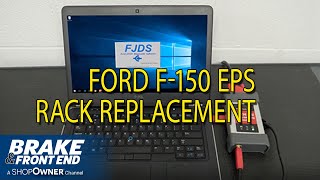
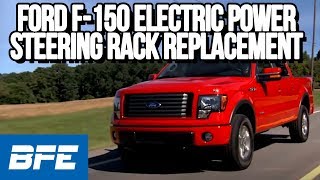
- Internal Failure of the Steering Torque Sensor (Requires Rack/Column Replacement) (Common) — The sensor fails due to heat, vibration, or internal wear. Because the torque sensor is permanently integrated into the steering rack or column assembly on modern vehicles, it cannot be replaced individually. The entire steering assembly must be replaced. 🎬 Watch this walkthrough of an electric power steering rack replacement
- Water Intrusion into Electrical Connectors (Less Common) — On 2017-2018 Jeep Compass models, TSB 19-002-17 documents water leaking into the steering column's main connector. This causes corrosion and short circuits, triggering code C1593-49 and requiring a full column replacement.
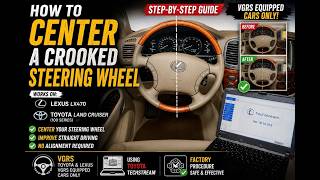
- Improper Service or Alignment Procedures (Less Common) — On Toyota/Lexus VGRS systems, disconnecting steering components or performing an alignment without recalibrating the system using Toyota Techstream causes the module to lose its standard position, instantly setting a C1593 fault.
- Damaged Wiring, Connectors, or Poor Ground (Rare) — The main C1/C2 connectors to the steering rack can loosen, or road debris can damage the harness. Additionally, manufacturing defects like excess glue on the EPS module grounding eyelet create intermittent voltage drops that trigger this code.
- Weak or Failing 12V Battery (Very Rare) — Electric power steering requires massive, stable amperage. A weak battery or failing alternator causes voltage drops during high-demand steering maneuvers, forcing the EPS module to shut down and log sensor faults.
Symptoms
- Sudden or Intermittent Loss of Power Steering — The steering wheel instantly becomes incredibly heavy, especially at low speeds. This often starts as an intermittent issue that resolves after restarting the car, before failing permanently.
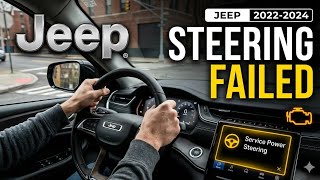
- Power Steering Warning Light and Dashboard Message — A yellow or red steering wheel icon illuminates on the instrument cluster, accompanied by a 'Service Electric Power Steering' message 🎬 Watch: How to fix sudden power steering loss on Jeeps on the information screen.
- Humming or Grinding Noise — A low-frequency humming or grinding sound emits from the steering rack when turning the wheel at low speeds, particularly in high ambient temperatures.
- Multiple Warning Lights (Electrical Cascade) — On vehicles like the Jeep Wagoneer, the C1593 code triggers a cascade of electrical failures, disabling the ABS, traction control, and advanced driver assistance systems (ADAS).
Diagnostic Flowchart
Tap your situation to follow the diagnostic path that matches what you're seeing on this code.
Common Fixes & Costs
- Reprogram (Flash) the EPS Control Module — Parts: $0, Labor: $150-$300, ~1.5 hr book time (Professional)
- Replace Electric Power Steering Rack Assembly — Parts: $1600-$2700, Labor: $800-$1300, ~8.5 hr book time (Professional)
- Replace Steering Column Assembly — Parts: $700-$1800, Labor: $300-$700, ~3.5 hr book time (Professional)
- Repair Damaged Wiring or Connectors — Parts: $10-$100, Labor: $150-$500, ~2.5 hr book time (Intermediate)
Used vs. New Parts: Buying Guide
When a used part is worth it: A remanufactured or used steering rack saves 30-50% on parts. This is ideal for out-of-warranty vehicles over 100,000 miles where budget is the primary concern.
Donor-vehicle mileage cap: roughly under 80000 miles for the part to have meaningful remaining life.
Donor quality checklist:
- Verify the exact OEM part number matches (e.g., Wagoneer Short vs. Long Wheelbase use different racks).
- Purchase from a remanufacturer offering at least a 6-month warranty.
- Inspect electrical connectors for corrosion and tie-rod boots for tears.
Decision logic:
- If The known cause is a software glitch (common on Jeeps) → Do not buy any parts. Pay for the dealer software update.
- If Vehicle is under 100K miles and you plan to keep it long-term → Buy a new OEM part. The longevity and 1-2 year warranty justify the cost.
- If Vehicle is over 150K miles or budget is tight → Purchase a quality remanufactured rack from a brand like Cardone.
Warranty tradeoff: Used parts offer 30-90 days. Remanufactured parts offer 6-12 months. New OEM parts carry 1-2 years and cover labor if installed by a dealer.
Worst-case if a used part fails: $800-$1300 (You will pay the massive labor cost a second time if a cheap used part fails prematurely).
What Happens If You Wait — Timeline
- 0-1 month: Intermittent failure. Power steering fails to initialize on startup but works after restarting the car. The C1593 code is stored in history. (MPG impact: 0%% · Added cost: $0)
- 1-3 months: Failures become frequent. The warning light stays on for entire drives. Steering feels 'notchy' or inconsistent before failing completely mid-trip. (MPG impact: 0%% · Added cost: $150-$250 (Diagnostic fee and potential tow).)
- 3+ months: Permanent failure. Power steering assist is completely gone. The steering is extremely heavy at all times, making the vehicle unsafe to drive. (MPG impact: 0%% · Added cost: $2400-$4000 (Full cost of steering rack replacement).)
- Ignored Failure: Catastrophic event. The driver cannot execute an emergency maneuver at low speed due to the extreme physical effort required, resulting in a crash. (MPG impact: 0%% · Added cost: $5,000 - $50,000+ (Accident liability, vehicle totals, injuries).)
Diagnosis Steps
- Scan for All Trouble Codes
Use a professional OBD-II scanner to read chassis ('C') and network ('U') codes. Confirm C1593 is present. Look for subtypes like C1593-49 (Internal Electronic Failure) or companion codes like C2217 (EPS Module Internal) which confirm hardware failure.
Tools: Professional OBD-II Scanner (Beginner) - Check for Technical Service Bulletins (TSBs)
Before touching any hardware, check the VIN for manufacturer TSBs. For Jeep/Wagoneer, look for TSBs 08-005-23, 08-035-22, or 08-146-23, which dictate a software update as the mandatory first fix.
Tools: Phone, online TSB database (Beginner) - Check Battery and Charging System Voltage
Test the 12V battery (must be >12.6V resting) and alternator output (13.5V-14.5V running). A perfectly stable power supply is mandatory for EPS operation and is a strict prerequisite before attempting any software flashes.
Tools: Multimeter, Battery Load Tester (Beginner) - PRO TIP: Analyze Live Sensor Data (Torque Value)
View the live data PID for 'Steering Torque' (measured in Nm). With wheels straight, it should read 0.0 Nm. As you turn the wheel, it should smoothly scale between +/- 4.0 to 8.0 Nm. A reading that is frozen, erratic, or unresponsive confirms a dead sensor.
Tools: Professional Scan Tool (Advanced) - Inspect Wiring, Connectors, and Grounds
Inspect the main C1/C2 connectors at the steering rack for corrosion or backed-out pins. On a Jeep Compass, check the connector at the base of the steering column for water damage. Verify the main EPS ground stud is tight and free of paint/glue.
Tools: Flashlight, basic hand tools (Intermediate) - Attempt Software Flash (If Applicable)
If a TSB exists, a dealer must flash the EPS module. Connect a dedicated automotive power supply to hold voltage strictly between 13.2V and 13.5V. Dropping below 13.2V during the flash permanently destroys the module. Perform a mandatory 'EPS reset' afterward.
Tools: Manufacturer scan tool (wiTECH), Automotive Power Supply (Professional) - PRO TIP: Verify Power and Ground at the Module
If live data is absent, back-probe the EPS module connector. Verify it receives 12.6V+ and has a ground voltage drop of less than 0.1V. This proves the vehicle is sending power, isolating the fault to the module itself.
Tools: Multimeter, wiring diagram (Advanced) - Confirm Internal Rack/Column Failure
If software updates fail (or don't apply), wiring is intact, and live data shows a dead sensor, the internal torque sensor has failed. The entire steering rack or column assembly requires replacement.
Tools: Professional Scan Tool (Advanced)
When This Code Triggers (Freeze-Frame Conditions)
- Vehicle Speed: 0-70 mph (Triggers at any speed, though symptoms are most violently felt during low-speed parking maneuvers.)
- Engine RPM: 700-3000 RPM (Engine running; EPS system is active.)
- Steering Wheel Angle: Any (Fault logs the exact millisecond the driver applies torque to the wheel and the sensor fails to report it.)
- System Voltage: 13.0-14.8V (Normal charging voltage. If voltage drops below 12V here, suspect a power supply issue, not a sensor issue.)
Related Codes
- C2217 — Means 'Electric Power Steering Module Internal'. If a software flash doesn't clear C1593 and C2217, the module confirms it is permanently damaged, requiring full rack/column replacement.
- C1592 — Means 'Electronic Power Steering Motor Circuit'. Often found alongside C1593. If either the motor (C1592) or sensor (C1593) fails, the integrated rack assembly must be replaced.
- U0131 — Means 'Lost Communication with Power Steering Control Module'. C1593 means the module is online but unhappy; U0131 means it is completely dead. Diagnose U0131 first by checking power/ground.
- C0051-64 — Means 'Steering Angle Sensor - Signal Plausibility Failure'. The PSCM flags this when the torque sensor (C1593) provides irrational data that conflicts with the steering angle sensor.
Climate & Environmental Factors
- Humidity and Water Intrusion: On 2017-2018 Jeep Compass models, heavy rain or deep puddles force water into the steering column connector, causing corrosion and triggering C1593-49.
- High Ambient Temperature: Extreme heat stresses electronic components, exacerbating underlying software glitches or hardware faults, and increasing the likelihood of the EPS module shutting down.
How to Talk to a Mechanic About This Code
Say this: "I have a C1593 code on my [Vehicle Make/Model] and a 'Service Power Steering' light. Based on my research, this is often a software issue. Could you please start by checking my VIN for any applicable TSBs or software updates for the Power Steering Control Module before diagnosing hardware?"
This directs the shop to the cheapest fix first (a software flash), preventing them from immediately quoting a $3,000 steering rack replacement.
Avoid saying:
- 'My steering feels heavy, can you fix it?'
- 'The power steering light is on, just do whatever it takes.'
- 'I think I need a new steering rack.'
Questions to ask before authorizing the repair:
- Did you check for TSBs, and was a software update applicable and attempted?
- If the software flash didn't work, what specific data confirmed the steering rack has failed internally?
- Is the replacement part new OEM, remanufactured, or used?
- Does the estimate include the post-repair electronic calibration of the new part?
- What is the warranty on both the parts and the labor?
Where to Take It: Dealer vs Independent vs Chain
- Dealer:
Best for: Vehicles under warranty., Initial diagnosis and software updates (flashing), as they have proprietary tools like wiTECH., Toyota/Lexus VGRS calibration issues.
Downsides: Highest labor rates, often 1.5-2x more than independent shops., Defaults to expensive full assembly replacement if out of warranty. (Typical cost: +50% vs. baseline) - Independent Shop:
Go to the dealer FIRST for diagnosis and a software update. If you need a new steering rack out of warranty, get a quote from a trusted independent shop to save on labor.
Best for: Out-of-warranty hardware replacement (steering rack/column) to save on labor costs., Basic electrical diagnosis like checking grounds or connectors.
Downsides: Must verify they have advanced diagnostic tools to perform post-repair calibrations., May lack access to manufacturer TSBs or software flashing equipment. (Typical cost: +0% vs. baseline) - Chain Shop:
AVOID. This repair is too complex and safety-critical. They cannot perform the necessary software flashing or post-replacement calibration.
Best for: Simple jobs like battery replacement or tire alignment.
Downsides: Lack specialized diagnostic tools and expertise for complex electronic steering issues., High risk of misdiagnosis. (Typical cost: -10% vs. baseline)
When to Walk Away From the Repair
If the estimated repair cost for a steering rack exceeds 50% of the car's current private-party value, seriously consider selling the car as-is or trading it in.
- Car worth $7000, fix is $3800: Walk away. The repair cost is over 50% of the car's value.
- Car worth $25000, fix is $4000: Fix it. The repair cost is significant but well below the 50% threshold.
- Car worth $4500, fix is $300: Fix it. If the issue is just a software flash, the low cost makes it an easy decision.
What Scan Tool You Need for This Code
Minimum: A scanner that reads manufacturer-specific Chassis ('C') codes and displays live data streams for the Power Steering Control Module.
A basic $20 code reader cannot see 'C' codes like C1593. It also cannot display live 'Steering Torque' data, which is essential for confirming sensor failure.
Budget: BlueDriver Pro Scan Tool (~$100) — Reads chassis codes and displays live data PIDs for steering torque. Sufficient for a DIYer to confirm the code before visiting a shop.
Mid-range: Foxwell NT510 Elite (~$200) — Offers deeper diagnostics and can perform some service functions like Steering Angle Sensor (SAS) calibration after a repair.
Professional: Autel MaxiCOM MK808S (~$500) — Provides bidirectional control, performs advanced calibrations like 'EPS Reset', and has OEM-level diagnostic depth.
Rent vs buy: Buy. Standard auto parts store loaner tools are basic code readers that cannot diagnose this specific 'C' code or perform calibrations.
Will This Fail Emissions / State Inspection?
Yes — this code typically fails an OBD-II emissions inspection.
- California: An illuminated power steering warning light causes an automatic failure of the visual/safety inspection. Clearing the code resets emissions readiness monitors, which must complete to pass the OBD-II test.
- New York: Any illuminated dashboard warning light, including the EPS light, results in an automatic safety inspection failure.
- Texas: The active warning light fails the safety portion of the inspection. Note: As of 2025, annual safety inspections are eliminated for non-commercial vehicles, but emissions tests remain in 17 counties.
Most Commonly Affected Vehicles
- Jeep Grand Cherokee / Grand Cherokee L (2021-2025) — Extremely prone to software glitches. TSBs 08-005-23 and 08-035-22 resolve this with a software update.
- Jeep Wagoneer / Grand Wagoneer (2022-2025) — Shares software issues with the Grand Cherokee. TSB 08-146-23 addresses the fault. Ensure correct part numbers for Short vs. Long Wheelbase if replacing the rack.
- Jeep Compass (2017-2018) — TSB 19-002-17 points to water intrusion into the steering column connector, requiring column replacement. Applies to vehicles built Aug-Sept 2017.
- Mercedes-Benz B-Class (B250) (2014-2019) — Code C159362 indicates a failed, non-serviceable torque sensor. Requires an expensive steering rack replacement ($3,000+).
- Toyota / Lexus Land Cruiser / LS460 / LX570 (2007-2021) — C1593 indicates an 'Actuator Standard Position' error in the VGRS system. This is a calibration issue requiring Techstream, not a hardware failure.
- Ford F-150 (2011-2018) — C1593 appears as part of a general Electronic Power Assist Steering (EPAS) failure, often requiring steering rack replacement.
Manufacturer-Specific Notes
- Jeep / Stellantis: The cause is almost always a software glitch. A dealer must perform a software update (e.g., TSB 08-005-23) before replacing parts. The flash requires strict voltage control (13.2V-13.5V) and a mandatory 'EPS reset'.
- Mercedes-Benz: C1593 indicates a definitive torque sensor malfunction (often subtype C159362). The sensor is not sold separately, forcing a $3,000+ steering rack replacement.
- Toyota / Lexus: Uses C1593 for an 'Actuator Standard Position' error in VGRS systems. This is a calibration error, not a broken sensor. Diagnosis requires Techstream calibration before replacing parts.
Real Owner Stories
2022 Jeep Wagoneer at 40K miles
While driving slowly, the 'Service power steering' warning appeared, steering became extremely heavy, and the infotainment system began glitching.
Outcome: The dealer applied a software update to the EPS module per TSB 08-146-23. This permanently resolved the issue without replacing any hardware.
Lesson: On modern Jeeps, C1593 is almost always a software bug. Demand the dealer check for TSBs before authorizing a $3,000 rack replacement.
2021 Jeep Grand Cherokee L at 60K miles
Sudden, complete loss of power steering accompanied by the dashboard warning message.
Outcome: The software update failed to clear the code. The dealer diagnosed an internal hardware failure and replaced the entire steering rack and pinion assembly.
Lesson: Software updates are not a guaranteed fix. If the code persists after a reflash, the internal torque sensor is dead, requiring a full rack replacement.
2007 Lexus LS460 with VGRS
VGRS and VSC warning lights illuminated after an alignment shop removed the steering wheel. The steering wheel remained off-center.
Outcome: The issue was a loss of the system's standard position due to improper alignment procedures. A specialized shop used Toyota Techstream to perform a zero-point calibration, fixing the issue without parts.
Lesson: On Toyota/Lexus VGRS systems, C1593 is a calibration error. Do not replace parts; find a shop equipped with Techstream to recalibrate the system.
2018 Jeep Compass with C1593-49
Total loss of power steering. Scan tool revealed code C1593-49 (Internal Electronic Failure).
Outcome: The shop found water intrusion and corrosion in the steering column's main electrical connector per TSB 19-002-17. The entire steering column assembly was replaced.
Lesson: Subtype codes are critical. C1593-49 on a 2017-2018 Compass guarantees water damage in the column connector, requiring a hardware replacement, not a software flash.
How to Prevent This Code From Triggering
- Keep Battery & Charging System Healthy (Annually) — EPS is a high-draw system. Unstable voltage from a weak battery stresses the EPS control module, causing software glitches or premature failure.
- Avoid Driving Through Deep Puddles (As needed) — Submerging the front end forces water into sensitive electrical connectors. On the Jeep Compass, this directly causes C1593.
- Ask for Software Updates During Service (Every 1-2 years) — Manufacturers frequently update EPS software to patch bugs that trigger false codes. Requesting updates during routine dealer visits prevents sudden failures.
- Ensure Proper Wheel Alignment (Every 1-2 years or after hitting a pothole) — Poor alignment forces constant steering corrections, overworking the EPS motor. It also ensures the Steering Angle Sensor remains calibrated, which is critical for EPS function.
Frequently Asked Questions
Can I just replace the steering torque sensor?
No. On modern vehicles, the torque sensor is permanently integrated into the steering rack or column assembly. You must replace the entire assembly.
Is it safe to drive my car to the shop with code C1593?
No. Power steering can fail instantly, making the car incredibly heavy and difficult to steer. Have the vehicle towed to prevent a crash.
Why is the repair so expensive?
If software doesn't fix it, you must replace the entire electric steering rack. The part alone costs $1,600+, and labor is intensive, requiring specialized post-installation electronic calibration.
My dealer says I need a software update. What does that mean?
The manufacturer found a bug in the EPS computer code causing false sensor readings. The dealer installs a new software version, which usually fixes the problem without replacing parts.
Can a weak battery cause code C1593?
A weak battery causes general electrical issues, but C1593 specifically indicates a torque sensor circuit fault. However, a healthy 13.5V-14.5V charging system is mandatory for proper diagnosis and software updates. Address weak batteries first, though they rarely fix the root C1593 code.
What are common misdiagnosis mistakes for C1593?
The biggest mistake is replacing a $3,000 steering rack before checking for a software update on Jeep/Stellantis vehicles. Another is ignoring secondary wiring harnesses and ground connections. On Toyota/Lexus VGRS systems, technicians often wrongly assume a torque sensor is bad when the real issue is a loss of calibration.
Can I perform the steering angle sensor calibration myself?
No. After replacing steering components, the system requires a zero-point calibration using a manufacturer-specific professional scan tool (like wiTECH or Techstream).
What does the C1593-49 subtype mean on my Jeep Compass?
Subtype C1593-49 indicates an 'Internal Electronic Failure'. On a 2017-2018 Compass, TSB 19-002-17 confirms this is caused by water destroying the steering column connector, requiring a full column replacement.
Key Takeaways
- Code C1593 disables power steering instantly, requiring a tow to prevent a low-speed crash.
- On 2021+ Jeep and Wagoneer models, a $150-$300 dealer software update fixes this code 80% of the time.
- If software isn't the issue, expect a $2,400 to $4,000 repair bill to replace the entire steering rack, as the torque sensor is not sold separately.
- DIY repairs are impossible for C1593 because post-installation electronic calibration requires a $1,000+ bidirectional scan tool.
Helpful Videos
Shop the Parts Behind C1593
Below are the parts most often responsible for code C1593, ranked by how frequently each one is the actual culprit (per the diagnosis above). Tap any to see what we have for your vehicle.



The information in this article is provided for general reference and educational purposes only. Vehicle specifications, procedures, and part compatibility can vary by production date, trim level, and region. Always consult your vehicle's factory service manual and verify part numbers before purchasing or performing repairs. Safety-critical components such as airbags, seat belts, and braking systems should be installed by a qualified professional.
- 🧭 Diagnostic Flowchart
- 🎬 Helpful Videos
- 🛍️ Shop This Part
- What Does C1593 Mean?
- Can I Drive With C1593?
- Common Causes
- Symptoms
- Common Fixes & Costs
- Used vs. New Parts: Buying Guide
- What Happens If You Wait — Timeline
- Diagnosis Steps
- When This Code Triggers (Freeze-Frame Conditions)
- Related Codes
- Climate & Environmental Factors
- How to Talk to a Mechanic About This Code
- Where to Take It: Dealer vs Independent vs Chain
- When to Walk Away From the Repair
- What Scan Tool You Need for This Code
- Will This Fail Emissions / State Inspection?
- Most Commonly Affected Vehicles
- Manufacturer-Specific Notes
- Real Owner Stories
- 2022 Jeep Wagoneer at 40K miles
- 2021 Jeep Grand Cherokee L at 60K miles
- 2007 Lexus LS460 with VGRS
- 2018 Jeep Compass with C1593-49
- How to Prevent This Code From Triggering
- Frequently Asked Questions
- Can I just replace the steering torque sensor?
- Is it safe to drive my car to the shop with code C1593?
- Why is the repair so expensive?
- My dealer says I need a software update. What does that mean?
- Can a weak battery cause code C1593?
- What are common misdiagnosis mistakes for C1593?
- Can I perform the steering angle sensor calibration myself?
- What does the C1593-49 subtype mean on my Jeep Compass?
- Key Takeaways
- 🎟️ Get 5% Off