

Ultimate Guide to OBD-II Code C1599: Power Steering System Malfunction
The Most Comprehensive Resource for Diagnosing and Fixing C1599 on GM and Other Vehicles
- C1599 on GM vehicles indicates a critical power steering fault, most frequently caused by a corroded braided ground strap (like G132 or G133) rather than a failed steering rack.
- Perform a voltage drop test on the main negative battery cable and ground straps; a reading above 100mV confirms high resistance and dictates a cable replacement.
- If the C1599 code appears immediately after a dead battery or jump-start and refuses to clear, the vehicle requires a dealer-level PSCM software update per GM TSB 20-NA-113.
- Check your VIN against GM Special Coverage N252515590, which provides free ground strap replacements for affected 2019-2024 Silverado and Sierra 1500 trucks until February 2028.
What Does C1599 Mean?
C1599 is a manufacturer-specific Diagnostic Trouble Code (DTC), used almost exclusively by General Motors (GM). It signifies the Power Steering Control Module (PSCM) detected a critical fault within the electric power steering (EPS) system. The module enters a fail-safe mode, disabling steering assist because it cannot guarantee safe operation. Most often, this stems from an issue with its high-amperage electrical power or ground connection, starving the EPS motor of required power.
Technical definition: On General Motors vehicles, C1599 is a chassis code (C-code) set by the Power Steering Control Module (PSCM) when it detects a power supply malfunction. The PSCM operates between 9 and 16 volts, setting a fault if voltage drops below this threshold. The EPS motor draws 30-40 amps normally and peaks over 70-90 amps at full steering lock, making it extremely sensitive to voltage and ground integrity. According to GM Technical Service Bulletins (TSBs), the most prevalent cause is high resistance or a complete failure of a main ground cable, particularly grounds G132 and G133 on modern trucks. This code always accompanies a complete loss of power steering assist and a dashboard warning message.
Can I Drive With C1599?
No — Do Not Drive. Driving is not recommended. The complete and sudden loss of power steering assist makes the vehicle extremely difficult to steer, especially at low speeds, requiring significant physical effort. This causes delayed reactions in emergencies, loss of control, and an increased risk of a crash. Continuing to drive strains other steering components. The system disables for safety to prevent unpredictable behavior.
Common Causes
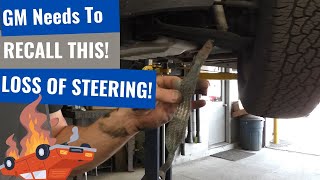
- Corroded, loose, or broken main ground straps (Very Common) — This is the primary cause, especially on 2019-2022 GM trucks. The braided electrical ground straps connecting the engine-to-frame (G132, G134) and frame-to-body (G133, G131) corrode and fail, cutting off the return path for the high-current EPS motor. GM issued TSBs PIT6088 and 23-NA-201 specifically for this issue.
- Weak or failing vehicle battery (Common) — Electric power steering is a high-demand system. An old or failing battery cannot provide the stable 9-16V required, causing the PSCM to shut down and trigger a fault.
- Failing alternator or charging system issue (Common) — A faulty alternator failing to recharge the battery causes system voltage to drop while driving. This low-voltage condition starves the EPS system, leading to a shutdown and setting code C1599.
- Outdated PSCM software (post-low voltage event) (Less Common) — Per GM TSB 20-NA-113, a temporary low-voltage event (like a dead battery or jump start) causes the PSCM to set a persistent C1599 code that refuses to clear after battery replacement. The module requires a dealer software update to correct this.
- Poor Body Control Module (BCM) ground (G218) (Less Common) — Detailed in GM TSB 18-NA-161, a poor ground connection for the BCM (ground point G218 under the driver's side dash) causes a cascade of electrical problems, including the loss of power steering.
- Damaged wiring harness or connectors (Less Common) — Physical damage to the large-gauge power/ground wires or smaller communication wires for the PSCM causes a fault. This stems from road debris, improper repairs, or rodents chewing wire insulation.
- Positive battery cable shorting to starter heat shield (Rare) — Mentioned in GM TSB 18-NA-161, the positive battery cable rubs against the starter motor's heat shield, creating a short that causes major electrical disruptions and triggers C1599.
- Faulty Power Steering Control Module (PSCM) (Rare) — The control module fails due to internal short circuits, software corruption, or water intrusion. Suspect this only after definitively ruling out all power, ground, and wiring issues.
- Defective electric power steering rack assembly (Rare) — The entire steering rack fails internally. GM TSB 20-NA-215 points to internal grounding issues within the steering gear on select models. This is frequently misdiagnosed when the actual cause is an external ground strap.
Symptoms
- Complete loss of power steering assist — The steering wheel suddenly becomes extremely heavy and difficult to turn, requiring significant manual effort.
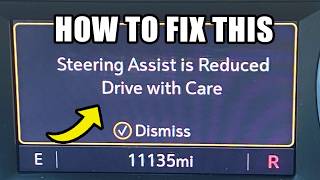
- “Steering Assist is Reduced Drive With Care” message — A prominent warning message appears on the Driver Information Center (DIC), accompanied by an audible chime. 🎬 Watch: How to fix the Steering Assist is Reduced warning
- Multiple warning lights on the dashboard — The Check Engine, ABS, Service Stabilitrak/ESC, and parking brake lights illuminate simultaneously because these interconnected systems rely on stable voltage.
- Jittery, stuttering, or kicking steering wheel before failure — Prior to complete failure, the steering assist feels erratic, sticky, or kicks back against the driver's inputs as the system struggles with intermittent power.
- Widespread electrical glitches — Because a bad ground is the primary cause, drivers notice dimming headlights, a radio cutting out, or an inoperative instrument panel (TSB 18-NA-161).
Diagnostic Flowchart
Tap your situation to follow the diagnostic path that matches what you're seeing on this code.
Common Fixes & Costs
- Clean or Replace Engine/Body Ground Straps — Parts: $15-$60, Labor: $100-$200, ~1.2 hr book time (Intermediate)
- Replace Vehicle Battery — Parts: $150-$350, Labor: $0-$100, ~0.5 hr book time (DIY)
- Update Power Steering Control Module (PSCM) Software — Parts: $0, Labor: $125-$250, ~1.0 hr book time (Professional)
- Replace Power Steering Control Module (PSCM) — Parts: $300-$960, Labor: $150-$300, ~1.5 hr book time (Professional)
- Replace Electric Power Steering Rack Assembly — Parts: $800-$2,000, Labor: $400-$800, ~4.5 hr book time (Professional)
DIY vs Professional
- Clean or Replace Engine/Body Ground Straps 🟢 Beginner
Tools: Socket set, wire brush, dielectric grease, trim removal tools (for wheel liners). - Replace Vehicle Battery 🟢 Beginner
Tools: Socket set/wrenches, battery terminal cleaner tool. - Update Power Steering Control Module (PSCM) Software 🟢 Beginner
Tools: GM's GDS2/MDI2 diagnostic tool or equivalent J2534 pass-thru device with a subscription to the GM Technical Information System (TIS2Web). - Replace Power Steering Control Module (PSCM) 🟢 Beginner
Tools: Socket set, diagnostic scan tool, GM GDS2/MDI2 for programming. - Replace Electric Power Steering Rack Assembly 🟢 Beginner
Tools: Vehicle lift, extensive socket/wrench set, ball joint separator, torque wrench, professional scan tool for calibration.
Used vs. New Parts: Buying Guide
When a used part is worth it: For the most expensive fix, the steering rack assembly, a used part from a low-mileage, accident-damaged donor vehicle saves 40-60% off the new price. This makes sense for older, high-mileage vehicles where budget is a primary concern.
Donor-vehicle mileage cap: roughly under 70000 miles for the part to have meaningful remaining life.
Donor quality checklist:
- Verify the part number matches exactly.
- Inspect electrical connectors for corrosion or damage (a known failure point).
- Choose a donor from a dry climate to avoid corrosion issues.
- Ensure the part comes with a short-term warranty (30-90 days).
Decision logic:
- If Vehicle is newer or has low mileage → Buy a new OEM or high-quality remanufactured part for longevity and a better warranty.
- If Vehicle is older (>150K miles) and repair budget is tight → A tested used part from a reputable salvage yard is a reasonable choice.
- If The specific failure is electronic (PSCM) and not mechanical → Avoid used modules unless you verify they do not require programming, which most do.
Warranty tradeoff: Used parts typically offer a 30-90 day warranty. Remanufactured parts come with a 1-year to lifetime warranty. New OEM parts carry the longest and most comprehensive warranties.
Worst-case if a used part fails: $600-$1200 if a used steering rack fails after the warranty period, requiring paying for labor and alignment a second time, plus the cost of another replacement part.
What Happens If You Wait — Timeline
- Immediate: A critical ground connection breaks or system voltage drops below ~9V. The PSCM enters fail-safe mode, instantly disabling all steering assist. A 'Steering Assist is Reduced' message appears, and the steering becomes extremely heavy. (MPG impact: 0%% · Added cost: $0 (but vehicle is unsafe to drive))
- 0-1 month (with intermittent fault): If caused by a loose or partially corroded ground, the fault is intermittent. The driver experiences brief moments of heavy steering, a 'kicking' wheel, and flickering dashboard lights. These events cause unpredictable voltage spikes across the electrical system. (MPG impact: 0-2%% · Added cost: $0-$50 (potential for wasted fuel from inefficient sensor readings))
- 1-6 months: Continued driving with an unstable ground connection places significant strain on the alternator and other control modules. Fluctuating voltage corrupts software or causes premature failure in sensitive electronics like the BCM. Manually forcing the steering strains mechanical steering components. (MPG impact: 2-5%% · Added cost: $200-$1500 (risk of damaging the alternator, other modules, or intermediate steering shaft))
- 6+ months: Catastrophic electrical damage becomes likely. A major voltage surge from a failing ground permanently destroys multiple control modules, leading to a no-start condition or widespread electronic failures. The repair is no longer a simple ground strap but a complex diagnostic and module replacement job. (MPG impact: N/A (vehicle may be inoperable)% · Added cost: $1500-$3000+ (cost to diagnose and replace multiple fried electronic modules))
Cost of Not Fixing It
- Immediate: Extreme safety risk. The sudden loss of steering assist makes the vehicle very difficult to control, especially at low speeds or in an emergency, dramatically increasing the chance of a crash. (Added cost: $5,000-$30,000+ (potential for total loss of vehicle and medical liabilities from a crash).)
- 0-3 months: Strain on other steering components. Manually forcing the heavy steering puts excess stress on the steering column, intermediate shaft, and tie rods. (Added cost: $200-$1000 (if related components are damaged).)
- 3+ months: Progressive electrical system damage. If the root cause is a bad ground, continued operation causes intermittent issues and damage to other sensitive electronic modules in the vehicle. (Added cost: $500-$2500+ (for diagnosis and replacement of other control modules).)
Diagnosis Steps
- Read All Trouble Codes from All Modules
Use a professional-grade OBD-II scanner to read codes from ALL vehicle modules (PSCM, BCM, ABS, ECM). Note codes appearing alongside C1599, such as C1597, P25A2, and 'U' (communication) codes. Their presence strongly indicates a shared electrical fault, not multiple separate problems.
Tools: Professional OBD-II Scanner (Beginner) - Visually and Physically Inspect All Main Ground Straps
Per TSB PIT6088 and 23-NA-201, locate and inspect the braided ground straps. On GM trucks, check G132/G133 (engine/frame grounds behind the passenger-side front wheel well liner) and G130/G131/G134. Look for green/white corrosion. Physically tug on the straps; they frequently break inside the sheathing or at the crimped eyelet.
Tools: Flashlight, Safety Glasses, Trim Removal Tools (Intermediate) - Load Test the Battery and Alternator
A basic voltage check is insufficient. Use a digital battery tester to perform a full load test. With the engine running, use a multimeter to verify the alternator output is between 13.7V and 14.7V at the battery terminals. The PSCM requires a stable 9V-16V to operate.
Tools: Digital Battery Tester, Multimeter (Beginner) - Perform a Voltage Drop Test on Ground Circuits
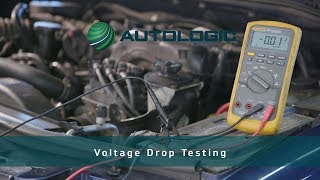
Visual inspections are misleading. Set a multimeter to DC millivolts (mV). With the engine running and high-current accessories on, place the red lead on the negative battery terminal post and the black lead on the engine block. A reading above 100mV (0.1V) indicates high resistance. TSB 18-NA-161 specifies a failure threshold of 200mV (0.2V) on the main negative battery cable while cranking the engine.
Tools: Multimeter with mV setting (Advanced) - Verify TSBs and Software Calibration
If the C1599 code is 'current' and refuses to clear after fixing a low voltage issue (like installing a new battery), the vehicle requires the PSCM software update described in TSB 20-NA-113. This requires a dealer or a properly equipped independent shop.
Tools: TSB Database Access (Intermediate) - Check EPS Live Data PIDs
Monitor live data from the PSCM. Watch 'EPS Motor Current,' 'PSCM Voltage,' and 'Steering Wheel Position/Torque Sensor Voltage.' PSCM voltage must remain stable between 13.7V and 14.7V with the engine running. Torque sensor voltage should read between 0.25V and 4.75V. Readings outside these ranges isolate a specific component fault.
Tools: Professional OBD-II Scanner (Advanced) - Inspect Wiring Harness for Physical Damage
Inspect the wiring harness leading to the electric power steering rack. Look for areas rubbing against the frame, engine components, or suspension parts. Check large-gauge wires and connectors for melting, corrosion, or physical damage.
Tools: Flashlight, Inspection Mirror (Intermediate) - Scope Test the PSCM Power and Ground
For intermittent issues, use an automotive oscilloscope. Back-probe the main power and ground terminals at the PSCM connector. Capture voltage over time while an assistant turns the steering wheel lock-to-lock. Look for voltage drops on the power side or spikes on the ground side. The EPS motor draws up to 58A, instantly revealing high resistance as a large drop/spike on the scope.
Tools: Automotive Oscilloscope, Probing Kit, Wiring Diagram (Professional) - Isolate the Steering Rack
If all grounds, power feeds, and wiring test perfectly, the fault is internal to the rack assembly. Disconnect the main electrical connector to the rack, start the vehicle to see what codes appear, then reconnect it. This confirms if the fault is isolated to the rack itself.
Tools: Basic Hand Tools (Advanced)
When This Code Triggers (Freeze-Frame Conditions)
- Control Module Voltage: 13.5-14.5V (A value dropping below 12V, especially during steering input, is a key indicator. The PSCM sets a fault if voltage drops below 9V.)
- Engine RPM: 600-2500 RPM (The fault occurs at idle, during low-speed parking maneuvers, or at steady highway speeds when electrical demand fluctuates.)
- Vehicle Speed: 0-65 mph (Failure is most common at low speeds where steering effort and motor current are highest, but happens at highway speeds due to vibration on unstable connections.)
- Engine Coolant Temp: Any (The fault is an electrical failure independent of engine temperature. It happens on a cold start or when fully warmed up.)
Related Codes
- C1597 — This is a sister code to C1599. GM TSB PIT6088 explicitly states they are set together and point to the same root cause (bad ground). Do not diagnose them separately; the fix for one resolves the other.
- P25A2 — This Powertrain code for 'Brake Booster Pressure Sensor Circuit' frequently appears with C1599. TSB PIT6088 confirms seeing both is a strong indicator of a widespread electrical ground problem affecting multiple systems.
- U0415 — 'Invalid Data Received From ABS Control Module.' This network code is a symptom, not a cause. The PSCM sets this code because the primary electrical fault (bad ground or low voltage) disrupts communication between modules. Fix the C1599 power issue first.
- B1325 — 'Device Power Circuit Voltage Below Threshold.' This Body Control Module code is strong evidence that the root cause is a system-wide low voltage or grounding issue, as described in TSB 18-NA-161.
Climate & Environmental Factors
- Road Salt / High Humidity: This is a primary contributor to C1599 failures. In regions with winter snow ('Rust Belt') or coastal areas, road salt and moisture create a brine that aggressively corrodes the braided copper ground straps. The corrosion increases electrical resistance, starving the EPS motor of current and causing it to shut down.
- Extreme Cold: Cold temperatures increase the internal resistance of a vehicle's battery, reducing its ability to deliver high current. A weak battery starts the engine but fails to provide the amperage needed by the EPS system on a cold start, triggering a C1599 fault.
How to Talk to a Mechanic About This Code
Say this: "I have a C1599 code and a 'Service Power Steering' message on my GM vehicle. Based on my research, the primary cause is a bad ground strap or a battery issue. Please perform a battery load test and a voltage drop test on the main ground circuits before quoting a steering rack replacement."
This signals you are an informed customer. It directs the technician to the most likely and cheapest repairs first, explicitly asking them to prove the electrical integrity of the system before condemning an expensive component like the steering rack.
Avoid saying:
- 'My power steering is out, just fix it.'
- 'The steering is heavy, I think I need a new steering rack.'
- 'Just do whatever you think is best.'
Questions to ask before authorizing the repair:
- What were the results of the battery load test and the charging system test?
- What was the millivolt (mV) reading on the voltage drop test for the main ground straps? Was it under 100mV?
- Did you physically inspect the ground straps, specifically G132 and G133 on a truck, for corrosion or breakage?
- If you are recommending a steering rack replacement, can you show me the data proving all power and ground inputs to the module are good?
- Does my vehicle have any open recalls or special coverage programs (like N252515590) for this issue?
- If the PSCM needs a software update, is that something you perform in-house?
- What is the warranty on the recommended parts and labor?
Where to Take It: Dealer vs Independent vs Chain
- Dealer:
Recommended only if a specific dealer-only software update is needed or if the repair is covered by warranty/special program. Otherwise, an independent shop is a better starting point.
Best for: Vehicles under warranty or covered by GM's Special Coverage program (N252515590)., If the problem requires a Power Steering Control Module (PSCM) software update (per TSB 20-NA-113)., Complex electrical issues after an independent shop has ruled out the basics.
Downsides: Higher labor rates (1.5-2x vs independent)., May recommend a full steering rack replacement instead of diagnosing a simple ground strap. (Typical cost: +50% vs. baseline) - Independent Shop:
Best first choice. An experienced independent technician is familiar with this common GM ground issue and performs necessary electrical tests (like a voltage drop test) more cost-effectively than a dealer.
Best for: Out-of-warranty vehicles where the most likely cause is a bad ground strap or battery., Getting a second opinion after a high quote from a dealer., Owners who want to build a relationship with a trusted mechanic.
Downsides: Quality varies; ensure the shop has experience with modern electrical diagnostics., May lack the equipment for GM-specific software updates. (Typical cost: +0% vs. baseline) - Chain Shop:
AVOID for diagnosis. While they test or replace a battery, they are not equipped to properly diagnose the root cause of a C1599 code, which involves ground circuit testing or module software issues.
Best for: Getting a free battery test to rule out the simplest cause.
Downsides: Technicians are often less experienced with in-depth electrical diagnosis beyond reading a code., High pressure to sell parts leads to incorrect recommendations., Unlikely to have the tools for chassis-level diagnostics or software updates. (Typical cost: -10% vs. baseline)
When to Walk Away From the Repair
If the estimated repair cost exceeds 50% of the car's private-party value (from Kelley Blue Book), seriously consider selling or trading in the vehicle instead of repairing it.
- Car worth $8000, fix is $4500: Walk away. A $4,500 quote indicates a full steering rack and module replacement. This cost is over 50% of the car's value and is not a sound investment.
- Car worth $25000, fix is $250: Fix it. A $250 repair is a new battery or ground strap replacement and is a tiny fraction of the vehicle's value.
- Car worth $4000, fix is $2500: Walk away. The repair cost is over 60% of the car's value. Put that money towards a more reliable vehicle.
What Scan Tool You Need for This Code
Minimum: A scanner that reads and clears codes from ALL vehicle systems, including the Power Steering Control Module (PSCM). This is labeled as 'All System,' 'Full System,' or 'Manufacturer-Specific' code access.
A basic $20 OBD-II reader only reads generic 'P' (Powertrain) codes from the engine computer. It CANNOT see 'C' (Chassis) codes like C1599. Using one leads you to believe there are no codes, even when the steering has failed. Free scans at auto parts stores often fail to read these codes.
Budget: Foxwell NT301 / Ancel AD310 (~$50) — These are engine code readers and are NOT sufficient for C1599. You must step up to a full-system scanner.
Mid-range: BlueDriver Pro / Innova 1000 (~$120) — These Bluetooth dongles pair with a smartphone app and read codes from all modules (Engine, ABS, Airbag, Steering) on modern vehicles. They confirm the C1599 code, view freeze-frame data, and monitor live data like module voltage. This is the best value for a serious DIYer.
Professional: Autel MaxiCOM MK808 / Foxwell NT510 Elite (~$300-500) — These tablet-style scanners offer full system diagnostics plus bi-directional controls. You read data and command modules to perform tests. For C1599, this level is only needed if you are a professional performing advanced functions like programming a new PSCM.
Rent vs buy: Free rental scanners at auto parts stores are basic code readers and will not work for C1599. If you diagnose issues on a modern car more than once, buying a midrange, all-system scanner like the BlueDriver is a worthwhile investment.
How to Clear the Code After You Fix It
- Fix the underlying electrical or mechanical fault (e.g., replace ground strap).
- Reconnect the battery if it was disconnected.
- Use a professional scan tool to clear codes from the PSCM. A basic OBD-II reader cannot clear C-codes.
- If the code persists after fixing a low-voltage issue, a dealer software update per TSB 20-NA-113 is required.
- Perform a steering angle sensor calibration if the rack or PSCM was replaced.
Drive cycle (~20 minutes): A specific drive cycle is not required for the PSCM to confirm a fix; it performs self-tests on startup. To reset other related monitors (like ABS/ESC): Cold start, idle for 2-3 minutes. Drive at a steady speed of 45-55 mph for 5-10 minutes. Perform a few slow, full lock-to-lock turns in a safe area.
Readiness monitors affected: This is a Chassis (C) code, so it does not directly affect emissions readiness monitors like the Catalyst or O2 sensor monitors., However, the underlying electrical issue interrupts other modules and affects their ability to complete readiness tests.
Before emissions retest: drive at least 50 miles to fully set monitors.
Watch out for:
- Clearing the code without fixing the root cause results in the code returning immediately.
- Using a basic code reader that cannot access or clear chassis codes from the PSCM.
- Failing to realize a dealer software update is required to clear a persistent code after a battery replacement.
- Disconnecting the battery does not clear this code from the PSCM's memory.
Will This Fail Emissions / State Inspection?
No — by itself this code doesn't fail OBD inspection (but it can keep readiness monitors from setting, which causes a separate fail).
- California: A C-code itself does not cause an emissions test failure. However, if the 'Service Engine Soon' or Check Engine Light is illuminated due to related electrical issues, the vehicle fails the OBD-II scan.
- New York: New York performs a safety inspection including the power steering system. An illuminated power steering warning light and non-operational power steering is a direct cause for safety inspection failure.
- Texas: The Texas safety inspection explicitly checks the steering system. An illuminated warning light related to steering is a cause for failure.
- Massachusetts: While a C-code isn't an emissions failure, any active Diagnostic Trouble Code (DTC) that turns on the Check Engine light causes a failure.
Most Commonly Affected Vehicles
- Chevrolet Silverado 1500 (2019-2024) — Highly prone to failed ground straps causing this code, documented in GM TSBs PIT6088 and 23-NA-201. The OEM ground strap part number is 84827778. Covered under GM Special Coverage program N252515590.
- GMC Sierra 1500 (2019-2024) — Shares the same platform and electrical vulnerabilities as the Silverado 1500. TSBs PIT6088 and 23-NA-201 apply directly, pointing to grounds G132/G133 behind the passenger wheel liner. Covered under GM Special Coverage program N252515590.
- Chevrolet Tahoe (2015-2020) — Susceptible to the same electrical issues from bad grounds (per TSB 18-NA-161) and persistent codes after low voltage events (per TSB 20-NA-113) due to a shared electrical architecture.
- GMC Yukon (2015-2020) — Mechanically identical to the Tahoe, this model is affected by the issues described in TSBs 18-NA-161 and 20-NA-113, leading to a C1599 code.
- Chevrolet Blazer, Traverse (2020-2021) — These models were cited in TSB 20-NA-215 for an internal grounding problem within the power steering gear itself leading to a loss of assist.
- Ford Fusion, Focus, Escape (2011-2023) — Does not use C1599, but displays a 'Steering Assist Fault' message for similar failures. The root cause is often a failure of the entire Electric Power Assisted Steering (EPAS) rack.
- Honda Civic, CR-V, HR-V (2022-2025) — Does not use C1599. These models are subject to recall 24V-744 for 'sticky steering' caused by a mechanical defect inside the steering gearbox, not an electrical fault.
- Nissan Rogue, X-Trail (2014-2020) — Does not use C1599, but shows a 'Chassis Control System Error' for similar electrical reasons, such as a weak battery, faulty alternator, or bad wheel speed sensors.
Manufacturer-Specific Notes
- General Motors: The primary cause is overwhelmingly a corroded or broken braided ground strap. TSBs PIT6088 and 23-NA-201 give specific instructions to inspect grounds G130, G131, G132, G133, and G134, especially behind the passenger side wheel well liner on trucks.
- General Motors: A low voltage event (e.g., dead battery) sets a persistent C1599 fault in the PSCM that will not clear with a standard scanner. Per TSB 20-NA-113, the module's software must be updated by a dealer to allow the code to move to 'history' after the repair.
- General Motors: Widespread electrical chaos (flickering lights, radio off, Stabilitrak warnings) along with C1599 strongly points to the issues in TSB 18-NA-161: a bad BCM ground (G218) or a positive battery cable shorting to the starter heat shield.
- General Motors: SPECIAL COVERAGE N252515590: GM has a service program for 2019-2024 Silverado 1500 and Sierra 1500 trucks to replace the body-to-frame ground cable free of charge due to corrosion issues. This program is active until Feb. 29, 2028, with no mileage limit.
- Ford: While not code C1599, the 'Steering Assist Fault' message on Fords means the entire EPAS steering rack has failed. Unlike GM, the cause is less likely to be an external ground and more likely to be an internal rack failure.
Real Owner Stories
2019 Chevy Silverado with 43K miles - The Classic Ground Strap Failure
While driving, the power steering suddenly failed, accompanied by multiple dashboard warnings including 'Service Power Steering' and a brake controller message.
Outcome: The owner replaced the faulty ground strap with a new, shielded wire to better protect it from the elements. This single, inexpensive repair resolved all the warning messages and restored power steering function.
Lesson: On 2019+ GM trucks, C1599 is almost always a failed ground strap. Inspecting the strap behind the driver's or passenger's front wheel well is the absolute first step before considering any other repairs.
2020 GMC Sierra - Dealer Misdiagnosis Leads to Frustration
Experienced intermittent loss of power steering along with 'Service Power Steering,' 'Service ESC,' and 'Service Trailer Brake System' messages.
Outcome: The owner declined the expensive repairs. Further research led them to discover the common ground strap issue. Replacing the corroded ground strap themselves fixed all the problems for less than $40.
Lesson: Be skeptical of a diagnosis that involves replacing multiple expensive modules, especially when C1599 is present. The symptoms of a single bad ground mimic the failure of many different systems.
2017 Chevy Silverado - The Persistent Warning After a Battery Change
After the original battery died and was replaced, a 'Service Power Steering, Drive with Care' message appeared at every startup, even though the steering felt perfectly normal.
Outcome: A trip to the dealership was required. They confirmed the issue was a known software glitch described in GM TSB 20-NA-113. The dealer performed a software update on the Power Steering Control Module (PSCM) for a fee of around $260, which finally cleared the persistent warning message.
Lesson: If C1599 appears immediately after a low-voltage event (dead battery, jump start) and won't clear despite a new battery and good grounds, the PSCM requires a software update from the dealer. A standard scanner cannot fix this.
How to Prevent This Code From Triggering
- Apply an undercoating or rust inhibitor to the vehicle's undercarriage (Once before winter, or every 1-2 years in salty regions) — Creates a physical barrier preventing corrosive road salt and moisture from directly contacting the exposed braided ground straps, frame, and other metallic components, slowing down rust and corrosion.
- Periodically inspect and clean main ground connection points (Every 15,000 miles or annually) — Visually checking the ground straps (especially G131/G133 on GM trucks) for green or white corrosion catches problems early. Unbolting the connection, cleaning surfaces to bare metal, and re-securing it prevents future failure.
- Coat new or cleaned ground connections with dielectric grease or a terminal sealant spray (During any battery or ground strap service) — Applying a sealant over the exterior of the terminal and bolt head blocks out oxygen and moisture, which are the key ingredients for future corrosion.
- Perform regular high-pressure undercarriage washes (Weekly or bi-weekly during winter months in 'Rust Belt' areas) — Actively removes the buildup of road salt and de-icing brines from the underbody. This reduces the time corrosive materials are in contact with the ground straps and frame, significantly slowing deterioration.
- Replace aging batteries proactively (Every 4-5 years, regardless of symptoms) — An aging battery's ability to supply high current under load diminishes. Proactively replacing it prevents the intermittent low-voltage conditions that stress the EPS system and trigger a C1599 fault.
Frequently Asked Questions
Can I fix code C1599 myself?
If the cause is a weak battery or an obviously corroded ground strap, a DIY repair is straightforward. However, if the cause requires software programming, oscilloscope diagnosis, or steering rack replacement, take the vehicle to a professional shop.
My battery is new, why do I still have the C1599 code?
First, the root cause is often a bad ground strap causing voltage instability, not the battery itself. Second, on many GM vehicles, a low-voltage event triggers a persistent code in the PSCM requiring a dealer software update (TSB 20-NA-113) to clear. A new battery alone cannot fix this software state.
What is the most common misdiagnosis for C1599?
The most common and expensive mistake is replacing the $1,500+ power steering rack assembly without first performing voltage drop tests on all main ground straps. Another frequent error is unnecessarily replacing the PSCM when it only requires a $150 software update.
Will clearing the code fix the problem?
No, clearing the code only temporarily erases the fault record. The PSCM re-detects the underlying electrical problem on the next ignition cycle, instantly returning the symptoms. In cases requiring a software update, standard scanners cannot clear the code at all.
Why did my power steering fail so suddenly?
Electric power steering systems fail into a safe, manual state when the control module detects a critical fault, like a sudden loss of power or ground. It immediately shuts off assist to prevent dangerous, erratic, or unpredictable steering behavior.
How much does a C1599 repair cost?
Costs range from $15 for a DIY ground strap cleaning to over $2,000 for a full steering rack replacement. A typical shop charges $150-$250 to replace a ground strap, while a dealer software update costs $125-$250. Check for GM Special Coverage N252515590, which covers ground strap replacement for free on certain 2019-2024 trucks.
Why are so many other warning lights on with the steering warning?
Modern safety systems like ABS and Electronic Stability Control (Stabilitrak) rely heavily on steering angle data to function. When the PSCM detects a major fault and shuts down, it triggers a cascade of communication faults and warning lights across these interconnected systems.
What is a ground strap and why does it fail?
A ground strap is a braided wire cable providing a return path for electricity to the battery's negative terminal, essential for high-current devices like the EPS motor. Located on the undercarriage, they are exposed to road salt and water, causing them to corrode, fray, and break over time.
Key Takeaways
- C1599 on GM vehicles indicates a critical power steering fault, most frequently caused by a corroded braided ground strap (like G132 or G133) rather than a failed steering rack.
- Perform a voltage drop test on the main negative battery cable and ground straps; a reading above 100mV confirms high resistance and dictates a cable replacement.
- If the C1599 code appears immediately after a dead battery or jump-start and refuses to clear, the vehicle requires a dealer-level PSCM software update per GM TSB 20-NA-113.
- Check your VIN against GM Special Coverage N252515590, which provides free ground strap replacements for affected 2019-2024 Silverado and Sierra 1500 trucks until February 2028.
Helpful Videos
Shop the Parts Behind C1599
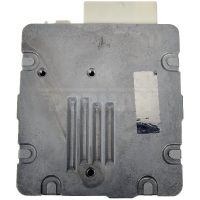
Below are the parts most often responsible for code C1599, ranked by how frequently each one is the actual culprit (per the diagnosis above). Tap any to see what we have for your vehicle.




The information in this article is provided for general reference and educational purposes only. Vehicle specifications, procedures, and part compatibility can vary by production date, trim level, and region. Always consult your vehicle's factory service manual and verify part numbers before purchasing or performing repairs. Safety-critical components such as airbags, seat belts, and braking systems should be installed by a qualified professional.
- 🧭 Diagnostic Flowchart
- 🎬 Helpful Videos
- 🛍️ Shop This Part
- What Does C1599 Mean?
- Can I Drive With C1599?
- Common Causes
- Symptoms
- Common Fixes & Costs
- DIY vs Professional
- Used vs. New Parts: Buying Guide
- What Happens If You Wait — Timeline
- Cost of Not Fixing It
- Diagnosis Steps
- When This Code Triggers (Freeze-Frame Conditions)
- Related Codes
- Climate & Environmental Factors
- How to Talk to a Mechanic About This Code
- Where to Take It: Dealer vs Independent vs Chain
- When to Walk Away From the Repair
- What Scan Tool You Need for This Code
- How to Clear the Code After You Fix It
- Will This Fail Emissions / State Inspection?
- Most Commonly Affected Vehicles
- Manufacturer-Specific Notes
- Real Owner Stories
- 2019 Chevy Silverado with 43K miles - The Classic Ground Strap Failure
- 2020 GMC Sierra - Dealer Misdiagnosis Leads to Frustration
- 2017 Chevy Silverado - The Persistent Warning After a Battery Change
- How to Prevent This Code From Triggering
- Frequently Asked Questions
- Can I fix code C1599 myself?
- My battery is new, why do I still have the C1599 code?
- What is the most common misdiagnosis for C1599?
- Will clearing the code fix the problem?
- Why did my power steering fail so suddenly?
- How much does a C1599 repair cost?
- Why are so many other warning lights on with the steering warning?
- What is a ground strap and why does it fail?
- Key Takeaways
- 🎟️ Get 5% Off