

OBD-II Code C1602: ECU Hardware Error
What C1602 means, why it triggers, and how to fix it
- Code C1602 indicates a fatal internal failure of the ABS/ESC control module, completely disabling anti-lock brakes and stability control.
- On 2011-2021 Hyundai and Kia models, this code links to a major recall where the ABS module shorts and causes engine fires; park outside immediately.
- Always test the battery to ensure voltage stays above 9.6V during engine cranking, as low voltage triggers false C1602 hardware errors.
- Sending your original ABS module to a specialist for a $150-$300 repair is the most cost-effective fix and avoids expensive dealer programming.
- Installing a new or used replacement ABS module requires a bi-directional scanner to perform variant coding and an automated brake bleed.
What Does C1602 Mean?
Code C1602 indicates a fatal hardware failure inside the Anti-lock Brake System (ABS) or Electronic Stability Control (ESC) module. The module's internal self-diagnostics detected a critical error with its processor, memory, or circuitry. When this code triggers, the vehicle disables all ABS and stability control safety features to prevent erratic braking behavior.
Technical definition: The SAE/ISO definition for C1602 translates to 'ECU Hardware Error' on the most commonly affected vehicles (Hyundai and Kia). It indicates the Electronic Control Unit (ECU) for the ABS/ESC system failed an internal self-test. On Ford vehicles, it logs as P1602, indicating an immobilizer communication error. On Nissan, it indicates missing module programming.
Can I Drive With C1602?
No — Do Not Drive. Do not drive normally. Your regular hydraulic brakes function, but the Anti-lock Braking System (ABS), Electronic Stability Control (ESC), and Traction Control (TCS) are completely disabled. This significantly increases stopping distances and the risk of skidding. More critically, on affected Hyundai and Kia models, this code links to an ABS module short circuit that causes engine compartment fires even when parked. Park the vehicle outside and away from structures until inspected.
Common Causes
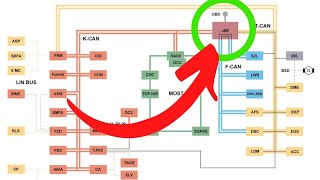
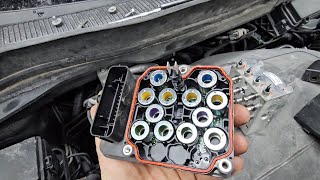
- Internal ABS/ESC Module Failure (Very Common) — The electronic components, solder joints, or hydraulic pump motor inside the ABS control unit (HECU) fail due to manufacturing defects or age. 🎬 Watch: A time-saving trick to replace the module without bleeding brakes. On Hyundai and Kia vehicles, internal brake fluid leaks onto the circuit board cause electrical shorts.
- Low Battery Voltage During Cranking (Common) — A weak battery supplies insufficient voltage to electronic modules. The sensitive ABS/ESC module interprets voltage drops below 9.6V during engine cranking as an internal hardware fault and sets this code.
- Blown ABS Multi-Fuse (Common) — An electrical short within the ABS module blows the main ABS fuse (typically 40A). Cutting power to the module presents as a hardware error. A massive recall was issued for Hyundai/Kia to replace these fuses as a preventative fire measure.
- Corroded Wiring or Chassis Ground (Less Common) — The ABS module relies on a clean, solid ground connection to the vehicle's chassis. A corroded or loose ground strap creates high resistance, causing a voltage drop that triggers C1602.
- Faulty Brake Light Switch (Rare) — A failing brake light switch sends incorrect or intermittent signals, confusing the ABS module. While this typically sets a different code, it occasionally triggers a general internal fault code.
Symptoms
- ABS and ESC Warning Lights Illuminated — The ABS, Electronic Stability Control (ESC), and Traction Control (TCS) warning lights remain permanently lit on the dashboard.
- Loss of Anti-Lock Braking and Stability Control — During a hard stop, the wheels lock up and skid. The vehicle lacks stability control assistance in sharp turns or on slippery surfaces.
- ABS Pump Runs Constantly — A shorted module sends incorrect signals, causing the ABS pump motor to run continuously, even when the vehicle is turned off. This sounds like a humming or buzzing from the engine bay.
- Spongy or Unresponsive Brake Pedal — Internal valve malfunctions inside the ABS hydraulic unit cause the brake pedal to feel unusually hard, soft, or unresponsive.
- Engine No-Start (Ford Vehicles Only) — On Ford vehicles, this code relates to the immobilizer system (PATS) and prevents the engine from cranking or starting.
Diagnostic Flowchart
Tap your situation to follow the diagnostic path that matches what you're seeing on this code.
Common Fixes & Costs
- ABS Module Repair Service — Parts: $150-$300, Labor: $150-$250, ~1.5 hr book time (Intermediate)
- Replace ABS Fuse (Recall Remedy) — Parts: $0, Labor: $0, ~0.5 hr book time (DIY)
- Replace with Remanufactured or Used ABS Module — Parts: $250-$500, Labor: $200-$350, ~2.5 hr book time (Professional)
- Replace ABS Module (New) — Parts: $1200-$2200, Labor: $200-$350, ~2.5 hr book time (Professional)
- Replace Brake Light Switch — Parts: $20-$50, Labor: $60-$100, ~0.5 hr book time (DIY)
Used vs. New Parts: Buying Guide
When a used part is worth it: A used ABS module is viable when a new part is prohibitively expensive and your budget is tight. It makes the most sense for older vehicles where a new part exceeds 30% of the car's value.
Donor-vehicle mileage cap: roughly under 80000 miles for the part to have meaningful remaining life.
Donor quality checklist:
- Purchase from a reputable seller offering at least a 90-day warranty.
- Verify the part number matches your original module exactly.
- Avoid parts with visible corrosion or damage to the electrical connector.
Decision logic:
- If The vehicle is a Hyundai/Kia with an active recall → Go to the dealer first. The preventative fuse replacement is free.
- If Budget is the top priority and you have a trusted shop for programming → A used or remanufactured part offers the best value.
- If Reliability is most important and cost is secondary → Send your original module to a reputable repair service with a lifetime warranty, or buy a new OEM part.
Warranty tradeoff: Used parts typically include a 30-90 day warranty. Remanufactured/repaired units offer a 1-year to lifetime warranty. New OEM parts carry a 1-year warranty.
Worst-case if a used part fails: $300-$500 if a used part is dead on arrival. This covers repeat labor for removal, reinstallation, and reprogramming.
What Happens If You Wait — Timeline
- Immediate: Code C1602 is stored. ABS, ESC, and TCS warning lights illuminate. All anti-lock and stability control functions are disabled. (MPG impact: 0%% · Added cost: $0 (Safety risk is the primary concern))
- 0 days - 1 month (Affected Hyundai/Kia): The internal electrical short presents an active fire risk. The module catches fire at any time, even with the vehicle parked and off. (MPG impact: 0%% · Added cost: $5,000 - $25,000+ (Total vehicle loss and property damage))
- 1-6+ months: If the failure causes the ABS pump to run constantly, the pump motor burns out. This drains the battery repeatedly. (MPG impact: 0%% · Added cost: $800 - $1500 (A burned-out motor forces the purchase of a full replacement unit instead of a cheaper repair service))
- Ongoing: Driving without ABS/ESC safety nets significantly increases the risk of an accident in an emergency maneuver. (MPG impact: 0%% · Added cost: Variable (Cost of accident deductible or total loss))
Cost of Not Fixing It
- Immediate: Loss of ABS and Electronic Stability Control (ESC). Increased risk of skidding and loss of control in panic stops or on slippery surfaces. (Added cost: N/A (Safety Risk))
- Immediate (for affected Hyundai/Kia): Significant risk of engine compartment fire, even while the vehicle is parked and turned off. This leads to total loss of the vehicle and property damage. (Added cost: $5,000 - $25,000+ (Total vehicle loss))
- 1-6+ Months: Continued operation causes the ABS pump motor to run constantly, leading to burnout. A burned-out motor makes the module unrepairable, forcing the purchase of a full replacement unit. (Added cost: $800 - $1500 (Difference between a repair service and a new module))
Diagnosis Steps
- Read All Fault Codes
Use an advanced OBD-II scanner capable of reading Chassis (C-codes) to confirm C1602. Note any other codes. C2402 points to the pump motor; U-codes indicate communication network failures.
Tools: Advanced OBD-II Scanner (Beginner) - Check Battery Voltage During Cranking
Connect a multimeter to the battery. A healthy battery maintains voltage above 10.5V during cranking. A drop below 9.6V triggers false electronic codes and requires battery replacement.
Tools: Multimeter (Beginner) - Inspect ABS Multi-Fuses
Locate the large multi-fuses (typically 40A) for the ABS/ESC system in the engine bay fuse box. Verify they are intact. A blown fuse confirms a severe electrical short.
Tools: Visual Inspection (Beginner) - Test Power and Ground at Module Connector
Unplug the ABS module connector. With the key ON, use a multimeter to verify battery voltage (>12.4V) on the main power pins. Switch to Ohms and check the ground pins against a clean chassis ground; resistance must be less than 1.0 Ohm.
Tools: Multimeter, Vehicle-Specific Wiring Diagram (Advanced) - Perform Parasitic Draw Test (Hyundai/Kia)
Disconnect the battery and remove the ABS multi-fuse. Connect a multimeter set to microamps (µA) in series with the fuse terminals. A reading above 70µA confirms an internal leak/short in the HECU, mandating module replacement.
Tools: Multimeter with microamp function (Advanced) - Perform ABS Pump Actuation Test
If code C2402 is also present, use a bi-directional scanner to command the ABS pump motor ON. If the motor fails to run, the motor itself is dead. If it runs, the control module's logic board failed.
Tools: Bi-Directional OBD-II Scanner (Advanced)
When This Code Triggers (Freeze-Frame Conditions)
- Vehicle State: Key-On or Initial Movement (The C1602 code is detected during the module's power-on self-test (POST). This happens the moment you turn the ignition key to the 'ON' position or as the vehicle reaches ~10 mph.)
- Battery Voltage: < 9.6 Volts (A significant voltage drop during engine cranking causes the sensitive ABS module to fail its self-test and incorrectly log a hardware fault.)
- Vehicle Speed: 0 mph or < 15 mph (Because the self-test runs at startup or very low speeds, freeze frame data almost always shows the vehicle as stationary or moving very slowly.)
- Fault Status: Present / Active (A C1602 hardware failure is a 'hard fault.' The freeze frame shows the fault as currently active, and it reappears instantly after being cleared.)
Related Codes
- C1604 — Also defined as 'ECU Hardware Error'. It appears interchangeably with C1602 and points to the exact same internal module failure.
- C2402 — Indicates 'Pump Motor Electric Circuit Faulty'. C1602 is a general internal failure, while C2402 specifically blames the electric motor inside the ABS module.
- C1260 — Indicates a fault with the 'Steering Angle Sensor Circuit'. If live data shows the steering angle sensor reading correctly, the fault lies within the ABS module (C1602).
- C1611 — A 'CAN Timeout' code indicating the ABS module stopped communicating with the network. C1602 is the root cause; C1611 is the resulting symptom.
Climate & Environmental Factors
- High Humidity / Moisture: Moisture enters the ABS module through failing seals, causing internal corrosion on the circuit board and leading to electrical shorts.
- Road Salt (Winter Climates): Salt accelerates the degradation of wiring, connectors, and the ABS module housing. Salt brine also causes rust buildup under wheel speed sensors, creating erratic signals.
- Extreme Cold: Cold temperatures reduce battery cranking amps. The resulting voltage drop during startup falls below the 9.6V threshold required by the ABS module, logging false internal hardware faults.
How to Talk to a Mechanic About This Code
Say this: "I have an ABS and ESC light on, and my scanner shows a C1602 ECU Hardware Error. Before replacing the ABS module, please verify it has proper power and ground at the connector. If I have a Hyundai or Kia, please check if the fire risk recall applies."
This signals you understand the code points to a module failure but know external factors like power, grounds, or recalls must be checked first. It prevents a shop from immediately quoting an expensive module replacement.
Avoid saying:
- 'My ABS light is on, can you fix it?'
- 'Just replace the ABS module.'
- 'I have a C1602, just clear the code for me.'
Questions to ask before authorizing the repair:
- Did you confirm the ABS module is receiving correct battery voltage and has a good ground (<1.0 Ohm)?
- Have you checked my VIN for any open recalls related to the ABS module?
- If the module needs replacement, does your quote include programming ('variant coding') and the ABS brake bleed procedure?
- What is the warranty on the replacement part and the labor?
Where to Take It: Dealer vs Independent vs Chain
- Dealer:
Go here FIRST if you own an affected Hyundai or Kia to see if a free recall remedy is available. Otherwise, use only if warranty is the top priority.
Best for: Hyundai/Kia vehicles, to check for and perform free fire-risk recall service., Vehicles still under warranty., Complex programming for a brand-new OEM module.
Downsides: Highest labor rates and part costs, often 1.5-2x more than an independent shop., Refuses to install affordable repaired or used units. (Typical cost: +75% vs. baseline) - Independent Shop:
Best overall fit for a paid repair. A good independent shop provides the best balance of expertise and value.
Best for: Out-of-warranty vehicles where cost is a major factor., Diagnosing the root cause (module vs. wiring/power)., Installing a repaired, remanufactured, or used ABS module.
Downsides: Quality varies; ensure the shop has an advanced bi-directional scanner for programming and ABS bleeding. (Typical cost: +0% vs. baseline) - Chain Shop:
AVOID for this code. They are ill-equipped to diagnose or correctly replace the ABS module.
Best for: Simple, unrelated jobs like oil changes or new tires.
Downsides: Technicians lack advanced diagnostic training for complex electronic faults., Not equipped with bi-directional scanners for programming or ABS bleeding. (Typical cost: -10% vs. baseline)
When to Walk Away From the Repair
If the estimated repair cost exceeds 40-50% of the car's private-party value, seriously consider selling or trading it in.
- Car worth $8000, fix is $450: Fix it. A repair or remanufactured module is well below the threshold.
- Car worth $5000, fix is $2200: Borderline. A new dealer module costs almost 50% of the car's value. Explore a repair service before deciding.
- Car worth $3000, fix is $2200: Walk away. The repair cost is over 70% of the car's value. It is not economically sensible to proceed.
What Scan Tool You Need for This Code
Minimum: A scanner that reads and clears Anti-lock Brake System (ABS) fault codes. Basic engine-only code readers will not see C-codes.
A basic scanner won't detect a C1602. You need a tool that communicates with the ABS module. A better tool has bi-directional controls to perform an ABS bleed and program a replacement module.
Budget: BlueDriver Pro (~$100) — Reads and clears ABS codes, confirming the C1602 fault. Shows live data to rule out a faulty wheel speed sensor. Cannot perform the ABS bleed or programming.
Mid-range: Foxwell NT510 Elite (~$150) — Adds critical bi-directional controls. Performs the automated ABS bleed procedure required after replacing the hydraulic unit. Runs active tests on the ABS pump motor.
Professional: Autel MaxiCOM MK808BT (~$500) — Provides full OE-level functionality. Performs diagnostics, bi-directional active tests, the automated ABS bleed, and the 'variant coding' required to program a replacement module.
Rent vs buy: Auto parts store loaner tools are basic engine code readers and will NOT read ABS codes. If doing the full repair yourself, buy at least a mid-range scanner with ABS bleed functions.
How to Clear the Code After You Fix It
- Perform the physical repair (e.g., replace/reinstall the ABS module).
- If the hydraulic unit was opened, perform a full brake bleed, including the specialized ABS bleed procedure with a bi-directional scan tool.
- Use an advanced OBD-II scan tool to clear the C1602 code from the ABS module memory.
- Perform a test drive to confirm the ABS/ESC warning lights do not return.
Drive cycle (~10 minutes): Start the vehicle and drive for 5-10 minutes, including some turns and braking, to allow the ABS module to complete its self-tests. The ABS light should remain off.
Readiness monitors affected: None. Chassis codes do not affect emissions readiness monitors.
Watch out for:
- Clearing the code with a basic scanner fails; an advanced tool that accesses the ABS module is required.
- The code returns immediately if the root cause (faulty module, bad wiring, or poor ground) remains unfixed.
- Forgetting to perform the automated ABS bleed procedure leaves air in the system, resulting in a spongy pedal.
Will This Fail Emissions / State Inspection?
No — by itself this code doesn't fail OBD inspection (but it can keep readiness monitors from setting, which causes a separate fail).
- California: An illuminated ABS light does not cause a smog test failure, but the technician notes it as a safety issue.
- New York: An illuminated ABS light is grounds for failure of the annual safety inspection.
- Texas: An illuminated ABS light does NOT cause a failure of the state safety inspection. The red 'BRAKE' warning light causes a failure, but the amber 'ABS' light does not.
Most Commonly Affected Vehicles
- Hyundai Sonata (2011-2015) — Subject to NHTSA recall for ABS module fire risk even when parked. Owners must park outside until repaired.
- Kia Optima (2011-2016) — Shares the faulty ABS module (HECU) design with the Sonata. Subject to critical fire risk recall (NHTSA Campaign 20V519).
- Hyundai Elantra (2011-2016) — Included in the ABS module fire risk recall campaign due to identical hardware failures.
- Kia Sorento (2007-2009, 2013-2015) — Multiple recalls (NHTSA 20V519, 21V331) issued for moisture intrusion or internal fluid leaks causing the ABS module to short.
- Chevrolet Equinox (2010-2017) — Known for 'Service Stabilitrak' warnings caused by failure of the Electronic Brake Control Module (EBCM).
- Subaru Outback (2010-2014) — Experiences ABS control module failure, leading to chassis system warning lights.
- Ford Escape (2008-2012) — Logs code P1602, indicating an 'Immobilizer/ECM Communication Error'. This is a no-start security issue, not a brake system fault.
- Ford E-Series Van (2009-2014) — Logs P1602 as an immobilizer communication failure between the instrument cluster and the PCM, causing a no-crank condition.
Manufacturer-Specific Notes
- Hyundai / Kia: These brands used an ABS/ESC module (HECU) with a high rate of internal failure, leading to massive fire-risk recalls (NHTSA 20V-519, 21V-331, 22V-810). Brake fluid leaks internally, shorting the circuit board. The remedy involves a dealer installing a lower-amperage fuse to prevent fires.
- Ford: On Ford products, the code is P1602 (a powertrain code) and points to a communication failure between the Passive Anti-Theft System (PATS) module and the main engine computer (PCM), resulting in a no-start condition.
- Nissan: C1602 means 'No Tuning Set'. It indicates a module is not programmed correctly after a replacement or battery disconnect, requiring a dealer-level scan tool to perform variant coding.
Real Owner Stories
2016 Kia Optima with multiple warning lights
Owner of a 2016 Kia Optima with 62,000 miles reported the ABS, ESC, and traction control lights illuminated simultaneously.
Outcome: The owner removed the module and sent it to an online repair service for $200. After reinstalling the repaired module, the lights cleared without needing dealer programming.
Lesson: On a Hyundai or Kia, C1602 is an extremely common failure. Sending the module for repair is a standard, reliable, and much cheaper alternative to a dealer replacement.
2012 Ford Fusion with a P1602 no-start condition
A 2012 Ford Fusion refused to start, displaying a rapidly blinking anti-theft light. The scanner showed code P1602 (Immobilizer/ECM Communication Error).
Outcome: The mechanic reflowed the solder on the instrument cluster's connector pins, restoring communication and allowing the vehicle to start. Total cost was two hours of diagnostic labor.
Lesson: On Ford vehicles, P1602 is a security/communication error, not a brake system code. Check for bad solder joints or corroded connectors before replacing expensive modules.
Dodge Ram with ABS pump running constantly
Owner noticed the ABS pump motor running continuously, even with the truck turned off, forcing them to pull the fuse to prevent battery drain.
Outcome: The owner sent the electronic portion of the ABS module to a repair service. The service repaired the internal relay for $150. After reinstallation, the pump functioned normally.
Lesson: If the ABS pump runs constantly, immediately pull the ABS fuse to prevent the motor from burning out. Sending the module for repair is a fast and cost-effective solution.
How to Prevent This Code From Triggering
- Perform a brake fluid flush every 2 years or 30,000 miles. (Every 2 years) — Brake fluid absorbs moisture over time. This moisture causes internal corrosion of the sensitive solenoid valves and metal components inside the ABS module.
- Clean major chassis and battery ground connections. (Every 3-5 years) — Corroded ground connections create high resistance, causing voltage drops that damage sensitive electronics or trigger false fault codes.
- Replace a weak or dying battery promptly. (As needed) — Subjecting electronic modules to low voltage during cranking (below 9.6V) stresses components and causes them to log false hardware faults.
- Ensure engine and wheel well splash shields are intact. (Check during oil changes) — Shields protect the ABS module from direct water spray and road salt. Missing shields allow corrosive elements to attack the module's housing and connectors.
Frequently Asked Questions
Can I just clear the C1602 code?
You can try, but if the code is due to a hardware failure, it returns almost immediately after the car's computer runs its self-check. This usually happens within seconds of starting the vehicle.
Is it safe to drive with the C1602 code?
It is not recommended because you lose anti-lock brakes (ABS) and stability control (ESC). More critically, on many Hyundai and Kia models, this code indicates a short circuit that causes engine compartment fires. Park outside and away from buildings until the vehicle is inspected.
What does 'ECU Hardware Error' actually mean?
It means the module's internal self-diagnostics detected a fatal problem with its processor, memory, or integrated circuits. The computer determines it cannot trust its own calculations. It shuts itself down as a safety precaution.
Could a bad wheel speed sensor cause code C1602?
It is very unlikely. A bad wheel speed sensor triggers specific trouble codes in the C1200-C1212 range. Code C1602 points directly to a problem inside the main control unit itself.
Is an ABS module repair service reliable?
Yes, reputable repair services are a highly reliable and cost-effective solution. They diagnose and fix known weak points on the circuit board and test the module. Most services offer a long-term or lifetime warranty, making it a better value than a new part.
If I replace the ABS module, does it need to be programmed?
Yes, on most modern vehicles, a replacement ABS module requires programming to the car. This process, called 'variant coding', configures the module for your specific VIN and drivetrain options. Without programming, the replacement module will not function.
Can I just replace the electronic part of the ABS module?
Sometimes, yes. The electronic portion of the ABS assembly can often be unbolted and replaced separately, avoiding a complicated hydraulic brake bleed. However, if internal brake fluid leaks caused the failure, you must replace the entire assembly.
Key Takeaways
- Code C1602 indicates a fatal internal failure of the ABS/ESC control module, completely disabling anti-lock brakes and stability control.
- On 2011-2021 Hyundai and Kia models, this code links to a major recall where the ABS module shorts and causes engine fires; park outside immediately.
- Always test the battery to ensure voltage stays above 9.6V during engine cranking, as low voltage triggers false C1602 hardware errors.
- Sending your original ABS module to a specialist for a $150-$300 repair is the most cost-effective fix and avoids expensive dealer programming.
- Installing a new or used replacement ABS module requires a bi-directional scanner to perform variant coding and an automated brake bleed.
Helpful Videos

Shop the Parts Behind C1602
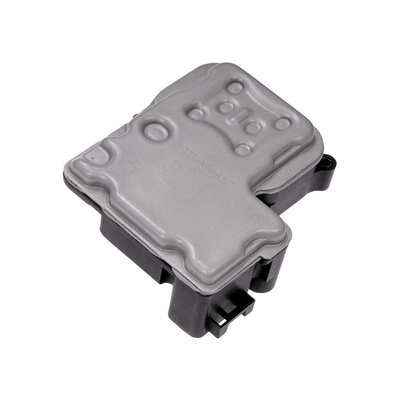
Below are the parts most often responsible for code C1602, ranked by how frequently each one is the actual culprit (per the diagnosis above). Tap any to see what we have for your vehicle.



The information in this article is provided for general reference and educational purposes only. Vehicle specifications, procedures, and part compatibility can vary by production date, trim level, and region. Always consult your vehicle's factory service manual and verify part numbers before purchasing or performing repairs. Safety-critical components such as airbags, seat belts, and braking systems should be installed by a qualified professional.
- 🧭 Diagnostic Flowchart
- 🎬 Helpful Videos
- 🛍️ Shop This Part
- What Does C1602 Mean?
- Can I Drive With C1602?
- Common Causes
- Symptoms
- Common Fixes & Costs
- Used vs. New Parts: Buying Guide
- What Happens If You Wait — Timeline
- Cost of Not Fixing It
- Diagnosis Steps
- When This Code Triggers (Freeze-Frame Conditions)
- Related Codes
- Climate & Environmental Factors
- How to Talk to a Mechanic About This Code
- Where to Take It: Dealer vs Independent vs Chain
- When to Walk Away From the Repair
- What Scan Tool You Need for This Code
- How to Clear the Code After You Fix It
- Will This Fail Emissions / State Inspection?
- Most Commonly Affected Vehicles
- Manufacturer-Specific Notes
- Real Owner Stories
- 2016 Kia Optima with multiple warning lights
- 2012 Ford Fusion with a P1602 no-start condition
- Dodge Ram with ABS pump running constantly
- How to Prevent This Code From Triggering
- Frequently Asked Questions
- Can I just clear the C1602 code?
- Is it safe to drive with the C1602 code?
- What does 'ECU Hardware Error' actually mean?
- Could a bad wheel speed sensor cause code C1602?
- Is an ABS module repair service reliable?
- If I replace the ABS module, does it need to be programmed?
- Can I just replace the electronic part of the ABS module?
- Key Takeaways
- 🎟️ Get 5% Off