

OBD-II Code C1604: Control Unit Hardware Error
What C1604 means, why it triggers, and how to fix it
- Code C1604 indicates an internal hardware failure in your ABS or Electronic Power Steering (EPS) control module, requiring repair or replacement.
- Test your battery and alternator first; voltage drops below 12.4V frequently trigger false C1604 hardware errors.
- Do not drive normally with a C1604 code; disabled ABS increases stopping distances by over 20 meters at highway speeds, and failed EPS makes steering dangerously heavy.
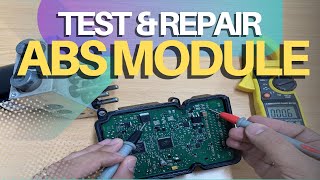
- Save $500 to $1,500 by sending your original ABS or EPS module to a specialist for remanufacturing instead of buying a new unit that requires dealer programming.
What Does C1604 Mean?

Code C1604 means your car's computer detected an internal hardware failure in a critical control module, usually the Anti-lock Brake System (ABS) or Electronic Power Steering (EPS). The module ran a self-check and found an unrecoverable error in its internal processor, memory, or circuits, forcing a shutdown to prevent unpredictable behavior.
Technical definition: While definitions vary by manufacturer, C1604 generally means 'ECU Hardware Error' (common in Hyundai/Kia). The Electronic Control Unit (ECU) for the ABS or EPS detected a malfunction in its processor, memory, A/D converter, or status register. The ECU sets the code when it detects an incorrect checksum during an EEPROM read or if the read sequence times out. On Nissan vehicles, it specifically points to a failure of the Electric Power Steering Torque Sensor.
Can I Drive With C1604?
Yes, But With Caution. You can drive short distances to a repair shop, but exercise extreme caution. Code C1604 disables your Anti-lock Braking System (ABS) or Electronic Power Steering (EPS). Without EPS, steering becomes extremely heavy at low speeds, making parking and sharp turns difficult. Without ABS, wheels lock during hard braking, increasing stopping distances by over 20 meters from 70 mph and causing skids. Continuing to drive with a failed EPS system damages the steering rack.
Common Causes

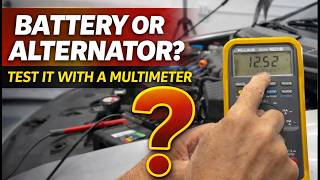
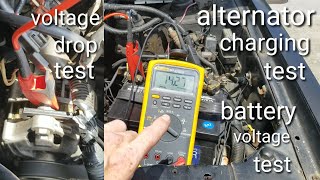
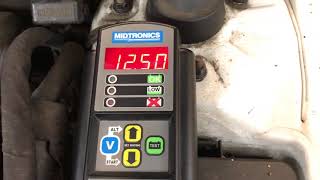
- Low or Unstable Battery Voltage (Very Common) — Control modules require a stable voltage (above 12.4V). A weak battery, failing alternator, faulty battery sensor (common on Kia Forte), or corroded terminals cause voltage drops 🎬 Watch: How to test your battery and alternator with a multimeter. that trigger false hardware error codes.
- Internal Failure of the ABS or EPS Control Module (Very Common) — Age, heat cycles, and vibrations degrade internal circuits and solder joints over time. Moisture intrusion causing internal corrosion is another primary cause of premature failure.
- Poor Ground Connection (Common) — Modules rely on a clean chassis ground. A loose or corroded ground strap creates electrical noise and unstable power, triggering C1604. This is a known issue on Nissan models.
- Corroded or Damaged Wiring/Connectors (Common) — Moisture, heat, and road salt damage wiring harnesses and connectors. This creates short or open circuits that the module misinterprets as an internal hardware fault.
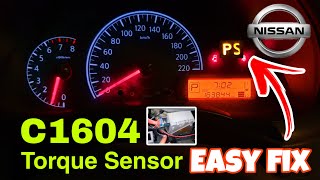
- Internal Torque Sensor Failure (Less Common) — On brands like Nissan, C1604 points directly to a malfunctioning steering torque sensor integrated into the steering column. 🎬 See this video for a Nissan torque sensor repair solution. The module functions normally but receives impossible data from the sensor.
- Software or Firmware Glitch (Rare) — Software bugs trigger false codes. Manufacturers issue Technical Service Bulletins (TSBs) with software updates to fix the problem without replacing parts, as seen with the 2021 Kia Seltos.
- Sudden Impact or Shock (Rare) — Hitting a large pothole or curb causes catastrophic failure of delicate electronics within the ABS or EPS module, leading to an immediate C1604 code.
Symptoms

- ABS Warning Light On — The ABS light illuminates, indicating the anti-lock braking system is disabled.
- EPS/Power Steering Warning Light On — The Electronic Power Steering (EPS) warning light turns on, signaling a fault in the power steering system.
- Steering Becomes Heavy or Difficult — If the EPS module fails, you lose power steering assist, making the steering wheel very hard to turn at low speeds.
- Traction Control or Stability Control Light On — Because ABS and stability control systems link together, an ABS module fault disables these safety features and illuminates their warning lights.
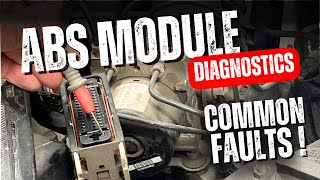
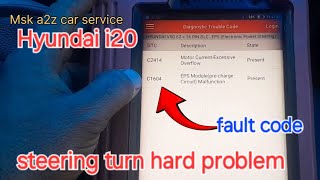
- Erratic Steering Behavior — A failing EPS module or torque sensor sends erratic signals, causing the wheel to feel notchy, make clunking noises, or attempt to self-steer before shutting down completely 🎬 Watch: Diagnosing C1604 and C2414 on a Hyundai i20. (common in Hyundai i20).
Diagnostic Flowchart
Tap your situation to follow the diagnostic path that matches what you're seeing on this code.
Common Fixes & Costs
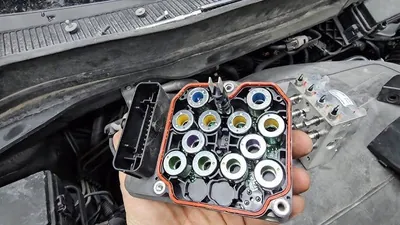
- Repairing/Remanufacturing the Original Module — Parts: $150-$400, Labor: $100-$200, ~1.5 hr book time (Intermediate)
- Replacing the ABS Control Module — Parts: $600-$2500, Labor: $150-$300, ~1.5 hr book time (Professional)
- Replacing the EPS Control Module or Full Steering Column — Parts: $400-$2600, Labor: $200-$400, ~2.5 hr book time (Professional)
- Repairing Damaged Wiring or Ground Connection — Parts: $10-$50, Labor: $100-$400, ~2 hr book time (Intermediate)
- Updating Control Module Software — Parts: $0, Labor: $100-$200, ~1 hr book time (Professional)
Used vs. New Parts: Buying Guide
When a used part is worth it: A used ABS or EPS module suits older, lower-value vehicles where new parts are cost-prohibitive, provided you have access to professional scan tools for VIN programming.
Donor-vehicle mileage cap: roughly under 100000 miles for the part to have meaningful remaining life.
Donor quality checklist:
- Match the part number exactly; electronics are rarely interchangeable.
- Source from a reputable seller offering a short-term warranty (30-90 days).
- Avoid parts from vehicles with flood or fire damage.
- Understand the part requires VIN programming to function.
Decision logic:
- If The part requires VIN programming and you are a DIYer → Choose 'Repair Service' for your original module to avoid programming.
- If The vehicle is newer and under 100k miles → Favor a new OEM part or a high-quality remanufacture for longevity and warranty.
- If Budget is the primary concern and programming is possible → A used part is an option, factoring in the risk of failure after the warranty period.
Warranty tradeoff: Used parts have 30-90 day warranties. New aftermarket parts offer 1-year to lifetime warranties. OEM parts have a 1-year warranty. Repair services usually provide a 1-year or lifetime warranty.
Worst-case if a used part fails: $500-$1000 if a used part fails, requiring a replacement part and repeated labor costs.
What Happens If You Wait — Timeline
- Immediate: Code sets, ABS and/or EPS warning light illuminates. The vehicle's fail-safe protocol disables the corresponding system. (MPG impact: 0%% · Added cost: $0)
- 0-1 month: Steering is consistently heavy. In emergency braking, wheels lock up, increasing stopping distance and causing loss of steering control. (MPG impact: 0%% · Added cost: $0 - $5000+ (Cost of an accident due to compromised handling))
- 1-6 months: Continued driving with failed EPS risks driver fatigue and accidents. A faulty ABS module causes uneven brake wear. (MPG impact: 0-1%% · Added cost: $50-$300 (Premature brake pad wear or alignment issues))
- 6+ months: The vehicle remains unsafe and fails state safety inspections checking for ABS/EPS warning lights. (MPG impact: 0%% · Added cost: $100+ (Failed inspection fees, towing))
Cost of Not Fixing It
- Immediate: Loss of ABS and/or Power Steering. This increases stopping distances and requires extreme effort to steer. (Added cost: Negligible in parts, infinite if it leads to an accident.)
- 1-6 months: A faulty ABS module intermittently applying brakes causes premature wear of pads and rotors. (Added cost: $200-$800 for new brake pads and rotors.)
- 6+ months: The vehicle remains unsafe and fails safety inspections in states checking ABS/EPS functionality. (Added cost: Towing costs and eventual repair expenses.)
Diagnosis Steps

- Check for Technical Service Bulletins (TSBs)
Search online for TSBs for your vehicle's make, model, and year related to C1604. Models like the 2021 Kia Seltos have a known software issue (TSB SA466) fixed with a dealer update.
Tools: Smartphone or computer (Beginner) - Check Battery and Charging System
Verify battery health. Use a multimeter to check voltage; it must be above 12.4V with the engine off and between 13.5V and 14.5V running. A weak battery or failing alternator frequently causes this code.
Tools: Multimeter (Beginner) - Inspect All Related Fuses
Locate and inspect all fuses for the ABS and Power Steering systems. On Volkswagens, a blown high-amperage alternator fuse in the under-hood box causes low voltage and triggers power steering faults.
Tools: Owner's manual, fuse puller (Beginner) - Visually Inspect Wiring and Grounds
Inspect the ABS or EPS module wiring harness and connectors for corrosion or damage. Follow the main ground wire to the chassis and ensure the connection is clean and tight. Loose grounds are a common culprit on Nissans.
Tools: Flashlight, socket set, wire brush (Intermediate) - Scan and Clear Codes, Then Test Drive
Clear the C1604 code with a scanner. Drive the vehicle. If the code returns immediately, it indicates a hard failure within the control module. If intermittent, the issue is wiring or voltage-related.
Tools: OBD-II Scanner (Intermediate) - Pro Tip: Scan Tool Live Data Analysis
Monitor live data PIDs from the affected module. For EPS, watch 'Module Supply Voltage' (>12V), 'Torque Sensor' (changes smoothly when turning), and 'Motor Current'. For ABS, monitor 'Wheel Speed Sensor' PIDs while driving to ensure consistent readings.
Tools: Advanced OBD-II Scan Tool (Advanced) - Pro Tip: Torque Sensor Voltage Check
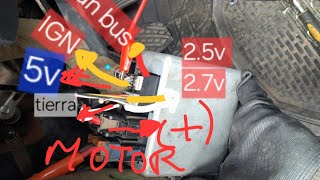
Test the EPS torque sensor. With ignition on (engine off), connect a multimeter to the signal output wires. Applying light pressure to the steering wheel should increase one voltage from center (e.g., 2.5V) and decrease the other. No change indicates a faulty sensor.
Tools: Multimeter, vehicle-specific wiring diagram (Advanced) - Pro Tip: CAN Bus Resistance Check
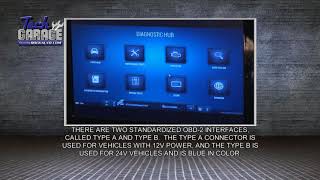
Measure resistance at the OBD-II port to check network health. Turn ignition off, wait 5 minutes. Measure between Pin 6 and Pin 14. A healthy network reads 60 Ω. A 120 Ω reading indicates an open circuit or missing terminating resistor.
Tools: Multimeter (Advanced) - Pro Tip: EPS Motor Resistance Check (Nissan)
On Nissan models, check the EPS motor. With ignition off, disconnect the EPS motor connector and measure resistance between terminals. For a 2012 Versa, resistance should be 0.1 Ω or less. Higher readings indicate a faulty motor requiring column replacement.
Tools: Multimeter (Advanced) - Pro Tip: Advanced Signal Analysis with an Oscilloscope
Back-probe the torque sensor signal wires to view the live waveform. A good sensor produces a clean square wave that changes duty cycle as you turn the wheel. Dropouts or noise confirm a failing sensor or bad wiring.
Tools: Oscilloscope, back-probe pins (Advanced) - Final Diagnosis: Swapping with a Known-Good Part
If wiring, power, and grounds test good, substitute the suspected module with a known-good unit. If this corrects the fault, the original module is defective.
Tools: OBD-II Scanner, basic hand tools (Professional)
When This Code Triggers (Freeze-Frame Conditions)
- Event: Ignition ON (The code sets during the Power-On Self-Test (POST) when the ignition turns on, before the engine starts.)
- Module Voltage: < 11.5V or Unstable (The code triggers during operation if system voltage drops suddenly due to a failing battery, alternator, or poor connection.)
- Internal Check: Checksum Mismatch / Timeout (The module's processor checks its memory at startup. Corrupt data or a timeout sets the code.)
- Vehicle Speed: 0 mph (If triggered during the initial self-test, the vehicle is stationary.)
Related Codes
- C1260 — Indicates a Steering Angle Sensor (SAS) fault. A C1604 fault means the main module is bad and cannot process the SAS signal. C1604 is the primary fault.
- C2414 — Indicates 'Motor Current Excessive' in the EPS system. Frequently set alongside C1604 on Hyundai/Kia vehicles when the failing EPS module sends erratic current to the steering motor.
- C1606 — On Nissan vehicles, C1606 (EPS Motor Malfunction) appears with C1604 (Torque Sensor). The torque sensor sends bad data, causing the control unit to flag the motor circuit.
- C1702 — Indicates 'Variant Coding Error' on Hyundai/Kia vehicles when a new ABS or EPS module is installed but not programmed to the vehicle's VIN.
Climate & Environmental Factors
- High Humidity and Road Salt: Moisture and salt accelerate corrosion on external connectors and penetrate seals, causing internal circuit board corrosion. This is a major issue in coastal and 'Salt Belt' regions.
- Water Ingress: Leaks from clogged sunroof drains or driving through deep puddles introduce water directly to modules, causing immediate electrical shorts and long-term corrosion.
How to Talk to a Mechanic About This Code
Say this: "I have a C1604 code and the ABS/EPS light is on. Please start by testing the battery, charging system, and checking the main power and ground connections to the control module before assuming the module itself has failed."
This directs the shop to perform a logical, cost-effective diagnostic routine first, reducing the chance of an immediate, expensive misdiagnosis.
Avoid saying:
- 'My ABS light is on, can you just fix it?'
- 'The car is steering funny, do whatever you think is best.'
- 'Just replace the computer.'
Questions to ask before authorizing the repair:
- Did you confirm the battery is healthy and the alternator provides stable voltage between 13.5 and 14.5 volts?
- Was the module's ground connection inspected and confirmed clean and tight?
- Is the replacement quote for a new OEM, remanufactured, or used part?
- Does the replacement require VIN programming, and is that cost included?
- Can I send my original module out for repair, and how does that compare in cost?
Where to Take It: Dealer vs Independent vs Chain
- Dealer:
Best for warranty work or known TSBs. Get a second opinion here if an independent shop struggles with programming.
Best for: Vehicles under warranty, Repairs covered by a Technical Service Bulletin (TSB), Complex module programming
Downsides: Highest labor and parts costs., Defaults to replacing entire assemblies instead of smaller components. (Typical cost: +30% vs. baseline) - Independent Shop:
Highly Recommended. Offers a balance of expertise and value. Vet the shop for electronic module diagnostic capabilities.
Best for: Out-of-warranty vehicles., Diagnosing common issues like bad grounds or voltage problems., Exploring cost-effective options like remanufactured parts.
Downsides: Diagnostic tool capabilities vary; ensure they have advanced scanners for ABS/EPS codes and programming. (Typical cost: +0% vs. baseline) - Chain Shop:
AVOID for diagnosing C1604. The risk of misdiagnosis is very high.
Best for: Simple services like oil changes., Basic battery tests.
Downsides: Technicians lack specialized training for complex electronic diagnostics., High-pressure sales environment., Lacks tools for module programming or ABS bleeding. (Typical cost: -10% vs. baseline)
When to Walk Away From the Repair
If the estimated repair cost exceeds 50% of the car's private-party market value, consider selling or trading in the vehicle.
- Car worth $4000, fix is $2200: Walk away. The repair cost exceeds 50% of the car's value.
- Car worth $15000, fix is $2500: Fix it. The repair cost is below the threshold and restores a critical safety system.
- Car worth $3000, fix is $450: Fix it. A cheaper fix like a wiring repair or module remanufacturing justifies the repair.
What Scan Tool You Need for This Code
Minimum: A scanner that reads and clears ABS, SRS, and EPS codes, and displays live data for relevant sensors.
A basic $20 engine code reader cannot communicate with ABS or EPS modules and will show 'no codes found'.
Budget: BlueDriver Pro or Foxwell NT630 Plus (~$100) — Reads and clears ABS/EPS codes, and displays live data to diagnose voltage or sensor issues.
Mid-range: Foxwell NT510 Elite or Autel MaxiCheck Pro (~$250) — Includes bidirectional controls to run the 'Automated Bleed' function after replacing an ABS module.
Professional: Autel MaxiCOM MK808S or Launch X431 series (~$500-1200) — Provides full bidirectional control and module programming ('variant coding') required for new or used ABS/EPS modules.
Rent vs buy: Auto parts stores scan ABS/EPS codes for free but cannot perform programming or ABS bleeding. Buy a mid-range or pro-level scanner if replacing a module yourself.
How to Clear the Code After You Fix It
- Reconnect any disconnected components (e.g., battery, module connector).
- Use an OBD-II scan tool to access the ABS or EPS system and clear the C1604 fault code.
- Perform a short test drive involving several turns and stops to confirm the warning light remains off and system functionality is restored.
Drive cycle (~15 minutes): Start the vehicle and idle for 1-2 minutes. Drive for 10-15 minutes in city conditions (under 40 mph) including left and right turns. If the warning light remains off, the repair is successful.
Readiness monitors affected: None directly. Clearing DTCs with a generic scanner resets all emission readiness monitors, preventing a smog check pass.
Before emissions retest: drive at least 50 miles to fully set monitors.
Watch out for:
- Using a generic OBD-II scanner that cannot access ABS or EPS control modules.
- Clearing the code without fixing the root cause, resulting in immediate code return.
- Forgetting that clearing codes resets emissions monitors, leading to a failed smog test.
Will This Fail Emissions / State Inspection?
No — by itself this code doesn't fail OBD inspection (but it can keep readiness monitors from setting, which causes a separate fail).
- California: An illuminated ABS or EPS warning light does NOT cause a smog check failure. Only the 'Check Engine' light causes automatic failure.
- New York: An illuminated ABS warning light is an advisory item, not a cause for safety inspection rejection. The vehicle passes if the base braking system functions.
- Texas: Inspectors check base brake and steering systems. While an ABS light is not an automatic failure, an inspector fails the vehicle if the overall braking system is unsafe. It passes the emissions test.
Most Commonly Affected Vehicles
- Hyundai Elantra (2009-2012) — Prone to internal hardware failure of the ABS/ESC control unit. A recall exists for some 2007-2011 models for a fire risk due to moisture intrusion in the ABS module.
- Kia Seltos / Soul (2021-2022) — A software glitch triggers C1604 during startup. Kia service bulletin SA466 updates the EPS module software to resolve the false code.
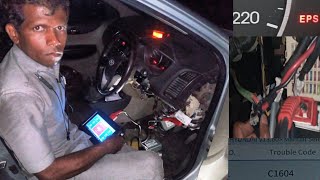
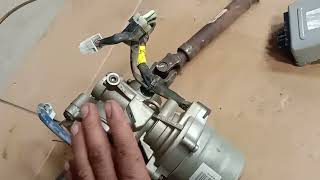
- Hyundai i20 (2011-2015) — Experiences EPS module failure, causing intermittent steering hardness or self-steering. Often accompanied by code C2414 (Motor Current Excessive).
- Hyundai i30 (2009-2012) — Known for EPS failure requiring full steering column replacement.
- Kia Forte (2010-2013) — Triggered by a faulty battery sensor on the negative terminal causing unstable voltage to the EPS module. Wiggling the sensor causes charging system fluctuations, confirming the issue.
- Nissan Versa / Sunny (2012-2015) — C1604 points to a failure of the internal steering torque sensor. Repair requires replacing the entire steering column assembly.
- Kia Optima (2016-2017) — Experiences EPS hardware failure. Symptoms include jerky steering or a clunking noise from the column before assist fails completely.
- Ford Fusion, Focus, Escape, F-150 (2008-2017) — EPAS systems are prone to similar failures, often setting different codes (e.g., C102D). Root causes are typically low battery voltage, bad grounds, or internal rack failure.
Manufacturer-Specific Notes
- Hyundai / Kia: The most common brand for C1604. Several recalls exist for ABS modules shorting out and causing fires (e.g., NHTSA recall 20V-060). Do not confuse C1604 with a worn steering coupler clicking noise (TSB 17-ST-002).
- Nissan / Infiniti: C1604 typically points to a failure of the Electric Power Steering Torque Sensor, requiring replacement of the entire steering column assembly.
- Toyota / Lexus: Code P1604 (Powertrain) means 'Startability Malfunction'. It is unrelated to ABS/EPS and points to an engine starting issue.
- Volkswagen / Audi: A C1604-equivalent fault triggers from a blown high-amperage alternator fuse in the under-hood power distribution box, causing low system voltage and communication errors.
Real Owner Stories
2010 Kia Forte with intermittent power steering loss
Owner experienced sudden, intermittent loss of power steering. The EPS warning light illuminated with code C1604.
Outcome: A faulty battery sensor provided unstable voltage to the EPS module, triggering a false C1604 hardware fault. Replacing the sensor stabilized the power supply and resolved the issue.
Lesson: Verify battery health and charging system stability before condemning an electronic module. Unstable voltage frequently causes false hardware error codes.
2015 Nissan Sunny (Versa) with hard steering
The power steering warning light illuminated, steering became very hard, and a scan revealed code C1604.
Outcome: A missing ground connection starved the EPS control module of power. Securing the loose ground wire restored power, cleared the C1604 code, and fixed the steering.
Lesson: Always check power and ground to the control module first. A simple wiring fault mimics major component failure.
Hyundai i20 with self-steering and C1604/C2414 codes
Steering behaved erratically, jerking and turning on its own before becoming hard. Codes C1604 (ECU Hardware Error) and C2414 (Motor Current Excessive) were stored.
Outcome: The technician diagnosed a faulty EPS control module. Replacing the module resolved all symptoms and codes.
Lesson: When a hardware error (C1604) accompanies an operational error (C2414), the hardware error is the root cause. The failing module sent bad commands to the motor.
2015 VW Jetta, hit curb, ABS/Traction lights on
After hitting a curb at 15-20 mph, ABS and traction control lights illuminated periodically. The steering wheel required an angle to drive straight.
Outcome: Repair required replacing the damaged sensor and bent suspension parts, followed by a wheel alignment.
Lesson: Physical impacts trigger electronic fault codes due to mechanical damage. Repair underlying suspension and sensor damage first; electronic module failure from impact is rare.
How to Prevent This Code From Triggering
- Perform regular brake fluid flushes (Every 2 years or per manufacturer recommendation) — Brake fluid absorbs moisture over time, causing internal corrosion within the delicate passages and electronic components of the ABS module.
- Maintain battery and connections (Every 6 months) — Clean battery terminals and a healthy battery ensure stable voltage. Electronic modules are sensitive to voltage drops that corrupt software or trigger false hardware codes.
- Protect electrical connectors (When working on the vehicle) — Applying dielectric grease to exposed connectors seals out moisture and prevents corrosion, especially for modules in the engine bay or undercarriage.
- Avoid driving through deep water (As needed) — Submerging electronic modules forces water past seals, causing immediate short circuits or long-term corrosion.
- Address fluid leaks promptly (As needed) — Oil, coolant, or power steering fluid leaking onto module wiring degrades protective insulation and seals, allowing contaminants to enter.
Frequently Asked Questions
Is C1604 a serious trouble code?
Yes. It indicates the failure of a key safety system like anti-lock brakes or power steering. While drivable, handling is significantly compromised, and it requires immediate repair.
Can I fix code C1604 myself?
Beginner checks like inspecting the battery and fuses are DIY-friendly. However, replacing an ABS or EPS module requires professional tools for brake bleeding and mandatory software programming.
Will replacing the battery clear a C1604 code?
If low voltage triggered the code, replacing the battery and clearing the code permanently fixes the issue. If the code returns, the module or wiring is faulty.
What is the most common misdiagnosis for C1604?
The most common mistake is replacing the expensive control module without ruling out simpler causes. Always verify battery health, stable voltage, and clean grounds before condemning the module.
Can hitting a pothole cause a C1604 code?
Yes. A severe impact causes sudden electronic failure within the delicate circuitry of an ABS or EPS module, triggering the code immediately.
Do I need to program a new ABS or EPS module?
Yes. A new or used module must be programmed to the car's VIN and specific options. Repairing your original module avoids this programming requirement.
Can a bad alignment cause a C1604 code?
No. However, severe misalignment causes constant steering corrections, stressing the EPAS motor and potentially leading to other fault codes like C102D.
Key Takeaways
- Code C1604 indicates an internal hardware failure in your ABS or Electronic Power Steering (EPS) control module, requiring repair or replacement.
- Test your battery and alternator first; voltage drops below 12.4V frequently trigger false C1604 hardware errors.
- Do not drive normally with a C1604 code; disabled ABS increases stopping distances by over 20 meters at highway speeds, and failed EPS makes steering dangerously heavy.
- Save $500 to $1,500 by sending your original ABS or EPS module to a specialist for remanufacturing instead of buying a new unit that requires dealer programming.
Helpful Videos


Shop the Parts Behind C1604
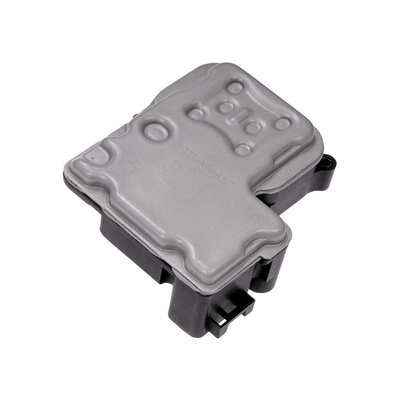
Below are the parts most often responsible for code C1604, ranked by how frequently each one is the actual culprit (per the diagnosis above). Tap any to see what we have for your vehicle.


The information in this article is provided for general reference and educational purposes only. Vehicle specifications, procedures, and part compatibility can vary by production date, trim level, and region. Always consult your vehicle's factory service manual and verify part numbers before purchasing or performing repairs. Safety-critical components such as airbags, seat belts, and braking systems should be installed by a qualified professional.
- 🧭 Diagnostic Flowchart
- 🎬 Helpful Videos
- 🛍️ Shop This Part
- What Does C1604 Mean?
- Can I Drive With C1604?
- Common Causes
- Symptoms
- Common Fixes & Costs
- Used vs. New Parts: Buying Guide
- What Happens If You Wait — Timeline
- Cost of Not Fixing It
- Diagnosis Steps
- When This Code Triggers (Freeze-Frame Conditions)
- Related Codes
- Climate & Environmental Factors
- How to Talk to a Mechanic About This Code
- Where to Take It: Dealer vs Independent vs Chain
- When to Walk Away From the Repair
- What Scan Tool You Need for This Code
- How to Clear the Code After You Fix It
- Will This Fail Emissions / State Inspection?
- Most Commonly Affected Vehicles
- Manufacturer-Specific Notes
- Real Owner Stories
- 2010 Kia Forte with intermittent power steering loss
- 2015 Nissan Sunny (Versa) with hard steering
- Hyundai i20 with self-steering and C1604/C2414 codes
- 2015 VW Jetta, hit curb, ABS/Traction lights on
- How to Prevent This Code From Triggering
- Frequently Asked Questions
- Is C1604 a serious trouble code?
- Can I fix code C1604 myself?
- Will replacing the battery clear a C1604 code?
- What is the most common misdiagnosis for C1604?
- Can hitting a pothole cause a C1604 code?
- Do I need to program a new ABS or EPS module?
- Can a bad alignment cause a C1604 code?
- Key Takeaways
- 🎟️ Get 5% Off