

OBD-II Code C1612: A Pro's Guide to Communication & Power Faults
What C1612 means, why it triggers, and how to fix it for good
- Code C1612 primarily flags a CAN bus communication failure between the ABS module (HECU) and the Transmission Control Module (TCM), particularly on 2010-2019 Hyundai and Kia vehicles.
- A weak battery or a bad ground connection showing a voltage drop above 0.2V frequently triggers this code by disrupting the 11-14V power supply required for module communication.
- Before replacing a $1,500 control module, test the CAN bus resistance at the OBD-II port; a healthy network reads exactly 60 ohms, while 120 ohms indicates a broken wire.
- Hyundai and Kia owners must immediately check their VIN against recalls 251 and SC284, as a C1612 code often precedes a catastrophic HECU internal short and engine fire.
What Does C1612 Mean?
C1612 is a manufacturer-specific chassis ('C') code signaling a communication breakdown between two of your car's computers. On Hyundai and Kia vehicles, it means the anti-lock brake system (ABS) module lost communication with the transmission control module (TCM). Alternatively, it indicates a specific computer module is receiving incorrect voltage (too high or too low) from the ignition system, affecting components from power steering to parking assist.
Technical definition: The formal definition of C1612 varies by manufacturer. For Hyundai and Kia vehicles, the Society of Automotive Engineers (SAE) defines it as 'CAN Time-out TCM,' indicating the Hydraulic Electronic Control Unit (HECU) lost communication with the Transmission Control Module (TCM). For Toyota models, it is defined as 'IG (Ignition) Voltage is Low or High,' indicating voltage is outside the standard 11-14V range. On Mitsubishi vehicles, it translates to 'AWC Pressure Sensor System (High Voltage),' pointing to an all-wheel control system issue where sensor voltage exceeds 4.6V.
Can I Drive With C1612?
Yes, But With Caution. You can drive the vehicle, but with significant caution. Your primary hydraulic brakes still function, but the anti-lock (ABS), traction control (TCS), and electronic stability control (ESC) systems are disabled. This dramatically increases the risk of skidding or losing control in an emergency maneuver or on slippery roads. If the code stems from a communication loss with the transmission module (TCM), you will experience erratic shifting or limp mode, which is dangerous in traffic. Ignoring the issue turns a $300 wiring repair into a $2,000+ HECU or transmission replacement due to cascading damage.
Common Causes
- Damaged or Corroded Wiring/Connectors (Very Common) — The wires and plugs connecting your car's computers (especially the CAN bus network) get damaged, corroded, or come loose. This interrupts the flow of information or electricity. A pothole impact often loosens a connection.
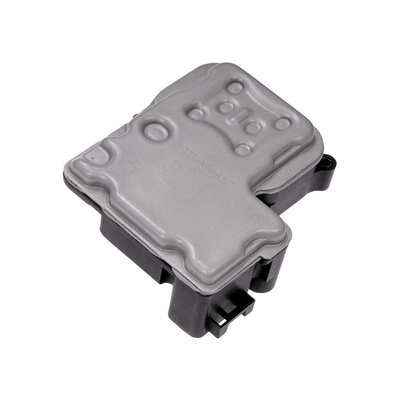
- Internal HECU (ABS Module) Failure (Common) — On many Hyundai and Kia vehicles, the HECU frequently fails. An internal electrical short occurs, disrupting communication and posing a severe fire risk even when the vehicle is off. This triggered a major recall and class-action lawsuit.
- Failing Battery or Alternator (Common) — A weak battery or a failing alternator causes low or fluctuating voltage throughout the car. This triggers the 'IG Voltage Low' variation of the code in various modules.
- Poor Ground Connections (Common) — A corroded, loose, or broken ground strap for the engine, chassis, or a specific control module causes erratic voltage and communication errors between modules. Technicians perform voltage drop tests on grounds before replacing expensive parts.
- Faulty Control Module (TCM or PCM) (Less Common) — The computer modules themselves fail. The Transmission Control Module (TCM) or the main Powertrain Control Module (PCM) goes bad, preventing communication across the network.
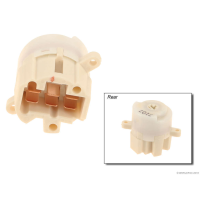
- Faulty Ignition Switch (Less Common) — The ignition switch sends power to many of the car's systems. A failing switch sends an unstable or incorrect voltage, triggering the 'IG Voltage' version of the code.
- Blown Fuses or Faulty Relays (Rare) — A blown fuse or a bad relay in a related circuit causes a total loss of power or communication to a specific module, leading to this code.
- Aftermarket Electronics Interference (Rare) — Improperly installed aftermarket devices like remote starters, alarms, or stereo systems interfere with the CAN bus data network, causing communication timeouts and setting false codes.
Symptoms
- ABS, ESC, or Traction Control Light is On — Because the code involves the brake control module losing communication, you will see these warning lights illuminated on your dashboard.
- Check Engine Light is On — A communication or power fault triggers the main check engine light, although sometimes only chassis-related lights illuminate.
- Transmission Shifting Issues — When the transmission computer loses communication, it results in harsh shifting, getting stuck in one gear (limp mode), or erratic transmission behavior.
- Engine Stalling or Hesitation — If the code relates to an ignition voltage problem or a critical communication loss, the engine runs poorly, hesitates during acceleration, or stalls completely.
- Car Won't Start or Cranks and Stalls — With ignition switch or major communication failures, the vehicle fails to start. On Kia/Hyundai models, this code links directly to a crank-and-stall or no-crank condition.
Diagnostic Flowchart
Tap your situation to follow the diagnostic path that matches what you're seeing on this code.
Common Fixes & Costs
- Repairing Damaged Wiring or Cleaning Connectors/Grounds — Parts: $5-$50, Labor: $150-$450 (1-3 hours of diagnostic and repair time), ~2 hr book time (Intermediate)
- Replacing the Battery — Parts: $150-$350, Labor: $50-$100 (registration/relearning may be extra), ~0.7 hr book time (DIY)
- Replacing the HECU (ABS Pump and Module Assembly) — Parts: $800-$1800, Labor: $300-$600 (includes programming and brake system bleeding), ~2.5 hr book time (Professional)
- Replacing the Ignition Switch — Parts: $50-$200, Labor: $120-$300, ~1.5 hr book time (Intermediate)
- Replacing a Control Module (TCM, PCM) — Parts: $500-$1500+, Labor: $150-$400 (includes diagnostics and required programming), ~2 hr book time (Professional)
DIY vs Professional
- Repairing Damaged Wiring or Cleaning Connectors/Grounds 🟢 Beginner
Tools: Multimeter, socket set, wire strippers, connectors, soldering iron (optional). - Replacing the Battery 🟢 Beginner
Tools: Socket set/wrenches. Battery terminal cleaner. - Replacing the HECU (ABS Pump and Module Assembly) 🟢 Beginner
Tools: Advanced scan tool, flare nut wrenches, brake bleeding equipment. - Replacing the Ignition Switch 🟢 Beginner
Tools: Screwdrivers, trim removal tools, socket set. - Replacing a Control Module (TCM, PCM) 🟢 Beginner
Tools: Advanced scan tool capable of VIN programming and software flashing.
Used vs. New Parts: Buying Guide
When a used part is worth it: A used HECU (ABS module) from a low-mileage vehicle scrapped for non-electrical reasons (like a rear-end collision) is a cost-effective option, especially for older, out-of-warranty vehicles.
Donor-vehicle mileage cap: roughly under 100000 miles for the part to have meaningful remaining life.
Donor quality checklist:
- Verify the part number matches your original module exactly.
- Ask the seller for the VIN of the donor car to check its history.
- Avoid parts from flood-damaged or fire-damaged vehicles.
- Remanufactured units from reputable suppliers like Cardone are a good middle ground, as they are tested and have corrected original design flaws.
Decision logic:
- If Vehicle is under warranty or part of the HECU fire recall → Use a new OEM part installed by the dealer; the repair is free.
- If The vehicle is over 10 years old and the budget is tight → A used or remanufactured module is a reasonable choice, provided you have a plan for programming.
- If The cost of a new OEM part is less than $800 → Buy new for the peace of mind and longer warranty, as the savings on a used part are not worth the risk.
Warranty tradeoff: Used parts from salvage yards typically offer a 30-90 day warranty. Remanufactured parts come with a 1-year to limited lifetime warranty. New OEM parts installed by a dealer carry a 1-year/12,000-mile warranty.
Worst-case if a used part fails: $300-$600 if a used module is dead on arrival or fails after the warranty period, as you pay for labor and programming a second time.
What Happens If You Wait — Timeline
- 0-1 month: Code is set, and ABS/ESC/TCS warning lights are on. The vehicle's primary hydraulic brakes function normally, but all electronic stability and anti-lock safety features are disabled. (MPG impact: 0%% · Added cost: $0, but safety risk is significantly increased.)
- 1-6 months: If the cause is a failing alternator or bad battery, you experience intermittent stalling, dimming lights, or a no-start condition. Continued driving with unstable voltage puts stress on all vehicle electronics. (MPG impact: 0-5% (if shifting becomes erratic)% · Added cost: $500-$900 if the alternator fails completely, requiring replacement and potentially a tow.)
- 6-12 months: On affected Hyundai/Kia models, the unrepaired HECU remains a constant fire risk. For all makes, persistent electrical noise and voltage instability from a bad ground or wiring short degrades the sensitive electronics in other control modules. (MPG impact: 0-5%% · Added cost: $1,000+ if the fire risk materializes or another module is damaged. The original repair requires a more expensive wiring harness fix instead of a simple connector cleaning.)
- 12+ months: Cascading failure occurs. The electrical stress or network instability caused by the initial fault leads to the premature failure of other expensive modules like the TCM or PCM. What started as a C1612 in the ABS module results in additional U-codes across the system, requiring complex diagnostics. (MPG impact: 5-15% (due to poor transmission and engine control)% · Added cost: $1,500-$3,500+ for the diagnosis and replacement of multiple control modules (e.g., ABS module + TCM).)
Cost of Not Fixing It
- Short-Term (0-3 months): Loss of ABS, traction control, and stability control, increasing the risk of an accident in emergency braking or poor weather conditions. You experience erratic shifting or stalling. (Added cost: Negligible, unless an accident occurs.)
- Medium-Term (3-12 months): Continued electrical stress on related modules. If the cause is a faulty alternator, it fails completely, leaving you stranded. On affected Hyundai/Kia models, the fire risk from a faulty HECU persists as long as the vehicle is driven. (Added cost: $500-$900 for a new alternator, plus potential towing costs.)
- Long-Term (1+ year): A persistent communication fault leads to premature failure of other networked modules, such as the TCM or PCM, due to electrical noise or instability. A minor wiring issue evolves into a major harness replacement. (Added cost: $1500-$3000+ for replacing and programming additional control modules.)
Diagnosis Steps
- Clear the Code and Test Drive
Use an OBD-II scanner to clear the C1612 code. Drive the vehicle to see if the code returns immediately. A temporary glitch sets a code, and if it doesn't come back, it is not a persistent issue.
Tools: OBD-II Scanner (Beginner) - Check the Battery and Charging System
Many electrical problems start with a bad battery or alternator. Use a multimeter to check the battery voltage with the car off (should be ~12.6V). Start the car and check it again (should be ~13.5-14.5V). A parts store performs a comprehensive test for free.
Tools: Multimeter (Beginner) - Inspect Fuses and Relays
Check your vehicle's fuse box (cabin and engine bay). Look for fuses labeled for the ABS, ESC, TCM, or ECU. Pull them out and visually inspect if the metal strip inside is broken. Inspect related relays for signs of overheating or damage.
Tools: Fuse puller (often included in the fuse box), Owner's manual (Beginner) - Visually Inspect Wiring and Ground Connections
Look for obvious signs of damage to the wiring harnesses going to the transmission and the ABS control module. Check for corrosion on battery terminals and ensure the main engine and chassis ground straps are clean, tight, and not frayed.
Tools: Flashlight, Socket set (for grounds) (Intermediate) - Use an Advanced Scanner for Deeper Diagnosis
A basic code reader only shows generic engine codes. C1612 is a manufacturer-specific chassis ('C') code. A bi-directional scan tool is required to read codes from all modules (ABS, TCM, etc.) and see which one is reporting the fault.
Tools: Advanced Bi-Directional Scan Tool (Advanced) - Pro Tip: Test the CAN Bus Resistance
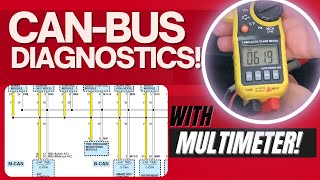
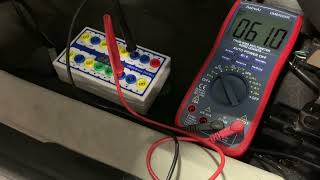
With the battery disconnected, use a multimeter to measure the resistance between Pin 6 (CAN High) and Pin 14 (CAN Low) on the vehicle's OBD-II port. A healthy network reads approximately 60 Ohms. A reading of 120 Ohms indicates a break in the circuit or a missing terminating resistor. A reading near 0 Ohms indicates the CAN High and Low wires are shorted together.
Tools: Multimeter, OBD-II port pinout diagram (Advanced) - Pro Tip: Perform a Ground Voltage Drop Test
To confirm a solid ground at the HECU, connect a multimeter's red lead to the module's ground pin and the black lead to the negative battery terminal. With the ignition on, the voltage reading must be less than 0.2 volts (200mV). A higher reading indicates a poor ground connection causing resistance.
Tools: Multimeter, Vehicle-specific wiring diagrams (Advanced) - Advanced: Check CAN Bus Live Voltage
With the ignition on, use a multimeter to check the voltage on the CAN bus lines at the OBD-II port. CAN High (Pin 6) should be ~2.5V at rest and pulse up to ~3.5V when data is sent. CAN Low (Pin 14) should be ~2.5V at rest and pulse down to ~1.5V. If voltages are stuck high or low, it indicates a wiring short or a faulty module.
Tools: Multimeter, OBD-II port pinout diagram (Advanced) - Advanced: Check for IG Power Supply Voltage (Toyota/Lexus)
If your vehicle defines C1612 as an ignition voltage issue, check the voltage at the specified ECU (e.g., Parking Assist ECU). With the ignition on, measure the voltage between the IG power pin and the ground pin at the module's connector. The reading must be between 11 and 14 volts.
Tools: Multimeter, Vehicle-specific wiring diagrams (Advanced) - Isolate the Faulty Module or Wiring
Using vehicle-specific wiring diagrams, disconnect modules one by one to see if the CAN bus resistance returns to a normal 60 Ohms. Use an oscilloscope to look for a clean, square waveform on the CAN lines. A noisy or flat signal points to wiring issues or a faulty module dragging the network down.
Tools: Multimeter, Oscilloscope, Vehicle-specific wiring diagrams (Professional)
When This Code Triggers (Freeze-Frame Conditions)
- Vehicle Speed: 30-60 mph (During steady cruise or light acceleration/deceleration.)
- Engine RPM: 1200-2500 RPM (Normal driving range, not high-load or high-RPM.)
- System Voltage: <11.5V or >15V (Logged at startup (low voltage) or if the alternator is failing (high voltage).)
- Time Since Start: Variable (The communication timeout happens immediately at startup or intermittently during a drive.)
Related Codes
- C1611 — This code frequently appears with C1612, especially in Hyundai and Kia vehicles. C1611 indicates a 'CAN Time-out from ECM,' while C1612 indicates a 'CAN Time-out from TCM.' If you have only C1612, the problem is between the ABS and TCM. If you have both, it suggests a wider network problem affecting multiple modules.
- U0101 — This is a generic SAE code for 'Lost Communication with TCM'. C1612 is the manufacturer-specific equivalent set by the ABS module. Seeing U0101 in the PCM and C1612 in the ABS module strongly confirms the problem is a communication breakdown with the transmission control module.
- C1616 — A more severe code than C1611/C1612. In Hyundai/Kia vehicles, C1616 means 'CAN Bus Off'. It is set by the HECU when it fails to initialize on the network after multiple attempts. This points to a major network failure, such as a shorted wire, a bad ground for the entire system, or a complete failure of the HECU.
- P0562 — This code means 'System Voltage Low' and is set by the Powertrain Control Module (PCM). If you see this with the 'IG Voltage' variation of C1612 (common in Toyota), it points directly to a systemic electrical problem like a failing battery or alternator, rather than a data bus fault.
Climate & Environmental Factors
- High Humidity & Road Salt: These conditions significantly accelerate corrosion on wiring, connectors, and chassis ground points. Vehicles in the 'Salt Belt' or coastal areas are more prone to C1612 faults caused by electrical resistance from corrosion.
- Extreme Cold: Cold temperatures weaken an already-failing battery, causing low voltage conditions that trigger the 'IG Voltage Low' variant of the code. It causes plastics to become brittle, leading to connector or wire insulation damage.
How to Talk to a Mechanic About This Code
Say this: "I have a C1612 code, and my ABS/ESC lights are on. I'd like to schedule a diagnostic appointment. Since this is a communication code, please start by checking the power supply, grounds, and the CAN bus wiring between the ABS module and the TCM before quoting a module replacement."
This signals you understand the code's nature and that the most common causes are wiring or power-related, not a failed module. It directs the technician to perform foundational diagnostics first, which prevents them from jumping to the most expensive conclusion.
Avoid saying:
- 'My ABS light is on, can you fix it?' (This is too vague and invites a parts-based guess rather than diagnosis.)
- 'I think I need a new ABS module.' (Never diagnose the car for the shop; you pay for a part you didn't need.)
- 'Just do whatever it takes to fix it.' (This gives the shop a blank check and removes your ability to control costs.)
Questions to ask before authorizing the repair:
- Did you perform a voltage drop test on the ABS module's power and ground circuits? What were the readings?
- Did you measure the resistance on the CAN bus at the OBD-II port? Was it 60 ohms?
- Can you show me the damaged wiring or corroded connector that you found?
- If you are recommending a module replacement, what specific tests did you run to condemn the old module?
- Does the estimate include the cost of programming the new module and bleeding the brakes?
- What is the warranty on this specific repair, including both parts and labor?
Where to Take It: Dealer vs Independent vs Chain
- Dealer:
Recommended if your vehicle is part of a recall or if an independent shop failed to diagnose the issue. They are a reliable, albeit expensive, option for this complex code.
Best for: Vehicles under warranty or covered by the HECU fire recall., Complex, brand-specific electrical issues where the dealer has proprietary diagnostic tools and information., When a new module requires online programming that only a dealer performs.
Downsides: Typically the highest labor rates., Quicker to replace a whole module assembly rather than perform a detailed wiring repair. (Typical cost: +50% vs. baseline) - Independent Shop:
Best fit for most cases, provided you vet the shop. A good independent technician with CAN bus diagnostic experience is ideal for finding a wiring or ground fault without resorting to expensive module replacement.
Best for: Out-of-warranty vehicles where cost is a major factor., Shops with a strong reputation for electrical and diagnostic work (look for ASE certifications and positive reviews mentioning diagnostics).
Downsides: Shop quality and diagnostic capability vary widely., Lacks access to the very latest manufacturer-specific software or tools for programming. (Typical cost: +0% vs. baseline) - Chain Shop:
AVOID for diagnosing the root cause. While they test the battery, they are not equipped for the in-depth electrical troubleshooting this code requires.
Best for: Checking and replacing the battery, which is sometimes the cause., Reading the initial code for free.
Downsides: Technicians lack the advanced training and equipment (like oscilloscopes) for complex CAN bus diagnosis., High pressure to sell parts leads to misdiagnosis and unnecessary replacement of modules. (Typical cost: -10% vs. baseline)
When to Walk Away From the Repair
If the estimated repair cost for the C1612 fault exceeds 50% of your car's private-party market value (check Kelley Blue Book or Edmunds), seriously consider selling or trading in the vehicle instead of repairing it.
- Car worth $5000, fix is $2500: Walk away. A $2,500 repair (e.g., a new HECU module plus labor) is too much to invest in a $5,000 car.
- Car worth $10000, fix is $400: Fix it. A $400 repair for a wiring issue is well below the threshold and restores critical safety systems.
- Car worth $3000, fix is $1800: Walk away. The repair cost is over 50% of the car's value. It is not economically sensible.
What Scan Tool You Need for This Code
Minimum: A scanner that reads manufacturer-specific Chassis (C) codes from the ABS/ESC module. A generic engine-only code reader is not sufficient.
A $20 OBD-II reader will not see the C1612 code at all, or it won't tell you which module (ABS, Power Steering, etc.) stored the code. Without this, you cannot begin to diagnose the problem.
Budget: Foxwell NT301 Plus / Autel AL619 (~$80) — Reads and clears engine AND ABS codes. This is the minimum needed to confirm the code exists in the brake module and to clear it after a repair.
Mid-range: BlueDriver Pro / Foxwell NT510 Elite (~$120) — Scans all vehicle modules (ABS, TCM, ECM, etc.), provides live data streaming for voltages and sensor readings, and offers repair reports. This level of detail is crucial for seeing if the communication loss is happening in real-time.
Professional: Autel MaxiCOM MK808 / Innova 5610 (~$450-600) — Offers bi-directional control to actively test modules and components. For example, it commands the ABS pump to cycle, which is necessary after replacing a HECU. This is professional-grade diagnostic power.
How to Clear the Code After You Fix It
- Ensure all connectors are secure and the battery is reconnected.
- Use an OBD-II scan tool to erase the C1612 fault code from the ABS/ESC module.
- Perform a drive cycle to allow the system to re-verify communication.
Drive cycle (~15 minutes): Start the engine and let it idle for 2-3 minutes. Drive the vehicle at a steady speed between 40-60 mph for 5-10 minutes. Perform several stop-and-go maneuvers in a safe location. After the drive, turn the ignition off and then back on to see if the warning lights return.
Readiness monitors affected: This is a chassis code and does not directly affect emissions readiness monitors like Catalyst or O2 sensors.
Watch out for:
- Simply clearing the code without fixing the underlying wiring, ground, or module issue causes it to return almost immediately.
- Forgetting to have a replacement module programmed prevents the code from being cleared successfully.
Will This Fail Emissions / State Inspection?
Yes — this code typically fails an OBD-II emissions inspection.
- California: An illuminated ABS light is not an automatic failure for the smog check itself, but if the Check Engine Light is also on due to the communication fault, the vehicle fails. The OBD-II system scan reports the C-code, but the P-code (from the CEL) fails the test.
- New York: An illuminated ABS warning light is grounds for failing the state safety inspection. While some forum users report passing with the light on, official rules lead to failure.
- Texas: For counties requiring emissions testing, an illuminated Check Engine Light is an automatic failure. While the ABS light itself is a safety item, a related CEL prevents you from passing inspection.
Most Commonly Affected Vehicles
- Hyundai Elantra (2011-2013) — Prone to the 'CAN Time-out TCM' variation. Hitting a pothole is a known trigger for loosening a connector. Some models were also subject to ECM update TSBs which relate to module communication.
- Kia Optima (2011-2015) — Often experiences this code as a 'Loss of Communication w/ TCM', causing a no-start or crank-and-stall condition. These models were part of the major HECU fire risk recall (SC284).
- Hyundai Tucson (2011-2017) — Frequently logs C1612 for loss of communication between the HECU and TCM. Diagnostic procedures for the 2017 model specifically point to CAN bus circuit inspection.
- Hyundai Accent (2010-2012) — This model sets C1612 for 'CAN Time-out TCM', disabling the Electronic Stability Program (ESP). The fault triggers if the TCM message is not received by the HECU within 500ms. Part of HECU fire risk recall 251.
- Hyundai Veracruz / ix55 (2009-2011) — Sets C1612 when the HECU does not receive a signal from the TCU (TCM) within a specific timeframe, inhibiting ESP control.
- Ford Focus (2012-2018) — Logs a C1612-equivalent code related to lost communication with the ABS control module. These models are known for wiring harness issues where chafing against chassis components causes shorts.
- Mitsubishi Outlander, Lancer (2008-2015) — On these models, C1612 indicates 'AWC Pressure Sensor System (High Voltage),' a fault within the All-Wheel Control system where sensor voltage is >= 4.6V, rather than a typical CAN bus error.
- Chevrolet Cruze, Malibu (2011-2016) — On GM vehicles, the related code P1612 points to a problem with the immobilizer or anti-theft system communication, causing a no-start.
Manufacturer-Specific Notes
- Hyundai / Kia: For these brands, C1612 means 'CAN Time-out TCM'. The issue is a communication loss between the brake control module (HECU) and the transmission control module (TCM). Critically, the HECU in many models was subject to recalls for being a fire hazard. Owners are advised to park outside until the repair is complete. Key recall campaign numbers include Hyundai's 251 and Kia's SC284 (NHTSA 23V652000). The remedy is a free fuse replacement at the dealership to prevent overcurrent.
- Toyota / Lexus: On some Toyota models, C1612 is defined as 'IG Voltage is Low or High' and is stored in the Parking Assist ECU. This indicates a power supply problem (outside the 11-14V range) to the parking sensor system, not a CAN bus failure.
- General Motors (GM): While C1612 is less common, the related code P1612 on GM vehicles points to a problem with the immobilizer or anti-theft system communication, causing a no-start condition.
- Nissan: Similar to GM, Nissan uses the code P1612 for 'IMMU-KEY UNMATCH' or 'LOCK MODE,' indicating a failure between the ignition key's transponder and the immobilizer module, preventing the car from starting.
Real Owner Stories
2013 Hyundai Elantra at 80K miles with C1611 & C1612
Check Engine Light came on, but the car ran fine. A basic auto parts store code reader showed C1611 and C1612.
Outcome: The initial advice was to perform a full system scan with a professional tool if the codes reappeared, as the fault existed in the ESC, TPMS, or power steering modules. The problem was an intermittent communication glitch.
Lesson: Never trust a basic code reader for chassis codes. Clear the code and see if it returns before starting expensive diagnostics. A professional, all-module scan pinpoints the true source of a CAN bus error.
2013 Kia Optima with multiple communication codes (C1611, C1612, C1688)
ABS and ESC lights were on, and the owner felt the ABS cycling when coming to a stop. An auto parts store scan suggested a faulty ABS module.
Outcome: The combination of multiple CAN timeout codes (C1611 for ECM, C1612 for TCM) points to a failure of the main HECU/ABS module, which acts as a central hub for these communications.
Lesson: When multiple modules report a loss of communication simultaneously, the problem is a central module they all talk to (like the ABS module) or a network-wide issue like a bad ground, not individual module failures.
2017 Hyundai Tucson with C1612
The ESP/ESC warning light activated, indicating the stability control system was disabled. A professional scan tool identified C1612: CAN Time-out TCM.
Outcome: The diagnostic procedure confirmed a break in the CAN High wire before condemning the expensive HECU or TCM modules.
Lesson: A communication timeout code is usually a wiring or connector problem, not a failed computer module. Following a systematic diagnostic procedure prevents unnecessary replacement of expensive parts.
How to Prevent This Code From Triggering
- Perform regular battery and charging system tests (Twice per year (e.g., before winter and summer)) — A weak battery or failing alternator causes low or unstable voltage, a primary trigger for the 'IG Voltage' variant of C1612. A load test identifies a failing battery before it causes electronic issues.
- Clean battery terminals and chassis ground points (Once per year or every oil change) — Corrosion on terminals and ground straps creates resistance, leading to voltage drops and communication errors between modules. Cleaning these points with a wire brush ensures a solid electrical connection.
- Apply dielectric grease to critical electrical connectors (When servicing or exposing connectors) — Dielectric grease is a non-conductive, waterproof sealant protecting connector pins from moisture and corrosion, which are common causes of open or shorted circuits in the CAN bus network.
- Inspect visible wiring harnesses for damage (During routine maintenance like oil changes) — Periodically checking for chafed, cracked, or rodent-damaged wiring catches potential shorts or breaks in the CAN bus lines before they cause a communication failure and trigger a code.
- Check for Hyundai/Kia HECU recalls (Once, immediately upon seeing this code) — Many Hyundai and Kia models have a recall for faulty HECUs that short and cause a fire. The fix is a free fuse replacement at the dealer, preventing the overcurrent condition that damages the module and causes communication codes.
Frequently Asked Questions
Can a bad battery cause code C1612?
Yes, absolutely. A weak or failing battery causes incorrect voltage levels throughout your car's electrical system. This is a primary trigger for the 'IG Voltage Low' variation of code C1612.
What is a HECU and why is it important?
HECU stands for Hydraulic Electronic Control Unit. It is the combined ABS pump/modulator and electronic control module built into a single assembly. It acts as the 'brain' and 'body' of your anti-lock brakes, traction control, and stability control systems.
My scanner shows both C1611 and C1612. What does that mean?
Seeing both codes together points to a broader network problem. C1611 indicates the ABS module lost communication with the engine computer (ECM), while C1612 means it lost communication with the transmission computer (TCM). The fault likely lies in a shared CAN bus wiring harness, a failed ABS module, or a major power/ground issue.
What is the Hyundai/Kia HECU fire recall?
Hyundai and Kia recalled millions of vehicles because the HECU (ABS module) develops an internal electrical short. This causes a fire in the engine compartment, even with the car turned off. If you have a C1612 code on an affected model, immediately check your VIN against recalls like Hyundai's 251 or Kia's SC284.
What are the most common misdiagnosis mistakes for a C1612?
The biggest mistake is replacing an expensive control module without thoroughly testing the wiring, connectors, and ground connections first. A voltage drop test showing more than 0.2V of loss indicates a wiring or connection problem, not a bad module. Using a basic OBD-II reader that cannot access manufacturer-specific 'C' codes also leads to incomplete diagnoses.
Is it safe to drive with the ABS and ESC lights on?
Your primary brakes still work, but the anti-lock and stability control features are disabled. Your wheels will lock up during a hard stop, and the car will not assist you in a skid. Drive cautiously, increase your following distance, and avoid hard braking in wet or slippery conditions.
Why did the code appear after I hit a pothole?
Hitting a pothole jolts the vehicle hard enough to loosen an electrical connector or damage a wire. This physical interruption in the connection between modules is a primary reason for communication-related codes like C1612 to suddenly appear.
Key Takeaways
- Code C1612 primarily flags a CAN bus communication failure between the ABS module (HECU) and the Transmission Control Module (TCM), particularly on 2010-2019 Hyundai and Kia vehicles.
- A weak battery or a bad ground connection showing a voltage drop above 0.2V frequently triggers this code by disrupting the 11-14V power supply required for module communication.
- Before replacing a $1,500 control module, test the CAN bus resistance at the OBD-II port; a healthy network reads exactly 60 ohms, while 120 ohms indicates a broken wire.
- Hyundai and Kia owners must immediately check their VIN against recalls 251 and SC284, as a C1612 code often precedes a catastrophic HECU internal short and engine fire.
Helpful Videos
![How To Test CAN BUS With A Multimeter [CAN Bus Resistance Check] Mechanic Mindset](https://img.youtube.com/vi/JPE42HSJxAk/mqdefault.jpg)

Shop the Parts Behind C1612
Below are the parts most often responsible for code C1612, ranked by how frequently each one is the actual culprit (per the diagnosis above). Tap any to see what we have for your vehicle.


The information in this article is provided for general reference and educational purposes only. Vehicle specifications, procedures, and part compatibility can vary by production date, trim level, and region. Always consult your vehicle's factory service manual and verify part numbers before purchasing or performing repairs. Safety-critical components such as airbags, seat belts, and braking systems should be installed by a qualified professional.
- 🧭 Diagnostic Flowchart
- 🎬 Helpful Videos
- 🛍️ Shop This Part
- What Does C1612 Mean?
- Can I Drive With C1612?
- Common Causes
- Symptoms
- Common Fixes & Costs
- DIY vs Professional
- Used vs. New Parts: Buying Guide
- What Happens If You Wait — Timeline
- Cost of Not Fixing It
- Diagnosis Steps
- When This Code Triggers (Freeze-Frame Conditions)
- Related Codes
- Climate & Environmental Factors
- How to Talk to a Mechanic About This Code
- Where to Take It: Dealer vs Independent vs Chain
- When to Walk Away From the Repair
- What Scan Tool You Need for This Code
- How to Clear the Code After You Fix It
- Will This Fail Emissions / State Inspection?
- Most Commonly Affected Vehicles
- Manufacturer-Specific Notes
- Real Owner Stories
- 2013 Hyundai Elantra at 80K miles with C1611 & C1612
- 2013 Kia Optima with multiple communication codes (C1611, C1612, C1688)
- 2017 Hyundai Tucson with C1612
- How to Prevent This Code From Triggering
- Frequently Asked Questions
- Can a bad battery cause code C1612?
- What is a HECU and why is it important?
- My scanner shows both C1611 and C1612. What does that mean?
- What is the Hyundai/Kia HECU fire recall?
- What are the most common misdiagnosis mistakes for a C1612?
- Is it safe to drive with the ABS and ESC lights on?
- Why did the code appear after I hit a pothole?
- Key Takeaways
- 🎟️ Get 5% Off