

OBD-II Code C1638: Advanced Driver-Assistance System (ADAS) Communication Error
What C1638 means, why it triggers, and how to fix it
- C1638 is a manufacturer-specific chassis code indicating a communication failure in advanced safety systems like adaptive cruise control or stability control.
- Over 50% of C1638 triggers stem from easily fixable issues: dirty front radar sensors, weak 12V batteries, or loose wiring harness connections.
- Driving with an active C1638 code disables critical safety features like Automatic Emergency Braking (AEB), requiring increased following distances and manual braking readiness.
- Proper diagnosis requires a bidirectional scan tool capable of reading C-codes and U-codes; basic $20 OBD-II readers cannot see or clear C1638.
- Always check for Technical Service Bulletins (TSBs) before replacing parts; manufacturers frequently resolve C1638 faults with a simple 30-minute software update.
What Does C1638 Mean?

Code C1638 indicates a communication failure within the vehicle's advanced safety systems. The exact definition varies by manufacturer. On a Hyundai, it means the smart cruise control cannot communicate with the stability control system. On a Peugeot, it points to inconsistent data from the steering angle sensor.
Technical definition: The SAE/ISO definition for C1638 varies by manufacturer, commonly indicating an 'ACC Communication Error' or 'Estimation of Steering Wheel Angle - Consistency'. The fault triggers when a control module fails to receive an expected data packet from another critical chassis component on the CAN bus network within a specified timeframe, resulting in a timeout error.
Can I Drive With C1638?
Yes, But With Caution. Yes, but drive with extreme caution. The vehicle's core braking and steering function normally, but critical safety systems like Automatic Emergency Braking (AEB), stability control, and adaptive cruise control are disabled. ADAS-equipped vehicles reduce injury crashes by up to 27%; driving with these inactive negates this benefit and places full responsibility on the driver's reaction time. Intentionally ignoring these warning lights also carries insurance liability implications in the event of an accident.
Common Causes


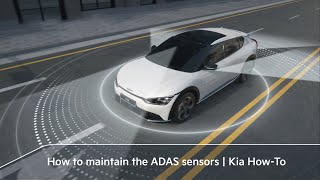
- Dirty or Obstructed ADAS Sensor (Very Common) — Dirt, snow, ice, or poorly placed stickers block the front grille radar or windshield camera, preventing system operation and causing a communication fault. 🎬 Watch: How to keep your car sensors clean and clear.
- Damaged Wiring or Poor Connections (Very Common) — Corroded, loose, or damaged wires and connectors for front bumper sensors, wheel speed sensors, or the steering column disrupt CAN bus communication. Poor terminal tension inside the connector is a frequent culprit.
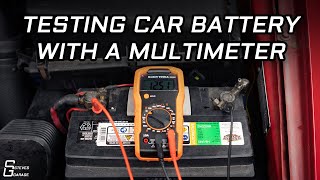
- Weak or Failing Car Battery (Common) — Low system voltage from a dying battery causes unpredictable communication glitches between control modules, triggering false C1638 codes. 🎬 See three easy ways to test your car battery.
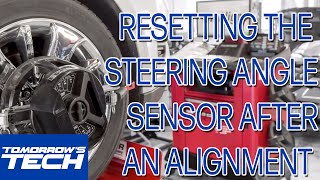
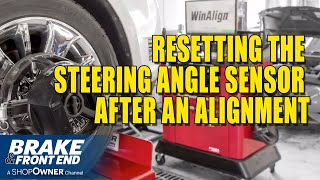
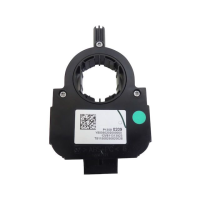
- Faulty Steering Angle Sensor (Common) — This sensor tracks steering direction. Internal dirt, hardware failure, or lost calibration after a wheel alignment triggers this code, 🎬 Watch: How to perform a steering angle sensor calibration. especially on European makes like Peugeot and BMW.
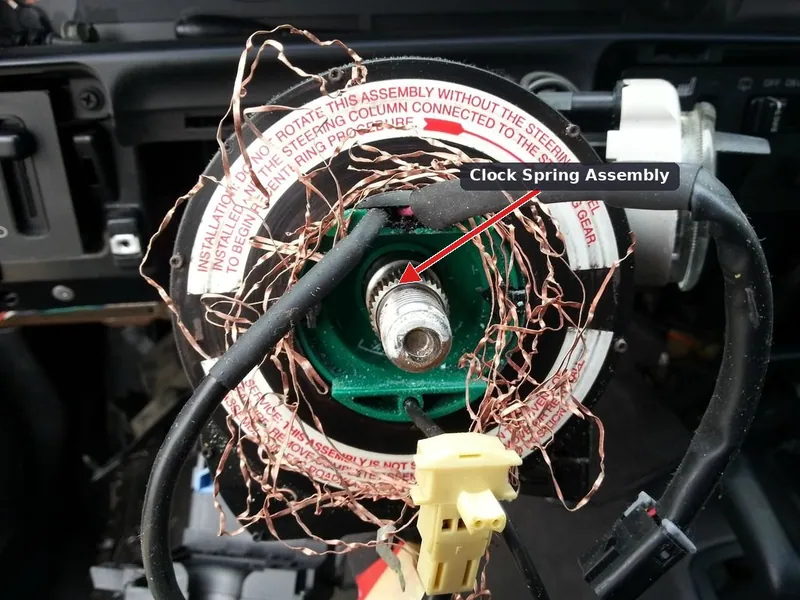
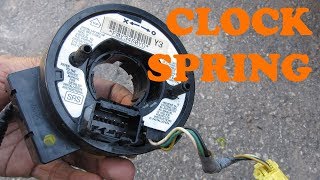
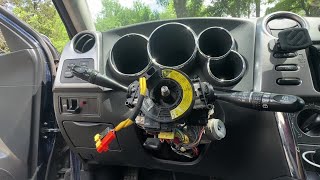
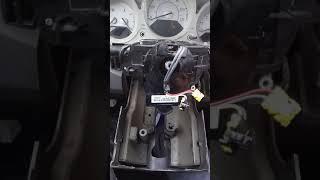
- Faulty Clock Spring (Common) — This rotary electrical connector in the steering column maintains wiring while the wheel turns. Failure severs communication to cruise control buttons and the steering angle sensor, often presenting intermittently when turning.
- Software Glitch in Control Module (Common) — Software bugs within the ABS or ADAS modules trigger false warnings. Manufacturers frequently release Technical Service Bulletins (TSBs) with software updates to resolve this, notably on 2018-2019 Ford F-150s.
- Faulty ADAS Control Module or Camera (Less Common) — The radar sensor, forward-facing camera, or main safety computer (ABS/SCC module) fails internally. On some Volkswagen and Audi models, camera circuit board chips de-solder due to heat cycles.
- Rusted or Damaged ABS Sensor Ring (Uncommon) — The magnetic sensor ring on the wheel hub rusts, expands, and physically destroys the wheel speed sensor, cutting off data to the stability control module.
- Worn Brake Pedal Switch or Stopper (Uncommon) — A degrading plastic stopper on the brake pedal switch makes the vehicle register continuous braking, instantly disabling the cruise control system.
Symptoms

- Warning Lights on Dash — The ABS, Traction Control (ESC/ESP), or specific messages like 'Check Smart Cruise Control System' illuminate.
- Safety Systems Disabled — Adaptive cruise control, lane-keeping assist, and forward collision warning cease to function.
- Cruise Control Inoperative or Erratic — Standard and adaptive cruise control refuse to engage. The cruise light blinks or only activates at specific steering angles.
- Intermittent Faults — Warning lights appear randomly and clear after restarting the vehicle, only to return during the next drive cycle.
- Loss of Power Steering — On specific vehicles like the Peugeot 208, this code triggers a sudden loss of power steering assist, making the wheel extremely heavy.
Diagnostic Flowchart
Tap your situation to follow the diagnostic path that matches what you're seeing on this code.
Common Fixes & Costs
- Replace the Car Battery — Parts: $150-$250, Labor: $50-$100, ~0.5 hr book time (DIY)
- Repair Damaged Wiring or Connector — Parts: $10-$50, Labor: $150-$300, ~1.5 hr book time (Professional)
- Replace a Wheel Speed Sensor
— Parts: $50-$150, Labor: $100-$200, ~1.0 hr book time
(DIY)
Hyundai Santa Fe (2013-2018): OEM 95671-2W000 (Front Right) (Alt: Mando (25A5052), Duralast (ABSD30852))
Ford F-150 (2015-2020): OEM FL3Z-2C204-A (Front) (Alt: Motorcraft (BRAB-420), Dorman (970-096)) - Replace Steering Angle Sensor
— Parts: $100-$400, Labor: $150-$300 (plus calibration), ~1.5 hr book time
(Intermediate)
BMW E90 (3-Series): OEM 61319129499 (Alt: VEMO (V20-80-0010), Bosch)
Chevrolet Cruze (2011-2015): OEM 13589113 (Alt: ACDelco (13589113), Dorman (601-226)) - Replace Clock Spring
— Parts: $70-$250, Labor: $150-$300 (plus calibration), ~1.5 hr book time
(Intermediate)
Nissan Frontier (2005-2019): OEM 25560-9BH3A (Alt: Dorman (525-156), Standard Motor Products (CSP269))
Hyundai Santa Fe (2013-2018): OEM 93490-2W110 (Alt: Standard Motor Products (CSP367)) - Replace ADAS Radar Sensor / Module
— Parts: $800-$2000+, Labor: $300-$600 (includes calibration), ~2.5 hr book time
(Professional)
Ford F-150 (2018-2020): OEM FL3T-9G768-AH (Alt: OEM only)
Kia Sorento (2017-2020): OEM 99110-C6000 (Alt: OEM only) - Replace Electric Power Steering Rack — Parts: $1200-$2500+, Labor: $400-$800, ~4.5 hr book time (Professional)
DIY vs Professional
- Replace the Car Battery — Beginner:
- Replace a Wheel Speed Sensor — Beginner:
- Replace Clock Spring — Beginner:
- Replace Steering Angle Sensor — Beginner:
- Replace ADAS Radar Sensor / Module — Beginner:
Used vs. New Parts: Buying Guide
When a used part is worth it: For expensive electronic modules like an ADAS radar or a complete steering rack, a used part from a low-mileage, accident-free vehicle offers significant savings. Buy new for wear items like clock springs or wheel speed sensors.
Donor-vehicle mileage cap: roughly under 60000 miles for the part to have meaningful remaining life.
Donor quality checklist:
- Verify the exact part number matches; modules look identical but run different software.
- Obtain the donor VIN to check for accidents or flood damage.
- Require a 30-90 day warranty to protect against dead-on-arrival parts.
Decision logic:
- If The part is a simple sensor costing less than $150 new. → Buy new. Savings from a used part are minimal and not worth the risk of premature failure.
- If The part is an expensive electronic module (>$800 new) and the vehicle is over 7 years old. → Buy a used part from a reputable recycler to manage repair costs.
- If The part requires complex and expensive calibration after installation. → Buy a new OEM part. Labor for calibrating a failed used part is not refunded.
Warranty tradeoff: Used parts carry a 30-90 day part-only warranty. New aftermarket parts offer 1-year to limited lifetime warranties. New OEM parts include a 1-year warranty.
Worst-case if a used part fails: $400-$1000 if a used electronic module fails after installation, requiring a second diagnostic and labor charge.
What Happens If You Wait — Timeline
- Immediate: Warning lights illuminate. Critical safety features like stability control, automatic emergency braking, and adaptive cruise control are disabled. (MPG impact: 0%% · Added cost: $0, but accident risk increases significantly.)
- 1-3 months: A minor wiring issue allows moisture to penetrate, causing corrosion on module pins. (MPG impact: 0%% · Added cost: $200-$500 in added diagnostic time as a simple fix becomes a complex corrosion problem.)
- 3-12 months: Corrosion migrates into a control module, causing internal failure. A $10 connector pin repair now requires a new module. (MPG impact: 0%% · Added cost: $800 - $2,500 for a replacement ABS, SCC, or steering control module plus calibration.)
- In case of an accident: Insurance claims face denial or liability increases because the vehicle was knowingly operated with a disabled safety system. (MPG impact: N/A% · Added cost: Potentially thousands in uncovered damages or legal liability.)
Cost of Not Fixing It
- Immediate: Loss of critical safety features like Automatic Emergency Braking (AEB) and stability control, increasing accident risk. (Added cost: N/A)
- In case of an accident: Increased liability or claim denial from insurance if a known safety system fault was ignored. (Added cost: Potentially thousands in liability or uncovered repair costs.)
- Long-term: A minor wiring fault allows moisture intrusion, destroying an expensive control module. A miscalibrated steering sensor causes uneven tire wear. (Added cost: $500 - $2500+)
Diagnosis Steps
- Read Codes with an Advanced Scanner
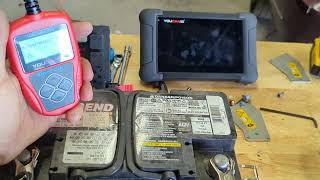
Connect an advanced scanner to read manufacturer-specific codes and live data from the ABS, steering, and cruise control modules. A basic OBD-II reader cannot see C1638.
Tools: Advanced OBD-II Scan Tool (Intermediate) - Check and Clean External Sensors
Visually inspect the front grille radar and windshield camera. Remove all dirt, snow, ice, or obstructions blocking the sensors.
Tools: Soft cloth, water (Beginner) - Test the Battery and Charging System
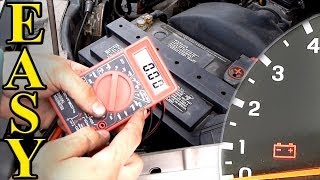
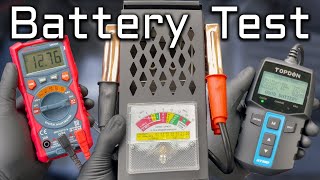
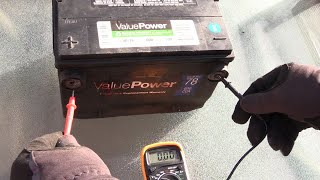
Measure battery voltage. A healthy battery reads 12.6 volts with the engine off and 13.7 to 14.7 volts running. Low voltage causes network communication dropouts.
Tools: Multimeter (Beginner) - Check for Technical Service Bulletins (TSBs)
Search for TSBs related to C1638 for your specific VIN. Manufacturers issue software updates to fix false warnings, saving hours of diagnostic time.
Tools: Internet access (Intermediate) - Visually Inspect Wiring
Inspect wiring harnesses around the front bumper, wheel speed sensors, and steering column. Look for frayed wires, corrosion, or loose connectors.
Tools: Flashlight (Intermediate) - Analyze Steering Angle Sensor Live Data
View Steering Angle Sensor live data with the wheels straight. It must read 0 degrees (+/- 3 degrees). Turn the wheel lock-to-lock; the reading must change smoothly. Erratic jumps indicate a failed sensor or clock spring.
Tools: Advanced OBD-II Scan Tool (Advanced) - Test Specific Sensor Circuits
Test the power, ground, and signal circuits for the suspected sensor using a wiring diagram. Confirm the sensor receives a 5V reference and outputs a variable signal voltage.
Tools: Multimeter, vehicle-specific wiring diagram (Advanced) - Load Test Power and Ground Circuits
Perform a load test on the power and ground circuits for the affected module. A circuit showing proper voltage on a multimeter fails to deliver adequate current under load, revealing hidden wire damage.
Tools: Multimeter, Automotive Test Light or Headlight Bulb (Advanced) - Test CAN Bus Network Resistance
Disconnect the battery and measure resistance between Pin 6 and Pin 14 at the DLC. A healthy network reads 60 Ohms. 120 Ohms indicates an open circuit; 0 Ohms indicates a short.
Tools: Multimeter (Advanced) - Perform CAN Bus Network Test with Oscilloscope
Connect a lab scope to Pins 6 and 14. During communication, CAN High rises to ~3.5V and CAN Low drops to ~1.5V, creating a mirror-image square wave. Distorted waveforms indicate a bad module or shorted wire.
Tools: Oscilloscope, DLC Breakout Box (Advanced)
When This Code Triggers (Freeze-Frame Conditions)
- Vehicle Speed: 30-70 mph (Highway driving, when Adaptive Cruise Control is active or initializing.)
- Steering Angle: Variable (During a turn or immediately after a wheel alignment if the sensor wasn't recalibrated.)
- System Voltage: 13.5-14.5V (The code sets when the engine is running and the charging system is active.)
- Ignition Status: RUN (The fault is detected during the system's self-test shortly after the vehicle starts.)
Related Codes
- C1135 — On Peugeot vehicles, C1135 ('Steering Wheel Angle Sensor Signal') appears with C1638. C1135 points directly to an internal electrical fault within the sensor, confirming the diagnosis.
- C1636 / C1637 — On Hyundai/Kia vehicles, these point to a CAN bus communication failure between the Smart Cruise Control (SCC) and Electronic Stability Control (ESC) modules. C1638 is the timeout error, while C1636/C1637 indicate inconsistent data.
- U-Series Codes (e.g., U0121, U0415) — U-codes indicate network communication problems and frequently accompany C1638. U0121 identifies the ABS module as offline, while C1638 shows which other modules were affected by its absence.
- C0051:54 — On Ford F-150s, this code for 'Steering Wheel Position Sensor: Missing Calibration' appears with AdvanceTrac warnings, often resolved by reprogramming the ABS module per a TSB.
Climate & Environmental Factors
- Heavy Rain & High Humidity: Moisture obscures camera lenses and penetrates compromised wiring connectors, causing corrosion and electrical shorts over time.
- Snow & Ice: Accumulation on the front grille or windshield completely blocks radar and camera sensors, instantly disabling adaptive cruise control and collision avoidance.
- Dust & Dirt: Mud adhering to the radar sensor's surface causes severe signal attenuation, impairing object detection.
- Extreme Temperatures: High heat causes enclosed camera modules to overheat and shut down. Extreme cold reduces battery voltage, triggering communication codes during startup.
How to Talk to a Mechanic About This Code
Say this: "I have a C1638 code and the associated ADAS warning lights are on. I've checked for sensor obstructions and tested the battery, which are fine. I'd like you to check for manufacturer-specific codes, inspect the wiring harness for the front radar and steering angle sensor, and check live data from the steering angle sensor before recommending any part replacements."
This script directs the technician toward a logical diagnostic path rather than immediately replacing expensive parts. Mentioning what you've already checked saves diagnostic time and avoids a 'parts cannon' approach.
Avoid saying:
- 'My cruise control isn't working, can you fix it?' (too vague, invites expensive guesses)
- 'Just replace the sensor the code is for.' (the code rarely names the exact failed part)
- 'Do whatever you think is best.' (gives the shop a blank check)
Questions to ask before authorizing the repair:
- What specific manufacturer code did you find, and which module stored it?
- Did you find the fault in the wiring, the sensor, or the module itself? How did you confirm this?
- If a part needs replacement, does it require calibration? Is the calibration cost included in this quote?
- What is the warranty on both the parts and labor for this specific repair?
Where to Take It: Dealer vs Independent vs Chain
- Dealer:
Recommended for warranty work or if an independent shop with ADAS expertise is unavailable. They possess the exact software and calibration tools required.
Best for: Vehicles under warranty., Complex, manufacturer-specific issues., When a software update (TSB) is the likely fix.
Downsides: Highest labor rates., Prefers replacing large assemblies rather than diagnosing smaller components., Requires specific appointments for ADAS work. (Typical cost: +50% vs. baseline) - Independent Shop:
Best overall fit, IF you find a well-equipped shop. Ask directly if they have ADAS calibration capabilities and experience with communication network diagnostics.
Best for: Out-of-warranty vehicles where cost is a major factor., Common C1638 causes like a bad clock spring, wheel speed sensor, or wiring repair., Shops specializing in your vehicle's make.
Downsides: Skill and equipment vary widely. Must verify they have advanced ADAS diagnostic and calibration equipment., Lacks access to the latest manufacturer TSBs or software updates. (Typical cost: +0% vs. baseline) - Chain Shop:
AVOID for diagnosis. They cannot diagnose the root cause of a C1638 or perform the necessary calibrations.
Best for: Simple, related fixes like a battery replacement or wheel alignment.
Downsides: Lacks advanced diagnostic tools and ADAS calibration equipment., Technicians lack training for complex electrical or network diagnostics., High pressure to upsell parts leads to incorrect repairs. (Typical cost: -10% vs. baseline)
When to Walk Away From the Repair
If the estimated repair cost for the ADAS system exceeds 50% of the car's current private-party value, seriously consider alternatives to repair.
- Car worth $5000, fix is $3000: Walk away. A $3,000 repair on a $5,000 car for a non-essential system is not economical.
- Car worth $15000, fix is $2200: Fix it. The repair cost is well under the 50% threshold and restores important safety functions.
- Car worth $8000, fix is $4000: Borderline. Get a second opinion and explore the cost of used modules before proceeding.
What Scan Tool You Need for This Code
Minimum: A scanner that reads manufacturer-specific codes from the Chassis (C) and Network (U) systems, and displays live sensor data.
A basic $20 code reader only checks for Powertrain (P) codes and cannot see the C1638 code. You need a tool that communicates with the ABS and SRS modules on the CAN bus network.
Budget: BlueDriver Pro (~$99) — Reads and clears enhanced codes and displays live data. Lacks the bidirectional control needed for Steering Angle Sensor calibration.
Mid-range: Foxwell NT614/NT630 Plus or Autel MaxiCOM MK808S (~$180-370) — Offers bidirectional control and special service functions. Reads live data from the steering angle sensor and performs the mandatory SAS calibration procedure.
Professional: Autel MaxiSYS MS906 Pro / Ultra S2 (~$1000-2500+) — Provides full OEM-level diagnostics, network topology mapping, and the ability to perform complex ADAS radar and camera calibrations with additional hardware.
How to Clear the Code After You Fix It
- Use an advanced OBD-II scan tool to clear the C1638 and related codes from all modules (ABS, SCC, etc.).
- Perform required calibration procedures, such as a Steering Angle Sensor zero-point calibration or ADAS radar aiming.
- Perform a vehicle-specific drive cycle to confirm the fix and allow systems to re-initialize.
Drive cycle (~20 minutes): Start the vehicle, idle for 3 minutes, followed by a mix of city driving with stops and turns, and steady highway driving above 40 mph for 15 minutes. For steering angle sensor issues, turn the wheel lock-to-lock with the engine on.
Readiness monitors affected: Chassis-related codes do not affect emissions readiness monitors. However, if the fault triggered a general engine code, those monitors reset.
Before emissions retest: drive at least 50 miles to fully set monitors.
Watch out for:
- Clearing the code without fixing the root cause results in the code returning immediately.
- Forgetting to perform a mandatory calibration causes the code to persist even with a new part.
- Using a basic code reader that cannot clear codes from the specific ABS or SCC module.
Will This Fail Emissions / State Inspection?
Yes — this code typically fails an OBD-II emissions inspection.
- California: While C1638 doesn't fail the emissions test directly, an illuminated ABS or stability control light fails the separate safety inspection.
- New York: An illuminated ABS or traction control warning light guarantees a safety inspection failure.
- Texas: The annual safety inspection requires a functional ABS warning light. If illuminated, the vehicle fails.
Most Commonly Affected Vehicles
- Hyundai Genesis, Azera, Santa Fe (2010-2022) — Prone to Smart Cruise Control (SCC) timeout errors. The SCC module loses communication with the stability control module due to wiring faults or an obstructed radar sensor.
- Kia Sorento, Sportage (2016-2023) — Experiences this code when the front radar sensor connector suffers from poor pin tension, disabling the Smart Cruise Control.
- Peugeot 208 (2013-2019) — Triggers C1638 due to a faulty steering angle sensor integrated into the electric steering rack, requiring a costly replacement of the entire assembly.
- Ford F-150, Expedition, Navigator (2018-2020) — TSB SSM 48042 addresses inoperative adaptive cruise control caused by weak power/ground connections to the ABS module. TSB 20-2046 fixes related warnings via an ABS software update.
- Nissan Frontier, Xterra (2005-2021) — A failing clock spring causes intermittent cruise control dropouts when turning the steering wheel.
- Volkswagen / Audi A6, A7, A8 (2010-2019) — Susceptible to an 'ACC is Not Available' warning caused by an overheated processor chip de-soldering from the forward-facing camera circuit board.
- BMW E90, E60 (2004-2013) — Triggered by a dirty optical disc inside the steering angle sensor. Cleaning the disc and recalibrating the sensor resolves the fault without replacement.
- Chevrolet Cruze (2011-2016) — The steering angle sensor loses calibration after wheel alignments, suspension work, or battery replacements, triggering traction control warnings.
Manufacturer-Specific Notes
- Hyundai / Kia: The code relates to a Smart Cruise Control (SCC) timeout error caused by a bad connection at the front radar sensor, poor terminal tension, or internal SCC module failure.
- Peugeot / Citroen: Points directly to a steering angle sensor reading error. The fix ranges from recalibration to replacing the entire electric power steering rack assembly.
- Ford: Per TSB SSM 48042, if Adaptive Cruise Control is inoperative, the ABS module power/ground circuit must be load-tested to find the fault. Multimeter voltage checks are insufficient.
- Volkswagen / Audi: An overheated processor chip inside the forward-facing camera module de-solders itself from the circuit board. Specialists repair this by re-flowing the solder.
- BMW: The steering angle sensor uses an optical disc that becomes dirty. Disassembling and cleaning the sensor resolves the fault without requiring a new part.
- General Motors: Safety recall N202325410 for Colorado/Canyon trucks addresses power steering loss due to poor electrical connections, explicitly requiring a Steering Wheel Angle Sensor reset post-repair.
Real Owner Stories
2015 Peugeot 208 with Intermittent Power Steering Loss
The ESP/ASR fault light and 'Steering System Faulty' message appeared, causing heavy, unpowered steering. Restarting the car temporarily cleared the fault.
Outcome: The codes indicated an impending failure of the entire electric power steering rack, as the sensor is integrated. The quoted cost for a new rack was £1900 plus labor.
Lesson: On modern European cars, a steering angle sensor fault indicates a non-serviceable assembly failure, leading to an extremely expensive repair.
2022 Hyundai Santa Fe with SCC Communication Fault
A 'CAN communication fault' message for the local CAN between the camera and radar appeared intermittently after a radar calibration.
Outcome: The root cause was poor terminal tension on the power feed pin within the radar's electrical connector. Tightening the pin terminal resolved the issue.
Lesson: Intermittent communication faults stem from physical wiring issues. Perform a 'wiggle test' on connectors while monitoring live data before replacing expensive modules.
Honda CR-V with ABS/Traction Control Lights
ABS and traction control lights illuminated. The owner attempted a wheel speed sensor replacement.
Outcome: The repair escalated. The seized CV axle, wheel hub assembly, and wheel bearing required replacement, costing over $300 in parts alone.
Lesson: A simple sensor replacement becomes complex in rust-prone areas. ABS faults trigger communication codes like C1638 when the stability control module loses critical data.
How to Prevent This Code From Triggering
- Keep ADAS Sensors Clean (During every car wash) — Cleaning the front grille emblem and the inside of the upper windshield prevents dirt and bugs from blocking sensor signals and triggering faults.
- Perform Regular Battery Maintenance (Every 6 months) — Cleaning battery terminals prevents voltage drops and electrical glitches that cause random communication codes. A healthy battery reads above 12.4 volts.
- Use a Battery Tender for Stored Vehicles (If car sits for more than 2 weeks) — Maintains a stable charge, preventing the battery from draining to a low voltage state where control modules generate false communication faults upon startup.
- Insist on SAS Calibration After Alignment (After every wheel alignment) — Minor toe adjustments change the steering wheel's center point. A steering angle sensor reset ensures the stability control system receives accurate data.
- Protect Wiring in Vulnerable Areas (During underbody inspections) — Securing loose wires away from moving suspension parts or hot exhaust components prevents shorts and open circuits that cause communication loss.
Frequently Asked Questions
Can I fix code C1638 myself?
Simple fixes like cleaning sensors or replacing a battery are DIY-friendly. Diagnosing wiring issues or replacing and calibrating sensors requires professional tools. Take the vehicle to a shop equipped with ADAS calibration tools if sensor cleaning fails.
Will clearing the code fix the problem?
No. Clearing the code only temporarily removes the warning lights. The code returns immediately once the system attempts to initialize if the hardware fault remains.
Can a bad wheel alignment cause code C1638?
Yes. An improper alignment leaves the steering wheel off-center, causing the steering angle sensor data to conflict with wheel speed sensor data. The sensor requires recalibration with a scan tool after any alignment.
Can a dead battery cause C1638?
Yes. Low voltage causes communication glitches between modules. Disconnecting the battery also forces modules to lose calibration, requiring a reset procedure to resolve the fault.
Why does C1638 appear in snow or heavy rain?
Severe weather physically blocks the front-facing radar sensor or windshield camera. The system shuts down and logs a fault code when its view is obstructed.
Can I pass a state inspection with code C1638 active?
No. An active warning light for primary safety systems like ABS or Electronic Stability Control guarantees a safety inspection failure in most jurisdictions.
How much does it cost to diagnose the C1638 code?
Shops charge a diagnostic fee ranging from $120 to $250. This covers reading manufacturer-specific codes with an advanced scanner and performing initial circuit checks.
Is C1638 the same as P1638 or B1638?
No. C1638 is a Chassis code for systems like ABS and steering. P1638 is a Powertrain code, and B1638 is a Body code.
Key Takeaways
- C1638 is a manufacturer-specific chassis code indicating a communication failure in advanced safety systems like adaptive cruise control or stability control.
- Over 50% of C1638 triggers stem from easily fixable issues: dirty front radar sensors, weak 12V batteries, or loose wiring harness connections.
- Driving with an active C1638 code disables critical safety features like Automatic Emergency Braking (AEB), requiring increased following distances and manual braking readiness.
- Proper diagnosis requires a bidirectional scan tool capable of reading C-codes and U-codes; basic $20 OBD-II readers cannot see or clear C1638.
- Always check for Technical Service Bulletins (TSBs) before replacing parts; manufacturers frequently resolve C1638 faults with a simple 30-minute software update.
Helpful Videos




Shop the Parts Behind C1638
Below are the parts most often responsible for code C1638, ranked by how frequently each one is the actual culprit (per the diagnosis above). Tap any to see what we have for your vehicle.




The information in this article is provided for general reference and educational purposes only. Vehicle specifications, procedures, and part compatibility can vary by production date, trim level, and region. Always consult your vehicle's factory service manual and verify part numbers before purchasing or performing repairs. Safety-critical components such as airbags, seat belts, and braking systems should be installed by a qualified professional.
- 🧭 Diagnostic Flowchart
- 🎬 Helpful Videos
- 🛍️ Shop This Part
- What Does C1638 Mean?
- Can I Drive With C1638?
- Common Causes
- Symptoms
- Common Fixes & Costs
- DIY vs Professional
- Used vs. New Parts: Buying Guide
- What Happens If You Wait — Timeline
- Cost of Not Fixing It
- Diagnosis Steps
- When This Code Triggers (Freeze-Frame Conditions)
- Related Codes
- Climate & Environmental Factors
- How to Talk to a Mechanic About This Code
- Where to Take It: Dealer vs Independent vs Chain
- When to Walk Away From the Repair
- What Scan Tool You Need for This Code
- How to Clear the Code After You Fix It
- Will This Fail Emissions / State Inspection?
- Most Commonly Affected Vehicles
- Manufacturer-Specific Notes
- Real Owner Stories
- 2015 Peugeot 208 with Intermittent Power Steering Loss
- 2022 Hyundai Santa Fe with SCC Communication Fault
- Honda CR-V with ABS/Traction Control Lights
- How to Prevent This Code From Triggering
- Frequently Asked Questions
- Can I fix code C1638 myself?
- Will clearing the code fix the problem?
- Can a bad wheel alignment cause code C1638?
- Can a dead battery cause C1638?
- Why does C1638 appear in snow or heavy rain?
- Can I pass a state inspection with code C1638 active?
- How much does it cost to diagnose the C1638 code?
- Is C1638 the same as P1638 or B1638?
- Key Takeaways
- 🎟️ Get 5% Off