

OBD-II Code C1642: ABS/ESC System Communication Failure
The Ultimate Guide to Meaning, Diagnosis, and Repair
- Code C1642 disables your ABS and Electronic Stability Control systems, increasing emergency stopping distances by up to 20% on slick roads.
- This code appears primarily on Hyundai and Kia vehicles as a secondary 'symptom' code, meaning the reporting module is rarely the actual problem.
- Over 70% of C1642 codes stem from a single faulty wheel speed sensor or damaged wiring harness, costing under $300 to fix.
- You must use an advanced OBD-II scanner capable of reading the ABS module to find the primary C12xx series fault code hiding behind the C1642.
What Does C1642 Mean?

Code C1642 means a peripheral control module received invalid data from the Anti-lock Braking System (ABS) or Electronic Stability Control (ESC) over the Controller Area Network (CAN) bus. The module reporting this code is rarely the problem; it is a symptom of an underlying ABS/ESC fault. The vehicle disables these safety features as a precaution. This code appears most frequently on Hyundai and Kia vehicles as a secondary code triggered by a primary ABS fault.
Technical definition: The official SAE definition for C1642 is manufacturer-specific. On Hyundai and Kia models, it is defined as 'CAN Signal Error - ESC (ESP)'. 🎬 See a real-world fix for code C1642 on a Hyundai. This indicates the ESC/ABS module is broadcasting invalid data over the CAN bus. The code logs in a peripheral module (like Smart Cruise Control, Electric Parking Brake, or a forward-facing camera) that listens for valid data from the primary ABS/ESC controller and receives corrupted information.
Can I Drive With C1642?
Yes, But With Caution. Yes, but with extreme caution. Your primary safety systems—Anti-lock Brakes (ABS) and Electronic Stability Control (ESC)—are disabled. In a panic stop, your wheels lock up, causing a skid and significantly increasing stopping distance. Other systems relying on wheel speed data, like cruise control and collision avoidance, also disable. Limit driving to essential trips and repair immediately.
Common Causes

- Faulty Wheel Speed Sensor (Very Common) — A single failing wheel speed sensor sends erratic signals to the ABS module. The module broadcasts this nonsensical data to the rest of the car, triggering C1642 in other ECUs, even though the ABS module itself functions correctly.
- Damaged or Corroded Wiring/Connectors (Very Common) — The wiring harness leading to the ABS module or wheel speed sensors is exposed to harsh conditions. Wires chafe, break, or connectors fill with water and corrode, interrupting the communication signal.
- Low Battery Voltage or Poor Ground Connection (Common) — Control modules require stable voltage to communicate. A weak battery, failing alternator, or a loose main ground wire for the ABS module causes unpredictable communication errors across the network.
- Failing ABS/ESC Control Module (HECU) (Common) — The internal electronics of the ABS/ESC module fail due to vibration, moisture intrusion, or age. This causes it to send corrupted messages or stop communicating altogether.
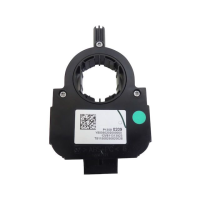
- Faulty Steering Angle Sensor (SAS) (Less Common) — The SAS tells the ESC system the driver's intended direction. If it fails or loses calibration after an alignment, it sends data conflicting with the wheel speed sensors, causing the ESC module to broadcast invalid CAN messages.
- Faulty Yaw Rate / G-Sensor (Rare) — This sensor measures the car's rotation and lateral G-forces. If it fails, it provides the ESC with incorrect vehicle dynamics data, prompting the ESC module to broadcast bad information.
Symptoms

- ABS and ESC Warning Lights Illuminated — The primary 'ABS' light and the Traction/Stability Control light (car with squiggly lines) turn on, indicating these systems are disabled.
- ADAS and Cruise Control Disabled — Lights for Forward Collision-Avoidance Assist, Smart Cruise Control, and All-Wheel Drive turn on simultaneously as these systems go offline.
- Loss of Anti-Lock Braking Functionality — During hard braking, the wheels lock up. In slippery conditions, traction control fails to prevent wheel spin.
- General Brake Warning Light Illuminated — The red 'BRAKE' warning light illuminates, especially if the fault relates to the Electric Parking Brake (EPB) module.
Diagnostic Flowchart

Tap your situation to follow the diagnostic path that matches what you're seeing on this code.
Common Fixes & Costs
- Replace Faulty Wheel Speed Sensor
— Parts: $50-$150, Labor: $100-$160, ~1.2 hr book time
(DIY)
: OEM
: OEM - Repair Damaged Wiring or Connectors — Parts: $10-$50, Labor: $150-$300, ~2.0 hr book time (Intermediate)
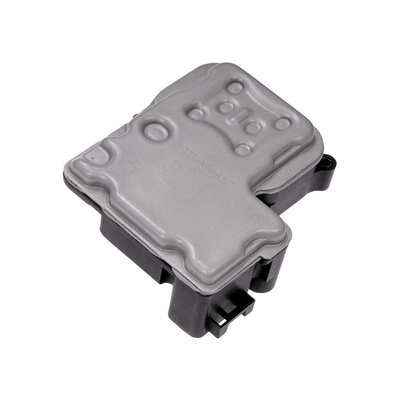
- Replace or Rebuild ABS/ESC Control Module (HECU)
— Parts: $250-$1,500 (Rebuild vs. New OEM), Labor: $150-$350, ~3.5 hr book time
(Professional)
: OEM - Replace Steering Angle Sensor
— Parts: $150-$400, Labor: $100-$250, ~2.0 hr book time
(Intermediate)
: OEM
DIY vs Professional
- Replace Faulty Wheel Speed Sensor — Beginner: True
- Repair Damaged Wiring or Connectors — Beginner: False
- Replace ABS/ESC Control Module (HECU) — Beginner: False
Used vs. New Parts: Buying Guide
When a used part is worth it: A used or remanufactured part offers significant savings for the ABS/HECU module if the vehicle is older and the budget for a new OEM part is prohibitive.
Donor-vehicle mileage cap: roughly under 100000 miles for the part to have meaningful remaining life.
Donor quality checklist:
- Match the part number EXACTLY. Different vehicle options use different modules, and they are not interchangeable.
- Check if the donor vehicle's VIN is part of any ABS module recalls. Avoid modules from recall-affected populations.
- Inspect the electrical connector for any signs of corrosion or heat damage.
Decision logic:
- If The fix is a wheel speed sensor → Buy new. The cost savings for a used sensor are minimal and not worth the risk of premature failure.
- If The fix is the ABS/HECU module and the vehicle is under 10 years old → Consider a remanufactured unit from a specialist. They correct known factory flaws and offer better warranties than used parts.
- If The fix is the ABS/HECU module and the vehicle is over 10 years old → A warrantied used part is a reasonable option, but it requires professional programming to match your vehicle's VIN.
Warranty tradeoff: Used parts typically have a 30-90 day warranty. Remanufactured modules often carry a 1-year to lifetime warranty. New OEM parts have a 1-year/12,000-mile warranty.
Worst-case if a used part fails: $300-$600 if a used module fails after installation, requiring repeat labor for removal, reinstallation, and brake bleeding.
What Happens If You Wait — Timeline
- Immediate (0 days): Code C1642 sets. ABS, ESC, and related ADAS warning lights illuminate. The ABS and stability control systems are immediately disabled. (MPG impact: 0%% · Added cost: $0)
- 0 days - 6 months: Continued driving without ABS functionality. In an emergency stop, wheels lock, causing a skid and significantly longer stopping distances. (MPG impact: 0%% · Added cost: $0 (unless an accident occurs))
- Ongoing (for specific Hyundai/Kia models): If the root cause is an internal defect in the ABS/HECU module subject to a recall, continued operation poses a risk of an engine compartment fire, even when parked. (MPG impact: 0%% · Added cost: Total vehicle loss ($5,000+))
Cost of Not Fixing It
- Immediate: Loss of ABS and Electronic Stability Control (ESC). Increased risk of skidding and longer stopping distances in emergency situations. (Added cost: $0 (until an accident occurs))
- 0-6 months: Potential for uneven tire wear or flat-spotting if the driver frequently locks the wheels during braking. (Added cost: $200-$800 (for new tires))
- Long-term: For certain Hyundai/Kia models, ignoring the warning light means missing a critical symptom of a recall-related safety defect linked to engine compartment fires. (Added cost: Total vehicle loss)
Diagnosis Steps
- Scan ALL Vehicle Modules for DTCs
Use a professional-grade OBD-II scanner to read codes from all vehicle modules. C1642 is a secondary code. The root cause is a different code stored in the ABS/ESC module itself, such as a wheel speed sensor fault (C1200-C1212). Document and address the primary codes first.
Tools: Professional OBD-II Scanner (All-System) (Beginner) - Live Data Analysis of Wheel Speed Sensors
If a wheel speed sensor code (C12xx) is present, use your scanner's live data function to monitor all four sensors while driving slowly in a straight line. All four must read the exact same speed. Any sensor that drops out, reads erratically, or stays at 0 mph is faulty.
Tools: OBD-II Scanner with Live Data (Intermediate) - Inspect Wiring Harness and Connectors
Visually trace the wiring harness from the ABS control module and all four wheel speed sensors. Look for chafing against suspension components, melting near exhaust parts, or rodent damage. Unplug connectors and inspect for green/white corrosion or bent pins.
Tools: Flashlight, Jack and Jack Stands (Intermediate) - Check Battery Voltage and System Grounds
Ensure the battery is fully charged (above 12.4V with engine off) and the alternator charges correctly (13.2-14.5V running). Locate the main ground connection for the ABS module on the chassis and ensure it is clean, tight, and free of corrosion.
Tools: Multimeter (Beginner) - Test the CAN Bus Network Resistance
With the battery disconnected, measure the resistance between Pin 6 (CAN High) and Pin 14 (CAN Low) at the OBD-II port. A healthy network reads 60 ohms. A reading of 120 ohms indicates a broken wire or missing termination resistor. A reading near 0 ohms indicates a short.
Tools: Multimeter (Intermediate) - Verify Power and Ground at the ABS Module
Using a wiring diagram, unplug the ABS module connector and test for battery voltage and ground at the appropriate pins. If either is missing, trace the wiring to find the open circuit. If powers and grounds are good, the ABS module itself has likely failed.
Tools: Multimeter, Vehicle Wiring Diagram (Advanced) - [PRO TIP] Test Active Wheel Speed Sensor Voltage
For 2-wire active sensors, back-probe the connector with the ignition on. One wire shows battery voltage (12V) or reference voltage (5V). When spinning the wheel by hand, the signal wire's voltage rapidly switches between a low value (~0.7V) and a high value (~1.4V). A stuck voltage means a dead sensor.
Tools: Multimeter with Back-Probe Pins (Advanced) - [PRO TIP] Check CAN Bus Voltages
With ignition on (engine off), back-probe the CAN pins. Measure Pin 6 (CAN High) to ground; it should be ~2.6V. Measure Pin 14 (CAN Low) to ground; it should be ~2.4V. The two voltages must add up to ~5V. If one line is at 0V or 5V, there is a wiring short.
Tools: Multimeter with Back-Probe Pins (Advanced) - [PRO TIP] Live Data Analysis of SAS and Yaw Rate Sensor
Monitor the Steering Angle Sensor and Yaw Rate Sensor via live data. With wheels straight, the SAS reads 0°. Turning the wheel shows a smooth change. The Yaw Rate Sensor reads 0 deg/s when stationary. Erratic values indicate a sensor or calibration issue.
Tools: OBD-II Scanner with Live Data (Advanced)
When This Code Triggers (Freeze-Frame Conditions)
- Vehicle Speed: 15-70 mph (During normal driving, especially when systems like cruise control are engaged.)
- System Voltage: 13.2-14.5V (Engine running. The code sets during a system self-check immediately after startup or while driving.)
- CAN Bus Status: Active/Error (The code sets in a receiving module when it detects an invalid CAN message from the ESC/ABS module for a specified duration, often as short as 0.5 seconds.)
Related Codes
- U0415 — The generic SAE equivalent of C1642, meaning 'Invalid Data Received From ABS Control Module'. Seeing both codes confirms the ABS system is the source of the bad data.
- C1200-C1212 — A direct 'cause and effect' relationship. A C12xx code identifies a specific wheel speed sensor circuit fault (the root cause). The ABS module broadcasts this faulty data, causing other modules to log C1642.
- U0121 — Indicates a total loss of communication. C1642 means a module receives garbled messages; U0121 means it receives no messages at all, pointing to a dead module or severed CAN bus.
Climate & Environmental Factors
- Road Salt / High Humidity (Salt Belt Regions): Accelerates corrosion of wiring harnesses and connector pins. Saltwater acts as an electrolyte, causing green crust to form on copper pins, leading to high resistance and intermittent signals.
- Extreme Cold Weather: Wiring insulation becomes brittle and cracks where the harness flexes near suspension components. Water inside connectors freezes and expands, breaking wire seals.
How to Talk to a Mechanic About This Code
Say this: "I have an ABS/ESC warning light and my scanner shows code C1642 in a peripheral module. Please start by performing a full system scan to find the primary fault code in the ABS module itself, and check the live data from all four wheel speed sensors. I want to rule out a sensor or wiring issue before considering expensive control modules."
This signals that you are an informed customer. It correctly identifies C1642 as a secondary code and steers the technician down the proper diagnostic path, preventing them from incorrectly quoting a replacement for the module that stored C1642.
Avoid saying:
- My ABS light is on, can you fix it?
- I think I need a new ABS module, can you give me a price?
- My cruise control camera has a C1642 code, I think the camera is bad.
Questions to ask before authorizing the repair:
- What was the primary fault code you found in the ABS module, and what does it point to?
- Can you show me the live data from the wheel speed sensors that confirms the failure?
- If you recommend an ABS module replacement, what specific tests did you perform to definitively rule out all sensors, wiring, power, and grounds?
- If the repair is for wiring, will you use solder and heat-shrink connections or crimp connectors?
Where to Take It: Dealer vs Independent vs Chain
- Dealer:
Recommended only if the vehicle is under warranty, is part of a known HECU recall, or if other shops have failed to find the root cause.
Best for: Vehicles under warranty, Checking for and performing recall-related repairs (e.g., Hyundai/Kia HECU fire risk recalls), Complex CAN bus network issues after an independent shop has failed to diagnose it.
Downsides: Highest labor rates, often 1.5-2x more than independent shops., Quick to recommend expensive module replacement over component-level repair. (Typical cost: +75% vs. baseline) - Independent Shop:
Best fit for most cases. Find a well-reviewed shop specializing in electrical diagnostics to correctly identify and repair the common, less-expensive root causes.
Best for: Out-of-warranty vehicles where cost is a factor., Diagnosing and repairing common C1642 causes like wheel speed sensors and wiring issues.
Downsides: Diagnostic capabilities vary widely. Ensure the shop has modern scan tools that read ABS codes and live data. (Typical cost: +0% vs. baseline) - Chain Shop:
Avoid for diagnosis. Only use if you have already confirmed the fault is a specific, easy-to-replace part like a wheel speed sensor.
Best for: Simple, pre-diagnosed repairs like replacing a single wheel speed sensor.
Downsides: High risk of misdiagnosis. They may only read the C1642 code and recommend replacing the wrong module., Generally not equipped for in-depth electrical or CAN bus diagnostics. (Typical cost: -10% vs. baseline)
When to Walk Away From the Repair
If the estimated repair cost for the ABS/HECU module exceeds 40-50% of your car's private-party value, seriously consider selling the car as-is or trading it in.
- Car worth $3500, fix is $2200: Walk away. The repair cost is over 60% of the vehicle's value. It is not a sound financial decision.
- Car worth $15000, fix is $2200: Fix it. The repair cost is less than 15% of the car's value.
- Car worth $5000, fix is $300: Fix it. If the diagnosis confirms a cheaper fix like a wheel speed sensor, it is almost always worth doing.
What Scan Tool You Need for This Code
Minimum: A scanner that reads and clears codes from the ABS/SRS systems and displays live data for the wheel speed sensors.
A basic $20 engine code reader only communicates with the engine control module. It shows 'No Codes Found' while your ABS light is on and cannot see the primary fault code stored in the ABS module.
Budget: Autel AutoLink AL619 / Foxwell NT630 Plus (~$90) — Reads and clears ABS codes and streams live data from all four wheel speed sensors, allowing you to see which sensor drops out while driving.
Mid-range: Innova 5610 / BlueDriver Bluetooth Pro (~$120) — Offers enhanced features and bi-directional control, which is useful for testing and may include the ABS bleed function needed after replacing the HECU.
Professional: Autel MaxiCOM MK808 / Kingbolen S608 (~$450) — Provides full bi-directional control. It performs critical functions like ABS brake bleeding, Steering Angle Sensor (SAS) calibration, and VIN programming for a new module.
Rent vs buy: For a one-time diagnosis, auto parts stores scan ABS codes for free. Their loaner tool programs allow you to borrow an ABS-capable scanner with a refundable deposit.
How to Clear the Code After You Fix It
- Fix the underlying hardware fault (e.g., replace the bad sensor or repair wiring).
- Use an OBD-II scan tool to erase the fault codes from ALL modules (ABS, Camera, EPB, etc.).
- Perform the drive cycle to confirm the fix.
Drive cycle (~15 minutes): Start the vehicle and let it idle for 1 minute. Drive in a mix of city and highway conditions, reaching speeds above 30 mph. Perform several normal stops. The warning lights should remain off.
Readiness monitors affected: Clearing all DTCs resets all emissions monitors to 'incomplete', requiring a full drive cycle before an emissions test.
Before emissions retest: drive at least 50 miles to fully set monitors.
Watch out for:
- Only clearing the C1642 code from the reporting module but not clearing the primary code from the ABS module. The code returns instantly.
- Using a basic code reader that cannot communicate with the ABS module to clear the primary fault.
Will This Fail Emissions / State Inspection?
No — by itself this code doesn't fail OBD inspection (but it can keep readiness monitors from setting, which causes a separate fail).
- California: An ABS light does NOT cause a failure of the emissions portion (smog check). However, if the check engine light is also on, it is an automatic failure.
- New York: An illuminated ABS warning light is grounds for failing the annual safety inspection.
- Texas: An illuminated ABS light is NOT a cause for rejection in the Texas state safety inspection. The vehicle passes as long as the primary service brakes function correctly.
Most Commonly Affected Vehicles

- Hyundai i30 (2012-2017) — Commonly sets in the Electric Parking Brake (EPB) module when it detects a CAN signal error from the ESC system.
- Kia Forte / K5 (2019-2022) — Frequently sets C1642 due to a faulty rear wheel speed sensor integrated into the wheel hub bearing assembly.
- Hyundai Venue (2020-2022) — Often appears in the forward camera module. The root cause is almost always a primary fault code in the ABS module, typically C1200 (front-left wheel speed sensor).
- Hyundai Genesis (2011-2014) — The Smart Cruise Control (SCC) module logs C1642 when it receives an abnormal message from the ESC system.
- Hyundai Santa Fe Sport (2013-2015) — Subject to a major recall for ABS module internal faults that cause fires, highlighting known issues with the HECU.
Manufacturer-Specific Notes
- Hyundai / Kia: This code is extremely common and is almost always a secondary 'symptom' code. Large-scale recalls exist for internal ABS/HECU module failures that cause electrical shorts and engine compartment fires. Owners of affected vehicles are advised to park outside until the recall is performed.
- Ford: C1642 is not a standard ABS communication code on Ford vehicles. The similar P1642 code relates to the Fuel Pump Monitor Circuit. ABS communication faults on Fords set U-codes like U0121 or U0415.
- Toyota / Honda / Subaru / VW: These manufacturers do not use C1642 for ABS/ESC communication faults. It is critical to use a scanner with manufacturer-specific definitions, as this code number has vastly different meanings across brands.
Real Owner Stories
2017 Hyundai Elantra at 75,000 miles - The Classic Wheel Speed Sensor Fix
ABS, ESC, and Forward Collision-Avoidance Assist warning lights illuminated simultaneously. Cruise control would not engage.
What they tried:
- Visited a quick-lube shop with a basic OBD-II reader, which showed no codes.
- Took the car to an independent mechanic with an advanced scanner. The scanner found C1642 in the forward camera module, and code C1207 (Rear-Left Wheel Speed Sensor Circuit) in the ABS module.
Outcome: The mechanic replaced the rear-left wheel speed sensor for $220 total. After clearing codes from all modules, a short test drive confirmed the fix.
Lesson: C1642 is a ghost code. The real problem is almost always a different code in the ABS module itself. A basic code reader cannot see ABS codes, leading to misdiagnosis.
2019 Kia Forte at 40,000 miles - A Misdiagnosis Story
ABS and ESC lights came on intermittently after driving for 20 minutes. The C1642 code was found in the Electric Parking Brake (EPB) module.
What they tried:
- Believing the EPB module was faulty, the owner purchased a used one online and paid a shop $350 total to install it. The codes returned the next day.
- A dealership technician performed live data analysis while driving and noticed the right rear wheel speed reading occasionally dropped to zero.
Outcome: The dealership replaced a faulty right rear wheel speed sensor, solving the problem. The owner wasted $350 on the unnecessary EPB module replacement.
Lesson: Do not replace the module that stores C1642. It is the 'victim' of bad data, not the source. Live data analysis of all four wheel speed sensors is critical to catch intermittent failures.
2012 Hyundai Genesis at 110,000 miles - An Unusual Wiring Cause
Smart Cruise Control and Stability Management warning lights appeared after hitting a large pothole. The scanner showed C1642 in the SCC module.
What they tried:
- A mechanic tested the CAN bus resistance at the OBD-II port and got a reading of 120 Ohms, indicating an open circuit or missing terminating resistor.
- They inspected the main harness connector at the ABS module and found the impact had dislodged the connector's locking tab, causing a poor connection.
Outcome: The mechanic cleaned the connector, applied dielectric grease, and securely re-seated it. The CAN bus resistance returned to 60 Ohms, and the fault did not return.
Lesson: A CAN bus resistance reading of 120 Ohms points directly to a wiring break or a major module connection issue. Physical shock can disrupt critical connectors.
How to Prevent This Code From Triggering
- Perform a brake fluid flush every 2-3 years or 30,000 miles. (Every 2-3 years) — Brake fluid absorbs moisture from the air. This moisture corrodes the sensitive internal valves and electronic components of the ABS/HECU module from the inside out, leading to expensive failure.
- Apply dielectric grease to exposed electrical connectors. (During any brake or suspension work) — Applying a thin layer of non-conductive dielectric grease to the seals of wheel speed sensor and ABS module connectors blocks moisture and road salt from causing corrosion on the pins.
- Periodically wash the vehicle's undercarriage. (Monthly in 'Salt Belt' regions) — Road salt and de-icing brines are highly corrosive to wiring harnesses and sensor housings. Rinsing the underbody washes these contaminants away before they cause damage.
Frequently Asked Questions
My scanner shows C1642 in the cruise control / forward camera module. Should I replace that module?
Almost certainly not. C1642 means the reporting module received invalid data from the ABS/ESC system. The actual fault lies within the ABS system itself, so always scan the ABS module for primary fault codes first.
Can I just clear the C1642 code and keep driving?
You can clear the code, but it returns immediately if the underlying problem remains. Driving with this code active disables your ABS and stability control, significantly increasing your risk during emergency stops.
Why did my cruise control and collision avoidance stop working with this code?
Modern systems like adaptive cruise control, collision avoidance, and all-wheel drive rely on accurate wheel speed data from the ABS module. When the ABS module sends bad data, these dependent systems disable themselves as a safety precaution.
My mechanic said the CAN bus resistance is 120 ohms, not 60. What does that mean?
A 120-ohm reading indicates one of the two 120-ohm terminating resistors on the CAN network is missing or disconnected. This usually means a broken CAN wire leading to the Engine Control Module or ABS module, or an internal module failure.
Can a bad wheel alignment cause a C1642 code?
Yes. If the steering wheel is off-center after a poor alignment, the Steering Angle Sensor reports a turn while the wheel speed sensors report straight-line driving. The ESC module flags this conflicting data as an error, broadcasting invalid messages that trigger C1642.
The code appeared after I replaced my battery. What should I do?
Ensure the new battery terminals are tight and clean, as momentary voltage drops during installation cause temporary communication glitches. Clear the code with a scanner; if it returns, the voltage fluctuation likely exposed a pre-existing weakness in the ABS module.
What is the difference between code C1642 and U0121?
C1642 means 'Invalid Data Received', indicating the ABS module is communicating but sending illogical data due to a bad sensor. U0121 means 'Lost Communication', indicating the ABS module is completely dead or disconnected due to a power, ground, or wiring failure.
Key Takeaways
- Code C1642 disables your ABS and Electronic Stability Control systems, increasing emergency stopping distances by up to 20% on slick roads.
- This code appears primarily on Hyundai and Kia vehicles as a secondary 'symptom' code, meaning the reporting module is rarely the actual problem.
- Over 70% of C1642 codes stem from a single faulty wheel speed sensor or damaged wiring harness, costing under $300 to fix.
- You must use an advanced OBD-II scanner capable of reading the ABS module to find the primary C12xx series fault code hiding behind the C1642.
Helpful Videos
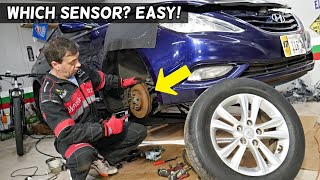


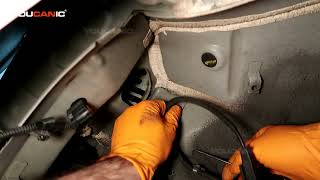

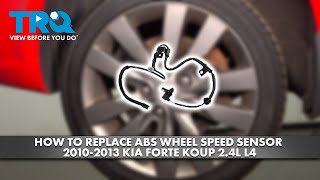
Shop the Parts Behind C1642
Below are the parts most often responsible for code C1642, ranked by how frequently each one is the actual culprit (per the diagnosis above). Tap any to see what we have for your vehicle.


The information in this article is provided for general reference and educational purposes only. Vehicle specifications, procedures, and part compatibility can vary by production date, trim level, and region. Always consult your vehicle's factory service manual and verify part numbers before purchasing or performing repairs. Safety-critical components such as airbags, seat belts, and braking systems should be installed by a qualified professional.
- 🧭 Diagnostic Flowchart
- 🎬 Helpful Videos
- 🛍️ Shop This Part
- What Does C1642 Mean?
- Can I Drive With C1642?
- Common Causes
- Symptoms
- Common Fixes & Costs
- DIY vs Professional
- Used vs. New Parts: Buying Guide
- What Happens If You Wait — Timeline
- Cost of Not Fixing It
- Diagnosis Steps
- When This Code Triggers (Freeze-Frame Conditions)
- Related Codes
- Climate & Environmental Factors
- How to Talk to a Mechanic About This Code
- Where to Take It: Dealer vs Independent vs Chain
- When to Walk Away From the Repair
- What Scan Tool You Need for This Code
- How to Clear the Code After You Fix It
- Will This Fail Emissions / State Inspection?
- Most Commonly Affected Vehicles
- Manufacturer-Specific Notes
- Real Owner Stories
- 2017 Hyundai Elantra at 75,000 miles - The Classic Wheel Speed Sensor Fix
- 2019 Kia Forte at 40,000 miles - A Misdiagnosis Story
- 2012 Hyundai Genesis at 110,000 miles - An Unusual Wiring Cause
- How to Prevent This Code From Triggering
- Frequently Asked Questions
- My scanner shows C1642 in the cruise control / forward camera module. Should I replace that module?
- Can I just clear the C1642 code and keep driving?
- Why did my cruise control and collision avoidance stop working with this code?
- My mechanic said the CAN bus resistance is 120 ohms, not 60. What does that mean?
- Can a bad wheel alignment cause a C1642 code?
- The code appeared after I replaced my battery. What should I do?
- What is the difference between code C1642 and U0121?
- Key Takeaways
- 🎟️ Get 5% Off