

OBD-II Code C1647: Yaw Rate Sensor Circuit Malfunction
What C1647 means, why it triggers, and how to fix it
- Code C1647 disables your vehicle's Electronic Stability Control (ESC) and Traction Control systems, increasing the risk of a rollover or spin-out by up to 70% during emergency maneuvers.
- Always test the 12V battery and inspect the floor-mounted sensor wiring for water damage before spending $750+ on a replacement yaw rate sensor.
- Replacing a yaw rate sensor requires a mandatory 'Zero Point Calibration' using a professional bi-directional scan tool on a perfectly level surface with less than 1 degree of inclination.
- On 2021 and newer Acura TLX models, C1647 indicates a right rear suspension stroke sensor failure caused by water intrusion, not a yaw rate sensor fault.
What Does C1647 Mean?
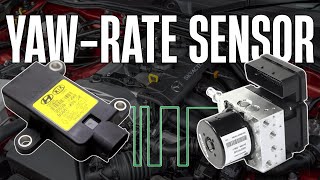
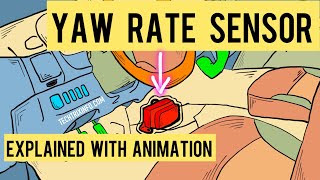
Code C1647 signifies that your vehicle's Anti-Lock Brake System (ABS) or Electronic Stability Control (ESC) module detected a critical error within the yaw rate sensor's circuit. This gyroscopic sensor measures the vehicle's rotation around its vertical axis 🎬 Watch: How yaw rate sensors work with this helpful animation. (its 'yaw'). The ESC and TCS use this data to determine if the car is turning as intended or beginning to spin out. When this code sets, these safety features deactivate as a fail-safe, illuminating dashboard warning lights.
Technical definition: The official SAE/ISO definition for code C1647 varies by manufacturer. For Hyundai and Kia, it is 'CAN Hardware Error - Sensor Channel,' indicating the ABS module lost communication with the yaw rate sensor over its dedicated CAN bus line. For Toyota, it translates to 'G Sensor Failure,' often set by secondary systems like Parking Assist reporting a fault from the main Vehicle Stability Control (VSC) sensor. For 2021+ Acura models, it indicates a suspension fault: 'Right Rear Stroke Sensor Upper/Lower Limit Abnormality'.
Can I Drive With C1647?
Yes, But With Caution. Yes, but with a significant reduction in safety. Your vehicle's Electronic Stability Control (ESC) and Traction Control (TCS) systems are completely disabled. The vehicle will not automatically assist you in the event of a skid or loss of control, significantly increasing the risk of a spin-out or rollover accident. Avoid high speeds and aggressive driving, and repair the vehicle promptly. Driving with these safety systems disabled causes a vehicle to fail a safety inspection in many jurisdictions.
Common Causes
- Faulty Yaw Rate Sensor (Very Common) — The sensor itself is the most frequent culprit. As a sensitive electronic gyroscope, its internal components fail from age, heat cycles, or physical shock, causing it to send incorrect data or go completely offline.
- Damaged Wiring, Corroded Connector, or Water Intrusion (Common) — Because yaw rate sensors are often located on the vehicle floor under a seat or center console, they are highly susceptible to moisture from spills, sunroof leaks, or flood damage. This water intrusion corrodes the connector pins, causing high resistance or open circuits.
- Weak Battery or Charging System Voltage Issues (Common) — Low system voltage during startup causes a cascade of communication errors across various modules. Sensitive systems like the ESC log fault codes like C1647 when a battery is failing, even if the sensor and wiring are perfectly fine.
- Improper Sensor Calibration (Less Common) — After replacing a yaw rate sensor, performing a wheel alignment, or completing significant suspension work, a 'Zero Point Calibration' is mandatory. Skipping this step leaves the system's baseline for 'straight' incorrect, triggering code C1647.
- Software Glitch / Incorrect Module Coding (Less Common) — On 2015-2019 Volkswagens, a P1647 code sets in the ECM after programming unrelated modules like the CAN Gateway. This is a known software configuration issue requiring a specific 'restore function' procedure with a factory scan tool (ODIS) to resolve.
- Failed ABS/ESC Control Module (Rare) — The control module that processes the yaw rate sensor's signal can fail internally. This is a costly repair and is only considered after the sensor, wiring, and calibration are definitively ruled out.
Symptoms
- ESC, ABS, and Traction Control Warning Lights Illuminated — The ABS and ESC systems are deeply integrated. A fault in the yaw rate sensor circuit triggers the ESC/VSC light (a car with squiggly lines), the ABS light, and the 'TCS OFF' light simultaneously.
- Secondary System Warnings (Hill Start Assist, Parking Assist) — A fault in the ABS/ESC system causes related systems that rely on yaw and wheel speed data to disable, displaying warnings like 'Hill Start Assist Not Available' or disabling parking sensors.
- Normal Drivability Until Emergency Maneuvers — The vehicle feels completely normal during regular driving. The absence of the safety systems only becomes apparent during an emergency maneuver or on a slippery surface when the car fails to correct a skid.
Common Fixes & Costs
- Replace Yaw Rate Sensor
— Parts: $600-$1000, Labor: $150-$300, ~1.5 hr book time
(Intermediate)
Hyundai Santa Fe (2007-2009): OEM 95690-2B100 (Alt: Limited availability, check with specialty suppliers.)
Kia Sorento (2016-2020): OEM 95690-2S000 (Alt: Limited availability, check with specialty suppliers.)
Acura TLX (2021+) Right Rear Stroke Sensor: OEM 33196-T6N-H01 (Alt: Not generally available.) - Repair Wiring or Connector — Parts: $20-$100, Labor: $150-$400, ~2.5 hr book time (Intermediate)
- Perform Zero Point Calibration — Parts: $0, Labor: $75-$150, ~0.5 hr book time (Beginner)
- Repair ABS/ESC Control Module — Parts: $150-$400, Labor: $150-$250, ~2 hr book time (Professional)
- Replace ABS/ESC Control Module — Parts: $800-$1500, Labor: $150-$250, ~2 hr book time (Professional)
DIY vs Professional
- Replace Yaw Rate Sensor 🟢 Beginner
Tools: Socket set, trim removal tools, professional bi-directional scan tool. - Repair Wiring or Connector 🟢 Beginner
Tools: Multimeter, wire strippers, soldering iron, heat shrink tubing, pigtail connector. - Perform Zero Point Calibration 🟢 Beginner
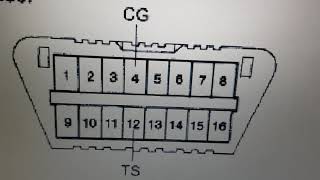
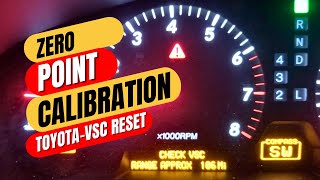
Tools: Professional scan tool OR a jumper wire for specific older Toyota models. 🎬 Watch: Step-by-step VSC zero point calibration for Toyota and Lexus. - Replace ABS/ESC Control Module 🟢 Beginner
Tools: Socket set, flare nut wrenches, professional scan tool with programming capabilities.
Used vs. New Parts: Buying Guide
When a used part is worth it: Given the high cost of a new OEM yaw rate sensor ($600-$1000+), a used sensor from a reputable salvage yard is a cost-effective option for older, high-mileage vehicles, cutting the part cost by 50-75%.
Donor-vehicle mileage cap: roughly under 100000 miles for the part to have meaningful remaining life.
Donor quality checklist:
- Verify the donor vehicle was not a flood or water-damage victim.
- Obtain the part from a low-mileage vehicle involved in a collision that did not damage the floor or center console area.
- Match the part number EXACTLY. Superseded parts from different models are often incompatible.
Decision logic:
- If The vehicle is less than 10 years old and the budget allows. → Buy a new OEM or high-quality aftermarket part for maximum reliability and longevity.
- If The vehicle is older, has high mileage, and the cost of a new part is prohibitive. → A used OEM part is an acceptable risk, provided you verify the donor quality and get a 30-90 day warranty.
- If The cause of failure on the original part was water intrusion. → Strongly favor a new part, as a used part likely has hidden corrosion and a short remaining lifespan.
Warranty tradeoff: Used parts typically offer a 30-90 day functional warranty. New aftermarket parts come with a 1-year to limited lifetime warranty. New OEM parts carry a 1-year warranty.
Worst-case if a used part fails: $200-$400 if a used part is dead on arrival or fails shortly after the warranty period, requiring you to pay for labor a second time.
Cost of Not Fixing It
- Immediate: Complete loss of Electronic Stability Control (ESC) and Traction Control (TCS). Increased risk of skidding, spin-outs, or rollover accidents, especially in adverse weather or emergency maneuvers. (Added cost: N/A (Safety Risk))
- 0-12 months: Guaranteed failure of the safety inspection portion of a state vehicle inspection in many jurisdictions, preventing legal vehicle registration. (Added cost: $50-$200 in failed inspection fees and potential fines.)
- Long-term: The primary cost is the ongoing safety risk to the driver and passengers, and the potential for an at-fault accident that a functional ESC system prevents. (Added cost: Potential cost of an insurance deductible ($500+) or total loss of the vehicle in an accident.)
Diagnosis Steps
- Read All Fault Codes from All Modules
Use an advanced OBD-II scanner capable of reading Chassis ('C') and Network ('U') codes from all vehicle modules. Confirm C1647 is present and document all other codes. Codes like U0125 point to a total communication loss, while C1282/C1283 suggest a signal plausibility issue.
Tools: Advanced OBD-II Scanner (Beginner) - Check Battery and Charging System Voltage
Ensure the battery is healthy and fully charged (12.4-12.6V with engine off). Start the engine and verify the alternator is charging correctly (13.5-14.5V). Low or unstable voltage is a primary cause of spurious communication codes.
Tools: Multimeter (Beginner) - Visually Inspect the Sensor and Wiring
Locate the yaw rate sensor (typically under the driver/passenger seat or center console). Unplug the connector and inspect for green/white corrosion, moisture, or pushed-out pins. Check the wiring harness for chafing or cuts.
Tools: Flashlight, Trim Removal Tools (Intermediate) - Check Live Sensor Data
Access the live data stream for the yaw rate sensor using your scanner. With the car stationary on a level surface, the reading must be stable and close to 0 degrees/second. Rock the vehicle side-to-side; the value must change smoothly. If the reading is stuck, erratic, or missing, the sensor or circuit is faulty.
Tools: Advanced OBD-II Scanner (Intermediate) - Test Power and Ground at the Sensor Connector
Disconnect the sensor. Use a multimeter and a wiring diagram to identify the power and ground pins. With the ignition on, check for reference voltage (typically 5V or 12V) and a solid ground (less than 1.0 Ω to the chassis).
Tools: Multimeter, Vehicle-Specific Wiring Diagram, Back-probe Kit (Advanced) - Test CAN Bus Communication Wires and Signal
For 4-wire CAN sensors, test the CAN High (approx. 2.6V) and CAN Low (approx. 2.4V) circuits with a multimeter. For definitive proof, use an oscilloscope to back-probe the wires; you must see a clean, mirrored square wave pattern. If power, ground, and CAN signals are present but live data is absent, the sensor has failed internally.
Tools: Multimeter, Oscilloscope, Wiring Diagram, Back-probe Kit (Advanced) - Test Sensor Signal Voltage (Analog Sensors Only)
For older analog sensors, test the signal wire voltage with a multimeter. On a level surface, the sensor outputs a specific bias voltage (typically 2.5V). Tilting the sensor causes the voltage to change predictably. Readings outside the specified range indicate a fault.
Tools: Multimeter, Wiring Diagram, Back-probe Kit (Advanced) - Perform Zero Point Calibration
If you replaced the sensor, performed a wheel alignment, or completed suspension work, you must perform a 'Zero Point Calibration'. This requires a professional-grade scan tool and must be done on a perfectly level surface to reset the sensor's baseline.
Tools: Professional Scan Tool (Intermediate)
When This Code Triggers (Freeze-Frame Conditions)
- Fault Trigger: Key-On Self Test (The code sets immediately upon starting the vehicle as the ABS/ESC module performs its initial hardware check and fails to communicate with the sensor.)
- Vehicle Speed: 0-5 mph (If the fault occurs during the initial self-test, vehicle speed is at or near zero.)
- System Voltage: 11.5V - 14.5V (Values on the low end suggest a battery or charging system issue as the root cause, rather than the sensor itself.)
- Yaw Rate Sensor Signal: No Data / Implausible Value (The direct data from the sensor shows as offline, stuck at a fixed value, or providing a reading that is physically impossible while stationary.)
Related Codes
- C1282 / C1283 — These indicate a 'Signal Plausibility' fault. C1647 means a complete hardware or communication failure, while C1282/C1283 means the module is communicating, but its reported data is irrational or doesn't match steering angle data.
- C1260 — Indicates a fault with the steering angle sensor. Differentiate them using live data: with C1260, the steering angle value is stuck while the yaw rate reads correctly. With C1647, the yaw rate value is faulty.
- U0125 — A generic communication code meaning 'Lost Communication With Yaw Rate Sensor Module'. U0125 points strongly to a wiring break or totally dead sensor, whereas C1647 is the manufacturer-specific code set by the ABS module.
- P1647 — A Powertrain code specific to Volkswagen meaning 'Check Coding/Versions of Control Modules in Drivetrain'. It is a software configuration error occurring after programming certain modules, not a sensor fault.
Climate & Environmental Factors
- High Humidity / Water Intrusion: The sensor's location on the vehicle floor makes it extremely vulnerable to water intrusion from floods, leaking sunroofs, or spilled drinks. Moisture wicks up the wiring harness and corrodes the connector from the inside out.
- Cold Climates / Road Salt: In regions using road salt, salty moisture tracks into the cabin on boots and seeps under carpeting. This creates a highly corrosive environment that rapidly deteriorates the yaw rate sensor's connector pins.
How to Talk to a Mechanic About This Code
Say this: "I have a C1647 code with the ABS and ESC lights on. I'd like to schedule a diagnostic. Please start by checking the battery and charging system, and then inspect the yaw rate sensor connector for corrosion before testing the sensor itself. Also, confirm if you have the tools to perform a zero-point calibration if the sensor needs replacement."
This directs the mechanic to check the simplest and cheapest potential causes first (battery, wiring) before moving to an expensive sensor replacement. Asking about calibration confirms they have the necessary equipment to finish the job correctly.
Avoid saying:
- 'My stability control light is on, can you just fix it?'
- 'I'm pretty sure it's the yaw sensor, just replace it.'
- 'Do whatever you think is best.'
Questions to ask before authorizing the repair:
- What were the results of the battery and charging system test?
- Did you inspect the sensor connector and wiring for moisture or corrosion?
- What did the live data for the yaw rate sensor show when the vehicle was stationary?
- If recommending a sensor replacement, is the mandatory zero-point calibration included in the labor estimate?
- Can you show me the old part and explain why it failed?
Where to Take It: Dealer vs Independent vs Chain
- Dealer:
Recommended for specific manufacturer quirks or if the vehicle is under warranty. They are guaranteed to have the correct calibration tools.
Best for: Vehicles under warranty., Known manufacturer-specific quirks (e.g., VW software issues, Acura stroke sensor faults)., Complex diagnostics where access to factory technical support and software is critical.
Downsides: Highest labor rates, often 1.5-2x more than independent shops., Defaults to replacing entire assemblies rather than performing a nuanced wiring repair. (Typical cost: +50% vs. baseline) - Independent Shop:
Best overall fit, provided you vet the shop first. Ask specifically if they can diagnose ABS/ESC systems and perform a 'zero-point' calibration.
Best for: Out-of-warranty vehicles where cost is a primary concern., Common failures on well-known models (e.g., Hyundai/Kia sensor failures)., Building a long-term relationship with a trusted mechanic.
Downsides: Diagnostic capabilities vary widely; a shop without a modern, bi-directional scan tool cannot complete this job., Unaware of obscure manufacturer TSBs or software-related fixes. (Typical cost: +0% vs. baseline) - Chain Shop:
AVOID for this code. They are unlikely to have the tools or expertise for proper diagnosis and the essential final calibration step.
Best for: Simple, high-volume jobs like oil changes, tires, and brake pads.
Downsides: Technician skill level varies dramatically., Lack the advanced diagnostic equipment and specific training required for complex electronic faults and mandatory calibration procedures. (Typical cost: -10% vs. baseline)
When to Walk Away From the Repair
If the estimated repair cost for the C1647 fault exceeds 40-50% of your car's private-party value, seriously consider selling or trading it in.
- Car worth $4000, fix is $1200: Fix it. The repair is 30% of the vehicle's value and restores a critical safety feature.
- Car worth $3000, fix is $1400: Borderline. The repair cost is nearly 50% of the car's value. Get a second opinion before authorizing, and consider selling it as-is.
- Car worth $2000, fix is $1300: Walk away. The repair cost is 65% of the car's value. It is not economically viable to put that much money into an aging vehicle for a single repair.
What Scan Tool You Need for This Code
Minimum: An OBD-II scanner that reads and clears Chassis (ABS/ESC) codes and displays live sensor data. A basic engine-only code reader will not work.
A $20 scanner won't see the C1647 fault. To diagnose this properly, you must view the live data stream from the yaw rate sensor. For the final repair, a tool with bidirectional control is required to perform the Zero Point Calibration.
Budget: BlueDriver Pro (~$100) — Reads and clears ABS/ESC codes and provides live data graphing for the yaw rate sensor on many models. It helps diagnose if the sensor is sending a signal but cannot perform the final calibration step.
Mid-range: Foxwell NT510 Elite / Innova 5610 (~$180) — The minimum level for a complete DIY fix. These scanners offer manufacturer-specific diagnostics and perform the critical 'Zero Point Calibration' required after replacing the sensor.
Professional: Autel MaxiCOM MK808 / MX808 (~$450) — Provides full bidirectional control and access to all service functions, including yaw rate sensor calibration, ABS bleeding, and module coding, walking you through the procedure step-by-step.
Rent vs buy: Rent for initial diagnosis only. Auto parts store loaner tools read the C-code but CANNOT perform the special 'Zero Point Calibration' function. If replacing the sensor yourself, you must buy a mid-range or better scanner.
How to Clear the Code After You Fix It
- Perform the mandatory Zero Point Calibration for the new part using a bi-directional scan tool.
- Use an OBD-II scanner with ABS/Chassis system capabilities to clear the C1647 fault code.
- Turn the ignition off, wait 30 seconds, then restart the vehicle.
- Drive the vehicle for 5-10 minutes, including several turns, to allow the system to self-test and confirm the fix.
Drive cycle (~10 minutes): There is no complex drive cycle for most C-codes. After clearing the code, a short test drive is sufficient for the ABS/ESC module to re-run its self-tests and confirm the yaw rate sensor is communicating correctly.
Readiness monitors affected: None directly. Chassis codes like C1647 do not affect the emissions readiness monitors required for a smog test.
Watch out for:
- Using a basic code reader that only clears Powertrain (P) codes will not erase a Chassis (C) code.
- Forgetting to perform the mandatory Zero Point Calibration after replacing the sensor causes the code to return immediately.
- Simply disconnecting the battery does not clear the code from the ABS module's permanent memory.
Will This Fail Emissions / State Inspection?
No — by itself this code doesn't fail OBD inspection (but it can keep readiness monitors from setting, which causes a separate fail).
- California: An illuminated ABS/ESC light itself does not cause a failure of the emissions (smog) test. However, if the fault also causes the main Check Engine Light to illuminate, it will fail.
- New York: An illuminated ABS warning light is an automatic failure of the annual safety inspection. The vehicle cannot be legally registered until the fault is repaired.
- Texas: An illuminated Anti-lock (ABS) lamp is NOT a cause for rejection during the safety inspection. However, a lit 'Brake' warning light is.
- North Carolina: A lit ABS light causes the vehicle to fail its annual safety inspection.
Most Commonly Affected Vehicles
- Hyundai Santa Fe (2006-2012) — Highly prone to yaw rate sensor failures. The sensor (P/N 95690-2B100) is often integrated into the airbag control module under the center console.
- Kia Sorento (2016-2020) — Yaw rate sensor failure is a known issue, often requiring replacement of OEM part 95690-2S000. Water intrusion into the sensor connector is a frequent root cause.
- Acura TLX (ADV & Type S) (2021-2025) — On models with the Adaptive Damper System, C1647 means 'Right Rear Stroke Sensor Upper/Lower Limit Abnormality'. This is a suspension height sensor issue caused by water intrusion into the connector, not a yaw sensor fault.
- Volkswagen Jetta, Golf, Passat, Atlas, Tiguan (2015-2019) — Sets a P1647 fault in the ECM after online programming of other modules. This is a software configuration mismatch requiring a specific service procedure using the ODIS factory scan tool (TSB 90-19-10TT).
- Ford Fusion (2013-2020) — Symptoms overlap with common wheel speed sensor failures. TSB SSM 44504 highlights wiring corrosion near the wheel speed sensor connector, which causes identical ABS/TCS warnings and must be inspected first.
- Hyundai Azera / Grandeur (2011-2015) — Specifically defines C1647 as a 'CAN Hardware Error - Sensor Channel', pointing directly to a communication or internal sensor hardware problem.
- Kia Optima (2011-2013) — Frequently experiences yaw rate sensor issues leading to ESC system faults. The sensor is located under the center console.
- Toyota Various with Parking Assist (2010-2018) — C1647 is set by the Parking Assist ECU and defined as 'G Sensor Failure'. The parking system is reporting a fault detected in the primary Vehicle Stability Control (VSC) system. Diagnostics must start with the VSC system.
Manufacturer-Specific Notes
- Hyundai / Kia: Defines C1647 specifically as a 'CAN Hardware Error - Sensor Channel,' pointing to an issue on the dedicated communication bus. Sensor replacement always requires a 'Zero Point Calibration' with a factory-level scan tool.
- Toyota: The code is often set by a secondary system, like the Parking Assist ECU, reporting a 'G Sensor Failure' detected in the primary Vehicle Stability Control (VSC) system. Diagnostics must start with the VSC and Airbag systems.
- Volkswagen: A P1647 code appears in the ECM after unrelated programming. This is a known software issue addressed by TSB 90-19-10TT, requiring a special 'Control Module Software Configuration' function with the ODIS diagnostic tool.
- Acura: On 2021+ models with an Adaptive Damper System, C1647 means 'Right Rear Stroke Sensor Upper/Lower Limit Abnormality'. This is a suspension component fault caused by a poor connector design allowing water entry, not a yaw rate sensor fault.
- Ford: Before suspecting the yaw rate sensor, rule out a faulty wheel speed sensor. TSB SSM 44504 points to a known problem of wiring corrosion near the wheel speed sensor connector on Fusions, producing identical warning lights.
Frequently Asked Questions
What are the most common misdiagnosis mistakes for C1647?
The most common mistake is replacing the expensive yaw rate sensor without thorough diagnosis. Technicians often fail to first rule out simpler causes like a weak battery, corroded wiring, or a missed zero-point calibration. Another major pitfall is confusing a yaw rate sensor fault with a wheel speed sensor fault on vehicles like the Ford Fusion.
My ESC light came on after hitting a pothole, could that cause C1647?
Yes. A severe impact from a pothole creates a large, unexpected spike in G-force data that the control module flags as implausible. The physical shock can also damage the delicate internal components of the yaw rate sensor or knock a wheel speed sensor out of alignment.
Can I fix code C1647 myself?
A skilled DIYer can check the battery, fuses, and visually inspect accessible wiring for corrosion. However, definitive diagnosis requires an advanced scan tool to read live data and an oscilloscope for circuit testing. Because replacement always requires a 'Zero Point Calibration', this job is typically best left to a professional.
What is a yaw rate sensor and what does it do?
A yaw rate sensor is a gyroscopic device that measures a vehicle's angular velocity around its vertical axis, determining how fast it is turning. This information is critical for the Electronic Stability Control (ESC) system. The ESC compares the yaw rate to the steering angle and wheel speeds to detect and correct skids.
Will clearing the code fix the problem?
No. Clearing the code only extinguishes the warning lights temporarily. The ABS/ESC module performs a self-test every time the vehicle starts, and the code will reset immediately once it detects the hardware or communication fault again.
What does 'Zero Point Calibration' for a yaw rate sensor do?
Zero Point Calibration is a mandatory procedure that sets the sensor's baseline 'zero' value. It tells the ESC control module what the sensor's output is when the vehicle is stationary on a perfectly level surface with the steering wheel pointed straight. Without this reference point, the system cannot accurately interpret data and will trigger a fault.
How much does it cost to fix code C1647?
The cost varies widely based on the vehicle and the root cause. Replacing the yaw rate sensor typically costs between $750 and $1,300, with the OEM part accounting for the majority of the expense. Simpler issues like a wiring repair or a zero-point calibration cost between $75 and $400.
Key Takeaways
- Code C1647 disables your vehicle's Electronic Stability Control (ESC) and Traction Control systems, increasing the risk of a rollover or spin-out by up to 70% during emergency maneuvers.
- Always test the 12V battery and inspect the floor-mounted sensor wiring for water damage before spending $750+ on a replacement yaw rate sensor.
- Replacing a yaw rate sensor requires a mandatory 'Zero Point Calibration' using a professional bi-directional scan tool on a perfectly level surface with less than 1 degree of inclination.
- On 2021 and newer Acura TLX models, C1647 indicates a right rear suspension stroke sensor failure caused by water intrusion, not a yaw rate sensor fault.
Helpful Videos
Shop the Parts Behind C1647
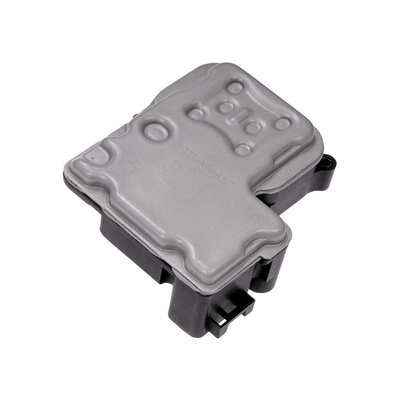
Below are the parts most often responsible for code C1647, ranked by how frequently each one is the actual culprit (per the diagnosis above). Tap any to see what we have for your vehicle.


The information in this article is provided for general reference and educational purposes only. Vehicle specifications, procedures, and part compatibility can vary by production date, trim level, and region. Always consult your vehicle's factory service manual and verify part numbers before purchasing or performing repairs. Safety-critical components such as airbags, seat belts, and braking systems should be installed by a qualified professional.
- 🎬 Helpful Videos
- 🛍️ Shop This Part
- What Does C1647 Mean?
- Can I Drive With C1647?
- Common Causes
- Symptoms
- Common Fixes & Costs
- DIY vs Professional
- Used vs. New Parts: Buying Guide
- Cost of Not Fixing It
- Diagnosis Steps
- When This Code Triggers (Freeze-Frame Conditions)
- Related Codes
- Climate & Environmental Factors
- How to Talk to a Mechanic About This Code
- Where to Take It: Dealer vs Independent vs Chain
- When to Walk Away From the Repair
- What Scan Tool You Need for This Code
- How to Clear the Code After You Fix It
- Will This Fail Emissions / State Inspection?
- Most Commonly Affected Vehicles
- Manufacturer-Specific Notes
- Frequently Asked Questions
- What are the most common misdiagnosis mistakes for C1647?
- My ESC light came on after hitting a pothole, could that cause C1647?
- Can I fix code C1647 myself?
- What is a yaw rate sensor and what does it do?
- Will clearing the code fix the problem?
- What does 'Zero Point Calibration' for a yaw rate sensor do?
- How much does it cost to fix code C1647?
- Key Takeaways
- 🎟️ Get 5% Off