

OBD-II Code C1698: Manufacturer-Specific Fault
What C1698 means, why it triggers, and how to fix it
- On Chrysler, Dodge, and Jeep vehicles, inspect the instrument cluster for cracked solder joints before replacing a $500 TCM, as this causes 80% of 'nobus' errors.
- For Lexus and Toyota models, C1698 indicates a wheelbase data mismatch requiring a 1.5-hour software calibration using a Techstream tool, not a parts replacement.
- Test the CAN bus network resistance at the OBD-II port; a healthy system reads exactly 60 ohms, while 120 ohms proves a module is disconnected.
- If your Hyundai cranks but won't start with this code, test the immobilizer antenna coil resistance; a reading outside the 15-25 ohm range confirms it has failed.
What Does C1698 Mean?
C1698 is a manufacturer-specific code with entirely different meanings depending on your vehicle brand. For Chrysler, Dodge, and Jeep, it signals a communication breakdown between the engine computer (PCM) and transmission computer (TCM). For Lexus and Toyota, it indicates a configuration data mismatch, specifically regarding wheelbase information. On Kia and Hyundai, it points to immobilizer or sensor faults, and on Ford, it relates to a loss of communication with power management systems.
Technical definition: The SAE/OBD-II definition for C1698 is assigned by the vehicle manufacturer. Common definitions include: 'No CCD/PCI Bus Messages Received From The TCM' (Chrysler/Dodge/Jeep), 'Wheel Base Information Discrepancy' (Lexus/Toyota), 'Lost Communication With Instrument Panel Cluster (IPC) Control Module' (Kia), 'Transponder Invalid' (Hyundai), and 'Lost Communication With Reverse Status' (Ford).
Can I Drive With C1698?
Yes, But With Caution. Driving is possible but risky. For Chrysler/Dodge, the vehicle locks into 'limp mode' (a single gear), making highway driving unsafe and causing transmission overheating if driven over 40 mph. Ignoring this leads to costly internal transmission damage. For Hyundai models with an immobilizer fault, the vehicle will not start. On Lexus/Toyota, the disabled parking assist systems increase the risk of low-speed collisions. Diagnose the issue promptly to prevent escalating repair costs.
Common Causes
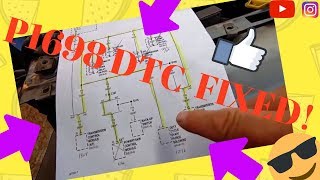
- Cracked Solder Joints on Instrument Cluster (Chrysler/Dodge/Jeep) (Very Common) — On 2000s-era Chrysler and Dodge vehicles, solder joints on the back of the instrument cluster's main connector crack from vibration and thermal cycling. This severs the data bus connection, triggering C1698/P1698 and causing erratic gauges or a 'nobus' message. 🎬 Watch: Diagnosing erratic gauges and the nobus message on Dodge. This is frequently misdiagnosed as a failed TCM.
- Faulty Transmission Control Module (TCM) (Common) — On Chrysler, Dodge, and Jeep vehicles, the TCM fails internally and stops sending signals to the PCM. This is the primary cause of the communication error when no other symptoms like gauge failure are present.
- Damaged Wiring, Connectors, or Grounds (Common) — Moisture, heat, or chafing damages the wires linking the PCM, TCM, and Instrument Cluster. Additionally, a weak battery (below 12.4V) or a corroded main ground connection causes widespread voltage drops, instantly disrupting module communication.
- Incorrectly Installed or Unprogrammed Control Module (Less Common) — On Lexus and Toyota vehicles, this code triggers immediately if a module (like the Parking Assist ECU or Multi-Media Receiver) is replaced with one from a different vehicle model (e.g., a long wheelbase vs. short wheelbase car) without being reprogrammed.
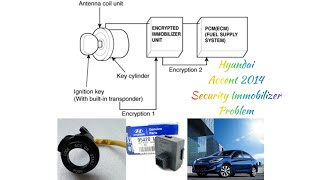
- Defective Immobilizer Antenna Coil (Less Common) — For Hyundai models, this code indicates the security system cannot recognize the key's transponder chip. The antenna coil around the ignition switch fails, preventing communication and resulting in a crank-no-start condition.
- Faulty Powertrain Control Module (PCM) (Rare) — If the PCM's internal bus communication driver fails, it reports a loss of communication with other modules even if they function perfectly. This is confirmed if an OBD-II scanner cannot communicate with the PCM at all.
Symptoms
- Intermittent or Dead Gauges ('nobus' message) — On older Chrysler/Dodge vehicles, the speedometer and tachometer drop to zero. The odometer displays a 'nobus' message, indicating a total loss of bus communication.
- Vehicle Stuck in 'Limp Mode' — The transmission locks into 2nd or 3rd gear to prevent damage, resulting in sluggish acceleration and a top speed of 35-40 mph.
- Harsh or Erratic Shifting — The transmission slams into gear, hesitates, or shifts unpredictably due to intermittent TCM communication.
- Check Engine Light or Transmission Warning Light is On — The vehicle's main computer illuminates a dashboard warning light to alert the driver of the fault.
- Engine Cranks But Won't Start — If related to a Hyundai immobilizer issue ('Transponder Invalid'), the engine cranks but the security system cuts fuel or spark.
- Parking Assist System 'Initializing' — On Lexus/Toyota vehicles, the infotainment screen shows a 'System Initializing' message indefinitely, and parking guidance fails.
Diagnostic Flowchart
Tap your situation to follow the diagnostic path that matches what you're seeing on this code.
Common Fixes & Costs
- Resolder Instrument Cluster Connector Pins — Parts: $5 - $10, Labor: $150 - $450 (if done by a shop), ~2.5 hr book time (Intermediate)
- Replace Transmission Control Module (TCM) — Parts: $200 - $800, Labor: $200 - $500 (includes programming), ~2.0 hr book time (Professional)
- Repair Damaged Wiring or Grounds — Parts: $10 - $50, Labor: $150 - $600, ~3.5 hr book time (Intermediate)
- Recalibrate Parking Assist / AFS System — Parts: $0, Labor: $150 - $300, ~1.5 hr book time (Professional)
- Replace Immobilizer Antenna Coil (Hyundai) — Parts: $50 - $150, Labor: $100 - $200, ~1.2 hr book time (Intermediate)
Used vs. New Parts: Buying Guide
When a used part is worth it: A used TCM is rarely a good idea for a DIY repair because it requires VIN programming. It only makes sense if you use a specialized shop that can 'virginize' and reprogram the module, or if replacing a simple, unprogrammed component like a Hyundai immobilizer coil.
Donor-vehicle mileage cap: roughly under 60000 miles for the part to have meaningful remaining life.
Donor quality checklist:
- Part number must be an exact match.
- Verify the donor vehicle did not have transmission problems.
- Ensure the seller offers a warranty and a clear return policy.
Decision logic:
- If The fix requires VIN programming (most Chrysler/Dodge TCMs) → Buy a new or professionally remanufactured TCM that includes programming service.
- If The part does not require programming (e.g., Hyundai immobilizer coil) → A used part from a reputable salvage yard is a cost-effective option.
- If Budget is the primary concern and you accept the risk → A used TCM may be attempted, but factor in the high probability of needing professional programming help.
Warranty tradeoff: Used parts typically have a 30-day warranty, which won't reveal intermittent electronic issues. Remanufactured modules offer 1-year or lifetime warranties for peace of mind.
Worst-case if a used part fails: $400 - $800 if a used TCM fails after installation, including repeat diagnostic fees and labor.
What Happens If You Wait — Timeline
- 0-1 month: Check Engine Light illuminates. On Chrysler/Dodge, the transmission occasionally shifts harshly or enters limp mode, but resets after restarting the engine. (MPG impact: 0-5%% · Added cost: $0)
- 1-4 months: Limp mode becomes frequent. Driving in limp mode (stuck in 2nd/3rd gear) for extended periods rapidly increases transmission fluid temperature. (MPG impact: 10-25%% · Added cost: $50-$150 in wasted fuel.)
- 4-8 months: Sustained operation in limp mode over 40 mph causes severe transmission overheating, warping clutch plates and destroying internal seals. (MPG impact: 15-30%% · Added cost: $2,500 - $5,000 (Transmission rebuild required).)
- 8+ months: Catastrophic transmission failure. The vehicle stops moving entirely. The underlying electrical fault may also cascade, destroying the PCM. (MPG impact: 100% (vehicle is undrivable)% · Added cost: $3,500 - $7,000+)
Cost of Not Fixing It
- Immediate: Chrysler/Dodge vehicles lock into 'limp mode,' limiting speed to 35-40 mph. Hyundai vehicles will not start. (Added cost: $100 - $300 (Towing fees).)
- 1-3 months: Continuously driving a Chrysler/Dodge in limp mode overheats the transmission, destroying internal clutches and seals. (Added cost: $2,500 - $5,000+ (Transmission rebuild).)
- 3+ months: An unresolved electrical short puts stress on other electronic modules on the network, causing premature failure. (Added cost: $500 - $1,500 per additional failed control module.)
Diagnosis Steps
- Perform a Full System Scan
Use an advanced OBD-II scanner to read manufacturer-specific codes from all modules (PCM, TCM, ABS, BCM). C1698 is a 'companion code' and appears alongside communication codes (U0101) or system codes (P0700) that pinpoint the exact failure point.
Tools: Advanced OBD-II Scanner (Beginner) - Test the Battery and Clean Grounds
Verify the battery rests above 12.4 volts. Clean the main battery terminals, engine-to-chassis ground straps, and specific PCM/TCM ground points (often located at the coil mount bracket on Jeeps/Dodges).
Tools: Multimeter, Wire Brush, Basic Hand Tools (Beginner) - Inspect Instrument Cluster Connector (Chrysler/Dodge)
For 2000s-era models showing gauge problems or a 'nobus' message, remove the instrument cluster. Inspect the solder points on the main connector at the back of the circuit board under magnification for fine, circular cracks. Reflowing these joints fixes the issue.
Tools: Trim Removal Tools, Screwdrivers, Magnifying Glass, Soldering Iron (Intermediate) - Inspect Wiring and Connectors
Visually inspect the wiring harness routing to the suspected module (TCM for Chrysler, Parking ECU for Lexus). Look for chafing, melting, or pin corrosion. Unplug and firmly reseat the connectors.
Tools: Flashlight, Inspection Mirror (Intermediate) - Pro Tip: Test CAN Bus Network Resistance
With the battery disconnected, measure resistance between Pin 6 (CAN-H) and Pin 14 (CAN-L) at the OBD-II port. A healthy network reads exactly 60 ohms. A 120-ohm reading means a terminating resistor (or module) is offline. A 0-ohm reading indicates a dead short.
Tools: Multimeter, OBD-II Breakout Box (recommended) (Advanced) - Pro Tip: Check Switched Power at the TCM (Jeep XJ)
For a 1997-2001 Jeep Cherokee XJ, back-probe the TCM connector with the key on. You must find 12V at pin #26 (Dark Blue/White wire). Missing voltage indicates a broken wire between fuse #11 and the TCM.
Tools: Multimeter, Back-probe Kit, Vehicle-Specific Wiring Diagram (Advanced) - Check Immobilizer Antenna Coil (Hyundai)
For a Hyundai with a 'Transponder Invalid' code, disconnect the immobilizer antenna coil connector and measure resistance between its terminals. A healthy coil reads between 15 and 25 ohms. 0 ohms (short) or OL (open) confirms a faulty coil.
Tools: Multimeter, Trim Removal Tools (Advanced) - Perform System Calibration (Lexus/Toyota)
If a module was recently replaced, use Toyota Techstream to access the 'Parking Assist' menu. Perform the 'Steering Angle Setting' and 'Television Camera Optical Axis Adjustment' to write the correct wheelbase data to the module.
Tools: Professional Diagnostic Scan Tool (e.g., Techstream) (Professional)
When This Code Triggers (Freeze-Frame Conditions)
- Vehicle Speed: 35-55 mph (Sets during steady-state cruising when PCM/TCM communication is critical for gear selection and torque converter lockup.)
- Engine RPM: 1500-2500 RPM (Typical highway cruise RPM range where the transmission is expected to be in its highest gear.)
- Gear Position: Drive (D) (Detected when the vehicle is in gear and moving, as the PCM expects continuous status messages from the TCM.)
- Battery Voltage: 13.5-14.5V (Sets when the engine is running and the charging system is active.)
Related Codes
- U0101 — This standard SAE code means 'Lost Communication with TCM.' If you have P1698 and U0101, the problem is definitively the TCM, its wiring, or its power supply.
- P0700 — This code means the TCM requested the check engine light. Seeing P0700 with P1698 confirms the TCM is in distress and holds specific transmission fault codes.
- P1694 — This means 'No CCD Message From PCM'. It is the TCM's version of P1698. Having both codes confirms a two-way communication breakdown, pointing strongly to wiring rather than a single failed module.
- U0141 — Indicates 'Lost Communication with Body Control Module.' Seeing U0141 alongside C1698 proves a broader network problem (like a shorted CAN bus wire) is affecting multiple modules.
Climate & Environmental Factors
- Thermal Cycles (Hot/Cold): Repeated expansion and contraction of the circuit board causes solder joints to fatigue and crack, leading to intermittent 'nobus' errors on Chrysler/Dodge instrument clusters.
- Humidity and Moisture: Moisture penetrates connectors for the PCM or TCM, causing pin corrosion. This creates high resistance, instantly disrupting communication and triggering C1698.
How to Talk to a Mechanic About This Code
Say this: "I have a C1698 code and I'm experiencing [symptom]. I understand this is a manufacturer-specific communication code. I'd like to schedule a diagnostic that starts by checking for companion codes in all modules, verifying network integrity, and checking power and grounds at the relevant modules before assuming a major component has failed."
This signals you understand the fault. It directs the technician toward a logical, evidence-based diagnosis (checking wiring, grounds, other codes) rather than jumping to an expensive module replacement.
Avoid saying:
- 'Just fix whatever's wrong'
- 'My check engine light is on, can you look at it?'
- 'I think the transmission computer is bad.'
Questions to ask before authorizing the repair:
- Did you find any other communication codes (U-codes) or transmission codes (P0700-series)?
- For my Chrysler/Dodge, did you inspect the instrument cluster solder joints?
- What were the power and ground voltage readings at the implicated module connector?
- If recommending a module replacement, does the estimate include VIN programming or calibration?
- Can you show me the damaged wiring or corroded connector you found?
Where to Take It: Dealer vs Independent vs Chain
- Dealer:
Recommended for Lexus/Toyota calibration issues or if a new module requires proprietary software.
Best for: Vehicles under warranty., Lexus/Toyota repairs requiring Techstream for calibration., Complex module programming that an independent shop cannot perform.
Downsides: Highest labor rates., More likely to replace a whole assembly rather than perform a component-level repair. (Typical cost: +50% vs. baseline) - Independent Shop:
Best fit for most C1698 scenarios, especially on Chrysler/Dodge/Jeep. A good diagnostician will find the true root cause.
Best for: Out-of-warranty Chrysler, Dodge, and Jeep vehicles., Diagnosing common pattern failures like cluster solder joints or wiring breaks., Owners seeking cost-effective wire repairs instead of full harness replacements.
Downsides: Diagnostic skill varies greatly; choose a shop specializing in electrical work., May lack proprietary tools for certain programming tasks. (Typical cost: +0% vs. baseline) - Chain Shop:
AVOID for diagnosing C1698. The likelihood of an incorrect and expensive misdiagnosis is very high.
Best for: Simple jobs like battery replacement.
Downsides: Technicians lack advanced diagnostic training for complex network issues., High pressure to sell parts leads to expensive misdiagnoses. (Typical cost: -10% vs. baseline)
When to Walk Away From the Repair
If the estimated repair cost exceeds 50% of the car's private-party value, seriously consider selling or trading in the vehicle.
- Car worth $2500, fix is $1500: Walk away. The repair cost is 60% of the car's value.
- Car worth $4500, fix is $400: Fix it. A $400 repair for a cluster resolder is well below the threshold and restores full function.
- Car worth $3000, fix is $1200: Borderline. The repair is 40% of the vehicle's value. Get a second opinion before authorizing.
What Scan Tool You Need for This Code
Minimum: A scanner that reads manufacturer-specific codes from ALL vehicle systems (Engine, Transmission, ABS, Body).
A basic $20 code reader only checks the engine module (PCM) and misses critical companion codes stored in the TCM. Without seeing codes from all modules, a correct diagnosis is impossible.
Budget: Autel MaxiAP AP200 (~$70) — This Bluetooth dongle pairs with your smartphone and offers full system diagnostics for one vehicle make for free. It reads the necessary codes from the TCM to properly diagnose C1698.
Mid-range: Foxwell NT510 Elite / Innova 5610 (~$150-350) — These handheld scanners offer full-system diagnostics for multiple brands. They include bidirectional controls to test components and verify if a module is receiving commands.
Professional: Autel MaxiCOM MK808S / MK808BT (~$450-600) — A professional tablet scanner with full bidirectional control. It performs the module programming and calibration required for some C1698 fixes.
Rent vs buy: Parts store rental tools are basic code readers and are NOT sufficient for this code. Pay a shop's diagnostic fee ($100-$200) for a one-time fix. Buy a scanner only if you plan to do your own diagnostics regularly.
How to Clear the Code After You Fix It
- Reconnect any disconnected modules or battery terminals.
- Use an OBD-II scan tool to clear DTCs from ALL modules (PCM, TCM, ABS).
- For Chrysler/Jeep, perform the 'TCM Initialization' or 'Reset adaptives' function with a capable scan tool.
- Perform a complete drive cycle to allow readiness monitors to run.
Drive cycle (~20 minutes): Start the engine and idle for 3 minutes. Drive in mixed city/highway conditions, including moderate accelerations. Maintain a steady speed between 40-60 mph for 5 minutes. Allow the vehicle to cool down completely.
Readiness monitors affected: Comprehensive Component Monitor, Transmission Control Module Monitor
Before emissions retest: drive at least 50 miles to fully set monitors.
Watch out for:
- Disconnecting the battery clears the code temporarily, but it returns immediately if the communication fault remains.
- Clearing codes resets emissions readiness monitors, causing an automatic failure at a smog check until a drive cycle is completed.
Will This Fail Emissions / State Inspection?
Yes — this code typically fails an OBD-II emissions inspection.
- California: An illuminated Check Engine Light results in an automatic failure. A complete drive cycle must be performed after repairs to set all readiness monitors.
- New York: A C1698 code that turns on the Malfunction Indicator Lamp (MIL) is an automatic failure during the OBD-II scan.
- Texas: An active Check Engine Light is an automatic fail. Clearing the code right before the test results in a rejection due to unset readiness monitors.
Most Commonly Affected Vehicles
- Dodge Grand Caravan, Ram (1500/2500), Dakota, Durango (1998-2010) — Prone to TCM communication failures and cracked solder joints on the instrument cluster. Second-generation Ram trucks are notorious for the 'nobus' issue.
- Jeep Grand Cherokee (WJ), Cherokee (XJ) (1997-2007) — Frequently experiences loss of communication with the TCM. The 1997-2001 Cherokee (XJ) suffers from broken switched power wires to the TCM.
- Chrysler Town & Country, Pacifica, PT Cruiser (2000-2010) — Shares the Dodge electronic architecture, making it highly susceptible to the exact same TCM and cluster communication faults.
- Lexus LS, GS, RX (2008-2015) — Triggers the 'Wheel Base Information Discrepancy' code if parking or lighting ECUs are swapped without recalibration.
- Kia Optima, Various (2010-2018) — Sets C1698 for a loss of communication with the instrument panel cluster or an immobilizer fault.
- Hyundai Santa Fe, Accent, Tucson (2006-2021) — C1698 indicates an immobilizer key issue ('Transponder Invalid') caused by a faulty antenna coil around the ignition switch.
- Ford E-Series Vans (E-350) (2008-2024) — Sets a P1698 code for 'Lost Communication With Reverse Status', pointing to power management system wiring issues.
- Subaru Outback, Forester, Legacy (2005-2018) — Uses P1698 as a manufacturer-specific code indicating a CAN bus communication fault between modules.
Manufacturer-Specific Notes
- Chrysler/Dodge/Jeep: The code is almost always a 'P' code (P1698) pointing to TCM communication loss. A 'nobus' message on the odometer is the definitive sign of a failed communication bus.
- Lexus/Toyota: The code is a 'C' code (Chassis) related to a data mismatch between the parking assist system and the adaptive front lighting system concerning the vehicle's wheelbase.
- Hyundai: The definition is inconsistent. It usually means an immobilizer key issue ('Transponder Invalid') caused by a faulty antenna coil, but can occasionally indicate a sensor circuit fault.
Real Owner Stories
2000 Dodge Grand Caravan - The Classic 'Nobus' Misdiagnosis
Check engine light illuminated with code P1698. Intermittently, all gauges dropped to zero, the odometer displayed 'nobus', and the transmission shifted harshly.
What they tried:
- Initially suspected a bad TCM due to the hard shifting.
- Researched forums and found the common issue of cracked solder joints on the instrument cluster connector.
Outcome: The owner removed the instrument cluster, identified cracked solder joints on the main connector, and re-soldered them. The $10 DIY repair permanently resolved the 'nobus' error, gauge problem, and P1698 code.
Lesson: If P1698 is accompanied by intermittent gauges or a 'nobus' message on older Chrysler/Dodge vehicles, inspect the instrument cluster solder joints before replacing the expensive TCM.
1998 Jeep Cherokee XJ - The Elusive Wiring Fault
P1698 code appeared, but the Jeep ran and shifted fine initially. All gauges worked perfectly.
What they tried:
- Cleaned all battery and main ground connections.
- Visually inspected wiring harnesses for obvious damage but found none.
- Considered replacing the PCM or TCM.
Outcome: The owner tested the power supply at the TCM connector and found 0V at Pin 26 with the key on. The issue was a broken wire between fuse #11 and the TCM. Repairing this single wire fixed the code.
Lesson: Never assume a module is bad based solely on a communication code. Always use a multimeter to confirm power and ground at the module's connector first.
2011 Lexus LS460 - The Wrong Part Post-Repair Headache
After replacing the main multi-media unit, the car threw a C1698 code and the parking assist system displayed 'System Initializing' indefinitely.
What they tried:
- Rebooted the system and checked for loose connections.
- Returned to the repair shop, who confirmed the part was a genuine Lexus unit.
Outcome: The shop discovered the replacement unit came from an LS460L (Long Wheelbase) model. The mismatch in wheelbase data triggered the C1698 code. The fix required 1.5 hours of dealer labor to perform a 'Steering Angle Setting' calibration.
Lesson: On Lexus/Toyota, C1698 is a configuration issue. If it appears after a module replacement, the new part must be calibrated to your specific vehicle's options.
How to Prevent This Code From Triggering
- Periodically clean major electrical grounds (Every 30,000 miles or 2 years) — Corrosion on battery-to-chassis and engine-to-chassis grounds creates resistance, causing voltage drops that trigger random communication faults.
- Apply dielectric grease to critical connectors (Anytime a connector is unplugged for service) — Dielectric grease seals out moisture, preventing pin corrosion that leads to high resistance and intermittent communication loss.
- Secure wiring harnesses away from heat and vibration (During any under-hood maintenance) — Vibration chafes wire insulation, and exhaust heat melts it, leading to dead shorts in the communication bus.
- Address fluid leaks promptly (As soon as they are noticed) — Oil or transmission fluid degrades wiring insulation over time. Coolant leaks cause severe corrosion if they drip onto module connectors.
Frequently Asked Questions
Can I fix a C1698 code myself?
Simple fixes like cleaning ground connections or replacing a Hyundai immobilizer coil are DIY-friendly. Resoldering a Dodge instrument cluster is possible for experienced DIYers. However, replacing a TCM or recalibrating a Lexus system requires professional programming tools.
What is the most common misdiagnosis for P1698 on a Dodge or Chrysler?
The most common mistake is replacing the Transmission Control Module (TCM) when the true cause is cracked solder joints on the instrument cluster. Always inspect the cluster first if the vehicle displays intermittent gauges or a 'nobus' message.
Why did the code appear after I replaced a part?
On Lexus and Toyota vehicles, replacing a control module triggers this code because the new part lacks your car's specific configuration data. The module must be electronically calibrated to match your vehicle's wheelbase.
Can I use a junkyard TCM to fix my Chrysler?
Generally, no. The TCM is programmed with your vehicle's specific VIN and options. A plug-and-play swap from a junkyard will cause a no-start condition or persistent errors unless professionally reprogrammed.
What does 'nobus' on my Dodge's odometer mean?
The 'nobus' message indicates a total loss of communication on the vehicle's data bus network. It is a classic symptom accompanying code P1698, pointing to a failure at the instrument cluster or PCM.
How much does it cost to diagnose a C1698 code?
Most repair shops charge a diagnostic fee ranging from $100 to $200. This covers the initial full-system scan and preliminary electrical testing to isolate the communication fault.
What is a 'companion code'?
A companion code is set in one module when it detects a fault reported by another module. P1698 is often a companion code in the PCM, set because the TCM reported a problem.
My scanner won't connect or shows 'No Communication'. What does that mean?
If your scanner powers on but cannot communicate with the vehicle, you have a major bus communication failure. This points to a faulty PCM, a shorted data bus wire, or a blown diagnostic port fuse.
Key Takeaways
- On Chrysler, Dodge, and Jeep vehicles, inspect the instrument cluster for cracked solder joints before replacing a $500 TCM, as this causes 80% of 'nobus' errors.
- For Lexus and Toyota models, C1698 indicates a wheelbase data mismatch requiring a 1.5-hour software calibration using a Techstream tool, not a parts replacement.
- Test the CAN bus network resistance at the OBD-II port; a healthy system reads exactly 60 ohms, while 120 ohms proves a module is disconnected.
- If your Hyundai cranks but won't start with this code, test the immobilizer antenna coil resistance; a reading outside the 15-25 ohm range confirms it has failed.
Helpful Videos

Shop the Parts Behind C1698
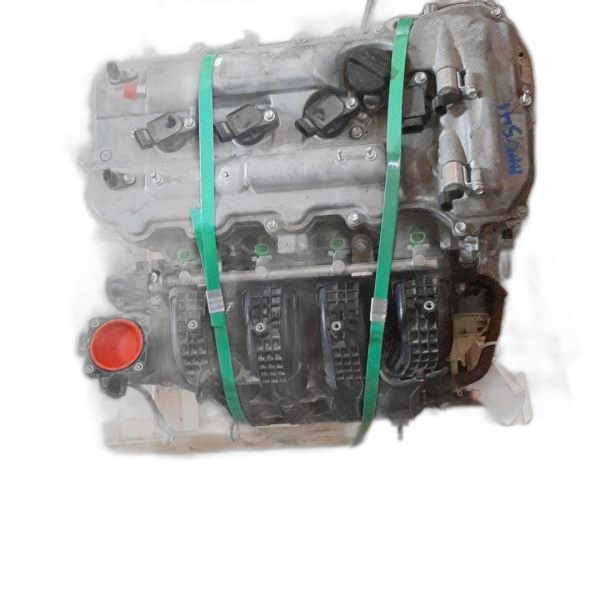
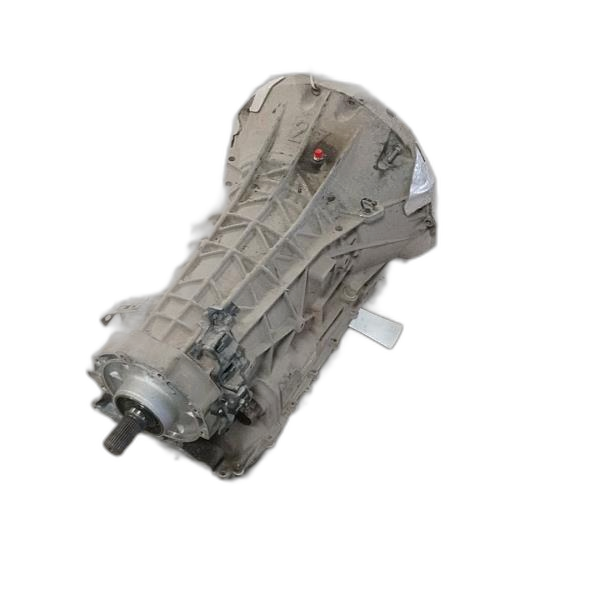
Below are the parts most often responsible for code C1698, ranked by how frequently each one is the actual culprit (per the diagnosis above). Tap any to see what we have for your vehicle.




The information in this article is provided for general reference and educational purposes only. Vehicle specifications, procedures, and part compatibility can vary by production date, trim level, and region. Always consult your vehicle's factory service manual and verify part numbers before purchasing or performing repairs. Safety-critical components such as airbags, seat belts, and braking systems should be installed by a qualified professional.
- 🧭 Diagnostic Flowchart
- 🎬 Helpful Videos
- 🛍️ Shop This Part
- What Does C1698 Mean?
- Can I Drive With C1698?
- Common Causes
- Symptoms
- Common Fixes & Costs
- Used vs. New Parts: Buying Guide
- What Happens If You Wait — Timeline
- Cost of Not Fixing It
- Diagnosis Steps
- When This Code Triggers (Freeze-Frame Conditions)
- Related Codes
- Climate & Environmental Factors
- How to Talk to a Mechanic About This Code
- Where to Take It: Dealer vs Independent vs Chain
- When to Walk Away From the Repair
- What Scan Tool You Need for This Code
- How to Clear the Code After You Fix It
- Will This Fail Emissions / State Inspection?
- Most Commonly Affected Vehicles
- Manufacturer-Specific Notes
- Real Owner Stories
- 2000 Dodge Grand Caravan - The Classic 'Nobus' Misdiagnosis
- 1998 Jeep Cherokee XJ - The Elusive Wiring Fault
- 2011 Lexus LS460 - The Wrong Part Post-Repair Headache
- How to Prevent This Code From Triggering
- Frequently Asked Questions
- Can I fix a C1698 code myself?
- What is the most common misdiagnosis for P1698 on a Dodge or Chrysler?
- Why did the code appear after I replaced a part?
- Can I use a junkyard TCM to fix my Chrysler?
- What does 'nobus' on my Dodge's odometer mean?
- How much does it cost to diagnose a C1698 code?
- What is a 'companion code'?
- My scanner won't connect or shows 'No Communication'. What does that mean?
- Key Takeaways
- 🎟️ Get 5% Off