

C1699 on 2018-2020 Ford EcoSport: Parking Sensor and Wiring Faults Explained
This code indicates a short circuit in the rear outer left parking sensor system. While a bad sensor or rear harness is possible, a known issue on the EcoSport is a damaged main wiring harness in the engine bay, as identified in Ford's Technical Service Bulletin SSM 49828. This TSB is the most likely cause, especially on 2.0L models.
- Code C1699 means the rear outer left parking sensor circuit has a short.
- Before you buy any parts or remove the rear bumper, inspect the main wiring harness in the engine bay near the passenger side strut tower for damage, as per Ford TSB SSM 49828.
- If the engine bay harness is fine, the most likely causes are a bad parking sensor or a damaged rear bumper harness.
- A simple way to test the sensors is to put the car in reverse (engine off) and listen for a faint clicking sound from each one; a silent sensor is likely broken.
- This issue disables your parking assist, but the vehicle remains safe to drive.
What's Unique About the 2018-2020 Ford ECOSPORT
While any vehicle can suffer from a failed parking sensor or damaged rear bumper wiring, the 2018-2020 EcoSport has a unique and documented vulnerability, particularly models with the 2.0L engine. Ford issued Technical Service Bulletin (TSB) SSM 49828 which identifies a specific chafing point on the main engine bay wiring harness (part number family 12A581) near the front strut tower. Damage in this unexpected, forward location can cause a short circuit that triggers the C1699 code for a rear sensor, leading to a potentially confusing diagnosis if you only focus on the rear of the vehicle. The TSB explicitly mentions inspecting the harness near connectors C1699 and C1698, confirming these are connector names and not just a reference to the DTC.
Diagnostic Flowchart
Tap your situation to follow the diagnostic path that matches what you're seeing on this vehicle.
Symptoms You May Notice
- "Check Rear Park Aid" message on the instrument cluster display
- The parking aid system automatically turns itself off
- No beeping or audible alerts when the vehicle is in reverse and approaching an obstacle
- A solid, continuous tone as soon as reverse is selected
- Intermittent failure of the system before it fails completely
- Immediately replacing the rear parking sensor without checking for the TSB-related wiring issue in the engine bay. This can lead to the problem persisting after the new part is installed, wasting time and money.
- Replacing the rear bumper harness when the actual fault is in the main engine harness.
Most Likely Causes
- Damaged Main Engine Harness (12A581) 🔴 High Probability Ford TSB SSM 49828 specifically calls out a location near the right/front strut tower (passenger side in the US), behind the coolant expansion tank (degas bottle), where this harness can rub against the chassis or other components and chafe through the insulation. This issue is noted for vehicles with the 2.0L engine and can cause various DTCs, including C1699.
How to confirm: Perform a careful visual inspection of the 12A581 wiring harness in the engine bay, specifically around the passenger side strut tower. You may need to move the coolant degas bottle to get a clear view. Look for any signs of rubbing, chafing, exposed copper wires, or damage to the convoluted loom tubing.
Typical fix: Repair the damaged section of the wiring harness. This involves carefully cutting out the damaged wire(s), splicing in a new section of the same gauge wire, and protecting the repair with adhesive-lined heat shrink tubing and new loom. Replacing the entire harness is a costly last resort.
Est. part cost: $5-$25 for wiring repair supplies - Failed Rear Outer Left Parking Sensor 🟡 Medium Probability Parking sensors are exposed to weather, moisture, and potential impacts, which can lead to internal failure or corrosion of the connector pins.
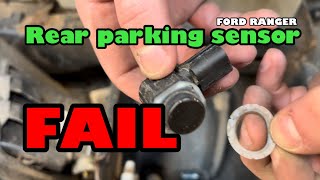
How to confirm: With the key on and vehicle in reverse, listen closely for a faint clicking or ticking sound from each sensor. The sensor that is silent is likely the faulty one. 🎬 Watch: A quick demonstration on how to test for clicking sensors. Alternatively, swap the suspect sensor with an adjacent one (e.g., the inner left) and see if the fault code changes to follow the sensor's new position (e.g., to C1705 for the inner left).
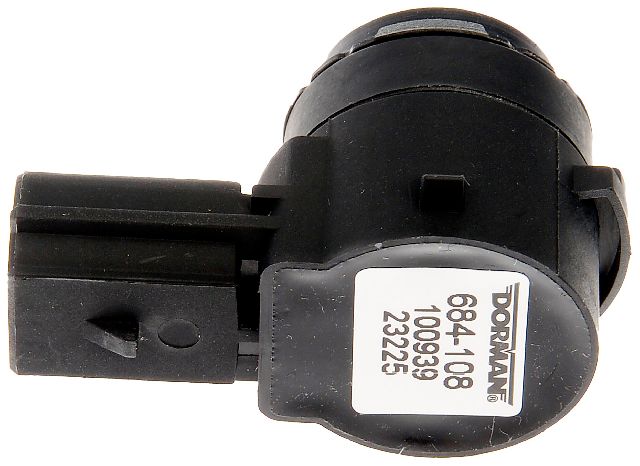
Typical fix: Replace the faulty parking aid sensor. This often requires removal of the rear bumper cover. The OEM part number is HU5Z-15K859-A.
Est. part cost: $30-$60 for an aftermarket sensor, $65-$80 for an OEM Motorcraft sensor (Part # HU5Z-15K859-A). - Damaged Rear Bumper Wiring Harness 🟡 Medium Probability → Shop Body Wiring Harness This harness is located behind the bumper cover and is vulnerable to damage from minor rear-end collisions, improper trailer hitch installation, or moisture intrusion leading to corrosion.
How to confirm: With the rear bumper cover removed, visually inspect the entire length of the harness that connects the sensors. Look for cut wires, corroded connectors, or pinch points.
Typical fix: Repair the damaged section of the harness or replace the rear bumper harness assembly if damage is extensive. 🎬 See this walkthrough for repairing damaged parking sensor and camera wiring.
Est. part cost: $50-$100 for a new harness assembly. - Failed Parking Aid Module (PAM) ⚪ Low Probability Module failure is less common than sensor or wiring issues. Electrical issues elsewhere, like the main harness chafe, can send improper voltage and potentially damage the module over time, but the module itself is rarely the root cause.
How to confirm: This is typically diagnosed by exclusion. If all sensors and wiring (both front and rear harnesses) have been tested and confirmed to be in good condition, the module itself is the likely culprit. A scan tool capable of communicating with the PAM is needed for definitive diagnosis.
Typical fix: Replace the Parking Aid Module. This may require programming by a dealer or a qualified shop with Ford diagnostic software (like FORScan).
Est. part cost: $100-$250 for a used or new module.
Diagnosis Steps
- Scan the vehicle's modules with a capable OBD-II scanner (like FORScan for Fords) to confirm C1699 is the active code in the Parking Aid Module (PAM). Note any other codes, especially P06A7.
- Start with the TSB. Before checking anything else, inspect the main engine wiring harness (12A581) near the right front strut tower as described in TSB SSM 49828. Carefully pull back the loom and inspect the wires for chafing, especially behind the coolant degas bottle.
- If no damage is found in the engine bay, proceed to the rear. Put the ignition in the 'on' position (engine off) and engage reverse. Listen for a quiet ticking sound from each of the four rear sensors. The outer left sensor will likely be silent if it or its wiring is the issue.
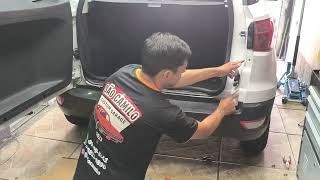
- If the listening test is inconclusive, you will need to access the sensors. This requires careful removal of the rear bumper cover. 🎬 Watch: Step-by-step guide on how to remove the rear bumper cover.
- Once the bumper is off, inspect the rear bumper wiring harness for any obvious signs of damage, cuts, or corrosion, especially near the sensor connectors.
- Disconnect the outer left sensor. Inspect its connector pins for green or white corrosion or physical damage.
- To definitively test the sensor, swap it with an adjacent one (e.g., the inner left sensor). Reconnect everything temporarily, clear the codes, and re-scan. If the code changes to C1705 (Rear inner left sensor circuit short to battery), the sensor you moved is faulty and needs replacement.
- If the C1699 code returns after the swap, the problem lies in the wiring between the PAM and the sensor connector.
- Using a multimeter, check the signal wire at the outer left sensor connector for a short to voltage (battery power). If voltage is present when it shouldn't be, a wiring short exists between that point and the PAM. This would again point towards the TSB issue as the most likely cause.
- If all wiring and sensors are confirmed good, the Parking Aid Module (PAM) is the most likely remaining point of failure.
Parts You'll Likely Need
- Rear Parking Aid Sensor
(OEM #HU5Z-15K859-A)— These sensors are a common failure point due to their exposure to the elements and potential for impact damage. This is the correct OEM part number for the 2018-2022 EcoSport.
Trusted brands: Motorcraft, Dorman, Standard Motor Products
OEM price range: $65-$80
Aftermarket price range: $30-$60 - Main Engine Wiring Harness
(OEM #GN1Z-12A581-QP)— Per TSB SSM 49828, this harness is known to chafe and short out in the engine bay, causing this code. It is typically repaired, not replaced. Full replacement is very expensive.
Trusted brands: Ford
OEM price range: $700-$1000 - Rear Bumper Parking Sensor Harness — This harness can be damaged in minor collisions or from environmental exposure, causing faults in one or more sensors.
Trusted brands: Ford
OEM price range: $50-$100
Related Codes That Often Appear With This One
- P06A7: While TSB SSM 49828 was issued to address DTC P06A7 (Sensor Reference Voltage 'B' Circuit Range/Performance), the underlying cause—a damaged 12A581 harness—is the same one that can trigger the C1699 code.
Technical Service Bulletins (TSBs) & Recalls
- SSM 49828: Inspect the 12A581 harness for possible damage near the right/front strut tower (behind the degas bottle) and a few inches back from connectors C1699 and C1698.
Platform-Specific Known Issues
- TSB SSM 49828: This bulletin is the most critical piece of information for this code on an EcoSport. It notes that on some 2018-2020 models with the 2.0L engine, the main engine harness (12A581) can be damaged near the right front strut tower. This damage can cause a short circuit, leading to various DTCs, including P06A7 and, by extension, parking aid faults like C1699. The repair involves inspecting and repairing the harness rather than replacing it.
Mechanic-Grade Diagnostic Values
- Parking Aid Sensor Internal Resistance — expected: A good sensor should show a clear resistance value, for example, a similar new sensor for a Ford vehicle showed a reading of around 9.9 kOhms on a 20k Ohm multimeter setting.. Failure: An open circuit (no reading) or a short circuit (very low resistance) indicates a failed sensor.
- Voltage at PAM Connector C4014-1, circuit CBP32 (GN/VT) — expected: Greater than 10 volts with ignition on.. Failure: Less than 10 volts indicates an open in the power supply circuit or a blown fuse (SJB Fuse 32, 10A).
Scan Tool Commands That Help
- FORScan: PAM On-Demand Self Test — This is a crucial first step after reading the initial DTCs. Running the self-test can confirm if the C1699 code is a hard, current fault. It's also used to verify a fix after swapping sensors or repairing wiring.
- FORScan: Read PAM Live Data (PIDs) — To monitor the status of individual sensors in real-time. This can help identify intermittent faults that may not be present during a static self-test.
- FORScan: Module Configuration (As-Built format) — This is used if the Parking Aid Module (PAM) is replaced. The configuration from the old module must be saved and written to the new module to ensure proper function within the vehicle's specific options.
Wiring & Ground Locations
- Parking Aid Module (PAM) — On similar Ford platforms like the Maverick and Expedition, the PAM is located in the cabin, often behind a C-pillar trim panel on the driver's side or near the B-pillar. On the EcoSport, it is typically found in the rear of the vehicle, behind the luggage compartment trim panels.. This is the control unit for the parking aid system. All sensor wiring terminates here. A code for a short to voltage (like C1699) could theoretically be caused by an internal module fault, though wiring is more common.
- Parking Sensor Connector — Plugs directly into the back of each parking sensor, located in the rear bumper cover. It is a 3-pin connector.. This connector is a common point of failure due to moisture intrusion and corrosion, which can cause shorts or open circuits. The pins can become corroded and break off.
- Main Chassis Ground — A primary ground connection point is located in the engine compartment to the right of the battery, near the fuse box. Other critical grounds are located on the engine block and behind the intake manifold.. While a bad ground typically causes an open circuit or low voltage fault, poor grounding can lead to unpredictable electrical issues across multiple systems. Ensuring the main chassis and engine grounds are clean and tight is a fundamental step in diagnosing any electrical DTC.
Real Owner Repair Stories
- Reddit r/mechanic (2020 Ford EcoSport SES) — Parking aid system not working, "Parking Aid Fault" message.
❌ Tried (didn't work) Initially assumed one or more sensors were bad.
✅ What actually fixed it A mechanic discovered the entire rear bumper wiring harness had been intentionally cut, likely by a previous owner to hide signs of an accident. The resolution was to replace the rear bumper wiring harness. - Reddit r/Ford (2018 Ford EcoSport) — Parking aid fault after being backed into a pole.
❌ Tried (didn't work) Popping the fender back into place.
✅ What actually fixed it The impact physically broke the passenger-side rear parking sensor. The fix required replacing the broken sensor.
OEM Part Supersession History
HU5Z-15K859-A→HU5T-15K859-AAW, 2529799— Part number evolution and updates across different models (Fiesta, Focus, Transit) that use the same sensor architecture.
Heads up: While the base part numbers are often interchangeable for unpainted black sensors, it is critical to verify the exact part number for the vehicle's VIN, especially for pre-painted sensors, to ensure correct fit and function.
Helpful Videos

We Have This Part in Stock


The information in this article is provided for general reference and educational purposes only. Vehicle specifications, procedures, and part compatibility can vary by production date, trim level, and region. Always consult your vehicle's factory service manual and verify part numbers before purchasing or performing repairs. Safety-critical components such as airbags, seat belts, and braking systems should be installed by a qualified professional.
- Ford ECOSPORT:
- 🧭 Diagnostic Flowchart
- 🎬 Helpful Videos
- 🛍️ Shop This Part
- What's Unique About the 2018-2020 Ford ECOSPORT
- Symptoms You May Notice
- Most Likely Causes
- Diagnosis Steps
- Parts You'll Likely Need
- Related Codes That Often Appear With This One
- Technical Service Bulletins (TSBs) & Recalls
- Platform-Specific Known Issues
- Mechanic-Grade Diagnostic Values
- Scan Tool Commands That Help
- Wiring & Ground Locations
- Real Owner Repair Stories
- OEM Part Supersession History
- 🎟️ Get 5% Off