

C1709 on 2017-2018 Nissan 370Z: Front Right TPMS Fault Causes and Fixes
Code C1709 on a 2017-2018 Nissan 370Z means the front right TPMS sensor is not sending a signal to the car. The most common cause is a dead battery inside the sensor, which has a 5-10 year lifespan. Before replacing anything, unplug all 12V accessories to rule out RF interference. For 2018 models specifically, a faulty HVAC blower motor is a known cause per TSB NTB19-062. The typical fix is to replace the sensor and have it programmed, costing between $130 and $350 at a shop.
- C1709 means the front right TPMS sensor is not communicating, most likely due to a dead internal battery.
- Before replacing any parts, unplug all phone chargers and aftermarket accessories to rule out simple radio frequency interference.
- On 2018 models specifically, a faulty HVAC blower motor can cause this code; test for it by running the fan on high during a drive as per TSB NTB19-062.
- Sensor replacement is not a DIY job for most people, as it requires tire dismounting and a special tool to register the new sensor to the car.
What's Unique About the 2017-2018 Nissan 370Z
For the 2017-2018 370Z, Nissan has issued specific service bulletins that are highly relevant to code C1709. TSB NTB13088A acknowledges that radio frequency (RF) interference from accessories like phone chargers is a common cause for this code across many Nissan models. More specifically for the 2018 model year, TSB NTB19-062 identifies a unique and surprising potential cause: a failing HVAC blower motor can create enough RF interference to block the TPMS signal, triggering the C1709 code. This TSB provides a specific diagnostic procedure to confirm the blower motor as the culprit.
Diagnostic Flowchart
Tap your situation to follow the diagnostic path that matches what you're seeing on this vehicle.
Symptoms You May Notice
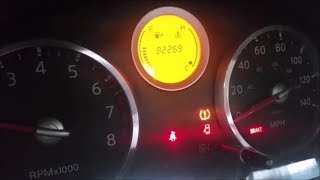
- TPMS warning light flashes for approximately one minute at startup, then stays on solid.
- Inability to read the front right tire pressure through the vehicle's information display (if equipped).
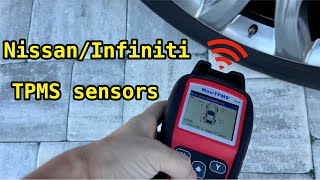
- A TPMS diagnostic tool will show 'NO TPM FOUND' or a similar error when trying to activate the front right sensor.
- Replacing the TPMS sensor without first checking for Radio Frequency (RF) interference from a phone charger or other accessory.
- Assuming the tire is low on air when the light is flashing, which indicates a system fault, not low pressure.
- Replacing the wrong wheel's sensor. If tires have been rotated without relearning their positions, the BCM may report C1709 for the front right position when the faulty sensor is physically located elsewhere on the car.
Most Likely Causes
- Dead TPMS Sensor Battery 🔴 High Probability → Shop Tire Pressure Monitoring System (TPMS) Sensor TPMS sensors contain non-serviceable batteries with a finite lifespan of 5-10 years. Vehicles from 2017-2018 are now entering the age range where battery failure is common and expected. Forum users on Reddit's r/370z frequently point to dead batteries as the primary cause for this issue on aging Zs.
How to confirm: A tire shop can use a TPMS activation tool (like the Signal Tech II mentioned in Nissan TSBs) to try and read the sensor. If the tool gets no response after several attempts, the sensor has failed.
Typical fix: Replace the front right TPMS sensor. It is often recommended to replace all four sensors at once, as the others are likely near the end of their service life.
Est. part cost: $35-$100 - Radio Frequency (RF) Interference 🟡 Medium Probability Nissan TSB NTB13088A specifically calls out that aftermarket devices plugged into the 12V power outlets (like 'Smart cell phone chargers', dash cams, or GPS units) can emit RF noise that interferes with the 315 MHz TPMS signal. Many cheap, poorly-shielded chargers are known to cause this type of interference.
How to confirm: Unplug all aftermarket accessories from the vehicle's power outlets. Clear the code and drive the vehicle for several minutes above 25 MPH to see if the light stays off.
Typical fix: Remove or replace the interfering device with a higher-quality, better-shielded alternative. Sometimes using a ferrite choke on the power cord can help filter the noise.
Est. part cost: $0-$50 - Faulty HVAC Blower Motor (2018 model) ⚪ Low Probability → Shop HVAC Blower Motor As per Nissan TSB NTB19-062, a failing HVAC blower motor on the 2018 370Z can generate significant RF interference, specifically causing TPMS data loss. This is a documented, vehicle-specific issue.
How to confirm: Follow the diagnostic procedure in TSB NTB19-062: First, confirm all sensors are transmitting with a TPMS tool. Then, with the engine running, turn the A/C to max cool, max fan speed, and recirculate. Drive at 25 MPH or more for 3 minutes, then at any speed for 10 minutes. If the C1709 code returns during this test, the blower motor is the confirmed cause.
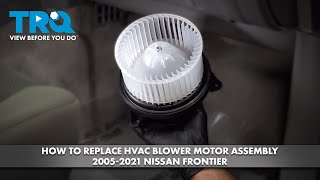
Typical fix: Replace the HVAC blower motor assembly. The OEM part number is 27225-1EA0A. 🎬 See this walkthrough for replacing a Nissan HVAC blower motor.
Est. part cost: $100-$200
Rare But Worth Checking
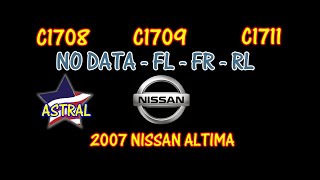
- Faulty TPMS Receiver or BCM: In rare instances, the receiver module (often part of the Body Control Module) can fail. This is more likely if multiple TPMS codes (e.g., C1708, C1710, C1711) are present simultaneously 🎬 Watch: Diagnosing multiple 'No Data' TPMS codes on a Nissan. and RF interference and sensor failure have been ruled out.
Diagnosis Steps
- Verify that the TPMS warning light is flashing for a minute and then staying solid, confirming a system fault.
- Unplug all aftermarket accessories from 12V power outlets (phone chargers, dash cams, etc.).
- Clear the DTCs and drive the vehicle for several minutes above 25 MPH to see if the code returns. If it does not, one of the accessories was the cause.
- If the code returns, use a TPMS activation tool to attempt to read the front right sensor. If it does not respond ('NO TPM FOUND'), the sensor has failed and needs replacement.
- If the sensor responds, the issue may be with signal reception. For 2018 models, perform the HVAC blower motor test as described in TSB NTB19-062.
- If the blower motor test is negative and the sensor is confirmed to be transmitting, investigate potential issues with the TPMS receiver/BCM wiring, which requires professional diagnosis.
Parts You'll Likely Need
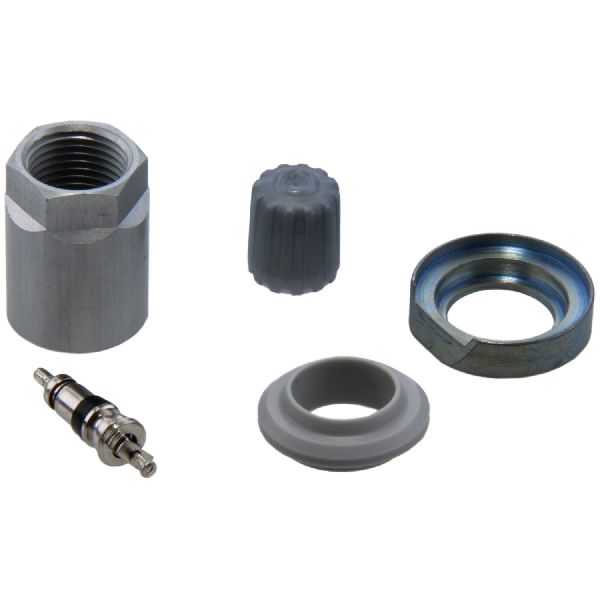
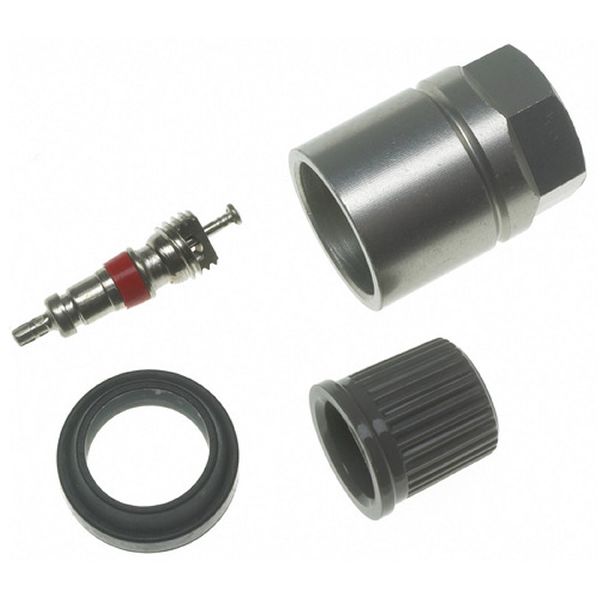
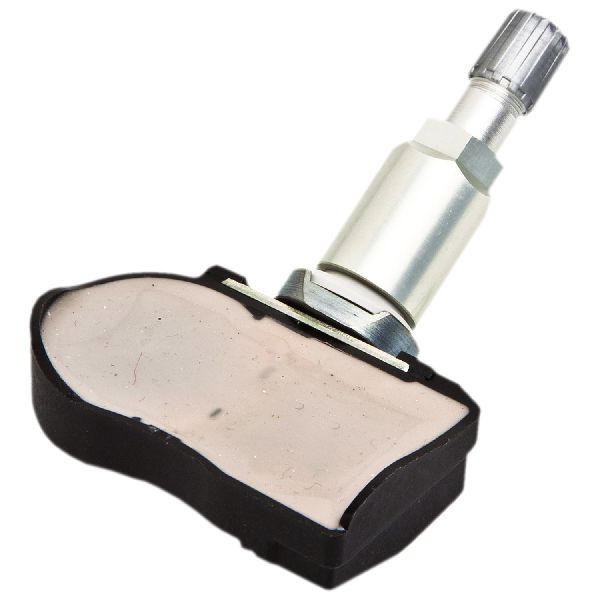
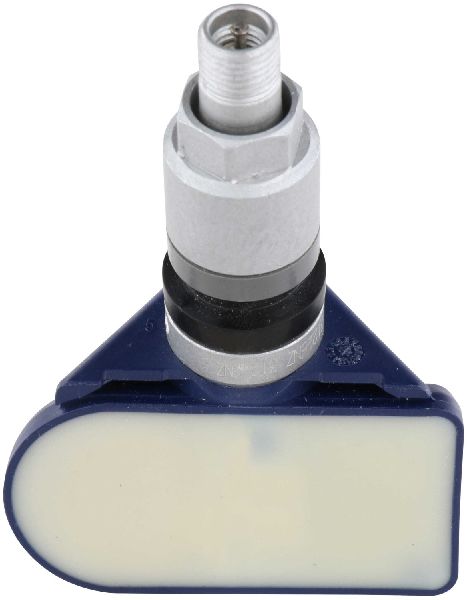
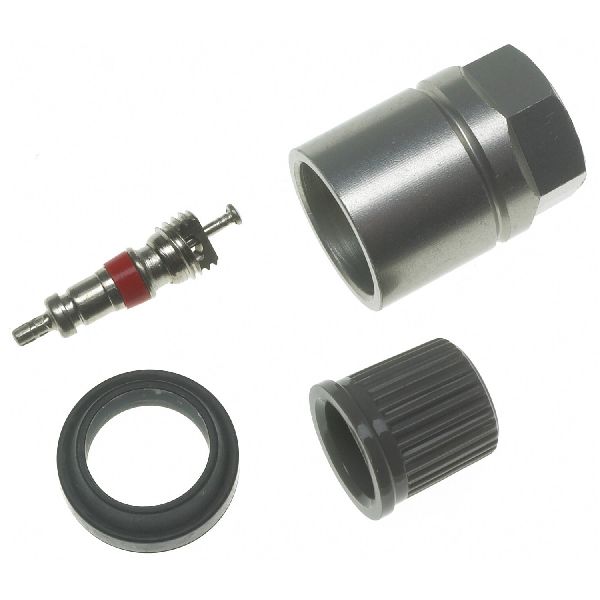
- Tire Pressure Monitoring System (TPMS) Sensor
(OEM #40700-6WY0B)— This is the most common failure point, typically due to an expired internal battery. This part number is specified for many Nissan vehicles of this era and may be superseded by 40700-6WY0C.
Trusted brands: Nissan Genuine, Schrader, Continental, Denso, Dorman, Bosch
OEM price range: $70-$120
Aftermarket price range: $35-$70 - HVAC Blower Motor Assembly
(OEM #27225-1EA0A)— A specific failure point for the 2018 model year, this part can create RF interference that blocks TPMS signals, as documented in TSB NTB19-062.
Trusted brands: Nissan Genuine, Four Seasons, Global Parts
OEM price range: $180-$275
Aftermarket price range: $80-$150
Related Codes That Often Appear With This One
- C1708 — This is the code for the front left sensor. Seeing both codes can indicate that multiple sensor batteries are failing at the same time due to age, or a significant RF interference issue is affecting both front sensors.
- C1710 — This code is for the rear right sensor. Its presence with C1709 suggests either multiple sensors are failing or a systemic issue like RF interference.
- C1711 — This is the code for the rear left sensor. When multiple TPMS 'No Data' codes appear together, it's a strong sign that all sensors are reaching the end of their battery life or a central issue exists.
Technical Service Bulletins (TSBs) & Recalls
- NTB19-062: '2018 370Z AND GT-R; TPMS LIGHT ON WITH DTC STORED' - Details a diagnostic procedure for when the HVAC blower motor causes TPMS codes C1708, C1709, C1710, or C1711. It requires using a TPMS tool to confirm sensors are transmitting first, then running the HVAC on max fan speed during a road test to see if the code reappears.
- NTB13088A: 'LOW TIRE PRESSURE WARNING SYSTEM BULLETINS SUMMARY' - Mentions that Radio Frequency (RF) interference from devices like 'Smart cell phone chargers' can cause 'No Data' conditions (C1708-C1711).
Platform-Specific Known Issues
- TSB NTB19-062 notes that on 2018 370Z models, a faulty HVAC blower motor can be the source of RF interference causing C1709. The fix is to replace the blower motor.
- TSB NTB13088A confirms that aftermarket electronics are a known cause of TPMS communication codes like C1709 on Nissan vehicles.
Mechanic-Grade Diagnostic Values
- TPMS Sensor Operating Frequency — expected: 315 MHz. Failure: A sensor operating on a different frequency (e.g., 433 MHz) will not communicate with the vehicle's BCM.
- TPMS Sensor Battery Voltage — expected: 3-volt (Lithium-ion) or 1.25-volt (Nickel-metal hydride). Failure: A depleted battery requires replacement of the entire sensor unit, as the batteries are encased and non-serviceable.
- Tire Pressures for Manual Relearn Procedure — expected: Front-Left: 34 PSI, Front-Right: 31 PSI, Rear-Right: 29 PSI, Rear-Left: 26 PSI. Failure: If this specific, unequal pressure pattern is not set, the BCM cannot identify sensor locations, and the manual relearn will fail. This procedure is more common on older Nissans and may not be applicable to all 370Z models, which often require a scan tool.
Scan Tool Commands That Help
- Nissan CONSULT-III / CONSULT 3+: Work Support > ID Regist — This function is required after replacing a TPMS sensor to write the new, unique sensor ID to the Body Control Module (BCM). The tool puts the BCM in 'execution mode' to accept the new ID, which is typically read by a secondary TPMS activation tool at the wheel.
- OBD Fusion App (with Enhanced Diagnostics): Live Data > Body Control Module > Tire Pressures — Can be used to view real-time pressure data from the functioning sensors after driving above 25 mph to wake them up. A sensor that consistently shows zero pressure while others report values is likely the one that has failed. This helps confirm the fault is with the sensor for C1709 before replacement.
Wiring & Ground Locations
- Body Control Module (BCM) — Located in the driver's side kick panel, below the fuse box.. The BCM acts as the main computer for the TPMS. It receives the signals from the TPMS receiver and logs codes like C1709. All diagnostic communication and sensor registration is performed through the BCM.
- TPMS Receiver — On the related 350Z platform, it is located under the dashboard on the passenger side, near the center, often tucked above the blower motor housing. Its location on the 370Z is similar, being high up in the passenger side dash.. This module receives the direct 315 MHz radio signals from the wheel sensors before relaying the data to the BCM. A loose connector or fault at this receiver could mimic a failed sensor, though it would be a much rarer cause of a single-sensor code like C1709.
- TPMS Relearn Connector (Not present on 370Z) — On some older Nissan models, a single-wire connector for initiating a manual relearn was taped to the OBD-II port harness.. It is important for mechanics to know that the 370Z does not have this manual relearn connector. Attempts to find and ground this wire will be unsuccessful; sensor registration must be done via a scan tool through the OBD-II port.
Real Owner Repair Stories
- Go-Parts.com / Nissan Rogue Forum (Nissan Rogue (platform relative)) — TPMS light flashed and then stayed on solid after installing new, pre-programmed aftermarket sensors.
❌ Tried (didn't work) Assuming the pre-programmed sensors would learn automatically without a tool.
✅ What actually fixed it The discussion confirmed that this generation of Nissan requires a scan tool to perform the OBD relearn procedure. The fix was to have a shop use a tool to properly register the new sensor IDs to the BCM.
OEM Part Supersession History
40700-6WY0C→40700-6WY0B— Standard part revision and consolidation by the manufacturer.
Heads up: While these parts are generally interchangeable for the specified vehicle, it is critical to verify fitment by VIN. Some aftermarket sensors may operate on the wrong frequency (e.g. 433MHz vs the required 315MHz) despite looking identical.
Model Year Variations Within This Range
- 2018 only: The 2018 model year is specifically called out in TSB NTB19-062 for a potential issue where a failing HVAC blower motor can cause RF interference leading to TPMS codes, including C1709. This is not a documented common cause for the 2017 model year.
Helpful Videos
We Have This Part in Stock


The information in this article is provided for general reference and educational purposes only. Vehicle specifications, procedures, and part compatibility can vary by production date, trim level, and region. Always consult your vehicle's factory service manual and verify part numbers before purchasing or performing repairs. Safety-critical components such as airbags, seat belts, and braking systems should be installed by a qualified professional.
- Nissan 370Z:
- 🧭 Diagnostic Flowchart
- 🎬 Helpful Videos
- 🛍️ Shop This Part
- What's Unique About the 2017-2018 Nissan 370Z
- Symptoms You May Notice
- Most Likely Causes
- Rare But Worth Checking
- Diagnosis Steps
- Parts You'll Likely Need
- Related Codes That Often Appear With This One
- Technical Service Bulletins (TSBs) & Recalls
- Platform-Specific Known Issues
- Mechanic-Grade Diagnostic Values
- Scan Tool Commands That Help
- Wiring & Ground Locations
- Real Owner Repair Stories
- OEM Part Supersession History
- Model Year Variations Within This Range
- 🎟️ Get 5% Off