

C1711 on 2013-2016 Nissan FRONTIER: Rear Left TPMS 'No Data' Causes and Fixes
C1711 means the rear left TPMS sensor is not communicating with your truck. The most common cause is a dead battery inside the sensor, which is expected for vehicles of this age. The fix is to replace the sensor at a tire shop, which costs about $75-$200. Before replacing, always unplug all phone chargers and dash cams to rule out radio interference, a known Nissan issue.
- C1711 specifically points to a communication loss with the rear-left TPMS sensor.
- The most probable cause is a dead battery in the sensor, which is a common maintenance item for a 2013-2016 vehicle.
- Before buying any parts, unplug all phone chargers and dash cams to rule out radio frequency interference, a known Nissan issue.
- Replacing a sensor is not a DIY job for most people, as it requires tire dismounting and special tools for programming.
- If one sensor has failed due to age, it is cost-effective to replace all four at the same time to avoid future labor costs.
What's Unique About the 2013-2016 Nissan FRONTIER
For this generation of Frontier, Nissan has acknowledged two key issues that can trigger a C1711 code. First, as outlined in TSB NTB13088A, these trucks can be sensitive to radio frequency (RF) interference from aftermarket devices like phone chargers or dash cams plugged into the power outlets. Second, a separate bulletin, NTB14119, points to a specific intermittent issue on some 2014 models with non-navigation color displays where the rear TPMS sensors (C1710/C1711) can lose connection, requiring the replacement of all four sensors as the official fix. Always ruling out RF interference is a critical first step before replacing parts.
Diagnostic Flowchart
Tap your situation to follow the diagnostic path that matches what you're seeing on this vehicle.
Symptoms You May Notice
- TPMS warning light flashes for approximately 60-90 seconds at startup, then stays on continuously.
- Inability to view the tire pressure reading for the rear left tire on the vehicle's information display (if equipped).
- A 'Check Tire Pressure' message may appear on the information display.
- Replacing the tire itself, when the problem is the sensor inside the wheel.
- Assuming the sensor is bad without first checking for radio frequency interference from chargers or other aftermarket electronics, a step explicitly called for in Nissan TSBs.
- Ignoring the flashing light. Many owners on forums resort to putting black tape over the indicator light, which is not a fix and leaves the system inoperative.
Most Likely Causes
- Dead or Failing TPMS Sensor Battery 🔴 High Probability → Shop Tire Pressure Monitoring System (TPMS) Sensor TPMS sensors contain small, non-replaceable 3-volt lithium-ion batteries with a finite lifespan of 7-10 years. Vehicles in the 2013-2016 range are now at an age where battery failure is the most common cause, a frequent topic in owner forums.
How to confirm: A professional tire shop can use a TPMS diagnostic tool to attempt to activate the sensor. If the sensor does not respond or shows a low battery status on the tool, it has failed. This is the definitive test.
Typical fix: Replace the rear left TPMS sensor. It is highly recommended to replace all four sensors at the same time, as the others are likely to fail soon. Many owners on forums like Reddit recommend this to avoid repeat trips to the tire shop.
Est. part cost: $30-$80 per sensor - Radio Frequency (RF) Interference 🟡 Medium Probability Nissan issued TSB NTB13088A specifically warning that aftermarket electronics (phone chargers, dash cams, power inverters, etc.) can broadcast a signal that disrupts communication with the 315 MHz TPMS sensors. Owners on ClubFrontier and other forums frequently report that a cheap, unshielded USB charger was the culprit. 🎬 Watch this owner troubleshoot common Nissan TPMS interference and sensor issues.
How to confirm: Unplug all aftermarket devices from the vehicle's 12V power outlets. Clear the codes if you have a scanner, or simply turn the vehicle off and on. Drive the vehicle for several minutes above 16 MPH to see if the TPMS light turns off and the code clears.
Typical fix: Identify and remove or replace the interfering electronic device. Some owners have had success adding a ferrite choke/core to the power cable of the offending device to suppress the interference.
Est. part cost: $0 - $20 - Faulty TPMS Sensor (Internal Failure) ⚪ Low Probability → Shop Tire Pressure Monitoring System (TPMS) Sensor As noted in TSB NTB14119, some 2014 Frontiers with specific non-NAVI color-screen radios experienced intermittent 'No Data' faults from rear sensors even when the sensors tested as 'good'. This suggests a potential batch of faulty sensors or a conflict with the radio head unit's electronics.
How to confirm: This is a diagnosis of exclusion. If the sensor battery tests as 'good' with a TPMS tool and there is no RF interference, but the code persists intermittently, and your truck matches the TSB description (2014, non-NAVI color screen), this is the likely cause.
Typical fix: Replace all four TPMS sensors with the updated part number recommended by the manufacturer, as per the TSB.
Est. part cost: $120-$320 for four sensors
Rare But Worth Checking
- Faulty TPMS Control Module / BCM: While rare, the receiver module that collects signals from all four sensors can fail. This is usually suspected only after all sensors have been replaced and RF interference has been ruled out. This may be accompanied by other communication codes like U1000.
- Physically Damaged Sensor: A TPMS sensor can be broken by a technician during a tire change if they are not careful. This would cause the C1711 code to appear immediately after the tire service.
Diagnosis Steps
- Confirm the symptom: Note if the TPMS light flashes for about a minute before staying solid, which indicates a system fault.
- Read the code: Use an OBD-II scanner capable of reading Chassis (C-codes) to confirm C1711 is present.
- Rule out RF Interference: Unplug ALL aftermarket devices from power ports (phone chargers, dash cams, etc.). Clear the codes and drive the vehicle for 10-15 minutes above 16 mph to see if the light returns. This is a critical first step for Nissan vehicles.
- Test the Sensor: If the light returns, take the vehicle to a tire shop. They will use a TPMS activation tool to check if the rear-left sensor is transmitting a signal and check its battery status.
- Confirm Sensor Failure: If the tool cannot get a response from the sensor, the sensor has failed and needs to be replaced.
- Check for TSB NTB14119 applicability: If the sensor tests as 'good' but the code persists, and your truck is a 2014 model with a non-NAVI color screen, the issue described in the TSB may apply, requiring the replacement of all four sensors.
- Replace and Relearn: Replace the failed sensor(s). After replacement, a TPMS relearn procedure must be performed. This can be done with a professional TPMS tool or via a manual procedure.
- Manual Relearn Procedure (DIY): Some owners successfully perform a manual relearn by grounding a specific pin in a diagnostic connector near the OBD-II port. The process involves turning the ignition ON, grounding the white wire in the TPMS diagnostic connector to a metal bracket 6 times in 10 seconds until the TPMS light flashes slowly, then driving the vehicle. Some variations of this procedure require setting the tires to different pressures before driving (e.g., FL 34, FR 31, RR 29, RL 26 psi). 🎬 Watch: How to perform this manual TPMS relearn for free.
Parts You'll Likely Need
- TPMS Sensor
(OEM #40700-1AA0D)— This is the component that fails, most often due to its internal battery dying. The entire unit must be replaced. This part number is often superseded by 40700-JK01C.
Trusted brands: Schrader (OEM supplier), Autel (programmable), VDO, Dill
OEM price range: $60-$100
Aftermarket price range: $30-$80 - TPMS Sensor Service Kit
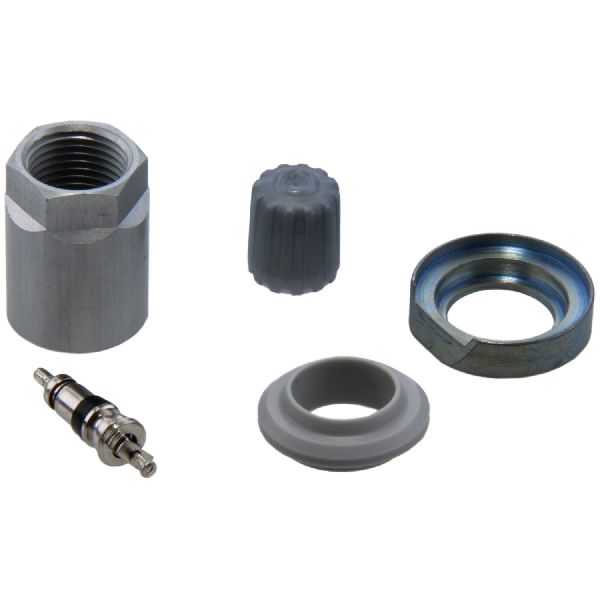
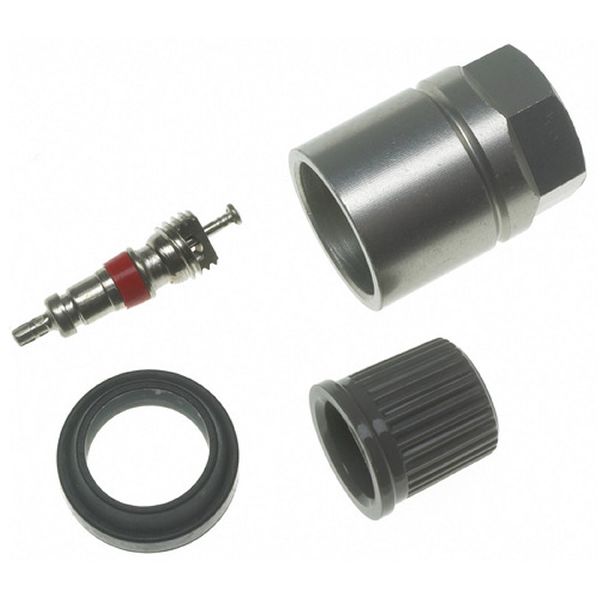
(OEM #40702-CD001)— This inexpensive kit contains the rubber grommet, retaining nut, valve core, and cap. It is critical to replace these small parts whenever a sensor is serviced or a tire is replaced to ensure an airtight seal and prevent corrosion.
Trusted brands: Nissan (OEM), Dill, Schrader
OEM price range: $5-$15
Aftermarket price range: $3-$10
Related Codes That Often Appear With This One
- C1710 — This code is for the Rear-Right (RR) sensor. Seeing C1710 and C1711 together is common if both rear sensors are failing from age or if there is an intermittent fault as described in TSB NTB14119.
- C1708 — This code is for the Front-Left (FL) sensor. If multiple TPMS codes appear at once, it strongly suggests either that all sensors are reaching the end of their battery life simultaneously or there is a significant RF interference issue.
- C1709 — This code is for the Front-Right (FR) sensor. Like with C1708, its presence alongside C1711 points towards a system-wide issue rather than a single isolated failure.
Technical Service Bulletins (TSBs) & Recalls
- NTB14119: Addresses intermittent C1710/C1711 codes on specific 2014 Frontier models, recommending replacement of all four sensors.
- NTB13088A: Discusses 'No Data' TPMS codes (including C1711) caused by radio frequency interference from aftermarket devices.
Platform-Specific Known Issues
- Per TSB NTB14119, some 2014 models with non-NAVI color screen radios may intermittently store C1710 and/or C1711 even if the sensors test good. The official fix is to replace all four TPMS sensors.
- Per TSB NTB13088A, these vehicles are known to be susceptible to radio frequency interference from aftermarket electronics, which can cause 'No Data' codes like C1711.
Mechanic-Grade Diagnostic Values
- Manual Relearn Tire Pressures — expected: Front-Left: 34 PSI, Front-Right: 31 PSI, Rear-Right: 28-29 PSI, Rear-Left: 25-26 PSI.. Failure: The system requires this specific pressure differential to identify each wheel's position during the relearn drive cycle. If pressures are incorrect, the relearn will fail and the TPMS light will remain on.
- TPMS Sensor Battery Voltage — expected: A new sensor has a 3-volt lithium-ion battery. A TPMS tool should show a 'Good' or 'OK' battery status.. Failure: A 'Low' or 'N/A' battery status reading from a TPMS diagnostic tool indicates the sensor has failed or is about to fail and must be replaced.
- Main Body Ground Voltage Drop — expected: Less than 0.20 volts. A reading up to 0.50 volts may be acceptable.. Failure: A voltage reading greater than 0.50V between the negative battery terminal and the vehicle body (firewall) with the engine running and accessories on indicates a poor ground, which can cause intermittent communication issues with modules like the BCM.
Scan Tool Commands That Help
- Nissan CONSULT-II / CONSULT-III: Work Support > ID REGIST — This is the dealership-level function required to register the unique IDs of new TPMS sensors to the Body Control Module (BCM) after replacement. It is the primary method used when the manual relearn procedure fails or is not desired.
- Nissan CONSULT-II / CONSULT-III: Data Monitor > AIR PRESS — This function allows a technician to view the live data the BCM is receiving (or not receiving) from each registered TPMS sensor. For code C1711, a technician would use this to confirm that no data packets are being received from the sensor ID assigned to the rear-left wheel position.
- Professional TPMS Tool (e.g., Autel, Bartec): OBD Relearn / Write IDs to ECU — After activating and reading the new sensor IDs, this function connects to the vehicle's OBD-II port to write the new sensor information directly to the BCM, completing the registration process.
Wiring & Ground Locations
- TPMS Diagnostic Check Connector — A single-wire white connector, typically taped to a wiring harness under the driver's side dashboard, near the OBD-II port.. This connector is the key to initiating the manual TPMS relearn mode without a scan tool. Grounding the pin in this connector six times within 10 seconds of turning the ignition ON puts the BCM into learning mode, allowing it to register new sensor IDs during a drive cycle.
- Main Body Ground — On the D40 Frontier, a primary body ground connection is located on the passenger-side inner fender panel, where a strap from the negative battery cable bolts to the chassis.. The BCM and its TPMS receiver rely on a clean ground path. A loose or corroded main body ground can cause a voltage drop, leading to intermittent and difficult-to-diagnose communication errors, including TPMS faults like C1711.
- Body Control Module (BCM) — Located behind the glove box area. It serves as the receiver for the TPMS signals.. This is the control unit that sets code C1711. All diagnostic paths ultimately lead here. A failure of the BCM itself is rare but possible if all sensors and wiring check out.
Real Owner Repair Stories
- YouTube video by user 'Fix It Now' (2017 Nissan Frontier (D40 generation, same as 2013-2016)) — TPMS light was flashing on startup and then staying solid, indicating a system fault after swapping to a different set of wheels with new sensors.
❌ Tried (didn't work) Simply driving the truck did not work, as the new sensor IDs were not registered in the BCM.
✅ What actually fixed it The owner successfully performed the manual relearn procedure. He set the tire pressures to a specific differential (34/31/28/25 PSI). He then located the white single-wire TPMS diagnostic connector under the dash, turned the ignition ON, and grounded the wire to the metal OBD-II port bracket six times. This caused the TPMS light to flash slowly, indicating it was in learn mode. After a short drive around the neighborhood, the light turned off, and then came on with a 'Check Tire Pressure' message, confirming the new sensors were learned and were correctly reporting the low pressure set for the procedure. He then inflated the tires to the correct 35 PSI.
OEM Part Supersession History
40700-1AA0D→40700-JK01C— Part consolidation and potential design updates. The 40700-JK01C part is used across a wide range of Nissan vehicles from the era.
Heads up: 40700-JK01C is the correct service replacement for a long list of previous part numbers, including: 40700-1AA0A, 40700-1AA0B, 40700-1AA0C, 40700-JA01B, 40700-JK00A, 40700-JK00B, 40700-JK00C, 40700-JK00D, and 40700-JK01B.
Model Year Variations Within This Range
- 2014 only: Per TSB NTB14119, some 2014 models equipped with a non-navigation color display radio can experience intermittent C1710/C1711 codes even with good sensors. The official Nissan fix is to replace all four TPMS sensors, suggesting a potential incompatibility or fault with the original sensors in conjunction with that specific head unit.
Helpful Videos
We Have This Part in Stock


The information in this article is provided for general reference and educational purposes only. Vehicle specifications, procedures, and part compatibility can vary by production date, trim level, and region. Always consult your vehicle's factory service manual and verify part numbers before purchasing or performing repairs. Safety-critical components such as airbags, seat belts, and braking systems should be installed by a qualified professional.
- Nissan FRONTIER:
- 🧭 Diagnostic Flowchart
- 🎬 Helpful Videos
- 🛍️ Shop This Part
- What's Unique About the 2013-2016 Nissan FRONTIER
- Symptoms You May Notice
- Most Likely Causes
- Rare But Worth Checking
- Diagnosis Steps
- Parts You'll Likely Need
- Related Codes That Often Appear With This One
- Technical Service Bulletins (TSBs) & Recalls
- Platform-Specific Known Issues
- Mechanic-Grade Diagnostic Values
- Scan Tool Commands That Help
- Wiring & Ground Locations
- Real Owner Repair Stories
- OEM Part Supersession History
- Model Year Variations Within This Range
- 🎟️ Get 5% Off