

OBD-II Code C1717: Chassis Sensor Circuit Fault
What C1717 means, why it triggers, and how to fix it
- Always verify your vehicle's specific C1717 definition before buying parts, as it means a corroded suspension connector on a 2015 Ford Fusion but a critical airbag failure on a 2017 Nissan Altima.
- On 2013-2019 Ford and Lincoln hybrids, inspect connector C1717 for green water corrosion per TSB #SSM 47790 before spending $300+ on a new ride height sensor.
- Stop driving immediately if C1717 triggers an airbag warning light on a Nissan vehicle, as this indicates a passenger-side squib circuit failure that prevents airbag deployment in a crash.
- Expect critical safety systems like ABS and Stability Control to be completely disabled while C1717 is active, increasing your risk of skidding during emergency stops.
What Does C1717 Mean?
C1717 is a manufacturer-specific chassis code indicating a sensor circuit fault. Its definition changes entirely based on the vehicle brand. On Ford and Lincoln models, it usually flags a corroded stability or suspension connector. On Nissans, it signals a critical airbag failure or a Tire Pressure Monitoring System (TPMS) fault. On Toyota, Lexus, and GM vehicles, it points to adaptive suspension sensor failures.
Technical definition: The generic SAE definition is 'Left Front Center Sensor Circuit Short to Vbat'. However, manufacturers override this. GM defines it as 'RF Shock Absorber Solenoid Open Circuit'. Nissan uses 'Short to GND in Front Passenger Side Squib 2nd Step Circuit' or 'Transmitter Pressure Malfunction'. Toyota defines it as 'Rear Acceleration Sensor Malfunction'.
Can I Drive With C1717?
Yes, But With Caution. Yes, but only a short distance to a repair shop. C1717 disables critical safety systems like ABS, Stability Control, or airbags. Your conventional brakes will work, but you lose automated safety nets, drastically increasing the risk of skidding or injury during an emergency. Schedule service immediately.
Common Causes
- Wiring or Electrical Connector Damage (Very Common) — Connectors for chassis sensors are exposed to the elements, leading to water intrusion and corrosion. Wires also chafe against suspension components, causing shorts. On Ford/Lincoln hybrids, connector 'C1717' fails from water leaks (TSB #SSM 47790).
- Failed Chassis Sensor (Common) — The sensor itself fails electronically. Depending on the vehicle, this includes yaw rate sensors, ride height sensors, shock actuators, or acceleration sensors.
- Failed Tire Pressure Monitoring System (TPMS) Sensor (Common) — On Nissan models (Rogue, Titan), C1717 means TPMS sensor data is out of range or unregistered with the Body Control Module.
- Failed Airbag System Component (Nissan) (Less Common) — Points to a fault in the passenger-side airbag circuit, caused by a faulty squib, clock spring, or airbag module. 🎬 See how to diagnose and identify Nissan airbag codes.
- Failed ABS or Suspension Control Module (Less Common) — The control module receiving sensor signals fails, sending false error codes. This is diagnosed only after confirming wiring and sensors are intact.
- Low Battery Voltage or Charging System Fault (Rare) — A weak battery causes unpredictable behavior in electronic modules, triggering false chassis codes during startup.
- Blown Fuse or Faulty Relay (Rare) — A blown fuse or bad relay in the ABS, suspension, or airbag circuit causes this code, usually resulting from an underlying short.
Symptoms
- ABS Light On — The Anti-lock Braking System warning light illuminates, indicating the ABS is disabled.
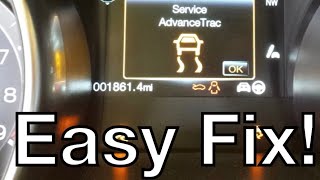
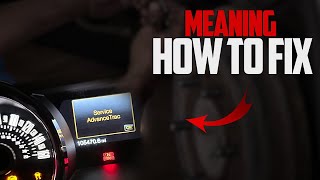
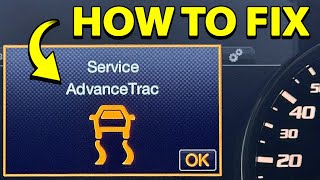
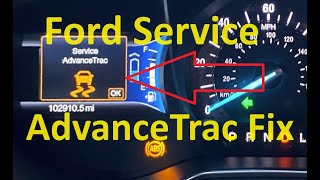
- Traction or Stability Control Light On — A warning light indicating 'Service AdvanceTrac' or 'ESC Off' 🎬 Watch: How to fix the Service AdvanceTrac message on Fords. displays, signaling the system is inactive.
- Airbag Warning Light On — On certain Nissan vehicles, the SRS light illuminates, indicating a serious safety fault.
- Tire Pressure Warning Light On — On Nissan models like the Rogue or Titan, the TPMS warning light illuminates or flashes.
- Harsh, Stiff, or Bouncy Ride — If the code relates to an adaptive suspension system, the ride becomes noticeably firm as the system defaults to a safe setting.
Diagnostic Flowchart
Tap your situation to follow the diagnostic path that matches what you're seeing on this code.
Common Fixes & Costs
- Clean or Replace Corroded Electrical Connector — Parts: $15-$75, Labor: $150-$400, ~1.5 hr book time (Intermediate)
- Replace Failed Chassis Sensor — Parts: $100-$400, Labor: $100-$250, ~1.0 hr book time (DIY)
- Replace Failed TPMS Sensor and Register ID — Parts: $50-$150, Labor: $50-$100, ~0.5 hr book time (DIY)
- Repair Damaged Wiring Harness — Parts: $10-$50, Labor: $150-$500, ~2.5 hr book time (Intermediate)
- Replace Failed Airbag Squib or Clock Spring — Parts: $150-$600, Labor: $150-$300, ~1.5 hr book time (Professional)
Used vs. New Parts: Buying Guide
When a used part is worth it: Buying used electronic sensors is risky due to unknown history. It only makes sense for older vehicles on a tight budget using a reputable recycler. Always buy connectors new as pigtails.
Donor-vehicle mileage cap: roughly under 60000 miles for the part to have meaningful remaining life.
Donor quality checklist:
- Verify the part comes with at least a 90-day warranty.
- Avoid parts from vehicles with flood or heavy collision damage.
- Match the part number exactly.
Decision logic:
- If The part is a wiring connector pigtail or TPMS sensor. → Always buy new. The cost is low and reliability is critical.
- If The part is an electronic sensor and the vehicle is less than 10 years old. → Strongly favor a new OEM or high-quality aftermarket part for reliability and warranty.
- If The part is a major control module. → Used is an option if a new part is prohibitively expensive, provided it includes a warranty and you confirm programming requirements.
Warranty tradeoff: Used parts typically come with a 30-90 day functional warranty. New aftermarket parts offer a 1-year to limited lifetime warranty. Labor for a failed used part is rarely covered.
Worst-case if a used part fails: $250-$600
What Happens If You Wait — Timeline
- Immediate: Code sets and safety systems (ABS, Stability, Airbag) disable immediately. Airbags will not deploy in a crash. (MPG impact: 0%% · Added cost: $0)
- 1-3 months: Adaptive suspensions default to a stiff setting, causing a harsh ride and accelerating tire wear. (MPG impact: 0-2%% · Added cost: $50-$150)
- 3-9 months: Continued driving on compromised suspension leads to uneven tire wear and shortens the life of ball joints and bushings. (MPG impact: 2-5%% · Added cost: $400-$1,200)
- In case of an accident: Disabled safety systems fail to prevent or mitigate an accident, leading to severe injury or catastrophic vehicle damage. (MPG impact: N/A% · Added cost: $2,500 - $50,000+)
Cost of Not Fixing It
- Immediate: Disabled safety systems (ABS, Stability Control, or Airbags). This creates an immediate risk of losing control during an emergency maneuver or lacking airbag protection in a crash. (Added cost: N/A)
- 1-6 months: If related to adaptive suspension, ignoring the fault causes a harsh ride and accelerates wear on tires, bushings, and ball joints. (Added cost: $300-$1000)
- 6+ months / In case of accident: The cost of an accident that functional ABS, stability, or airbag systems would have prevented. Insurance claims are often complicated by known, unfixed safety defects. (Added cost: $2,500 - $50,000+)
Diagnosis Steps
- Identify Vehicle-Specific Definition
Use the vehicle's make, model, and year to determine the specific meaning of C1717. A Ford chassis sensor fault requires completely different diagnostics than a Nissan airbag fault.
Tools: Vehicle Service Information (Beginner) - Check for Technical Service Bulletins (TSBs)
For Ford, Lincoln, and GM vehicles, check for TSBs. Ford's TSB #SSM 47790 details water corroding connectors (including one named C1717), causing this code.
Tools: Online TSB Database (Beginner) - Scan for All Trouble Codes
Use an OBD-II scanner capable of reading Chassis (C), Body (B), and Network (U) codes. C1717 is often accompanied by communication codes (U-prefix) on Fords with connector issues.
Tools: Advanced OBD-II Scanner (Beginner) - Visually Inspect Wiring and Connectors
Locate the relevant component and inspect the wiring harness and electrical connector for damage, chafing, or green corrosion. On Ford/Lincoln hybrids, scrutinize connectors mentioned in TSB #SSM 47790.
Tools: Flashlight, Inspection Mirror (Intermediate) - Inspect Fuses and Relays
Check the fuse boxes for blown fuses related to the ABS, stability control, suspension, TPMS, or airbag systems. A blown fuse indicates an underlying short circuit.
Tools: Owner's Manual, Fuse Puller (Beginner) - Perform Circuit Integrity Tests
Disconnect the sensor and control module. Use a multimeter to check for continuity on signal and ground wires, then check for a short to ground or short to power.
Tools: Digital Multimeter, Vehicle Wiring Diagram (Advanced) - Test Sensor Live Data
Monitor the live data PID for the sensor. On Toyota and Ford vehicles, a yaw rate sensor reading should be stable between 2.4V and 2.6V when stationary. Erratic readings point to a faulty sensor or circuit.
Tools: Advanced OBD-II Scanner (Advanced) - Test Sensor Voltage
For Toyota/Lexus vehicles, the ECU sets C1717 if the rear acceleration sensor signal voltage falls below 0.3V or exceeds 4.7V. Bench-test the sensor by applying a 4.5V power source and measuring output.
Tools: Digital Multimeter, 1.5V Batteries (x3), Wiring Diagram (Advanced) - Analyze Signal with an Oscilloscope
Connect an oscilloscope to the sensor's signal wire to view its waveform. A faulty sensor shows a flat line, erratic spikes, or a noisy pattern.
Tools: Automotive Oscilloscope, Wiring Diagram (Professional)
When This Code Triggers (Freeze-Frame Conditions)
- System Voltage: 11.5V - 14.5V (Key On, Engine Off (KOEO) or Key On, Engine Running (KOER). The code often sets during the initial self-test.)
- Vehicle Speed: 0 mph (The fault is a circuit error (open, short) detected by the control module before the vehicle moves.)
- Time Since Key On: < 5 seconds (Chassis modules perform a self-check immediately upon receiving power, flagging circuit faults instantly.)
- Fault Status: Present / Active (Hard circuit faults like a short to voltage or ground remain active as long as the module is powered.)
Related Codes
- C1711 — On Fords, C1711 is 'Left Front Sensor Circuit Short to Vbat', pointing to a different stability sensor. On Toyotas, C1711 is the Front Right Height Control Sensor.
- U019F / U0284 — CAN bus communication codes on Fords. They appear when water damage in the C1717 connector disrupts the vehicle network.
- P26C3 / P26CA — Powertrain codes for the engine coolant bypass valve on Ford hybrids, triggered by the same water intrusion issue affecting the C1717 connector.
- B1049 — A general Nissan code for a driver-side airbag module open circuit, often accompanying C1717 during widespread SRS failures.
Climate & Environmental Factors
- Humidity and Water Intrusion: High humidity and heavy rain force water into unprotected electrical connectors in wheel wells. This moisture causes the corrosion responsible for C1717 on Ford and Lincoln vehicles.
- Road Salt (Salt Belt Regions): Salty spray dramatically accelerates corrosion on exposed metal, connector pins, and wiring, making vehicles in salt belt regions highly susceptible to C1717.
How to Talk to a Mechanic About This Code
Say this: "I have a C1717 chassis code on my [Year/Make/Model]. For a Ford/Lincoln, please inspect the wiring connectors for corrosion per TSB SSM 47790 before quoting a sensor. For a Nissan airbag light, diagnose the passenger side squib circuit. For a Toyota, test the rear acceleration sensor circuit."
Signals you are an informed customer, directs the technician to the most likely fix first, and prevents unnecessary expensive part replacements.
Avoid saying:
- 'My ABS light is on, just fix it.'
- 'I need a new ABS sensor.'
- 'Do whatever it takes to turn the light off.'
Questions to ask before authorizing the repair:
- Did you find corrosion during the wiring inspection?
- What specific tests confirmed the sensor failed?
- Does this repair require programming or calibration?
- Will you provide the old parts?
- What is the warranty on parts and labor?
Where to Take It: Dealer vs Independent vs Chain
- Dealer:
Recommended for Nissan airbag faults or adaptive suspension repairs requiring proprietary calibration.
Best for: Vehicles under warranty., Complex airbag system faults (Nissan)., Adaptive suspension repairs requiring specific calibration (Lincoln, Toyota).
Downsides: Highest labor rates., May be quick to replace a module or sensor when a wiring repair would suffice. (Typical cost: +50% vs. baseline) - Independent Shop:
Best for diagnosing common Ford/Lincoln wiring issues and standard sensor replacements.
Best for: Out-of-warranty vehicles., Diagnosing and repairing known wiring/connector issues (Ford/Lincoln)., Sensor replacements on common platforms.
Downsides: Quality varies greatly; ensure they have ASE-certified technicians., May not have the expensive, specialized tools for airbag or suspension calibration. (Typical cost: +0% vs. baseline) - Chain Shop:
AVOID. Chain shops lack the advanced diagnostic tools and training required for complex chassis codes.
Best for: Simple, unrelated maintenance like oil changes or tires.
Downsides: Technician skill is highly variable., Often lack the advanced diagnostic tools and training for complex chassis (C) codes., High pressure to sell parts. (Typical cost: -10% vs. baseline)
When to Walk Away From the Repair
Consider selling the vehicle if the C1717 repair cost exceeds 40-50% of its private-party value.
- Car worth $5000, fix is $2800: Walk away. Repair exceeds 50% of value.
- Car worth $15000, fix is $900: Fix it. Cost is well under threshold.
- Car worth $3000, fix is $1300: Borderline. Get a second opinion. If the car has other issues, sell it.
What Scan Tool You Need for This Code
Minimum: A scanner capable of reading and clearing Chassis (C) and Body (B) codes. Basic $20 engine readers are useless.
C1717 is stored in the ABS, SRS, or Suspension module. Basic readers cannot communicate with these systems.
Budget: BlueDriver Pro, Foxwell NT630 Plus (~$100-140) — Reads ABS/SRS codes and live data.
Mid-range: Innova 5610, FORScan with compatible OBDLink adapter (~$150-350) — Provides bidirectional controls for mandatory sensor calibration.
Professional: Autel MaxiCOM MK808/MK906BT, Launch X431 Series (~$500-1200) — Full bidirectional control, module coding, and advanced diagnostics.
Rent vs buy: Auto parts stores do not rent ABS/SRS scanners. You must buy a capable scanner or pay for professional diagnosis.
How to Clear the Code After You Fix It
- Reconnect battery if disconnected.
- Use a compatible OBD-II scan tool to clear Chassis (C) codes from the ABS, SRS, or BCM module.
- Perform the system's self-test verification drive cycle.
Drive cycle (~10 minutes): For ABS/Stability faults, start the vehicle and drive straight above 15 mph (25 km/h). This allows wheel speed sensors to send valid signals to the control module, confirming the fault is gone. For Airbag (SRS) faults, the light extinguishes immediately after clearing the code and cycling the ignition if the repair succeeds.
Readiness monitors affected: None
Watch out for:
- Disconnecting the battery will not clear chassis codes.
- Basic OBD-II scanners cannot clear Chassis (C) codes.
- If the warning light returns immediately, the underlying electrical fault remains.
Will This Fail Emissions / State Inspection?
Yes — this code typically fails an OBD-II emissions inspection.
- California: An illuminated ABS or Airbag warning light fails the safety portion of the inspection.
- New York: An illuminated airbag or ABS warning light fails the annual safety inspection.
- Texas: An illuminated warning light for required safety systems fails the annual safety inspection.
Most Commonly Affected Vehicles
- Ford C-MAX (PHEV) (2013-2018) — Prone to water intrusion in electrical connectors per TSB #SSM 47790. The connector named C1717 is specific to Plug-in Hybrid models.
- Lincoln MKZ (2013-2019) — Commonly caused by a corroded connector on the front left ride height sensor, disabling adaptive suspension and stability control.
- Ford Fusion (PHEV) (2013-2019) — C1717 often refers to the name of a connector known to cause multiple codes when it corrodes on Hybrid and Plug-in Hybrid models.
- Chevrolet Corvette (C5) (1997-2004) — Indicates an open circuit in the Right Front shock absorber solenoid on models with F45/F55 suspension.
- Toyota / Lexus Various with AHC/AVS (1998-2021) — Defines C1717 as 'Rear Acceleration Sensor Malfunction' on models like the Land Cruiser, LX, and GX series.
- Nissan Rogue, Titan, Xterra (2004-2019) — Indicates a 'Transmitter Pressure Malfunction' related to the TPMS.
- Hummer H2 (2003-2009) — Defines C1717 as 'Right Front Damper Actuator Open Circuit', related to the air suspension system.
- Nissan Altima, Sentra (2013-2018) — Uses this code for an airbag system fault ('Short to GND in Front Passenger Side Squib 2nd Step Circuit').
Manufacturer-Specific Notes
- Ford / Lincoln: C1717 often refers to the physical name of a connector (C1717) that corrodes from water leaks on hybrids, rather than a specific sensor failure (TSB #SSM 47790).
- General Motors (Chevrolet Corvette, Hummer): On C5 Corvettes and Hummer H2s, C1717 specifically points to an open circuit in the right front shock absorber actuator.
- Nissan: Nissan uses C1717 for two unrelated systems: a critical airbag squib fault or a TPMS transmitter malfunction. Verify the specific system before diagnosing.
- Toyota / Lexus: C1717 consistently points to a Rear Acceleration Sensor Malfunction. The code sets if signal voltage falls outside 0.3V - 4.7V for over one second.
Real Owner Stories
2015 Lincoln MKZ with adaptive suspension fault
Owner experienced a harsh ride and a 'Service AdvanceTrac' warning light. Code C1717 was present.
What they tried:
- Initially suspected a failed ride height sensor due to the symptoms.
Outcome: Following TSB SSM 47790, the owner inspected the front left ride height sensor connector and found green corrosion. Cleaning the pins with contact cleaner and applying dielectric grease cleared the code permanently.
Lesson: On Ford/Lincoln platforms, inspect wiring connectors for corrosion before replacing sensors. A $10 can of contact cleaner often saves a $300 sensor replacement.
2015 Nissan Rogue with flashing TPMS light
Five days after installing new TPMS sensors, the TPMS warning light began flashing for a minute upon startup and then stayed solid.
What they tried:
- The owner attempted to put the vehicle into manual 're-learn' mode, which is not possible on a 2015 Rogue without a specialized scan tool.
Outcome: A forum expert explained that a flashing light indicates a system error. The issue was RF interference from an aftermarket dash cam plugged into a power outlet.
Lesson: On modern Nissans, a flashing TPMS light points to a system malfunction or RF interference. Unplug aftermarket 12V accessories before paying for diagnostics.
2017 Nissan Altima with airbag light on
The airbag warning light illuminated. The dealer quoted $2,906 to replace the front seat side airbag.
What they tried:
- The owner filed a complaint with the NHTSA, noting many other owners reported similar failures.
Outcome: After escalating to Nissan corporate, engineers acknowledged it was a common issue and the driver's airbag was replaced under warranty.
Lesson: An airbag light with code C1717 on a Nissan indicates a critical safety failure. Check for NHTSA complaints and push for goodwill repairs, as this is often a known manufacturing defect.
Toyota Land Cruiser with AVS/AHC suspension fault
Vehicle displayed a suspension warning light and logged code C1717, indicating a 'Rear Acceleration Sensor Malfunction'.
What they tried:
- The diagnostic procedure involves checking the sensor's output voltage.
Outcome: The owner bench-tested the sensor by applying a 4.5V power source to confirm it output a stable voltage within the expected range before replacing it.
Lesson: For Toyota/Lexus vehicles, test the rear acceleration sensor's voltage to confirm failure before buying a costly replacement part.
How to Prevent This Code From Triggering
- Apply Dielectric Grease to Vulnerable Connectors (Anytime a connector is disconnected, or once every 2-3 years.) — Creates a waterproof barrier preventing moisture and road salt from corroding metal pins.
- Regularly Clean Wheel Wells and Underbody (Monthly, and especially after driving on salted or muddy roads.) — Washes away accumulated road salt and debris, reducing corrosive materials around exposed chassis connectors.
- Inspect and Clear Cowl and Sunroof Drains (Once a year, typically in the fall.) — Prevents water from overflowing into the cabin and saturating wiring harnesses on Ford Fusions.
- Periodically Inspect Exposed Wiring Harnesses (During every oil change or tire rotation.) — Address chafing or poor routing early to prevent wires from rubbing through insulation and shorting.
Frequently Asked Questions
Can I fix code C1717 myself?
If the cause is a corroded connector or TPMS sensor, intermediate DIYers can fix it. Tracing complex wiring shorts or replacing control modules requires professional help. Airbag system repairs must always be left to certified professionals due to explosive safety risks.
How much does it cost to fix code C1717?
Repair costs range from $150 to $400 to diagnose and clean a corroded connector. Replacing a chassis sensor costs $200 to $650 for parts and labor. Complex module or airbag repairs easily exceed $1,000.
What is a common misdiagnosis for C1717?
The most common mistake is replacing a sensor without checking the wiring first. On Fords, mechanics often replace yaw sensors when the true fault is a corroded connector. Another pitfall is ignoring manufacturer-specific definitions and inspecting the wrong system entirely.
What does 'Service AdvanceTrac' mean?
'Service AdvanceTrac' is a Ford/Lincoln warning message indicating a disabled electronic stability control system. It appears when codes like C1717 detect a problem with critical chassis sensors.
What is an airbag squib?
An airbag squib is a small pyrotechnic device that ignites the airbag's gas generator. When the SRS module detects a crash, it sends an electrical signal to the squib to inflate the airbag. A C1717 squib fault means the airbag will not deploy.
Why does C1717 show up in medical billing?
'C1717' is also a US healthcare billing code for brachytherapy radiation sources. This is completely unrelated to automotive diagnostics. If you see this code on a medical bill, it has nothing to do with your car.
Can low battery voltage cause a C1717 code?
Yes. Low system voltage from a weak battery or failing alternator causes electronic control modules to malfunction and generate false codes. Always ensure your battery and charging system are healthy before starting complex diagnostics.
Will clearing the code make it go away?
Clearing the code with a scanner temporarily turns off the warning light, but it returns immediately if the electrical fault remains. You must fix the underlying short or open circuit to permanently clear the code.
Key Takeaways
- Always verify your vehicle's specific C1717 definition before buying parts, as it means a corroded suspension connector on a 2015 Ford Fusion but a critical airbag failure on a 2017 Nissan Altima.
- On 2013-2019 Ford and Lincoln hybrids, inspect connector C1717 for green water corrosion per TSB #SSM 47790 before spending $300+ on a new ride height sensor.
- Stop driving immediately if C1717 triggers an airbag warning light on a Nissan vehicle, as this indicates a passenger-side squib circuit failure that prevents airbag deployment in a crash.
- Expect critical safety systems like ABS and Stability Control to be completely disabled while C1717 is active, increasing your risk of skidding during emergency stops.
Helpful Videos


Shop the Parts Behind C1717
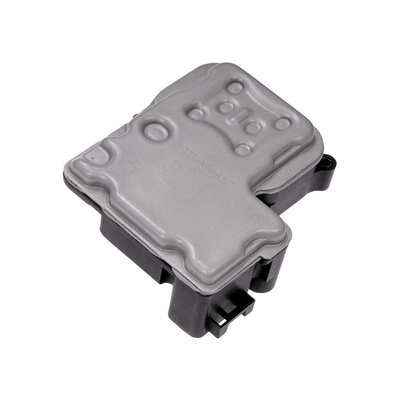
Below are the parts most often responsible for code C1717, ranked by how frequently each one is the actual culprit (per the diagnosis above). Tap any to see what we have for your vehicle.





The information in this article is provided for general reference and educational purposes only. Vehicle specifications, procedures, and part compatibility can vary by production date, trim level, and region. Always consult your vehicle's factory service manual and verify part numbers before purchasing or performing repairs. Safety-critical components such as airbags, seat belts, and braking systems should be installed by a qualified professional.
- 🧭 Diagnostic Flowchart
- 🎬 Helpful Videos
- 🛍️ Shop This Part
- What Does C1717 Mean?
- Can I Drive With C1717?
- Common Causes
- Symptoms
- Common Fixes & Costs
- Used vs. New Parts: Buying Guide
- What Happens If You Wait — Timeline
- Cost of Not Fixing It
- Diagnosis Steps
- When This Code Triggers (Freeze-Frame Conditions)
- Related Codes
- Climate & Environmental Factors
- How to Talk to a Mechanic About This Code
- Where to Take It: Dealer vs Independent vs Chain
- When to Walk Away From the Repair
- What Scan Tool You Need for This Code
- How to Clear the Code After You Fix It
- Will This Fail Emissions / State Inspection?
- Most Commonly Affected Vehicles
- Manufacturer-Specific Notes
- Real Owner Stories
- 2015 Lincoln MKZ with adaptive suspension fault
- 2015 Nissan Rogue with flashing TPMS light
- 2017 Nissan Altima with airbag light on
- Toyota Land Cruiser with AVS/AHC suspension fault
- How to Prevent This Code From Triggering
- Frequently Asked Questions
- Can I fix code C1717 myself?
- How much does it cost to fix code C1717?
- What is a common misdiagnosis for C1717?
- What does 'Service AdvanceTrac' mean?
- What is an airbag squib?
- Why does C1717 show up in medical billing?
- Can low battery voltage cause a C1717 code?
- Will clearing the code make it go away?
- Key Takeaways
- 🎟️ Get 5% Off