

C1717 on 2002-2009 Audi A8: Air Suspension Fault Causes and Fixes
C1717 on a D3 Audi A8 is a generic code indicating a fault in the adaptive air suspension. The most common cause is a leaking air spring (strut) which overworks and burns out the air compressor. Expect to replace the leaking strut and potentially the compressor and its relay, costing $800-$2000+ for parts.
- C1717 is a generic code; you MUST use a VAG-specific scanner (like VCDS) to find the true fault.
- The most common problem is a leaking air strut, which causes the vehicle to sag when parked.
- A leaking strut will cause the air compressor to overwork and fail. Always fix leaks before or at the same time as replacing a compressor.
- Always replace the inexpensive compressor relay (often marked '373') when replacing the compressor to prevent repeat failure.
- After replacing struts or sensors, the system must be recalibrated with a diagnostic tool for the car to sit level.
What's Unique About the 2002-2009 Audi A8
The D3 generation Audi A8 was equipped with a sophisticated but failure-prone adaptive air suspension as a key luxury feature. Unlike many vehicles, the failure of this system is not a matter of 'if' but 'when.' The system's design makes it a closed loop of cause and effect: age-related leaks in the rubber air springs are the primary failure point, which then cause the air compressor to run constantly, leading to the secondary failure of the compressor and its electrical relay. Therefore, C1717 on this car almost always initiates a predictable diagnostic path starting with leak detection.
Symptoms You May Notice
- Yellow or green suspension warning light on the instrument cluster.
- Vehicle sagging on one corner or one axle, especially after being parked overnight.
- A compressor that runs constantly or is unusually loud (located behind the front driver's side wheel well liner).
- An excessively harsh, bouncy, or stiff ride.
- Vehicle seems stuck in one height setting (e.g., Lift mode) and will not lower or raise.
- "Air Suspension: System Fault" message on the MMI screen.
- Replacing only the air compressor without finding and fixing the air leak that caused it to fail. The new compressor will quickly burn out as well.
Most Likely Causes
- Leaking Air Spring / Strut 🔴 High Probability The rubber air bladders in the struts are a known wear item that dry rot, crack, and develop leaks over time, typically before 100,000 miles. Cold weather can make small leaks worse.
How to confirm: Park the vehicle, enable 'Jacking Mode' in the MMI to disable self-leveling, and observe if a corner sags over several hours. With the system pressurized, spray the air springs (especially around the top seal and rubber folds) with soapy water and look for bubbles, which indicate a leak.
Typical fix: Replace the entire air strut assembly. While some owners replace only the failed strut, replacing in pairs (both front or both rear) is often recommended.
Est. part cost: $300-$800 per strut - Failed Air Suspension Compressor 🔴 High Probability → Shop Suspension Self-Leveling Pump This is almost always a secondary failure caused by a leak elsewhere in the system (usually an air spring). The compressor is overworked trying to compensate for the leak, causing it to overheat and burn out.
How to confirm: Listen for a compressor that runs continuously or makes excessive noise. A VCDS scan may show a fault code like '01577 - Turn-Off due to Over-Temp'. If the compressor does not run at all, check its 40A fuse and relay first.
Typical fix: Replace the air suspension compressor AND its corresponding relay. It is critical to find and fix the air leak that caused the compressor to fail in the first place, otherwise the new compressor will also fail quickly.
Est. part cost: $400-$1200 - Faulty Air Suspension Compressor Relay 🟡 Medium Probability → Shop Wiring Relay The relay can become stuck in the closed (on) position due to worn contacts, forcing the compressor to run continuously until it destroys itself, even after the car is turned off.
How to confirm: If the compressor continues to run after the car is turned off, the relay is the likely culprit. The relay can be tested by swapping it with a known good relay of the same type. The original relay is often marked '373', with the replacement part being marked '645' or similar.
Typical fix: Replace the relay. For LHD vehicles, it is located under the driver's side lower dash panel. For RHD (UK) vehicles, it is under the passenger's side footwell carpet. The OEM part number is 4H0951253A. 🎬 See how to replace the compressor and relay
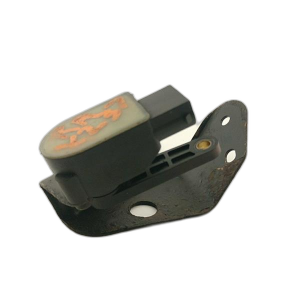
Est. part cost: $15-$50 - Failed Ride Height Level Sensor ⚪ Low Probability The sensor's plastic linkage arms are exposed to the elements and can become brittle and break, or the sensor itself can fail electronically, sending implausible signals to the control module.
How to confirm: Visually inspect the sensor and its linkage at each corner of the vehicle for physical damage. Use a diagnostic tool to monitor live data from each sensor to see if one is providing an erratic or incorrect reading.
Typical fix: Replace the faulty sensor assembly. The system must be recalibrated after replacement.
Est. part cost: $80-$200
Rare But Worth Checking
- Failed Air Distribution Valve Block: This component distributes air from the compressor to the individual struts and the reservoir. While it can fail internally or develop leaks at its fittings, it is much less common than strut or compressor failure. A VCDS scan may point to pressure regulation issues if the valve block is faulty.
- Damaged Air Lines: The plastic air lines that run to each strut can be punctured or cut by road debris, though this is uncommon. A leak test with soapy water along the lines can identify such a failure.
Diagnosis Steps
- Scan the vehicle with a VAG-compatible diagnostic tool (like VCDS) and check for specific fault codes in the '34 - Level Control' module.
- Check for visible sagging at any corner of the car after it has been parked for a few hours. Use 'Jacking Mode' in the MMI to get a true sense of any leaks.
- Start the engine and listen for the air compressor. Note if it is unusually loud or runs for more than a minute or two. A constantly running compressor points to a leak.
- If a corner is sagging, raise the vehicle to 'Lift' mode to pressurize the system, then spray the corresponding air spring/strut with a soapy water solution and look for the formation of bubbles, which confirms a leak.
- If no leaks are found but the compressor is not running, inspect the 40A fuse and the compressor relay (OEM P/N 4H0951253A, often marked '373' or '645').
- Visually inspect the ride height sensors at all four corners, paying attention to their plastic linkage arms for any cracks or breaks.
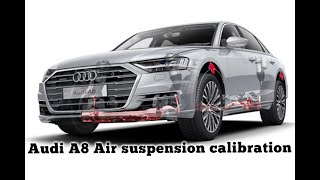
- If parts are replaced, perform the system calibration procedure using the diagnostic tool to set the correct ride heights. 🎬 Watch: Step-by-step VCDS air suspension calibration
Parts You'll Likely Need
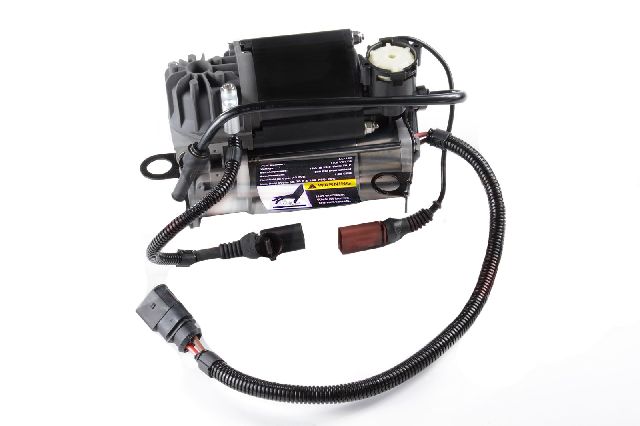
- Air Suspension Compressor
(OEM #4E0616007D, 4E0616007B, 4E0616005H (supersedes older numbers like 4E0616007C, 4E0616007A, 4E0616005E))— This part fails frequently due to being overworked from system air leaks. It is the heart of the air suspension system.
Trusted brands: WABCO (OEM supplier), Arnott, Aerosus
OEM price range: $800-$1200
Aftermarket price range: $350-$700 - Front Air Spring Strut Assembly
(OEM #4E0616039AF, 4E0616040AF (and many other supersessions depending on Sport/Normal suspension).)— The rubber air springs are the most common failure point, developing leaks with age and causing the entire system to malfunction.
Trusted brands: Arnott, Suncore, Aerosus, Bilstein (OEM)
OEM price range: $1000-$1600
Aftermarket price range: $300-$800 - Rear Air Spring Strut Assembly
(OEM #4E0616001N, 4E0616002N (and other supersessions).)— Like the fronts, the rear air springs are a common failure point due to age-related leaks.
Trusted brands: Arnott, Suncore, Aerosus, Bilstein (OEM)
OEM price range: $900-$1500
Aftermarket price range: $300-$700 - Air Suspension Compressor Relay
(OEM #4H0951253A (replaces older '373' relays).)— This relay is critical and often fails, getting stuck 'on' and destroying the compressor. It should always be replaced when the compressor is replaced.
Trusted brands: Audi (OEM), Bosch, Hella
OEM price range: $25-$50
Aftermarket price range: $10-$25
Related Codes That Often Appear With This One
- 01583 — This is a specific VAG fault code for 'Leak in System Detected,' which is the most common root cause of the general C1717 fault.
- 01577 — This VAG code means 'Turn-Off due to Over-Temp' and is a direct result of the compressor being overworked by a system leak.
- 01400 — This VAG code for 'Suspension Level Control' indicates the vehicle cannot reach its target ride height, usually due to a major leak or a failed compressor.
- 01772 — This VAG code points to an implausible signal from the level control pressure sensor (G291), often triggered when the compressor can't build pressure due to a leak or failure.
Technical Service Bulletins (TSBs) & Recalls
- TSB 43-08-04: Addresses the air suspension compressor running after the ignition is off
Mechanic-Grade Diagnostic Values
- Default Ride Height (Center of wheel to fender arch) - Standard Suspension (PR-1BK) — expected: Front: 416 mm, Rear: 398 mm. Failure: These are not test values, but the target values to be entered during VCDS calibration. Deviation from these indicates a calibration need or a fault.
- Default Ride Height (Center of wheel to fender arch) - Sport Suspension (PR-2MA/2MB) — expected: Front: 396 mm, Rear: 378 mm. Failure: These are not test values, but the target values to be entered during VCDS calibration. Deviation from these indicates a calibration need or a fault.
- Compressor Temperature Sensor (G290) Status — expected: No faults in VCDS Address 34.. Failure: A persistent fault code '01770 - Temperature Sensor for Level Control Pump (G290)' indicates a failed sensor, which is part of the compressor assembly. This can prevent the compressor from running as a protective measure.
- System Pressure Sensor (G291) Status — expected: Live data in VCDS should show pressure changing as the compressor runs. Normal operating pressure in the reservoir is around 15-16 bar.. Failure: A fault code '01772 - Signal from Level Control Pressure Sensor (G291)' or pressure readings that do not change indicate a faulty sensor, which is integrated into the valve block.
Scan Tool Commands That Help
- VCDS (VAG-COM): Suspension Level Calibration (Adaptation) — This procedure is mandatory after replacing any strut, height sensor, or the control module. It sets the base ride height for the system. Go to [34 - Level Control], use [Security Access - 16] with code 31564. Then, use [Adaptation - 10] and enter the measured height for each corner in Channels 01-04, and save by entering '1' in Channel 05.
- VCDS (VAG-COM): Output Tests — To individually test components. For example, you can command the compressor to run or command individual solenoids in the valve block to open/close. This is useful for diagnosing a non-responsive compressor or a suspected faulty valve block without physically removing parts.
- VCDS (VAG-COM): Clear Fault Codes (in all modules) — Before attempting Security Access for calibration. A fault in another module on the same data bus (e.g., Electronic Parking Brake) can cause the Level Control module to reject the security access code 31564 with an 'Error 35: Invalid Key' message. Clearing all codes can resolve this communication block.
Wiring & Ground Locations
- J197 — Behind the glove box in the passenger side dashboard.. This is the main Adaptive Air Suspension Control Unit. All sensor inputs and component outputs are processed here. Water ingress from a clogged plenum drain or sunroof drain can damage this module.
- Compressor Relay (J403) — In a relay carrier under the driver's side lower dash panel (for LHD vehicles). For RHD vehicles, it is in a similar position on the passenger (left) side.. This relay provides power to the compressor. If it fails 'open', the compressor won't run. If it fails 'closed' (stuck on), it will run continuously and burn out the compressor.
- Ground Connection 375 — Described as 'Earth connection 10, in main wiring harness' in wiring diagrams.. This is a key ground point for the adaptive suspension system, including the control unit and compressor motor. A corroded or loose ground can cause intermittent faults, communication errors, and unpredictable system behavior.
- T10k Connector — The 10-pin black connector on the air distribution valve block.. This connector carries the signals to the individual solenoids for each strut and the pressure accumulator, as well as the signal from the integrated pressure sensor (G291). Corrosion here can cause faults related to specific corners or pressure readings.
Real Owner Repair Stories
- Ross-Tech Forum user (2004 Audi A8L) — Rear suspension would not pump up. After replacing the valve block, the suspension was 'wonky' and could not be calibrated. Trying to use Security Access code 31564 in VCDS resulted in 'Error 35: Invalid Key'.
❌ Tried (didn't work) Replacing the valve block., Repeatedly trying the security access code., Unplugging the emergency brake module.
✅ What actually fixed it The user discovered that you must first clear any existing fault codes in the Level Control module before the security access code will be accepted. A fault code from the electronic parking brake module was preventing access. Clearing the codes allowed the security login to work, enabling the calibration procedure. - AudiWorld Forum user (2008 Audi S8) — Intermittent suspension fault, especially in cold weather. The front of the car would not lift, and the compressor would run until it shut off due to overheating (VCDS code 01577). The car would sit level when parked in jacking mode, suggesting no major leaks.
❌ Tried (didn't work) The owner had already replaced the front two air springs less than a year prior.
✅ What actually fixed it A responding expert suggested the cause was likely a contaminated valve block. The theory was that the compressor's air intake filter had become detached, allowing dirt and debris into the system. This debris caused the solenoids in the valve block to stick intermittently, preventing air from being sent to the front struts. The fix is to replace the valve block and ensure the compressor's intake filter and line are intact.
"I Checked Everything" — The Actual Cause
- In the context of air suspension, the equivalent of a 'smoke test clean' is a 'leak test clean'. A common scenario is a vehicle that sags on one corner, but spraying the air strut with soapy water reveals no bubbles. The actual cause can be a faulty valve block. The internal solenoid for that corner may be leaking air back into the system or failing to seal, but the leak is internal to the block, not external from the strut. A diagnostic trick is to swap the air lines for two corners at the valve block; if the sagging corner moves to the other side, the valve block is confirmed to be the problem.
OEM Part Supersession History
Relay marked '373'→Relay marked '645', modern OEM P/N 4H0951253A— Standard part evolution and consolidation by VAG.
Heads up: The new relay 4H0951253A is a direct replacement. It is a multipurpose 40A relay used across many VAG models for various functions, including fuel pumps and horns.Various older compressor numbers (e.g., 4E0616007A, 4E0616007C)→4E0616007D, 4E0616005H, etc.— Internal revisions and improvements by the OEM supplier (WABCO).
Heads up: Generally, the latest part number is backward compatible for the D3 platform, but it is always critical to verify the part number with the vehicle's VIN.
Model Year Variations Within This Range
- All (2002-2009): The most significant variation is the optional Sport Suspension (PR-codes 2MA/2MB) vs. the Standard Suspension (PR-1BK). This changes the physical struts, the anti-roll bars (Sport is thicker), and the target ride height values used for calibration. Parts are not interchangeable without causing issues.
- Pre-facelift (2002-2005) vs. Facelift (2006-2009): There were minor changes to some electronic components. For example, wiring diagrams indicate a change in the vehicle level sender part numbers or wiring from model year 2006 onwards. While the core function is the same, using a sensor from the wrong year range could cause calibration problems.
Diagnostic Flowchart
Other Known Issues on This Vehicle
Issues unrelated to this code that are worth knowing about as an owner of this generation:
- MMI System Failure 🟠 Medium — Common on older models. The screen may get stuck open, go blank, or the system may randomly reboot. Often caused by a failure in one of the fiber optic loop components (e.g., amplifier, CD changer) or a control module fault.
- Clogged Sunroof Drains 🔴 High — Very common issue. The four drain tubes get clogged with debris, causing water to overflow into the cabin and trunk, potentially damaging sensitive electronic modules like the MMI amplifier or navigation unit located in the trunk.
- Timing Chain Tensioner Wear (4.2L V8) 🔴 High — Affects pre-facelift 4.2L V8 MPI engines. A characteristic rattle on cold starts indicates wear. Failure to address can lead to catastrophic engine damage. Less common on the later FSI engines.
- Carbon Buildup (FSI Engines) 🟠 Medium — Direct injection engines (like the 3.2 FSI and 4.2 FSI) are prone to carbon buildup on intake valves, leading to rough idle, misfires, and power loss, typically after 60,000 miles.
- Electronic Parking Brake Motor Failure 🟠 Medium — The housings for the rear parking brake motors can crack, allowing water ingress and causing the motor to fail. This can result in the parking brake being stuck on or inoperative.
Used vs. New Parts: Buying Guide for This Vehicle
When a used part is the smart pick: Used parts can be a cost-effective choice for non-wear items. The Level Control Module (J197) is a good candidate, provided the part number matches exactly. A used valve block is also an option, but it carries the risk of being internally contaminated from its donor vehicle.
Donor-vehicle mileage cap: roughly under 80000 miles for the part to have meaningful remaining life.
What to inspect on the donor part:
- For a compressor or strut, verify the donor vehicle's mileage is low.
- For a control module, ensure the part number is an exact match and there are no signs of water damage on the casing or pins.
- For a valve block, inspect the air line fittings for damage and the electrical connector for corrosion.
OEM-only on this vehicle (don't cheap out):
- Air Suspension Compressor Relay: This part is inexpensive and absolutely critical. A cheap, poor-quality relay can fail and destroy a new, expensive compressor. Stick with Genuine Audi/VW or a known OEM supplier like Bosch or Hella.
Aftermarket brands forum-validated for this vehicle:
- Arnott: Widely regarded in owner forums as a high-quality, and often improved, alternative to OEM for both air struts and compressors.
- WABCO: They are the original equipment manufacturer for the compressor, so buying a WABCO-branded compressor is equivalent to getting the OEM part without the Audi box.
- Bilstein: The OEM for the shock absorber portion of the air strut assembly.
Brands owners have reported issues with on this vehicle:
- Unbranded, low-cost air springs and compressors from marketplaces like eBay and Amazon. While some may have initial success, they have a very high rate of premature failure (leaks, compressor burnout) according to extensive forum discussions.
Real Owner Stories
Aggregated from forums and TSBs cited above. Mileages and costs reflect what owners reported in those sources.
2006 Audi A8L D3 — 119000 miles
Symptoms: Front air suspension failed; owner performed a diagnosis to identify a leaking front strut.
What fixed it: Replacement of the front air suspension strut.
Source hint: https://www.dognmonkey.com/audi/2006-a8l-d3-front-air-suspension-failed-119k-miles.html
Audi A8 D3
Symptoms: Intermittent strut leak; owner was advised to replace the strut before the compressor failed due to overwork.
What fixed it: Replacement of the leaking air strut.
Source hint: https://www.audiworld.com/forums/a8-s8-d3-platform-discussion-60/a8-air-strut-leaking-or-not-2877960/
Related OBD-II Codes
Frequently Asked Questions
My compressor keeps running even after I turn off my 2005 Audi A8. Does TSB 43-08-04 apply to this?
Where is the air suspension relay located on my RHD (UK) Audi A8?
I see a relay marked '373' in my A8; is this the correct part to replace for air suspension issues?
How can I check for air leaks on my A8 without the car constantly trying to level itself?
My A8 is sagging on one side; should I replace just the one leaking strut or both?
Is there a specific diagnostic tool I should use to find the cause of the yellow suspension light?
Helpful Videos

Used OEM Parts in Stock
New Aftermarket Parts Available

The information in this article is provided for general reference and educational purposes only. Vehicle specifications, procedures, and part compatibility can vary by production date, trim level, and region. Always consult your vehicle's factory service manual and verify part numbers before purchasing or performing repairs. Safety-critical components such as airbags, seat belts, and braking systems should be installed by a qualified professional.
- Audi A8:
- 🧭 Diagnostic Flowchart
- 🎬 Helpful Videos
- 🛍️ Shop This Part
- What's Unique About the 2002-2009 Audi A8
- Symptoms You May Notice
- Most Likely Causes
- Rare But Worth Checking
- Diagnosis Steps
- Parts You'll Likely Need
- Related Codes That Often Appear With This One
- Technical Service Bulletins (TSBs) & Recalls
- Mechanic-Grade Diagnostic Values
- Scan Tool Commands That Help
- Wiring & Ground Locations
- Real Owner Repair Stories
- "I Checked Everything" — The Actual Cause
- OEM Part Supersession History
- Model Year Variations Within This Range
- Other Known Issues on This Vehicle
- Used vs. New Parts: Buying Guide for This Vehicle
- Real Owner Stories
- 2006 Audi A8L D3 — 119000 miles
- Audi A8 D3
- Related OBD-II Codes
- Frequently Asked Questions
- 🎟️ Get 5% Off