

C1717 on 2010-2017 Audi A8: Why This Code is Likely a Scan Tool Error
Code C1717 is not a recognized fault for the Audi A8. It likely indicates an error from a generic OBD-II scanner. If you have an air suspension warning, the actual issue is probably a leak, a failing compressor, or a bad sensor, which requires a proper VAG-specific scan tool (like VCDS) to diagnose the real fault code.
- The code C1717 is not a valid fault code for a 2010-2017 Audi A8. It is almost certainly an error from a generic scan tool.
- Do not replace any parts based on a C1717 reading. You must get the car scanned with a VAG-specific tool (like VCDS) to find the real trouble code.
- The most common causes for air suspension faults on this car are leaking air struts or a failing air compressor.
- Driving with a suspension fault is possible but not recommended, as it can cause further damage (like burning out the compressor) and compromises vehicle safety.
- Common valid fault codes to look for are 01583 (Leak Detected), 01577 (Compressor Overheat), and 01772 (Pressure Sensor).
What's Unique About the 2010-2017 Audi A8
The Audi A8 (D4 generation, internal designation 4H) uses a sophisticated adaptive air suspension system that is managed by a dedicated control module. This system has its own set of specific fault codes (DTCs) that are not always readable by standard, non-VAG specific scan tools. While other manufacturers like Ford may use the C1717 code for chassis faults, it does not apply to the Audi platform. The actual fault codes for this system typically start with numbers, such as 01577 (compressor overheat), 01583 (system leak detected), or 01770 (Temperature Sensor for Compressor for Level Control).
Symptoms You May Notice
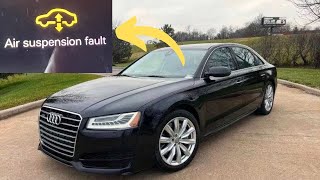
- An amber or green air suspension warning light on the dashboard, sometimes with a 'System Fault' message.
- Vehicle sagging at one or more corners, especially after being parked overnight.
- The air suspension compressor seems to be running constantly or is unusually loud.
- The vehicle seems stuck at one ride height and will not raise or lower.
- A 'hissing' sound can be heard from a corner of the vehicle, indicating an air leak.
- A bouncy or unusually harsh and stiff ride, even in 'Comfort' mode.
- Multiple other system warnings appearing simultaneously, such as for ACC, brake guard, or lane assist, which can sometimes be triggered by a weak battery or a primary suspension fault.
- Replacing parts based on the C1717 code. Since this code is not valid for an Audi, any action taken based on it is a misdiagnosis. The real issue must be found with a proper scan.
- Replacing the air compressor when the actual fault is a hidden blown fuse or a significant air leak causing the compressor to overheat and enter a protective shutdown mode (Fault 01577).
Most Likely Causes
- Leaking Air Strut / Air Spring 🔴 High Probability The flexible rubber air bladders, often made by Continental, degrade over time due to age, mileage, and environmental factors, developing cracks that lead to leaks. This is a common wear item on most air suspension-equipped vehicles, often failing around 100,000-120,000 miles.
How to confirm: With the vehicle running, spray a solution of soapy water on the air struts at each corner, particularly around the rubber bladder and top mount. Bubbles will form at the site of the leak. Often, a corner will be visibly lower than the others after being parked for a few hours or overnight.
Typical fix: Replacement of the failed air strut assembly. 🎬 See this step-by-step guide for installing a new air strut. It is often recommended to replace them in pairs (both front or both rear) to ensure even performance and damping characteristics.
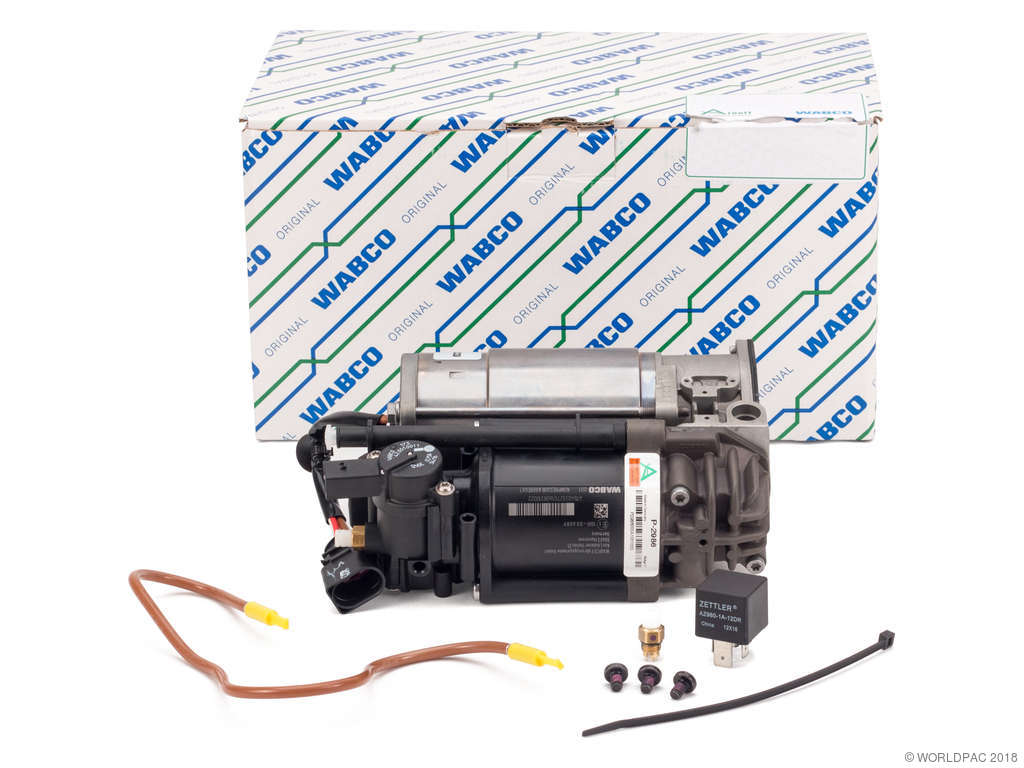
Est. part cost: $400-$1200 per strut - Failing Air Suspension Compressor 🟡 Medium Probability → Shop Suspension Self-Leveling Pump The compressor (often a WABCO unit) can wear out from normal use, but its life is significantly shortened if it runs excessively to compensate for a leak in the system. This leads to overheating and eventual failure.
How to confirm: A common fault code is 01577 - Turn-Off due to Over-Temp. The compressor may become very loud or stop running entirely. A hidden 40A fuse for the compressor, located in the trunk behind side panels, can blow when the compressor is overworked. A technician can test the compressor's output pressure.
Typical fix: Replacement of the air suspension compressor and its associated relay (J403). The root cause (a leak) must be fixed first, or the new compressor will also fail prematurely.
Est. part cost: $300-$900 - Faulty Valve Block ⚪ Low Probability The valve block, located in the driver's side front wheel well area, directs air from the compressor to the individual air struts and reservoir. Internal solenoids or seals can fail, causing leaks, preventing air distribution, or causing inconsistent ride comfort. The internal pressure sensor (G291) can also fail, which requires replacement of the entire valve block.
How to confirm: Diagnosis involves using a VAG-specific scan tool to perform output tests on individual solenoid channels. If struts and lines hold pressure but the car still drops or fails to level, the valve block is a likely suspect. A fault code 01772 for the G291 pressure sensor points directly to a faulty valve block.
Typical fix: Replacement of the air suspension valve block. This is a relatively straightforward part to replace once accessed.
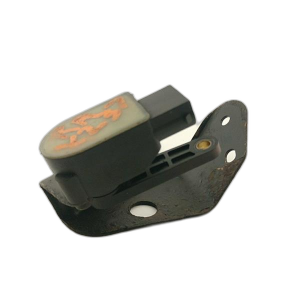
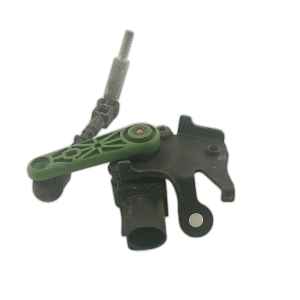
Est. part cost: $250-$500 - Failed Ride Height Sensor ⚪ Low Probability These sensors are mounted on the chassis and connect to the control arms via plastic linkages. They are exposed to the elements and can fail due to corrosion, physical damage, or internal electronic faults. A wiring interruption to a sensor is also a documented failure mode.
How to confirm: A VAG-specific scan tool can read the live data from each height sensor in the Level Control module (Address 34). A logical test involves checking the sensor's voltage output; a good sensor provides a 5-volt feed. If the 5-volt feed disappears when the sensor is connected, it indicates an internal short. A visual inspection may reveal a broken linkage or corroded connector.
Typical fix: Replacement of the faulty ride height sensor and recalibration of the suspension system using a VAG-specific tool. 🎬 Watch: How to perform a suspension leveling calibration using VCDS.
Est. part cost: $100-$250
Rare But Worth Checking
- Blown/hidden compressor fuse: An AudiWorld user discovered a 40A fuse for the compressor in the trunk that is not shown on many schematics. When his compressor wouldn't turn on after replacing struts, he found this fuse was blown.
- Weak vehicle battery: Low system voltage can cause a variety of seemingly unrelated electronic faults, including air suspension warnings. If the car has been sitting for a long time, this is a primary suspect.
- Faulty Compressor Relay (J403): This relay can get stuck in the 'on' position, causing the compressor to run continuously until it burns out and blows a fuse. It is located in a relay carrier in the driver's side footwell, under the dashboard.
Diagnosis Steps
- Disregard the C1717 code. It is not a valid Audi fault.
- Obtain a VAG-specific scan tool (like VCDS or OBDeleven).
- Scan the Level Control module (Address 34) for the actual fault codes (e.g., 01583, 01577).
- Observe the vehicle's behavior. Note which corner, if any, is sagging after being parked overnight.
- If a leak is suspected (code 01583), put the car in 'Lift' mode to raise it, then activate 'Jacking Mode' via the MMI to prevent the system from auto-correcting. Spray air struts and lines with soapy water and look for bubbles.
- If the compressor is not running at all, check all related fuses. This includes standard fuse boxes in the dash and a main fuse panel in the luggage compartment on the right side. Crucially, check for a 'secret' 40A fuse for the compressor, which may require removing trunk side panels to access.
- Test the compressor relay (J403). It is located under the driver's side dashboard and is often marked '373' or a superseding number like '645'. A stuck relay can burn out a new compressor.
- Check the live data from the ride height sensors in Address 34 to ensure they are all reporting plausible and changing values as the suspension is raised or lowered.
- If the vehicle ride is harsh but no codes are present, investigate mechanical suspension components like upper control arm bushings, which are a known wear item, or consider a suspension calibration.
Parts You'll Likely Need
- Air Suspension Strut Assembly
(OEM #4H0616039 (followed by various letters like AD, T, H, AP, etc.). Example: 4H0616039AD.)— This is the most common failure point, where the flexible bladder develops leaks over time.
Trusted brands: Arnott (Remanufactured and New), Suncore, Bilstein (OEM supplier)
OEM price range: $900-$1500
Aftermarket price range: $400-$800 - Air Suspension Compressor — The compressor often fails as a secondary issue, burning out from overwork caused by a system leak.
Trusted brands: WABCO (OEM supplier), Arnott
OEM price range: $700-$1100
Aftermarket price range: $300-$500 - Air Suspension Valve Block
(OEM #4H0616013A or 4H0616013C.)— Can fail internally, causing leaks or improper air distribution to the struts.
Trusted brands: Aerosus, Genuine Audi
OEM price range: $400-$550
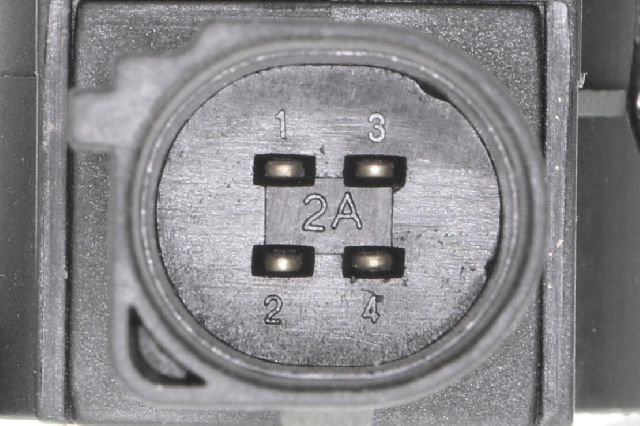
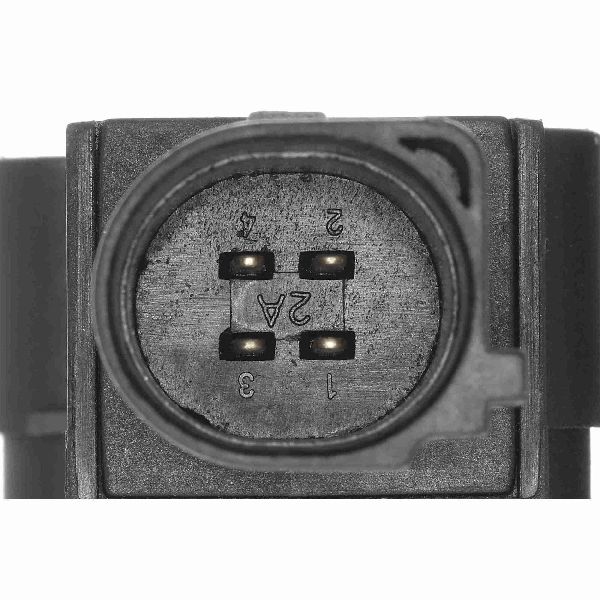
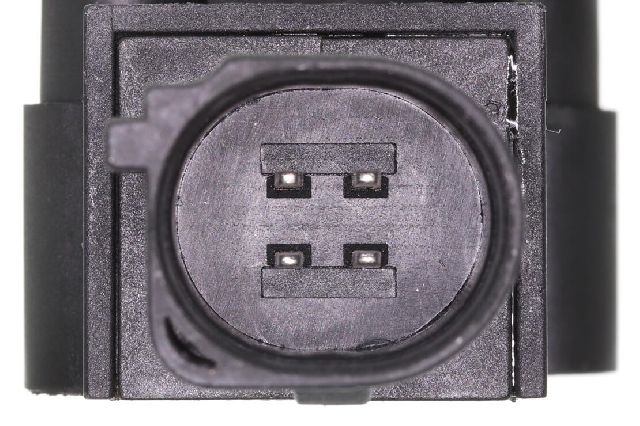
Aftermarket price range: $200-$350 - Ride Height Sensor — Provides ride height information to the control module; failure can cause leveling issues or faults.
Trusted brands: Genuine Audi, VEMO
OEM price range: $150-$250
Aftermarket price range: $80-$150 - Air Suspension Compressor Relay
(OEM #8D0951253C (often stamped '373'))— This relay can fail and get stuck, burning out the compressor. It is considered a mandatory replacement when installing a new compressor.
Trusted brands: Genuine Audi, Bosch
OEM price range: $20-$40
Aftermarket price range: $10-$25
Related Codes That Often Appear With This One
- 01583 — This code means 'Leak in System Detected' and is one of the most common true faults found when an A8 has suspension problems.
- 01772 — This code points to a 'Signal from Level Control Pressure Sensor (G291)' and often indicates a problem with the valve block or a compressor unable to build sufficient pressure.
- 01400 — This code means 'Suspension Level Control - Lower Limit Not Reached', indicating the system cannot raise the vehicle to the correct height, usually due to a major leak or a failed compressor.
- 01577 — This code indicates the compressor has been turning off due to overheating, almost always because it is running constantly to compensate for a leak.
- 01770 — This code for the 'Temperature Sensor for Compressor for Level Control' can be logged when the compressor overheats repeatedly.
Technical Service Bulletins (TSBs) & Recalls
- Audi TSB 2044640/4 (May 22, 2018): While not for the suspension, this TSB is for the 4.0T V8 engine and addresses issues like 'Engine difficult to start, turbocharger damaged', which is relevant to owners of V8 models.
Platform-Specific Known Issues
- A harsh ride without any fault codes can sometimes be traced to worn upper control arm bushings, a common wear item on the D4 platform, rather than the air suspension components themselves.
- There is a 40A fuse for the air suspension compressor located in the trunk that is reportedly not documented in all official diagrams. A blown fuse here can mimic a complete compressor failure. A user on AudiWorld forums found this to be the cause of his issue after replacing multiple parts.
Mechanic-Grade Diagnostic Values
- Ride Height Sensor (G76, G78, etc.) Voltage Feed — expected: Approx. 5 volts with the sensor disconnected, and a varying signal voltage when connected and the suspension arm is moved.. Failure: If the 5-volt feed from the control module disappears or shorts to ground when the sensor is connected, the sensor is internally faulty.
- Ride Height Sensor PWM Signal Value (VCDS) — expected: A percentage value that changes as suspension height changes. For example, a normal range might be between 38% and 47%.. Failure: A value that is stuck at 0%, 100%, or does not change when the suspension moves indicates a failed sensor or wiring issue.
- Pneumatic Spring Bellows Pressure (VCDS) — expected: Front struts typically show higher pressure than rear. Example: Fronts at 7.4 bar, Rears at 4.6 bar at normal height.. Failure: Significantly lower pressure in one corner compared to the other on the same axle can indicate a leak. Very low or zero pressure indicates a major leak or failed valve block channel.
- Ride Height Calibration Measurement — expected: Measured in millimeters from the center of the wheel to the edge of the fender. Factory values are typically around 400-415mm depending on the wheel/tire setup.. Failure: If the measured value is significantly different from the value stored in the control module, or if the car cannot reach the target height during calibration, it indicates a fault.
Hidden / Shadow Codes Worth Checking
- U1013 00: Control Module Not Coded. This fault can appear after a module replacement or if coding is lost. It prevents the system from operating correctly. (see via VCDS or other VAG-specific diagnostic tool when scanning Address 34 (Level Control).)
Scan Tool Commands That Help
- VCDS (VAG-COM): Security Access (Code 20103) — Required before performing adaptations or basic settings in the Level Control module (Address 34), such as calibrating ride height.
- VCDS (VAG-COM): Basic Settings: Delete Calibration for Level Control — This is the first step in the full recalibration procedure. It erases the old height values and will trigger a temporary suspension fault light, which is normal.
- VCDS (VAG-COM): Basic Settings: Start up to Reference Level — After deleting the old calibration, this command tells the system to inflate to a default reference position before new measurements are entered.
- VCDS (VAG-COM): Adaptation: Body height wheelhouse edge (Channels 1-4) — Used to input the newly measured height values (in mm) for each corner of the car to complete the calibration. Entering a larger value than measured will result in a lower ride height.
- VCDS (VAG-COM): Output Tests (in Level Control Module) — Allows a technician to individually cycle each solenoid in the valve block and the compressor. This is used to test the function of the valve block and check if it's correctly directing air to each strut.
Wiring & Ground Locations
- J403 - Compressor Relay — Located in a relay carrier under the driver's side dashboard, in the footwell area. It is often a 40A relay marked '373' or a superseding part number like '645'.. A faulty relay can stick on, causing the compressor to run continuously and burn itself out, or fail to activate, preventing the system from raising.
- Compressor Fuse (Main) — A 40A fuse located in the luggage compartment fuse panel, on the right side behind a trim panel.. This is the primary fuse for the compressor. If the compressor is overworked due to a leak, this fuse will often blow.
- Compressor Fuse ('Secret') — A 40A fuse located in the trunk fuse panel area, but reportedly not on all schematics and may require prying down a cover board over the main trunk fuse panel to see.. This is a hidden fuse that can cause a complete loss of compressor function. Technicians may replace the compressor without realizing this fuse is the actual point of failure.
- J197 - Level Control Module — The control module itself is typically located in the luggage compartment.. This is the brain of the system. All sensor inputs and component commands route through this module. A bad ground or connector here can cause widespread system failure.
Real Owner Repair Stories
- AudiWorld Forums user (2011 Audi A8) — Rear of the car dropped flat. Compressor would not turn on.
❌ Tried (didn't work) Replaced both rear air struts., Checked standard fuses., Replaced air pump (compressor), relay, and control valve.
✅ What actually fixed it The user discovered two 'secret' 40A fuses in the trunk that were not on any available schematics. Access required removing the rear trunk side panels and prying down the board covering the trunk fuse panel. One of these hidden fuses, which powered the air suspension compressor, was blown. Replacing the fuse restored compressor function. - DiagnoseDan YouTube Channel (Audi A8 (D3, but diagnostic principle is identical for D4)) — Air suspension fault light with code 01767 'right height sensor left rear feed is shorted to ground'.
❌ Tried (didn't work) Initial thought was a wiring short between the control module and the sensor.
✅ What actually fixed it Using a multimeter, the technician confirmed the control module was sending the correct 5-volt feed. However, as soon as the sensor was plugged in, the 5-volt feed disappeared, indicating an internal short to ground within the sensor itself. Replacing the faulty ride height sensor (G76) resolved the issue. - AudiWorld Forums user (2011 A8 D4 at 120k miles) — Very stiff, harsh ride with no error codes present. All suspension modes (Comfort, Auto, etc.) worked, but the ride quality was poor.
❌ Tried (didn't work) Replaced front sway bar links (which had fixed a previous creaking noise)., Replaced the compressor relay as a preventative measure., Replaced front upper control arms which were showing wear.
✅ What actually fixed it The issue was traced back to a previous repair where a dealership fixed interrupted wiring to the front right height sensor. Although the fault code was gone, the ride never felt right afterward. The final resolution was performing a full suspension recalibration using VCDS, which restored the plush ride quality.
OEM Part Supersession History
4H0616039E, 4H0616039F, 4H0616039G, 4H0616039H→4H0616039T, 4H0616039AB, 4H0616039AD, 4H0616039AP, etc.— Revisions to improve reliability and address wear issues. The list of superseded part numbers for the front strut is extensive, indicating multiple revisions over the vehicle's life.
Heads up: While most front struts are interchangeable across the 2010-2017 range, it is critical to order based on VIN to ensure compatibility with specific sub-models (e.g., A8 vs. S8) and features. Always replace in pairs to maintain balanced damping.
Model Year Variations Within This Range
- 2015-2017: The Audi A8 D4 received a facelift for the 2015 model year, which included revised styling and technology updates. While the fundamental air suspension design remained the same, control module software and some component part numbers may differ from pre-facelift (2010-2014) models. When sourcing parts or looking at wiring diagrams, it is important to specify pre- or post-facelift.
Diagnostic Flowchart
Other Known Issues on This Vehicle
Issues unrelated to this code that are worth knowing about as an owner of this generation:
- 4.0T V8 Turbocharger Oil Screen Clogging 🔴 High — A well-documented design flaw. The screen filtering oil to the turbos can clog, starving them of oil and leading to catastrophic turbo failure. Can occur at any mileage, but risk increases over time. (Ref: Audi TSB 2044640/4 addresses related symptoms.)
- 3.0T V6 Supercharged Engine Carbon Buildup 🟠 Medium — As a direct-injection engine, carbon deposits build up on the intake valves over time, typically requiring cleaning every 60k-90k miles. Symptoms include rough idle, misfires, and reduced performance.
- Engine Mount Failure (Especially on 4.0T) 🟠 Medium — The active (electronically controlled) engine mounts are prone to failure, causing vibrations at idle or specific RPMs.
- Coolant Leaks (Thermostat & Water Pump) 🟠 Medium — Leaks from the plastic thermostat housing and water pump are common, particularly on the 3.0T engine, often occurring after 60,000 miles.
- MMI Screen Mechanism Failure 🟡 Low — The motor or gears for the retractable MMI infotainment screen can fail, causing the screen to get stuck open or closed.
- Timing Chain Tensioner Wear (High Mileage) 🔴 High — On higher mileage engines (both 3.0T and 4.0T, typically over 100k-120k miles), tensioners can wear, causing a brief rattle on cold starts. If ignored, this can lead to chain slip and major engine damage.
Used vs. New Parts: Buying Guide for This Vehicle
When a used part is the smart pick: Used parts are generally not recommended for the primary wear items of this system (struts, compressor). However, a used valve block, ride height sensor, or control module from a low-mileage, accident-damaged donor car can be a cost-effective option if verified to be in good working order.
Donor-vehicle mileage cap: roughly under 70000 miles for the part to have meaningful remaining life.
What to inspect on the donor part:
- For air struts, check the rubber bladder for any signs of dry rot, cracking, or abrasion.
- Verify the part number on the component matches the required part for your vehicle's VIN.
- Ask the seller for the VIN of the donor car to verify its mileage and that it wasn't from a flood-damaged vehicle.
- Inspect electrical connectors for corrosion or damage.
OEM-only on this vehicle (don't cheap out):
- Control Module (J197): Due to component protection and coding requirements, using a new OEM module or one from a specialized VAG recycler is safest to avoid programming headaches.
Aftermarket brands forum-validated for this vehicle:
- Arnott: Widely used for both remanufactured OEM struts (which retain the active damping) and new aftermarket struts (which often do not, resulting in a more fixed ride). Their lifetime warranty is a significant draw for many owners.
- Bilstein: An OEM supplier for Audi. Their B4 air suspension struts are considered a high-quality replacement that maintains original ride characteristics and active damping.
- WABCO: The OEM supplier for the air suspension compressor. A new WABCO unit is equivalent to a genuine Audi part.
Brands owners have reported issues with on this vehicle:
- Unbranded/generic eBay struts: While significantly cheaper, many owners report premature failure, poor ride quality, and difficulty with warranty claims.
- Arnott 'New' (non-remanufactured) Struts: Some users report that these new units, which lack the original's active damping, provide a ride that is either too firm or 'floaty' compared to the OEM feel.
Real Owner Stories
Aggregated from forums and TSBs cited above. Mileages and costs reflect what owners reported in those sources.
Audi A8 D4
Symptoms: The owner replaced rear struts, the compressor, and the valve block, but the suspension still wouldn't function correctly.
What fixed it: The root cause was discovered to be a hidden 40A fuse for the compressor located behind the trunk side panels.
Source hint: AudiWorld Forums: 'A8 D4 Suspension Problem'
Audi A8 D4
Symptoms: The vehicle had a very stiff and harsh ride, but the computer reported no error codes.
What fixed it: The discussion identified potential causes as faulty height sensor wiring, worn upper control arms, or the need for a suspension calibration.
Source hint: AudiWorld Forums: 'Air Suspension very stiff (no error codes)'
Audi A8
Symptoms: After sitting for several weeks, the car displayed multiple simultaneous faults for the suspension and ACC.
What fixed it: A technician found the front height sensors had seized; the issue was resolved by simply lubricating the sensors.
Source hint: Audi Owners Club (UK): 'Fault with air suspension.'
Related OBD-II Codes
Frequently Asked Questions
I have a 'System Fault' message and the car is sagging, but I'm seeing code C1717. What should I do?
My 2010-2017 Audi A8 has a very harsh ride in 'Comfort' mode but no error codes are showing. What could be wrong?
Where is the 'secret' 40A fuse for the air suspension compressor located on the A8 D4?
My compressor stopped working after a leak. Do I just need to replace the unit?
Can a weak battery cause air suspension warnings on my Audi A8?
How can I check if my air struts are leaking at home?
Helpful Videos
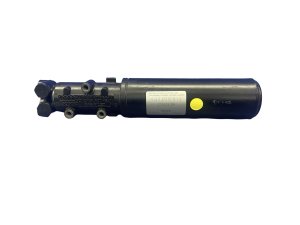
Used OEM Parts in Stock
New Aftermarket Parts Available

The information in this article is provided for general reference and educational purposes only. Vehicle specifications, procedures, and part compatibility can vary by production date, trim level, and region. Always consult your vehicle's factory service manual and verify part numbers before purchasing or performing repairs. Safety-critical components such as airbags, seat belts, and braking systems should be installed by a qualified professional.
- Audi A8:
- 🧭 Diagnostic Flowchart
- 🎬 Helpful Videos
- 🛍️ Shop This Part
- What's Unique About the 2010-2017 Audi A8
- Symptoms You May Notice
- Most Likely Causes
- Rare But Worth Checking
- Diagnosis Steps
- Parts You'll Likely Need
- Related Codes That Often Appear With This One
- Technical Service Bulletins (TSBs) & Recalls
- Platform-Specific Known Issues
- Mechanic-Grade Diagnostic Values
- Hidden / Shadow Codes Worth Checking
- Scan Tool Commands That Help
- Wiring & Ground Locations
- Real Owner Repair Stories
- OEM Part Supersession History
- Model Year Variations Within This Range
- Other Known Issues on This Vehicle
- Used vs. New Parts: Buying Guide for This Vehicle
- Real Owner Stories
- Audi A8 D4
- Audi A8 D4
- Audi A8
- Related OBD-II Codes
- Frequently Asked Questions
- 🎟️ Get 5% Off