

C1717 on 2007-2015 Audi Q7: Air Suspension Fault Causes and Fixes
Code C1717 on a 2007-2015 Audi Q7 is a non-specific chassis code that almost always points to a problem in the adaptive air suspension system. The most common cause is a failed air suspension compressor, its relay (J403), or both, which can cost between $400 and $900 for parts. A stuck relay often causes the compressor to burn out.
- C1717 is a generic code; use a VAG-specific scanner to find the true Audi fault code related to the air suspension.
- The most likely cause of a complete suspension failure is a burned-out air compressor, often caused by a faulty relay.
- Always replace the compressor relay and the 40A fuse when replacing the air suspension compressor to prevent a repeat failure.
- Check for air leaks at the air springs using soapy water, as even small leaks will eventually lead to compressor failure.
What's Unique About the 2007-2015 Audi Q7
The first-generation (Typ 4L) Audi Q7, built on the PL71 platform shared with the VW Touareg and Porsche Cayenne, relied heavily on its adaptive air suspension for ride comfort and functionality. This system is complex, involving a WABCO air compressor, a relay, a valve block, air springs at each corner, and multiple sensors. Over time, components like the compressor and its relay are known failure points. A common failure sequence involves the relay sticking 'on', causing the compressor to run continuously until it overheats and burns out, often blowing a 40-amp fuse in the process. The compressor is located behind the right front wheel well liner, making it somewhat vulnerable to the elements.
Symptoms You May Notice
- Flashing yellow and green suspension warning lights on the dashboard.
- Vehicle is sitting low on one or all corners and will not raise.
- An excessively harsh, bouncy, or bumpy ride.
- Audible air leak (hissing sound) from a corner of the vehicle or near the compressor.
- Suspension height adjustment options are grayed out in the MMI system.
- Compressor can be heard running continuously, more frequently than usual, or not at all.
- "Air Suspension Fault" or similar warning message on the instrument cluster.
- Replacing only the blown 40A fuse without replacing the failing compressor and relay. The fuse is a symptom, not the cause.
- Replacing the valve block when the compressor is weak. A weak compressor may not provide enough pressure for the valve block to operate correctly, mimicking a valve block fault.
- Replacing an entire air strut assembly when only a cheap O-ring or residual pressure valve at the top of the strut is leaking.
Most Likely Causes
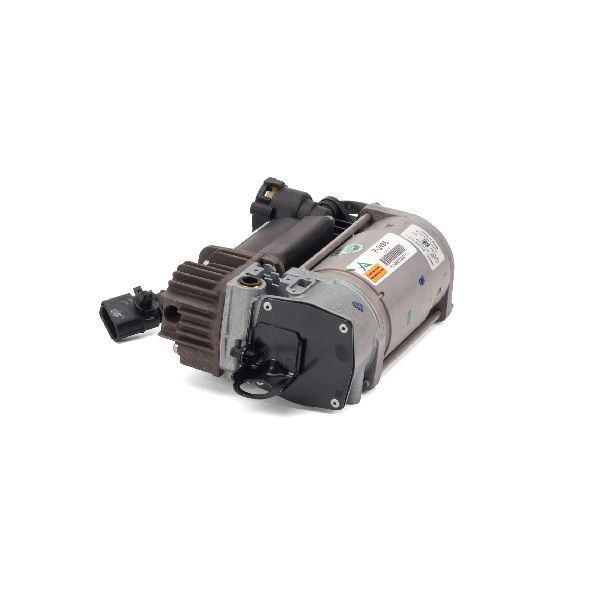
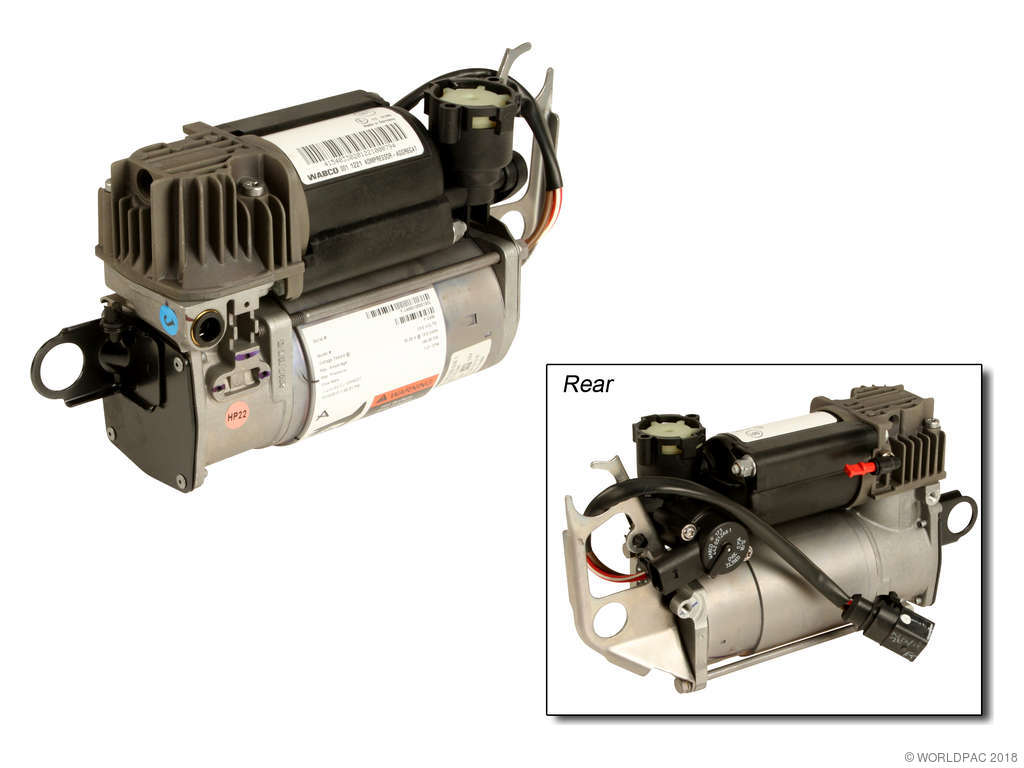
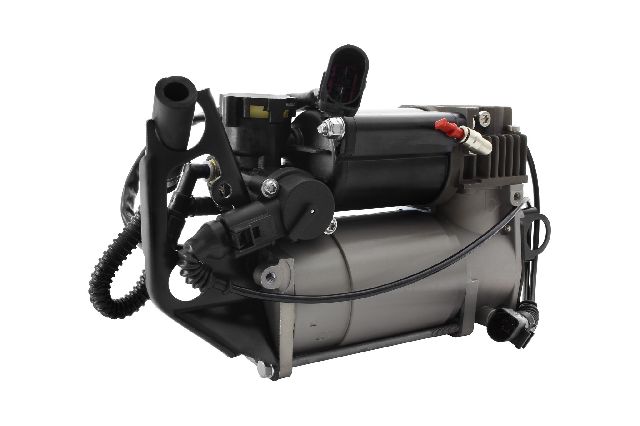
- Failed Air Suspension Compressor 🔴 High Probability → Shop Suspension Self-Leveling Pump The WABCO compressor is often overworked due to small system leaks (from aged air springs or O-rings) or a faulty relay, leading to premature failure from overheating or seizure.
How to confirm: Listen for the compressor running when the vehicle is started. If it doesn't run, check its fuse and relay first. If the fuse and relay are good, apply 12V directly to the compressor to see if it powers on. A compressor that runs but doesn't build sufficient pressure (target is around 9-14 bar or 130-200 PSI) is also considered failed. An overheating compressor will trigger fault code 01577.
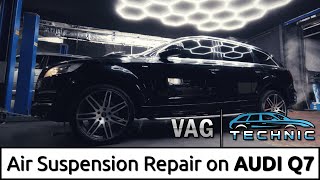
Typical fix: Replace the air suspension compressor, its relay (J403), and the associated 40A fuse. It is critical to replace the relay at the same time as the compressor, as a faulty relay is often the root cause of the compressor's failure. Addressing any system leaks is also crucial 🎬 See this walkthrough for replacing the compressor with a new unit. to prevent premature failure of the new compressor.
Est. part cost: $350-$800 - Faulty Air Suspension Compressor Relay (J403) 🔴 High Probability → Shop Wiring Relay The relay's contacts can weld shut, causing it to become stuck in the closed position. This forces the compressor to run constantly until it burns out.
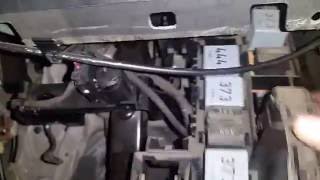
How to confirm: If the compressor continues to run after the vehicle is turned off, the relay is almost certainly stuck. The relay is located in a carrier under the driver's side dashboard, near the steering column. It is often labeled with the number 645. 🎬 Watch: Troubleshooting Audi air suspension problems and the compressor relay.
Typical fix: Replace the air suspension relay. This should always be done when replacing the compressor as a preventative measure. Many owners replace it preventatively on high-mileage vehicles.
Est. part cost: $15-$40 - Air Leak from Air Spring/Strut 🟡 Medium Probability The rubber air bladders on the struts crack and perish with age and exposure, developing leaks. The top O-ring seal on the strut is also a very common failure point.
How to confirm: Spray a solution of soapy water on the air springs at each corner, especially around the top mount and where the bag rolls. Look for bubbles forming, which indicates a leak. The vehicle may also be visibly lower on one corner after being parked overnight.
Typical fix: Replace the leaking air spring/strut assembly or, in some cases, just the leaking O-rings or residual pressure valves. Air springs are often replaced in pairs (both fronts or both rears) to maintain balanced performance. 🎬 Watch: How to replace a front air spring on this platform.
Est. part cost: $300-$700 per strut (aftermarket) - Blown 40A Fuse for Suspension Compressor 🟡 Medium Probability A seized or failing compressor will draw excessive current, causing the main fuse to blow as a protective measure.
How to confirm: Locate the fuse for the level control system. On many Q7s, this is a 40A fuse located in the fuse panel on the driver's side (left-hand) of the dashboard. However, some diagrams show it on a main fuse carrier under the driver's seat. Visually inspect the fuse.
Typical fix: Replace the fuse. However, simply replacing the fuse without addressing the underlying cause (the failing compressor and/or relay) will result in the new fuse blowing again.
Est. part cost: $1-$5
Rare But Worth Checking
- Failed Valve Block: The valve block directs air from the compressor to the individual air springs and the reservoir. While less common than compressor failure, it can get stuck, leak internally, or have corroded fittings, causing leveling issues. It is often misdiagnosed when the primary issue is a weak compressor.
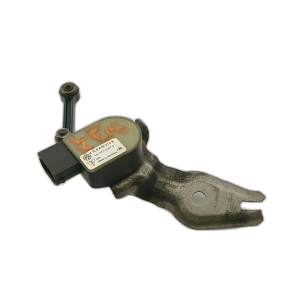
- Failed Ride Height Level Sensor: These sensors tell the control module the height of each corner. A failed sensor can cause the system to stop adjusting or behave erratically. This usually triggers a specific fault code for the sensor itself, but can contribute to the overall system fault reported as C1717 by generic scanners.
- Leaking Air Lines or Fittings: The plastic air lines or the brass fittings that connect them to the valve block and struts can become brittle, cracked, or corroded, causing slow leaks. This is more common on vehicles from regions with road salt.
Diagnosis Steps
- Scan the Level Control Module (Address 34) with a VAG-specific tool like VCDS or OBDeleven to get the actual Audi fault codes, not just the generic C1717.
- Check the 40A fuse for the air suspension compressor. Its location can be in the driver's side dash panel or under the driver's seat.
- Check the compressor relay (J403), often marked #645, located under the driver's side dash. Listen for a compressor that won't shut off, which indicates a stuck relay.
- If the fuse and relay are good, but the compressor doesn't run, test for power and ground at the compressor's electrical connector when the system is commanded on.
- If the compressor runs but the vehicle doesn't lift, the compressor is likely worn out and not producing sufficient pressure.
- If the vehicle lifts but one or more corners sag overnight, perform a leak test on the air springs (especially the top seals) and lines using soapy water.
- Activate 'Jack Mode' in the MMI to close the valves and help isolate which corner or component is leaking.
Parts You'll Likely Need
- Air Suspension Compressor
(OEM #7L0698007D (or supersessions like 7L8616006D))— This is the most common failure point in the system, often due to being overworked from leaks or a bad relay.
Trusted brands: Wabco (OEM), Arnott (P-2496 is an OES unit), VEMO
OEM price range: $600-$900
Aftermarket price range: $350-$550 - Air Suspension Compressor Relay
(OEM #8K0951253 (often stamped with '643' or '645'))— A stuck relay is a frequent cause of compressor burnout. It must be replaced whenever the compressor is replaced.
Related Codes That Often Appear With This One
- 01577 — Indicates 'Turn-Off due to Over-Temp'. This is logged when the compressor runs too long (due to a leak or being worn out) and the thermal protection switch shuts it down.
- 01583 — Indicates 'Leak in System Detected'. The control module logs this when it has to run the compressor too frequently to maintain ride height, pointing to a leak in an air spring or line.
- 01400 — Indicates 'Suspension Level Control, Lower Limit Exceeded'. This code is set when the vehicle is sitting too low and cannot be raised, often due to a major leak or a failed compressor.
- 02645 — Indicates 'Valves for Level Control System Mechanical Malfunction'. This can point to an issue with the compressor relay or the valve block itself.
- 02250 — Indicates 'Function Deactivation; Valve Duty Cycle'. This is often seen when the system deactivates due to excessive compressor runtime, usually caused by a leak.
Platform-Specific Known Issues
- Compressor Location and Vulnerability: The compressor is mounted behind the front-right wheel well liner. If the liner is damaged or missing, the compressor is exposed to water, salt, and road debris, which can accelerate corrosion and failure of the unit and its electrical connections.
- Relay Location and Replacement: The compressor relay (J403) is located in a relay carrier tucked up under the driver's side dashboard, making it somewhat difficult to access. The lower dash panel must be removed to reach it. Forum users stress the importance of replacing this specific relay, as getting it wrong can lead to immediate failure of the new compressor.
Mechanic-Grade Diagnostic Values
- System Pressure via VCDS Measuring Blocks (G291 Sensor) — expected: 9-14 bar (130-200 PSI). Failure: Pressure does not build when compressor is active, or drops rapidly, indicating a leak or failed compressor.
- Compressor Temperature via VCDS Measuring Blocks (G290 Sensor) — expected: Should rise steadily during operation but not exceed thermal cutoff limit.. Failure: An 'Open or Short to Plus' fault for G290, or a temperature reading that is implausible, points to a faulty sensor or wiring, not necessarily a bad compressor.
- Ride Height Calibration Values (Post-Calibration) — expected: Front: ~449 mm, Rear: ~465 mm (measured from wheel center to fender arch).. Failure: Inability to achieve or maintain these values after calibration suggests a persistent leak, faulty level sensor, or weak compressor.
Scan Tool Commands That Help
- VCDS (VAG-COM): Security Access (Login) - Code 31564 — Required to enable Adaptation and Basic Settings for the Level Control module (34).
- VCDS (VAG-COM): Adaptation - Channels 01-05 — To perform a suspension level control calibration after replacing components like struts or level sensors. You enter the measured height for each corner (Channels 01-04) and then save the calibration (Channel 05).
- VCDS (VAG-COM): Basic Settings - Groups 020, 021, 022 — To bleed the system of air pressure before service. Group 020 bleeds the pressure accumulator, 021 for the front axle, and 022 for the rear axle. Requires Security Access code 08367.
- VCDS (VAG-COM): Basic Settings - Groups 023, 024, 025 — To charge the system with air after service. Group 023 charges the pressure accumulator, 024 for the front axle, and 025 for the rear axle. Requires Security Access code 08367.
Wiring & Ground Locations
- Ground Point 35 — Under the front passenger's seat.. This is a potential earth point for the Level Control System Control Unit (J197), and corrosion or a loose connection here can cause erratic behavior.
- J403 Relay Pinout — On the relay itself, located under the driver's side dash.. For manual testing: Pin 30 is Battery Input, Pin 87 is Output to Compressor, Pin 85 is Ground Control Signal, and Pin 86 is Ignition Power Trigger. Jumpering 30 to 87 should directly power the compressor.
- G290 Temperature Sensor — Mounted on the cylinder head of the air compressor.. A fault in this sensor or its wiring can cause a 01770 code and prevent the compressor from running, mimicking a failed compressor. The sensor's resistance changes with temperature.
- G291 Pressure Sensor — Integrated into the air suspension valve block; cannot be replaced separately.. A failure of this sensor (DTC 01772) requires replacement of the entire valve block. It provides the primary pressure reading to the control module.
Real Owner Repair Stories
- Ross-Tech Forums User (2013 Audi Q7 TDI) — Air suspension fault light, codes 01770 (G290 Temperature Sensor - Open or Short to Plus) and 01577 (Turn-Off due to Over-Temp).
❌ Tried (didn't work) Initial assumption was a failed compressor due to the over-temp code.
✅ What actually fixed it The G290 temperature sensor itself was faulty. The user tested the ground connection, which was fine. They temporarily swapped a known-good sensor from another Q7, which resolved the issue and brought sensor values back to normal in VCDS. The final fix was replacing only the G290 sensor. - AudiWorld Forums User (2015 Q7) — Blinking yellow suspension light, TPMS error, VCDS codes 02645 (Valves for Level Control) and over-temp codes.
❌ Tried (didn't work) A 'bagpipingandy' repair (a common forum repair for the compressor piston ring) did not solve the issue.
✅ What actually fixed it Replacing the air suspension compressor with a new WABCO unit fixed the problem. The user noted that the desiccant in the old compressor was completely saturated. They debated replacing the valve block as well but found the system worked perfectly after just the compressor replacement.
OEM Part Supersession History
Relay stamped '373' (e.g., 8D0951253C)→Relay stamped '645' or '643' (e.g., 8K0951253)— Updated design for improved reliability and contact durability.
Heads up: While physically different in size, the newer '645' relay is the recommended and more robust replacement for the older '373' or '643' relays.7L0698007A / 7L0698007B→7L0698007D, 7L8616006A, 7L8616006C, 7L8616006D, 7L8616007A, etc.— Multiple revisions and updates by the OEM (WABCO) over the production run of the PL71 platform.
Heads up: Most supersessions are interchangeable for the 2007-2015 Q7. It is critical to ensure the replacement kit includes the correct relay and any necessary updated wiring pigtails if specified by the manufacturer.
Model Year Variations Within This Range
- 2007-2010 vs 2011-2015: While the core air suspension system is very similar, there are minor differences in fuse and relay locations documented in service manuals. Pre-facelift (before 2010) and post-facelift models may have slightly different relay carrier layouts under the dashboard. Always verify the location using the vehicle's specific documentation.
Diagnostic Flowchart
Other Known Issues on This Vehicle
Issues unrelated to this code that are worth knowing about as an owner of this generation:
- Clogged Panoramic Sunroof Drains 🔴 High — Very common, especially on vehicles parked outdoors. Can lead to water ingress in the cabin, damaging electronics.
- MMI System Failure 🟠 Medium — Common, particularly on pre-facelift models (2007-2009). Can manifest as a black screen, intermittent operation, or total failure.
- Timing Chain Tensioner Rattle (3.0 TDI) 🔴 High — Frequently reported on the 3.0L TDI diesel engine, typically noticeable on cold starts after 60,000+ miles.
- Water Ingress into ECU Compartment 🔴 High — A known design flaw where water draining from the windshield cowl can drip directly onto the Engine Control Unit (ECU).
Used vs. New Parts: Buying Guide for This Vehicle
When a used part is the smart pick: A used valve block or ride height sensor from a low-mileage, non-corroded donor vehicle can be a cost-effective option, as these components are generally robust. A complete used strut assembly can also be considered if its age and condition are verifiable.
Donor-vehicle mileage cap: roughly under 80000 miles for the part to have meaningful remaining life.
What to inspect on the donor part:
- For air struts, inspect the rubber bladder for any signs of dry rot, cracking, or abrasion. Check the top mount for corrosion.
- For a valve block, ensure the air line fittings are clean and not stripped. Look for any signs of water intrusion or corrosion on the electrical connector.
- Verify the donor vehicle is from a dry climate (non-salt-belt) to minimize the risk of corrosion on all components.
OEM-only on this vehicle (don't cheap out):
- Air Suspension Compressor Relay (J403): This is an inexpensive but absolutely critical part. Given that a faulty relay is a primary cause of catastrophic compressor failure, using a new, genuine OEM or OES relay is the only safe choice.
Aftermarket brands forum-validated for this vehicle:
- Compressor: WABCO (Original Equipment Supplier), Arnott (offers both OES WABCO units and their own remanufactured/new designs, generally well-regarded).
- Air Struts/Bags: Arnott is a highly reputable aftermarket brand for air suspension components.
Brands owners have reported issues with on this vehicle:
- Unbranded, no-name compressors and relays from online marketplaces. These often have high failure rates, use inferior materials, and can cause further damage to the system. One owner reported a poorly-fitted aftermarket compressor failed prematurely.
Real Owner Stories
Aggregated from forums and TSBs cited above. Mileages and costs reflect what owners reported in those sources.
2007-2015 Audi Q7
Symptoms: The rear suspension was stuck in the high position and would not lower.
What fixed it: The owner used light tapping to free stuck residual pressure valves on the rear struts.
Source hint: Ross-Tech Forums - 'Audi Q7 air suspension problem'
2007-2015 Audi Q7
Symptoms: Air suspension issues involving troubleshooting the valve block and searching for air line leaks.
What fixed it: The owner utilized 'Jack Mode' to help isolate the leak and performed a systematic diagnosis of the air lines.
Source hint: AudiWorld Forums - 'Q7 air suspension issues'
2007-2015 Audi Q7
Symptoms: The compressor was running continuously even after the vehicle was turned off, leading to concerns about burn-out.
What fixed it: Replacement of the J403 relay (labeled 645) located under the driver's side dash.
Source hint: AudiWorld Forums - 'Where is location of Adaptive suspension compressor relay J403'
Related OBD-II Codes
Frequently Asked Questions
Where is the air suspension compressor relay (J403) located on my Audi Q7?
Why are my suspension height adjustment options grayed out in the MMI?
Can I just replace the blown 40A fuse to fix my suspension?
How can I tell if my Q7 has an air leak or a bad compressor?
Is it true that the compressor is vulnerable to road salt and water?
Do I really need to replace the relay when I buy a new compressor?
Helpful Videos


Used OEM Parts in Stock
New Aftermarket Parts Available


The information in this article is provided for general reference and educational purposes only. Vehicle specifications, procedures, and part compatibility can vary by production date, trim level, and region. Always consult your vehicle's factory service manual and verify part numbers before purchasing or performing repairs. Safety-critical components such as airbags, seat belts, and braking systems should be installed by a qualified professional.
- Audi Q7:
- 🧭 Diagnostic Flowchart
- 🎬 Helpful Videos
- 🛍️ Shop This Part
- What's Unique About the 2007-2015 Audi Q7
- Symptoms You May Notice
- Most Likely Causes
- Rare But Worth Checking
- Diagnosis Steps
- Parts You'll Likely Need
- Related Codes That Often Appear With This One
- Platform-Specific Known Issues
- Mechanic-Grade Diagnostic Values
- Scan Tool Commands That Help
- Wiring & Ground Locations
- Real Owner Repair Stories
- OEM Part Supersession History
- Model Year Variations Within This Range
- Other Known Issues on This Vehicle
- Used vs. New Parts: Buying Guide for This Vehicle
- Real Owner Stories
- 2007-2015 Audi Q7
- 2007-2015 Audi Q7
- 2007-2015 Audi Q7
- Related OBD-II Codes
- Frequently Asked Questions
- 🎟️ Get 5% Off