

C1717 on a 2014-2018 BMW X5: Air Suspension Fault
On a 2014-2018 BMW X5 (F15), the chassis code C1717 almost always points to a fault in the optional rear air suspension system. The specific BMW definition is 'Accumulator charging pressure sensor'. This typically means there is a leak in the system, a faulty pressure sensor, or a failing air suspension valve block. Diagnosis with a BMW-specific tool like ISTA is required to pinpoint the exact component failure.
- On an F15 BMW X5, C1717 means 'Accumulator charging pressure sensor' and points directly to a fault in the rear air suspension system.
- Do not trust generic definitions for this code; a BMW-specific scan is mandatory.
- The most common cause is a leaking rear air spring (bellows), which is a known wear item on this platform.
- A faulty valve block or a burned-out compressor are also potential causes, but compressor failure is often a secondary result of an unaddressed leak.
- Attempting to replace parts without a proper diagnosis using software like ISTA is likely to be expensive and ineffective.
What's Unique About the 2014-2018 BMW X5
The F15 X5, particularly models with optional third-row seating or the self-leveling suspension package, relies on a rear air suspension system that is prone to failure with age. Unlike many other brands where C1717 can mean anything from an airbag to a TPMS fault, on the F15 platform, it is specifically tied to the air suspension. The system consists of two rear air springs (bellows), a compressor, and a valve block assembly that houses the pressure sensor. A failure in any of these components can trigger the C1717 code. The most common failures are the air springs themselves, which develop leaks over time.
Symptoms You May Notice
- Appearance of a 'Chassis function restricted' or similar warning message on the iDrive display.
- Noticeable changes in ride height, such as one or both rear corners sagging, especially after being parked overnight.
- One corner of the rear suspension is noticeably higher than the other.
- An unusually harsh, bouncy, or unsettled ride.
- The air suspension compressor can be heard running excessively or making loud noises as it tries to compensate for a leak.
- The vehicle does not raise or lower correctly when commanded.
- Uneven tire wear on the rear tires.
- Replacing the air suspension compressor without first fixing the air leak that caused it to fail. The new compressor will quickly burn out as well.
- Replacing a single air spring. The other, being of the same age and wear, is likely to fail soon after, requiring a second repair.
- Replacing ride height sensors when the issue is a mechanical leak or pressure sensor fault.
Most Likely Causes
- Leaking Rear Air Spring(s) 🔴 High Probability → Shop Air Suspension Spring The rubber bellows of the air springs are a known weak point on the F15 X5. Over time, they develop cracks from age and environmental exposure, leading to air leaks. This is the most common failure in the system, often occurring after 4-6 years of service.
How to confirm: Perform a leak test by spraying soapy water on the air springs and looking for bubbles. A technician can also use ISTA to command the system to fill and then monitor the ride height sensors for a drop over time. A sagging corner after parking is a strong indicator.
Typical fix: Replace both rear air springs. It is highly recommended to replace them in pairs to ensure even performance and prevent the other old spring from failing shortly after.
Est. part cost: $200 - $500 for a pair of aftermarket air springs. - Faulty Air Suspension Valve Block / Pressure Sensor 🟡 Medium Probability The valve block, which distributes air from the compressor, contains the pressure sensor that triggers code C1717. The internal seals of the valve block can fail, causing leaks, or the electronic sensor itself can malfunction. Corrosion from moisture can also damage the valve.
How to confirm: A technician using ISTA can monitor the pressure readings from the sensor directly. If the pressure readings are erratic, do not change, or are implausible while the compressor is running, the valve block/sensor assembly is likely faulty. A short circuit fault for the discharge valve may also be present.
Typical fix: Replace the air suspension valve block. This part is often integrated with the compressor assembly but can sometimes be sourced separately.
Est. part cost: $250 - $400 for the valve block assembly. - Failing Air Suspension Compressor ⚪ Low Probability → Shop Suspension Self-Leveling Pump The compressor is a durable component but can burn out from being overworked. This is almost always a secondary failure caused by a persistent leak in the system (usually from the air springs) that forces the compressor to run constantly.
How to confirm: If the compressor is excessively noisy, fails to run at all, or cannot generate sufficient pressure when commanded via a diagnostic tool, it has likely failed. This diagnosis should only be made after confirming there are no leaks in the system.
Typical fix: Replace the air suspension compressor and the associated relay. It is critical to also find and fix the air leak that caused the compressor to fail in the first place.
Est. part cost: $400 - $800 for a new compressor assembly.
Rare But Worth Checking
- Damaged Air Lines:
- Faulty Ride Height Sensor:
Diagnosis Steps
- Scan the vehicle with a BMW-specific diagnostic tool like ISTA to confirm code C1717 and retrieve the specific BMW fault description 'Accumulator charging pressure sensor'.
- Visually inspect the rear of the vehicle. Note if one or both sides are sagging.
- Start the engine and listen for the air compressor. Note if it is running continuously, is unusually loud, or does not turn on at all.
- Using the scan tool, access the EHC (Electronic Height Control) module and monitor live data for the pressure accumulator sensor. Check if the pressure builds when the compressor is active.
- Perform a leak test. With the system pressurized, spray the rear air springs, air lines, and valve block connections with a soapy water solution and look for bubbles.
- Use the scan tool's service functions to command the compressor on and attempt to fill the air springs individually. This helps isolate a leak or a faulty valve channel.
- If a leak is found in an air spring, replace both rear springs.
- If no leaks are found but pressure does not build or readings are erratic, the valve block/pressure sensor assembly is the likely culprit.
- If the compressor is noisy or inactive and there are no leaks, test the compressor relay and power supply before condemning the compressor itself.
Parts You'll Likely Need
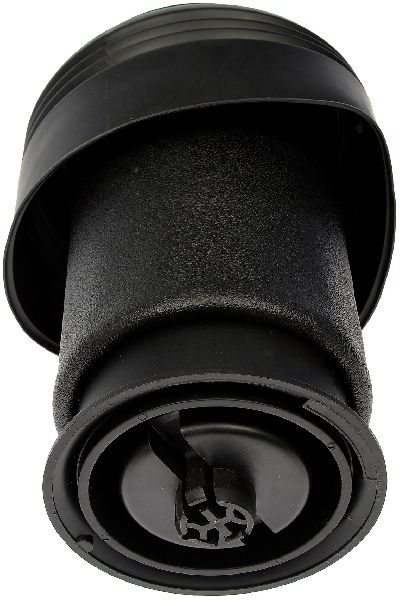
- Rear Air Spring (Bellows)
- Air Suspension Valve Block
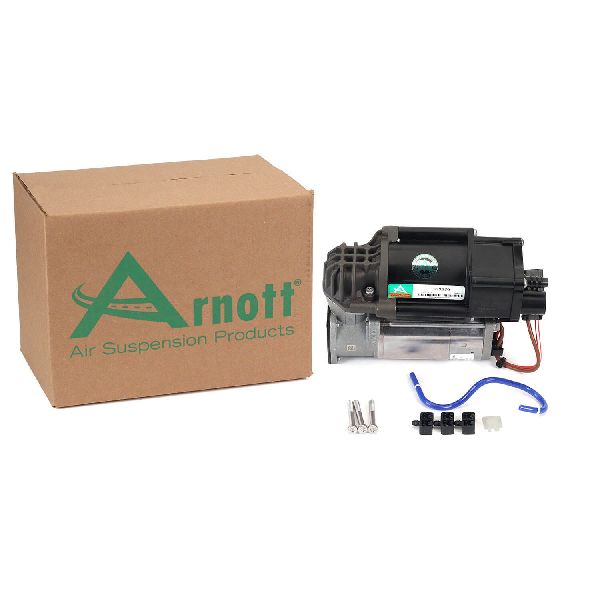
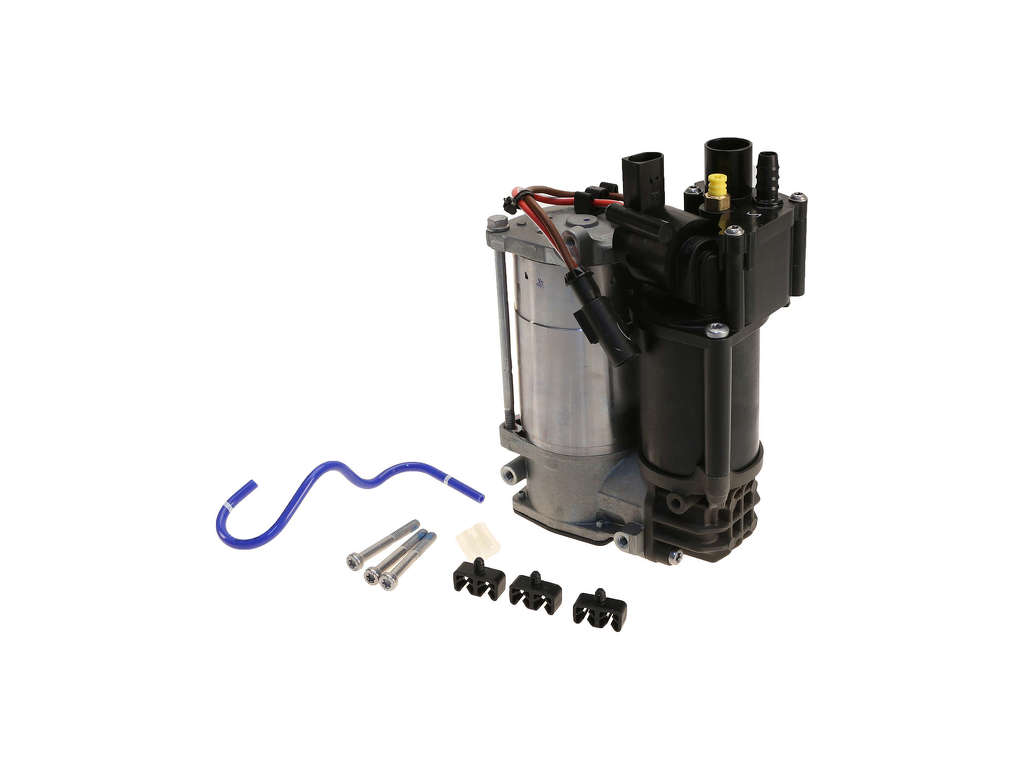
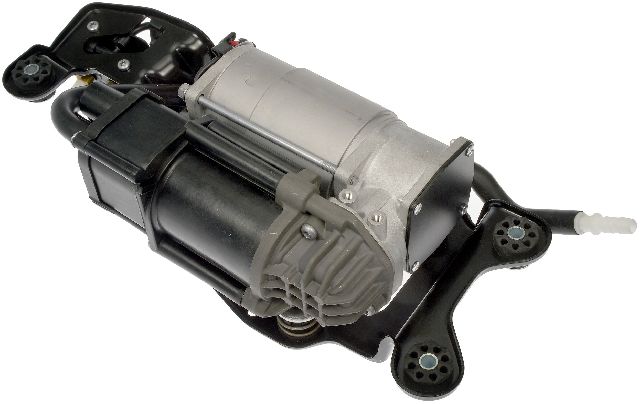
- Air Suspension Compressor
Related Codes That Often Appear With This One
- Fault codes related to ride height plausibility or control time.
- Codes indicating a short or open circuit in the compressor or valve block.
- In some cases, a generic P0420 code might appear if a diagnostic tool misinterprets the manufacturer-specific chassis fault.
Platform-Specific Known Issues
- Premature Air Spring Failure: Owners on Bimmerpost forums frequently report rear air spring failure on the F15 X5, often starting around the 4-6 year mark or 80,000 miles. The primary symptom is one or both rear corners sagging overnight, which corrects itself upon starting the car, accompanied by a 'Chassis function restricted' warning.
- Aftermarket Valve Block Port Mismatch: A user on Bimmerpost reported a persistent issue after replacing the compressor and valve block with an aftermarket unit. The issue was resolved by discovering the color-coded dots for the air line connections were reversed compared to the OEM part. The aftermarket valve had a red dot where the OEM part had a blue dot, requiring the air lines to be swapped to function correctly.
Mechanic-Grade Diagnostic Values
- Nominal Rear Ride Height Value (ISTA) — expected: Approximately 734mm. Failure: If the sensor shows a value significantly lower (e.g., 30mm low) and the EHC module does not command the compressor to correct it, it can indicate a faulty EHC module or a communication issue.
Hidden / Shadow Codes Worth Checking
- 480117: ICM: Carrying Out Ride Height Adjustment. This fault in the Integrated Chassis Management (ICM) module indicates the system has detected a problem that requires a ride height adjustment/calibration procedure to be performed. (see via Advanced scan tools like LAUNCH X431 or BMW's ISTA.)
Scan Tool Commands That Help
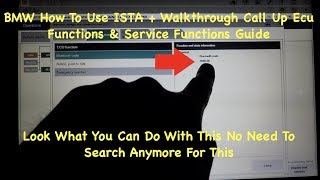
- ISTA: EHC: Component activation — To individually test components like the compressor and specific valve block solenoids to isolate a failure without replacing parts.
- ISTA / LAUNCH X431: Electronic Ride Height Control (EHC): Filling and Draining — This service function is critical after replacing components. It allows the technician to safely bleed all air from the bellows before removal and then properly fill the new components to the correct pressure and height after installation.
- ISTA: Ride Height Adjustment / Calibration — After replacing any suspension height-related component (air springs, sensors, EHC module), this function must be run to teach the system the new baseline height. Failure to do so will result in incorrect ride height and potential warning lights.
Wiring & Ground Locations
- EHC Control Module (A83a) — Located in the luggage compartment, on the right side, behind the trim panel.. This is the brain of the air suspension system. It receives data from the pressure sensor and ride height sensors and commands the compressor and valve block. A failure here, though rare, can cause the C1717 code.
- Compressor Relay and Fuse — In the rear fuse box, located in the right side of the luggage compartment. The relay is typically a large green 4-pin relay, and the fuse is a 40-amp fuse.. A blown fuse or faulty relay will cut power to the compressor, preventing it from building pressure and directly leading to a charging pressure fault. Corrosion on the relay contacts is also a possible failure point.
Real Owner Repair Stories
- Bimmerpost user @abdul642 (BMW F15 X5 (year not specified)) — After replacing leaking air bellows, one side of the car raised itself too high, while the other side was at the correct height. This happened after every drive cycle, despite resetting ride height levels with ISTA.
❌ Tried (didn't work) Replacing both rear air bellows with new Arnott units., Replacing the air compressor., Replacing both rear ride height sensors with new OEM parts., Replacing the EHC control module., Repeatedly bleeding and refilling the system using ISTA.
✅ What actually fixed it The aftermarket valve block that came with the new compressor had its color-coded ports reversed compared to the OEM part. The red air line needed to be connected to the port marked with a red dot, which was in a different position than the blue-dotted port on the original factory valve block. Swapping the air lines to match the color-coding on the new valve block resolved the issue instantly. - YouTube channel 'KahnBB6' (2014 BMW X5 (F15)) — 'Chassis Malfunction' error on iDrive. The car was unable to lower itself when commanded by ISTA, triggering a fault for taking too long to drop.
❌ Tried (didn't work) Replacing the rear air springs (this fixed a separate sagging issue but not the chassis error)., Changing the solenoid valve.
✅ What actually fixed it The desiccant filter canister inside the air compressor assembly was completely saturated with water and clogged. This allowed the compressor to force air into the bags but prevented the system from venting air out to lower the car. The fix was to disassemble the compressor, discard the old wet desiccant beads, and refill the canister with new 1-3mm desiccant beads, costing around $12 instead of a $2,350 dealer quote for a new compressor. - Bimmerpost user @nuggetman (BMW F15 X5 (year not specified)) — Rear suspension was 30mm too low. The old compressor was waterlogged and had blown the 40-amp fuse. After replacing the compressor, the system would not automatically correct the low ride height, even though the compressor could be activated manually via ISTA.
❌ Tried (didn't work) Replacing the compressor and fuse., Changing desiccant beads., Manually filling the system with ISTA (height would not hold automatically).
✅ What actually fixed it The EHC (Electronic Height Control) module itself was faulty. The final fix was replacing the EHC control module, flashing it with E-Sys, and then performing a ride height calibration with ISTA. After a power cycle, the system began functioning correctly.
"I Checked Everything" — The Actual Cause
- In humid climates, the compressor's desiccant (air dryer) beads can become saturated with water. This can create a blockage that prevents the system from venting air, leading to errors about the suspension being unable to lower. While not a pressure *building* issue, it's a fault within the same compressor/valve assembly that can be misdiagnosed if only leaks are considered. A technician found that disassembling the compressor and replacing the $12 desiccant beads fixed the issue, avoiding a $2,300+ compressor replacement.
When the Usual Fixes Don't Work
- While the C1717 code directly points to the 'Accumulator charging pressure sensor' located in the valve block, several confirmed fixes show that the root cause is not always the sensor itself. In one case, a user replaced nearly every component (bags, sensors, compressor, EHC module) to fix a height issue, only to find the air lines on an aftermarket valve block were swapped. In another case, a clogged desiccant filter inside the compressor prevented the system from venting, causing a different chassis error but originating from the same core component group. This shows that while C1717 flags a pressure sensor issue, the true mechanical or electrical failure may be upstream or downstream, requiring diagnosis beyond just testing the sensor's output.
OEM Part Supersession History
37206789450, 37206864215, 37206789165, 37206794465→37206875176— Component revision and consolidation by BMW. This part number is for the valve block assembly.
Heads up: The OEM supplier is WABCO, whose part number is 4722555610. This WABCO part is identical to the Genuine BMW part and is a reliable alternative. Be aware that some aftermarket valve blocks may have the color-coded air line ports in different positions than the OEM unit, requiring careful checking during installation.
Diagnostic Flowchart
Other Known Issues on This Vehicle
Issues unrelated to this code that are worth knowing about as an owner of this generation:
- N55 & N63 Engine Oil Leaks 🔴 High — Very common, especially after 60,000-80,000 miles. Leaks from the valve cover gasket and oil filter housing gasket are almost expected.
- xDrive Transfer Case Failure 🔴 High — Commonly occurs around 80,000-100,000 miles. Symptoms include shuddering or jerking during acceleration or low-speed turns. Often caused by fluid degradation or mismatched tire tread depth.
- N55 Electric Water Pump Failure 🔴 High — Can fail without warning, typically between 50,000 and 80,000 miles. Failure can lead to rapid engine overheating. It's recommended to replace the thermostat at the same time.
- N63 V8 Engine High Oil Consumption & Timing Chain Stretch 🔴 High — Particularly prevalent in early (pre-N63TU) engines. Issues include excessive oil consumption, timing chain stretch, and failures of valve stem seals, injectors, and turbos. (Ref: BMW issued a 'Customer Care Package' (CCP) for early N63 engines to address some of these issues.)
- N55 Charge Pipe Failure 🟠 Medium — The factory plastic charge pipe can become brittle and crack or break under boost, especially on tuned vehicles, causing a sudden loss of power.
- xDrive40e Hybrid Charging and Battery Faults 🟠 Medium — Owners report issues with the vehicle being unable to charge ('red ring of death') and faults related to the auxiliary 12V battery, which can prevent the high-voltage system from working correctly.
Used vs. New Parts: Buying Guide for This Vehicle
When a used part is the smart pick: A used OEM compressor assembly from a low-mileage, accident-damaged vehicle can be a cost-effective option, especially if your compressor failed due to being overworked by a leak that has since been fixed. A used EHC control module can also be viable, but it will require professional coding to your vehicle.
Donor-vehicle mileage cap: roughly under 60000 miles for the part to have meaningful remaining life.
What to inspect on the donor part:
- For a compressor, check for low mileage on the donor vehicle (under 60k miles is ideal).
- Visually inspect the unit for corrosion, especially around the valve block and electrical connectors.
- Ensure the donor vehicle was not from a flood-damaged area.
- If possible, confirm the donor vehicle did not have a long-standing air suspension leak, which would have overworked the compressor.
OEM-only on this vehicle (don't cheap out):
- While not strictly 'OEM-only', using a Genuine BMW or OEM-supplier (WABCO) valve block is highly recommended. Some aftermarket valve blocks have been reported to have reversed port coloring, leading to complex diagnostic issues.
Aftermarket brands forum-validated for this vehicle:
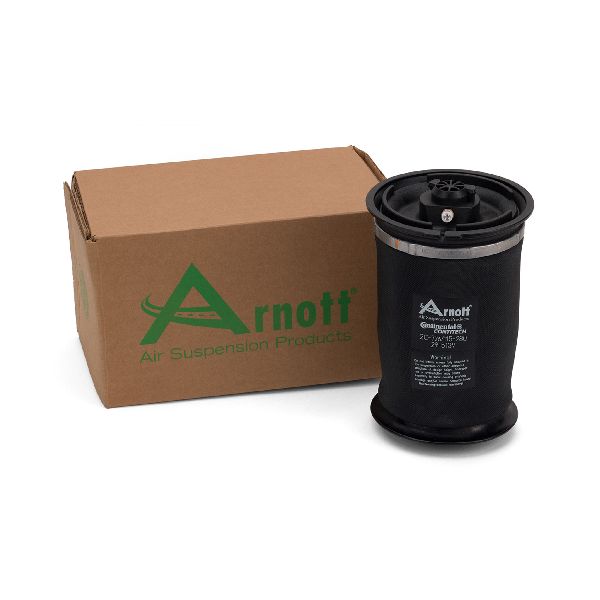
- Arnott is a widely recommended and trusted brand for replacement air springs (bellows). Forum users report ride quality is comparable to OEM, and they often come with a lifetime warranty.
- WABCO is the original equipment manufacturer for the valve block and likely the compressor. Buying a WABCO-branded part is equivalent to getting a Genuine BMW part without the dealership markup.
Brands owners have reported issues with on this vehicle:
- Unnamed, low-cost generic valve blocks and compressors from online marketplaces can be risky. While they may work initially, some have been documented with incorrect port markings that can make installation and diagnosis extremely difficult.
Real Owner Stories
Aggregated from forums and TSBs cited above. Mileages and costs reflect what owners reported in those sources.
2015 BMW X5 (F15) — ~80000 miles
Symptoms: One or both rear corners sagging overnight, which corrects itself upon starting the car, accompanied by a 'Chassis function restricted' warning.
What fixed it: Replacement of the rear air springs (bellows).
Source hint: Bimmerpost forum thread 'F15 air suspension issue' and 'Premature Air Spring Failure' section
2014-2018 BMW X5 (F15)
Symptoms: Persistent issue after replacing the compressor and valve block with an aftermarket unit where the system did not function correctly; one side raising too high.
What fixed it: Discovering the color-coded dots for the air line connections were reversed compared to the OEM part and swapping the air lines to the correct ports.
Source hint: Bimmerpost forum thread 'F15 air suspension issue' cited in 'Aftermarket Valve Block Port Mismatch'
Related OBD-II Codes
Frequently Asked Questions
My 2015 X5 is sagging on one side after sitting overnight, but the 'Chassis function restricted' message disappears after driving. Is this a common issue?
I replaced my compressor and valve block with aftermarket parts, but my suspension is still not working correctly. What could be wrong?
Can I just replace the one leaking air spring on my 2016 X5?
Is there a TSB or recall for the N63 engine in my X5 regarding oil consumption?
My X5 is shuddering during low-speed turns; is this related to the C1717 air suspension code?
How can I confirm if my air suspension valve block is the cause of the C1717 code?
Helpful Videos
We Have This Part in Stock


The information in this article is provided for general reference and educational purposes only. Vehicle specifications, procedures, and part compatibility can vary by production date, trim level, and region. Always consult your vehicle's factory service manual and verify part numbers before purchasing or performing repairs. Safety-critical components such as airbags, seat belts, and braking systems should be installed by a qualified professional.
- BMW X5:
- 🧭 Diagnostic Flowchart
- 🎬 Helpful Videos
- 🛍️ Shop This Part
- What's Unique About the 2014-2018 BMW X5
- Symptoms You May Notice
- Most Likely Causes
- Rare But Worth Checking
- Diagnosis Steps
- Parts You'll Likely Need
- Related Codes That Often Appear With This One
- Platform-Specific Known Issues
- Mechanic-Grade Diagnostic Values
- Hidden / Shadow Codes Worth Checking
- Scan Tool Commands That Help
- Wiring & Ground Locations
- Real Owner Repair Stories
- "I Checked Everything" — The Actual Cause
- When the Usual Fixes Don't Work
- OEM Part Supersession History
- Other Known Issues on This Vehicle
- Used vs. New Parts: Buying Guide for This Vehicle
- Real Owner Stories
- 2015 BMW X5 (F15) — ~80000 miles
- 2014-2018 BMW X5 (F15)
- Related OBD-II Codes
- Frequently Asked Questions
- 🎟️ Get 5% Off