

OBD-II Code C1741: Suspension System Fault
What C1741 means, why it triggers, and how to fix it
- Verify the C1741 definition for your specific vehicle, as it indicates an air suspension fault on Fords and Toyotas, but points to stability control on Subarus or airbags on VWs.
- Treat C1741 as an electrical code with a mechanical root cause; a leaking air spring forces the compressor to overwork, ultimately burning out the $50 suspension relay.
- Expect repair costs to range from $65 for a simple Toyota relay replacement to over $1,500 per corner for a Range Rover air strut assembly.
- Use a multimeter to test circuit resistance (aiming for <1.0 Ω continuity) and a bi-directional scanner to actively command the suspension relay before replacing any parts.
What Does C1741 Mean?
Code C1741 indicates a control module detected a fault within a chassis-related system. While it most commonly points to an electrical issue in the air suspension system—specifically the front right air spring solenoid circuit or main air suspension relay—its meaning varies by manufacturer. On some makes, this code refers to the Vehicle Dynamics Control (VDC), Electronic Stability Control (ESC), or airbag system. Verify the code's definition for your specific vehicle before diagnosing.
Technical definition: The SAE/OBD-II definition for C1741 varies by manufacturer. For Toyota and Lexus, it is defined as "Front Height Control Solenoid Valve RH Circuit Malfunction" or "AIR SUS Relay Circuit Malfunction," indicating an open or short circuit. For Hyundai or Subaru, it points to a stability control system fault, while on some Volkswagen models, it indicates a side airbag sensor failure.
Can I Drive With C1741?
Yes, But With Caution. Yes, but only for short distances at low speeds to reach a repair shop. Driving with a failed suspension severely compromises vehicle handling, stability, and braking. Ignoring the issue causes costly secondary damage, including a burnt-out air compressor ($500-$1,500) and premature tire wear ($200-$500 per tire).
Common Causes
- Corroded or damaged wiring harness (Very Common) — Suspension wiring is exposed to moisture, road salt, and debris. This exposure causes corrosion, chafing, or breaks, creating a short or open circuit that triggers the code.
- Failed or sticking air suspension relay (Common) — The main relay powering the air suspension compressor fails from age or overwork caused by a system leak. The internal contacts burn out or stick closed, prompting the module to log a circuit fault.
- Leaking air spring (air bag) (Common) — A leaking air spring forces the compressor and relay to run constantly. This excessive cycling overheats and destroys the relay or compressor motor, triggering the C1741 electrical code.
- Faulty front right air spring solenoid (Common) — The solenoid is an electro-mechanical valve controlling airflow to the air spring. An internal short or open circuit within the solenoid coil triggers this code.
- Faulty Height Control or Acceleration Sensor (Less Common) — Vehicles use vertical acceleration or height sensors to monitor suspension position. A sensor failure triggers a generic chassis stabilization warning and logs C1741, even if the solenoid functions properly.
- Internal ABS/VDC/ESC Module Failure (Rare) — On Subaru or Hyundai, C1741 points to the Vehicle Dynamics Control (VDC) or Electronic Stability Control (ESC) system. An internal failure of this separate module sets the code.
- Defective Suspension Control Module (ECU) (Rare) — The control module is the computer brain of the system. An internal hardware failure causes it to incorrectly report a circuit fault. Consider this only after ruling out all other possibilities.
Symptoms
- Air Suspension warning light is on — A "Check Air Suspension," "Suspension Fault," or "Stop, car too low" warning message illuminates on the dashboard.
- Vehicle is sagging or sitting low — The front right corner, or the entire vehicle, sits noticeably lower than normal and fails to raise when the car starts.
- Air compressor does not run or runs constantly — The air suspension compressor is completely silent when starting the car, or it runs continuously, indicating a severe leak.
- Harsh, bouncy, or noisy ride — A deflated air spring eliminates the suspension's ability to absorb bumps, resulting in a stiff, uncomfortable, and noisy ride.
- ABS, VDC/ESC, or Airbag Light is on — On Subaru, Hyundai, or VW, this code triggers a warning light for the ABS, Vehicle Dynamics Control (VDC), or airbag system.
Diagnostic Flowchart
Tap your situation to follow the diagnostic path that matches what you're seeing on this code.
Common Fixes & Costs
- Replace Air Suspension Relay — Parts: $15-$50, Labor: $50-$125, ~0.5 hr book time (DIY)
- Replace Front Air Spring/Strut Assembly — Parts: $250-$800, Labor: $300-$700, ~2.5 hr book time (Intermediate)
- Repair Damaged Wiring or Connector — Parts: $10-$50, Labor: $150-$400, ~2 hr book time (Intermediate)
- Install Air Suspension to Coil Spring Conversion Kit — Parts: $500-$1,500, Labor: $1,000-$2,500, ~5 hr book time (Professional)
- Replace Air Suspension Control Module — Parts: $200-$800, Labor: $300-$1,000, ~1.5 hr book time (Professional)
Used vs. New Parts: Buying Guide
When a used part is worth it: For a high-mileage vehicle (>150k miles) where the budget is extremely tight and the owner accepts the risk of a much shorter part lifespan.
Donor-vehicle mileage cap: roughly under 80000 miles for the part to have meaningful remaining life.
Donor quality checklist:
- Verify the donor vehicle was not scrapped due to a major collision.
- Avoid parts from regions with heavy road salt use.
- Match the part number exactly. Internal valving differs even if parts look identical.
- Inspect the rubber air spring for cracking, dry rot, or abrasion. Inspect the shock body for oil leaks.
Decision logic:
- If Vehicle is < 80K miles OR you plan to keep it long-term → Buy new (OEM or quality aftermarket like Arnott). The cost is higher, but reliability and warranty provide peace of mind.
- If Vehicle is > 150K miles AND budget is the primary concern → A used part from a low-mileage donor is a viable short-term option, but expect 30-60% of the life of a new part.
- If The part is a remanufactured unit from a reputable supplier → This is a good middle ground, providing a new air spring on a used-but-inspected strut body with a limited warranty.
Warranty tradeoff: Used parts from a salvage yard typically have a 30-90 day warranty covering only the part. New aftermarket parts offer a 1-year to limited lifetime warranty.
Worst-case if a used part fails: $500-$1500 if a used part fails after install, including repeat labor and a replacement part.
What Happens If You Wait — Timeline
- 0-1 month: A slow leak develops in an air spring. The vehicle sags slightly after being parked. The compressor runs longer than usual to compensate. C1741 appears intermittently. (MPG impact: 0-1%% · Added cost: $0)
- 1-3 months: The leak worsens. The vehicle sags noticeably overnight. The compressor runs for 30-60 seconds after every startup. The C1741 code permanently sets due to high current draw. (MPG impact: 1-2%% · Added cost: $50-$100 in accelerated relay wear)
- 3-6 months: The air suspension relay burns out from overheating. The compressor stops turning on. The vehicle is stuck in a low position, resulting in unsafe handling and uneven tire wear. (MPG impact: 3-5%% · Added cost: $600-$1,700 (Cost of a new compressor and relay))
- 6+ months: Continued driving on the bump stops destroys the tires and damages ball joints or control arms. The repair cost now includes the leak, compressor, relay, tires, and secondary suspension damage. (MPG impact: 5-10%+% · Added cost: $1,500-$4,000+)
Cost of Not Fixing It
- 0-1 month: A persistent air leak causes the compressor to run excessively, increasing wear and noise. Ride quality is poor and vehicle handling is compromised. (Added cost: Negligible, but the primary failure worsens.)
- 1-6 months: The overworked air compressor burns out. The vehicle gets stuck in a low position, making it unsafe to drive. Incorrect ride height causes accelerated and uneven tire wear. (Added cost: $800-$2,500 (New compressor: $500-$1500; New set of tires: $400-$1000+).)
- 6+ months: Continued driving on a failed suspension puts severe stress on ball joints, control arms, and wheel bearings. On AWD vehicles, uneven tire wear strains the drivetrain. (Added cost: $2,000-$5,000+ (Includes compressor, tires, and secondary suspension or drivetrain damage).)
Diagnosis Steps
- Scan for All DTCs and Verify Code Definition
Use a professional-grade OBD-II scanner to read chassis ('C') codes. Record all present codes and verify the specific definition of C1741 for your vehicle's make, model, and year.
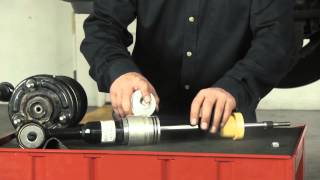
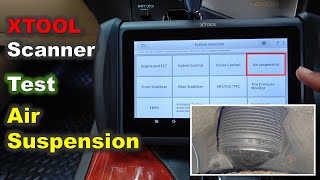
Tools: Advanced OBD-II Scanner 🎬 Watch: How to test air suspension struts with a scanner (Beginner) - [PRO TIP] Active Test with a Bi-Directional Scanner
Enter the Suspension Control Module and select 'Active Test'. Command the air suspension relay and front right solenoid on and off. A distinct 'click' confirms the electrical circuit works, pointing to a mechanical failure (like a stuck valve). No click confirms an electrical fault.
Tools: Bi-directional OBD-II Scanner (Advanced) - Inspect Fuses and Relays
Check fuse boxes for fuses labeled 'Air Suspension' or 'ESC'. Pull the air suspension relay and inspect for burning or corrosion. Swap it with an identical relay (e.g., the horn relay) to quickly test if the original relay failed.
Tools: Owner's manual, fuse puller or pliers (Beginner) - Visually Inspect Wiring and Components
Inspect the wiring routed to the front right air spring solenoid, compressor, and height sensors. Look for breaks, chafing, or green/white corrosion on connectors, especially where the harness bends.
Tools: Flashlight, safety glasses, inspection mirror (Beginner) - Test the Air Suspension Relay Circuit
Using a multimeter, check for 12V power on the supply side of the relay socket (typically pin 1 or 3). Check for voltage on the control side of the socket when the system is commanded on to verify the module is activating the relay.
Tools: Multimeter, service manual with wiring diagrams (Intermediate) - Test the Solenoid Power and Ground Circuit
Disconnect the harness at the front right air spring solenoid. Use a multimeter to verify battery voltage and a solid ground at the connector pins when the system is active.
Tools: Multimeter, service manual (Intermediate) - Test the Solenoid Itself
Measure the resistance across the two pins of the air spring solenoid. Compare this to the repair manual specification (typically 10-14 Ω). A reading of 'OL' indicates an open circuit, while near 0 Ω indicates a short.
Tools: Multimeter, service manual (Intermediate) - [PRO TIP] Advanced Circuit Resistance Checks
Disconnect the battery, control module, and component. Measure resistance of the power wire from the module connector to the component connector (aim for <1.0 Ω). Measure resistance from each wire to a known good chassis ground (aim for 'OL' or >10 kΩ).
Tools: Multimeter, service manual with pinout diagrams (Advanced) - [PRO TIP] Perform a Parasitic Draw Test
If a short is suspected, connect a multimeter in series with the negative battery cable with the vehicle off. A draw over 85mA indicates a problem. Pull suspension fuses one-by-one; a significant amperage drop identifies the shorted circuit.
Tools: Multimeter with 10A capability, fuse puller (Advanced)
When This Code Triggers (Freeze-Frame Conditions)
- Battery Voltage: 12.5-14.5V (Normal operating voltage. The fault logs during startup or while driving.)
- Vehicle Speed: 0-70 mph (The check runs when the vehicle is stationary or at any speed.)
- Ignition Status: ON (The suspension control module is powered on and running self-diagnostics.)
- Suspension Command Status: Active/Inactive (The code sets when the module commands the relay/solenoid and detects an electrical mismatch (e.g., commands it ON but detects an open circuit).)
Related Codes
- C1742 — Indicates a 'Front Height Control Solenoid Valve LH Circuit Malfunction'. If both C1741 and C1742 are present, the problem is a shared component like the main air suspension relay or control module.
- C1751 — On Toyota/Lexus AHC systems, this 'Compressor Relay Circuit' code often accompanies C1741. It indicates the compressor ran too long, strongly suggesting a major air leak.
- C1774 — Indicates a 'Power Source Voltage Malfunction' for the suspension ECU. Diagnose C1774 first, as a power supply fault causes the module to set false circuit codes like C1741.
- C1761 — Points to an internal malfunction within the suspension control ECU. Seeing this alongside C1741 significantly increases the likelihood that the ECU hardware is failing.
Climate & Environmental Factors
- Cold Weather & Road Salt: Road salt creates a highly corrosive brine that attacks wiring harnesses and metal suspension components, causing open/short circuits. Cold temperatures make rubber air springs brittle, increasing the likelihood of cracks and leaks.
- High Humidity: Moisture gets trapped inside the air suspension system if the dryer component fails. This moisture corrodes solenoids and valves from the inside out and degrades compressor performance.
- High Heat: The air suspension compressor works harder to generate pressure in hot climates. This increases the risk of overheating and shortens the life of the compressor and its relay.
How to Talk to a Mechanic About This Code
Say this: "I have a C1741 code on my [Make/Model]. If it's a Subaru, please check for TSB 06-56-16R. If it's a Ford/Lincoln with air suspension, I'm seeing sagging and the compressor runs constantly, so please check for an air leak before replacing electrical parts. For my Toyota/Lexus, please test the AIR SUS relay circuit first."
This shows you've done your research and directs the technician to the most likely cause for your specific vehicle, preventing a generic, time-consuming diagnosis and unnecessary parts replacement.
Avoid saying:
- 'My suspension light is on, can you fix it?'
- 'Just replace the sensor.'
- 'Do whatever it takes to fix it.'
Questions to ask before authorizing the repair:
- Can you explain what this code means for my specific car?
- If you recommend a new air spring, did you confirm the old one leaks with a soapy water test?
- If you recommend a new compressor or relay, have you confirmed there are no air leaks?
- Can you show me the damaged part after it's removed?
- What is the warranty on the parts and labor for this specific repair?
Where to Take It: Dealer vs Independent vs Chain
- Dealer:
Best for: Vehicles under warranty., Manufacturer-specific software updates (like the Subaru VDC issue)., Complex electronic issues on German luxury brands.
Downsides: Significantly higher labor rates and parts costs., May recommend replacing an entire assembly when only a smaller component failed. (Typical cost: +50% vs. baseline) - Independent Shop:
Best fit for most C1741 scenarios, especially on common vehicles where the root cause is a well-known mechanical failure.
Best for: Out-of-warranty vehicles, especially common ones like Ford/Lincoln and Toyota/Lexus., Diagnosing and repairing common mechanical failures like air spring leaks., Offering cost-effective repair options, like aftermarket parts or coil conversion kits.
Downsides: Quality varies, so check for ASE certifications and good reviews., May lack the latest manufacturer-specific diagnostic software for very new models. (Typical cost: +0% vs. baseline) - Chain Shop:
AVOID for C1741 diagnosis. This code requires specialized knowledge typically beyond the scope of a chain shop.
Best for: Simple, unrelated services like tire replacement or oil changes.
Downsides: Technicians often lack specialized experience for complex air suspension diagnostics., High pressure to upsell services leads to misdiagnosis. (Typical cost: -10% vs. baseline)
When to Walk Away From the Repair
If the total estimated repair cost for the suspension system exceeds 50% of your car's current private-party value, seriously consider selling or trading it in.
- Car worth $5000, fix is $2800: Walk away. The repair cost is over 50% of the car's value. The risk of other age-related failures is high.
- Car worth $15000, fix is $1500: Fix it. The repair cost is only 10% of the vehicle's value and is a worthwhile investment to maintain safety.
- Car worth $3000, fix is $1800: Walk away. The repair cost is 60% of the car's value. It is not economically sensible to proceed.
What Scan Tool You Need for This Code
Minimum: A scanner that reads and clears Chassis (C-codes) and views live data from the suspension module. A basic engine-only code reader will NOT work.
A standard $20 engine code reader cannot communicate with the Suspension Control Module or ABS/VDC module. It shows 'no codes' even when the suspension warning light is on.
Budget: BlueDriver Pro (~$100) — Reads and clears chassis codes like C1741, views live data from suspension height sensors, and provides repair reports.
Mid-range: Foxwell NT510 Elite / NT809BT (~$180) — Offers bi-directional control to actively test components. You can command the air compressor relay and individual solenoids on and off.
Professional: Autel MaxiCOM MK808BT / MK900BT (~$500-800) — Provides full OE-level diagnostics, including bi-directional control, ride height calibration, and access to manufacturer-specific data.
Rent vs buy: Buying a capable scanner like the BlueDriver is a better investment for DIY diagnosis, as it saves you hundreds on a single diagnostic fee.
How to Clear the Code After You Fix It
- Ensure all mechanical and electrical repairs are complete.
- Reconnect the battery if it was disconnected.
- Use an OBD-II scan tool capable of accessing the Chassis Control Module to clear the C1741 fault code.
- Start the vehicle and allow the air suspension system to cycle and self-level.
- Perform a drive cycle to confirm the fault does not return.
Drive cycle (~20 minutes): Cold start the vehicle and idle for 2-3 minutes while the compressor runs. Drive for 15-20 minutes in mixed conditions to allow the suspension to adjust to different loads. Park, turn off, and restart to ensure the warning light remains off.
Readiness monitors affected: None directly, Comprehensive Component Monitor (CCM)
Before emissions retest: drive at least 50 miles to fully set monitors.
Watch out for:
- Using a basic engine code reader that cannot communicate with the suspension module to clear the code.
- Disconnecting the battery fails to clear the code from the module's memory.
- The code returns immediately if the underlying mechanical or electrical fault remains unfixed.
Will This Fail Emissions / State Inspection?
Yes — this code typically fails an OBD-II emissions inspection.
- California: While C1741 is a chassis code, clearing it resets OBD-II readiness monitors. A vehicle cannot pass the smog check until monitors are set, requiring 50-100 miles of driving.
- New York: The NYS inspection checks for illuminated malfunction indicator lights. An active air suspension warning light results in an inspection failure.
- Texas: A visible and severe suspension defect (like a sagging corner) fails a safety inspection, even if the warning light itself does not trigger an emissions failure.
Most Commonly Affected Vehicles
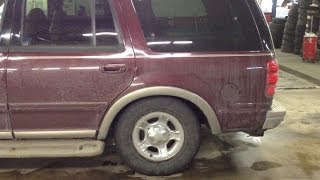
- Lincoln Navigator (2003-2006) — Highly prone to failure. Dry-rotted rubber air springs leak, overworking the compressor and relay, triggering C1741. TSB 06-15-10 addresses height sensor linkage failures.
- Ford Expedition (2003-2006) — Shares the Navigator platform. Equally prone to C1741 from leaking air springs and failed relays. A full strut replacement costs over $1,500 per axle.
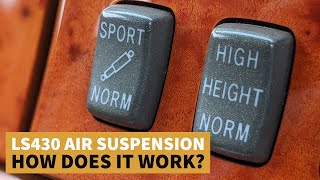
- Lexus LS430, GX470 (2001-2009) — C1741 specifically points to a malfunction in the air suspension relay circuit or front height control solenoid. Diagnosis involves verifying resistance values (10-14 Ω for the solenoid).
- Toyota Land Cruiser, 4Runner (2003-2009) — Equipped with Active Height Control (AHC). Logs C1741 for a fault in the AHC motor relay circuit. Often seen with C1751 if a severe leak prevents reaching target height.
- Land Rover Range Rover (L322) (2003-2012) — Air suspension faults are extremely common. Issues include failing Hitachi compressors and leaking valve blocks. A single air spring replacement costs over $1,100.
- Hyundai Kona, Optima (Kia) (2019-2022) — C1741 is an Electronic Stability Control (ESC) code. TSB 22-01-018H notes this code appears secondarily to an engine airflow sensor fault, resolved with an ECM software update.
- Volkswagen Tiguan, various (2015-2017) — The equivalent fault code (01741) is for the airbag system, specifically 'Side Airbag Crash Sensor; Front Passenger Side'. Requires a unique diagnostic approach.
- Subaru Legacy, Outback, WRX (2015-2018) — C1741 relates to the Vehicle Dynamics Control (VDC) system. TSB 06-56-16R addresses this code being falsely triggered by resting a foot on the brake pedal. Fixed via software update.
Manufacturer-Specific Notes
- Toyota/Lexus: Diagnostic procedures focus heavily on testing the 'AIR SUS Relay Circuit'. Repair manuals provide explicit resistance values (e.g., <1.0 Ω for wire continuity, >10 kΩ for short to ground).
- Ford/Lincoln: While C1741 is an electrical code, the root cause is almost always a mechanical failure: a leaking rubber air spring. The leak burns out the compressor and relay, triggering the circuit code.
- Subaru: C1741 indicates a fault in the Vehicle Dynamics Control (VDC) system. TSB 06-56-16R fixes a software glitch where resting a foot on the brake pedal falsely triggers the code.
- Hyundai/Kia: C1741 is an Electronic Stability Control (ESC) code. TSB 22-01-018H indicates this is a secondary code caused by an engine management fault, fixed with an ECM software update.
- Volkswagen/Audi: Code 01741 points to a fault with the 'Side Airbag Crash Sensor; Front Passenger Side'. This requires diagnosing components under the seat or in the door pillar.
Real Owner Stories
2005 Lincoln Navigator at 130K miles
Owner noticed the "Check Suspension" light was on and the front of the vehicle sagged overnight. The compressor ran constantly.
What they tried:
- Ignored the problem, hoping it was cold weather related.
- Received a $1,500 quote from a local shop to replace front air struts.
- Researched online and found leaking front air springs were a common issue.
Outcome: The owner replaced both front air spring assemblies with aftermarket Arnott parts for $600. The C1741 code cleared, and vehicle height was restored.
Lesson: On Ford/Lincoln SUVs, a sagging front end and constantly running compressor point to leaking air springs. The C1741 electrical code is a symptom of the compressor and relay being overworked by the leak.
2016 Subaru Outback at 75K miles
The ABS, Vehicle Dynamics Control (VDC), and Hill Holder warning lights illuminated simultaneously. A parts store scan revealed code C1741.
What they tried:
- Owner was confused because the vehicle lacks air suspension.
- Online research pointed to Technical Service Bulletin (TSB) 06-56-16R.
- Took the vehicle to a Subaru dealership.
Outcome: The dealership confirmed a software glitch in the VDC control module falsely triggered the code when the driver rested their foot on the brake pedal. A $150 software update resolved the issue.
Lesson: Never assume C1741 means an air suspension problem. On Subarus, it indicates a known software issue with the VDC system. Always verify the code's meaning for your specific vehicle.
2004 Lexus LS430 at 110K miles
The air suspension warning light came on with code C1741. Ride height was normal, the compressor was quiet, and there were no obvious leaks.
What they tried:
- Used a bi-directional scanner to perform an active test on the air suspension relay but heard no 'click'.
- Swapped the AIR SUS relay with the identical horn relay.
- The horn worked, confirming the original relay failed.
Outcome: The owner purchased a new OEM relay (part #90987-02025) for $40. The C1741 code cleared and did not return.
Lesson: For Toyota/Lexus vehicles, C1741 often points directly to the relay circuit. A relay swap is a quick, no-cost diagnostic step before suspecting expensive components.
How to Prevent This Code From Triggering
- Perform regular visual inspections of air springs and lines (Every 6 months or during tire rotation) — Look for cracks, chafing, or signs of rubbing on the rubber air springs. Catching physical damage early prevents catastrophic leaks that destroy the compressor.
- Clean and protect electrical connectors (Once per year, especially in rust-belt regions) — Clean suspension sensor and solenoid connectors with electronics cleaner and apply dielectric grease. This creates a moisture-proof barrier, preventing corrosion.
- Periodically drain the air tank (Every 3-6 months, more often in humid climates) — Draining the tank removes condensation that travels through the system, corroding solenoids and valves from the inside out.
- Test for and fix small leaks immediately (Anytime you suspect a problem) — A small leak forces the compressor to run more often, leading to premature wear and burnout. Fixing a small leak is cheap; replacing a burned-out compressor is not.
Frequently Asked Questions
What are the most common misdiagnosis mistakes for C1741?
The biggest mistake is assuming the code's definition is the same for all cars. The second error is replacing a relay or compressor without fixing the underlying air leak that caused it to fail. Finally, failing to check for other codes first is a major pitfall; codes like C1774 (power supply) or C1761 (ECU fault) are the true root cause.
How long does an air suspension system typically last?
Rubber air springs typically last 8-10 years or 80,000-100,000 miles before dry rot and cracks form. However, a small, unrepaired leak causes the compressor and relays to fail much sooner due to overwork. Lifespan is significantly shorter in regions that use road salt.
Is it expensive to fix an air suspension fault?
Yes, repairs are often costly. A simple relay costs under $100, but a single air strut replacement ranges from $600 on a Ford to over $1,500 on a Range Rover. A complete system overhaul costs several thousand dollars, driving many owners to install affordable coil spring conversion kits.
What happens if I keep driving with a suspension fault?
Continued driving is unsafe and guarantees more damage. The vehicle handles poorly in emergencies, and the constant stress from a leak burns out the air compressor. The incorrect ride height also causes severe, uneven tire wear and damages other suspension components.
Can I replace just the air spring solenoid?
On some older vehicles, the solenoid is replaceable separately from the air spring. However, on most modern vehicles, the solenoid is integrated into the air strut assembly, requiring you to replace the entire unit.
Why did the code come back after I replaced the relay?
If the C1741 code returns after replacing the relay, the relay was a symptom rather than the root cause. A persistent air leak is likely overworking and burning out the new relay, or a wiring short is causing a continuous high-current draw.
How do I reset the air suspension light after a repair?
After fixing the underlying issue, clear the C1741 code from the suspension control module using an advanced OBD-II scanner. A basic engine code reader cannot communicate with the suspension module to clear chassis faults.
Key Takeaways
- Verify the C1741 definition for your specific vehicle, as it indicates an air suspension fault on Fords and Toyotas, but points to stability control on Subarus or airbags on VWs.
- Treat C1741 as an electrical code with a mechanical root cause; a leaking air spring forces the compressor to overwork, ultimately burning out the $50 suspension relay.
- Expect repair costs to range from $65 for a simple Toyota relay replacement to over $1,500 per corner for a Range Rover air strut assembly.
- Use a multimeter to test circuit resistance (aiming for <1.0 Ω continuity) and a bi-directional scanner to actively command the suspension relay before replacing any parts.
Helpful Videos

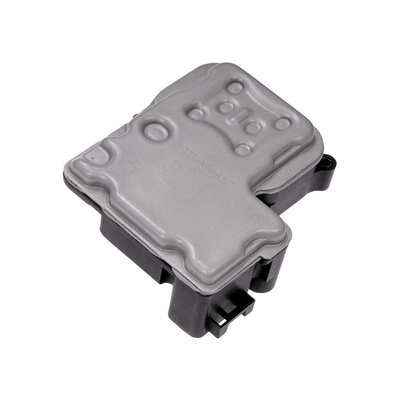
Shop the Parts Behind C1741
Below are the parts most often responsible for code C1741, ranked by how frequently each one is the actual culprit (per the diagnosis above). Tap any to see what we have for your vehicle.





The information in this article is provided for general reference and educational purposes only. Vehicle specifications, procedures, and part compatibility can vary by production date, trim level, and region. Always consult your vehicle's factory service manual and verify part numbers before purchasing or performing repairs. Safety-critical components such as airbags, seat belts, and braking systems should be installed by a qualified professional.
- 🧭 Diagnostic Flowchart
- 🎬 Helpful Videos
- 🛍️ Shop This Part
- What Does C1741 Mean?
- Can I Drive With C1741?
- Common Causes
- Symptoms
- Common Fixes & Costs
- Used vs. New Parts: Buying Guide
- What Happens If You Wait — Timeline
- Cost of Not Fixing It
- Diagnosis Steps
- When This Code Triggers (Freeze-Frame Conditions)
- Related Codes
- Climate & Environmental Factors
- How to Talk to a Mechanic About This Code
- Where to Take It: Dealer vs Independent vs Chain
- When to Walk Away From the Repair
- What Scan Tool You Need for This Code
- How to Clear the Code After You Fix It
- Will This Fail Emissions / State Inspection?
- Most Commonly Affected Vehicles
- Manufacturer-Specific Notes
- Real Owner Stories
- 2005 Lincoln Navigator at 130K miles
- 2016 Subaru Outback at 75K miles
- 2004 Lexus LS430 at 110K miles
- How to Prevent This Code From Triggering
- Frequently Asked Questions
- What are the most common misdiagnosis mistakes for C1741?
- How long does an air suspension system typically last?
- Is it expensive to fix an air suspension fault?
- What happens if I keep driving with a suspension fault?
- Can I replace just the air spring solenoid?
- Why did the code come back after I replaced the relay?
- How do I reset the air suspension light after a repair?
- Key Takeaways
- 🎟️ Get 5% Off