

OBD-II Code C1743: Air Suspension Solenoid Fault
What C1743 means, why it triggers, and how to fix it
- C1743 indicates an electrical failure in the right rear air suspension solenoid or its wiring, most common on Toyota, Lexus, Ford, and GM SUVs.
- On 2016+ Hyundai and Kia vehicles, C1743 is a software mismatch in the blind spot monitoring system, requiring a dealer-level variant coding procedure.
- Before replacing parts, test the solenoid's resistance with a multimeter; a healthy Toyota/Lexus solenoid measures 10-14 Ohms at 68°F.
- Driving with a collapsed suspension overworks the air compressor, often turning a $300 solenoid repair into a $1,200+ cascading failure within weeks.
What Does C1743 Mean?
C1743 means the Suspension Control Module detects an electrical fault in the right rear air suspension height control solenoid valve. This valve inflates and deflates the air spring. When it fails, the computer loses control of that corner's ride height.
Technical definition: The official definition is "Rear Height Control Solenoid Valve RH Circuit Malfunction". The suspension control module logs this fault when it detects an open circuit for more than one second while the solenoid is off, or a repeated short circuit when commanded on.
Can I Drive With C1743?
Yes, But With Caution. You can drive short distances, but a collapsed suspension severely compromises handling, braking, and stability. Continuing to drive overworks the air compressor, often causing a $250-$800+ secondary failure and destroying the tire on the affected corner.
Common Causes
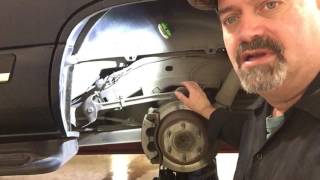
- Failed Height Control Solenoid Valve (Very Common) — The electromagnetic valve wears out, sticks internally, or fails electronically. This is the most frequent cause of the code. 🎬 Watch: Step-by-step guide to replacing Toyota and Lexus air springs.
- Corroded Wiring or Connectors (Common) — Exposed to moisture and road salt, the electrical connector pins corrode or wires break, creating an open or short circuit.
- Stuck or Failed Height Sensor (Common) — If the right rear sensor fails, the ECU does not know the corner is low and will not command the solenoid to open. This is frequently misdiagnosed as a bad solenoid.
- Air Leak in the Suspension System (Common) — A leaking air spring forces the compressor and solenoids to run continuously, eventually overheating and destroying the solenoid valve.
- Burnt Out Air Suspension Compressor (Less Common) — A persistent leak or stuck solenoid forces the compressor to run until it burns out. This occurs alongside solenoid issues and prevents the system from pressurizing.
- Defective AHC Main Relay (Toyota/Lexus) (Rare) — A failed main relay disrupts power to the suspension ECU, triggering multiple codes including C1743.
- Clogged Air Lines (Rare) — Degraded desiccant from the air dryer clogs the solenoid's internal passages, blocking airflow even if the electrical circuit works.
- Faulty Suspension Control Module (ECU) (Rare) — The internal driver circuit that signals the solenoid fails, mimicking a wiring problem.
Symptoms
- Vehicle Sagging or Sitting Low — The right rear corner sits noticeably lower than the others, especially after parking overnight.
- Harsh, Bouncy, or Unstable Ride — A deflated air spring provides zero cushioning, transmitting every road bump directly into the cabin and making the vehicle feel unstable.
- Compressor Runs Constantly or Not at All — The compressor runs continuously to compensate for a leak, or shuts off entirely if the ECU disables the system to prevent damage. 🎬 See how to troubleshoot and repair GM AutoRide suspension systems.
- Air Suspension Warning Light is On — The dashboard displays an air suspension warning light, which flashes or stays illuminated.
- Abnormal Suspension Noises — Hissing sounds indicate a leaking air spring, while loud clunking points to an un-cushioned suspension bottoming out.
Diagnostic Flowchart
Tap your situation to follow the diagnostic path that matches what you're seeing on this code.
Common Fixes & Costs
- Replace the Height Control Solenoid Valve — Parts: $75-$350, Labor: $150-$300, ~1.5 hr book time (Intermediate)
- Repair Damaged Wiring or Connector — Parts: $10-$50, Labor: $100-$250, ~1.8 hr book time (Intermediate)
- Replace Air Spring Assembly — Parts: $150-$800, Labor: $200-$400, ~2.0 hr book time (Intermediate)
- Replace Air Suspension Compressor — Parts: $250-$800, Labor: $150-$400, ~1.8 hr book time (Professional)
- Perform Variant Coding (Hyundai/Kia) — Parts: $0, Labor: $100-$200, ~1.0 hr book time (Professional)
Used vs. New Parts: Buying Guide
When a used part is worth it: A used OEM solenoid from a low-mileage vehicle (under 80,000 miles) is a cost-effective alternative for older vehicles. Avoid used parts from rust-belt regions due to corrosion risk.
Donor-vehicle mileage cap: roughly under 80000 miles for the part to have meaningful remaining life.
Donor quality checklist:
- Verify the donor vehicle was not scrapped due to a major suspension-impacting collision.
- Inspect the electrical connector for corrosion or brittle plastic.
- Match the part number exactly; solenoids have internal differences despite identical exteriors.
Decision logic:
- If The vehicle is newer or has low mileage (<80k) → Buy a new OEM or high-quality aftermarket part (e.g., Arnott, Dorman) for longevity and warranty.
- If The vehicle is older (>150k miles) and the budget is tight → Buy a used OEM solenoid, accepting the limited remaining lifespan and lack of warranty.
- If The part is a complete air spring/strut assembly → Buy new. Used air springs are high risk because the rubber bladder degrades with age, guaranteeing future leaks.
Warranty tradeoff: Used parts offer a 30-90 day warranty covering only the part. New aftermarket parts include 1-year to lifetime warranties. New OEM parts carry a 1-2 year warranty.
Worst-case if a used part fails: 200-400
What Happens If You Wait — Timeline
- 0-2 weeks: Code C1743 sets. The right rear corner sags intermittently but re-inflates on startup. Ride quality is harsh. (MPG impact: 0-1%% · Added cost: 0)
- 2 weeks - 3 months: The corner sags consistently. The compressor runs frequently to compensate, causing significant wear. The ride is unstable. (MPG impact: 1-2%% · Added cost: 50-100)
- 3-6 months: The air compressor burns out. The vehicle no longer lifts, and the suspension sits on the bump stops. (MPG impact: 2-4%% · Added cost: 400-1200)
- 6+ months: Severe impacts destroy the wheel bearing, ball joints, and control arm bushings. The tire on the collapsed corner is ruined. (MPG impact: 3-5%% · Added cost: 800-2500)
Cost of Not Fixing It
- 0-1 month: The vehicle suffers a harsh, unstable ride and reduced ground clearance. The air compressor runs excessively to compensate, accelerating wear on internal seals. (Added cost: 0)
- 1-6 months: The air suspension compressor burns out from continuous operation. Uneven tire wear destroys the tire on the affected corner. (Added cost: 400-1200)
- 6+ months: Sustained driving on a collapsed corner destroys the wheel bearing, ball joints, and control arm bushings due to severe impact harshness. (Added cost: 800-2500)
Diagnosis Steps
- Read the Trouble Codes
Connect an OBD-II scanner with ABS/Chassis capabilities to confirm C1743. Check for related codes (like C1744 for the left side), which indicate a shared wiring or power issue.
Tools: OBD-II Scanner (with ABS/Chassis capability) (Beginner) - Listen for the Solenoid 'Click'
Use a bi-directional scanner to command the solenoid on and off. Place your hand on the solenoid or listen closely for a 'click'. No click confirms an electrical issue or a dead solenoid.
Tools: Bi-directional Scan Tool or Helper (Intermediate) - Visual Inspection
Raise the vehicle and inspect the right rear air spring, solenoid valve, height sensor, and wiring for broken wires, corroded pins, or disconnected linkages.
Tools: Jack, Jack Stands, Flashlight (Beginner) - Test the Solenoid Resistance
Disconnect the solenoid. Use a multimeter to measure resistance across its two pins. Compare to factory specs (typically 10-14 ohms for Toyota/Lexus). An infinite reading (OL) means an open circuit; near 0 ohms means a short circuit. Both require replacement.
Tools: Multimeter, Service Manual (Advanced) - Test the Solenoid Circuit at the Connector
With the key on and the ECU commanding the solenoid, check the harness connector with a multimeter. You must see battery voltage (~12V) on one pin and a solid ground on the other. This isolates the issue to the solenoid rather than the wiring.
Tools: Multimeter (Intermediate) - Check for Air Leaks
With the system pressurized, spray soapy water on the air spring, fittings, and solenoid valve. Bubbles indicate an air leak, which causes solenoids to fail from overwork.
Tools: Spray Bottle with Soapy Water (Intermediate) - Pro Tip: Bench Test the Solenoid
Remove the solenoid and connect a 12V power source to its pins. A solid 'click' confirms mechanical actuation. Blow low-pressure air through it to ensure the internal passage opens and closes.
Tools: 12V Power Source, Low-pressure Air Source (Advanced) - Pro Tip: Check for Voltage Drop
Back-probe the solenoid's power pin while commanded ON. Connect the multimeter's positive lead to the battery positive and negative to the pin. A reading above 0.5 volts proves excessive resistance (corrosion/frayed wire) in the power circuit. Repeat for the ground side.
Tools: Multimeter with back-probe pins (Professional) - Advanced: Test Height Sensor Voltage
Back-probe the height sensor signal wire. Voltage must change smoothly (typically 0.5V to 4.5V) as the suspension moves. Erratic or stuck readings prove a failed sensor.
Tools: Multimeter with back-probe pins (Advanced) - Advanced: Check Harness Continuity
Disconnect the solenoid and suspension ECU. Measure resistance between corresponding pins on both connectors. Resistance must be below 1.0 Ω. Check resistance from each pin to ground; it must be infinite (OL) to rule out a short to ground.
Tools: Multimeter, Wiring Diagram (Professional)
When This Code Triggers (Freeze-Frame Conditions)
- System Voltage: 11-14V (Normal operating voltage; the code sets if voltage drops too low to actuate the solenoid.)
- Vehicle Speed: 0-70 mph (The fault triggers at any speed during the system's continuous self-checks.)
- Solenoid Command State: On or Off (The ECU logs the fault upon detecting a mismatch between the commanded state and the circuit's electrical feedback.)
- Time Since Ignition On: > 2 seconds (The fault logs after the system completes its initial startup self-test.)
Related Codes
- C1744 — Identical fault for the Rear Left (LH) Solenoid. If both appear, suspect a shared power/ground issue or a faulty main relay.
- C1736 — Indicates a fault with the Front Suspension Control Valve. Appearing alongside C1743 suggests a systemic problem like a faulty ECU or main relay.
- C1782 — Power supply voltage malfunction for the suspension ECU. Fix this first, as incorrect voltage prevents the ECU from controlling the solenoids.
- C1751 — Ford-specific code for Vehicle Speed Sensor fault. Disables speed-dependent suspension adjustments, potentially logging secondary chassis codes.
Climate & Environmental Factors
- Cold Weather: Rubber air springs become brittle and crack. Moisture inside air lines freezes, blocking airflow and causing compressor burnout.
- High Humidity: Accelerates water accumulation in the air tank. This moisture travels through the system, corroding solenoid valves internally.
- Road Salt: Destroys electrical connectors, wiring insulation, and metal air lines, directly causing the open circuits that trigger C1743.
How to Talk to a Mechanic About This Code
Say this: "I have a C1743 code and my right rear suspension is sagging. Please test the solenoid's resistance and check for voltage and ground at the connector before recommending any parts."
This proves you want a proper electrical diagnosis, guiding the mechanic to test the cheapest failure points (solenoid and wiring) before upselling an expensive compressor.
Avoid saying:
- 'My suspension is broken, just fix it.'
- 'My car is bouncy, can you look at it?'
- 'I think I need a new compressor.'
Questions to ask before authorizing the repair:
- What was the exact resistance reading on the solenoid?
- Did you confirm 12-volt power and a solid ground at the connector?
- Can you show me the corroded wiring or the failed part?
- What is the warranty on the recommended part and labor?
Where to Take It: Dealer vs Independent vs Chain
- Dealer:
Best for: Hyundai/Kia vehicles requiring 'variant coding'., Toyota/Lexus vehicles requiring 'height calibration' with Techstream software., Vehicles under warranty.
Downsides: Highest labor rates., Tendency to replace entire strut assemblies rather than individual solenoids. (Typical cost: +50% vs. baseline) - Independent Shop:
Best fit for common air suspension repairs (Ford/GM). For Hyundai/Kia, a dealer is mandatory.
Best for: Out-of-warranty Ford, GM, and older Lexus/Toyota vehicles., Shops specializing in suspension or specific brands.
Downsides: May lack the expensive, brand-specific software for calibration or coding. (Typical cost: +0% vs. baseline) - Chain Shop:
AVOID. The risk of being oversold on parts you do not need is extremely high.
Best for: Tires, brakes, and oil changes.
Downsides: Technicians lack specialized training for complex air suspension diagnostics., High risk of misdiagnosis and unnecessary compressor replacement. (Typical cost: -10% vs. baseline)
When to Walk Away From the Repair
If the total estimated repair cost for the air suspension system exceeds 50% of the car's private-party value, consider alternatives like a coil conversion.
- Car worth $5000, fix is $2800: Walk away. The repair exceeds half the car's value. Sell as-is or install a cheap coil conversion kit.
- Car worth $15000, fix is $1500: Fix it. The repair cost is 10% of the vehicle's value and restores safety.
- Car worth $8000, fix is $3500: Borderline. Get a second opinion, and investigate if a cheaper coil conversion kit is available.
What Scan Tool You Need for This Code
Minimum: An OBD-II reader that reads Chassis (C-codes). Basic engine-only code readers cannot see C1743.
A standard $20 scanner only reads Powertrain (P-codes). It cannot communicate with the Suspension Control Module.
Budget: BlueDriver Pro Scan Tool (~$100) — Reads and clears enhanced chassis codes for most makes, confirming C1743.
Mid-range: Foxwell NT510 Elite (~$160) — Offers bi-directional control to command the solenoid to 'click', which is the most important diagnostic step.
Professional: Autel MaxiCOM MK808S (~$450) — Provides full bi-directional control and performs 'Vehicle Height Calibration' on Toyota/Lexus models.
Rent vs buy: Buy. Auto parts store rental scanners cannot read C-codes or perform bi-directional tests.
How to Clear the Code After You Fix It
- Use an OBD-II scan tool to clear the C-prefix trouble codes from the Suspension Control Module.
- Start the vehicle and allow the air suspension system to initialize and self-level.
- Perform a vehicle height calibration using a dealer-level scan tool if a height sensor or control module was replaced.
Drive cycle (~20 minutes): Start the engine and idle for 2 minutes to allow the compressor to run. Drive for 15-20 minutes, mixing city speeds (25-45 mph) and steady highway speeds (55+ mph). The system's self-tests run continuously during operation.
Readiness monitors affected: Chassis codes (C-codes) do not affect emissions-related readiness monitors.
Watch out for:
- Basic OBD-II readers only clear powertrain (P-codes) and cannot clear a C1743 chassis code.
- The code returns immediately if the underlying electrical fault remains unfixed.
- Skipping the height calibration on Toyota/Lexus/Ford systems causes erratic suspension behavior even with no codes present.
Will This Fail Emissions / State Inspection?
No — by itself this code doesn't fail OBD inspection (but it can keep readiness monitors from setting, which causes a separate fail).
- California: A C1743 code does not cause a smog check failure. California focuses on powertrain (P-codes) and the Check Engine Light.
- New York: New York's annual safety inspection includes the suspension. A severely sagging vehicle fails the safety portion, separate from emissions.
- Texas: Texas requires the suspension to be in proper condition. A collapsed corner fails the safety inspection, preventing registration renewal.
Most Commonly Affected Vehicles
- Lexus LX470 / LX570 (2002-2021) — The sophisticated Active Height Control (AHC) system suffers well-documented solenoid and relay failures as it ages.
- Lexus GX470 (2003-2009) — Prone to age-related solenoid and sensor issues once the vehicle exceeds 10-15 years of age.
- Toyota Land Cruiser (2002-2015) — Equipped with the AHC system, failures in the height control valve or main relay are common and require dealer-level diagnostics.
- Ford Expedition / Lincoln Navigator (2003-2017) — C1743 points to a faulty rear solenoid, but leaks in the air springs are the most frequent root cause.
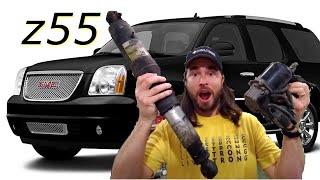
- Chevrolet / GMC Tahoe, Suburban, Yukon, Escalade (2000-2014) — On GM models with 'Autoride' (Z55), C1743 indicates a fault in the right rear shock absorber assembly, which contains an integrated solenoid.
- Hyundai Santa Fe / Elantra (2019-2021) — C1743 indicates a software mismatch in the blind spot detection system, not a suspension issue (TSB 19-BE-008H).
- Kia Sorento (2016-2020) — Points to a software conflict between the blind spot radar modules, requiring 'variant coding' to resolve.
Manufacturer-Specific Notes
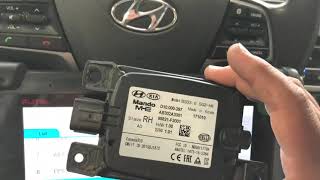
- Hyundai / Kia: C1743 means 'Software Mismatch' for the Blind-Spot Collision Warning system (TSB 19-BE-008H). It occurs after replacing a rear radar sensor and requires 'variant coding' with a dealer scan tool to synchronize the modules.
- Toyota / Lexus: A failure of the AHC Main Relay causes C1743. After replacing a sensor or ECU, a 'Vehicle Height Offset Calibration' must be performed with Techstream software.
- GM (Chevrolet / GMC / Cadillac): When converting Z55 'Autoride' systems to passive shocks, technicians install a 3.9 Ohm, 25 Watt resistor on the harness connector to mimic the solenoid and defeat the 'Service Suspension System' warning.
- Mitsubishi: On some models, C1743 is defined as 'Tire pressure sensor no data RR', indicating a fault with the right-rear TPMS sensor, not the suspension.
Real Owner Stories
2007 Lexus GX470 at 165K miles
The rear right corner sagged significantly overnight, and the height control 'OFF' light flashed.
What they tried:
- Performed a soapy water test but found no air leaks.
- Tested the solenoid resistance with a multimeter and found an open circuit (OL).
- Listened for a 'click' during active testing and heard nothing.
Outcome: Replaced the rear height control solenoid valve (OEM 48910-60021) for $350. The code cleared and normal operation resumed.
Lesson: A quick electrical resistance test pinpoints a dead solenoid, preventing the unnecessary and expensive replacement of a healthy air spring.
2019 Hyundai Elantra at 40K miles
The Blind-Spot Collision Warning light illuminated with code C1743 after a body shop replaced the right rear radar sensor.
What they tried:
- The body shop cleared the code, but it returned instantly.
- Replaced the new sensor with another unit, yielding the same result.
- Took the vehicle to a Hyundai dealership.
Outcome: The dealer used a GDS scan tool to perform 'variant coding', synchronizing the new sensor. The 30-minute procedure resolved the code permanently.
Lesson: On modern Hyundai/Kia vehicles, C1743 is a software code. Replacing a blind spot radar mandates variant coding to make the system recognize the part.
2005 Ford Expedition at 190K miles
The rear sagged, the 'Check Suspension' light illuminated, and the compressor ran constantly.
What they tried:
- Replaced the right rear solenoid, but the corner remained collapsed.
- Inspected the wiring harness and found no damage.
- Tested the height level sensor voltage and found it stuck at a single value regardless of suspension movement.
Outcome: Replaced the failed right rear height level sensor. The system functioned correctly immediately after.
Lesson: A failed height sensor prevents the computer from commanding the solenoid to open. Always verify sensor output before buying a new solenoid.
2008 Cadillac Escalade at 130K miles
Experienced a harsh ride with a 'Service Suspension System' message and code C1743.
What they tried:
- Found a massive leak in the right rear air shock bladder.
- Installed a passive coil spring conversion kit due to high OEM replacement costs.
- The warning message remained on the dash after installation.
Outcome: Installed a 3.9 Ohm, 25 Watt resistor across the terminals of the disconnected harness connector at each corner, successfully tricking the module and clearing the warning.
Lesson: Converting a GM Autoride (Z55) vehicle to passive springs requires bypass resistors to disable the suspension warning light.
How to Prevent This Code From Triggering
- Wash the Undercarriage (Monthly, and immediately after driving on salted roads) — Removes corrosive road salt that destroys electrical connectors and metal suspension components.
- Perform a Soapy Water Leak Test (Every 6-12 months) — Catching small air leaks early prevents the air compressor from overworking and burning out.
- Service the Air Dryer System (Every 2-3 years) — Replaces saturated desiccant, preventing moisture from entering the system and corroding solenoids internally.
- Inspect System Components (During every oil change) — Visually checking for cracked rubber and intact sensor linkages prevents catastrophic on-road failures.
Frequently Asked Questions
Can I just replace the solenoid to fix code C1743?
Often, yes, as the solenoid is the most common failure point. However, always test the wiring for power and ground first to avoid replacing a good part. Also, check for underlying air leaks that overworked the solenoid.
I replaced the solenoid, but the code C1743 came back. What's next?
If a new solenoid doesn't fix the issue, check the wiring harness for intermittent opens or shorts using a voltage drop test. Also, test the height level sensor, as a failed sensor won't command the solenoid to open. Finally, consider a rare failure of the suspension control module.
Is it safe to drive with code C1743?
It is not recommended. Handling, braking, and stability are severely compromised. Driving with a collapsed corner destroys tires and burns out the expensive air compressor.
Why is my suspension warning light flashing?
A flashing light indicates the system detected a serious fault and disabled itself. It defaults to the stiffest setting and will not self-level until repaired.
My car is a Hyundai. Why does this guide talk about air suspension?
Code C1743 has different meanings for different carmakers. For Hyundai and Kia, it indicates a software mismatch in the blind spot detection system, requiring special programming. The air suspension data applies to Toyota, Lexus, Ford, and GM.
What is 'variant coding' for a Hyundai/Kia C1743 code?
Variant coding is a scan tool procedure that synchronizes a newly installed blind spot radar module with the vehicle's computer. Without it, the modules cannot communicate, triggering C1743.
Can I convert my air suspension to regular shocks and springs?
Yes, conversion kits replace air components with traditional coil springs. This is a permanent, cost-effective solution for older vehicles with recurring air suspension failures.
How do I clear the 'Service Suspension System' message after converting to passive shocks on my GM vehicle?
Install a 3.9 Ohm, 25 Watt resistor across the two wires at each corner's shock connector. This tricks the module into thinking the electronic shock is present, disabling the warning.
Key Takeaways
- C1743 indicates an electrical failure in the right rear air suspension solenoid or its wiring, most common on Toyota, Lexus, Ford, and GM SUVs.
- On 2016+ Hyundai and Kia vehicles, C1743 is a software mismatch in the blind spot monitoring system, requiring a dealer-level variant coding procedure.
- Before replacing parts, test the solenoid's resistance with a multimeter; a healthy Toyota/Lexus solenoid measures 10-14 Ohms at 68°F.
- Driving with a collapsed suspension overworks the air compressor, often turning a $300 solenoid repair into a $1,200+ cascading failure within weeks.
Helpful Videos
Shop the Parts Behind C1743
Below are the parts most often responsible for code C1743, ranked by how frequently each one is the actual culprit (per the diagnosis above). Tap any to see what we have for your vehicle.



The information in this article is provided for general reference and educational purposes only. Vehicle specifications, procedures, and part compatibility can vary by production date, trim level, and region. Always consult your vehicle's factory service manual and verify part numbers before purchasing or performing repairs. Safety-critical components such as airbags, seat belts, and braking systems should be installed by a qualified professional.
- 🧭 Diagnostic Flowchart
- 🎬 Helpful Videos
- 🛍️ Shop This Part
- What Does C1743 Mean?
- Can I Drive With C1743?
- Common Causes
- Symptoms
- Common Fixes & Costs
- Used vs. New Parts: Buying Guide
- What Happens If You Wait — Timeline
- Cost of Not Fixing It
- Diagnosis Steps
- When This Code Triggers (Freeze-Frame Conditions)
- Related Codes
- Climate & Environmental Factors
- How to Talk to a Mechanic About This Code
- Where to Take It: Dealer vs Independent vs Chain
- When to Walk Away From the Repair
- What Scan Tool You Need for This Code
- How to Clear the Code After You Fix It
- Will This Fail Emissions / State Inspection?
- Most Commonly Affected Vehicles
- Manufacturer-Specific Notes
- Real Owner Stories
- 2007 Lexus GX470 at 165K miles
- 2019 Hyundai Elantra at 40K miles
- 2005 Ford Expedition at 190K miles
- 2008 Cadillac Escalade at 130K miles
- How to Prevent This Code From Triggering
- Frequently Asked Questions
- Can I just replace the solenoid to fix code C1743?
- I replaced the solenoid, but the code C1743 came back. What's next?
- Is it safe to drive with code C1743?
- Why is my suspension warning light flashing?
- My car is a Hyundai. Why does this guide talk about air suspension?
- What is 'variant coding' for a Hyundai/Kia C1743 code?
- Can I convert my air suspension to regular shocks and springs?
- How do I clear the 'Service Suspension System' message after converting to passive shocks on my GM vehicle?
- Key Takeaways
- 🎟️ Get 5% Off