

OBD-II Code C1767: Not a Valid Automotive Trouble Code
The Definitive Guide to Diagnosing the Real Problem Behind the Non-Existent C1767 Code
- C1767 is a medical billing code for a neurostimulator, not a valid OBD-II automotive diagnostic trouble code.
- A C1767 reading is almost always a scanner misread of P1767 or B1767; re-scan your vehicle using a professional-grade tool capable of reading Transmission Control Module (TCM) codes.
- If the true code is P1767 on a Nissan, the vehicle will likely enter limp mode, limiting speed to 40 mph and requiring a $900-$1,800 valve body replacement.
- A weak 12-volt battery dropping below 12.4 volts or a faulty ground connection causes control modules to store false, nonsensical trouble codes.
What Does C1767 Mean?
C1767 is a Healthcare Common Procedure Coding System (HCPCS) medical billing code, not a standard SAE or ISO automotive OBD-II code. Seeing this on a vehicle scan is a mistake caused by a cheap scanner or a user misreading the display.
Technical definition: The official definition for C1767 is 'Generator, neurostimulator (implantable), non-rechargeable'. It bills for a spinal cord stimulator and has zero connection to automotive systems.
Can I Drive With C1767?
Yes, But With Caution. C1767 is not a vehicle fault. However, the warning light indicates a real code that was misread. If the true code is a Nissan P1767 transmission fault, the vehicle enters 'limp mode,' limiting speed to 40 mph and risking severe transmission damage if driven. If the true code is a Kia P1767 ABS fault, stability control is disabled, increasing skid risk.
Common Causes
- Scanner Display Misread (Typo of P1767) (Very Common) — Users frequently mistake a 'P' for a 'C' on small digital displays. P1767 is a valid, manufacturer-specific code relating to transmission solenoids, CAN bus errors, or steering sensors.
- Scanner Display Misread (Typo of B1767) (Common) — Users mistake a 'B' for a 'C'. B1767 indicates a short to battery in the driver's power seat forward circuit.
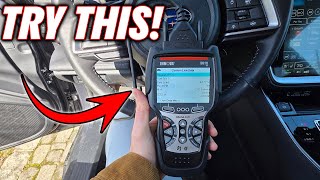
- Faulty or Incompatible Scan Tool (Less Common) — Cheap or outdated OBD-II scanners fail to interpret manufacturer-specific data correctly, displaying malformed or nonsensical codes from other industries. 🎬 Watch: Why cheap scanners fail on modern vehicle systems.
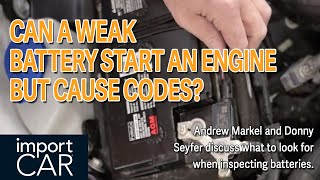
- Low Battery Voltage or Poor Grounds (Less Common) — A weak battery dropping below 12.4 volts causes erratic voltage drops, confusing control modules into storing false trouble codes. 🎬 See how a weak battery triggers phantom error codes.
- Module Communication Failure (Rare) — A failing Engine Control Module (ECM) or a post-repair security system breakdown causes bizarre network behavior and erroneous codes.
Symptoms
- Check Engine Light is on — The light illuminates for a valid 'P', 'U', 'B', or 'C' code. You must re-scan to find the actual fault.
- Transmission stuck in Limp Mode (for P1767) — On Nissan or Chrysler vehicles, a P1767 code locks the transmission in one gear, limiting speed to 40 mph and causing harsh shifts.
- Power seat inoperable (for B1767) — The driver's power seat fails to move forward due to an electrical short.
- ABS or 4WD warning lights illuminated (for P1767) (also visible on scanner) — On Hyundai or Kia vehicles, P1767 disables the Anti-lock Brake System (ABS) and 4-Wheel Drive, illuminating their respective dashboard lights.
Common Fixes & Costs
- Re-scanning to identify the correct trouble code — Parts: $0, Labor: $0, ~0.1 hr book time (DIY)
- Replacing the transmission valve body assembly (Nissan P1767) — Parts: $600-$1,000, Labor: $400-$800, ~4.5 hr book time (Professional)
- Replacing Transmission Control Lever Knob (Chevy Malibu P1767) — Parts: $60-$120, Labor: $100-$150, ~0.8 hr book time (Intermediate)
- Repairing wiring to ABS/4WD modules (Kia/Hyundai P1767) — Parts: $10-$50, Labor: $150-$300, ~1.5 hr book time (Intermediate)
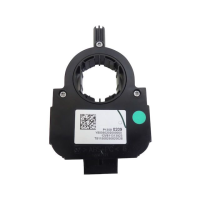
- Replacing the Steering Angle Sensor (Subaru P1767) — Parts: $250-$400, Labor: $300-$600, ~1.2 hr book time (Professional)
- Replacing a faulty 4WD Control Module (Kia/Hyundai P1767) — Parts: $800-$1,500, Labor: $150-$300, ~1.2 hr book time (Professional)
Used vs. New Parts: Buying Guide
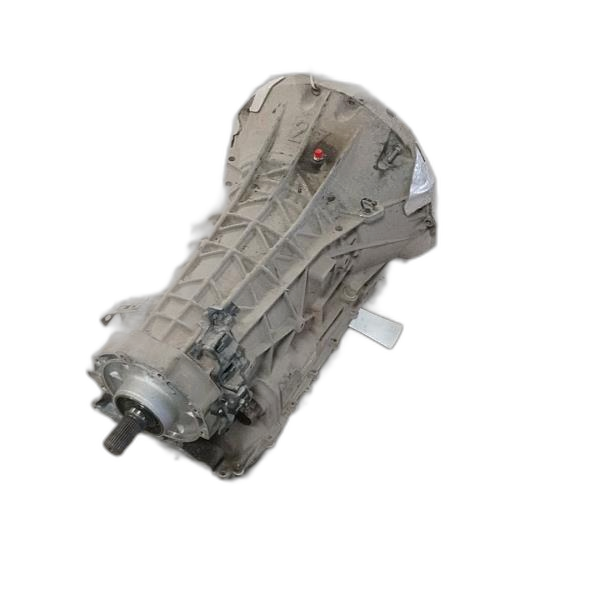
When a used part is worth it: For the most common expensive fix (Nissan RE5R05A Valve Body), a used or remanufactured unit is a common repair. A used assembly from a low-mileage vehicle makes sense for older vehicles to get a few more years of service.
Donor-vehicle mileage cap: roughly under 100000 miles for the part to have meaningful remaining life.
Donor quality checklist:
- Verify the donor vehicle was not scrapped for transmission failure.
- Match the part number exactly; there are many variations of valve bodies.
- Prefer sellers who test the part and offer a warranty of at least 90 days.
- For electronic modules, ensure there is no visible corrosion or water damage.
Decision logic:
- If Vehicle is newer or has high value and you plan to keep it long-term → Buy a new or remanufactured part. The longer warranty and guaranteed quality are worth the cost.
- If Vehicle is over 12 years old or has over 150,000 miles → A quality tested used part is a reasonable choice to keep repair costs proportional to the vehicle's value.
- If The part is a known high-failure item like a transmission valve body → Favor a remanufactured unit over a standard used one, as the remanufactured part has new seals and updated components.
Warranty tradeoff: Used parts typically come with a 30-90 day warranty. Remanufactured parts often have a 1-3 year warranty. New OEM parts carry a 12-month/12,000-mile warranty.
Worst-case if a used part fails: $800-$1500 if a used part fails after installation, as you must pay for the labor a second time plus the cost of another replacement part.
Cost of Not Fixing It
- Immediate: If the true code is for a Nissan transmission (P1767), the vehicle enters limp mode, limiting speed and becoming a safety hazard. If it's a Kia/Hyundai CAN error (P1767), ABS and stability control are disabled. (Added cost: $0)
- 1-3 months: Continuously driving a Nissan in limp mode causes excessive heat and wear on clutch packs, turning a valve body repair into a full transmission rebuild. (Added cost: $2,500-$4,500)
- 3+ months: Prolonged driving with a severe transmission issue leads to catastrophic failure, leaving the vehicle stranded and requiring a complete transmission replacement. (Added cost: $3,500-$7,000+)
Diagnosis Steps
- Re-Scan with a Professional Tool
Ditch the cheap code reader. Plug in a high-quality OBD-II scanner capable of reading Transmission Control Module (TCM) and ABS codes to find the real fault.
Tools: Professional-grade OBD-II Scanner (Beginner) - Check for the P0700 Flag Code
Scan for all stored codes. If P0700 appears alongside your misread code, it confirms a transmission-specific fault is stored in the TCM.
Tools: OBD-II Scanner (Beginner) - Inspect Nissan/Chrysler Transmission Solenoids (If P1767)
For Nissan/Infiniti, inspect the transmission valve body solenoids and connectors for damage or burnt fluid. For Chrysler, check the transmission relay circuit.
Tools: Flashlight, multimeter, vehicle-specific service manual (Intermediate) - Inspect Kia/Hyundai CAN Bus Wiring (If P1767)
Inspect the wiring harness between the ABS module and the 4WD ECU (often under the driver's seat) for water damage, corrosion, or broken wires.
Tools: Flashlight, multimeter, trim removal tools (Intermediate) - Inspect Subaru Steering Angle Sensor (If P1767)
Check the steering angle sensor connections behind the steering wheel, especially if recent rack or alignment work was performed.
Tools: Screwdriver set, flashlight (Intermediate) - Inspect Power Seat Wiring (If B1767)
Inspect the wiring harness under the driver's seat for pinched, chafed, or broken wires causing a short to battery.
Tools: Multimeter, flashlight (Intermediate) - [Pro Tip] Advanced Solenoid Resistance Test
Disconnect the transmission solenoid and measure resistance across its terminals. Standard on/off solenoids read 10-30 Ohms; PWM solenoids read ~5 Ohms. Infinite resistance means an open circuit.
Tools: Digital Multimeter, vehicle wiring diagram (Professional) - [Pro Tip] CAN Bus Health Check
With the battery disconnected, measure resistance between CAN High and CAN Low pins at the diagnostic connector. A healthy network reads 60 Ohms. 120 Ohms indicates a missing terminating resistor.
Tools: Digital Multimeter (Professional) - [Advanced] Live Data Analysis for Steering Angle Sensor
Use a scan tool to read the 'Steering Angle Sensor' PID. It must read 0 degrees when straight and change smoothly when turned. A stuck value indicates a failed sensor.
Tools: Advanced OBD-II Scanner with live data (Advanced) - [Advanced] Solenoid Voltage Drop Test
Back-probe the solenoid's power and ground wires while running. A voltage drop exceeding 0.5V across the circuit indicates high resistance in the wiring or a faulty TCM driver.
Tools: Digital Multimeter with back-probe pins (Advanced)
When This Code Triggers (Freeze-Frame Conditions)
- Note: N/A (C1767 never triggers. The following are typical freeze frame conditions for a Nissan P1767 (High/Low Reverse Clutch Solenoid) fault.)
- Engine Coolant Temp: 160-210°F (Fully warmed up.)
- RPM: 1200-2800 RPM (During or just after a 2nd to 3rd gear shift under moderate load.)
- Vehicle Speed: 25-45 mph (City or highway driving, often when accelerating to merge or pass.)
- Accelerator Position: 20-30% (1.5/8 - 2.0/8 throttle) (Steady, moderate acceleration, often uphill to increase engine load.)
Related Codes
- P1767 — This is the most plausible typo. Its meaning is highly manufacturer-specific: Nissan (Transmission Solenoid), Kia/Hyundai (ABS CAN Error), Chrysler (Transmission Relay), Subaru (Steering Angle Sensor).
- B1767 — This is another plausible typo. It points to a fault in the driver's power seat circuit, such as 'Seat Driver Forward Circuit Short To Battery'.
- P0700 — This generic code acts as a flag. It means the Transmission Control Module (TCM) detected a fault and requested the Check Engine Light. You MUST scan the TCM to find the specific code (like P1767).
- U0121 — If the issue is a communication problem with the ABS module (Kia's P1767), generic code U0121 (Lost Communication With Anti-Lock Brake System Module) is also present.
Climate & Environmental Factors
- Cold Weather: For transmission-related P1767 codes (Nissan), cold weather exacerbates symptoms. Low temperatures increase transmission fluid viscosity, causing delayed engagement or making a failing solenoid stick on a cold start.
- Humidity and Water Intrusion: For communication-related P1767 codes (Kia/Hyundai), humidity is a major factor. Meltwater from snow tracked into the cabin seeps into the 4WD ECU under the driver's seat, corroding the circuit board and causing CAN bus errors.
How to Clear the Code After You Fix It
- Reconnect battery if disconnected for repair.
- Use an OBD-II scan tool to select the 'Clear/Erase Codes' function.
- Perform a complete drive cycle to allow readiness monitors to run.
Drive cycle (~20 minutes): A generic drive cycle includes: a cold start (sit for 8+ hours), idle for 2-3 minutes, 15 minutes of mixed city/highway driving including steady speeds around 55 mph, and at least four 30-second idle periods.
Readiness monitors affected: Transmission Components, Comprehensive Component Monitor, Catalyst
Before emissions retest: drive at least 50 miles to fully set monitors.
Watch out for:
- Disconnecting the battery clears the light but resets all readiness monitors to 'Not Ready', guaranteeing an emissions test failure.
- The code returns immediately if the underlying mechanical or electrical fault is not properly fixed.
- For a Subaru P1767, a standard reset fails; the 'latched' code in the steering angle sensor's memory requires a specialized tool to clear.
Will This Fail Emissions / State Inspection?
Yes — this code typically fails an OBD-II emissions inspection.
- California: An illuminated Check Engine Light (triggered by the actual P-code) is an automatic failure. After repair, you must complete a drive cycle to set the readiness monitors.
- New York: An illuminated MIL (Check Engine Light) causes the vehicle to fail the OBD-II emissions inspection. For 2001 and newer vehicles, only one readiness monitor is allowed to be incomplete.
- Texas: In counties requiring emissions testing, an illuminated Check Engine Light is an automatic fail. After clearing the code, you must drive 50-100 miles to reset the readiness monitors before re-testing.
Most Commonly Affected Vehicles
- N/A All (1996-Present) — C1767 is not a valid automotive code for any make or model. It will not be found on any vehicle.
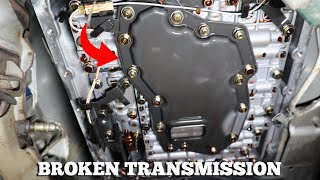
- Nissan/Infiniti Xterra, G35, 350Z, Frontier, Titan, Armada (2002-2013) — On models with the RE5R05A transmission, P1767 points to a fault with the 'High and Low Reverse Clutch Solenoid Valve'. This requires replacing the entire valve body assembly. 🎬 Watch: Diagnosing Nissan P1767 solenoid and valve body issues.
- Kia Sportage, Sorento (2005-2014) — These models display a P1767 code for an 'ABS ACTIVE SIGNAL (CAN ERROR)'. This indicates a communication failure between the ABS module and the 4WD ECU, often caused by water damage.
- Hyundai Tucson (2005-2009) — The Tucson sets a P1767 for a CAN communication line fault between the ABS/ESP module and the 4WD ECU. Diagnosis involves checking the CAN bus wiring for shorts.
- Subaru Impreza WRX STI (2006-2007) — On models with DCCD, P1767 is a 'DCCD Steering Angle Sensor' fault. This code latches in memory after steering rack removal and requires a specialized tool to clear.
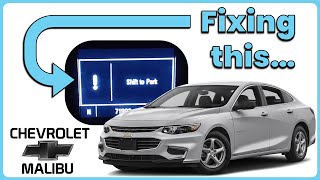
- Chevrolet Malibu (2016-2016) — TSB 16-NA-375 states DTC P1767 is set due to an issue with the transmission upshift/downshift switch circuits in the shifter knob. The fix is replacing the knob.
- Chrysler/Dodge/Jeep Various (2000-2010) — A P1767 code relates to the transmission relay circuit being stuck on, accompanied by P0700.
- Ford Various (2000-2012) — Ford vehicles use a B1767 code related to the driver's seat memory switch or wiring.
- General Motors Various (2000-2015) — GM vehicles use a B1767 code for a fault in the driver's seat position sensor circuit.
Manufacturer-Specific Notes
- All Manufacturers: No automotive manufacturer uses C1767 as a diagnostic trouble code. It is exclusively a medical billing code.
- Kia/Hyundai: These brands use P1767 for a CAN bus communication failure between the ABS module and the 4WD ECU, frequently caused by meltwater intrusion into the 4WD ECU under the seat.
- Nissan/Infiniti: The P1767 code on RE5R05A transmissions is almost always related to the solenoid pack on the valve body, requiring a full valve body replacement rather than a single solenoid.
- General Motors: TSB #16-NA-375 for the 2016 Chevrolet Malibu shows DTC P1767 is caused by a faulty up/down shift switch in the transmission shifter knob, not an internal transmission fault.
- Subaru: On STI models, P1767 is tied to the steering angle sensor. This fault permanently latches after steering rack removal and requires a dealer-level reset or EEPROM programming to clear.
Frequently Asked Questions
Why does my OBD-II scanner show C1767 if it's not a car code?
You misread the first letter or your scanner is malfunctioning. Double-check the display to see if the code is actually P1767 or B1767.
What is 'limp mode' and is it dangerous to drive?
Limp mode is a self-preservation feature that limits engine RPMs and vehicle speed to 30-40 mph to prevent catastrophic transmission damage. Driving in limp mode on the highway is dangerous and causes further mechanical wear.
Is it safe to ignore my Check Engine Light if the only code I see is C1767?
No. The light indicates a real, valid trouble code is stored in the vehicle's computer. You must re-scan with a better tool to find the actual code and determine the safety risk.
Can a weak or dead battery cause weird, incorrect codes to appear?
Yes. A battery dropping below 12.4 volts causes control modules to malfunction and report false error codes. Test your battery and charging system if the code appeared after a jump-start.
What's the difference between a P-code, C-code, B-code, and U-code?
The first letter indicates the system at fault. 'P' is for Powertrain (engine/transmission). 'C' is for Chassis (ABS/steering). 'B' is for Body (airbags/seats). 'U' is for Network Communication between modules.
I see a P0700 code along with P1767, what does that mean?
P0700 is a generic flag telling the engine computer that the Transmission Control Module (TCM) has a specific fault. Seeing both confirms the issue is strictly within the transmission system.
Could my car's computer be so broken that it's creating a fake code?
No. A failing control module triggers specific communication loss codes (U-codes). It will never generate a code from the healthcare industry's billing system.
Key Takeaways
- C1767 is a medical billing code for a neurostimulator, not a valid OBD-II automotive diagnostic trouble code.
- A C1767 reading is almost always a scanner misread of P1767 or B1767; re-scan your vehicle using a professional-grade tool capable of reading Transmission Control Module (TCM) codes.
- If the true code is P1767 on a Nissan, the vehicle will likely enter limp mode, limiting speed to 40 mph and requiring a $900-$1,800 valve body replacement.
- A weak 12-volt battery dropping below 12.4 volts or a faulty ground connection causes control modules to store false, nonsensical trouble codes.
Helpful Videos
Shop the Parts Behind C1767
Below are the parts most often responsible for code C1767, ranked by how frequently each one is the actual culprit (per the diagnosis above). Tap any to see what we have for your vehicle.


The information in this article is provided for general reference and educational purposes only. Vehicle specifications, procedures, and part compatibility can vary by production date, trim level, and region. Always consult your vehicle's factory service manual and verify part numbers before purchasing or performing repairs. Safety-critical components such as airbags, seat belts, and braking systems should be installed by a qualified professional.
- 🎬 Helpful Videos
- 🛍️ Shop This Part
- What Does C1767 Mean?
- Can I Drive With C1767?
- Common Causes
- Symptoms
- Common Fixes & Costs
- Used vs. New Parts: Buying Guide
- Cost of Not Fixing It
- Diagnosis Steps
- When This Code Triggers (Freeze-Frame Conditions)
- Related Codes
- Climate & Environmental Factors
- How to Clear the Code After You Fix It
- Will This Fail Emissions / State Inspection?
- Most Commonly Affected Vehicles
- Manufacturer-Specific Notes
- Frequently Asked Questions
- Why does my OBD-II scanner show C1767 if it's not a car code?
- What is 'limp mode' and is it dangerous to drive?
- Is it safe to ignore my Check Engine Light if the only code I see is C1767?
- Can a weak or dead battery cause weird, incorrect codes to appear?
- What's the difference between a P-code, C-code, B-code, and U-code?
- I see a P0700 code along with P1767, what does that mean?
- Could my car's computer be so broken that it's creating a fake code?
- Key Takeaways
- 🎟️ Get 5% Off