

OBD-II Code C1777: Vacuum, Communication, or Steering Sensor Fault
What C1777 means, why it triggers, and how to fix it
- Code C1777 indicates three distinct failures depending on the manufacturer: a brake vacuum leak (Jaguar/Land Rover), an Active Stability Control communication error (Mitsubishi), or a steering angle sensor fault (Toyota/Lexus).
- For Jaguar and Land Rover vehicles, inspect the brake booster vacuum pipe (part XR820798) for cracks before replacing the $1,500 ABS module.
- Mitsubishi owners must check for Technical Service Bulletin SC-17-001, which fixes this code with a $150-$300 dealer software update rather than a hardware replacement.
- On Toyota Land Cruiser and Lexus LX models, replacing the steering angle sensor requires a mandatory zero-point calibration using a Techstream scanner to restore the Active Height Control system.
- Do not drive with code C1777 active, as it disables critical safety systems like power brake assist, forward collision mitigation, or electronic stability control.
What Does C1777 Mean?
C1777 is a manufacturer-specific code with three distinct meanings. For Jaguar and Land Rover, it indicates a 'Vacuum pressure circuit failure' in the power brake system. For Mitsubishi, it signals a communication error where the Active Stability Control (ASC) module sends a failure message to the cruise control system. For Toyota and Lexus models with Active Height Control (AHC), it flags a 'Steering Angle Sensor Circuit' fault.
Technical definition: The formal SAE/OBD-II definition varies by manufacturer: 'Vacuum pressure circuit failure' (Jaguar/Land Rover), 'Received ACC Failure from ASC ECU' / 'System Fail Detected' (Mitsubishi), or 'Steering Angle Sensor Circuit' (Toyota/Lexus).
Can I Drive With C1777?
No — Do Not Drive. Do not drive. This code indicates a severe brake system failure (Jaguar/Land Rover), disabled stability control (Mitsubishi), or active suspension failure (Toyota/Lexus). A vacuum fault significantly increases stopping distance, creating an immediate crash hazard.
Common Causes
- Leaking Vacuum Hoses or Check Valve (Jaguar/Land Rover) (Very Common) — Plastic hoses and rubber grommets connected to the brake booster become brittle and crack, causing a vacuum leak. The integrated one-way plastic check valve also fails, preventing the booster from holding vacuum.
- Outdated Software or Faulty ASC Module (Mitsubishi) (Very Common) — A known software glitch in the Active Stability Control (ASC) module triggers this code. If a dealer software update (TSB SC-17-001) does not resolve it, the ASC/ABS module has suffered an internal hardware failure.
- Faulty Steering Angle Sensor (Toyota/Lexus) (Common) — On vehicles with Active Height Control (AHC), the steering angle sensor fails and stops sending data to the AHC ECU, logging C1777 and disabling the suspension system.
- Faulty Brake Booster Vacuum Pressure Sensor (Jaguar/Land Rover) (Common) — The sensor measuring vacuum pressure in the brake booster fails and sends incorrect voltage readings to the ABS module. This triggers the code even when the physical vacuum supply is perfect.
- Faulty Brake Booster or Vacuum Pump (Jaguar/Land Rover) (Less Common) — The brake booster's internal diaphragm tears, or the auxiliary electric vacuum pump fails completely, causing a total loss of power brake assist.
- Wiring, Ground, or CAN Bus Failure (All Makes) (Rare) — A corroded ground wire, broken CAN bus communication line, or damaged connector prevents modules from sharing data, mimicking a catastrophic module failure.
Symptoms
- Hard Brake Pedal (Jaguar/Land Rover) — The brake pedal requires extreme physical force to press, and stopping distances increase dramatically.
- Adaptive Cruise Control (ACC) Disabled (Mitsubishi) — Forward Collision Mitigation (FCM) and cruise control systems go offline, displaying a warning message on the instrument cluster.
- Active Height Control (AHC) Inoperative (Toyota/Lexus) — The air suspension disables, locking the vehicle at a single height, accompanied by an 'AHC OFF' dashboard light.
- Hissing Sound From Engine Bay (Jaguar/Land Rover) — A distinct vacuum leak hiss is audible near the brake booster while the engine idles.
Diagnostic Flowchart
Tap your situation to follow the diagnostic path that matches what you're seeing on this code.
Common Fixes & Costs
- Replace Leaking Vacuum Hoses or Check Valve (Jaguar/Land Rover) — Parts: $30-$200, Labor: $75-$200, ~1.2 hr book time (DIY)
- Reprogram ASC Module Software (Mitsubishi) — Parts: $0, Labor: $150-$300, ~1.0 hr book time (Professional)
- Replace Steering Angle Sensor (Toyota/Lexus) — Parts: $350-$500, Labor: $150-$300, ~2.0 hr book time (Professional)
- Replace Brake Booster Pressure Sensor (Jaguar/Land Rover) — Parts: $70-$280, Labor: $85-$150, ~1.0 hr book time (Intermediate)
- Replace Failed ABS/ASC Control Module (Mitsubishi) — Parts: $800-$2,200, Labor: $200-$500, ~2.5 hr book time (Professional)
DIY vs Professional
- Replace Leaking Vacuum Hoses/Lines (Jaguar/Land Rover) — Beginner:
- Reprogram Control Module with Updated Software (Mitsubishi) — Beginner:
- Replace Failed ABS/ASC Control Module (Mitsubishi) — Beginner:
- Replace Steering Angle Sensor (Toyota/Lexus) — Beginner:
Used vs. New Parts: Buying Guide
When a used part is worth it: Purchase a used Mitsubishi ASC/ABS module from a reputable salvage yard to save $1,000+ over a new unit, provided you have a shop capable of programming it to your VIN.
Donor-vehicle mileage cap: roughly under 80000 miles for the part to have meaningful remaining life.
Donor quality checklist:
- Match the OEM part number exactly.
- Ensure the seller offers a minimum 30-day warranty and tests their modules.
- Avoid parts from flood-damaged vehicles.
Decision logic:
- If The fix is a known software update (Mitsubishi) → Pay for the dealer software update; parts are irrelevant.
- If The part is a vacuum hose or pressure sensor → Buy new. The labor exceeds the part cost, making used parts a poor value.
- If The part is an expensive electronic module (ABS/ASC) → Buy used, but budget $150-$300 for mandatory professional programming.
Warranty tradeoff: Used modules carry 30-90 day warranties. New OEM modules installed by a dealer carry 1-2 year warranties covering parts and labor.
Worst-case if a used part fails: $500. If a used module is faulty, you pay for installation and programming labor twice.
What Happens If You Wait — Timeline
- 0-2 weeks: Warning lights illuminate. Jaguar/Land Rover brake pedals feel intermittently firm. Mitsubishi/Toyota safety systems disable, but base driving feels normal. (MPG impact: 0-1%% · Added cost: $0)
- 2 weeks - 3 months: Jaguar/Land Rover vacuum leaks worsen, causing a consistently hard brake pedal and rough idle. Driving without stability control increases accident risk. (MPG impact: 1-5%% · Added cost: $50-$150 in wasted fuel.)
- 3-6 months: Constant hard pedal use wears out brake components. A severe vacuum leak destroys the auxiliary vacuum pump. Disabled Toyota AHC systems ruin tires. (MPG impact: 5-10%% · Added cost: $400-$900 for a failed vacuum pump or prematurely worn tires.)
- 6+ months: Catastrophic failure. Complete loss of brake assist leads to an accident. Ignored electrical faults damage other CAN bus modules. (MPG impact: Variable% · Added cost: $2000+ for complex module failures or accident damage.)
Cost of Not Fixing It
- Immediate: A hard brake pedal significantly increases stopping distance, posing a severe crash risk. Critical safety systems like Stability Control and Collision Mitigation remain disabled. (Added cost: Cost of an accident.)
- 1-6 months: A persistent vacuum leak causes the engine to run lean, increasing temperatures and destroying the auxiliary electric vacuum pump. (Added cost: $500-$900 for a failed vacuum pump.)
- 6+ months: Driving with a disabled AHC system on a Toyota/Lexus causes severe, uneven tire wear and destroys conventional suspension components. (Added cost: $800-$1500 for new tires and suspension parts.)
Diagnosis Steps
- Identify Your Vehicle's Fault Type
Determine your diagnostic path based on the manufacturer: Jaguar/Land Rover (vacuum fault), Mitsubishi (communication/software fault), or Toyota/Lexus (steering sensor fault).
Tools: None (Beginner) - Scan for All Trouble Codes
Use a bidirectional OBD-II scanner to read codes from all modules (ABS, ASC, ACC, AHC). Look for corroborating codes like 'U' network codes on a Mitsubishi or P0556 on a Jaguar.
Tools: Advanced OBD-II Scanner (Intermediate) - Check for Technical Service Bulletins (TSBs)
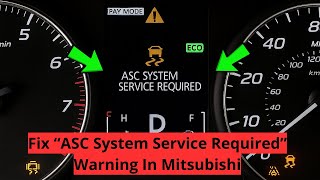
Before replacing parts on a Mitsubishi, verify if Service Campaign SC-17-001 🎬 See how to address Mitsubishi ASC System Service Required warnings. or TSB-18-13-002 applies to your VIN. These mandate a software update to fix the C1777 code.
Tools: Internet access, VIN (Beginner) - Inspect Vacuum System & Use a Smoke Machine (Jaguar/Land Rover)
Visually inspect the main vacuum hose from the engine to the brake booster. Introduce smoke into the vacuum system with the engine off to pinpoint hairline cracks in the plastic piping or grommets.
Tools: Flashlight, Smoke Machine (Intermediate) - Perform a Brake Booster Integrity Test (Jaguar/Land Rover)
With the engine OFF, pump the brake pedal 5 times until firm. Hold the pedal down and start the engine. The pedal must drop about an inch. If it remains stiff, the vacuum supply or booster has failed.
Tools: None (Beginner) - Test Brake Booster Pressure Sensor Voltage (Jaguar/Land Rover)
Backprobe the sensor's signal wire. With the ignition ON and engine OFF, voltage should be 4.5V - 4.8V. Start the engine; voltage must drop to 0.5V - 1.0V as vacuum builds. If voltage stays high, replace the sensor.
Tools: Multimeter, Wiring Diagram (Advanced) - Diagnose Steering Angle Sensor Circuit (Toyota/Lexus)
Monitor live steering angle sensor data using a scan tool while turning the wheel. The angle must change smoothly. If the reading is static or erratic, verify power and ground at the sensor connector before replacing it.
Tools: Advanced OBD-II Scanner (Advanced) - Diagnose CAN Bus and Module Power/Ground (Mitsubishi)
If code U0121 is present alongside C1777, test the ASC module's power and ground circuits for voltage drops. Measure resistance between CAN-High and CAN-Low at the OBD-II port (pins 6 and 14); it must read exactly 60 Ohms.
Tools: Multimeter, Wiring Diagram (Advanced) - Measure Brake Booster Vacuum (Jaguar/Land Rover)
Connect a vacuum gauge to the brake booster hose. A healthy engine produces 18-22 in-Hg at idle. Readings below 18 in-Hg confirm a physical leak. Strong vacuum with a persistent C1777 code confirms a failed pressure sensor.
Tools: Vacuum Gauge, T-adapter (Advanced) - Test Steering Angle Sensor with an Oscilloscope (Toyota/Lexus)
Connect an oscilloscope to the sensor's signal output terminals (SS2+ and SS2-). Slowly turn the steering wheel. A healthy sensor produces a clean, repeating ON-OFF square wave pattern.
Tools: Oscilloscope, Wiring Diagram (Expert)
When This Code Triggers (Freeze-Frame Conditions)
- Vehicle Speed: 0-10 mph or 40-60 mph (Triggers during the initial system self-test at startup, or during steady driving when a vacuum deviation or communication dropout occurs.)
- Brake Pedal Status: Applied (For Jaguar/Land Rover, the fault logs when the brake is applied and the measured vacuum drop is less than expected by the ECU.)
- Engine RPM: 700-800 RPM (Idle) (A Jaguar vacuum fault triggers rapidly at idle when engine vacuum is highest and leaks are most apparent to the pressure sensor.)
Related Codes
- U0121 — Means 'Lost Communication With ABS Control Module'. On a Mitsubishi, C1777 is the result of this problem. If both are present, U0121 is the root cause.
- P0556 — Means 'Brake Booster Pressure Sensor Circuit Range/Performance'. On a Jaguar/Land Rover, this Powertrain code corroborates the C1777 Chassis code, confirming a physical vacuum system fault.
- C1287 — Means 'Booster Pedal Force Switch Circuit Failure' on a Jaguar. If present with C1777, the entire brake booster assembly has likely failed internally.
- C1776 — Appears alongside C1777 on Mitsubishi vehicles. Both codes are cleared simultaneously by applying the SC-17-001 software update.
Climate & Environmental Factors
- Cold Weather: Cold temperatures cause Jaguar/Land Rover plastic vacuum lines and rubber grommets to harden and crack, triggering the C1777 vacuum leak code.
- High Humidity / Salt Belt Regions: Road salt accelerates corrosion on critical ground points and CAN bus connector pins, introducing resistance that causes intermittent communication faults on Mitsubishi vehicles.
- High Altitude: Operating a Jaguar/Land Rover at high altitudes reduces maximum engine vacuum. A minor, pre-existing leak combined with lower atmospheric pressure drops vacuum below the sensor's threshold, triggering the code.
How to Talk to a Mechanic About This Code
Say this: "I have a C1777 code. If it's a Jaguar/Land Rover, please smoke test the brake booster vacuum system. If it's a Mitsubishi, check my VIN for software TSB SC-17-001 before diagnosing modules. If it's a Toyota/Lexus, check the live data from the steering angle sensor."
This language directs the technician to the most likely, cheapest fix for your specific vehicle. It prevents expensive misdiagnoses, like replacing a $1,500 ABS module for a $50 hose or a software glitch.
Avoid saying:
- 'My check engine light is on, can you look at it?'
- 'Just fix whatever's wrong.'
- 'My cruise control isn't working.'
Questions to ask before authorizing the repair:
- For Jaguar/LR: Did the smoke test reveal a leak? What was the voltage from the brake booster pressure sensor?
- For Mitsubishi: Does my VIN show open TSBs for the ASC module? Does the estimate include programming?
- For Toyota/Lexus: Did you confirm the steering angle sensor failure with live data? Does the cost include zero-point calibration?
Where to Take It: Dealer vs Independent vs Chain
- Dealer:
Best for: Mitsubishi vehicles requiring TSB SC-17-001 software updates., Complex electronic diagnostics requiring proprietary tools (Jaguar SDD, Toyota Techstream).
Downsides: Highest labor rates., Tendency to replace entire module assemblies rather than diagnosing sensors. (Typical cost: +50% vs. baseline) - Independent Shop:
Best for Jaguar/Land Rover vacuum leaks. Required for Toyota/Lexus only if they possess a Techstream scanner for calibration.
Best for: Jaguar/Land Rover vacuum faults. European specialists fix these cost-effectively., Out-of-warranty vehicles where cost is a major factor.
Downsides: May lack proprietary software to perform required updates on Mitsubishi models. (Typical cost: +0% vs. baseline) - Chain Shop:
AVOID. The manufacturer-specific nature of C1777 creates a very high risk of incorrect repairs.
Best for: Not recommended for this code.
Downsides: Technicians lack specialized knowledge to differentiate the three meanings of C1777., High risk of expensive misdiagnosis., Inability to perform required software updates or calibrations. (Typical cost: -10% vs. baseline)
When to Walk Away From the Repair
If the estimated repair cost exceeds 40-50% of the car's current private-party value, seriously consider selling or trading in the vehicle.
- Car worth $4000, fix is $2700: Walk away. A failed Mitsubishi ASC module ($2200 part + $500 labor) is 68% of the car's value.
- Car worth $12000, fix is $350: Fix it. A vacuum hose and labor on a Jaguar is less than 3% of the vehicle's value.
What Scan Tool You Need for This Code
Minimum: A bidirectional scanner that reads manufacturer-specific 'C' (Chassis) codes from the ABS module and displays live sensor data.
A $20 code reader only checks engine 'P' codes and cannot see C1777. You must read live data from the brake pressure sensor, view communication status, or monitor steering angle data.
Budget: BlueDriver Pro (~$99) — Reads and clears ABS codes and graphs live data from supported sensors, providing enough data for a confident DIY diagnosis.
Mid-range: Autel MaxiCheck MX808S (~$350) — Offers bidirectional controls and performs the mandatory steering angle sensor zero-point calibration required for Toyota/Lexus repairs.
Professional: Autel MaxiCOM MK906BT (~$1200) — Provides dealer-level diagnostics necessary for programming a new ABS/ASC module on a Mitsubishi and diagnosing complex CAN bus faults.
Rent vs buy: Buy. Free loaner scanners at auto parts stores are basic readers that cannot access the ABS module or perform live data functions required for C1777.
How to Clear the Code After You Fix It
- Reconnect the battery if disconnected.
- Use a bidirectional OBD-II scan tool to erase the code from the specific ABS or ACC module.
- Perform mandatory recalibrations (e.g., steering angle sensor zero-point calibration for Toyota/Lexus).
- Complete a full drive cycle to verify the repair.
Drive cycle (~30 minutes): Perform a cold start, idle for 3 minutes, drive 15 minutes in mixed city/highway conditions (including steady 55 mph), and perform several coast-down decelerations without braking.
Readiness monitors affected: Clearing this Chassis code does not directly reset emissions monitors, but clearing all modules will reset Powertrain monitors.
Before emissions retest: drive at least 50 miles to fully set monitors.
Watch out for:
- Disconnecting the battery will not clear this code.
- Failing to perform a zero-point calibration after replacing a steering angle sensor guarantees the code returns immediately.
Will This Fail Emissions / State Inspection?
No — by itself this code doesn't fail OBD inspection (but it can keep readiness monitors from setting, which causes a separate fail).
- California: An illuminated ABS or Brake warning light on the dashboard triggers an automatic safety inspection failure.
- New York: An ABS light alone is not a failure, but an illuminated red 'Brake' warning light results in an immediate safety inspection failure.
- Texas: Texas DPS rules state an ABS lamp is not a rejection cause, but the primary red 'Brake' warning lamp will fail the vehicle.
Most Commonly Affected Vehicles
- Jaguar S-Type (2002-2008) — Extremely common issue due to a vacuum leak from the brake booster vacuum pipe (part XR820798) or its grommet.
- Mitsubishi Outlander / Lancer (2008-2020) — Prone to setting C1777 as a communication fault from the Active Stability Control (ASC) module. Always perform software update TSB SC-17-001 before replacing hardware.
- Land Rover Range Rover (2010-2019) — Shares the vacuum-based fault with Jaguar. Caused by a leaking hose, a failed auxiliary electric vacuum pump, or a faulty brake booster pressure sensor.
- Toyota / Lexus Land Cruiser / LX470 / LX570 (1998-2021) — On models equipped with Active Height Control (AHC), C1777 indicates a 'Steering Angle Sensor Circuit' fault, disabling the AHC system.
- Jaguar XF, XJ (2008-2015) — Suffers from the 'Vacuum pressure - circuit failure' fault, typically from cracked vacuum lines or a failed booster pressure sensor.
- Lincoln LS (2000-2006) — Shares its platform with the Jaguar S-Type, making it susceptible to the exact same vacuum-related C1777 fault.
Manufacturer-Specific Notes
- Jaguar / Land Rover: Mechanics frequently misdiagnose this code and replace the $1,500 ABS module when the actual fault is a $50 cracked plastic vacuum hose (XR820798).
- Mitsubishi: This is a 'phantom' code. The fault is not with the ACC module storing the code, but with the ASC module it communicates with. Software updates fix this 80% of the time.
- Toyota / Lexus: Replacing the steering angle sensor to fix C1777 requires a mandatory 'zero-point calibration' using a Techstream scanner, otherwise the AHC system remains disabled.
Real Owner Stories
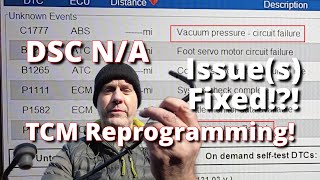
2005 Jaguar S-Type 3.0L with 'DSC Not Available'
Owner experienced an intermittent 'DSC Not Available' warning and a C1777 code for 'Vacuum pressure circuit failure'.
What they tried:
- Replaced the main brake booster vacuum hose (Part XR820798).
- Cleaned the ABS/DSC module connector.
Outcome: The hose replacement fixed the physical leak, but the code returned. The final fix required a 'Brake Booster Solenoid recalibration' using a Jaguar SDD scan tool to clear the code permanently.
Lesson: On Jaguars, fixing the physical vacuum leak is step one; you must often perform an electronic recalibration with a dealer-level tool to fully resolve the C1777 code.
2017 Mitsubishi Outlander with 'FCM Unavailable'
At 60,000 miles, the Forward Collision Mitigation (FCM) and Adaptive Cruise Control (ACC) systems disabled, logging code C1777.
What they tried:
- Inspected the radar sensor and ACC module for damage.
- Took the vehicle to the dealership.
Outcome: The dealership applied Technical Service Bulletin SC-17-001. A $200 software update to the ASC module permanently resolved the code without replacing any hardware.
Lesson: Always ask a Mitsubishi dealer to check your VIN for software TSBs before authorizing expensive hardware replacements for communication codes.
2008 Lexus LX570 with AHC Light
The Active Height Control (AHC) warning light illuminated, disabling the suspension. A scan revealed code C1777.
What they tried:
- Attempted to clear the code with a basic reader.
- Checked the sensor wiring for visible damage.
Outcome: The steering angle sensor failed internally. The owner paid $450 for an OEM sensor and $200 for installation and the mandatory 'zero-point calibration' using a Techstream scanner.
Lesson: On Toyota/Lexus vehicles, C1777 requires replacing the steering angle sensor and performing a mandatory electronic calibration to restore suspension function.
How to Prevent This Code From Triggering
- Inspect vacuum hoses (Every oil change) — Proactively checking for hardening or cracking of Jaguar/Land Rover vacuum lines prevents the most common cause of C1777.
- Apply dielectric grease to critical connectors (When servicing nearby components) — Sealing ABS/ASC module connectors with dielectric grease prevents moisture intrusion and the resulting communication faults.
- Clean module ground points (Every 30,000 miles in salt-belt regions) — Cleaning the main ground wire for the ABS/ASC module prevents voltage drops that trigger phantom communication codes on Mitsubishi vehicles.
- Recalibrate steering angle sensor after alignment (After every wheel alignment) — Ensuring the alignment shop resets the steering angle sensor prevents the AHC system from setting C1777 due to a steering angle mismatch.
Frequently Asked Questions
What is the most common cause of code C1777?
For Jaguar/Land Rover, it is a cracked vacuum hose near the brake booster. For Mitsubishi, it is a software glitch in the Active Stability Control module. For Toyota/Lexus with air suspension, it is a faulty steering angle sensor.
Can I fix code C1777 myself?
Replacing a cracked Jaguar vacuum hose is a simple DIY repair. However, Mitsubishi software updates or Toyota steering angle sensor calibrations require expensive, dealer-level scan tools and professional expertise.
How much does it cost to fix C1777 in 2024?
The cost varies dramatically. A DIY Jaguar vacuum hose replacement costs under $100, while a Mitsubishi dealer software update runs $150-$300. Replacing a Toyota steering angle sensor or Mitsubishi ASC module ranges from $500 to over $1,500.
What is the biggest misdiagnosis mistake with this code?
Mechanics frequently replace expensive modules based on generic code definitions. On a Jaguar, they replace the ABS module instead of a cheap vacuum hose; on a Mitsubishi, they replace the ACC module instead of updating the ASC software.
The C1777 code came back after I replaced the part. What now?
If a new part fails to clear the code, the issue lies in the surrounding circuit. Inspect the module's main ground connection and wiring harness for corrosion or damage. An intermittent wiring fault perfectly mimics a failed component.
Can a weak battery cause code C1777?
Yes. Low voltage from a failing battery causes unpredictable communication dropouts between modules. This easily triggers the C1777 communication fault on Mitsubishi models or erratic sensor readings on Jaguars.
Why did my cruise control and traction control lights come on at the same time?
These systems rely on shared data. On a Mitsubishi, the cruise control logs C1777 when it detects a traction control fault, disabling both systems simultaneously as a safety precaution.
I have a Ford with similar symptoms but no C1777 code. What could it be?
Ford uses different codes, but 2020-2021 Escapes and Bronco Sports suffer from faulty AWD modules that trigger cascading warning lights. This specific issue is covered under Ford Customer Satisfaction Program 21B19.
Key Takeaways
- Code C1777 indicates three distinct failures depending on the manufacturer: a brake vacuum leak (Jaguar/Land Rover), an Active Stability Control communication error (Mitsubishi), or a steering angle sensor fault (Toyota/Lexus).
- For Jaguar and Land Rover vehicles, inspect the brake booster vacuum pipe (part XR820798) for cracks before replacing the $1,500 ABS module.
- Mitsubishi owners must check for Technical Service Bulletin SC-17-001, which fixes this code with a $150-$300 dealer software update rather than a hardware replacement.
- On Toyota Land Cruiser and Lexus LX models, replacing the steering angle sensor requires a mandatory zero-point calibration using a Techstream scanner to restore the Active Height Control system.
- Do not drive with code C1777 active, as it disables critical safety systems like power brake assist, forward collision mitigation, or electronic stability control.
Helpful Videos
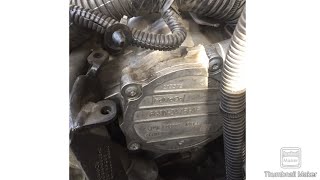
Shop the Parts Behind C1777
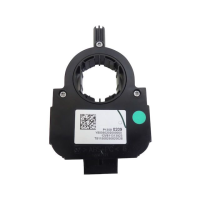
Below are the parts most often responsible for code C1777, ranked by how frequently each one is the actual culprit (per the diagnosis above). Tap any to see what we have for your vehicle.



The information in this article is provided for general reference and educational purposes only. Vehicle specifications, procedures, and part compatibility can vary by production date, trim level, and region. Always consult your vehicle's factory service manual and verify part numbers before purchasing or performing repairs. Safety-critical components such as airbags, seat belts, and braking systems should be installed by a qualified professional.
- 🧭 Diagnostic Flowchart
- 🎬 Helpful Videos
- 🛍️ Shop This Part
- What Does C1777 Mean?
- Can I Drive With C1777?
- Common Causes
- Symptoms
- Common Fixes & Costs
- DIY vs Professional
- Used vs. New Parts: Buying Guide
- What Happens If You Wait — Timeline
- Cost of Not Fixing It
- Diagnosis Steps
- When This Code Triggers (Freeze-Frame Conditions)
- Related Codes
- Climate & Environmental Factors
- How to Talk to a Mechanic About This Code
- Where to Take It: Dealer vs Independent vs Chain
- When to Walk Away From the Repair
- What Scan Tool You Need for This Code
- How to Clear the Code After You Fix It
- Will This Fail Emissions / State Inspection?
- Most Commonly Affected Vehicles
- Manufacturer-Specific Notes
- Real Owner Stories
- 2005 Jaguar S-Type 3.0L with 'DSC Not Available'
- 2017 Mitsubishi Outlander with 'FCM Unavailable'
- 2008 Lexus LX570 with AHC Light
- How to Prevent This Code From Triggering
- Frequently Asked Questions
- What is the most common cause of code C1777?
- Can I fix code C1777 myself?
- How much does it cost to fix C1777 in 2024?
- What is the biggest misdiagnosis mistake with this code?
- The C1777 code came back after I replaced the part. What now?
- Can a weak battery cause code C1777?
- Why did my cruise control and traction control lights come on at the same time?
- I have a Ford with similar symptoms but no C1777 code. What could it be?
- Key Takeaways
- 🎟️ Get 5% Off