

OBD-II Code C1851: Suspension System Pressure or Sensor Fault
What C1851 means, why it triggers, and how to fix it
- Code C1851 indicates a brand-specific chassis failure: Toyota/Lexus (KDSS hydraulic pressure), Honda/Acura (AWD motor circuit), or Jaguar/Land Rover (damper electronics).
- Corroded wiring and connectors cause over 50% of C1851 faults, specifically at the Toyota KDSS accumulator shield or the Honda AWD pump.
- Repairing a C1851 fault costs between $1,350 for a Honda AWD pump and over $4,000 for a Toyota KDSS accumulator replacement at a dealership.
- Driving with an active C1851 code disables your AWD system or stiffens your adaptive suspension, reducing traction and emergency handling capabilities.
What Does C1851 Mean?

Code C1851 is a manufacturer-specific code indicating the vehicle's computer has detected a problem in an advanced suspension or all-wheel-drive system. On Toyota and Lexus vehicles, it points to low pressure in the Kinetic Dynamic Suspension System (KDSS). On Honda and Acura models, it indicates an electrical circuit problem or communication failure with the all-wheel-drive (AWD) rear differential pump motor. For Jaguar and Land Rover, it signifies a fault within the Adaptive Dynamics suspension, typically related to a sensor in one of the shock absorbers.
Technical definition: The official SAE/ISO definition for C1851 varies by manufacturer. For Toyota/Lexus, it is "Low Pressure Malfunction in Upside of KDSS System", triggered when the accumulator pressure sensor reports a pressure below 0.9 MPa (130 psi) for a continuous 5-minute period with the ignition on. For Honda/Acura, it means "Motor Circuit High/Low Current" (C1851-1E / C1851-18) or "F-CAN malfunction lost communication" (C1851-87), pointing to an issue with the AWD pump motor or its communication network. For Jaguar/Land Rover, it relates to a current sensor circuit malfunction within the Adaptive Dynamics system's dampers.
Can I Drive With C1851?
Yes, But With Caution. Yes, but limit driving. With a failed KDSS system, the vehicle has significantly increased body roll and feels unstable in turns, compromising emergency handling. For Honda/Acura, the AWD system disables, defaulting to front-wheel drive and reducing traction in slippery conditions. Ignoring the issue leads to expensive secondary repairs, such as damaging the KDSS hydraulic pump or causing uneven tire wear.
Common Causes

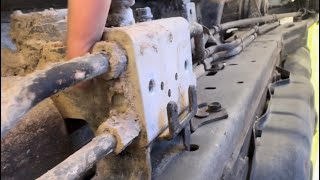
- Corroded Wiring and Connectors (Very Common) — Moisture, road salt, and debris damage wiring and connectors underneath the vehicle. On Toyota/Lexus KDSS systems, water intrudes into the main connector on the accumulator assembly 🎬 Watch: How to protect your KDSS accumulator from corrosion, causing severe corrosion. Pins break off and get stuck in the harness, creating a permanent open circuit. For Honda/Acura, water intrusion into the rear differential pump motor connector is a frequent issue addressed by TSBs.
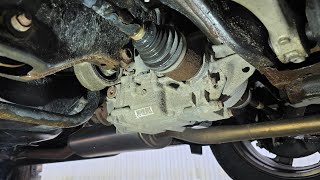
- Failed AWD Rear Differential Pump Motor (Very Common) — On many Honda and Acura models, this code is triggered by a failure in the electric motor for the rear differential's AWD system. A TSB for 2020-2021 CR-Vs notes that machining marks on the motor shaft allow differential fluid to contaminate the motor's electronics, causing a short.
- Internal KDSS Accumulator Failure / Nitrogen Leak (Common) — The KDSS accumulator stores hydraulic pressure using an internal nitrogen charge. This charge slowly leaks out over many years, leading to a borderline or permanent low-pressure condition, especially noticeable in cold weather when the hydraulic fluid contracts.
- Hydraulic Fluid Leak (Common) — For systems like Toyota's KDSS, a leak in the hydraulic lines or at the front/rear stabilizer cylinders causes a drop in pressure, triggering the code. Leaks are often subtle, appearing as an oily film on the component before they start to drip.
- Failed Active Suspension Damper/Strut (Common) — On vehicles with adaptive suspension (like JLR's Adaptive Dynamics), the electronic sensor is integrated into the shock absorber (damper). When the internal sensor or control valve fails, the entire strut assembly must be replaced to resolve the fault.
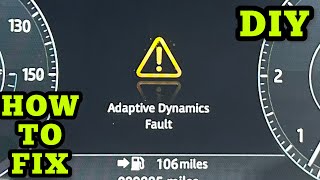
- Low Vehicle Battery Voltage (Less Common) — On sophisticated systems, particularly Jaguar/Land Rover's Adaptive Dynamics, a weak 12V battery causes a voltage drop during engine start-up, which falsely triggers suspension-related fault codes 🎬 Watch: How to fix common Land Rover Adaptive Dynamics faults like C1851.
- Faulty Suspension Control ECU (Rare) — The electronic control unit that manages the suspension or AWD system fails rarely. It is only considered after all other possibilities, especially wiring, connectors, and component failures, are thoroughly ruled out.
Symptoms

- Suspension or AWD warning light on — The most common symptom is an illuminated "KDSS," "Adaptive Dynamics Fault," or "All Wheel Drive System Problem" message on the dashboard.
- Harsh, bouncy, or stiff ride — When an adaptive suspension system fails, it defaults to its firmest setting, resulting in a very uncomfortable and jarring ride.
- Increased body roll and vehicle lean — On Toyota/Lexus vehicles with a severe KDSS leak or low pressure, the vehicle leans to one side (often the driver's side) and exhibits excessive body roll during turns.
- All-wheel drive system is disabled — For Honda/Acura vehicles where the code relates to the AWD system, the system deactivates as a fail-safe measure, and the vehicle operates in two-wheel drive only.
- Abnormal noises from the suspension or drivetrain — A clunking sound occurs over bumps due to a depressurized KDSS system or failed electronic shock absorber. On Honda/Acura models, a failing AWD pump motor causes grinding or whining noises from the rear differential.
Diagnostic Flowchart
Tap your situation to follow the diagnostic path that matches what you're seeing on this code.
Common Fixes & Costs
- Replace AWD Rear Differential Pump Motor — Parts: $400-$750, Labor: $200-$700, ~3 hr book time (Intermediate)
- Repair or Replace Wiring Harness/Connector — Parts: $50-$400, Labor: $200-$500, ~2.5 hr book time (Intermediate)
- Replace KDSS Accumulator Assembly — Parts: $1,500-$4,000, Labor: $800-$1,500 (includes system bleed), ~4 hr book time (Professional)
- Replace Adaptive Damper/Strut Assembly — Parts: $400-$1,500 per strut, Labor: $250-$500 per pair, ~1.5 hr book time (Intermediate)
- Bleed and Recharge Hydraulic Suspension System — Parts: $100-$150 (fluid), Labor: $600-$1,500, ~4.5 hr book time (Professional)
Used vs. New Parts: Buying Guide
When a used part is worth it: For purely electronic modules or mechanical parts without internal wear components (like a wiring harness), used is a good value. For the common C1851 failure parts, buying used is high-risk. A used Honda AWD pump from a low-mileage, rear-end collision donor is acceptable.
Donor-vehicle mileage cap: roughly under 60000 miles for the part to have meaningful remaining life.
Donor quality checklist:
- Verify the donor vehicle's VIN to confirm it's from a dry, salt-free region.
- For KDSS accumulators, avoid used parts entirely. The risk of failure due to internal age-related leaks or external corrosion is too high.
- For adaptive dampers, treat them as wear items. A used part is only a temporary fix; new aftermarket (e.g., Arnott, Bilstein) is a better long-term value.
- Match part numbers exactly, including any supersessions noted by the manufacturer.
Decision logic:
- If The part is a Toyota/Lexus KDSS accumulator → Buy new OEM only. The labor cost to install and bleed the system is too high to risk on a used part of unknown condition.
- If The part is a JLR adaptive damper → Buy new aftermarket from an OEM supplier (like Bilstein) or a reputable remanufacturer (like Arnott). This provides a warranty and better performance than a used part.
- If Vehicle is older (>10 years) and budget is the primary concern → A used Honda AWD pump is considered, but factor in the cost of repeat labor if the part fails within a year.
Warranty tradeoff: Used parts from salvage yards typically offer a 30-90 day warranty on the part only, not labor. New aftermarket parts often have a 1-year to limited lifetime warranty. New OEM parts have a 1-year warranty.
Worst-case if a used part fails: $800-$2000 if a used hydraulic or major electronic part fails after the 90-day warranty. This includes the cost of repeat labor and purchasing another replacement part.
What Happens If You Wait — Timeline
- 0-1 month: Warning light (KDSS, AWD, etc.) illuminates on the dash. On Toyota/Lexus, the light is intermittent, appearing only on cold starts. For Honda/JLR, the system disables immediately. Handling is compromised but not obvious in normal driving. (MPG impact: 0-1%% · Added cost: $0)
- 1-6 months: Secondary symptoms become noticeable. Increased body roll in turns (KDSS), a harsh/bouncy ride (JLR), or confirmed 2WD operation in slippery conditions (Honda). Uneven tire wear begins, especially 'cupping' on vehicles with failed dampers. (MPG impact: 1-3%% · Added cost: $400-$1,000 (cost of replacing a pair of prematurely worn tires))
- 6-18 months: Accelerated wear on related components. A failed adaptive damper puts significant stress on control arm bushings, ball joints, and wheel bearings. A continuously leaking KDSS system causes the pump to run excessively. The 'KDSS lean' becomes permanent and pronounced. (MPG impact: 2-5%% · Added cost: $1,000-$2,500 (cost of replacing tires plus additional worn suspension components like control arms or bushings).)
- 18+ months: Cascading and catastrophic failure. A complete loss of hydraulic fluid in a KDSS system damages the expensive accumulator/pump unit beyond repair. A severely failed damper leads to unpredictable handling and loss of control in an emergency maneuver. The vehicle fails a state safety inspection. (MPG impact: 5-10%% · Added cost: $2,500-$5,000+ (cost of primary failure part + secondary damage to other suspension/drivetrain components).)
Cost of Not Fixing It
- 0-3 months: Compromised safety and performance. Increased body roll on KDSS vehicles, disabled AWD on Honda/Acura models, and a harsh ride on JLR models. Noticeable handling degradation in emergency maneuvers. (Added cost: Negligible)
- 3-12 months: Accelerated and uneven tire wear due to poor suspension geometry and control. A full set of tires for an SUV or luxury vehicle is a significant expense. (Added cost: $800-$2000)
- 12+ months: Cascading component failure. A leaking KDSS system runs the pump dry, causing damage. A faulty damper puts extra stress on other suspension components like bushings, control arms, and ball joints, leading to more extensive and costly repairs. (Added cost: $2000-$5000+)
Diagnosis Steps
- Read the Full Code Definition
Use a high-quality OBD-II scanner capable of reading chassis (C-codes) and manufacturer-specific sub-codes (e.g., C1851-1E). This dictates which system (e.g., KDSS, AWD) and what type of fault (e.g., Low Pressure, Motor Circuit High Current) is occurring.
Tools: Advanced OBD-II Scanner (Beginner) - Check for Technical Service Bulletins (TSBs)
Search online for TSBs related to your vehicle's make, model, year, and the C1851 code. Manufacturers release bulletins for known issues, such as Honda's TSBs 23-031 and Acura's 24-022 for AWD pump motor issues, saving significant diagnostic time.
Tools: Internet Access (Beginner) - Inspect Electrical Connectors
Unplug the electrical connector for the identified sensor, motor, or accumulator. Look for green or white corrosion, bent pins, or broken wires. On Lexus/Toyota models, pay extremely close attention to the large connector on the KDSS accumulator assembly, as pins corrode and break off inside.
Tools: Socket Set or Screwdriver (to access components) (Intermediate) - Visually Inspect the System
Look under the vehicle at the component indicated by the code. Check for obvious signs of trouble like fluid leaks from hydraulic lines or shocks. On KDSS vehicles, remove the metal shield on the driver's side frame rail to inspect the accumulator for leaks and corrosion.
Tools: Flashlight, Jack and Jack Stands, Basic Hand Tools (Intermediate) - Test System Pressure (If Applicable)
For hydraulic systems like KDSS, a manufacturer-specific scan tool reads the system's pressure sensors in the live data stream. A reading below the specified minimum (e.g., below 0.9 MPa or 130 psi for Toyota) confirms a low-pressure condition. Normal pressure at 68°F is around 3.0 MPa (435 psi).
Tools: Manufacturer-Specific Scan Tool (e.g., Techstream for Toyota) (Advanced) - Pro Tip: Test the Honda AWD Pump Motor Circuit
For Honda/Acura codes like C1851-1E (High Current), unplug the pump motor. Use a multimeter to check for a short to ground on the motor's power wire. If the wire is shorted, the motor has failed internally. For C1851-87 (Lost Communication), check for 5V reference and good ground at the motor connector and use an oscilloscope to check for CAN bus signal activity.
Tools: Digital Multimeter, Oscilloscope (optional), Wiring Diagram (Advanced) - Pro Tip: Test the KDSS Pressure Sensor Circuit
If you suspect a sensor or wiring issue on a Toyota/Lexus, test the circuit with a multimeter. Unplug the sensor and turn the ignition ON. Probe the harness connector: you should find a 5V reference wire, a ground wire (check for continuity to chassis ground, resistance should be less than 1 ohm), and a signal wire. If the 5V reference or ground is missing, the problem is in the wiring or ECU.
Tools: Digital Multimeter, Wiring Diagram (Advanced) - Test Component Actuators and Solenoids
Some scan tools allow you to command actuators, like the KDSS stabilizer control solenoid valves, to operate. Listening for a 'click' confirms if the solenoid responds. Alternatively, use a multimeter to measure the resistance of the solenoid valves (typically 10-30 ohms). An open circuit indicates a failed solenoid.
Tools: Advanced Bi-Directional Scan Tool, Digital Multimeter, Service Manual (Advanced)
When This Code Triggers (Freeze-Frame Conditions)
- System State: Ignition ON (The ECU for the respective system (KDSS, AWD, Adaptive Dynamics) is powered on and actively monitoring.)
- Time Duration: 5 minutes (Toyota KDSS) (For Toyota/Lexus, the code sets if pressure remains below the 130 psi threshold for a continuous 5-minute period. For other makes, the fault must be present for a specific duration (often a few seconds) to be confirmed.)
- Vehicle Speed: 0 mph (Many system self-checks, particularly for pressure and electrical continuity, are performed with the ignition on but before driving, or while the vehicle is stationary.)
- System Pressure (KDSS): < 130 psi / 0.9 MPa (This is the direct trigger for the C1851 code in Toyota/Lexus vehicles, indicating a confirmed low-pressure state.)
Related Codes
- C1853 — On Toyota/Lexus vehicles, C1853 indicates HIGH pressure (above 1276 psi) in the KDSS system, whereas C1851 indicates LOW pressure (below 130 psi). C1853 points to a blockage in a hydraulic line or a stuck-closed solenoid valve, preventing pressure from being released. C1851 points to a fluid leak, a failed accumulator, or a faulty pressure sensor.
- C1831 / C1832 — These codes point specifically to an electrical fault in the KDSS stabilizer control solenoid valve circuits. Diagnostic procedures require checking for these codes first. If C1831/C1832 are present, the problem is electrical with the solenoids. If only C1851 is present, the problem is hydraulic (low pressure) or with the pressure sensor itself.
- C1850 — On Acura/Honda vehicles, C1850 indicates a fault with the AWD pressure sensor circuit. C1851 relates to the AWD pump *motor's* electrical circuit (current too high or low) or communication network. If you have C1850, the problem is the sensor measuring the pressure. If you have C1851, the problem is the motor creating the pressure or the wiring to it.
- C1852 — On older Toyota/Lexus KDSS systems (like the GX470), C1852 indicates 'Low Pressure Malfunction in Downside of KDSS System'. Seeing C1851 and C1852 together strongly suggests a system-wide low pressure condition, most likely from a significant fluid leak in a cylinder or the accumulator, rather than just a single sensor fault.
Climate & Environmental Factors
- Cold Weather: On Toyota/Lexus KDSS systems, cold temperatures cause the hydraulic fluid to contract and pressure to drop. If the accumulator's nitrogen charge is weak from age, the pressure falls below the 130 psi threshold, triggering C1851 only on cold mornings. The light goes out as the system warms up. This is a strong indicator of a failing accumulator.
- Road Salt & Humidity: In regions that use road salt or have high humidity, corrosion is the primary driver of C1851 failures across all makes. For Toyota/Lexus, the metal shield over the KDSS accumulator traps salt and moisture, accelerating corrosion of the unit and its electrical connector. For Honda/Acura, moisture intrusion into unprotected wiring harness connectors is a known issue addressed by TSBs.
- High Altitude: While not a primary cause, high altitude slightly exacerbates pre-existing low-pressure conditions in the KDSS system. The lower atmospheric pressure means the internal nitrogen charge has a slightly lower effective pressure relative to the outside, making a borderline accumulator more likely to trigger a fault.
How to Talk to a Mechanic About This Code
Say this: "I have a C1851 code on my [Toyota/Lexus/Honda/Jaguar]. I'd like to schedule a diagnostic. Based on my research, I'd like you to specifically check the [KDSS accumulator connector for corrosion / AWD pump motor and TSBs / 12V battery with a load test] before exploring other possibilities."
This signals to the service advisor that you are informed and helps guide the technician to the most common failure point, potentially saving hours of diagnostic labor. It focuses the conversation on a specific, testable hypothesis rather than a vague complaint.
Avoid saying:
- 'Just fix whatever's wrong'
- 'My suspension light is on, can you look at it?'
- 'I think I need a new [expensive part]'
Questions to ask before authorizing the repair:
- What was the specific failure you found? Was it a leak, a corroded connector, a failed motor, or something else?
- For Toyota/Lexus: What was the system pressure reading from the scan tool?
- For Honda/Acura: Did you find corrosion in the connector or did the motor itself fail the circuit test? Does this match any TSBs?
- For JLR: What were the results of the battery load test? If the battery is good, which specific damper is faulting?
- Is this repair covered by any warranty, service bulletin, or secret warranty program?
Where to Take It: Dealer vs Independent vs Chain
- Dealer:
Best for: Vehicles under warranty or covered by a TSB/warranty extension., Complex hydraulic repairs like a Toyota KDSS accumulator replacement, which requires manufacturer-specific tools (Techstream) and procedures.
Downsides: Highest labor rates., Unwilling to attempt component-level repairs (e.g., fixing a wiring connector) and push for full assembly replacement. (Typical cost: +50% vs. baseline) - Independent Shop:
A make-specific independent shop is the best value option. The dealer is the safest, albeit most expensive, choice for complex hydraulic work. Avoid general independent shops not specialized in your vehicle's brand.
Best for: Out-of-warranty vehicles where the owner has a trusted relationship with a make-specific specialist (e.g., a Toyota/Lexus or European car expert)., Electrical diagnostics and component replacement on less-specialized systems (e.g., Honda AWD pump, JLR damper).
Downsides: A general mechanic lacks the specific tools or knowledge for systems like KDSS., Quality and expertise vary widely; vetting the shop is crucial. (Typical cost: +0% vs. baseline) - Chain Shop:
AVOID. These shops are not equipped to diagnose or repair the complex, manufacturer-specific systems that trigger code C1851.
Best for: Tires, brakes, and oil changes.
Downsides: Technicians lack experience with or the tools for systems like KDSS, Adaptive Dynamics, or SH-AWD., High risk of misdiagnosis, leading to unnecessary and expensive parts replacement. (Typical cost: -10% vs. baseline)
When to Walk Away From the Repair
If the estimated repair cost exceeds 40-50% of the car's private-party value (check Kelley Blue Book), it's time to seriously consider selling or trading it in.
- Car worth $15000, fix is $4500: Borderline (30%). The repair is costly but significantly less than half the car's value. Get a second opinion from an independent specialist before authorizing the repair.
- Car worth $18000, fix is $1350: Fix it. The repair cost is low relative to the vehicle's value (7.5%).
- Car worth $5000, fix is $4500: Walk away. The repair cost is 90% of the car's value. It is not economically viable to perform this repair.
What Scan Tool You Need for This Code
Minimum: A scanner that can read manufacturer-specific Chassis (C-codes). A basic engine-only code reader will not see code C1851.
A cheap $20 scanner only reads generic Powertrain (P-codes) from the engine computer. Code C1851 is stored in a separate module for the chassis, suspension, or AWD system. A basic scanner reports 'No Codes Found,' leading you to believe nothing is wrong.
Budget: BlueDriver Pro (~$100) — Reads and clears manufacturer-specific chassis codes (like C1851) for most major brands. It displays live data, which is helpful for seeing KDSS pressure or sensor voltages.
Mid-range: Foxwell NT510 Elite (~$180) — Provides OE-level diagnostics for a single chosen car brand. It reads specific sub-codes (e.g., C1851-1E) and performs some bidirectional tests (commanding components to activate), which is extremely helpful for diagnosis.
Professional: Autel MaxiCOM MK808 / MK906BT (~$500-1200) — Offers full bidirectional control necessary for advanced procedures like activating the ABS pump for a brake bleed or commanding the KDSS solenoids. This is a professional-level tool required for completing complex repairs like a KDSS accumulator replacement.
Rent vs buy: For a one-time diagnosis of this complex code, paying a professional diagnostic fee ($150-$250) at a reputable shop is often more cost-effective than buying a mid-range or pro-level scanner. Rental scanners from auto parts stores do not have the ability to read manufacturer-specific chassis codes.
How to Clear the Code After You Fix It
- Perform the specified repair (e.g., replace component, fix wiring).
- Use a compatible OBD-II scan tool to clear the code from the specific module (Chassis, AWD, etc.).
- For hydraulic repairs (KDSS), perform the manufacturer-specific bleed procedure.
- Perform a verification drive to ensure the fault does not return.
Drive cycle (~15 minutes): A specific drive cycle is not required to clear this code, as it does not affect emissions readiness monitors. The goal is to operate the vehicle under normal conditions to verify the repair. A 15-minute drive with a mix of city and highway speeds is sufficient to confirm if the warning light will return.
Readiness monitors affected: None
Watch out for:
- Simply clearing the code with a scanner without fixing the root cause results in the code returning quickly.
- Disconnecting the battery does not clear the code from the chassis control module and causes other electronic issues.
- For Toyota KDSS, failing to properly bleed the system after a hydraulic repair causes the code to return.
Will This Fail Emissions / State Inspection?
No — by itself this code doesn't fail OBD inspection (but it can keep readiness monitors from setting, which causes a separate fail).
- California: This chassis code will not, by itself, fail the OBD-II portion of a Smog Check. However, the illuminated dashboard warning light (KDSS, AWD, etc.) results in a failure of the visual/functional safety inspection at the discretion of the technician.
- New York: An illuminated suspension or AWD warning light is a cause for failure of the mandatory annual safety inspection. The vehicle is rejected until the fault is repaired and the light is extinguished.
- Texas: While safety inspections are being phased out for most non-commercial vehicles starting in 2025, an illuminated warning light for a primary system like suspension or brakes is a reason for failure. In the 17 counties requiring emissions tests, this code will not cause an emissions failure unless it also causes the Check Engine Light to illuminate.
Most Commonly Affected Vehicles

- Toyota 4Runner (Trail, TRD Off-Road) (2010-2024) — Prone to low pressure in the Kinetic Dynamic Suspension System (KDSS), especially due to corroded accumulator connectors under the driver-side frame rail. The issue is prevalent in regions with road salt.
- Lexus GX 460 (2010-2023) — Shares the KDSS system with the 4Runner and suffers from identical failures: corroded accumulator connectors, low hydraulic pressure from leaks, and internal accumulator failure. The accumulator part number was updated from 48006-60030 to 48006-60031 to address issues.
- Toyota Land Cruiser, Land Cruiser Prado (2008-2021) — Equipped with KDSS and experiences the same low-pressure faults, leaks, and electrical connector corrosion as the 4Runner and GX models.
- Lexus GX 470 (2004-2009) — One of the first models with KDSS, these older vehicles are susceptible to age-related failures like internal accumulator nitrogen leaks and cylinder leaks, presenting with C1851 and C1852 codes.
- Honda CR-V (2017-2023) — A TSB (23-031) was issued for 2020-2021 models for a faulty rear differential pump motor causing C1851-1E. The issue is also common on other recent model years due to similar design.
- Acura MDX, TLX (AWD Models) (2015-2020) — Acura TSB 24-022 addresses water intrusion into the AWD pump motor connector, causing corrosion and triggering various C1851 sub-codes like C1851-87 and C1851-96.
- Honda Passport, HR-V, Ridgeline (2019-2024) — These models share similar AWD system architecture with the CR-V and experience the same pump motor and connector corrosion issues leading to C1851 and related codes.
- Jaguar XF, XJ, F-Pace, XE (2013-2024) — Code is commonly triggered by a failed sensor within the 'Adaptive Dynamics' electronic shock absorbers, causing an 'Adaptive Dynamics Fault' message.
- Land Rover Discovery, Range Rover Velar, Range Rover Sport (2017-2024) — The 'Adaptive Dynamics' system is shared with Jaguar and experiences similar failures of the integrated damper sensors, leading to a stiff ride and fault codes.
Manufacturer-Specific Notes
- Toyota / Lexus: The KDSS system is sensitive to cold temperatures. The C1851 code appears on cold mornings and disappears once the vehicle warms up, indicating the hydraulic pressure is borderline low. This is a classic sign of an aging accumulator struggling to maintain its nitrogen charge in the cold.
- Honda / Acura: Known issues covered by TSBs are the primary cause. For the CR-V (TSB 23-031), machining marks on the pump motor shaft allow fluid to contaminate the electronics. For MDX/TLX models (TSB 24-022), the fault is water intrusion into a specific wiring harness connector near the differential.
- Jaguar / Land Rover: A weak or failing vehicle battery causes a voltage drop during startup, which falsely triggers an 'Adaptive Dynamics Fault' and stores a C-code like C1851. It's a professional best practice to test the 12V battery and check for a clean, tight connection before replacing expensive suspension parts.
- Toyota / Lexus: The protective metal shield over the KDSS accumulator on the driver's side frame rail is a design flaw. It traps moisture and road salt, directly causing the corrosion that leads to leaks and electrical failures. Proactive owners remove this shield, clean the area, and apply a corrosion inhibitor to extend the part's life.
- Lexus: Lexus issued a warranty extension for the KDSS Accumulator on some 2010-2015 GX 460 models under program L-SB-0028-20. This program addressed accumulator leaks and covers the cost of replacement even outside the standard warranty period. Owners should contact a Lexus dealer with their VIN to check for eligibility.
Real Owner Stories
2018 Lexus GX 460 with KDSS warning at 78K miles
The KDSS warning light appeared on the dashboard. The owner discovered the electrical connector from the wiring harness to the KDSS accumulator was severely corroded. Several female pins from the harness broke off and were stuck inside the male connector on the accumulator.
Outcome: The required fix was a new KDSS accumulator assembly (because the connector is integrated) and a new wiring harness section. This is a multi-thousand dollar repair due to the high cost of the accumulator and the labor to replace it and bleed the system.
Lesson: The KDSS accumulator's protective shield traps moisture and salt, causing severe corrosion. Proactively removing the shield, cleaning the area, and applying a corrosion inhibitor like Fluid Film annually prevents this expensive failure.
2020 Honda CR-V with 'AWD System Problem' at 34K miles
The 'All Wheel Drive System Problem' light came on. The vehicle was just out of its lease and had low mileage. The owner had already tried changing the differential fluid, but the light remained.
Outcome: The dealer quoted $1,350 to replace the rear differential pump motor, stating it was not covered by the powertrain warranty. This is a known issue addressed by Honda TSB 23-031, which identifies machining marks on the motor shaft as the cause for fluid contamination and failure.
Lesson: The AWD pump motor is a known failure point on many modern Hondas. If you face this issue, reference TSB 23-031. Some owners successfully argue for powertrain warranty coverage by stating the pump is an internal part of the differential.
2013 Jaguar XF with 'Adaptive Dynamics Fault'
The 'Adaptive Dynamics Fault' message appeared on the screen, accompanied by other random electrical fault warnings (ABS, Park Brake), causing the car to go into limp mode.
Outcome: The issue was resolved by replacing the vehicle's aging 12V battery. Even though the battery tested with an acceptable voltage, it was not providing stable power, causing widespread electronic module communication errors.
Lesson: On complex modern cars like Jaguar/Land Rover, a weak battery is a primary cause of multiple, seemingly unrelated electronic fault codes, including suspension faults. Always test or replace an old battery before proceeding with expensive diagnostics.
2016 Toyota 4Runner with KDSS lean after lift kit
After installing a 2-inch lift, the vehicle developed a significant lean to the passenger side (1.25 inches). The handling felt asymmetrical, leaning more in left turns than right turns.
Outcome: The lean persisted and changed dynamically. The ultimate solution for a 'KDSS lean' involves a combination of adjustable spacers, ensuring the system is properly bled by a specialist, or replacing a coil spring per Lexus TSB L-SB-0015-21.
Lesson: Modifying the suspension on a KDSS-equipped vehicle induces a 'lean' if not done correctly. Fixing it requires specialized knowledge and more than just a simple system bleed. The system must be balanced correctly after any ride height changes.
How to Prevent This Code From Triggering
- Annually clean and coat the Toyota/Lexus KDSS accumulator. (Once per year (especially before winter in salt-belt regions)) — The metal shield over the accumulator traps salt and moisture, causing severe corrosion and failure. Remove the shield (two 12mm bolts), wash the area, let it dry, and coat the accumulator, lines, and fittings with a corrosion inhibitor like Fluid Film or Woolwax.
- Apply dielectric grease to critical connectors. (Whenever connectors are exposed for service.) — On Honda/Acura models, water intrusion into the AWD pump motor connector is a primary cause of failure (TSB 24-022). On Toyota/Lexus, the KDSS accumulator connector is vulnerable. Applying a small amount of dielectric grease to the connector seal keeps moisture out, preventing corrosion.
- Perform regular differential fluid changes on Honda/Acura AWD models. (Every 15,000-30,000 miles, or when Maintenance Minder code '6' appears.) — The clutch packs in the Honda AWD differential are sensitive to fluid condition. Old, burnt fluid causes shuddering, noise, and improper system engagement. Using only genuine Honda Dual Pump Fluid II (DPSF-II) is critical.
- Maintain a healthy 12V battery on Jaguar/Land Rover vehicles. (Test battery annually after 3 years of age.) — These vehicles are extremely sensitive to voltage. A weak battery causes a voltage drop during engine start, triggering numerous false error codes, including 'Adaptive Dynamics Fault' (C1851). Keeping the battery on a tender if the car is stored for long periods is recommended.
Frequently Asked Questions
What kind of fluid does the Toyota KDSS system use?
The system uses a specific fluid, Toyota AHC (Active Height Control) Suspension Fluid. It is not standard hydraulic fluid or brake fluid. Using the wrong fluid damages the system seals and components.
Can I bypass or delete the KDSS system?
Yes, it is possible to remove the KDSS components and replace them with conventional sway bars from a non-KDSS model, but it is a complex and labor-intensive job. Some owners do this to install long-travel suspension or to avoid high repair costs. Alternatively, companies like Dr. KDSS offer switch kits that allow manual control over the system without bypassing it.
Why did the C1851 code come back after the repair?
This happens due to misdiagnosis, such as performing a KDSS system bleed ($800+) which temporarily restores pressure, but the code returns because the underlying cause (a slow leak or corroded connector) was not fixed. In other cases, a part is replaced unnecessarily when the true fault was in the wiring between components.
My mechanic says the Honda AWD pump isn't covered by my powertrain warranty. Is that true?
This is a gray area. The powertrain warranty for Honda explicitly covers the "Differential housing and internal parts." Some owners successfully argue that the differential fluid pump is an integral part of the differential and get the repair covered under warranty. You may need to escalate the issue with the dealership manager or corporate customer service.
Can a pothole cause the C1851 code?
While a single pothole is unlikely to cause this code, a severe impact damages the sensitive electronics or valving within an adaptive shock absorber (common on Jaguar/Land Rover), leading to a fault. Repeated harsh impacts also stress hydraulic lines and fittings.
Do I need to replace my adaptive shocks in pairs for this code?
If the code is caused by a failed electronic damper (shock absorber), it is highly recommended to replace them in pairs (both front or both rear). This ensures balanced handling, damping performance, and prevents premature wear on the new part.
What is the 'KDSS lean'?
The 'KDSS lean' is a common issue on lifted or aging Toyota/Lexus vehicles where the truck visibly leans to one side, typically the driver's side. It is caused by a loss of hydraulic pressure, unevenly worn springs, or improper installation of a suspension lift.
Key Takeaways
- Code C1851 indicates a brand-specific chassis failure: Toyota/Lexus (KDSS hydraulic pressure), Honda/Acura (AWD motor circuit), or Jaguar/Land Rover (damper electronics).
- Corroded wiring and connectors cause over 50% of C1851 faults, specifically at the Toyota KDSS accumulator shield or the Honda AWD pump.
- Repairing a C1851 fault costs between $1,350 for a Honda AWD pump and over $4,000 for a Toyota KDSS accumulator replacement at a dealership.
- Driving with an active C1851 code disables your AWD system or stiffens your adaptive suspension, reducing traction and emergency handling capabilities.
Helpful Videos



Shop the Parts Behind C1851
Below are the parts most often responsible for code C1851, ranked by how frequently each one is the actual culprit (per the diagnosis above). Tap any to see what we have for your vehicle.



The information in this article is provided for general reference and educational purposes only. Vehicle specifications, procedures, and part compatibility can vary by production date, trim level, and region. Always consult your vehicle's factory service manual and verify part numbers before purchasing or performing repairs. Safety-critical components such as airbags, seat belts, and braking systems should be installed by a qualified professional.
- 🧭 Diagnostic Flowchart
- 🎬 Helpful Videos
- 🛍️ Shop This Part
- What Does C1851 Mean?
- Can I Drive With C1851?
- Common Causes
- Symptoms
- Common Fixes & Costs
- Used vs. New Parts: Buying Guide
- What Happens If You Wait — Timeline
- Cost of Not Fixing It
- Diagnosis Steps
- When This Code Triggers (Freeze-Frame Conditions)
- Related Codes
- Climate & Environmental Factors
- How to Talk to a Mechanic About This Code
- Where to Take It: Dealer vs Independent vs Chain
- When to Walk Away From the Repair
- What Scan Tool You Need for This Code
- How to Clear the Code After You Fix It
- Will This Fail Emissions / State Inspection?
- Most Commonly Affected Vehicles
- Manufacturer-Specific Notes
- Real Owner Stories
- 2018 Lexus GX 460 with KDSS warning at 78K miles
- 2020 Honda CR-V with 'AWD System Problem' at 34K miles
- 2013 Jaguar XF with 'Adaptive Dynamics Fault'
- 2016 Toyota 4Runner with KDSS lean after lift kit
- How to Prevent This Code From Triggering
- Frequently Asked Questions
- What kind of fluid does the Toyota KDSS system use?
- Can I bypass or delete the KDSS system?
- Why did the C1851 code come back after the repair?
- My mechanic says the Honda AWD pump isn't covered by my powertrain warranty. Is that true?
- Can a pothole cause the C1851 code?
- Do I need to replace my adaptive shocks in pairs for this code?
- What is the 'KDSS lean'?
- Key Takeaways
- 🎟️ Get 5% Off