

OBD-II Code C1870: 4WD Control System Fault
What C1870 means, why it triggers, and how to fix it when your 'Service 4WD' light comes on
- Code C1870 indicates a communication loss or internal fault in the Transfer Case Control Module (TCCM), completely disabling your 4WD system.
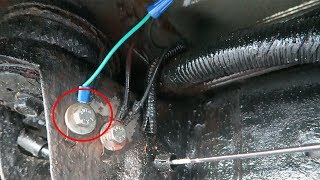
- On 1999-2007 GM trucks, fix this code 50% of the time for $0 by cleaning the black TCCM ground wire bolted to the frame under the driver's door.
- Driving on dry pavement while stuck in 4-High causes severe drivetrain binding, risking a $2,500 to $4,500 catastrophic transfer case failure.
- Never replace the $300+ TCCM without first testing the 4WD fuses, performing a 60-second battery disconnect reset, and scanning for companion 'U' codes.
What Does C1870 Mean?
Code C1870 means your vehicle's main computer lost communication with or detected a serious fault in the Transfer Case Control Module (TCCM). The TCCM controls your 4WD system; when it fails, it disables 4WD and triggers the 'Service 4WD' light.
Technical definition: OBD-II code C1870 indicates a fault detected by the Powertrain Control Module (PCM) or Body Control Module (BCM) regarding the Transfer Case Control Module (TCCM) or its electrical circuits. On specific makes like Honda or Lincoln, this 'C' (Chassis) code refers to completely different systems, such as air suspension or emissions, requiring manufacturer-specific scan tools.
Can I Drive With C1870?
Yes, But With Caution. Yes, but your four-wheel drive system is disabled. The vehicle is safe to drive in two-wheel drive on paved roads. However, if the vehicle is stuck in 4-High or 4-Low, you must stop driving on dry, high-traction surfaces immediately. Drivetrain binding from turning on pavement causes severe stress and leads to catastrophic transfer case failure, a $2,000 to $4,000 repair. If you hear grinding or feel the vehicle bucking on turns, tow it.
Common Causes
- Poor or Corroded Ground Wire (Very Common) — The TCCM requires a solid ground connection to the vehicle's frame. On 1999-2007 GM trucks, this ground wire sits under the driver's side door and corrodes heavily 🎬 Watch: How to fix common 4WD ground wire corrosion issues., interrupting module power.
- Failed Transfer Case Shift Motor (Encoder Motor) (Very Common) — This electric motor mounts on the transfer case and physically shifts the gears. It fails frequently due to internal wear, stripped plastic gears, or a broken integrated position sensor.
- Faulty Transfer Case Control Module (TCCM) (Very Common) — The TCCM fails internally from age, vibration, or electrical surges. This is a primary cause on GM and Ford trucks.
- Software Glitch or 'Logic Lock' (Common) — The control module's software enters a frozen error state, known as a 'logic lock', due to a voltage spike. The module is physically fine but stops communicating until hard-reset.
- Blown 4WD System Fuse (Less Common) — A short circuit in the shift motor or wiring blows the 4WD protection fuses (labeled ATC, 4X4, or TREC), instantly disabling the system.
- Damaged Wiring or Connectors (Less Common) — Wiring to the TCCM or shift motor frays or corrodes from road debris, causing open or short circuits.
- Faulty Serial Data Gateway Module (SDGM) (Rare) — On 2017+ GM vehicles, all module communications route through a gateway. An SDGM connector failure blocks TCCM communication, triggering the fault.
- Defective 4WD Selector Switch (Rare) — The dash-mounted switch used to select 4WD modes fails electrically, preventing mode selection.
Symptoms
- 'Service 4WD' Light is On — The driver information center displays a message like 'Service 4WD' or 'Check 4x4'.
- Cannot Shift Into or Out of 4WD — The vehicle ignores commands to change modes. The selector switch feels unresponsive.
- 4WD Indicator Lights Flashing or Dead — The selected mode light flashes briefly and goes out, indicating a failed shift. Alternatively, the lights remain completely dark.
- Stuck in a 4WD Mode — The vehicle remains locked in 4-High or 4-Low, causing dangerous drivetrain binding on dry pavement.
- Grinding or Clicking Noises When Shifting — Audible grinding or clicking from under the vehicle indicates a failing shift motor struggling to engage the gears.
- Intermittent 4WD Operation — The system works sporadically, pointing to a loose electrical connection or a failing relay.
Diagnostic Flowchart
Tap your situation to follow the diagnostic path that matches what you're seeing on this code.
Common Fixes & Costs
- Repair TCCM Ground Wire — Parts: $0-$5, Labor: $50-$125, ~0.8 hr book time (DIY)
- Replace Transfer Case Shift Motor
— Parts: $150-$300, Labor: $150-$250, ~1.2 hr book time
(Intermediate)
Ford F-150 (2004-2008): OEM 8L3Z-7G360-A (Alt: Dorman 600-911)
Chevrolet/GMC 1500 (1999-2007): OEM 19125571 (Alt: Dorman 600-901) - Replace Transfer Case Control Module (TCCM)
— Parts: $200-$400, Labor: $150-$300 (includes programming), ~1.0 hr book time
(DIY)
Chevrolet/GMC 1500 (2003-2006, w/ NP8): OEM 12590219 (Alt: Dorman 599-114) - TCCM Reprogramming/Update — Parts: $0, Labor: $125-$250, ~1.2 hr book time (Pro Only)
- Replace 4WD Selector Switch
— Parts: $40-$150, Labor: $50-$125, ~0.7 hr book time
(DIY)
Chevrolet/GMC 1500 (2003-2007): OEM 19259312 (Alt: Dorman 901-072)
DIY vs Professional
- Repair TCCM Ground Wire 🟢 Beginner
Tools: Socket set, wire brush, safety glasses. - Replace 4WD Selector Switch 🟢 Beginner
Tools: Plastic trim removal tools, small screwdriver. - Replace Transfer Case Shift Motor 🟢 Beginner
Tools: Jack and jack stands, socket set, RTV sealant, torque wrench. - Replace Transfer Case Control Module (TCCM) 🟢 Beginner
Tools: Socket set or wrenches.
Used vs. New Parts: Buying Guide
When a used part is worth it: A used TCCM from a low-mileage vehicle is cost-effective for older vehicles if programming is not required. Never buy a used transfer case shift motor due to high failure rates.
Donor-vehicle mileage cap: roughly under 75000 miles for the part to have meaningful remaining life.
Donor quality checklist:
- Match the part number exactly.
- Avoid parts from vehicles in high-humidity or road-salt regions to prevent corrosion issues.
Decision logic:
- If The required part is a Transfer Case Shift Motor → Buy new. Used parts carry a high risk of premature failure.
- If The replacement TCCM requires VIN programming → Buy new (OEM or pre-programmed aftermarket) to ensure compatibility.
Warranty tradeoff: Used parts offer 30-90 day warranties. New aftermarket parts offer 1-year to lifetime warranties.
Worst-case if a used part fails: $300-$500 if a used part fails, accounting for repeat labor and a new part.
What Happens If You Wait — Timeline
- Immediate: Code sets, 'Service 4WD' light appears. System defaults to 2WD. No physical damage occurs if the vehicle remains in 2WD. (MPG impact: 0%% · Added cost: $0)
- 1-50 miles (if stuck in 4WD): Driving on dry pavement causes immediate drivetrain binding. The vehicle bucks in tight turns, placing severe stress on the drivetrain. (MPG impact: 5-10%% · Added cost: $50-$200 (accelerated tire wear))
- 50-500 miles (if stuck in 4WD): Transfer case fluid overheats and breaks down. The internal chain stretches, and differential gears experience extreme wear. (MPG impact: 10-15%% · Added cost: $400-$1,200 (tire, CV joint, and seal damage))
- 500+ miles (if stuck in 4WD): Catastrophic failure. The transfer case chain snaps or gears shatter, resulting in a total loss of power and a locked drivetrain. (MPG impact: N/A% · Added cost: $2,500-$4,500 (full transfer case replacement))
Cost of Not Fixing It
- Immediate: No access to 4WD, reducing safety in inclement weather. (Added cost: $0)
- 1-3 months: If stuck in 4-High, driving on dry pavement causes excessive tire wear and stress on the front differential and axles. (Added cost: $400-$1000)
- 3+ months: Continued driving on pavement while stuck in 4WD destroys the transfer case chain and gears. (Added cost: $2,500-$4,500)
Diagnosis Steps
- Check the Fuses
Locate the fuse box using your owner's manual. Pull fuses labeled '4WD', 'TCCM', or 'ATC'. Replace any blown fuses.
Tools: Owner's manual, fuse puller (Beginner) - Inspect the TCCM Ground Wire
On 1999-2007 GM trucks, locate the black wire bolted to the frame under the driver's side door. Unbolt it, clean the frame and terminal with a wire brush until shiny, and re-secure tightly.
Tools: Socket set, wire brush (Beginner) - Perform a Hard Reset
Disconnect both battery cables. Touch the two cable ends together for 60 seconds to drain residual module power, then reconnect. This clears temporary 'logic locks'.
Tools: Wrench for battery terminals (Beginner) - Test the 4WD Selector Switch
Turn the ignition to 'Run' (engine off). Turn the 4WD selector knob. Listen for a relay click and a whirring sound from the shift motor. If you hear nothing, the switch or TCCM is suspect.
Tools: Quiet environment (Intermediate) - Test the Transfer Case Shift Motor
Have an assistant switch between 2WD and 4WD while you listen under the vehicle. A click with no motor sound means a dead motor. A spinning sound with no shift means stripped internal gears.
Tools: Assistant, quiet environment (Intermediate) - Visually Inspect Wiring
Inspect wiring harnesses connected to the TCCM and shift motor for damage, corrosion, or chafing against the frame.
Tools: Flashlight (Intermediate) - Test the TCCM with a Scan Tool
Connect a bidirectional scan tool. If it cannot communicate (showing U0102), check TCCM power/ground. If it communicates but shows C1870, the TCCM detects an internal or component fault.
Tools: Professional bidirectional scan tool (Advanced) - Pro Tip: Test Selector Switch Output
Back-probe the signal wire at the TCCM connector with a multimeter set to DC volts. Voltage must change as you turn the knob. Alternatively, measure resistance across switch pins (e.g., GM 4-Hi reads ~0.36 kΩ). Erratic readings indicate a bad switch.
Tools: Multimeter, vehicle-specific wiring diagram (Advanced) - Pro Tip: Test Encoder Motor Resistance
Disconnect the encoder motor and measure resistance between the control terminals. A healthy motor reads 2.0 to 3.0 ohms. 'OL' indicates an open circuit, requiring replacement.
Tools: Multimeter, service manual (Advanced) - Pro Tip: Bench Test Ford Encoder Motor Contact Plate
For Ford P1867, test the motor's internal contact plate. Check for continuity between the common pin and position pins while manually rotating the gear. Erratic resistance indicates a failed contact plate.
Tools: Multimeter, Torx bits (Advanced)
When This Code Triggers (Freeze-Frame Conditions)
- System Voltage: 13.5-14.5V (Normal operating voltage; fault triggers on key-on or during driving.)
- Engine State: Key-On, Engine-Off OR Engine Running (The TCCM performs a self-test at ignition-on; faults are also detected during shift attempts.)
- Commanded 4WD State: During transition (e.g., 2-Hi to 4-Hi) (Sets when the driver requests a mode change and the TCCM detects a failure to complete the shift.)
Related Codes
- U0102 — Means 'Lost Communication With TCCM.' The module is completely offline. Check power, ground, and network wiring. C1870 means the module is online but detects a fault.
- C0327 — Points to a fault in the transfer case motor's position sensor. Appears with C1870 when the shift motor assembly is the root cause.
- C0306 — Indicates a fault in the motor control circuit. The TCCM commands the motor but detects an open or short in the wiring.
- P1867 — Ford-specific code for a failed position sensor inside the shift motor assembly. Strongly indicates the shift motor requires replacement.
Climate & Environmental Factors
- Road Salt (Winter Climates): Salt spray creates a corrosive solution that destroys the TCCM ground wire, wiring harnesses, and shift motor electronics. 'Salt Belt' vehicles experience significantly higher failure rates.
- High Humidity / Moisture: Water intrusion from deep puddles or pressure washing damages shift motor seals and electrical connectors, causing immediate failure.
How to Talk to a Mechanic About This Code
Say this: "I have a 'Service 4WD' light and my scanner shows code C1870. Before replacing major parts like the TCCM, please check the 4WD fuse, the TCCM ground wire for corrosion, and related wiring for damage."
This directs the shop toward a logical, cost-effective diagnostic process and prevents them from immediately quoting an expensive module replacement.
Avoid saying:
- 'My 4x4 isn't working, can you fix it?'
- 'The 'Service 4WD' light is on, just do whatever it takes.'
- 'I think I need a new 4WD computer.'
Questions to ask before authorizing the repair:
- Did you confirm the TCCM ground wire is clean and tight?
- Did you test for power and ground at the TCCM and shift motor connectors?
- If you recommend a TCCM, what specific tests condemned the old part?
- If the part needs programming, is that included in the quote?
Where to Take It: Dealer vs Independent vs Chain
- Dealer:
Recommended for newer vehicles or if a software update is required.
Best for: Vehicles under warranty, Newer vehicles (2015+) requiring TSB software reflashes, When the replacement TCCM requires proprietary VIN programming
Downsides: Highest labor rates, May prefer replacing entire harnesses over cleaning simple ground wires. (Typical cost: +50% vs. baseline) - Independent Shop:
Best overall fit for most out-of-warranty C1870 repairs.
Best for: Out-of-warranty GM and Ford trucks with well-known C1870 issues., Diagnosing common failures like the TCCM ground, shift motor, or selector switch.
Downsides: Ensure they possess a professional scan tool capable of reading C and U codes. (Typical cost: +0% vs. baseline) - Chain Shop:
AVOID for diagnosis. The risk of an expensive misdiagnosis is high.
Best for: Not recommended for initial diagnosis of this code.
Downsides: Technicians lack specialized electrical diagnostic experience., High pressure to sell parts leads to unnecessary TCCM replacements. (Typical cost: -10% vs. baseline)
When to Walk Away From the Repair
If the estimated repair cost exceeds 40-50% of the vehicle's private-party value, reconsider the repair.
- Car worth $5000, fix is $250: Fix it. This is a minor cost to restore a key vehicle function.
- Car worth $5000, fix is $1200: Borderline. Consider the vehicle's overall condition. Get a second opinion.
- Car worth $5000, fix is $3500: Walk away. The repair cost approaches the vehicle's value.
What Scan Tool You Need for This Code
Minimum: An OBD-II reader that reads and clears 'C' (Chassis) and 'U' (Network) codes. Basic $20 readers only handle 'P' codes and will not see C1870.
A standard code reader reports 'No Codes Found' even when the 'Service 4WD' light is on. You must read Chassis and Network codes to diagnose this issue.
Budget: BlueDriver Pro (~$99) — Reads and clears 'C' and 'U' codes on most GM, Ford, and Chrysler vehicles. Provides live data and repair reports.
Mid-range: XTOOL D7 (~$350) — A bidirectional scan tool. Commands the shift motor to engage directly from the tool, confirming if the motor, module, or wiring is faulty.
Professional: Autel MaxiCOM MK808BT (~$500) — Offers full bidirectional control, module coding, and diagnoses complex network issues like faulty SDGMs on newer GM trucks.
Rent vs buy: Auto parts stores offer free scans that read ABS lights, which may retrieve C1870. However, buying a tool like BlueDriver is necessary for DIY repairs.
How to Clear the Code After You Fix It
- Use an OBD-II scan tool to clear the C-codes and related U-codes.
- Disconnect the negative battery terminal for 15 minutes to hard-reset all modules.
- With the engine running, cycle the 4WD selector switch through all modes, waiting for each to engage.
Drive cycle (~15 minutes): Perform a key cycle and successfully shift between 2WD and 4WD a few times. A short 15-minute drive confirms the light stays off.
Readiness monitors affected: None. C1870 is a chassis code and does not affect emissions readiness monitors.
Watch out for:
- Disconnecting the battery clears the light temporarily, but it returns immediately if the hard fault remains.
- Basic code readers only read 'P' codes and cannot clear 'C' or 'U' codes.
Will This Fail Emissions / State Inspection?
No — by itself this code doesn't fail OBD inspection (but it can keep readiness monitors from setting, which causes a separate fail).
- California: C1870 does not cause a smog check failure. However, some inspectors refuse to test vehicles with an illuminated 'Service 4WD' light.
- New York: The safety inspection does not check the 'Service 4WD' light. The OBD-II emissions test ignores 'C' codes.
- Texas: Emissions tests scan for 'P' codes. A C1870 code will not cause a failure.
Most Commonly Affected Vehicles
- Chevrolet Silverado 1500 (1999-2007) — Extremely common on the GMT800 platform. Caused by the TCCM ground wire corroding under the driver's side door.
- GMC Sierra 1500 (1999-2007) — Identical to the Silverado; suffers from the same TCCM and ground wire failures.
- Ford F-150 (2004-2011) — Prone to transfer case shift motor failures (code P1867) and vacuum-operated hub (IWE) issues.
- Chevrolet Tahoe / Suburban / Yukon (2000-2014) — Shares 4WD components with the Silverado. Newer models (2015+) experience SDGM communication issues.
- Ford Explorer / Ranger (1998-2010) — The shift motor fails frequently due to water intrusion or internal position sensor breakage.
- Honda CR-V (2012-2016) — C1870 indicates a 'Fuel and Emissions Related Malfunction' or AWD control unit fault. Requires a Honda-specific scanner.
- Jeep Grand Cherokee / RAM 1500 (2014-2022) — Communication codes (U0102) trigger due to poorly seated connectors at the Drivetrain Control Module (DTCM).
- GMC Yukon / Sierra 1500 (2017-2020) — Communication codes trigger due to a 'logic lock' at the Serial Data Gateway Module (SDGM), per TSB PIT5586G.
Manufacturer-Specific Notes
- General Motors (Chevrolet/GMC): The TCCM ground wire on 1999-2007 trucks is the most famous quirk. For 2015+ models, check TSB PIT5586G for SDGM logic locks before replacing parts.
- Ford: The vacuum-operated Integrated Wheel Ends (IWE) leak vacuum, causing a grinding noise identical to a transfer case issue.
- Honda: C1870 has multiple meanings, including 'Air Suspension Gate Solenoid' or 'Fuel and Emissions Malfunction'. Diagnosis requires a Honda scanner.
- Jeep / RAM (FCA): TSB RSU 22-226 advises technicians to disconnect and reconnect the DTCM connectors to fix poorly seated pins before performing diagnostics.
Real Owner Stories
2005 Chevrolet Silverado 1500 at 145K miles
'Service 4WD' light stayed on. Could not shift into 4-High during a snowstorm.
What they tried:
- Checked the 4x4 fuse, which was good.
- Attempted a battery disconnect reset, but the light returned immediately.
Outcome: Located the TCCM ground wire bolted to the frame under the driver's side door and found it heavily corroded. Sanded the frame and wire terminal to bare metal, re-attached securely. The light went out and 4WD function was restored. Total cost: $0.
Lesson: On 1999-2007 GM trucks, always check the driver-side frame ground wire first. It is the most common failure point and costs nothing to fix.
2008 Ford F-150 at 110K miles
Heard a grinding noise when trying to engage 4WD, followed by the 'Check 4x4' light. Scan showed code P1867.
What they tried:
- A shop quoted $700 for a new Transfer Case Control Module (TCCM).
- Owner researched P1867 and found it pointed to the shift motor's internal sensor.
Outcome: Declined the TCCM replacement. Installed a new OEM shift motor for $250 in 1.5 hours. This resolved the code and grinding, restoring 4WD.
Lesson: A grinding noise and code P1867 point directly to the shift motor, not the control module. Trust specific component codes over generic module replacements.
2017 GMC Sierra at 60K miles
Instrument panel gauges fluctuated, 'Service 4WD' appeared, and the truck occasionally failed to start. Scanner showed U0102 (Lost Comms with TCCM).
What they tried:
- A hard reset temporarily fixed the issue, but it always returned.
- Mechanic suggested replacing the TCCM.
Outcome: Found GM TSB PIT5586G describing a 'logic lock' at the Serial Data Gateway Module (SDGM). Disconnected and securely reconnected the main SDGM connectors behind the dashboard. This stabilized the network, resolving all codes without parts.
Lesson: On 2017+ GM trucks, communication issues stem from the SDGM. Always check TSBs before replacing modules.
How to Prevent This Code From Triggering
- Engage 4WD System Monthly (Once per month) — Cycling the 4WD system on a low-traction surface lubricates transfer case internals and prevents the electric shift motor contacts from oxidizing and seizing.
- Apply Dielectric Grease to Connectors (When servicing) — Applying non-conductive dielectric grease to TCCM and shift motor pins seals them from water intrusion, preventing corrosion.
- Check and Clean TCCM Ground Point (Every 30,000 miles (GM owners)) — Proactively cleaning the frame ground wire under the driver's door prevents the most common GM 4WD electrical failure.
Frequently Asked Questions
What are the most common misdiagnosis mistakes for C1870?
The biggest mistake is replacing the expensive TCCM without testing. Technicians often find the actual cause is a corroded ground wire, chafed wiring, or a blown fuse. Always check for TSBs on newer vehicles before condemning modules.
My scanner shows a 'U' code like U0102 with C1870. What's the difference?
A U0102 code means 'Lost Communication With TCCM,' indicating the module is completely offline due to power, ground, or network failure. A C1870 code means the TCCM is online but detects an internal fault or a failure in a controlled part.
Can a software update or 'reflash' fix a C1870 code?
Yes. Modules experience software glitches or 'logic locks' where they freeze. A dealership performs a software update or 'reflash' for $125 to $250, resolving the issue without replacing parts.
Can I just disconnect the battery to reset the 'Service 4WD' light?
Disconnecting the battery for 30 minutes clears the code temporarily if caused by a software glitch. However, if a hard fault exists, the light returns immediately after the system runs its self-test.
Is the Transfer Case Control Module (TCCM) the same as the transfer case motor?
No. The TCCM is the electronic computer located inside the cabin or on the frame rail. The transfer case shift motor is the mechanical part bolted to the transfer case that physically moves the gears.
Can a weak or dying battery cause a C1870 code?
Yes. Low system voltage causes electronic modules to malfunction and set false codes. Test your battery and alternator before replacing expensive 4WD components.
What happens if I ignore a C1870 code?
Ignoring the code disables your 4WD, reducing safety in poor weather. If stuck in 4WD on dry pavement, it causes severe drivetrain binding, leading to thousands of dollars in damage to the transfer case and axles.
Key Takeaways
- Code C1870 indicates a communication loss or internal fault in the Transfer Case Control Module (TCCM), completely disabling your 4WD system.
- On 1999-2007 GM trucks, fix this code 50% of the time for $0 by cleaning the black TCCM ground wire bolted to the frame under the driver's door.
- Driving on dry pavement while stuck in 4-High causes severe drivetrain binding, risking a $2,500 to $4,500 catastrophic transfer case failure.
- Never replace the $300+ TCCM without first testing the 4WD fuses, performing a 60-second battery disconnect reset, and scanning for companion 'U' codes.
Helpful Videos

Shop the Parts Behind C1870
Below are the parts most often responsible for code C1870, ranked by how frequently each one is the actual culprit (per the diagnosis above). Tap any to see what we have for your vehicle.


The information in this article is provided for general reference and educational purposes only. Vehicle specifications, procedures, and part compatibility can vary by production date, trim level, and region. Always consult your vehicle's factory service manual and verify part numbers before purchasing or performing repairs. Safety-critical components such as airbags, seat belts, and braking systems should be installed by a qualified professional.
- 🧭 Diagnostic Flowchart
- 🎬 Helpful Videos
- 🛍️ Shop This Part
- What Does C1870 Mean?
- Can I Drive With C1870?
- Common Causes
- Symptoms
- Common Fixes & Costs
- DIY vs Professional
- Used vs. New Parts: Buying Guide
- What Happens If You Wait — Timeline
- Cost of Not Fixing It
- Diagnosis Steps
- When This Code Triggers (Freeze-Frame Conditions)
- Related Codes
- Climate & Environmental Factors
- How to Talk to a Mechanic About This Code
- Where to Take It: Dealer vs Independent vs Chain
- When to Walk Away From the Repair
- What Scan Tool You Need for This Code
- How to Clear the Code After You Fix It
- Will This Fail Emissions / State Inspection?
- Most Commonly Affected Vehicles
- Manufacturer-Specific Notes
- Real Owner Stories
- 2005 Chevrolet Silverado 1500 at 145K miles
- 2008 Ford F-150 at 110K miles
- 2017 GMC Sierra at 60K miles
- How to Prevent This Code From Triggering
- Frequently Asked Questions
- What are the most common misdiagnosis mistakes for C1870?
- My scanner shows a 'U' code like U0102 with C1870. What's the difference?
- Can a software update or 'reflash' fix a C1870 code?
- Can I just disconnect the battery to reset the 'Service 4WD' light?
- Is the Transfer Case Control Module (TCCM) the same as the transfer case motor?
- Can a weak or dying battery cause a C1870 code?
- What happens if I ignore a C1870 code?
- Key Takeaways
- 🎟️ Get 5% Off