

OBD-II Code C1911: An ASE Master Technician's Expanded Guide
What C1911 means, why it triggers, and how to fix it on multiple vehicle systems
- Code C1911 indicates either a Tire Pressure Monitoring System (TPMS) communication failure or an electronic suspension circuit fault, depending entirely on your vehicle's make.
- Mitsubishi and Subaru vehicles log C1911 for TPMS failures, while GM, Jaguar, and Lincoln log it for right-front electronic shock actuator faults.
- A dead internal battery (which lasts 5-10 years) causes 80% of TPMS-related C1911 codes and requires replacing the entire $70-$200 sensor assembly.
- Damaged wiring or a corroded connector at the right-front shock absorber causes most suspension-related C1911 codes, requiring a $100-$300 pigtail repair rather than a $1,000+ shock replacement.
- A TPMS light that flashes for 60 seconds at startup confirms a sensor communication failure, whereas a 'Service Suspension' message confirms a chassis ride-control fault.
What Does C1911 Mean?
Code C1911 signals a chassis system failure. It carries three distinct definitions depending on the manufacturer: a TPMS sensor communication failure, an electronic suspension shock actuator short circuit, or an active stabilizer relay fault.
Technical definition: SAE/ISO definitions vary by manufacturer: "Tire ID Reception Fail, Tire 1" (Mitsubishi/Subaru), "Ride Control RF Shock Actuator Circuit Short To Battery" (GM/Jaguar/Ford), or "Malfunction in Rear Active Stabilizer Main Relay" (Toyota/Lexus).
Can I Drive With C1911?
Yes, But With Caution. You can drive, but a key safety system is disabled. A TPMS fault removes blowout protection; NHTSA data shows TPMS reduces severe underinflation incidents by 55%. A suspension fault compromises handling and increases highway braking distance by over 10 feet. Diagnose and repair promptly to avoid unsafe conditions.
Common Causes
- Dead Battery or Failed TPMS Sensor (Very Common) — The non-rechargeable lithium battery inside the tire pressure sensor dies after 5-10 years. The battery cannot be replaced separately; the entire sensor assembly must be swapped. Physical damage from potholes or internal moisture also destroys the sensor electronics.
- Damaged Suspension Wiring or Corroded Connector (Common) — The wiring harness leading to the right-front electronic shock actuator breaks from road debris, or the connector pins corrode from moisture. This creates a short circuit, triggering the suspension variant of C1911.
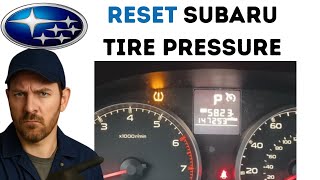
- Failed TPMS Relearn Procedure (Common) — After rotating tires or replacing a sensor, the vehicle's computer requires a specific relearn procedure to map the new sensor IDs. 🎬 Watch: How to perform a quick Subaru TPMS relearn If this fails or is skipped, the system loses communication and sets code C1911.
- Faulty Ride Control Shock Actuator (Less Common) — The electronic actuator integrated into the top of the shock absorber fails internally. This prevents the computer from adjusting ride firmness and requires replacing the entire shock assembly.
- Faulty TPMS Receiver Module (ECU) (Less Common) — The central module that receives TPMS signals fails. On specific Mitsubishi models, the sensors function perfectly, but the main computer (ETACS-ECU or KOS-ECU) drops the signal.
- Aftermarket Wheel Interference (Uncommon) — Dense metal alloys in custom aftermarket wheels block the radio frequency signal between the TPMS sensor and the vehicle's receiver.
- Failed Rear Active Stabilizer Relay (Rare) — On specific Toyota and Lexus SUVs equipped with KDSS or active stabilizers, the main power relay fails, disabling the sway bar adjustment system.
Symptoms
- Flashing TPMS Light and Blank Pressure Reading — The TPMS light flashes for 60-90 seconds at startup before turning solid. Vehicles with individual tire displays will show dashes (--) for the right-front wheel, confirming a communication loss.
- "Service Suspension System" or "CATS Fault" Message — Vehicles with electronic ride control display a direct warning message on the instrument cluster when the shock actuator circuit shorts out.
- Bumpy, Harsh, or Uncontrolled Ride — The suspension system defaults to its stiffest, passive setting when a fault occurs. The vehicle feels excessively harsh over bumps and sways abruptly during cornering.
- Active Stabilizer System Warning Light — Toyota and Lexus models illuminate a dedicated KDSS or suspension warning light when the stabilizer relay fails.
Common Fixes & Costs
- Replace Faulty TPMS Sensor
— Parts: $40-$120, Labor: $30-$80, ~0.8 hr book time
(Professional)
: OEM
: OEM - Repair Damaged Shock Actuator Wiring
— Parts: $10-$50, Labor: $100-$300, ~1.5 hr book time
(Intermediate)
: OEM - Replace Electronic Shock Absorber
— Parts: $400-$1500, Labor: $150-$400, ~1.5 hr book time
(Professional)
: OEM - Convert to Passive Suspension
— Parts: $400-$1000, Labor: $300-$600, ~4.0 hr book time
(Professional)
: OEM - Replace TPMS Control Module (ECU)
— Parts: $200-$700, Labor: $100-$250, ~1.2 hr book time
(Professional)
: OEM
Used vs. New Parts: Buying Guide
When a used part is worth it: Buy used electronic shocks for older vehicles to save money, provided the donor has low mileage. Never buy used TPMS sensors, as the internal battery is already depleted.
Donor-vehicle mileage cap: roughly under 60000 miles for the part to have meaningful remaining life.
Donor quality checklist:
- Verify the exact OEM part number matches the electronic shock.
- Inspect the shock body for fluid leaks and the electrical connector for corrosion.
- Source parts from dry, southern climates to avoid salt damage.
Decision logic:
- If The part is a TPMS sensor → Always buy new. The labor cost to install a used sensor with a dying battery negates any savings.
- If The part is an electronic shock and the vehicle is over 10 years old → A used part from a verified low-mileage donor is a cost-effective choice.
- If A new OEM electronic shock exceeds $1000 → Install a passive suspension conversion kit for a permanent, reliable fix.
Warranty tradeoff: Used parts offer 30-day part-only warranties. New aftermarket parts offer 1-year warranties. OEM parts offer 2-year warranties.
Worst-case if a used part fails: $400 if a used electronic shock fails, requiring you to pay for the part and labor twice.
Cost of Not Fixing It
- 0-3 months: A failed suspension shock causes rapid tire cupping, ruining a new tire in under 10,000 miles. A TPMS fault leaves you blind to sudden pressure loss. (Added cost: $200-$400 (Premature tire replacement))
- 3-12 months: Driving on a failed electronic shock destroys adjacent control arm bushings and ball joints due to uncontrolled oscillation. (Added cost: $400-$1000 (Suspension component replacement))
- 12+ months: Catastrophic failure of stressed suspension joints leads to wheel separation. Undetected tire underinflation results in a high-speed blowout. (Added cost: $2000+ (Major accident or total suspension overhaul))
Diagnosis Steps
- Identify the Target System
Determine the system based on your vehicle make. Mitsubishi and Subaru indicate a TPMS issue. GM, Jaguar, and Lincoln indicate a suspension issue. Toyota and Lexus indicate a stabilizer issue.
Tools: Owner's Manual (Beginner) - Scan for Sub-Codes
Connect an OBD-II scanner capable of reading chassis (C-prefix) codes. C1910, C1921, or C1931 confirm a TPMS fault. C1912 or C0580 confirm an electronic suspension fault.
Tools: Advanced OBD-II Scanner (Beginner) - Test the TPMS Sensor
For TPMS faults, scan the right-front tire sensor with an activation tool. If the tool receives no response or shows battery voltage below 3.0V, the sensor is dead and requires replacement.
Tools: TPMS Activation Tool (Intermediate) - Inspect the RF Shock Actuator Wiring
For suspension faults, locate the right-front shock absorber. Inspect the wiring pigtail and connector at the top of the shock for severed wires, melted insulation, or green corrosion.
Tools: Flashlight (Intermediate) - Perform a Multimeter Circuit Test
Disconnect the right-front shock actuator. Turn the ignition ON. Measure voltage between the signal wire and ground. A reading of 12V+ confirms a 'Short to Battery' in the wiring harness.
Tools: Multimeter, Wiring Diagram (Advanced) - Measure Actuator Resistance
Measure the resistance across the two pins on the disconnected shock actuator. GM MagneRide shocks typically read 2-3 ohms. A reading of OL (open) or 0 ohms (short) confirms the shock itself has failed.
Tools: Multimeter (Advanced) - Check CAN Bus Communication
If sensors and wiring test good, use a professional scanner to check for U-codes (network communication faults). A U-code indicates the main ECU or receiver module is failing to process the signals.
Tools: Professional Scan Tool (Professional)
When This Code Triggers (Freeze-Frame Conditions)
- Vehicle Speed: 20-50 mph (TPMS modules run continuous checks during steady driving. Suspension faults are actively monitored during suspension travel.)
- System Voltage: 13.5-14.5V (The code sets when the charging system operates normally, making a 'short to battery' fault clearly distinguishable.)
- Ignition Cycles Since Code Set: 0 (Captures data on the exact ignition cycle the control module confirms the hard fault.)
Related Codes
- C1910 — Indicates 'Transmitter Battery Voltage Low'. If present with C1911, it guarantees the TPMS sensor battery is dead and requires replacement.
- C1921, C1931, C1941 — These are identical 'Tire ID Reception Fail' codes for the other three wheels. Multiple simultaneous codes indicate a failed receiver module, not multiple bad sensors.
- C1912 — Indicates 'Ride Control RF Shock Actuator Circuit Short To Ground'. It points to the same suspension component as C1911 but requires testing for continuity to ground instead of voltage.
- U0126, U0121 — Network communication codes. Their presence alongside C1911 proves the fault lies in the vehicle's CAN bus data network, not the physical sensor or actuator.
Climate & Environmental Factors
- Extreme Cold: Sub-zero temperatures drop the voltage of aging TPMS batteries, triggering a communication failure. Cold also thickens hydraulic fluid in electronic shocks, exacerbating actuator performance issues.
- Road Salt and High Humidity: Salt spray heavily corrodes exposed suspension wiring harnesses and connectors, directly causing the 'Short to Battery' circuit faults seen in GM and Jaguar vehicles.
How to Talk to a Mechanic About This Code
Say this: "I have a chassis code C1911. If it's a suspension issue, please inspect the wiring and connector at the right-front shock before quoting a full replacement. If it's TPMS, please attempt a sensor relearn before replacing the sensor."
Directs the technician to check the inexpensive failure points (wiring/relearns) first, preventing them from immediately defaulting to a $1,000 shock or unnecessary sensor replacement.
Avoid saying:
- My TPMS light is on, replace the sensor.
- My ride is bumpy, put new shocks on it.
- Fix whatever is causing the suspension warning.
Questions to ask before authorizing the repair:
- Did you attempt a TPMS relearn procedure first?
- Does the TPMS quote include programming the new sensor to the vehicle?
- Did you find a specific wiring failure, or is the shock actuator itself blown?
- Does the shock replacement quote include the mandatory wheel alignment?
Where to Take It: Dealer vs Independent vs Chain
- Dealer:
Use only for specific manufacturer quirks (Mitsubishi ECU) or high-end European suspension systems.
Best for: Vehicles under warranty., Mitsubishi ECU programming issues., Complex Jaguar or Land Rover suspension diagnostics.
Downsides: Highest labor rates., Likely to recommend full component replacement over minor wiring repairs. (Typical cost: +40% vs. baseline) - Independent Shop:
The best choice for most C1911 scenarios. They handle wiring repairs and sensor replacements effectively at a fair price.
Best for: Out-of-warranty vehicles., Wiring repairs and TPMS sensor replacements., Installing aftermarket passive suspension conversion kits.
Downsides: May lack proprietary software for certain TPMS relearns. (Typical cost: +0% vs. baseline) - Chain Shop:
Avoid for suspension faults. Acceptable only for straightforward TPMS sensor replacements.
Best for: Simple TPMS sensor replacement when the bad sensor is already identified.
Downsides: High pressure to replace all four sensors., Incapable of diagnosing electronic suspension circuit faults. (Typical cost: -10% vs. baseline)
When to Walk Away From the Repair
If the estimated repair cost exceeds 40% of the car's private-party value, reconsider the repair. This applies heavily to $3,000+ electronic suspension overhauls.
- Car worth $4000, fix is $2000: Walk away. A $2,000 repair on a $4,000 car is 50% of its value. Install a passive conversion kit or sell the vehicle.
- Car worth $15000, fix is $1800: Fix it. The repair is 12% of the vehicle's value, well below the threshold for a critical safety system.
What Scan Tool You Need for This Code
Minimum: A scanner capable of reading Chassis (C-prefix) codes. Basic engine code readers cannot see C1911.
C1911 is a chassis code. Standard readers only access the powertrain module, leaving you blind to ABS, SRS, and suspension faults.
Budget: BlueDriver Pro (~$99) — Reads and clears chassis codes like C1911. Cannot perform TPMS relearns or bidirectional suspension tests.
Mid-range: Foxwell NT630 Plus (~$120) — Reads chassis codes and performs basic bidirectional tests for suspension actuators. Lacks full TPMS programming.
Professional: Autel MaxiTPMS TS508WF (~$300) — A dedicated TPMS tool that activates sensors, reads battery levels, and performs the OBD-II relearn procedure required after replacement.
Rent vs buy: Buy. Free rental tools at auto parts stores only read engine codes and cannot diagnose or clear C1911.
How to Clear the Code After You Fix It
- For TPMS: Execute a TPMS relearn procedure using an activation tool and OBD-II scanner.
- For Suspension: Clear the chassis (C-prefix) codes using an advanced OBD-II scanner.
Drive cycle (~20 minutes): For TPMS auto-relearn systems: Drive continuously for 20 minutes above 25 mph to allow the receiver to map the new sensor IDs. Suspension faults require no drive cycle; clearing the code suffices.
Readiness monitors affected: None
Watch out for:
- Clearing the code without performing a TPMS relearn causes the code to return immediately.
- Using a basic $20 code reader fails because it cannot access chassis (C-prefix) modules.
- Assuming a Subaru or GM will 'auto-relearn' when a manual OBD-II reset is actually required.
Will This Fail Emissions / State Inspection?
No — by itself this code doesn't fail OBD inspection (but it can keep readiness monitors from setting, which causes a separate fail).
- New York: Vehicles 2008 and newer fail the safety inspection if the TPMS warning light is illuminated.
- Texas: The TPMS warning light does not cause a failure during the annual safety inspection.
- California: C1911 does not fail a smog check unless the fault is severe enough to illuminate the primary Check Engine Light.
Most Commonly Affected Vehicles
- Mitsubishi Mirage / Mirage G4 (2014-2020) — Highly prone to C1911 TPMS failures. TSB TIN-19-31-001REVII notes the fault frequently lies in the main computer (KOS/ETACS-ECU) dropping sensor registrations, not the sensors themselves.
- Jaguar XK8, XKR, XJ (1996-2009) — The CATS suspension system sets C1911 when the short electrical pigtail on top of the shock absorber breaks from the shock body rotating over time.
- Cadillac / GMC / Chevrolet Escalade, Tahoe, Suburban, Yukon (2002-2014) — Z55 Autoride and Magnetic Ride Control systems frequently suffer front strut actuator failures and wiring corrosion due to exposed underbody routing.
- Subaru Impreza, WRX, Forester, Outback (2010-2018) — C1911 indicates a TPMS communication failure. The auto-relearn procedure frequently fails after swapping winter tires, requiring a manual OBD-II reset.
- Ford Expedition, Explorer (2003-2014) — Models equipped with electronic air suspension log C1911 for right-front shock actuator circuit shorts, often accompanied by compressor failures.
- Toyota / Lexus GX470, LX470 (2003-2009) — C1911 relates to a 'Malfunction in Rear Active Stabilizer Main Relay' on models equipped with KDSS or Active Height Control.
Manufacturer-Specific Notes
- Mitsubishi: TSB-15-32-003 instructs technicians to stop replacing TPMS sensors for C1911 and instead re-register the IDs to the main ECU, as the computer frequently drops the memory.
- General Motors: The electronic suspension control module mounts under the rear of the vehicle, exposing it to severe road salt corrosion that destroys the entire system harness.
- Subaru: Post-2008 models lack a manual TPMS reset button. The system relies on an 'auto-relearn' drive cycle that frequently fails, forcing owners to pay for dealer OBD-II resets.
Frequently Asked Questions
Why is my TPMS light still on after replacing the sensor?
This happens for two reasons: the new sensor's unique ID was not programmed into the vehicle's computer via a relearn procedure, or the TPMS control module itself has failed. Mitsubishi models frequently suffer from the latter.
Can I just ignore the C1911 code?
No. Ignoring a TPMS fault leaves you vulnerable to undetected high-speed blowouts. Ignoring a suspension fault compromises handling and increases emergency stopping distances by over 10 feet.
My TPMS light is on, but my tire pressure is fine. Is it a C1911?
Yes. A TPMS light that flashes for 60-90 seconds at startup before turning solid indicates a system communication fault like C1911, not low tire pressure. Always verify actual pressures with a manual gauge first.
Can I replace just the electronic actuator on my shock absorber?
Almost never. The electronic actuator is integrated into the top of the shock absorber and is not sold separately. You must replace the entire shock or strut assembly.
Can I convert my electronic suspension to a regular one?
Yes. Aftermarket conversion kits replace expensive electronic or air components with high-quality conventional shocks and coil springs. This provides a reliable, permanent, and affordable solution for older luxury vehicles.
Can a dead car battery cause a C1911 code?
A weak main vehicle battery causes erratic electrical glitches, but it rarely triggers a standalone C1911 code. The non-rechargeable lithium battery inside the wheel-mounted TPMS sensor is the actual culprit in 80% of these cases.
Can I replace a TPMS sensor myself?
No, unless you own a tire mounting machine. You must dismount the tire to access the sensor, install the new unit, rebalance the wheel, and program the new sensor ID into the car's computer using a specialized TPMS scan tool.
Key Takeaways
- Code C1911 indicates either a Tire Pressure Monitoring System (TPMS) communication failure or an electronic suspension circuit fault, depending entirely on your vehicle's make.
- Mitsubishi and Subaru vehicles log C1911 for TPMS failures, while GM, Jaguar, and Lincoln log it for right-front electronic shock actuator faults.
- A dead internal battery (which lasts 5-10 years) causes 80% of TPMS-related C1911 codes and requires replacing the entire $70-$200 sensor assembly.
- Damaged wiring or a corroded connector at the right-front shock absorber causes most suspension-related C1911 codes, requiring a $100-$300 pigtail repair rather than a $1,000+ shock replacement.
- A TPMS light that flashes for 60 seconds at startup confirms a sensor communication failure, whereas a 'Service Suspension' message confirms a chassis ride-control fault.
Helpful Videos
Shop the Parts Behind C1911
Below are the parts most often responsible for code C1911, ranked by how frequently each one is the actual culprit (per the diagnosis above). Tap any to see what we have for your vehicle.


The information in this article is provided for general reference and educational purposes only. Vehicle specifications, procedures, and part compatibility can vary by production date, trim level, and region. Always consult your vehicle's factory service manual and verify part numbers before purchasing or performing repairs. Safety-critical components such as airbags, seat belts, and braking systems should be installed by a qualified professional.
- 🎬 Helpful Videos
- 🛍️ Shop This Part
- What Does C1911 Mean?
- Can I Drive With C1911?
- Common Causes
- Symptoms
- Common Fixes & Costs
- Used vs. New Parts: Buying Guide
- Cost of Not Fixing It
- Diagnosis Steps
- When This Code Triggers (Freeze-Frame Conditions)
- Related Codes
- Climate & Environmental Factors
- How to Talk to a Mechanic About This Code
- Where to Take It: Dealer vs Independent vs Chain
- When to Walk Away From the Repair
- What Scan Tool You Need for This Code
- How to Clear the Code After You Fix It
- Will This Fail Emissions / State Inspection?
- Most Commonly Affected Vehicles
- Manufacturer-Specific Notes
- Frequently Asked Questions
- Why is my TPMS light still on after replacing the sensor?
- Can I just ignore the C1911 code?
- My TPMS light is on, but my tire pressure is fine. Is it a C1911?
- Can I replace just the electronic actuator on my shock absorber?
- Can I convert my electronic suspension to a regular one?
- Can a dead car battery cause a C1911 code?
- Can I replace a TPMS sensor myself?
- Key Takeaways
- 🎟️ Get 5% Off