

C1921 on 2017-2019 Mitsubishi Mirage G4: TPMS Reception Failure Causes and Fixes
Code C1921 on a 2017-2019 Mirage G4 means the vehicle's main computer has lost communication with one of the tire pressure sensors. Before replacing the sensor, try a simple re-registration procedure, as Mitsubishi TSBs indicate the sensor itself is often not the problem. Also, remove all aftermarket 12V accessories, as they are a known cause of radio frequency interference.
- C1921 means the TPMS receiver has lost contact with the sensor labeled 'Tire 2'.
- Do not immediately assume the sensor is bad. The problem is often a simple communication glitch that can be fixed by re-registering the sensor IDs.
- Remove any phone chargers or other aftermarket electronics from the car's power outlets, as they are a known cause of RF interference that can trigger this code.
- A dealer-level scan tool may be required, as some aftermarket tools cannot force the ECU to learn new sensor IDs if it has 'locked' onto the old ones.
What's Unique About the 2017-2019 Mitsubishi MIRAGE G4
For the Mirage and Mirage G4, Mitsubishi issued specific Technical Service Bulletins (TSBs) because they observed a high number of warranty claims where dealers were replacing TPMS sensors for this code, but the returned parts were found to have no issues. This indicates that on this platform, the root cause is often not a failed sensor but a communication or registration issue. One TSB, TIN1931001REV, even instructs dealers to stop diagnosis and open a case with Mitsubishi's Techline, highlighting that the problem was under active investigation by engineers from MMC/Japan for a potential 'scramble opportunity' to inspect a vehicle with the issue.
Diagnostic Flowchart
Tap your situation to follow the diagnostic path that matches what you're seeing on this vehicle.
Symptoms You May Notice
- The TPMS warning light on the instrument cluster will flash for about one minute when the car is started and then stay on continuously.
- A 'Service Required' message may appear in the multi-information display (MID).
- Immediately replacing the TPMS sensor without first attempting to re-register its ID. Mitsubishi TSB TIN-18-31-002 specifically warns against this, as many replaced sensors were found to be perfectly functional.
- Assuming the sensor is bad when the real issue is RF interference from a phone charger or other 12V accessory.
Most Likely Causes
- TPMS Sensor ID Registration Lost 🔴 High Probability → Shop Tire Pressure Monitoring System (TPMS) Sensor As highlighted in TSB TIN-18-31-002, communication glitches that can be solved by re-registering the sensor are common on this platform. The vehicle's ECU can sometimes experience a 'write lock' where it retains old sensor IDs and refuses to learn new ones until a full reset is performed with a dealer tool.
How to confirm: A professional technician uses a TPMS scan tool to attempt to re-register the existing sensor IDs with the vehicle's ECU.
Typical fix: Perform the TPMS sensor ID registration procedure using a compatible scan tool. 🎬 Watch: How to perform a Mitsubishi TPMS OBDII relearn. In some cases, a 'Total ID Clear' must be performed first.
Est. part cost: $0 - Radio Frequency (RF) Interference 🟡 Medium Probability The TPMS sensors communicate on a low-power frequency (315 MHz in North America, 433 MHz in other markets) that can be disrupted by other electronic devices. Owners and technicians specifically report issues with aftermarket phone chargers, dash cams, and GPS units causing TPMS communication codes.
How to confirm: Unplug all aftermarket devices from the 12V power outlets (phone chargers, dash cams, GPS units, etc.) and drive the vehicle to see if the code clears.
Typical fix: Remove or replace the interfering electronic device.
Est. part cost: $0 - Failing TPMS Sensor 🟡 Medium Probability → Shop Tire Pressure Monitoring System (TPMS) Sensor The battery inside the sensor is not serviceable and has a finite lifespan, typically 5-10 years. A weak battery can cause intermittent signal loss before failing completely.
How to confirm: If the sensor ID cannot be read or registered with a TPMS tool, its internal battery has likely died or the sensor has failed. A low battery may also set a specific DTC like C1920 (Transmitter BATT. voltage, Tire2).
Typical fix: Replace the TPMS sensor in the affected tire and register the new sensor ID with the vehicle.
Est. part cost: $40-$90 - Faulty TPMS Receiver or Control Module ⚪ Low Probability
How to confirm: This is diagnosed after ruling out all other possibilities. The receiver is integrated into the ETACS-ECU or KOS&OSS-ECU. A technician will use a scan tool to check for communication with the module and test its functions.
Typical fix: Replace the faulty control module (e.g., ETACS-ECU) and program it to the vehicle.
Est. part cost: $200-$500
Rare But Worth Checking
- CAN Bus or Wiring Harness Fault: A fault in the vehicle's communication network (CAN bus) can prevent the TPMS module from reporting sensor status correctly. This usually triggers other codes as well and requires advanced electrical diagnostics. The service manual explicitly states to check the CAN bus lines first using a M.U.T.-III scan tool.
Diagnosis Steps
- Verify the code is active using an OBD-II scanner capable of reading chassis codes.
- Consult TSBs TIN1931001REV and TIN-18-31-002 for this specific issue on the Mirage G4.
- Remove all aftermarket electronics from 12V power outlets to eliminate potential RF interference.
- Using a TPMS-capable scan tool, attempt to read the IDs from all four tires to identify which physical wheel corresponds to the 'Tire 2' ID.
- Perform the 'TPMS ID Registration' procedure using the scan tool, as recommended by Mitsubishi service literature.
- If registration fails, attempt a 'Total ID Clear' function if available on the scan tool, then try registration again.
- Drive the vehicle for at least 20 minutes at speeds above 25 mph (40 km/h) to see if the code clears.
- If the code returns or the sensor cannot be registered, test the sensor with a dedicated TPMS tool. If it fails the test (no signal or low battery), replace the sensor.
- If a new, known-good sensor also fails to register, the problem likely lies with the TPMS receiver module (ETACS/KOS-ECU), its wiring, or the CAN bus, requiring professional electrical diagnosis.
Parts You'll Likely Need
- TPMS Sensor
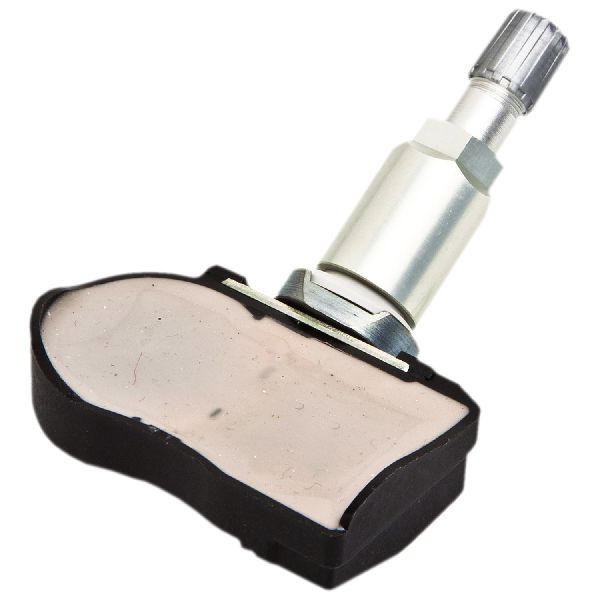
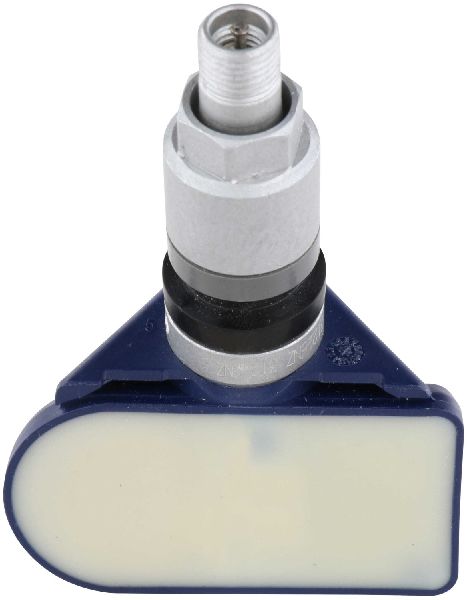
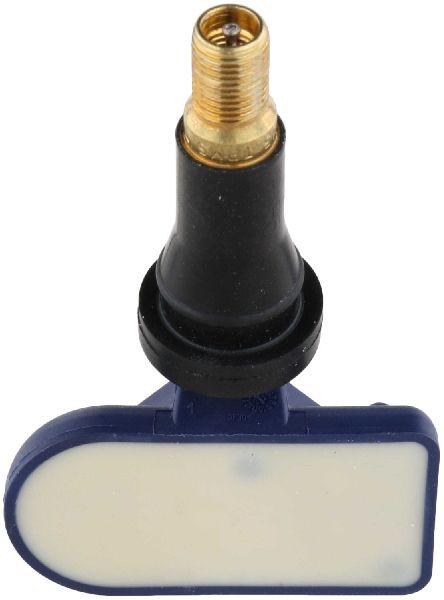
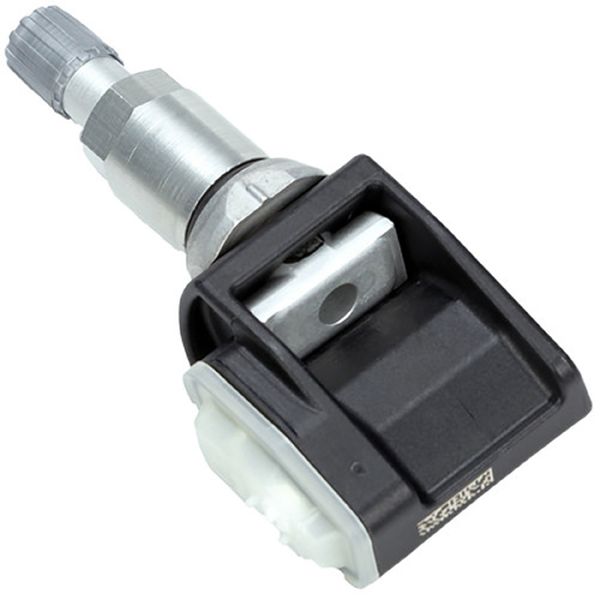
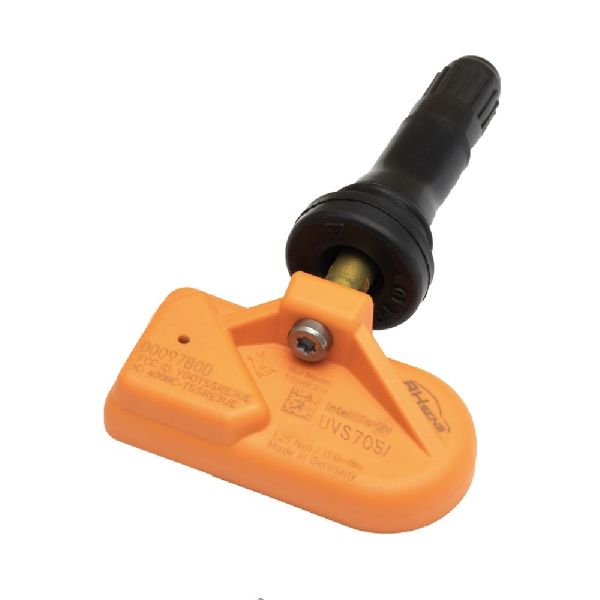
(OEM #4250C275)— This part is replaced if its internal battery has died or it has failed electronically, preventing it from transmitting its ID and pressure data. However, it is often replaced unnecessarily. The OEM part number for the 433 MHz sensor is 4250C275. Note that North American models may use a 315 MHz sensor, so verifying the correct frequency is critical.
Trusted brands: Schrader, Denso, Continental, Autel
OEM price range: $70-$120
Aftermarket price range: $40-$90
Related Codes That Often Appear With This One
- C1911 — This is the same 'Tire ID Reception Fail' error but for 'Tire 1'. Seeing multiple reception fail codes (C1911, C1921, C1931, C1941) together points more strongly toward a central receiver, CAN bus, or interference issue rather than multiple dead sensors.
- C1931 — This is the same 'Tire ID Reception Fail' error but for 'Tire 3'. Seeing multiple reception fail codes together points more strongly toward a central receiver, CAN bus, or interference issue.
- C1941 — This is the same 'Tire ID Reception Fail' error but for 'Tire 4'. Seeing multiple reception fail codes together points more strongly toward a central receiver, CAN bus, or interference issue.
- C1920 — This code indicates 'Transmitter BATT. voltage, Tire2'. Seeing this alongside C1921 strongly suggests the sensor's internal battery is failing, which is the root cause of the reception failure.
Technical Service Bulletins (TSBs) & Recalls
- TIN1931001REV: Instructs dealers to stop diagnosis and contact Techline for TPMS reception fail codes, including C1921, for a 'scramble opportunity' for factory engineers to investigate.
- TIN-18-31-002: Notes that many TPMS transmitters were being replaced for this code when no fault was found with the part, and advises re-registering sensor IDs before replacement.
Platform-Specific Known Issues
- Mitsubishi issued TSB TIN-18-31-002 specifically for 2017-2018 Mirage G4s (among others) due to a high rate of 'No Trouble Found' for TPMS sensors replaced under warranty for codes C1911, C1921, C1931, and C1941.
- TSB TIN1931001REV instructs dealers to stop diagnosis and create a Techline case if C1921 is present, suggesting a known issue that required special data collection by Mitsubishi's engineers in Japan.
- Owners on forums like MirageForum.com and Reddit frequently discuss TPMS issues, with many confirming that removing aftermarket 12V accessories or performing a sensor re-learn resolved the problem without replacing parts.
Mechanic-Grade Diagnostic Values
- Voltage at ETACS-ECU connector (BKLP terminal) to ground — expected: When brake pedal is depressed: System Voltage. When released: Approx. 0V-5V (pulse).. Failure: Readings outside this range indicate a fault in the stoplight switch circuit, which provides input to the ETACS-ECU.
Hidden / Shadow Codes Worth Checking
- C1925: Transmitter OFF mode, Tire2. This code is set if the TPMS sensor is in a sleep or shipping mode and has not been properly woken up or activated. This will cause a reception failure (C1921) because the sensor is not transmitting. (see via A dealer-level scan tool like the M.U.T.-III is required to read these specific TPMS fault codes.)
Scan Tool Commands That Help
- Mitsubishi M.U.T.-III: CAN bus diagnostics — This is the first step in the official Mitsubishi diagnostic procedure for C1921 to rule out a network communication problem before diagnosing individual components.
- Mitsubishi M.U.T.-III: Tire Pressure Sensor ID Registration — This is the primary fix recommended by TSBs. It is used to re-establish communication with the existing sensors or to program new sensors to the vehicle's receiver ECU.
- Mitsubishi M.U.T.-III: Tire Pressure Sensor ID Check — Used to confirm which sensor IDs are currently registered to the vehicle's ECU, which helps identify the specific physical tire that is not communicating.
Wiring & Ground Locations
- KOS&OSS-ECU or ETACS-ECU — The TPMS receiver is integrated into one of these two modules. The KOS&OSS-ECU is located behind the glove compartment. The ETACS-ECU is typically part of the interior junction block/fuse box.. This is the central receiver for the TPMS signals. Any power, ground, or network connection issue with this module will prevent it from receiving sensor data, causing C1921.
- G2 Ground Point — Located at the right end of the dashboard.. This is a key grounding point for components in the dash area, potentially including the KOS&OSS-ECU. A poor ground here can cause intermittent electronic failures, including loss of TPMS reception.
- Driver's Kick Panel Connectors — Behind the plastic kick panel to the left of the driver's feet.. This area is prone to moisture and corrosion from snow and salt tracked into the vehicle. Corrosion in the lowermost connectors can cause widespread electrical and CAN bus issues, potentially leading to TPMS communication failures.
Real Owner Repair Stories
- YouTube channel 'Mirage problems and Solutions' (Mitsubishi Mirage (years not specified, but applies to the generation)) — Multiple random warning lights flashing, including traction control, ABS, and sometimes drivability problems.
❌ Tried (didn't work) Chasing individual codes without success.
✅ What actually fixed it The cause was corrosion on a large electrical connector located behind the driver's side kick panel. Moisture from snow and salt would get into the connector. Cleaning the corrosion from the connector pins and ensuring a good connection resolved the widespread electrical issues.
OEM Part Supersession History
4250C275→4250F187— Likely a revision for improved reliability or manufacturing change.
Heads up: Part 4250C275 is a 433 MHz sensor. However, some sources state North American Mirage G4 models use a 315 MHz system. It is critical to verify the correct frequency for the specific vehicle before ordering, as a sensor with the wrong frequency will not register.Unknown→4250D585— Alternative OEM part number listed by vendors for this vehicle.
Heads up: This part number is also associated with the Mirage G4. Frequency must be verified (315 MHz vs 433 MHz) before purchase.
Model Year Variations Within This Range
- 2017-2019: The TPMS receiver is located in the ETACS-ECU on models without the Keyless Operation System (KOS), and in the KOS&OSS-ECU on models equipped with keyless start. This changes the physical location of the receiver module.
Helpful Videos


We Have This Part in Stock

The information in this article is provided for general reference and educational purposes only. Vehicle specifications, procedures, and part compatibility can vary by production date, trim level, and region. Always consult your vehicle's factory service manual and verify part numbers before purchasing or performing repairs. Safety-critical components such as airbags, seat belts, and braking systems should be installed by a qualified professional.
- Mitsubishi MIRAGE G4:
- 🧭 Diagnostic Flowchart
- 🎬 Helpful Videos
- 🛍️ Shop This Part
- What's Unique About the 2017-2019 Mitsubishi MIRAGE G4
- Symptoms You May Notice
- Most Likely Causes
- Rare But Worth Checking
- Diagnosis Steps
- Parts You'll Likely Need
- Related Codes That Often Appear With This One
- Technical Service Bulletins (TSBs) & Recalls
- Platform-Specific Known Issues
- Mechanic-Grade Diagnostic Values
- Hidden / Shadow Codes Worth Checking
- Scan Tool Commands That Help
- Wiring & Ground Locations
- Real Owner Repair Stories
- OEM Part Supersession History
- Model Year Variations Within This Range
- 🎟️ Get 5% Off