

OBD-II Code C1957: Dynamic Stability Control Valve Right Front Circuit Failure
What C1957 means, why it triggers, and how to fix it
- Code C1957 disables your Anti-lock Braking (ABS) and Electronic Stability Control (ESC) systems, increasing stopping distances by up to 20% during panic stops.
- Limit driving to under 15 miles to reach a repair shop, as the lack of ESC increases the risk of fatal single-vehicle rollovers by up to 56%.
- Fix the most common cause—an internally failed ABS control module—by sending the original unit to a rebuild service for $150-$400, saving over $800 compared to a dealer replacement.
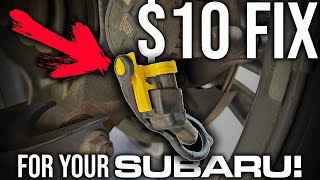
- For 2015-2018 Subaru owners, fix this code instantly by installing a $15 retaining clip (Part No. X9904AL110) on the rear electronic parking brake connector.
What Does C1957 Mean?
Trouble code C1957 indicates a problem in the electrical circuit for the stability control valve at the right front wheel. This solenoid valve is a critical component of your Anti-lock Braking System (ABS) and Electronic Stability Control (ESC), responsible for precisely adjusting brake pressure at that wheel. The Powertrain Control Module (PCM) or ABS module disables these safety features as a fail-safe measure, illuminating warning lights on your dash.
Technical definition: The official SAE/OBD-II definition for code C1957 is "Dynamic Stability Control Valve RF Circuit Failure." This indicates that the Anti-lock Brake System (ABS) module, also known as the Electronic Brake Control Module (EBCM), has detected an electrical fault (open circuit, short to ground, or short to power) in the control circuit for the solenoid valve that manages brake pressure at the right front wheel.
Can I Drive With C1957?
Yes, But With Caution. Yes, but with extreme caution and for limited distances. Your Anti-lock Braking (ABS) and Electronic Stability Control (ESC) systems are disabled. During a panic stop, your wheels will lock up, increasing stopping distances and causing a complete loss of steering control. On slippery surfaces, the risk of a spin-out or rollover is dramatically higher. NHTSA studies show ESC reduces the risk of fatal single-vehicle crashes by up to 56% in SUVs and 38% in cars. Do not drive in rain or snow.
Common Causes
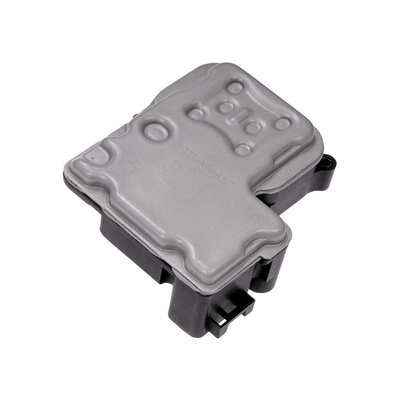
- Failed ABS Control Module (Very Common) — The ABS control module is the computer that controls the entire system. Internal electronic failures, often from cracked solder joints or failed components due to years of heat cycles and vibration, are the most frequent cause of this code across many manufacturers.
- Broken EPB Connector Retaining Tab (Subaru) (Common) — On 2015-2018 Subaru models, the small plastic retaining tab on the Electronic Parking Brake (EPB) actuator's electrical connector becomes brittle and breaks. This allows the connector to loosen, causing an intermittent connection that triggers C1957.
- Damaged or Corroded Wiring/Connectors (Common) — The wiring harness leading to the ABS module frays, breaks, or corrodes. If the weather-pack seal on the ABS module's main electrical connector fails, water seeps in and corrodes the pins, causing shorts and open circuits.
- Faulty Right Front Wheel Speed Sensor (Less Common) — Though the code points to a valve circuit, a faulty wheel speed sensor sends erratic or no data, which the ABS module misinterprets as a circuit failure. The sensor fails internally or its wiring sustains damage.
- Damaged or Debris-Covered Tone Ring (Less Common) — The wheel speed sensor reads a toothed or magnetic tone ring on the axle or wheel hub. If this ring cracks, loses teeth, or accumulates thick rust and metallic debris, it produces an erratic signal that mimics a sensor or circuit fault.
- Low System Voltage or Bad Ground (Less Common) — A weak battery, failing alternator, or a corroded ground connection for the ABS module causes insufficient or unstable power. This forces the module to generate incorrect error codes, including C1957.
- Internal HECU Fluid Leak (Kia/Hyundai) (Rare) — A safety recall (NHTSA 21V331000) affects specific Kia and Hyundai models where brake fluid leaks internally within the Hydraulic Electronic Control Unit (HECU). This fluid short-circuits the electronic components, triggering circuit fault codes and posing a fire risk.
Symptoms
- ABS Light On — The primary symptom is an illuminated ABS warning light on your dashboard.
- Traction/Stability Control Light On — The light for the Traction Control System (TCS) or Electronic Stability Control (ESC) illuminates. You will also see messages like "Service StabiliTrak" or "DSC System Fault".
- Disabled Safety Systems — The ABS and traction/stability control systems are inactive. You do not have anti-lock braking or skid correction assistance.
- Erratic Speedometer Behavior (also visible on scanner) — On vehicles where speed is calculated using wheel speed sensors, a fault causes the speedometer to work intermittently or drop to zero.
Diagnostic Flowchart
Tap your situation to follow the diagnostic path that matches what you're seeing on this code.
Common Fixes & Costs
- Install EPB Connector Repair Clip or Zip-Tie (Subaru)
— Parts: $10-$20, Labor: $40-$60, ~0.3 hr book time
(DIY)
: OEM X9904AL110 (Clip EPB Kit) (Alt: N/A) - Repair or Rebuild ABS Control Module — Parts: $150-$350 (cost to rebuild original module), Labor: $150-$300 (labor to remove and reinstall), ~1.5 hr book time (Professional)
- Replace ABS Control Module/HECU Assembly
— Parts: $600-$1200, Labor: $200-$400 (includes programming), ~2 hr book time
(Professional)
: OEM ER3Z-2C215-A (Alt: Cardone (12-10259))
: OEM 20896914 (Alt: Dorman (599-775)) - Replace Right Front Wheel Speed Sensor
— Parts: $60-$140, Labor: $80-$120, ~1 hr book time
(DIY)
: OEM Motorcraft DY1160 (Alt: Duralast (SU9078))
: OEM ACDelco 22870823 (Alt: Duralast (SU9453)) - Repair Damaged Wiring or Connectors — Parts: $10-$50, Labor: $150-$300, ~2 hr book time (Intermediate)
- Clean or Replace Damaged Tone Ring
— Parts: $20-$100, Labor: $150-$250, ~1.8 hr book time
(Intermediate)
: OEM N/A (part of hub or axle) (Alt: Yukon Gear (33563))
Used vs. New Parts: Buying Guide
When a used part is worth it: A used ABS module from a donor vehicle with the exact same part number is a cost-effective option for older vehicles where new parts are expensive or unavailable. This is viable for DIYers or shops with advanced scan tools capable of reprogramming the module's VIN.
Donor-vehicle mileage cap: roughly under 100000 miles for the part to have meaningful remaining life.
Donor quality checklist:
- Verify the part number on the module itself matches your original part exactly.
- Purchase from a reputable salvage yard that offers a warranty (typically 30-90 days).
- Avoid modules from vehicles with flood or fire damage.
Decision logic:
- If The original module can be repaired/rebuilt → Choose rebuilding. It is cost-effective and avoids VIN programming issues.
- If A new OEM or quality remanufactured part is available and affordable → Buy new or remanufactured. It comes with a longer warranty and guaranteed function.
- If The vehicle is old, budget is the primary concern, and you have access to programming tools → A used part is a reasonable gamble, provided the part number matches.
Warranty tradeoff: Used parts typically have a 30-90 day functional warranty. Remanufactured/rebuilt modules often carry a 1-year to lifetime warranty. New OEM parts have a 1-year warranty.
Worst-case if a used part fails: $200-$400 if a used part is dead on arrival or fails after the warranty period, covering repeat labor and the cost of another part.
What Happens If You Wait — Timeline
- Immediate (0 miles after fault detection): The ABS and ESC/TCS warning lights illuminate. The ABS module disables both the anti-lock braking and stability/traction control functions as a fail-safe. Your vehicle reverts to standard, unassisted hydraulic braking. (MPG impact: 0%% · Added cost: $0)
- 0-1 month: The primary consequence is a sustained safety risk. The driver has no electronic assistance to prevent wheel lock-up in a panic stop or to correct a skid on a slippery surface. (MPG impact: 0%% · Added cost: Potential cost of a failed safety inspection or an at-fault collision.)
- 1-6 months: If the internal fault causes the ABS pump motor relay to stick 'on', the pump runs continuously, even with the key off. This drains the battery and burns out the ABS pump motor. (MPG impact: 0%% · Added cost: $150-$400 (for a new battery and/or a replacement ABS pump motor).)
- 6+ months: On specific recalled Kia/Hyundai models, an internal brake fluid leak shorts the electronics, creating a fire risk. For all other cars, the long-term consequence is the ongoing safety risk and a reduction in vehicle resale value. (MPG impact: 0%% · Added cost: Reduced vehicle resale value and continued risk of secondary component failure.)
Cost of Not Fixing It
- Immediate: Loss of ABS and Electronic Stability Control (ESC) functions, leading to a significantly increased risk of skidding or loss of control in panic stops or on slippery surfaces. Inability to pass a state safety inspection. (Added cost: Potential cost of an accident or a failed inspection ticket.)
- 1-6 months: Continued operation with a faulty module poses a fire risk on recalled Kia/Hyundai models. On other models, an intermittently failing module causes the ABS pump to run constantly, draining the battery or burning out the pump motor. (Added cost: $200-$500 (for a new battery or a burned-out ABS pump motor).)
- 6+ months: The primary long-term cost is the sustained safety risk. There is no progressive mechanical damage to other unrelated vehicle systems, but the value of the vehicle is reduced due to a known, unfixed safety system fault. (Added cost: Reduced vehicle resale value.)
Diagnosis Steps
- Read the Fault Codes
Use an OBD-II scanner capable of reading ABS/chassis codes to confirm C1957 is present. Note all other codes. C1958 appearing simultaneously points to a central module failure, while C1956 on a Subaru confirms the EPB connector issue.
Tools: ABS-capable OBD-II Scanner (Beginner) - Inspect EPB Connectors (Subaru Models)
On 2015-2018 Subaru Legacy, Outback, and WRX models, locate the electrical connectors on the rear electronic parking brake actuators. Gently tug on them. If a connector pulls off easily, the broken locking tab is the confirmed cause.
Tools: Flashlight (Beginner) - Monitor Live Data PIDs
Using an advanced scan tool, monitor the live data for each wheel speed sensor. All four wheels must read 0 when stopped and increase smoothly with vehicle speed. Any sensor that reads erratically or drops to zero indicates a problem with that sensor, its wiring, or the tone ring.
Tools: Advanced Bi-directional Scan Tool (Intermediate) - Perform a Detailed Visual Inspection
Inspect the ABS module's main electrical connector for corrosion, moisture, or backed-out pins. Follow the wiring harness from the module to the right front wheel, looking for chafing, melting, or breaks. Check the wheel speed sensor and tone ring for physical damage.
Tools: Flashlight, Mirror (Beginner) - Check Fuses and Grounds
Verify the integrity of all fuses related to the ABS and stability control systems. Locate the main ground point for the ABS module (often on the frame rail nearby), remove it, and clean the contact surfaces with a wire brush.
Tools: Owner's Manual, Multimeter, Socket/Wrench Set, Wire Brush (Beginner) - Test the Wheel Speed Sensor Resistance
Disconnect the right front wheel speed sensor. Set a multimeter to Ohms (Ω). For a passive (2-wire) sensor, measure the resistance between its two pins. A reading of 'OL' (open) or zero indicates a failed sensor. Do not use this test on active (3-wire) sensors.
Tools: Multimeter, Vehicle Service Manual (Intermediate) - [PRO TIP] Test Harness for Shorts and Opens
Disconnect the battery, ABS module connector, and wheel speed sensor connector. Using a multimeter on continuity, check for an open circuit by testing each wire end-to-end. Test for a short to ground by checking continuity between each wire and chassis ground. Test for a short to power by checking for voltage on each wire with the ignition on.
Tools: Multimeter, Vehicle-specific Wiring Diagram (Advanced) - Perform a Voltage Drop Test on Module Power/Ground
With the module connected and ignition on, connect the positive multimeter lead to the battery's positive terminal and the negative lead to the power supply pin at the ABS module connector. A reading above 0.5V indicates excessive resistance. Repeat for the ground side; a reading above 0.2V indicates a poor ground.
Tools: Multimeter, Vehicle-specific Wiring Diagram, Back-probe Kit (Advanced) - [PRO TIP] Analyze Sensor Signal with an Oscilloscope
Connect an oscilloscope to the wheel speed sensor's signal and ground wires. Spin the wheel by hand. A healthy passive sensor shows a clean AC sine wave. An active sensor shows a clean digital square wave. Gaps, noise, or a flat line signal points to a bad sensor or damaged tone ring.
Tools: Oscilloscope, Back-probe Kit (Advanced)
When This Code Triggers (Freeze-Frame Conditions)
- System Voltage: 13.5-14.5V (Normal operating voltage during self-test)
- Vehicle Speed: 5-15 mph (During the initial self-test after startup)
- ABS/ESC Status: Active Self-Test (The module was performing its internal circuit checks when the fault was detected.)
- Time Since Engine Start: < 1 minute (Fault often logged shortly after starting the vehicle.)
Related Codes
- C1958 — This is the identical fault but for the Left Front (LF) wheel. If C1957 and C1958 appear together, the problem is not with individual wheel wiring. This strongly points to a central failure in the ABS control module or its main power/ground connection.
- C1956 — On Subaru vehicles, this code for the 'Right Hand Actuator Circuit' appears with C1957. They trigger together because the single faulty electrical connector on the Electronic Parking Brake (EPB) actuator becomes loose, disrupting signals for both systems.
- U0415 — This communication code means 'Invalid Data Received From Anti-Lock Brake System Control Module.' When this appears with C1957, it is a definitive indicator that the ABS module has failed internally and cannot communicate on the CAN bus network.
- P057C — This code indicates 'Brake Pedal Position Sensor A Circuit Low'. If this sensor's signal is faulty, the ABS module disables itself as a precaution and triggers secondary codes like C1957.
Climate & Environmental Factors
- Humidity and Road Salt: High humidity, heavy rain, and winter road salt significantly increase corrosion on wiring connectors, ground points, and the internal circuit board of the ABS module. This is a leading contributor to electrical circuit faults.
- Extreme Heat Cycles: Repeated heating and cooling of the ABS module in the hot engine bay causes thermal stress on the internal solder joints. Over time, this creates microscopic cracks in the solder, resulting in an open circuit.
- Vibration: Constant vehicle vibration contributes to the failure of electronic components within the ABS module. It also causes wiring harnesses to chafe against chassis components, wearing through the insulation and causing a short.
How to Talk to a Mechanic About This Code
Say this: "I have an ABS and stability control light on, and my scanner shows code C1957, which is a 'Right Front DSC Valve Circuit Failure'. I would like to book a diagnostic appointment to confirm the cause. Please test the wiring harness and wheel speed sensor before recommending an ABS module replacement."
This signals that you are an informed consumer. You've identified the specific code and know that the problem could be the wiring or sensor, not just the expensive module. This directs the technician to perform a thorough diagnosis.
Avoid saying:
- 'My ABS light is on, can you fix it?' (This is too vague and invites a wide-ranging, expensive diagnostic).
- 'Just replace whatever is broken.' (This gives the shop a blank check to replace the most expensive part without proper diagnosis).
- 'A guy on a forum said it's the module.' (This tells the shop to skip diagnosing cheaper parts first).
Questions to ask before authorizing the repair:
- Did you test the wiring harness between the module and the right front wheel for continuity, shorts to ground, and shorts to power?
- If you are recommending module replacement, what were the specific test results that ruled out the wiring and the sensor?
- If a new module is required, does it need to be programmed to my car's VIN, and is that included in the quote?
- If you recommend replacing the module, would you be willing to install a module that I send out for repair, or a used part I provide?
- What is the warranty on the parts and labor for this specific repair?
Where to Take It: Dealer vs Independent vs Chain
- Dealer:
Recommended only if the vehicle is under warranty or if you've confirmed a new, programmed module is the only viable fix and you want an OEM part.
Best for: Vehicles under warranty or covered by a specific TSB (like the Subaru EPB connector issue)., Complex cases requiring guaranteed-to-work OEM parts and proprietary programming tools., Owners who prioritize a manufacturer warranty over cost.
Downsides: Highest labor rates and parts costs; typically 1.5-2x more expensive than an independent shop., Less likely to suggest or accept cost-saving measures like rebuilding the original module or using used parts. (Typical cost: +75% vs. baseline) - Independent Shop:
Best overall fit. An experienced independent technician properly diagnoses the circuit and is more flexible with repair options, offering the best balance of cost and quality.
Best for: Out-of-warranty vehicles where cost is a major factor., Diagnosing the full range of causes (wiring, sensor, grounds, module)., Owners open to cost-effective solutions like sending the original module for repair, which avoids reprogramming.
Downsides: Shop quality and diagnostic capabilities vary widely; look for ASE certifications and good reviews., May not have the latest programming tools for all brands, which is an issue if a brand-new module is needed. (Typical cost: +0% vs. baseline) - Chain Shop:
AVOID for diagnosing C1957. While they could replace a wheel speed sensor if you specifically requested it, they are not the right choice for accurately diagnosing the root cause of a circuit fault code.
Best for: Simple, unrelated maintenance like oil changes or tire rotations.
Downsides: Technician skill varies dramatically; often not equipped for complex electrical diagnostics., Business model pressures technicians to upsell, leading to misdiagnosis., Unlikely to handle module repair/rebuild logistics. (Typical cost: -10% vs. baseline)
When to Walk Away From the Repair
If the total estimated repair cost for the C1957 fault exceeds 40-50% of your car's current private-party value, you should pause and seriously consider selling or trading in the vehicle instead of repairing it.
- Car worth $3000, fix is $1500: Walk away. The repair cost is 50% of the car's value. It is not a sound financial decision to invest this much into an older, lower-value car.
- Car worth $12000, fix is $1800: Fix it. The repair cost is only 15% of the vehicle's value, which is well below the threshold. Fixing the issue restores a critical safety feature and protects your investment.
- Car worth $6000, fix is $450: Fix it. This represents a module rebuild or wiring repair, which at only 7.5% of the car's value is a very sensible repair.
What Scan Tool You Need for This Code
Minimum: A scanner that can read and clear Chassis (C-prefix) codes, specifically for the ABS system.
A standard $20 engine code reader will NOT see or clear ABS codes like C1957. It reports 'no codes found,' leading you to believe there is no issue. You need a tool that communicates with the ABS control module.
Budget: BlueDriver Pro (~$100) — Connects to a smartphone app via Bluetooth. It reads and clears enhanced codes, including ABS, SRS, and transmission, for most major brands. It provides live data, allowing you to monitor wheel speed sensor readings.
Mid-range: Foxwell NT630 Plus / Innova 5610 (~$150) — These are powerful handheld units. In addition to reading/clearing ABS codes and viewing live data, they offer bidirectional control features, most importantly the 'Automated Bleed' or 'ABS Bleed' function. This is required after replacing the hydraulic module/HECU.
Professional: Autel MaxiCOM MK808 / MaxiCheck Pro (~$450-800) — Offers full-system diagnostics, extensive bidirectional controls, and advanced service functions like ABS bleeding. Some higher-end Autel models perform VIN programming on new modules, a function typically reserved for dealer tools.
Rent vs buy: Auto parts stores offer free loaner tool programs, but you must verify the specific tool they provide reads ABS codes. Many of their basic loaners cannot. If you plan to do more than one diagnosis per year or need an ABS bleed function, buying a budget or mid-range scanner is a worthwhile investment.
How to Clear the Code After You Fix It
- Use an ABS-capable OBD-II scan tool to clear the fault codes.
- Perform the automated ABS bleed procedure with the scan tool if the hydraulic unit was replaced.
- Perform any required steering angle sensor or G-sensor calibrations.
- Complete a full drive cycle to allow the system to self-test.
Drive cycle (~15 minutes): After clearing the code, start the vehicle. Drive in a straight line and exceed 15 mph to allow the ABS module to perform its initialization self-test. The ABS and ESC lights extinguish if the repair was successful. A short drive with several turns and stops confirms normal operation.
Readiness monitors affected: Not applicable for emissions readiness monitors.
Watch out for:
- Using a basic code reader that cannot clear Chassis (C-prefix) codes.
- Failing to perform necessary programming or calibration for a new ABS module, which prevents the code from clearing.
- The code returning immediately because the underlying electrical fault was not actually fixed.
Will This Fail Emissions / State Inspection?
No — by itself this code doesn't fail OBD inspection (but it can keep readiness monitors from setting, which causes a separate fail).
- California: An illuminated ABS light will not fail the emissions (smog) check. However, for a vehicle needing a 'Brake and Lamp Inspection' (typically for a salvage title), it fails.
- New York: An illuminated ABS warning light is grounds for failing the annual safety inspection.
- Texas: As of 2025, most non-commercial vehicles are exempt from the annual safety inspection. In the 17 counties that still require an emissions test, an ABS light does NOT cause a failure. The check engine light is the primary focus for emissions.
Most Commonly Affected Vehicles
- Ford Mustang (2010-2014) — Extremely common on the S197 platform, almost always caused by an internal failure of the ABS control module. The replacement part number is ER3Z-2C215-A.
- Subaru Outback, Legacy, WRX (2015-2018) — Subject to TSB 06-87-22R, which extends the warranty for the faulty Electronic Parking Brake (EPB) connector to 15 years/unlimited miles. The fix is a simple retaining clip (Part No. X9904AL110).
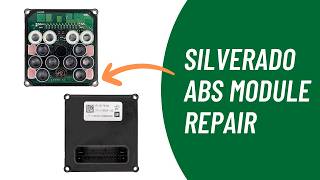
- Chevrolet / GMC Silverado, Sierra, Tahoe, Suburban (2007-2013) — These trucks use an ABS module notorious for internal electronic failure. The electronic part is easily removed and repaired. Aftermarket replacements like the Dorman 599-775 are available.
- Kia / Hyundai Optima, Sorento, Santa Fe (2013-2015) — Covered by recalls (NHTSA 21V331000) for internal brake fluid leaks in the HECU (ABS Module) that cause an electrical short and fire risk, even when parked.
- BMW X5 (E70), 3-Series (E90/E91) (2007-2013) — Known for DSC/ABS module failures. Another common issue is corrosion behind the rear wheel speed sensor tone rings, pushing them into contact with the sensor.
- Jaguar S-Type, X-Type, XF (2002-2015) — Owners frequently report 'DSC System Fault' messages triggered by C1957. These vehicles are highly sensitive to low battery voltage, which must be checked first.
- Dodge / Ram Ram 1500, Durango (2011-2018) — ABS module failures are a known issue, often presenting with multiple circuit fault codes simultaneously. Water intrusion into the module connector is also a frequent cause.
- Jeep Grand Cherokee (2011-2016) — The ABS module, sometimes called the Anti-lock Brake Module/Hydraulic Control Unit (ABM/HCU), is a common failure point leading to C1957.
Manufacturer-Specific Notes
- Mazda: Mazda uses code C1957 for a completely different issue: 'Cylinder 4 Oil Supply Solenoid Valve Under Voltage.' If you have a Mazda, this code is related to the engine's variable valve timing system, not the brakes.
- Subaru: For 2015-2018 models, the cause is almost always a broken plastic tab on an electronic parking brake connector. TSB 06-87-22R extends the warranty to 15 years/unlimited miles. The fix is an inexpensive retaining clip (Part No. X9904AL110).
- Ford: On the Mustang, this code is commonly caused by an internal failure of the ABS control module. These modules are easily repaired by a specialist service for a fraction of the cost of a new unit, avoiding dealer programming.
- GM (Chevrolet/GMC): On GM trucks, the electronic portion of the ABS module unbolts from the hydraulic pump block without opening any brake lines. This makes it easy to remove the module and send it for repair while the vehicle remains drivable.
- Kia / Hyundai: NHTSA Campaign 21V331000 affects many 2013-2015 models. Brake fluid leaks into the Hydraulic Electronic Control Unit (HECU), causing an electrical short and fire risk. Owners are advised to park outside until the recall repair is completed.
How to Prevent This Code From Triggering
- Perform regular brake fluid flushes (Every 2-3 years, or as per manufacturer's recommendation) — Brake fluid absorbs moisture over time. This moisture causes corrosion and sludge to build up inside the delicate solenoid valves and passages of the ABS module, leading to seizure and failure.
- Apply dielectric grease to connectors (During any repair that involves disconnecting electrical harnesses) — Applying dielectric grease to the weather-pack seals of connectors blocks moisture and road salt from causing corrosion on the electrical pins.
- Maintain battery and ground connections (Annually) — Clean and tighten battery terminals and the main ABS module ground strap. Sensitive electronics malfunction and set false codes if they receive low or unstable voltage.
- Periodically inspect wiring harnesses (During oil changes or other under-hood maintenance) — Visually check the wiring leading to the ABS module and wheel speed sensors for signs of chafing, melting, or rodent damage. Securing loose harnesses prevents future shorts.
- Fabricate a heat shield (for specific models) (Once) — On vehicles where the ABS module is mounted directly above the exhaust manifold, extreme heat cooks the electronics. Fabricating an aluminum heat shield deflects radiant heat and extends the module's life.
Frequently Asked Questions
Can I just clear the C1957 code?
You can clear the code with a scanner, but it returns immediately upon the next self-test. Clearing the code does not fix the underlying electrical fault, leaving your ABS and ESC systems disabled.
What is the most common misdiagnosis for code C1957?
On a Subaru, it is replacing the entire expensive electronic parking brake actuator when only the connector is loose. For most other cars, it is replacing the wheel speed sensor without proper testing, when the ABS module is the actual culprit.
Can a bad battery cause a C1957 code?
Yes, the ABS control module requires a stable voltage to operate correctly. A failing battery or alternator causes low or fluctuating voltage, forcing the module to generate false circuit codes. Always ensure your battery and charging system are healthy before condemning an expensive module.
How much does it cost to fix code C1957?
The cost varies wildly depending on the root cause. A Subaru repair clip costs under $20, while a wheel speed sensor replacement averages $150 to $250. Rebuilding an ABS module costs $300 to $600, whereas a full dealer replacement exceeds $1,000.
What is a Dynamic Stability Control Valve?
It is a small, computer-controlled solenoid valve located inside the main ABS hydraulic block. The stability control valve rapidly opens and closes to precisely adjust brake pressure at a specific wheel, independent of the driver's pedal input. This action prevents skids and maintains vehicle control during evasive maneuvers.
Do I have to go to the dealer to fix a C1957 code?
No, a qualified independent shop can diagnose and repair this issue. If a new ABS module is needed, it requires VIN programming, which necessitates a shop with specialized bidirectional scan tools. Using a repair service for your original module avoids programming altogether and saves money.
Will a C1957 code fail a safety inspection?
Yes, in most jurisdictions, an illuminated ABS warning light is an automatic failure for a vehicle safety inspection. The system must be fully functional to pass.
Key Takeaways
- Code C1957 disables your Anti-lock Braking (ABS) and Electronic Stability Control (ESC) systems, increasing stopping distances by up to 20% during panic stops.
- Limit driving to under 15 miles to reach a repair shop, as the lack of ESC increases the risk of fatal single-vehicle rollovers by up to 56%.
- Fix the most common cause—an internally failed ABS control module—by sending the original unit to a rebuild service for $150-$400, saving over $800 compared to a dealer replacement.
- For 2015-2018 Subaru owners, fix this code instantly by installing a $15 retaining clip (Part No. X9904AL110) on the rear electronic parking brake connector.
Helpful Videos
Shop the Parts Behind C1957
Below are the parts most often responsible for code C1957, ranked by how frequently each one is the actual culprit (per the diagnosis above). Tap any to see what we have for your vehicle.


The information in this article is provided for general reference and educational purposes only. Vehicle specifications, procedures, and part compatibility can vary by production date, trim level, and region. Always consult your vehicle's factory service manual and verify part numbers before purchasing or performing repairs. Safety-critical components such as airbags, seat belts, and braking systems should be installed by a qualified professional.
- 🧭 Diagnostic Flowchart
- 🎬 Helpful Videos
- 🛍️ Shop This Part
- What Does C1957 Mean?
- Can I Drive With C1957?
- Common Causes
- Symptoms
- Common Fixes & Costs
- Used vs. New Parts: Buying Guide
- What Happens If You Wait — Timeline
- Cost of Not Fixing It
- Diagnosis Steps
- When This Code Triggers (Freeze-Frame Conditions)
- Related Codes
- Climate & Environmental Factors
- How to Talk to a Mechanic About This Code
- Where to Take It: Dealer vs Independent vs Chain
- When to Walk Away From the Repair
- What Scan Tool You Need for This Code
- How to Clear the Code After You Fix It
- Will This Fail Emissions / State Inspection?
- Most Commonly Affected Vehicles
- Manufacturer-Specific Notes
- How to Prevent This Code From Triggering
- Frequently Asked Questions
- Can I just clear the C1957 code?
- What is the most common misdiagnosis for code C1957?
- Can a bad battery cause a C1957 code?
- How much does it cost to fix code C1957?
- What is a Dynamic Stability Control Valve?
- Do I have to go to the dealer to fix a C1957 code?
- Will a C1957 code fail a safety inspection?
- Key Takeaways
- 🎟️ Get 5% Off