

C2020 on 2015-2018 Jeep Renegade: DTCM Internal Fault Causes and Fixes
On a 2015-2018 Jeep Renegade, code C2020 almost always points to a software glitch in the Drivetrain Control Module (DTCM). The most common and manufacturer-recommended fix is a software update performed by a Jeep dealer, which is a relatively low-cost procedure compared to replacing parts. This issue is also confirmed to affect the 2016 Fiat 500X, a platform mate.
- Code C2020 on a 2015-2018 Renegade is an internal fault in the Drivetrain Control Module (DTCM).
- Before replacing any parts, check with a dealer for a software update. This is the most common and least expensive fix, often costing between $150-$250.
- The vehicle is safe to drive with this code, but your 4WD/AWD system will be disabled.
- This repair is not DIY-friendly as it requires proprietary dealer software (wiTECH) to perform the necessary reprogramming.
- Always reference TSBs #21-038-15 and #21-048-15 when discussing this issue with a service advisor.
- The same software-related issue is known to affect the 2016 Fiat 500X, which shares the same platform.
What's Unique About the 2015-2018 Jeep RENEGADE
For this generation of Jeep Renegade, the C2020-01 code is exceptionally well-documented by the manufacturer as a software issue. Unlike many other vehicles where an internal fault code often means expensive module replacement, on the Renegade it's frequently a bug that can be fixed by simply reprogramming the module with updated software. Jeep has released multiple Technical Service Bulletins (TSBs) to address this exact problem, where the code sets erroneously. The issue was prevalent enough that FCA released it as a Rapid Response Transmittal (RRT), indicating a high-priority fix for dealerships to implement.
Diagnostic Flowchart
Tap your situation to follow the diagnostic path that matches what you're seeing on this vehicle.
Symptoms You May Notice
- "Service 4WD" or All-Wheel Drive (AWD) warning light illuminated on the dashboard.
- 4x4 / AWD system is unavailable or not engaging.
- Traction control or stability control warning light may also illuminate.
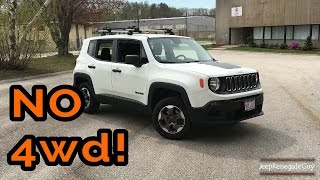
- The fault may be intermittent, appearing and disappearing on its own. 🎬 Watch: An owner's experience dealing with the Service 4WD light.
- Disconnecting the battery may temporarily clear the fault for 100-200km before it returns.
- Replacing the DTCM before attempting a software update. Given the high probability of a software fix, replacing the hardware first is an unnecessary expense that many owners are warned against.
Most Likely Causes
- Drivetrain Control Module (DTCM) Software Glitch 🔴 High Probability Manufacturer TSBs #21-038-15, #21-048-15, #08-110-17, and #0802721 explicitly state that this code can be set erroneously and direct technicians to perform a software update. The fix was issued as a high-priority Rapid Response Transmittal (RRT 15-097).
How to confirm: A Jeep dealer or a qualified shop with a wiTECH scan tool can check the current software version of the DTCM against the latest version available on their server. They can verify if the update specified in the TSBs is applicable to the vehicle's VIN.
Typical fix: Reprogramming (flashing) the DTCM with the latest manufacturer software. 🎬 See how a technician performs the DTCM reprogramming with wiTECH. This is a software-only repair that typically takes about one hour of labor at a dealership.
Est. part cost: $0 - Failed Drivetrain Control Module (DTCM) ⚪ Low Probability
How to confirm: If reprogramming the module does not resolve the code, or if the module fails to communicate with the scan tool, it is likely faulty. A technician would also check the module's power and ground circuits before condemning it. This step should only be taken *after* a software flash has been attempted.
Typical fix: Replacement of the Drivetrain Control Module. The new module will also require programming to the vehicle.
Est. part cost: $250-$650 - Wiring or Connector Issue ⚪ Low Probability The DTCM is located in the rear of the vehicle, potentially exposing it to moisture. One owner on a forum noted that a leak from the rear washer fluid line soaked the rear of the cabin shortly before 4WD electrical issues began, suggesting a possible, though unconfirmed, link to corrosion.
How to confirm: Visually inspect the wiring harness and connectors going to the DTCM for any signs of damage, corrosion, or loose pins. This would be performed after a software update fails to correct the issue.
Typical fix: Repairing the damaged section of the wiring harness or cleaning/replacing the connector.
Est. part cost: $10-$100
Diagnosis Steps
- Verify the presence of code C2020-01 using an OBD-II scanner capable of reading chassis codes.
- Check for the presence of any Technical Service Bulletins (TSBs) related to this code for your vehicle's specific VIN. Specifically, look for TSBs #21-038-15, #21-048-15, #08-110-17, and #0802721.
- Take the vehicle to a Jeep dealership or a qualified independent shop with access to FCA's wiTECH diagnostic software.
- Request the shop to perform the DTCM reprogramming as outlined in the relevant TSB. The TSB specifies maintaining battery voltage between 13.2 and 13.5 volts with a battery charger during the flash process to prevent failure.
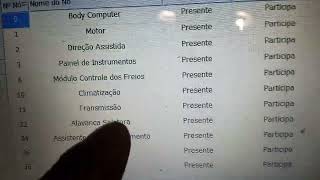
- After the flash, the technician should clear all DTCs and perform a proxy alignment routine. 🎬 Watch: A demonstration of the mandatory proxy alignment procedure.
- Perform a test drive to see if the code returns.
- If the code returns immediately or the module cannot be reprogrammed, the technician should then inspect the power, ground, and communication circuits for the DTCM.
- If the wiring is confirmed to be good and the software update was unsuccessful, the Drivetrain Control Module is likely faulty and should be replaced.
Parts You'll Likely Need
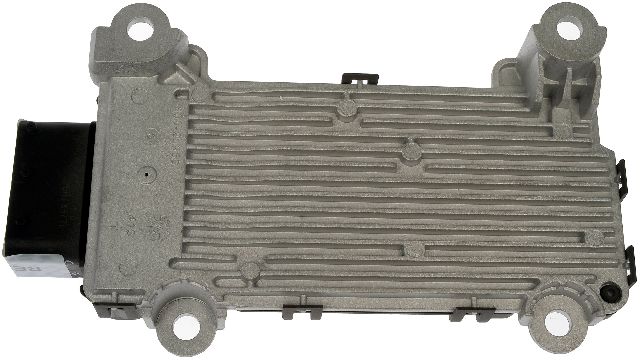
- Drivetrain Control Module (DTCM)
(OEM #68464872AM (supersedes multiple previous versions, always confirm with VIN))— This part is only needed if the primary fix—a software update—does not resolve the C2020 code, indicating a true internal hardware failure of the module.
Trusted brands: Mopar
OEM price range: $400-$650
Aftermarket price range: $250-$450
Related Codes That Often Appear With This One
- C2210-92 — This code for 'ETM Hall Sensor Performance' is mentioned in the same TSBs as C2020, indicating the software update addresses a cluster of related 4x4 system electronic faults. [NHTSA TSB #08-110-17]
- C2220-54 — This code for 'ETM Calibration Error' is also listed alongside C2020 in manufacturer TSBs, suggesting it is part of the same software-related issue. [NHTSA TSB #08-110-17]
Technical Service Bulletins (TSBs) & Recalls
- Bulletin #0802721: Mentions C2020-01 as 'ECU Internal Fault' and a software update that also enhances the Rear Drive Module.
- Bulletin #08-110-17: Defines C2020-01 as 'ECU Internal Fault - General Electrical Failure'.
- Bulletin #21-038-15 REV. B: Explicitly states the fix is to 'Flash: Drivetrain Control Module (DTCM)' to resolve the C2020-01 fault. This TSB was also released as high-priority RRT 15-097 and confirms the issue also applies to the 2016 Fiat 500X.
- Bulletin #21-048-15 REV-A: Repeats the instruction to reprogram the DTCM for the C2020-01 code.
Platform-Specific Known Issues
- A well-documented software anomaly causes the C2020-01 code to be stored erroneously, triggering the 'Service 4WD' light. This is addressed by multiple manufacturer TSBs which call for a software re-flash as the primary repair.
- Owners report that this fault can be intermittent and temporarily resolved by disconnecting the battery, strongly pointing to an electronic glitch rather than a hard mechanical failure.
Mechanic-Grade Diagnostic Values
- CAN C Bus Resistance — expected: Approximately 60 ohms. Failure: A reading of 120 ohms indicates a problem with one of the two terminating resistors or the wiring to it. A reading of 0 ohms or an open circuit (OL) indicates a short or break in the wiring.
- CAN High Voltage (Key On, Engine Off) — expected: Approximately 2.6 Volts. Failure: Significant deviation from this voltage can indicate a short to power or ground, or a faulty module pulling the bus voltage down.
- CAN Low Voltage (Key On, Engine Off) — expected: Approximately 2.4 Volts. Failure: Significant deviation from this voltage can indicate a short to power or ground, or a faulty module pulling the bus voltage down.
- Stable Battery Voltage During Flash — expected: 13.2 - 13.5 Volts. Failure: Dropping below 13.2V or climbing above 13.5V during the reprogramming process can cause the flash to fail and potentially damage the module.
Scan Tool Commands That Help
- wiTECH: Reprogram the DTCM — This is the primary repair step outlined in all relevant TSBs for an erroneous C2020-01 fault code.
- wiTECH: Restore configuration and align proxi — This is a mandatory step immediately after reprogramming the DTCM. It copies the vehicle's configuration from the Body Control Module (BCM) to the newly flashed DTCM to ensure it functions correctly within the vehicle's network.
- wiTECH: Clear all DTCs — This is the final step after a successful flash and proxy alignment to clear any faults set during the reprogramming process.
- wiTECH: DTCM Replacement with Value Transfer — On newer platforms, this function is used to save calibration data from the old module before flashing. A similar process may be embedded in the Renegade's flash procedure. A TSB for a newer Jeep warns that interrupting a flash on this type of module may be non-recoverable, making a stable process critical.
Wiring & Ground Locations
- Drivetrain Control Module (DTCM) — The exact location on the 2015-2018 Renegade is not consistently documented in service manuals. However, based on similar FCA platforms, it is located inside the vehicle cabin, not in the engine bay. Technicians should expect to remove significant interior trim. Likely locations are behind the rear seat trim panels (requiring rear seat removal) or under one of the front seats, attached to the seat frame.. Physical access is required to check for power, ground, and CAN bus connections at the module connector if a software flash fails to resolve the C2020 code.
- CAN Bus Terminating Resistors — The DTCM communicates on the CAN C bus. The two 120-ohm terminating resistors for this network are located within the Body Control Module (BCM) and the Instrument Panel Cluster (IPC).. A failure of either terminating resistor or the associated wiring would cause communication errors across the network, potentially leading to various module fault codes, including internal faults like C2020 if the DTCM cannot communicate reliably.
Real Owner Repair Stories
- Reddit user on r/JeepRenegade (Jeep Renegade (year not specified)) — Flashing odometer after swapping the factory radio for a cheap aftermarket screen. This indicates a proxy configuration mismatch.
❌ Tried (didn't work) A Jeep dealership could not perform the proxy alignment because of the aftermarket screen., Attempting a proxy alignment with AlfaOBD and an OBDLink MX+ failed repeatedly., The car became unresponsive with gauges clicking after a failed alignment attempt.
✅ What actually fixed it The unresponsive state was caused by a dead battery; replacing the battery allowed the car to start again. However, the proxy alignment would still not complete. The final fix required removing the cheap aftermarket radio, putting the original back in, and then successfully running the proxy alignment. The user concluded the cheap screen was causing a CAN bus drain or incompatibility.
OEM Part Supersession History
Multiple/Varies→Multiple/Varies— The Drivetrain Control Module for the 2015-2018 Renegade has undergone several revisions. There is no single part number that covers the entire range.
Heads up: It is absolutely critical to confirm the correct, most current part number with a Jeep dealership using the vehicle's VIN. Installing an incorrect or incompatible module, even if it physically fits, will result in proxy alignment failure and a non-functional 4WD system. The part number 68464872AM, sometimes associated with this code, is for a newer Grand Cherokee and is incorrect for the Renegade.
Model Year Variations Within This Range
- 2015: The earliest TSB for this issue, #21-038-15, specifically applies to vehicles built on or before May 19, 2015. While later TSBs cover a broader range, this indicates the issue was identified and addressed very early in the vehicle's production life.
Helpful Videos
We Have This Part in Stock

The information in this article is provided for general reference and educational purposes only. Vehicle specifications, procedures, and part compatibility can vary by production date, trim level, and region. Always consult your vehicle's factory service manual and verify part numbers before purchasing or performing repairs. Safety-critical components such as airbags, seat belts, and braking systems should be installed by a qualified professional.
- Jeep RENEGADE:
- 🧭 Diagnostic Flowchart
- 🎬 Helpful Videos
- 🛍️ Shop This Part
- What's Unique About the 2015-2018 Jeep RENEGADE
- Symptoms You May Notice
- Most Likely Causes
- Diagnosis Steps
- Parts You'll Likely Need
- Related Codes That Often Appear With This One
- Technical Service Bulletins (TSBs) & Recalls
- Platform-Specific Known Issues
- Mechanic-Grade Diagnostic Values
- Scan Tool Commands That Help
- Wiring & Ground Locations
- Real Owner Repair Stories
- OEM Part Supersession History
- Model Year Variations Within This Range
- 🎟️ Get 5% Off