

OBD-II Code C2128: Mastering a Code with Two Meanings
What C2128 means, why it triggers, and how to fix it on your vehicle
- Code C2128 indicates a minor TPMS sensor registration issue on Toyota/Lexus vehicles, but signals a critical Electro-Hydraulic Power Steering (EHPS) fault on Dodge/Ram trucks.
- Resolve the Toyota/Lexus C2128 TPMS code by driving continuously for 15-20 minutes above 25 mph to complete the automatic sensor registration process.
- Never ignore C2128 on a Dodge or Ram; it warns of an improper EHPS pump shutdown that frequently precedes a sudden, total loss of power steering assist.
- Test the battery's Cold Cranking Amps (CCA) before replacing the $800+ EHPS pump on a Ram, as voltage drops during engine cranking are the number one cause of this code.
- Diagnose and repair accompanying codes like U11E8 (Lost Communication) or C0051 (Steering Angle Sensor) first, as they pinpoint the exact failure point within the steering system.
What Does C2128 Mean?
C2128 carries two completely different definitions based on the manufacturer. On Toyota, Lexus, and Subaru, it indicates the Tire Pressure Monitoring System (TPMS) is actively trying to register new sensors. On Dodge, Ram, and Chrysler, it signals the Electro-Hydraulic Power Steering (EHPS) pump module detected an improper shutdown during the last ignition cycle.
Technical definition: For Toyota/Lexus/Subaru, C2128 is 'Auto ID Under Registration,' indicating the TPMS is learning new sensor IDs and the process is interrupted or incomplete. For Dodge/Ram/Chrysler, it is 'ECU RESET/RECOVERY OCCURRED,' meaning the Electro-Hydraulic Power Steering (EHPS) pump module experienced a voltage drop or internal fault causing an improper shutdown.
Can I Drive With C2128?
Yes, But With Caution. Driving is safe for the Toyota/Lexus TPMS issue, as the only risk is an unknowingly underinflated tire. Do NOT drive a Dodge/Ram with heavy steering; a sudden, complete loss of power steering assist causes extreme safety hazards at low speeds or during emergency maneuvers.
Common Causes
- [Dodge/Ram EHPS] Low or Unstable Battery Voltage (Very Common) — The EHPS pump draws massive electrical current. A weak battery, failing alternator, or poor terminal connection causes severe voltage drops during engine cranking or shutdown, instantly triggering this reset code.
- [Toyota/Lexus TPMS] Interrupted TPMS Relearn Process (Very Common) — Triggered when tires are recently rotated or replaced, and the system is actively trying to learn the new sensor locations. The code sets if the drive cycle is too short or if radio frequency interference from nearby vehicles disrupts the signal.
- [Dodge/Ram EHPS] Water or Oil Intrusion into Connectors (Common) — The EHPS pump sits directly below the oil filter on many Pentastar V6 and HEMI V8 engines. Spilled oil during maintenance, or heavy rain/car washes, penetrates the electrical connectors, causing short circuits and communication faults.
- [Dodge/Ram EHPS] Failing Electro-Hydraulic Power Steering Pump (Common) — The internal circuit board or electric motor of the power steering pump fails over time, often exacerbated by cold weather. This prevents the pump from initializing correctly, leading to intermittent or total loss of steering assist.
- [Dodge/Ram EHPS] Poor Ground or Power Wiring (Less Common) — A corroded ground wire or damaged power cable creates high electrical resistance. This starves the EHPS pump of power, triggering a reset fault during operation or shutdown.
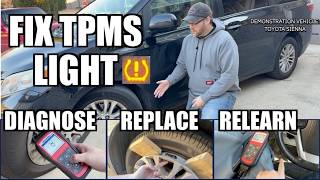
- [Toyota/Lexus TPMS] Failed TPMS ECU (Rare) — The main computer module for the tire pressure system fails internally, permanently preventing it from completing the sensor registration process. 🎬 Watch: How to diagnose, replace, and relearn Toyota TPMS sensors.
Symptoms
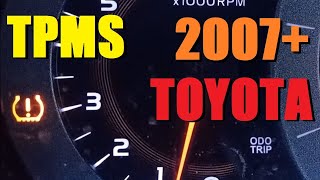
- [Toyota/Lexus TPMS] TPMS Light Flashes, Then Stays Solid — The tire pressure warning light flashes for exactly one minute after starting the car, then remains illuminated. This specific pattern indicates a system fault or relearn failure, not just a low tire. 🎬 See why your Toyota TPMS light is flashing and what it means.
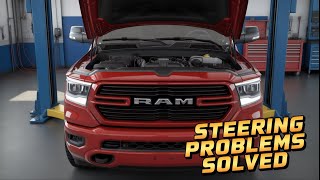
- [Dodge/Ram EHPS] Heavy or Difficult Steering — Power steering assist fails intermittently or completely. The steering wheel becomes extremely hard to turn, especially at low speeds, posing a severe safety risk. 🎬 Watch: Diagnosing a Dodge Ram with impossible to turn steering.
- [Dodge/Ram EHPS] 'Service Power Steering' Message — The instrument cluster displays a direct warning message indicating the onboard diagnostics disabled the steering system due to a fault.
- [Dodge/Ram EHPS] No Noticeable Symptoms (scan-tool only — no driver-felt sign) — The code is stored in the module's history from a single past event (like a jump-start or temporary voltage dip) without causing current steering problems.
Diagnostic Flowchart
Tap your situation to follow the diagnostic path that matches what you're seeing on this code.
Common Fixes & Costs
- [Dodge/Ram EHPS] Replace Battery — Parts: $150-$350, Labor: $25-$50, ~0.5 hr book time (DIY)
- [Toyota/Lexus TPMS] Relearn/Reset TPMS Sensors — Parts: $0, Labor: $50-$125 (professional labor if manual relearn is needed), ~0.8 hr book time (Professional)
- [Dodge/Ram EHPS] Clean and Secure EHPS Power/Ground Connections — Parts: $5-$15 (contact cleaner, dielectric grease), Labor: $50-$100, ~0.7 hr book time (DIY)
- [Dodge/Ram EHPS] Replace Electro-Hydraulic Power Steering (EHPS) Pump
— Parts: $600-$900 (remanufactured part), Labor: $170-$300, ~2.1 hr book time
(Professional)
Ram 1500 (2013-2018): OEM 68193091AB (Alt: Cardone 21-4068 (Reman))
Dodge Durango / Jeep Grand Cherokee (2011-2015): OEM 52124998AJ (Alt: Cardone 21-4068 (Reman)) - [Toyota/Lexus TPMS] Replace Faulty TPMS Sensor
— Parts: $50-$150, Labor: $50-$100, ~1.2 hr book time
(Professional)
Toyota RAV4 (2019-2022): OEM 42607-02021 (Alt: Denso 550-0118)
Toyota Camry (2018-2022): OEM 42607-06030 (Alt: Denso 53413ZTNT)
Used vs. New Parts: Buying Guide
When a used part is worth it: A used Dodge/Ram EHPS pump from a low-mileage, accident-damaged vehicle is a budget option for older trucks, but carries a high risk of premature failure.
Donor-vehicle mileage cap: roughly under 60000 miles for the part to have meaningful remaining life.
Donor quality checklist:
- Verify the donor vehicle was not scrapped due to electrical or engine failure.
- Inspect the pump for physical damage, corrosion, or leaking hydraulic fluid.
- Match the OEM part number exactly, verifying interchangeability for superseded numbers.
Decision logic:
- If Vehicle is under warranty or part of a recall → Use a new OEM part installed by a dealer.
- If Budget is the primary concern and you accept the risk of repeat labor → Purchase a low-mileage used part or a remanufactured part with a warranty.
- If Reliability and safety are top priorities → Buy a new OEM or high-quality remanufactured pump. The EHPS pump is a critical safety component.
Warranty tradeoff: Used parts offer 30-90 day warranties that exclude labor. Remanufactured parts offer 1-year to limited lifetime warranties. New OEM parts carry 1-2 year warranties.
Worst-case if a used part fails: $400-$800 (Cost of repeat labor plus another replacement pump if the used unit fails).
What Happens If You Wait — Timeline
- 0-1 month (Dodge/Ram): A single, stored C2128 code appears after a cold start. No symptoms are felt. The 'Service Power Steering' light may flash once. (MPG impact: 0%% · Added cost: $0)
- 1-4 months (Dodge/Ram): Steering becomes intermittently heavy for a few seconds on startup. The C2128 code becomes active more frequently. (MPG impact: 0-1%% · Added cost: $0-$50 (Cost of a battery load test).)
- 4-8 months (Dodge/Ram): Complete power steering failure occurs. Code U11E8 (Lost Communication) appears. The vehicle is unsafe to drive. (MPG impact: 1-2%% · Added cost: $800-$1500 (Cost of EHPS pump replacement).)
- Ignored (Toyota/Lexus): The TPMS light stays on permanently. The driver has no warning of underinflated tires, leading to accelerated tire wear. (MPG impact: Up to 10%% · Added cost: $50-$400 (Cost of replacing prematurely worn tires).)
Cost of Not Fixing It
- Immediate (Toyota/Lexus): Driving without a functional TPMS removes warnings for underinflated tires, leading to poor handling, reduced fuel economy, accelerated tire wear, and potential blowouts. (Added cost: $200-$1000 (Cost of a new tire or accident damage).)
- Immediate (Dodge/Ram): A sudden and complete loss of power steering assist while driving makes the vehicle extremely difficult to control, especially at low speeds or in emergencies. (Added cost: $5000+ (Potential cost of an accident).)
- 1-6 Months (Dodge/Ram): Ignoring an intermittent issue caused by a failing EHPS pump guarantees complete failure. A failing pump also places extreme strain on the alternator and battery. (Added cost: $800-$1500 (Cost of replacing the EHPS pump, plus a potentially ruined battery or alternator).)
Diagnosis Steps
- [All] Verify Vehicle Manufacturer
Identify if you are diagnosing a Toyota/Lexus/Subaru (TPMS issue) or a Dodge/Ram/Chrysler (Power Steering issue). This dictates the entire diagnostic path.
Tools: Owner's Manual (Beginner) - [Dodge/Ram EHPS] Perform Comprehensive Battery Load Test
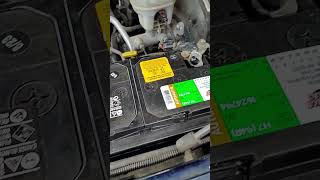
A basic voltage check is insufficient. Use an electronic battery tester to measure the battery's Cold Cranking Amps (CCA) and overall health. The EHPS pump is highly sensitive to voltage drops during engine cranking caused by a weak battery.
Tools: Electronic Battery Tester (Beginner) - [Toyota/Lexus TPMS] Initiate a Driving Relearn Cycle
If tires were recently serviced, the system is in 'Auto ID Under Registration' mode. Drive continuously for 15-20 minutes at speeds above 25 mph to allow the automatic registration to finish. Stay away from other vehicles to avoid signal interference.
Tools: None (Beginner) - [Dodge/Ram EHPS] Inspect EHPS Connectors for Contamination
Visually inspect the large electrical connectors on the EHPS pump. Look for green corrosion, moisture, or oil from a messy filter change. Disconnect them, clean thoroughly with electrical contact cleaner, apply dielectric grease, and reconnect.
Tools: Flashlight, Electrical Contact Cleaner, Dielectric Grease (Intermediate) - [Dodge/Ram EHPS] Perform Voltage Drop Test on Pump Wiring
With the EHPS pump disconnected, connect a multimeter between the positive battery terminal and the B+ pin on the EHPS harness. With ignition on, voltage must be under 0.5V. Repeat between the negative battery terminal and the ground pin. Readings over 0.5V indicate high resistance in the wiring that requires repair.
Tools: Multimeter, Vehicle Wiring Diagram (Advanced) - [Dodge/Ram EHPS] Test EHPS Pump Function with Scan Tool
Use a bidirectional scan tool to command the EHPS pump to run. Monitor data PIDs like pump motor speed and current draw. If the pump fails to respond despite passing the voltage drop test in Step 5, the pump has failed internally.
Tools: Advanced Bidirectional Scan Tool (Advanced) - [Toyota/Lexus TPMS] Scan for Brake System Codes
The TPMS system integrates with the brake control module (ABS/VSC). Check for codes in the brake system first. Brake system faults prevent the TPMS from initializing correctly and must be fixed prior to addressing C2128.
Tools: Advanced OBD-II Scan Tool (Intermediate) - [Toyota/Lexus TPMS] Check 'Judgment Status' PID
Using a professional scan tool, navigate to the Tire Pressure Monitor Data List. Check the '[RAM] Auto ID Registered Wheel Judgment Status' PID. If it reads 'Under a Judgment of Side by Side Car Influence', registration failed due to RF interference from another vehicle, ruling out a faulty ECU.
Tools: Advanced OBD-II Scan Tool (e.g., Techstream) (Advanced) - [Toyota/Lexus TPMS] Test Individual Sensor Resistance
Dismount the tire to access the suspect TPMS sensor. Measure resistance across the sensor's terminals with a multimeter. An open circuit (infinite resistance) or a short (zero resistance) confirms a failed sensor.
Tools: Multimeter, Tire Dismounting Tools (Advanced)
When This Code Triggers (Freeze-Frame Conditions)
- [Dodge/Ram EHPS] Battery Voltage: 9.5-11.5V (The fault logs at the next key-on if module voltage dropped excessively during the previous shutdown or engine cranking event.)
- [Dodge/Ram EHPS] Fault Time: Key-Off (C2128 specifically indicates an 'ECU RESET/RECOVERY OCCURRED', meaning the improper shutdown was detected during the last key cycle.)
- [Toyota/Lexus TPMS] Vehicle Speed: 25-50 MPH (Sets when the automatic ID registration process is active but fails to complete during a continuous drive cycle.)
- [Toyota/Lexus TPMS] ECU State: Auto ID Under Registration (Shows the TPMS ECU was in a learning mode when the fault triggered, usually due to RF interference or a timeout.)
Related Codes
- U11E8 — [Dodge/Ram EHPS] 'Lost Communication with EPS Module.' Appears alongside C2128 during a hard failure. Confirms the main computer cannot talk to the steering pump, resulting in a complete loss of assist.
- C0051 — [Dodge/Ram EHPS] 'Steering Wheel Position Sensor.' The EHPS pump uses this data to determine assist levels. A C0051 fault causes erratic steering even if the pump is fine. Diagnose C0051 first.
- C2121 — [Toyota/Lexus TPMS] 'Transmitter ID not Received.' C2128 means the system is stuck trying to learn IDs. C2121 means the ECU failed to receive a signal from a specific, expected sensor.
- C1201 — [Toyota/Lexus TPMS] 'Engine Control System Malfunction.' A secondary code set by the ABS/VSC module because the TPMS is part of stability control. Ignore C1201 and diagnose C2128 first.
Climate & Environmental Factors
- Cold Weather: Dodge/Ram EHPS pumps frequently fail on cold starts. Cold temperatures thicken hydraulic fluid, increase electrical resistance, and place maximum load on a weak battery, triggering the C2128 code.
- High Humidity / Water Exposure: Heavy rain or car washes force moisture into the Dodge/Ram EHPS pump's electrical connectors, causing short circuits. Humidity also accelerates corrosion on battery terminals, causing voltage drops.
How to Talk to a Mechanic About This Code
Say this: "For a Dodge/Ram: "I have a C2128 code and intermittent heavy power steering. Before quoting a new pump, please perform a comprehensive battery load test and inspect the EHPS pump wiring for oil or water contamination." For a Toyota/Lexus: "My TPMS light is on with a C2128 code following a recent tire rotation. Can you perform a manual TPMS relearn procedure?""
For Dodge/Ram, this language proves you know the most common cause is a simple battery or wiring issue, preventing a shop from immediately upselling a $1,200 pump replacement. For Toyota/Lexus, it specifies the exact, low-cost procedure needed, avoiding unnecessary diagnostic fees.
Avoid saying:
- 'My steering feels weird, can you check it?' (too vague)
- 'My tire light is on.' (implies simple low pressure, but this code requires a system relearn)
- 'Just replace the power steering pump.' (never diagnose for the mechanic; it is often a cheaper battery issue)
Questions to ask before authorizing the repair:
- [Dodge/Ram] Did the battery and alternator pass a load test, and what were the exact voltage drop readings on the power and ground circuits to the pump?
- [Dodge/Ram] Did you find any oil or water contamination inside the EHPS pump connectors?
- [Toyota/Lexus] Will this relearn procedure solve the issue permanently, or is a specific sensor battery dead?
- [All] What is the exact warranty period on the parts and labor for this repair?
Where to Take It: Dealer vs Independent vs Chain
- Dealer:
Recommended only for warranty/recall work or if you cannot find a trusted independent specialist for a Dodge/Ram electrical fault.
Best for: Vehicles under warranty or subject to a recall (like the Ram power steering investigation)., Complex electrical diagnosis on the Dodge/Ram EHPS system if an independent shop lacks Chrysler-specific software.
Downsides: Highest labor rates ($150-$250/hr)., Often recommends a $1,200+ full EHPS pump replacement without thoroughly investigating $150 battery or wiring issues first. (Typical cost: +50% vs. baseline) - Independent Shop:
Best overall fit. For Dodge/Ram, explicitly ask if they are comfortable performing voltage drop tests on high-current circuits.
Best for: Out-of-warranty Dodge/Ram vehicles, provided the shop has strong diagnostic skills and bidirectional scanners., Any Toyota/Lexus TPMS issue, as it is a routine and simple fix.
Downsides: Quality varies greatly. You must verify the shop has specific experience with Stellantis/Chrysler electro-hydraulic steering systems. (Typical cost: +0% vs. baseline) - Chain Shop:
Perfect for the Toyota/Lexus TPMS fix or a Dodge/Ram battery replacement. AVOID for diagnosing a symptomatic Dodge/Ram power steering failure.
Best for: Battery testing and replacement (the critical first step for the Dodge/Ram issue)., Tire services, including TPMS sensor replacement and relearns for the Toyota/Lexus issue.
Downsides: Lacks the equipment and expertise for in-depth electrical diagnosis of the Dodge/Ram EHPS pump., High pressure to upsell unnecessary fluid flushes or parts. (Typical cost: -10% vs. baseline)
When to Walk Away From the Repair
If the estimated repair cost exceeds 40-50% of the car's private-party value, sell the vehicle as-is or trade it in.
- Car worth $10000, fix is $1300: Fix it. A $1,300 EHPS pump replacement on a 2014 Ram 1500 worth $10,000 is a significant expense, but well below the walk-away threshold.
- Car worth $2500, fix is $1300: Walk away. The repair cost is over 50% of the vehicle's value. It is not economically sensible to proceed.
- Car worth $15000, fix is $150: Fix it. A $150 TPMS relearn or sensor replacement on a Toyota is a minor maintenance cost.
What Scan Tool You Need for This Code
Minimum: A scan tool capable of reading manufacturer-specific Chassis ('C') codes from the ABS/Chassis module (Dodge/Ram) or TPMS module (Toyota). Basic $20 engine-only readers will show 'No Codes Found'.
Generic OBD-II readers only scan the powertrain (engine/transmission). You need a tool that accesses all vehicle network modules to see the C2128 fault.
Budget: BlueDriver Pro, OBDLink MX+ (~$100) — Connects to a smartphone app to read all system modules, including chassis and TPMS. Confirms the code's presence and provides freeze-frame data for initial diagnosis.
Mid-range: Foxwell NT510 Elite, Launch Creader Elite 2.0 (~$150) — Adds bidirectional control. Commands the Dodge/Ram EHPS pump to run for testing, and forces a Toyota TPMS sensor relearn. This is the minimum requirement for confident DIY diagnosis.
Professional: Autel MaxiCOM MK808BT / MK808S (~$450-600) — Offers full bidirectional control, steering angle calibration, and FCA AutoAuth to access secure modules on 2018+ Chrysler/Dodge/Ram vehicles. Performs advanced TPMS programming.
Rent vs buy: Auto parts stores do NOT rent scanners with all-system or bidirectional capabilities. Buy a mid-range scanner if you plan to DIY repairs on modern vehicles.
How to Clear the Code After You Fix It
- For Dodge/Ram, fix the root cause (replace battery, clean connections, replace pump) BEFORE clearing.
- For Toyota/Lexus, ensure all tires are inflated to the exact placard pressure.
- Use an OBD-II scan tool to erase the code from the ABS/Chassis module (Dodge) or TPMS module (Toyota).
- Perform the manufacturer-specific drive cycle to confirm the fix.
Drive cycle (~20 minutes): For Toyota/Lexus: Drive continuously for 15-20 minutes above 25 MPH to complete sensor registration. For Dodge/Ram: Perform several key cycles (on-off) and drive for 10-15 minutes with varied steering inputs to ensure the 'Service Power Steering' message stays off.
Readiness monitors affected: This is a 'C' (Chassis) code and does not affect emissions readiness monitors.
Before emissions retest: drive at least 10 miles to fully set monitors.
Watch out for:
- Clearing C2128 on a Dodge/Ram without fixing the underlying voltage issue causes the code to return immediately.
- On Toyota/Lexus, if the TPMS light still flashes after the drive cycle, manual sensor registration with a scan tool is required.
- Disconnecting the battery on a Dodge/Ram temporarily clears the code but triggers it again if voltage is unstable upon reconnection.
Will This Fail Emissions / State Inspection?
No — by itself this code doesn't fail OBD inspection (but it can keep readiness monitors from setting, which causes a separate fail).
- California: A 'C' code won't fail the OBD-II plug-in test, but any illuminated malfunction indicator lamp (including TPMS or 'Service Power Steering') causes an immediate visual inspection failure.
- New York: NYS inspection rules mandate a functional TPMS warning light. An illuminated TPMS light or 'Service Power Steering' message results in a failed safety inspection.
- Texas: Texas inspections check the power steering system for function. An illuminated warning light or heavy steering is cause for rejection. The TPMS light is also a failure item.
Most Commonly Affected Vehicles
- Ram 1500 (2013-2018) — Highly prone to EHPS pump failures and voltage sensitivity triggering C2128. Oil spills during filter changes frequently contaminate the EHPS connector. Subject of a current NHTSA investigation.
- Dodge Durango (2011-2015) — Subject to NHTSA Recall 17V-435 for alternator failure, which starves the EHPS pump of power and causes sudden loss of steering.
- Jeep Grand Cherokee (2011-2015) — Uses the same EHPS pump as the Durango. Covered under NHTSA Recall 17V-435 for alternator failure impacting the EHPS system.
- Dodge Charger (2011-2019) — Experiences EHPS issues logging code C2128, heavily linked to low voltage conditions. Affected by NHTSA Recall 17V-435.
- Chrysler 300 (2011-2019) — Susceptible to C2128 faults from low voltage or EHPS pump failure. Affected by NHTSA Recall 17V-435.
- Toyota RAV4 (2019-2022) — The TPMS 'Auto ID Under Registration' code is well-documented. The system is sensitive to interference and requires a specific driving cycle to complete registration.
- Toyota Camry (2018-2022) — Frequently logs C2128 if the automatic registration process is interrupted. Resetting is done through the multi-information display or a drive cycle.
- Subaru Forester (2019-2022) — The TPMS system enters a state where ID registration fails, aligning with C2128 logic. Requires a dealer tool or specific driving cycle to resolve.
Manufacturer-Specific Notes
- Toyota / Lexus / Subaru: C2128 is an informational code indicating the TPMS is in a learning cycle. It resolves on its own after driving or requires a manual reset via the dashboard menu.
- Dodge / Ram / Chrysler (Stellantis): C2128 points to the Electro-Hydraulic Power Steering (EHPS) pump. It means the pump's computer shut down incorrectly, serving as an early warning for pump failure or a weak battery.
- Honda / Acura: A common misdiagnosis involves code P2128. On Hondas, P2128 is a Powertrain code for the Accelerator Pedal Position Sensor. It is completely unrelated to the C2128 chassis code. Verify the first letter.
- Dodge / Ram / Chrysler (Stellantis): The oil filter on Pentastar V6 and HEMI V8 engines sits directly above the EHPS pump. Spilling oil during a change contaminates the connector, causing communication errors and codes C2128 and U11E8.
Real Owner Stories
2014 Ram 1500 at 60K miles - Sudden Steering Loss
Owner experienced a sudden, complete loss of power steering on a snowy road, causing them to slide into a ditch. The failure was intermittent prior to the crash.
Outcome: The cause was a failing EHPS pump exacerbated by cold weather. The owner was advised not to drive the truck until the pump was replaced due to the extreme safety risk.
Lesson: Intermittent power steering failure on a Ram is a critical safety issue. C2128 paired with U11E8 strongly indicates a communication breakdown requiring immediate pump replacement.
2017 Ram 1500 - Code C2128 with No Symptoms
Owner discovered a stored C2128 code using a scanner but had no noticeable power steering problems.
Outcome: The stored code resulted from the past low voltage event triggering an 'improper shutdown'. The owner replaced the weak battery, cleared the code, and the issue never returned.
Lesson: A stored C2128 on a Ram without symptoms is often a ghost code from a past voltage drop. Test and replace a weak battery as the first step.
2021 Ram 1500 - Intermittent Failure After Car Wash
Owner lost all power steering immediately after exiting a car wash, accompanied by a 'Service Power Steering' message. The steering returned to normal hours later.
Outcome: Water intrusion into the EHPS electrical connectors caused a temporary short circuit. The owner cleaned the connectors and applied dielectric grease to prevent recurrence.
Lesson: If power steering fails after water exposure, disconnect the EHPS connectors, clean them with electrical contact cleaner, and seal them with dielectric grease.
Toyota RAV4 - TPMS Light On After Swapping Winter/Summer Tires
Owner swaps between summer and winter wheels. After a swap, the TPMS light stayed on, and a shop charged $50 to 'reconfigure' the sensors.
Outcome: Once the vehicle was driven away from the stored tires, a 20-minute drive cycle successfully registered the new sensors without a scan tool.
Lesson: When performing a TPMS relearn on a Toyota, ensure the other set of wheels is stored far away from the vehicle to prevent radio frequency interference.
How to Prevent This Code From Triggering
- [Dodge/Ram] Regularly Test Battery Health (Every 6 months) — The EHPS pump is extremely sensitive to voltage drops. Proactive load testing identifies weak batteries before they trigger C2128 codes and steering glitches.
- [Dodge/Ram] Clean EHPS Connectors During Service (At every oil change) — The oil filter sits above the pump. Proactively cleaning the connectors and sealing them with dielectric grease prevents oil contamination failures.
- [Dodge/Ram] Periodically Check Power Steering Fluid (Every 6 months) — Low or contaminated fluid forces the pump to work harder, overheat, and suffer premature electrical failure.
- [Dodge/Ram] Avoid Turning the Wheel to Full Lock (Daily driving habit) — Holding the steering wheel at full lock puts maximum strain on the pump, accelerating wear on both hydraulic and electrical components.
- [Toyota/Lexus] Replace TPMS Sensors Proactively (When buying new tires (if sensors are 7+ years old)) — Sensor batteries last 5-10 years. Replacing them while the tire is already dismounted saves $50-$100 per wheel in future labor costs.
Frequently Asked Questions
Why does C2128 mean two different things?
Manufacturers define 'C' (Chassis) codes for their specific systems without a universal standard. You must identify your vehicle's manufacturer before starting any diagnosis to avoid replacing the wrong parts.
Can I just clear the C2128 code and keep driving?
On a Toyota/Lexus, clearing it is fine but it returns if the TPMS registration isn't completed. On a Dodge/Ram, clearing it without fixing the underlying voltage or pump issue is dangerous. Ignoring it leads to a sudden, complete loss of power steering while driving.
My steering feels fine on my Ram truck, but I have code C2128. What should I do?
This is likely a 'history' code from a past event, like a jump-start or temporary low voltage. Have your battery's Cold Cranking Amps (CCA) professionally tested immediately. If the battery is healthy, monitor the steering closely, as it warns of an intermittent pump failure.
The tire shop rotated my Toyota's tires and now the TPMS light is on with code C2128. Did they break something?
No, the code simply means the system is trying to relearn the new tire positions. Drive the car for 15-20 minutes at speeds over 25 mph to complete the process. If the light stays on, the shop must perform a manual relearn with their scan tool.
Is the Electro-Hydraulic Power Steering (EHPS) pump the same as a regular power steering pump?
No. A traditional pump is driven by an engine belt, while an EHPS pump uses an electric motor to create hydraulic pressure. This introduces complex electronics that are highly sensitive to voltage drops and prone to electrical failure.
I looked up C2128 for my Honda and it says it's an accelerator pedal sensor. Is that right?
No, you are looking at code P2128, a powertrain code for the Accelerator Pedal Position sensor. C2128 is a chassis code. Always verify the first letter of the code (P, C, B, U) to ensure accurate diagnosis.
Could a bad alignment cause the C2128 code on my Ram?
Not directly. A bad alignment causes a C0051 code for the Steering Angle Sensor, not an electrical fault in the EHPS pump. However, since the pump relies on steering angle data, fix alignment and C0051 codes first to resolve erratic steering.
What is the difference between EHPS on a 2018 Ram 1500 and EPS on a 2019 Ram 1500?
The 2013-2018 Ram uses an Electro-Hydraulic (EHPS) system with an electric motor running a hydraulic pump. The 2019+ Ram uses full Electric Power Steering (EPS), attaching an electric motor directly to the steering rack and eliminating hydraulics entirely.
Key Takeaways
- Code C2128 indicates a minor TPMS sensor registration issue on Toyota/Lexus vehicles, but signals a critical Electro-Hydraulic Power Steering (EHPS) fault on Dodge/Ram trucks.
- Resolve the Toyota/Lexus C2128 TPMS code by driving continuously for 15-20 minutes above 25 mph to complete the automatic sensor registration process.
- Never ignore C2128 on a Dodge or Ram; it warns of an improper EHPS pump shutdown that frequently precedes a sudden, total loss of power steering assist.
- Test the battery's Cold Cranking Amps (CCA) before replacing the $800+ EHPS pump on a Ram, as voltage drops during engine cranking are the number one cause of this code.
- Diagnose and repair accompanying codes like U11E8 (Lost Communication) or C0051 (Steering Angle Sensor) first, as they pinpoint the exact failure point within the steering system.
Helpful Videos

Shop the Parts Behind C2128
Below are the parts most often responsible for code C2128, ranked by how frequently each one is the actual culprit (per the diagnosis above). Tap any to see what we have for your vehicle.



The information in this article is provided for general reference and educational purposes only. Vehicle specifications, procedures, and part compatibility can vary by production date, trim level, and region. Always consult your vehicle's factory service manual and verify part numbers before purchasing or performing repairs. Safety-critical components such as airbags, seat belts, and braking systems should be installed by a qualified professional.
- 🧭 Diagnostic Flowchart
- 🎬 Helpful Videos
- 🛍️ Shop This Part
- What Does C2128 Mean?
- Can I Drive With C2128?
- Common Causes
- Symptoms
- Common Fixes & Costs
- Used vs. New Parts: Buying Guide
- What Happens If You Wait — Timeline
- Cost of Not Fixing It
- Diagnosis Steps
- When This Code Triggers (Freeze-Frame Conditions)
- Related Codes
- Climate & Environmental Factors
- How to Talk to a Mechanic About This Code
- Where to Take It: Dealer vs Independent vs Chain
- When to Walk Away From the Repair
- What Scan Tool You Need for This Code
- How to Clear the Code After You Fix It
- Will This Fail Emissions / State Inspection?
- Most Commonly Affected Vehicles
- Manufacturer-Specific Notes
- Real Owner Stories
- 2014 Ram 1500 at 60K miles - Sudden Steering Loss
- 2017 Ram 1500 - Code C2128 with No Symptoms
- 2021 Ram 1500 - Intermittent Failure After Car Wash
- Toyota RAV4 - TPMS Light On After Swapping Winter/Summer Tires
- How to Prevent This Code From Triggering
- Frequently Asked Questions
- Why does C2128 mean two different things?
- Can I just clear the C2128 code and keep driving?
- My steering feels fine on my Ram truck, but I have code C2128. What should I do?
- The tire shop rotated my Toyota's tires and now the TPMS light is on with code C2128. Did they break something?
- Is the Electro-Hydraulic Power Steering (EHPS) pump the same as a regular power steering pump?
- I looked up C2128 for my Honda and it says it's an accelerator pedal sensor. Is that right?
- Could a bad alignment cause the C2128 code on my Ram?
- What is the difference between EHPS on a 2018 Ram 1500 and EPS on a 2019 Ram 1500?
- Key Takeaways
- 🎟️ Get 5% Off