

OBD-II Code C2129: System Voltage Problem
What C2129 means, why it triggers, and how to fix it
- Code C2129 indicates a critical voltage supply issue, not a failed module; never replace a $1,500 EPS rack before testing the battery and grounds.
- A failing AGM battery or corroded ground connection causes 80% of C2129 codes; always perform a professional load test before buying parts.
- Do not drive with an active C2129 code, as it triggers a sudden, complete loss of power steering assist or engine stalling.
- Read the code suffix to pinpoint the failure: C2129-16 means voltage dropped below 9.5V (bad battery), while C2129-17 means voltage exceeded 16.5V (failed alternator).
- On 2018+ Jeep models with Engine Stop-Start, a failed auxiliary battery is the primary trigger and must be disconnected to test accurately.
What Does C2129 Mean?
Code C2129 means a critical computer, like the Electric Power Steering (EPS) or Anti-Lock Brake System (ABS) module, is receiving incorrect electrical voltage. It is either too low (most common) or too high. This unstable power forces safety systems to shut down to prevent hardware damage, causing heavy steering and multiple warning lights.
Technical definition: C2129 is a manufacturer-specific Diagnostic Trouble Code (DTC) indicating a control module's supply voltage is outside the specified operating range. It primarily affects Stellantis vehicles (Jeep, Ram, Dodge, Chrysler). Suffix codes dictate the diagnosis: C2129-16 indicates 'Battery Voltage Below Threshold' (under 9.5V for 100ms), while C2129-17 indicates 'Battery Voltage Above Threshold' (over 16.5V for 100ms).
Can I Drive With C2129?
No — Do Not Drive. Driving is dangerous. This code indicates a critical power supply issue that causes a sudden, complete loss of power steering assist or engine stalling. Both scenarios are major safety risks, especially in heavy vehicles like a Ram ProMaster.
Common Causes
- Failing or Weak Main Battery (Very Common) — Modern Stellantis vehicles require a strong AGM battery to power high-draw electronics. As a battery ages (typically 3-5 years), it loses its ability to provide steady voltage under load, even if it shows 12.6V at rest. This is the primary cause of low-voltage C2129 codes.
- Corroded or Loose Battery Terminals and Grounds (Very Common) — Corrosion or a loose connection at the battery posts, main chassis ground, or engine block ground acts like a resistor, choking off the flow of electricity. This starves modules of power and is a frequent, easily overlooked cause.
- Failing Auxiliary (ESS) Battery (Common) — On vehicles with an Engine Stop-Start (ESS) system, like 2018+ Jeep Wranglers, a second, smaller battery is used. These auxiliary batteries have a high failure rate and trigger C2129 along with a cascade of other electrical fault codes when they degrade.
- Failing Alternator (Common) — If the alternator's internal voltage regulator fails, it undercharges the battery (causing low voltage) or overcharges it. A C2129-17 (high voltage) code guarantees a bad alternator.
- Corroded Power Steering Module Connector (Ram ProMaster) (Common On Specific Model) — On 2022-2025 Ram ProMaster vans, the main electrical plug on the power steering rack suffers from water intrusion. This causes corrosion that blocks power and triggers the code, leading to a loss of power steering (NHTSA safety investigation PE23017).
- Faulty Intelligent Battery Sensor (IBS) (Less Common) — This sensor on the negative battery terminal monitors the state of charge and commands the alternator. A faulty IBS or loose connector causes erratic charging behavior, leading to under or overcharging.
- Faulty Z-Case Fuse Array (Jeep JL) (Uncommon) — On Jeep Wrangler (JL) models, the Z-Case fuse array mounted directly to the positive battery terminal cracks or develops a bad internal connection, interrupting power and causing low voltage codes.
Symptoms
- Power Steering Warning Light and Loss of Assist — A 'Service Power Steering' message appears, and the steering wheel becomes extremely difficult to turn as the electric assist shuts down.
- Multiple Warning Lights (Christmas Tree Dash) — A system-wide voltage drop causes a cascade of warnings, illuminating the ABS, Stability Control, 'Service Shifter', and 'Stop/Start Unavailable' lights simultaneously.
- No-Start or Slow Engine Crank — The engine turns over very slowly or just clicks when starting because the battery lacks the amperage to operate the starter motor.
- Radio/Infotainment System Rebooting — The Uconnect screen flickers, goes blank, or gets stuck in a reboot loop due to unstable power.
Diagnostic Flowchart
Tap your situation to follow the diagnostic path that matches what you're seeing on this code.
Common Fixes & Costs
- Clean Battery Terminals and Ground Connections — Parts: $10-$20 (cleaning supplies), Labor: $100-$150, ~0.8 hr book time (DIY)
- Replace Main Vehicle Battery — Parts: $220-$350 (AGM Battery), Labor: $50-$100, ~0.5 hr book time (DIY)
- Replace Auxiliary (ESS) Battery — Parts: $120-$160, Labor: $150-$250, ~1.5 hr book time (Intermediate)
- Replace Alternator — Parts: $350-$600, Labor: $200-$350, ~1.8 hr book time (Intermediate)
- Replace EPS Rack Connector Pigtail (Ram ProMaster) — Parts: $70-$150, Labor: $150-$250, ~1.5 hr book time (Intermediate)
DIY vs Professional
- Clean Battery Terminals and Ground Connections 🟢 Beginner
Tools: Socket set, wire brush, safety glasses. - Replace Main Vehicle Battery 🟢 Beginner
Tools: Socket set (typically 10mm, 13mm), terminal cleaning brush. - Replace Auxiliary (ESS) Battery (Jeep JL) 🟢 Beginner
Tools: Socket set (10mm), plastic rivet removal tool, floor jack, jack stands, torque wrench. - Replace Alternator 🟢 Beginner
Tools: Socket set, serpentine belt tool, torque wrench. - Replace EPS Rack Connector Pigtail (Ram ProMaster) 🟢 Beginner
Tools: Soldering iron or quality crimp tool, heat shrink tubing, wire strippers, socket set.
Used vs. New Parts: Buying Guide
When a used part is worth it: A quality remanufactured alternator from a reputable brand balances cost and reliability. Never buy a used battery, as its history and remaining life are unknown.
Donor-vehicle mileage cap: roughly under 60000 miles for the part to have meaningful remaining life.
Donor quality checklist:
- Verify the donor vehicle's mileage and ensure the part number matches exactly.
- Check that the alternator pulley spins freely without noise or roughness.
- Avoid parts from flood-damaged or rust-belt vehicles.
Decision logic:
- If The part is a battery (main or auxiliary) → Always buy new. The savings on a used battery are not worth the risk of being stranded.
- If The part is an alternator and the vehicle is a daily driver → Buy a new OEM or top-tier remanufactured unit for maximum reliability.
- If The part is an alternator, budget is tight, and it's for an older vehicle → A tested, used OEM part from a low-mileage donor is a reasonable choice.
Warranty tradeoff: Used parts typically have a 30-90 day warranty. Remanufactured alternators offer a 1-year to limited lifetime warranty. New OEM parts carry a 1-2 year warranty.
Worst-case if a used part fails: $300-$600 if a used/reman alternator fails prematurely, covering repeat labor costs and a tow.
What Happens If You Wait — Timeline
- Immediate (First 0-2 weeks): Code C2129 sets. The dashboard lights up with warnings for Power Steering, ABS, and Stability Control. Steering feels heavy intermittently. Vehicle is slow to crank. (MPG impact: 0%% · Added cost: $100-$250 (Potential tow if vehicle fails to start or power steering fails completely))
- 2 weeks - 2 months (Low Voltage Scenario): If caused by a weak battery, the alternator works constantly at maximum capacity to charge it. This excessive strain leads to accelerated wear on the alternator. (MPG impact: 0-2%% · Added cost: $600-$1100 (Cost of premature alternator failure on top of the original battery problem))
- 2 weeks - 2 months (High Voltage Scenario): If caused by a C2129-17 fault (bad alternator), the system is flooded with excessive voltage (>15V). This boils off electrolyte, permanently damaging the battery. (MPG impact: 0%% · Added cost: $300-$450 (Permanent damage to the main battery, requiring replacement))
- 3+ months: Sustained over-voltage or under-voltage instability causes permanent damage to sensitive electronics like the Body Control Module (BCM) or Powertrain Control Module (PCM). (MPG impact: N/A (Vehicle may be undrivable)% · Added cost: $800-$2000+ (Cost to diagnose and replace a major control module))
Cost of Not Fixing It
- Immediate: Sudden loss of power steering assist or engine stalling in traffic, requiring a tow. (Added cost: $100-$250 (Towing))
- 0-3 months: A chronically undercharged battery forces the alternator to work constantly, leading to premature alternator failure. A high-voltage fault damages sensitive electronic modules. (Added cost: $600-$1500 (Alternator replacement, potential module replacement))
- 3+ months: Continued voltage instability corrupts software or causes permanent damage to the ECU, BCM, or infotainment system. (Added cost: $800-$2000+ (Module reprogramming or replacement))
Diagnosis Steps
- Read the Full Code with Suffix
Use an OBD-II scanner capable of reading Chassis (C) codes to view the critical suffix. C2129-16 means voltage is too low (test battery/connections). C2129-17 means voltage is too high (replace the alternator).
Tools: OBD-II Scanner (Chassis/ABS capable) (Beginner) - Perform a Professional Battery Load Test
A simple voltage check is insufficient. Test the battery under load with a professional electronic tester (e.g., Midtronics). If the vehicle has an auxiliary battery (like a Jeep JL), disconnect it and test it separately.
Tools: Professional battery load tester (Beginner) - Check Charging System Voltage
Start the engine. Set a multimeter to DC Volts and touch the probes to the battery terminals. A healthy system reads between 13.0V and 14.8V. Below 13.0V indicates an undercharge. Above 15.0V indicates an overcharge, guaranteeing a faulty alternator.
Tools: Multimeter (Beginner) - Inspect and Clean All Power and Ground Connections
Disconnect the battery. Meticulously clean the battery terminals, the main chassis ground (on the inner fender), and the engine-to-chassis ground strap to bare metal with a wire brush. Tighten securely.
Tools: Safety glasses, wire brush, socket set (Beginner) - Inspect Module-Specific Connectors
For a Ram ProMaster, unplug the main electrical connector on the power steering rack (battery disconnected) and check for green/white corrosion or water damage. For other vehicles, inspect the main power connector for the module that logged the code.
Tools: Flashlight, socket set (Intermediate) - [PRO TIP] Perform a Voltage Drop Test
With the engine running and electrical loads on, set your multimeter to a low DC Volts scale (e.g., 2V). Place the positive lead on the module's ground pin and the negative lead on the battery's negative post. A reading above 0.1V indicates a poor ground connection. Repeat on the power side; a reading above 0.2V indicates high resistance in the power feed.
Tools: Multimeter, wiring diagram (Advanced) - [PRO TIP] Test Alternator for AC Ripple
A failing diode in the alternator leaks AC voltage into the DC system, confusing electronics. Set your multimeter to AC Volts. With the engine running, connect the positive lead to the alternator's B+ output stud and the negative lead to the battery's negative post. A reading above 0.5V AC means the alternator must be replaced.
Tools: Multimeter with AC Volts function (Advanced) - Check for Parasitic Draw
If the battery keeps dying but tests good, perform an ignition-off draw (IOD) test. After letting the vehicle sit for an hour to 'sleep', current draw must be less than 50 milliamps (0.050A). A higher reading indicates a parasitic draw.
Tools: Multimeter with Amps (10A) function (Advanced)
When This Code Triggers (Freeze-Frame Conditions)
- System Voltage: < 9.5V or > 16.5V (The code sets when voltage deviates from the acceptable range for 100 milliseconds.)
- Engine State: Running or Cranking (Low voltage faults occur during engine start-up when a weak battery is under maximum load. High voltage faults occur while running due to a faulty alternator.)
- Electrical Load: High (The fault triggers when high-draw accessories (headlights, HVAC blower, EPS motor) activate, causing a weak battery's voltage to sag.)
- Ambient Temperature: Low (<32°F) or High (>90°F) (Cold temperatures reduce a battery's cranking amps, making low-voltage faults more likely. High temperatures accelerate battery degradation.)
Related Codes
- C2217 - EPS Module Internal — This code appears with C2129 but is a symptom, not the cause. Low voltage causes the power steering module's self-test to fail. Always fix the C2129 voltage issue first.
- U0131 - Lost Communication with Power Steering Control Module — When low voltage (C2129) causes the power steering module to shut down, other modules on the CAN bus network lose communication and log U0131. Restoring voltage clears this code.
- C212A - System Voltage — Another system voltage code that frequently appears alongside C2129. They represent two different modules (e.g., ABS and EPS) reporting the same power outage.
- B2199-16 - Battery Voltage Below Threshold — A Body Control Module (BCM) companion code set by the same low voltage event that triggers C2129, confirming a system-wide voltage drop.
Climate & Environmental Factors
- Cold Weather: Cold temperatures reduce a battery's available cranking amps. An already weak battery fails during a cold start, causing a voltage drop that triggers C2129.
- High Humidity / Water Intrusion: Moisture accelerates corrosion on battery terminals, ground points, and electrical connectors. This specifically causes the Ram ProMaster EPS connector failure.
- Extreme Heat: High ambient heat accelerates battery degradation and shortens lifespan. Heat causes internal damage, reducing the battery's ability to hold a charge.
How to Talk to a Mechanic About This Code
Say this: "I have a C2129 code and I'd like to book a diagnostic appointment. Based on the code, please start by performing a professional load test on the battery and checking the charging system output. Also, inspect the main power and ground connections for corrosion before diagnosing any modules."
This language signals that you understand C2129 is a voltage supply issue, not a module failure. It directs the technician to perform fundamental diagnostic steps first, preventing a misdiagnosis where an expensive module is quoted for replacement.
Avoid saying:
- 'My power steering is acting weird.'
- 'My dashboard is lit up like a Christmas tree, can you just fix it?'
- 'The code says something about voltage, just replace whatever you think is bad.'
Questions to ask before authorizing the repair:
- What were the results of the battery load test and the alternator output voltage test?
- Did you find any corrosion or loose connections on the battery terminals or the main chassis grounds?
- If you are recommending a module replacement, did you perform a voltage drop test on the power and ground wires to that module to rule out a wiring issue?
- Will you provide a written estimate that includes all parts, labor, and taxes, and specifies the warranty on the repair?
Where to Take It: Dealer vs Independent vs Chain
- Dealer:
Recommended for in-warranty vehicles or for specific, well-documented TSB-related repairs like on the Ram ProMaster.
Best for: Vehicles under warranty., Specific known issues covered by TSBs, like the Ram ProMaster EPS connector corrosion (NHTSA PE23017)., Complex electrical issues requiring manufacturer-specific diagnostic software (wiTECH).
Downsides: Highest labor rates., May be quicker to replace a module than perform in-depth wiring diagnostics on an out-of-warranty vehicle. (Typical cost: +50% vs. baseline) - Independent Shop:
Best overall fit for most out-of-warranty C2129 repairs, provided you choose a reputable shop that specializes in electrical diagnostics.
Best for: Out-of-warranty vehicles where the cause is likely a battery, alternator, or connection issue., Shops with strong electrical diagnostic reputations and ASE-certified technicians.
Downsides: Quality and expertise vary greatly., May not be aware of the latest manufacturer-specific TSBs or quirks like the Jeep JL auxiliary battery issue. (Typical cost: +0% vs. baseline) - Chain Shop:
Acceptable for a battery load test or replacement, but AVOID for comprehensive diagnosis of a C2129 code.
Best for: Straightforward battery replacement if you are certain that is the cause.
Downsides: Technician skill varies dramatically; they lack training for in-depth electrical diagnostics beyond a simple battery swap., High pressure to upsell services; risk of misdiagnosis is higher if the problem is anything other than a dead battery. (Typical cost: -10% vs. baseline)
When to Walk Away From the Repair
If the estimated repair cost exceeds 40-50% of the car's private-party value, seriously consider selling or trading in the vehicle.
- Car worth $5000, fix is $2500: Walk away. The repair cost is 50% of the vehicle's value, and for an electrical issue, this is likely the first of many expensive problems.
- Car worth $22000, fix is $1200: Fix it. The repair cost for a likely battery and/or alternator replacement is well below the 40% threshold and is a common maintenance item.
- Car worth $3000, fix is $750: Borderline. While only 25% of the car's value, consider the vehicle's overall condition and mileage. If other major repairs are looming, it is time to move on.
What Scan Tool You Need for This Code
Minimum: A scanner that reads and clears enhanced codes from the ABS, SRS (Airbag), and EPS (Electronic Power Steering) modules to see the critical suffix code (-16 or -17).
A basic $20 code reader only checks for engine (Powertrain) codes and shows 'No Codes Found' for C2129. You must see the Chassis (C) code and its suffix to diagnose the problem.
Budget: BlueDriver Pro (~$90) — Connects to a smartphone app and reads enhanced codes for Stellantis vehicles. It allows you to see the full C2129 code and suffix, view freeze frame data, and monitor live module voltage.
Mid-range: Foxwell NT510 Elite (with Chrysler software) (~$180) — A powerful handheld scanner providing OE-level diagnostics for Stellantis vehicles. It reads all codes, views live data streams, and performs bidirectional controls and battery resets.
Professional: Autel MaxiCOM MK808 / MX900 (~$450-600) — Offers comprehensive diagnostics across all modules, extensive live data graphing, and advanced service functions like ABS brake bleeding and battery registration.
Rent vs buy: Many AutoZone locations offer a loaner tool program where you borrow an ABS-capable scanner for a refundable deposit. This is the most cost-effective option for a one-time diagnosis.
How to Clear the Code After You Fix It
- Reconnect battery.
- Use an OBD-II scan tool to erase the DTC from all modules (ABS, EPS, BCM).
- For Ram/Jeep, allow the Intelligent Battery Sensor (IBS) to relearn by letting the vehicle sit undisturbed with the ignition off for 8 hours.
- Perform a complete drive cycle to run readiness monitors.
Drive cycle (~20 minutes): Perform a cold start (after sitting 8+ hours), idle for 3 minutes with electrical loads on, followed by mixed city driving (25-40 mph) and steady highway driving (55-60 mph for 10 minutes).
Readiness monitors affected: Evaporative System (EVAP), Catalyst (CAT), Oxygen (O2) Sensor
Before emissions retest: drive at least 50 miles to fully set monitors.
Watch out for:
- Disconnecting the battery clears the code but resets readiness monitors, causing an immediate emissions test failure.
- The code returns immediately if the underlying electrical problem is not fixed.
- Failing to allow the IBS to relearn leads to improper charging and a quick return of the code.
Will This Fail Emissions / State Inspection?
Yes — this code typically fails an OBD-II emissions inspection.
- California: An illuminated ABS or power steering light causes an automatic failure. Clearing the code resets readiness monitors, requiring a full drive cycle before passing.
- New York: The NYS inspection checks for illuminated ABS and safety system warning lights. An active C2129 code with a lit dashboard warning is an automatic failure.
- Texas: In counties requiring an emissions test, any code that illuminates a malfunction indicator lamp (Check Engine, ABS, Power Steering) results in an automatic failure.
Most Commonly Affected Vehicles
- Jeep Wrangler (JL) (2018-2025) — Extremely common. The #1 cause is the failure of the auxiliary battery for the Engine Stop-Start (ESS) system. Models with eTorque do not have this specific auxiliary battery.
- Ram 1500 (2019-2025) — Prone to this code from weak AGM batteries, faulty Intelligent Battery Sensors (IBS), and poor ground connections.
- Ram ProMaster (2022-2025) — A known issue where water enters the electric power steering rack connector, causing corrosion and voltage loss (NHTSA investigation PE23017).
- Jeep Grand Cherokee (2014-2025) — Frequently experiences this code due to battery and charging system faults that affect the ABS, DTCM (4WD), and EPS modules.
- Dodge Durango / Charger (2016-2023) — Shares electrical architecture with the Grand Cherokee, making it susceptible to C2129 from battery, alternator, or EPS module power supply issues.
- Chrysler Pacifica (2017-2025) — Models with dual-battery ESS systems set this code when either the main or auxiliary battery fails, causing widespread voltage instability.
- Jeep Compass / Renegade (2017-2025) — The 'Stop Start Unavailable' message is a primary symptom, caused by a failed auxiliary battery logging the C2129 code in various modules.
- Dodge / Ram Ram 2500/3500 (2011-2025) — Sets this code in the Integrated Trailer Brake Module (ITBM) due to general charging system or wiring issues.
Manufacturer-Specific Notes
- Stellantis (Jeep, Ram, Dodge, Chrysler): Service bulletins (S2319000005) specifically warn technicians not to replace expensive modules like EPS racks before thoroughly testing the battery and grounds, as this is a frequent misdiagnosis.
- Jeep (with ESS): On dual-battery Stop-Start systems, the small auxiliary battery is the most common failure point. When it fails, it drains the main battery. Replace both batteries simultaneously to prevent a recurrence.
- Ram: On late-model ProMaster vans, a known water leak corrodes the power steering rack's main connector (NHTSA PE23017). On Ram 1500s, a faulty Intelligent Battery Sensor (IBS) disrupts the charging strategy.
- Stellantis (General): The manufacturer requires using a professional-grade electronic battery tester (like a Midtronics GR8) for diagnosis. Basic parts store testers are insufficient to condemn a weak AGM battery causing intermittent faults.
Real Owner Stories
2018 Jeep Wrangler JL with 30K miles - The Classic Aux Battery Failure
Owner saw ABS and traction control lights flash briefly on startup, along with the 'Stop/Start Unavailable' message. Eventually, the dash lit up with multiple warnings and the C2129 code was stored.
Outcome: Owner replaced the small auxiliary battery (Aftermarket part AUX14, ~$144). This resolved all warning lights and the C2129 code. Replacing both the main and aux batteries simultaneously prevents a comeback.
Lesson: On a Jeep with an ESS system, the 'Stop/Start Unavailable' message is the early warning sign for a failing auxiliary battery, the #1 cause of C2129 on these vehicles.
2022 Ram ProMaster 2500 - Misdiagnosis and Water Intrusion
While driving on the highway, the power steering suddenly failed. The 'Service Power Steering' light came on, and code C2129 was present.
Outcome: The actual cause was water intrusion corroding the main electrical connector on the power steering rack. The fix was replacing the connector pigtail and sealing it against moisture, saving thousands.
Lesson: For a 2022+ Ram ProMaster, C2129 with power steering loss is caused by the known water intrusion issue at the EPS connector. Mention NHTSA PE23017 to avoid an unnecessary steering rack replacement.
2019 Ram 1500 - The Overlooked Ground Connection
Owner experienced intermittent 'Christmas tree' dash lights, infotainment reboots, and a C2129-16 code. The truck had a relatively new AGM battery.
Outcome: The owner meticulously cleaned all power and ground connections. They found a slightly loose and corroded chassis ground connection near the battery. Cleaning it to bare metal resolved all electrical problems.
Lesson: Never skip the basics. Before replacing expensive parts, perform a full inspection and cleaning of all battery terminals and primary ground straps.
How to Prevent This Code From Triggering
- Perform Annual Battery and Charging System Tests (Once per year (especially before winter)) — A professional load test catches a weakening battery or failing alternator before it causes a voltage fault and leaves you stranded.
- Clean Battery Terminals and Apply Protectant (Every 6-12 months or at every oil change) — Prevents corrosion buildup, which creates resistance and restricts current flow. Ensures a solid, low-resistance connection.
- Use a Battery Tender for Long-Term Storage (Any time the vehicle sits for more than 2 weeks) — Prevents the battery from self-discharging. Keeping an AGM battery fully charged prevents sulfation, which permanently reduces its capacity.
- Periodically Inspect Main Ground Connections (Once per year) — Ensuring the main chassis and engine ground straps are tight and clean is critical for stable voltage across the entire electrical system.
- Avoid Deeply Discharging the Battery (Daily habit) — Frequently running the battery down by using accessories with the engine off shortens its life. AGM batteries are damaged if their state of charge drops below 50% too often.
Frequently Asked Questions
Does C2129 mean I need a new power steering rack?
Almost never. This code reports a power supply issue to the module, not a failure of the module itself. Replacing the rack is a costly misdiagnosis; always test the battery and grounds first.
What's the difference between C2129-16 and C2129-17?
The suffix dictates the repair. '-16' means voltage dropped below 9.5V, pointing to a bad battery, poor connection, or failing alternator. '-17' means voltage exceeded 16.5V, which guarantees the alternator's internal voltage regulator failed.
My dashboard lit up with a dozen warnings. Is my car ruined?
No, this is a classic symptom of a system-wide voltage drop. When voltage sags, sensitive modules shut down and log simultaneous fault codes. Fixing the root power issue (like a weak battery) clears all these secondary codes.
The auto parts store said my battery is good. What now?
Ensure they performed a professional electronic load test, not just a voltage check. If the battery passes, meticulously clean all battery and chassis ground connections. Next, test the alternator's output while the engine is running (it must be 13.0V-14.8V).
Why is code C2129 so common on Jeeps and Rams?
These vehicles have high electrical demands and specific known failure points. The auxiliary batteries in Jeep ESS systems and the Intelligent Battery Sensors (IBS) on Rams frequently fail, triggering voltage-related faults.
Can I just clear the C2129 code and keep driving?
No. Clearing the code does not fix the underlying voltage problem. The code returns immediately, and safety systems like power steering will shut down again while driving.
My battery is only a year old. Can it still be the problem?
Yes. Batteries fail prematurely due to manufacturing defects, faulty alternators, or parasitic draws. You must load-test the battery to rule it out, regardless of its age.
Key Takeaways
- Code C2129 indicates a critical voltage supply issue, not a failed module; never replace a $1,500 EPS rack before testing the battery and grounds.
- A failing AGM battery or corroded ground connection causes 80% of C2129 codes; always perform a professional load test before buying parts.
- Do not drive with an active C2129 code, as it triggers a sudden, complete loss of power steering assist or engine stalling.
- Read the code suffix to pinpoint the failure: C2129-16 means voltage dropped below 9.5V (bad battery), while C2129-17 means voltage exceeded 16.5V (failed alternator).
- On 2018+ Jeep models with Engine Stop-Start, a failed auxiliary battery is the primary trigger and must be disconnected to test accurately.
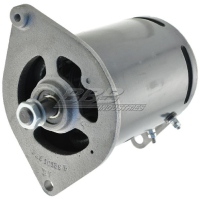
Shop the Parts Behind C2129
Below are the parts most often responsible for code C2129, ranked by how frequently each one is the actual culprit (per the diagnosis above). Tap any to see what we have for your vehicle.



The information in this article is provided for general reference and educational purposes only. Vehicle specifications, procedures, and part compatibility can vary by production date, trim level, and region. Always consult your vehicle's factory service manual and verify part numbers before purchasing or performing repairs. Safety-critical components such as airbags, seat belts, and braking systems should be installed by a qualified professional.
- 🧭 Diagnostic Flowchart
- 🛍️ Shop This Part
- What Does C2129 Mean?
- Can I Drive With C2129?
- Common Causes
- Symptoms
- Common Fixes & Costs
- DIY vs Professional
- Used vs. New Parts: Buying Guide
- What Happens If You Wait — Timeline
- Cost of Not Fixing It
- Diagnosis Steps
- When This Code Triggers (Freeze-Frame Conditions)
- Related Codes
- Climate & Environmental Factors
- How to Talk to a Mechanic About This Code
- Where to Take It: Dealer vs Independent vs Chain
- When to Walk Away From the Repair
- What Scan Tool You Need for This Code
- How to Clear the Code After You Fix It
- Will This Fail Emissions / State Inspection?
- Most Commonly Affected Vehicles
- Manufacturer-Specific Notes
- Real Owner Stories
- 2018 Jeep Wrangler JL with 30K miles - The Classic Aux Battery Failure
- 2022 Ram ProMaster 2500 - Misdiagnosis and Water Intrusion
- 2019 Ram 1500 - The Overlooked Ground Connection
- How to Prevent This Code From Triggering
- Frequently Asked Questions
- Does C2129 mean I need a new power steering rack?
- What's the difference between C2129-16 and C2129-17?
- My dashboard lit up with a dozen warnings. Is my car ruined?
- The auto parts store said my battery is good. What now?
- Why is code C2129 so common on Jeeps and Rams?
- Can I just clear the C2129 code and keep driving?
- My battery is only a year old. Can it still be the problem?
- Key Takeaways
- 🎟️ Get 5% Off