

OBD-II Code C2131: Brake Pressure Reservoir Fault
What C2131 means, why it triggers, and how to fix it
What Does C2131 Mean?

Code C2131 indicates the Sensotronic Brake Control (SBC) module detected a fault with the brake pressure reservoir (accumulator). This component stores brake fluid under extremely high pressure to ensure immediate braking response in Mercedes-Benz vehicles.
Technical definition: On Mercedes-Benz vehicles, C2131 universally means 'Pressure Reservoir Faulty'. The Sensotronic Brake Control (SBC) module runs a self-test and determines the pressure accumulator is not holding or supplying the required hydraulic pressure. A diagnostic scan tool will show the 'pretensioning pressure' or 'accumulator pressure' dropping below the specified 72 to 110 bar range, frequently falling below 64 bar to trigger the fault.
Can I Drive With C2131?
No — Do Not Drive. This code indicates a critical hydraulic braking system failure. Do not drive the vehicle. The system reverts to a non-powered backup mode with pressure only to the front wheels, requiring extreme pedal force and drastically increasing stopping distances.
Common Causes

- Failed SBC Pressure Accumulator (Very Common) — The pressure accumulator is a sphere attached to the SBC pump containing a diaphragm that separates high-pressure nitrogen gas from brake fluid. Over time, this diaphragm ruptures or the nitrogen gas leaks out, preventing the accumulator from storing pressure.
- Failing SBC Hydraulic Pump Motor (Common) — The electric motor driving the hydraulic pump wears out, specifically its internal brushes. A failing motor cannot build pressure in the accumulator quickly enough, leading to this fault code. This is frequently misdiagnosed as a bad accumulator.
- SBC Service Life Exceeded (Common) — The SBC unit has a pre-programmed service life based on a brake actuation counter. Reaching this limit triggers a fault, often logging code C249F alongside C2131 as aging components struggle to maintain pressure.
- Internal Leak in the SBC Hydraulic Unit (Less Common) — An internal leak within the complex valve assembly of the main SBC hydraulic unit prevents the system from holding pressure.
- Low or Contaminated Brake Fluid (Less Common) — Low brake fluid allows the SBC pump to draw in compressible air, preventing the system from reaching target pressure. Old, contaminated fluid damages internal seals, leading to pressure loss.
- Corroded Wiring or Bad Ground Connection (Rare) — Corrosion on the SBC unit's wiring harness or a faulty ground strap causes undervoltage. The control module interprets this electrical drop as a hydraulic fault.
- Faulty SBC Control Unit (Rare) — The electronic control unit itself fails, incorrectly reporting a pressure problem or failing to activate the pump. This is diagnosed only after verifying all hydraulic and mechanical components.
Symptoms

- Brake Warning Light on Dashboard — A white or red brake warning message appears, displaying 'Service Brake! Visit Workshop!' or 'Reduced Braking Power'.
- Increased Brake Pedal Effort — The brake pedal feels extremely hard to press, and the vehicle takes significantly longer to stop as the system reverts to hydraulic backup mode.
- SBC Pump Runs Constantly — A noticeable buzzing sound from the engine bay occurs frequently as the SBC electric pump attempts to build pressure in a faulty accumulator.
- No Power Assist Braking — The brakes require extreme leg strength to slow the vehicle, signaling a complete loss of power assist.
- ABS/ESP Warning Lights Activated — The Anti-lock Braking System (ABS) and Electronic Stability Program (ESP) warning lights illuminate, as these systems rely on the SBC unit.
Common Fixes & Costs
- Repair Under Extended Warranty — Parts: $0, Labor: $0, ~0.1 hr book time (DIY)
- Replace SBC Pressure Accumulator — Parts: $100-$200, Labor: $150-$300, ~2 hr book time (Professional)
- Replace SBC Hydraulic Control Unit (Pump and Accumulator Assembly) — Parts: $900-$2000, Labor: $250-$500, ~3 hr book time (Professional)
- Refurbish/Rebuild Existing SBC Pump — Parts: $0, Labor: $400-$800, ~3 hr book time (Professional)
- Bleed Brake System — Parts: $20-$40, Labor: $100-$200, ~1.2 hr book time (Professional)
Used vs. New Parts: Buying Guide
When a used part is worth it: Buying a used SBC accumulator or hydraulic unit is strongly discouraged due to the 25-year extended warranty from Mercedes-Benz and the critical safety nature of the part. Use a used part only if the vehicle is ineligible for warranty and budget prohibits a new or remanufactured part.
Donor-vehicle mileage cap: roughly under 40000 miles for the part to have meaningful remaining life.
Donor quality checklist:
- Verify the exact Bosch part number matches your original unit.
- Avoid parts from high-mileage vehicles; the component fails from age and use cycles, not just miles.
- A professionally remanufactured unit from Bosch is far safer than a salvage yard part.
Decision logic:
- If Vehicle is an affected model (e.g., W211, R230) → Contact a Mercedes dealer to utilize the 25-year unlimited mileage warranty for a free OEM replacement.
- If Vehicle is not covered by warranty AND only the accumulator has failed → Buy a new OEM (Bosch) accumulator. The part cost is low enough that the risk of a used part is unjustified.
- If Vehicle is not covered by warranty AND the entire SBC unit has failed → Favor a professionally remanufactured unit over a used one to get a warranty and a properly tested component.
Warranty tradeoff: Used parts offer a 30-90 day warranty. New Bosch parts carry a 1-2 year warranty. The Mercedes extended warranty covers part and labor for the remainder of the 25-year term.
Worst-case if a used part fails: $500-1000. If a used part fails, you pay repeat labor costs plus another replacement part, risking another brake failure.
What Happens If You Wait — Timeline
- 1-6 months before fault: The SBC pump runs slightly more often or for a second longer than usual as the accumulator's internal diaphragm weakens and leaks pressure slowly. (MPG impact: 0%% · Added cost: $0)
- Immediate (Fault Day): The SBC module detects accumulator pressure below the 70 bar threshold. A 'Service Brake! Visit Workshop!' message appears, code C2131 is stored, and the system enters fail-safe mode. (MPG impact: 0%% · Added cost: $0)
- 0-1 month of driving after fault (NOT RECOMMENDED): Braking is severely compromised. The SBC pump motor runs constantly to compensate for the failed accumulator, causing it to overheat and destroy its internal brushes. (MPG impact: 0%% · Added cost: $900 - $2,500. The initial accumulator issue destroys the entire SBC pump assembly.)
- Anytime after fault appears: A collision occurs due to significantly increased stopping distances. The driver is liable for operating a vehicle with a known, critical safety defect. (MPG impact: N/A% · Added cost: Potentially unlimited, including vehicle replacement, medical bills, and legal liability.)
Cost of Not Fixing It
- Immediate: The vehicle enters fail-safe mode with drastically reduced braking power on the front wheels only, requiring extreme pedal force. (Added cost: Potentially catastrophic, including total vehicle loss, personal injury, or death.)
- 0-1 month: Operating the vehicle causes the SBC pump motor to run constantly to compensate for the failed accumulator, leading to burnout. (Added cost: $900 - $2,500 for a replacement SBC pump on top of the original accumulator fault.)
- 1+ months: The vehicle is undrivable. If an accident occurs due to the known brake defect, the driver faces civil and criminal liability. (Added cost: Potentially unlimited, including legal fees, damages, and other penalties.)
Diagnosis Steps

- Check for Mercedes-Benz Extended Warranty
Contact a Mercedes-Benz dealer with your Vehicle Identification Number (VIN). The SBC system is covered by a 25-year, unlimited-mileage warranty on affected models. If covered, the dealer performs the diagnosis and repair free of charge. 🎬 Watch: How to check if your SBC system is under warranty
Tools: Vehicle VIN (Beginner) - Read Fault Codes with a Compatible Scan Tool
Use an OBD-II scanner capable of reading Mercedes-specific 'C' (Chassis) codes. Confirm C2131 is present and note any other codes like C249F (SBC service life exceeded) for diagnostic context.
Tools: Mercedes-compatible OBD-II Scanner (Beginner) - Listen to the SBC Pump Operation
With the vehicle off, open the driver's door. The SBC pump (a high-pitched buzz) runs for a few seconds to prime the system. If it runs for more than 15 seconds or after every single pedal press, the accumulator is not holding pressure.
Tools: None (Intermediate) - Measure Accumulator Pressure with a Scan Tool
Access live data for the SBC module. Monitor 'pressure reservoir' or 'accumulator pressure'. A healthy system maintains 72 to 110 bar. A reading consistently below 64 bar confirms the accumulator failed.
Tools: Advanced OBD-II Scanner with Live Data (Advanced) - Check Brake Fluid Level and Condition
Ensure the brake fluid level is between the 'MIN' and 'MAX' marks. Dark or cloudy fluid indicates contamination, which harms SBC components.
Tools: Flashlight (Beginner) - Inspect the SBC Unit for Leaks
Carefully inspect the accumulator (the black sphere), surrounding brake lines, and the main block for brake fluid leaks. A leak prevents the system from reaching target pressure.
Tools: Flashlight (Intermediate) - Pro Tip: Perform a Pump Voltage Drop Test
Connect a multimeter to the SBC pump's main power and ground terminals. Activate the pump. A voltage drop below 11.5V indicates high resistance due to a worn-out pump motor or poor electrical connection.
Tools: Multimeter, Advanced OBD-II Scanner (Professional) - Pro Tip: Inspect SBC Unit Ground Straps
Unbolt the brown ground wires attached to the chassis near the hydraulic unit. Clean the terminal and mounting point with a wire brush to remove corrosion. A poor ground causes intermittent voltage drops triggering false hydraulic codes.
Tools: Socket Set, Wire Brush, Dielectric Grease (Professional) - Advanced: Test SBC Pump Motor Amperage Draw
Use a lab scope with a low-amp clamp to measure current drawn by the SBC pump motor. Erratic, uneven humps or low amperage draw indicates failing brushes or windings, condemning the pump motor even if it still runs.
Tools: Lab Scope, Low-Amp Inductive Probe (Professional) - Advanced: Test Brake Booster Pressure Sensor (Chrysler/Dodge)
For Chrysler/Dodge vehicles, test the brake booster pressure sensor. Pump the brakes to deplete vacuum, hold the pedal, and start the engine. The pedal should sink slightly. Use a scan tool to verify sensor readings change logically with vacuum levels.
Tools: Vacuum Gauge, Multimeter, OBD-II Scanner (Advanced)
When This Code Triggers (Freeze-Frame Conditions)
- SBC Accumulator Pressure: < 70 Bar (The fault logs when the SBC module self-test detects accumulator pressure below the minimum threshold of 70 bar.)
- Vehicle State: Stationary (The code sets during a 'wake-up' event (opening the driver's door) or after a brake application triggering a pre-drive check (PDC).)
- SBC Pump Run Time: > 15 seconds (A pump running for excessive time after a wake-up event strongly indicates the accumulator is failing and a C2131 fault is imminent.)
- System Voltage: 12.0V - 14.5V (The self-test logging the code only runs if system voltage is within the normal operating range.)
How to Clear the Code After You Fix It
- Use a bidirectional scan tool to 'Deactivate' the SBC system BEFORE any repair.
- Perform the physical component replacement.
- Use the scan tool to perform the guided, multi-stage 'Brake Bleeding' procedure.
- Use the scan tool to 'Activate' or 'Commission' the SBC system, clearing the hard fault and re-initializing the module.
Drive cycle (~10 minutes): A conventional drive cycle does not apply. The code must be cleared with a specialized scan tool. After successful activation, a 10-minute test drive confirms the fix.
Readiness monitors affected: None
Watch out for:
- Attempting repair without a compatible scan tool to deactivate the system causes severe personal injury and results in a non-functional brake system.
- Clearing the code with a generic scanner fails; the fault requires the specific commissioning procedure.
- Failing to perform the scan tool-guided brake bleed leaves air in the system, causing a spongy pedal and new fault codes.
Will This Fail Emissions / State Inspection?
No — by itself this code doesn't fail OBD inspection (but it can keep readiness monitors from setting, which causes a separate fail).
- California: This code causes an automatic failure of the state's safety inspection. The Vehicle Safety Systems Inspection (VSSI) program explicitly fails vehicles for an illuminated brake warning lamp.
- New York: An illuminated red brake warning light is an automatic failure during the annual NYS safety inspection.
- Texas: A vehicle fails the Texas safety inspection if the primary brake warning lamp is illuminated.
Real Owner Stories
2005 Mercedes E320 with C2131
The white 'Service Brake! Visit Workshop!' message appeared. A scan tool read code C2131, 'Pressure Reservoir Faulty'.
What they tried:
- The owner discovered the 25-year unlimited mileage warranty on the SBC system.
- They called the local Mercedes-Benz dealership to verify coverage.
Outcome: The dealer confirmed the C2131 fault was due to the pressure accumulator and replaced the component for free under the extended warranty.
Lesson: If you have an affected Mercedes model with a C2131 code, immediately contact a dealer with your VIN. The repair is highly likely covered by the 25-year extended warranty.
2003 Mercedes E240 with persistent C2131
A diagnostic scan revealed code C2131. Live data showed the accumulator 'pretensioning pressure' at 64 bar, below the required 72-102 bar range.
What they tried:
- The owner replaced the pressure accumulator with a new part.
- After bleeding the brakes with a STAR diagnostic tool, the fault code would not clear.
- Live data showed the new accumulator only reaching 62 bar.
Outcome: The problem was a weak SBC pump motor unable to pressurize the new accumulator. The owner wasted money on the accumulator part.
Lesson: A C2131 code does not guarantee the accumulator is the only faulty part. A weak pump motor fails to pressurize a perfectly good accumulator, highlighting the need to check pump run time and voltage before replacing parts.
2013 Kia Optima with C2131
The check engine light illuminated with no noticeable braking problems. A code scan showed C2131.
What they tried:
- Make-specific research revealed that on a Kia, C2131 means 'ESS Brake Lamp Relay Error'.
- The owner checked the brake lamp relay in the engine compartment fuse box.
Outcome: The issue was related to the Emergency Stop Signal (ESS) system. The fix was an inexpensive electrical relay replacement, not a hydraulic repair.
Lesson: Fault code definitions change dramatically between manufacturers. For a Kia or Hyundai, C2131 is a minor electrical issue, not a critical hydraulic failure.
How to Prevent This Code From Triggering
- Flush brake fluid with approved DOT 4+. (Every 2 years or 20,000 miles.) — Brake fluid absorbs moisture, which corrodes the sensitive internal valves of the SBC unit and lowers the fluid's boiling point, reducing braking effectiveness.
- Maintain a healthy main and auxiliary battery. (Check annually, replace every 5-7 years.) — The electro-hydraulic SBC system relies on a stable voltage supply from both the main and auxiliary batteries to operate the pump and control unit correctly.
- Clean the SBC unit's ground connection. (Inspect during engine bay services, especially in salty climates.) — Corrosion at the dedicated chassis ground strap creates high resistance, leading to voltage drops and intermittent electronic faults misinterpreted as hydraulic failures.
- Practice smooth braking habits. (Daily habit.) — The SBC unit's service life is determined by an internal brake actuation counter. Frequent, sharp braking increases the actuation count faster, accelerating the timeline toward a C249F service life fault.
Helpful Videos

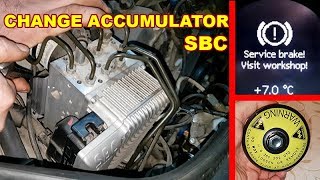

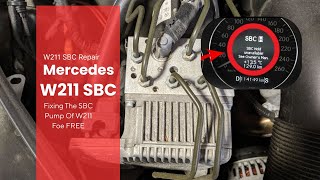
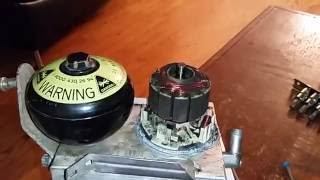
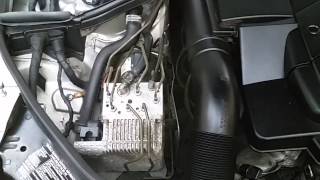
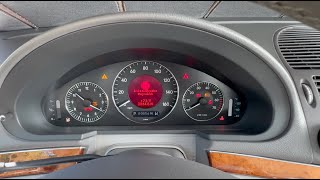
Shop the Parts Behind C2131
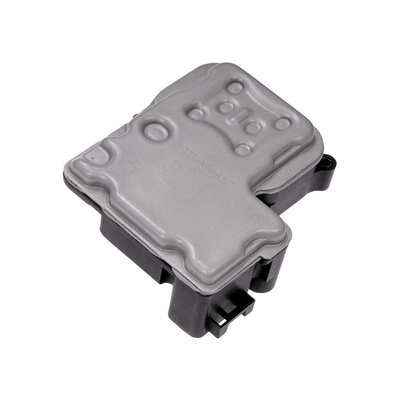
Below are the parts most often responsible for code C2131, ranked by how frequently each one is the actual culprit (per the diagnosis above). Tap any to see what we have for your vehicle.

The information in this article is provided for general reference and educational purposes only. Vehicle specifications, procedures, and part compatibility can vary by production date, trim level, and region. Always consult your vehicle's factory service manual and verify part numbers before purchasing or performing repairs. Safety-critical components such as airbags, seat belts, and braking systems should be installed by a qualified professional.
- 🎬 Helpful Videos
- 🛍️ Shop This Part
- What Does C2131 Mean?
- Can I Drive With C2131?
- Common Causes
- Symptoms
- Common Fixes & Costs
- Used vs. New Parts: Buying Guide
- What Happens If You Wait — Timeline
- Cost of Not Fixing It
- Diagnosis Steps
- When This Code Triggers (Freeze-Frame Conditions)
- How to Clear the Code After You Fix It
- Will This Fail Emissions / State Inspection?
- Real Owner Stories
- 2005 Mercedes E320 with C2131
- 2003 Mercedes E240 with persistent C2131
- 2013 Kia Optima with C2131
- How to Prevent This Code From Triggering
- 🎟️ Get 5% Off