

OBD-II Code C2203: VIN Missing or Mismatch
What C2203 means, why it triggers, and how to fix it
- Code C2203 indicates a control module (usually the ABS) is missing your vehicle's unique 17-digit VIN, shutting down critical safety systems.
- The #1 cause of C2203 is installing a new or used control module without performing the mandatory electronic VIN programming procedure.
- Before spending $800+ on a new ABS module, check for manufacturer Technical Service Bulletins (TSBs) and inspect the module's wiring harness for broken locking tabs.
- Fixing this code requires a professional-grade, bi-directional scan tool costing $450+ to write the VIN; a basic $50 code reader cannot resolve it.
- Driving with C2203 increases stopping distances by up to 30% on wet surfaces because the Anti-lock Braking System (ABS) is completely disabled.
What Does C2203 Mean?
Code C2203 means a specific control module—usually the Anti-lock Brakes (ABS)—has not stored your car's unique 17-digit Vehicle Identification Number (VIN). Without the VIN, the module shuts down its safety systems as a precaution.
Technical definition: The SAE/ISO definition for C2203 is "Current VIN Missing/Mismatch". This indicates a control module (ABS, ADAS, or ECS) failed to receive or store the VIN from the Engine Control Module (ECM) or Body Control Module (BCM) via the CAN bus network.
Can I Drive With C2203?
Yes, But With Caution. You can drive the vehicle, but do so with extreme caution. Your Anti-lock Braking System (ABS) and Traction/Stability Control (TCS/ESC) are completely disabled. Wheels will lock up during hard braking, increasing stopping distances by up to 30% on wet surfaces and causing a complete loss of steering control. Have the vehicle serviced immediately to avoid severe safety risks and potential insurance liability in an accident.
Common Causes
- Control module replaced but not programmed (Very Common) — This is the most frequent cause. When a new or used ABS or other control module is installed, it must be electronically programmed with the car's specific VIN before it will function.
- Software glitch in the control module (Common) — Software bugs cause the module to lose or fail to read the VIN. Manufacturers frequently release software updates via Technical Service Bulletins (TSBs) to fix these glitches, particularly in 2022+ Jeep models.
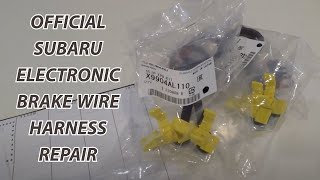
- Brittle or broken connector locking tabs (Common) — On 2015-2018 Subarus, the plastic locking tab on the Electronic Parking Brake connector becomes brittle and breaks. The connector vibrates loose, creating an intermittent connection that prevents communication.
- CAN bus communication network failure (Common) — The VIN is shared between modules over the CAN bus network. A damaged wire, loose connector, or faulty terminal prevents the VIN from reaching the ABS module.
- Low battery voltage or poor ground connection (Less Common) — A weak battery, corroded terminals, or a faulty ground connection causes unpredictable communication errors between modules during vehicle startup, triggering a C2203 code even if no permanent fault exists.
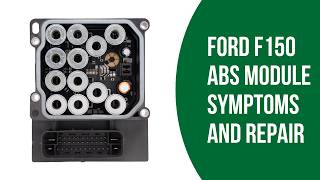
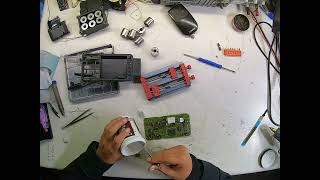
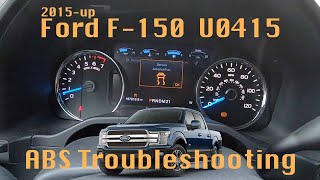
- Water intrusion into a junction box or module (Less Common) — On Ford F-Series trucks, water leaks into the main under-hood battery junction box (BJB). 🎬 Watch: Troubleshooting Ford F-150 ABS module and wiring issues. This causes corrosion and short-circuits communication lines, leading to ABS communication codes.
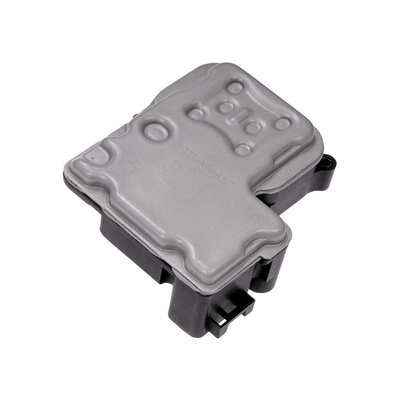
- Faulty Anti-Lock Brake System (ABS) module (Less Common) — The module itself fails internally due to broken solder joints or electronic component failure, losing its ability to store the VIN or communicate. This requires replacing the unit.
- Faulty Engine Control Module (ECM) (Rare) — The ECM is the primary source of the VIN information. A failing ECM stops sending the VIN to other modules on the network, often accompanied by code P0630.
- Faulty electronic suspension component (Rare) — On luxury models like the Hyundai Genesis/Equus, code C2203 points to a failure in the Electronic Control Suspension (ECS) system, such as a faulty damper actuator or a leaking air line.
Symptoms
- ABS warning light is on — The dashboard light with the letters "ABS" stays lit continuously.
- Traction or Stability Control (TCS/ESC) light is on — A light showing a car with squiggly lines illuminates, indicating traction and stability systems are disabled.
- Advanced safety features are disabled — Messages like "ACC/FCW Unavailable" or "Blindspot Detection Unavailable" appear, as these systems rely on the ABS module.
- Brake warning light is on — The main red brake system warning light (an exclamation point in a circle) illuminates.
- Wheels lock up under hard braking — Without ABS, slamming on the brakes causes the wheels to lock and skid, resulting in a loss of steering control.
- Suspension warning message — On Hyundai Equus/Genesis models, a 'Check Electronic Suspension' message appears on the instrument cluster.
Diagnostic Flowchart
Tap your situation to follow the diagnostic path that matches what you're seeing on this code.
Common Fixes & Costs
- Reprogramming Control Module — Parts: $0, Labor: $150-$350, ~1.5 hr book time (Professional)
- Updating Module Software per TSB — Parts: $0, Labor: $150-$250, ~1.2 hr book time (Professional)
- Securing a Loose Connector or Installing a TSB Clip — Parts: $1-$20, Labor: $0-$120, ~0.5 hr book time (Beginner)
- Repairing CAN Bus Wiring or Connectors — Parts: $10-$50, Labor: $250-$600, ~3 hr book time (Intermediate)
- Replacing and Programming the ABS Control Module
— Parts: $250-$1200, Labor: $150-$400, ~2.5 hr book time
(Professional)
: OEM
: OEM
: OEM
Used vs. New Parts: Buying Guide
When a used part is worth it: A used ABS module is a budget option for older vehicles, but only if you have confirmed access to a mechanic equipped to reprogram a used module.
Donor-vehicle mileage cap: roughly under 100000 miles for the part to have meaningful remaining life.
Donor quality checklist:
- Part number must be an exact match.
- Verify the donor vehicle's history to avoid flood-damaged modules.
- Understand it arrives with the donor car's VIN and absolutely requires reprogramming.
Decision logic:
- If It is your original module that failed → Send it to a reputable service for rebuilding; this is cheaper than new and requires no programming.
- If Vehicle is newer or the part is for an advanced safety system (ADAS) → Buy new OEM. The complexity and programming requirements make used parts too risky.
- If Budget is the primary concern and you accept the risk → A used part may work, but factor in $150-$350 for a programming attempt that may fail.
Warranty tradeoff: Used parts offer a 30-90 day warranty. Remanufactured units offer a 1-year or lifetime warranty. New OEM parts carry a 1-2 year warranty.
Worst-case if a used part fails: $300-$700. This is the cost of the used part plus non-refundable labor fees if the module is incompatible.
What Happens If You Wait — Timeline
- Immediate: Code C2203 is set. ABS, Traction Control, and Stability Control warning lights illuminate. Safety systems are disabled. (MPG impact: 0%% · Added cost: $0. The primary cost is the immediate high safety risk due to loss of driver aids.)
- 1-3 months (if caused by water/wiring fault): Corrosion builds on connector pins or wiring insulation breaches. The fault remains active, and damage becomes permanent. (MPG impact: 0%% · Added cost: $250 - $600. The problem progresses from a simple cleaning to requiring a wiring harness repair.)
- 3-9 months (if caused by water/wiring fault): Severe corrosion shorts CAN bus lines together, bringing down the entire communication network and causing multiple modules to fail. (MPG impact: 0-5%% · Added cost: $500 - $1500+. A single module issue becomes a network-wide failure requiring junction box replacement.)
- 9+ months (if caused by water/wiring fault): Catastrophic failure. Unchecked water intrusion destroys expensive control modules (BCM, ECM). The vehicle fails to start. (MPG impact: 0-10%% · Added cost: $1500 - $4000+. Repair involves replacing multiple expensive modules and tracing extensive electrical damage.)
Cost of Not Fixing It
- Immediate: Disabled ABS, Traction Control, and Stability Control systems lead to a high risk of skidding and loss of control in panic braking. (Added cost: $0 in repairs, but potential for thousands in accident damages or insurance claim denial.)
- 1-6 months: Continued risk of a serious accident. Insurance claims may be denied for knowingly operating a vehicle with a disabled safety system. (Added cost: Potential for full liability in an accident exceeding $100,000+.)
- 6+ months: If caused by water intrusion, corrosion spreads to other circuits, leading to complex network-wide electrical failures. (Added cost: $500 - $3000+)
Diagnosis Steps
- Scan for All Trouble Codes
Use an advanced OBD-II scanner to read codes from all modules (ABS, BCM, ECM, ECS). Note communication codes like U0121 or VIN mismatch codes like C2202. The presence of other codes dictates your diagnostic path.
Tools: Advanced OBD-II Scanner (Beginner) - Check for Technical Service Bulletins (TSBs)
Search online for TSBs related to code C2203 for your specific make and model. The fix is often a simple software update or a known issue with a specific connector.
Tools: Internet Access (Beginner) - Inspect Module Wiring and Connectors
Visually inspect the wiring harness and connector at the affected module. Look for damage, corrosion, or loose pins. Tug on the connector to ensure it is securely latched; broken locking tabs cause intermittent connections.
Tools: Flashlight (Intermediate) - Check Battery Voltage and Grounds
Ensure the battery is fully charged (12.4V+ with engine off) and terminals are clean. Check main chassis and engine grounds for corrosion. Bad grounds are a primary cause of communication errors.
Tools: Multimeter (Beginner) - Attempt to Program the VIN
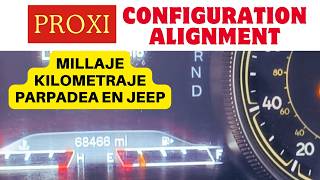
If a module was recently replaced, use a bi-directional scan tool to write the vehicle's VIN to the module. On Stellantis vehicles, perform a 'PROXI Alignment' to sync all modules.
Tools: Bi-directional Scan Tool with Programming Function (Professional) - Check for Power and Ground at the Module
Disconnect the module's electrical connector and verify it receives battery voltage (12.6V) and has a solid ground (less than 0.1 ohms resistance) at the correct pins. A module cannot communicate without power.
Tools: Multimeter, Vehicle-specific Wiring Diagram (Advanced) - Perform a CAN Bus Resistance Test
With the battery disconnected, measure resistance between CAN High and CAN Low at the OBD-II port (Pins 6 and 14). A healthy network reads 60 ohms. 120 ohms indicates a break; 0 ohms indicates a short.
Tools: Multimeter, Vehicle-specific Wiring Diagram (Advanced) - Perform a CAN Bus Voltage Test
With the key on and engine off, measure DC voltage of the CAN lines at the OBD-II port. CAN High (Pin 6) should be 2.5V-3.5V. CAN Low (Pin 14) should be 1.5V-2.5V. Deviations point to a short.
Tools: Multimeter (Advanced) - Analyze Live ABS Data
View the live data stream for the ABS module. Drive slowly in a straight line. All four wheel speed sensors must display identical readings matching the speedometer. Erratic readings disrupt module communication.
Tools: Advanced OBD-II Scanner (Intermediate) - Isolate the Faulty Module
If CAN bus resistance is near 0 ohms, unplug modules one by one until the resistance returns to 60 ohms. This identifies an internally shorted module bringing down the network.
Tools: Multimeter (Advanced)
When This Code Triggers (Freeze-Frame Conditions)
- Vehicle Speed: 0 MPH (Vehicle stationary during startup initialization.)
- Engine RPM: 0-800 RPM (Key-On Engine-Off or during initial engine crank/idle.)
- Control Module Voltage: 11.5-12.6V (During startup; a value below 11V indicates a weak battery causing the communication fault.)
- Engine Run Time: 0-10 seconds (Fault is logged immediately after the ignition is turned on as modules perform self-checks.)
Related Codes
- C2202 — Means 'Original VIN Mismatch'. C2203 means the VIN is blank; C2202 means a VIN is stored, but it belongs to a different vehicle. This confirms a used salvage yard module was installed without reprogramming.
- U0121 — Means 'Lost Communication With ABS Control Module'. U0121 directly causes C2203. If the car cannot communicate with the ABS module, the module cannot receive the VIN. Diagnose U0121 first.
- P0630 — Means 'VIN Not Programmed or Mismatch - PCM'. If P0630 is present, the Powertrain Control Module (PCM) is failing to broadcast the VIN to the network. Focus diagnosis on the PCM.
- C2200 — Indicates 'ABS Module Internal Failure'. Internal hardware failure corrupts the module's memory, erasing the VIN and logging C2203 as a secondary fault. The module requires replacement.
Climate & Environmental Factors
- Cold Weather: Extreme cold reduces battery cranking power, lowering system voltage during startup. Voltages below 10.5V cause communication modules to fail initialization, intermittently triggering C2203. If the code only appears on cold starts, replace the weak battery.
- High Humidity / Water Intrusion: Moisture causes corrosion on CAN bus pins, creating high resistance or short circuits. Water leaking into the Ford F-Series Battery Junction Box is a prime example of environmental damage triggering this code.
How to Talk to a Mechanic About This Code
Say this: "I have an ABS and traction control light on, and my scanner shows code C2203. I suspect a module programming or communication issue. I'd like to schedule a diagnostic to confirm if the module needs programming, or if there's a wiring, connector, or power/ground fault."
This focuses the technician's diagnostic path on programming and wiring, discouraging them from immediately quoting an expensive module replacement without proper testing.
Avoid saying:
- 'Just fix whatever's wrong'
- 'My ABS light is on, can you look at it?'
- 'I brought my own used ABS module, can you just install it?'
Questions to ask before authorizing the repair:
- Before replacing the module, did you confirm it has proper power, ground, and test the CAN bus communication lines?
- Does the estimate include the cost of programming/coding the new module to my vehicle's VIN?
- Have you checked for any Technical Service Bulletins (TSBs) for my vehicle related to this code?
- What is the warranty on both the part and the labor for this repair?
Where to Take It: Dealer vs Independent vs Chain
- Dealer:
Recommended. The dealership guarantees access to the correct diagnostic tools, software, and TSBs to fix C2203 correctly the first time.
Best for: Vehicles under warranty or with a relevant warranty extension., Newer vehicles (2022+) where a software update is the most likely fix., Complex programming requiring manufacturer-specific tools (e.g., PROXI alignment).
Downsides: Highest labor rate., Unwilling to program customer-supplied used modules. (Typical cost: +50% vs. baseline) - Independent Shop:
Recommended, with caution. Ask specifically if they can program ABS modules for your vehicle's make before booking.
Best for: Out-of-warranty vehicles where cost is a major factor., Diagnosing and repairing common wiring or connector issues., Shops specializing in diagnostics with advanced, bi-directional scan tools.
Downsides: Shop capabilities vary widely; a shop without proper programming tools cannot complete the repair., May lack access to the latest manufacturer software updates. (Typical cost: +0% vs. baseline) - Chain Shop:
AVOID. This repair is outside the scope of chain shops. They lack the specialized tools required for module programming.
Best for: Simple, non-diagnostic jobs like changing oil, tires, or brake pads.
Downsides: Technicians lack training for complex electronic diagnostics and module programming., High risk of misdiagnosis., Unable to perform the necessary VIN programming. (Typical cost: -10% vs. baseline)
When to Walk Away From the Repair
If the total estimated repair cost for the C2203 code exceeds 50% of your car's private-party value, seriously consider selling or trading in the vehicle.
- Car worth $4000, fix is $2200: Walk away. The repair cost is over 50% of the car's value. It is not a sound financial decision to proceed.
- Car worth $15000, fix is $1800: Fix it. The repair cost is well below the 50% threshold and restores a critical safety system.
- Car worth $3000, fix is $350: Fix it. A $350 programming fee is a small investment to make a $3,000 car safe and fully functional.
What Scan Tool You Need for This Code
Minimum: A scanner that reads and clears codes from the ABS/Brake control module. Basic engine-only readers will not see this code.
A basic scanner cannot fix this problem. The most common fix for C2203 is programming a VIN into a module, requiring a bi-directional scan tool with programming capabilities.
Budget: BlueDriver Pro or basic Autel/Foxwell models (~$100) — Confirms the C2203 code is present in the ABS module. Useful for initial diagnosis ONLY. Cannot perform programming.
Mid-range: Foxwell NT510/NT716 Elite or Innova 5610 (~$150) — Offers bi-directional controls and special functions, but VIN writing ability is limited and vehicle-dependent. May not complete the final repair.
Professional: Autel MaxiCOM MK808 / MK900-BT or Launch X431 series (~$450-1200) — Required for a DIY fix. Features advanced bi-directional control and ECU programming functions to write a VIN and perform PROXI alignments.
Rent vs buy: Rent a basic scanner from a parts store to confirm the code. You CANNOT rent the professional-grade tool needed to program the module. If you will not buy a pro-level tool, pay a shop for the final repair.
How to Clear the Code After You Fix It
- Fix the root cause (program module, repair wiring, etc.)
- Use an advanced OBD-II scan tool to clear the code from the ABS module
- Turn the ignition off for 30 seconds, then restart the vehicle to confirm the ABS light stays off
- Perform a short test drive including left and right turns to verify system function
Drive cycle (~10 minutes): A specific emissions drive cycle is not required. After clearing the code, a 10-minute test drive with varied speeds and turns confirms the ABS, TCS, and ESC systems are operational.
Readiness monitors affected: None
Watch out for:
- Attempting to clear the code without fixing the underlying programming fault causes the code to return instantly.
- Disconnecting the battery will not clear the VIN configuration fault from the module's memory.
- Using a basic code reader that only accesses the ECM cannot clear a code stored in the ABS module.
Will This Fail Emissions / State Inspection?
Yes — this code typically fails an OBD-II emissions inspection.
- California: An illuminated ABS warning light is a safety inspection failure. The vehicle will not pass its smog check.
- New York: Per NYS law, an illuminated ABS warning light is grounds for safety inspection failure.
- Texas: An illuminated amber ABS light will NOT cause a failure. However, an illuminated RED 'Brake' warning light results in failure.
Most Commonly Affected Vehicles
- Jeep Grand Cherokee / Grand Cherokee L / Wagoneer (2022-2026) — A software issue in the Central ADAS Decision Module (CADM) triggers C2203. Addressed by TSB 08-190-24 REV. A, requiring a dealer to reprogram the module.
- Subaru Outback, Legacy, WRX (2015-2018) — A brittle locking tab on the Electronic Parking Brake (EPB) connector breaks, causing a loose connection. Addressed by TSB 06-87-22R with a 15-year warranty extension.
- Ford F-150, F-250/F-350 Super Duty (2017-2025) — Prone to setting VIN mismatch codes after module replacement. On Super Duty trucks, water intrusion into the Battery Junction Box causes these codes and must be checked first.
- Mitsubishi Lancer, Outlander (2008-2017) — Code is common after replacing the All-Wheel Control (AWC) ECU without programming the chassis number (VIN) using a factory scan tool.
- Hyundai Genesis, Equus (2009-2016) — C2203 indicates a fault with the Electronic Control Suspension (ECS), not the ABS. Common causes include a leaking air line pinching against the frame.
- Dodge / Ram 1500, 2500, 3500 (2013-2018) — Commonly experience ABS module failures. C2202 (Original VIN Mismatch) appears when a used module is installed without being reprogrammed.
Manufacturer-Specific Notes
- Stellantis (Jeep, Dodge, Chrysler, Ram): A software update is the most common fix on newer models per TSB 08-190-24 REV. A. The repair requires a 'PROXI Alignment' using the wiTECH scan tool after programming.
- Subaru: On 2015-2018 models, brake warning lights are caused by a broken locking tab on the rear Electronic Parking Brake connectors. Install the revised retaining clip per TSB 06-87-22R.
- Ford: On Super Duty trucks, always inspect the Battery Junction Box for water intrusion and corrosion before replacing the ABS module.
- Hyundai: On Genesis and Equus models, C2203 relates to the Electronic Control Suspension (ECS). Check for sagging and air leaks before diagnosing the ABS.
- Mitsubishi: Defined as 'Chassis No. not programmed'. Guaranteed to appear if the ASC/AWC hydraulic unit is replaced without performing the VIN writing procedure.
Real Owner Stories
2017 Subaru Outback with multiple brake lights on
The owner reported the ABS, EyeSight, and Hill Holder lights all came on simultaneously. The vehicle drove normally, and the issue was intermittent.
Outcome: The plastic locking tab on the Electronic Parking Brake (EPB) module connector broke, allowing it to loosen. The fix was securing the connector with a zip tie. Subaru later issued a special retaining clip (Part #X9904AL110) and extended the warranty to 15 years.
Lesson: On 2015-2018 Subarus, a cluster of brake warning lights is usually caused by a broken connector tab near the rear wheels, not an expensive module failure. Always check TSBs first.
2022 Jeep Grand Cherokee L with random warning lights
The owner experienced random warning lights, including "Front Collision Warning OFF" and "Service Electrical System". The infotainment system also reset settings on its own.
Outcome: The root cause was a software glitch in the Central ADAS Decision Module (CADM). Jeep released TSB 08-190-24 REV. A, requiring a dealer to perform a software update and PROXI alignment to permanently resolve the C2203 code.
Lesson: On highly-computerized vehicles, random electrical faults are often software bugs. A dealer-installed software update is frequently the only solution.
2018 Ford F-250 Super Duty with no-start and electrical chaos
After a car wash, the truck's lights flashed and relays clicked randomly. The batteries died completely, and the truck would not start or unlock.
Outcome: Technicians found the under-hood Battery Junction Box (BJB) cover was not sealed. Water dripped into the BJB, causing widespread corrosion and shorting communication circuits, logging codes C2203 and U0121. The fix required replacing the entire BJB.
Lesson: On Ford trucks, inspect the Battery Junction Box for water intrusion before assuming an individual module failed. The BJB's poor seal causes cascading electrical problems.
2013 Hyundai Equus sagging and showing 'Check ECS' light
The rear air suspension sagged overnight. The owner replaced the rear airbags and compressor, but the problem persisted, logging a C2203 'CDC Actuator Failure' code.
Outcome: Inspection revealed the rear suspension air line rubbed against the frame, causing a slow leak that faulted the system after sitting. The fix involved repairing and rerouting the air line.
Lesson: On Hyundai Genesis and Equus models, C2203 points to the Electronic Control Suspension (ECS), not the ABS. Sagging is often a physical air leak, not a failed electronic module.
How to Prevent This Code From Triggering
- Maintain Battery Health (Every 6 months) — Low voltage during startup causes communication glitches. Clean battery terminals and ensure voltage remains above 12.4V.
- Inspect and Protect Electrical Connectors (Annually or when working on the vehicle) — Corrosion destroys CAN bus communication. Spray accessible connectors with electronic contact cleaner and apply dielectric grease to the seals.
- Check for and Clear Water Drains (Annually, especially before rainy season) — Clogged cowl or sunroof drains cause water to overflow onto sensitive electronics like fuse boxes, preventing catastrophic water damage.
- Secure Wiring Harnesses (Whenever working under the hood or chassis) — Physical damage to CAN bus wiring causes shorts. Ensure harnesses are secured away from hot exhaust and moving suspension parts.
Frequently Asked Questions
Why did code C2203 appear right after I replaced my ABS module?
The new or used module was not programmed with your car's VIN. The module will not function until it is electronically matched to your vehicle using a professional scan tool.
Can I use an ABS module from a junkyard?
Yes, but it is risky. A used module stores the donor vehicle's VIN, triggering code C2202. While advanced scanners can sometimes wipe and reprogram them, many modules are locked, making new or remanufactured units much more reliable.
My mechanic replaced the ABS module, but the C2203 code is still there. What went wrong?
Your mechanic likely lacks the specific software to perform the 'VIN write' or 'Module Setup' procedure. Alternatively, they misdiagnosed the problem, and the actual fault is in the wiring or network communication.
Can I fix code C2203 by just clearing it with a scanner?
No. C2203 is a 'hard code' indicating a configuration issue. The code returns immediately upon the next key cycle until the underlying programming or wiring problem is resolved.
What is a PROXI Alignment and why is it needed for a C2203 code?
A PROXI Alignment synchronizes the configuration data of all electronic modules on the vehicle's network. It tells the rest of the car that a newly installed module is valid. It is a mandatory final step on modern Stellantis vehicles after programming.
Can C2203 be related to my air suspension?
Yes. On Hyundai Genesis and Equus models, C2203 specifically points to a fault in the Electronic Control Suspension (ECS) system, such as an air leak, and is unrelated to the brakes.
Do I have to go to a dealership to fix a C2203 code?
Not necessarily, but the repair requires an advanced, bi-directional scan tool capable of 'VIN writing'. Many independent shops have this equipment, but a basic code reader cannot perform the function.
What is a common misdiagnosis for C2203?
A common mistake is immediately replacing the ABS module without ruling out other causes. The actual problem is often a broken connector clip, a corroded ground wire, or the need for a software update.
Can a low or dead battery cause code C2203?
Yes. Low system voltage during startup causes communication glitches between modules, intermittently setting a C2203 code. Fully charge and test the battery before beginning a complex diagnosis.
Key Takeaways
- Code C2203 indicates a control module (usually the ABS) is missing your vehicle's unique 17-digit VIN, shutting down critical safety systems.
- The #1 cause of C2203 is installing a new or used control module without performing the mandatory electronic VIN programming procedure.
- Before spending $800+ on a new ABS module, check for manufacturer Technical Service Bulletins (TSBs) and inspect the module's wiring harness for broken locking tabs.
- Fixing this code requires a professional-grade, bi-directional scan tool costing $450+ to write the VIN; a basic $50 code reader cannot resolve it.
- Driving with C2203 increases stopping distances by up to 30% on wet surfaces because the Anti-lock Braking System (ABS) is completely disabled.
Helpful Videos


Shop the Parts Behind C2203
Below are the parts most often responsible for code C2203, ranked by how frequently each one is the actual culprit (per the diagnosis above). Tap any to see what we have for your vehicle.

The information in this article is provided for general reference and educational purposes only. Vehicle specifications, procedures, and part compatibility can vary by production date, trim level, and region. Always consult your vehicle's factory service manual and verify part numbers before purchasing or performing repairs. Safety-critical components such as airbags, seat belts, and braking systems should be installed by a qualified professional.
- 🧭 Diagnostic Flowchart
- 🎬 Helpful Videos
- 🛍️ Shop This Part
- What Does C2203 Mean?
- Can I Drive With C2203?
- Common Causes
- Symptoms
- Common Fixes & Costs
- Used vs. New Parts: Buying Guide
- What Happens If You Wait — Timeline
- Cost of Not Fixing It
- Diagnosis Steps
- When This Code Triggers (Freeze-Frame Conditions)
- Related Codes
- Climate & Environmental Factors
- How to Talk to a Mechanic About This Code
- Where to Take It: Dealer vs Independent vs Chain
- When to Walk Away From the Repair
- What Scan Tool You Need for This Code
- How to Clear the Code After You Fix It
- Will This Fail Emissions / State Inspection?
- Most Commonly Affected Vehicles
- Manufacturer-Specific Notes
- Real Owner Stories
- 2017 Subaru Outback with multiple brake lights on
- 2022 Jeep Grand Cherokee L with random warning lights
- 2018 Ford F-250 Super Duty with no-start and electrical chaos
- 2013 Hyundai Equus sagging and showing 'Check ECS' light
- How to Prevent This Code From Triggering
- Frequently Asked Questions
- Why did code C2203 appear right after I replaced my ABS module?
- Can I use an ABS module from a junkyard?
- My mechanic replaced the ABS module, but the C2203 code is still there. What went wrong?
- Can I fix code C2203 by just clearing it with a scanner?
- What is a PROXI Alignment and why is it needed for a C2203 code?
- Can C2203 be related to my air suspension?
- Do I have to go to a dealership to fix a C2203 code?
- What is a common misdiagnosis for C2203?
- Can a low or dead battery cause code C2203?
- Key Takeaways
- 🎟️ Get 5% Off