

OBD-II Code C2205: Steering Angle Sensor Internal Failure
The Ultimate 2026 Guide to Diagnosing and Fixing C2205
- Code C2205 flags a definitive internal failure in the Steering Angle Sensor, instantly disabling your vehicle's ABS and Electronic Stability Control.
- If you drive a 2005-2010 Chrysler, Dodge, or Jeep, check the T30 Torx screw under the steering column first; tightening it fixes the code for $0 in under 5 minutes.
- Owners of 2011-2016 Jeep Wranglers must call a dealership with their VIN to check for the X68 15-year extended warranty before spending $600+ on a clock spring replacement.
- Do not drive at highway speeds or in wet conditions with an active C2205 code, as your vehicle lacks the automated systems required to prevent skids and rollovers.
- Always use a bi-directional scan tool to read live steering angle data and attempt a $50-$150 electronic recalibration before buying a new $300 sensor.
What Does C2205 Mean?
Trouble code C2205 means your Anti-Lock Brake System (ABS) Module detected a definitive internal electronic or mechanical failure within the Steering Angle Sensor (SAS). This sensor tells the computer the precise direction, rate of turn, and position of the steering wheel. Because this data is essential, the computer preemptively disables the Electronic Stability Control (ESC), ABS, and Traction Control systems to prevent erratic braking behavior.
Technical definition: The SAE/OBD-II definition for C2205 is "Steering Angle Sensor Internal." This indicates the ABS module received a status message directly from the steering angle sensor's internal microprocessor reporting a fatal hardware or logic fault, distinct from a simple calibration or communication error.
Can I Drive With C2205?
Yes, But With Caution. Yes, but with extreme caution. Your Electronic Stability Control (ESC) and Anti-lock Braking System (ABS) are disabled. This increases stopping distances on wet or gravel surfaces and deactivates your vehicle's primary automated system for preventing skids and rollovers. Service the vehicle immediately to restore these critical safety features.
Common Causes
- Internal Failure of the Steering Angle Sensor (SAS) (Very Common) — The electronic components, optical discs, or mechanical contacts inside the sensor wear out or break, causing it to fail its internal self-diagnosis.
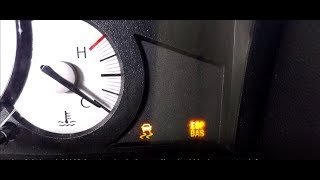
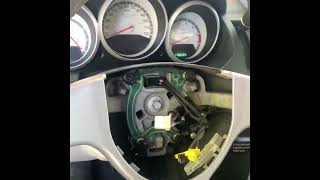
- Loose Steering Angle Sensor Mounting (Common) — Extremely common on 2005-2010 Chrysler, Dodge, and Jeep vehicles. A single T30 Torx screw securing the sensor loosens, allowing the sensor to shift during turns and trigger the fault. 🎬 Watch: How to fix Chrysler and Dodge sensors when turning left.
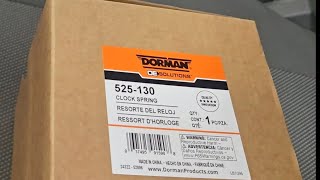
- Defective Clock Spring (Common) — The SAS is often physically integrated into the clock spring assembly. A worn-out or broken clock spring severs the sensor's electrical connections or interferes with its physical rotation.
- Improper Wheel Alignment or Recent Service (Less Common) — If a recent wheel alignment, suspension repair, or steering column service leaves the steering wheel off-center without recalibrating the sensor, it triggers this fault code.
- Wiring or Connector Issues (Less Common) — Damaged, corroded, spread, or loose wires and connector pins between the SAS, clock spring, and the ABS module interrupt the signal.
- Low Battery Voltage or Voltage Spikes (Less Common) — A weak battery, a recent battery disconnect, or a voltage surge from a jump-start corrupts the SAS's calibration memory, causing it to fail initialization.
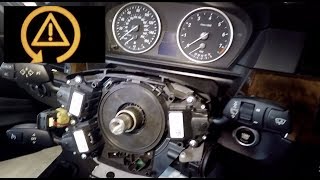
- Dirty or Obstructed Optical Sensor (BMW specific) (Rare) — On BMW models (E90/E60), dust and debris accumulate on the optical sensor lens, blocking its view of the internal disc and causing intermittent DSC/DBC errors. 🎬 See this DIY guide for cleaning BMW optical steering sensors.
- Software Glitches / Need for Reprogramming (Rare) — Certain vehicles, like the Jeep Wrangler (JK), require a software update to the sensor module to resolve intermittent C2205/C121A codes (TSB 08-010-07).
- Faulty Wheel Speed Sensor Preventing SAS Calibration (Very Rare) — A faulty ABS wheel speed sensor sends erratic data to the ABS module, preventing the system from successfully calibrating the Steering Angle Sensor.
- Faulty ABS/ESP Control Module (Very Rare) — In rare instances, the ABS module itself has a faulty input circuit or misinterprets a perfectly good signal from the steering angle sensor.
Symptoms
- Electronic Stability Control (ESC/ESP) Warning Light On — The most common and immediate symptom. The light, showing a car with squiggly lines, illuminates and stays on.
- ABS Warning Light On — The ABS light illuminates alongside the ESC light, confirming both systems are disabled.
- Traction Control (TC) Warning Light On — The traction control system is disabled, and its corresponding warning light turns on.
- Warning lights appear specifically when turning — On Chrysler, Dodge, and Jeep models, warning lights appearing only during a turn (often a slight left) is a classic sign of a loose sensor shifting in its mount.
- Heavy or Unpredictable Steering Feel — In vehicles with electric power steering (EPS), a faulty SAS causes the steering to feel unusually heavy, light, or inconsistent.
- Turn Signals Do Not Cancel — A mechanical failure in the clock spring/SAS assembly prevents the turn signal canceling mechanism from operating.
Diagnostic Flowchart
Tap your situation to follow the diagnostic path that matches what you're seeing on this code.
Common Fixes & Costs
- Tighten Loose Steering Angle Sensor — Parts: $0, Labor: $0-$120, ~0.5 hr book time (DIY)
- Replace Steering Angle Sensor (SAS) / Clock Spring Assembly
— Parts: $150-$600, Labor: $150-$500, ~1.8 hr book time
(Professional)
: OEM
: OEM
: OEM - Recalibrate Steering Angle Sensor — Parts: $0, Labor: $50-$150, ~0.5 hr book time (Professional)
- Clean Optical Steering Angle Sensor — Parts: $5, Labor: $200-$400, ~2 hr book time (DIY)
- Repair or Replace ABS Module — Parts: $200-$2500, Labor: $150-$250, ~1.5 hr book time (Professional)
Used vs. New Parts: Buying Guide
When a used part is worth it: A used clock spring/SAS assembly from a low-mileage, accident-damaged vehicle is a cost-effective option for older, out-of-warranty vehicles where the OEM part is expensive. It makes sense when the price is less than 50% of a new OEM part.
Donor-vehicle mileage cap: roughly under 80000 miles for the part to have meaningful remaining life.
Donor quality checklist:
- Verify the donor vehicle's mileage is low.
- Ensure the part number matches your original part exactly.
- Purchase from a reputable seller offering at least a 30-90 day warranty.
- Visually inspect the connectors for bent or corroded pins before installation.
Decision logic:
- If Vehicle is a 2011-2016 Jeep Wrangler → Do not buy any part until you have a dealer check your VIN for the 15-year extended warranty (X68).
- If The fix is the simple 'tighten the screw' procedure on a Chrysler/Dodge/Jeep → No part is needed.
- If A new aftermarket part is available for under $200 → Buy new aftermarket; the savings from a used part are not worth the risk of premature failure.
- If A new OEM part costs over $400 and the vehicle is over 10 years old → A used part from a low-mileage donor is an acceptable, budget-conscious choice.
Warranty tradeoff: Used parts typically come with a 30-90 day warranty. New aftermarket parts usually offer a 1-year to limited lifetime warranty. New OEM parts carry a 1-2 year warranty.
Worst-case if a used part fails: $250-$600 if a used part is faulty or fails shortly after the warranty period, as you pay for the labor to replace it again.
What Happens If You Wait — Timeline
- Immediate: Code C2205 sets. ABS, ESC, and Traction Control warning lights illuminate. The vehicle's primary active safety systems are disabled. (Added cost: $0)
- 1-6 months: The underlying cause, often a failing clock spring ribbon cable, continues to degrade. Other steering wheel functions begin to fail intermittently. (Added cost: $0, but safety risk increases.)
- 6-12 months: The clock spring ribbon cable fractures completely. All steering wheel-mounted controls (horn, radio, cruise control) permanently stop working. (Added cost: The repair is the same (replace clock spring assembly), but the vehicle is now less safe and functional.)
- 12+ months: The connection to the driver's side airbag severs. The airbag warning light illuminates. (Added cost: The financial cost of an accident could be thousands of dollars in deductibles and increased insurance premiums.)
Cost of Not Fixing It
- Immediate: ABS, Traction Control, and Electronic Stability Control (ESC) systems are disabled. Increased risk of losing control in an emergency maneuver or on slippery surfaces. The vehicle fails state safety inspections. (Added cost: Potential for an accident, which could be catastrophic. Cost of a failed inspection fee.)
- 1-6 months: Continued risk of an accident. On vehicles with integrated systems, it leads to uneven tire wear if the driver compensates for an off-center steering wheel. (Added cost: Potential cost of premature tire replacement.)
- 6+ months: The primary cost remains the significant safety risk. The underlying fault (like a failing clock spring) worsens, eventually causing the horn or airbag to stop working. (Added cost: The cost of an accident or a more complex diagnosis if other clock spring-related functions fail.)
Diagnosis Steps
- Read Fault Codes & Review FreezeFrame Data
Use an advanced OBD-II scanner capable of reading Chassis ('C') codes to confirm C2205 is active. Note any other codes (e.g., C121A, U0428, airbag codes, or wheel speed sensor codes) and review the freeze frame data to see the conditions under which the code set.
Tools: Advanced OBD-II Scanner (Beginner) - Check for Loose Sensor (Chrysler/Dodge/Jeep Specific)
On affected Chrysler, Dodge, and Jeep models, locate the T30 Torx screw on the underside of the steering column housing. Loosen it 5-6 turns, firmly push the left side of the plastic column housing forward (away from you), and then retighten the screw securely. This often reseats the sensor and permanently fixes the issue.
Tools: T30 Torx Screwdriver (3-4 inches long) (Intermediate) - Analyze Live Data Stream
Access the live data for the ABS/ESC module and monitor the 'Steering Angle Sensor' value. With wheels centered, it should read near 0 degrees (+/- 5 degrees). As you turn the wheel smoothly from lock to lock, the degree reading must change progressively without jumps, dropouts, or delays. A stuck or erratic reading confirms a sensor or wiring issue.
Tools: Advanced OBD-II Scanner (Intermediate) - Attempt Manual & Electronic Recalibration
Try a manual reset: with the engine running, turn the steering wheel fully left, fully right, and return to center. If the light remains, use your scan tool's special functions to perform the 'Steering Angle Sensor Calibration'. If calibration fails or the code immediately returns, it points to a hard fault.
Tools: Advanced OBD-II Scanner (Intermediate) - Test Horn, Cruise, and Radio Controls
Test all steering wheel-mounted functions. If the horn, cruise control, and radio buttons are malfunctioning or intermittent, it strongly suggests the entire clock spring assembly (which houses the SAS) has failed and needs replacement.
Tools: None (Beginner) - Inspect Wiring and Connectors
Visually inspect the wiring harness leading to the steering column (clock spring/SAS connector) and the ABS control module. Look for chafed wires, damaged insulation, or corrosion. Disconnect the connectors and check for bent, spread, or corroded pins.
Tools: Flashlight, Trim Removal Tools (Intermediate) - Advanced: SAS Circuit Integrity Test
Disconnect the SAS connector. Use a multimeter and a wiring diagram to test the sensor's circuits. Check for a 5-volt reference signal from the control module to the sensor. Verify continuity to ground on the ground pin (resistance < 1 ohm). No power/ground points to a wiring or module issue; no signal with good power/ground confirms a bad sensor.
Tools: Multimeter, Vehicle-Specific Wiring Diagram (Advanced) - Expert: CAN Bus Integrity Test
If communication codes (U-codes) are present, test the CAN bus circuit. Disconnect the battery. Measure resistance between CAN High and CAN Low pins at the DLC; it should be approximately 60 ohms. With the battery reconnected and ignition on, use an oscilloscope to check for proper CAN signals. A short or open in the CAN wiring prevents the ABS module from communicating with the SAS.
Tools: Oscilloscope, Multimeter, Breakout Box (Expert)
When This Code Triggers (Freeze-Frame Conditions)
- Vehicle Speed: 6-15 mph (10-25 km/h) (The code sets during low-speed turns after initial startup as the system performs its self-test.)
- Engine State: Ignition On, Engine Running (The fault is monitored immediately upon ignition and confirmed once the vehicle is in motion.)
- Steering Wheel Angle: Actively changing (On Chrysler/Dodge/Jeep vehicles, the fault specifically triggers when making a slight turn, often to the left.)
- System Voltage: 11-14 Volts (The self-test requires normal system voltage to run, so voltage is typically stable when C2205 sets.)
Related Codes
- C121A — Means 'Steering Angle Sensor Not Initialized.' This code is a constant companion to C2205. An internal fault (C2205) prevents the sensor from being able to initialize or hold its calibration, triggering C121A.
- C1240 — Means 'Steering Angle Sensor Overtravel Performance.' This indicates the sensor is reporting an angle beyond its physical limits. While a faulty sensor causes this, it's often triggered by a severe wheel misalignment or damaged steering components.
- U0428 — 'Invalid Data Received From Steering Angle Sensor Module.' This is a network communication error. C2205 means the sensor knows it's broken and is reporting it. U0428 means other modules are getting nonsensical data from the SAS, pointing towards a wiring or clock spring issue.
- C1219 — On Mitsubishi vehicles, this code ('Steering Wheel Sensor Signal') is often paired with C2205. A Technical Service Bulletin exists for this combination, pointing to either a failed SAS or a faulty Active Stability Control (ASC) ECU.
Climate & Environmental Factors
- Extreme Temperature Cycles: Repeated expansion and contraction from hot/cold cycles stresses the thin, flexible ribbon cable inside the clock spring assembly, leading to cracks and an open circuit over time.
- High Humidity / Water Ingress: Moisture inside the cabin or steering column leads to corrosion on the connector pins for the SAS or on the internal electronic components of the sensor itself, causing intermittent or failed signals.
- Road Salt & Corrosion: In regions with heavy winter road salt use, corrosion of the vehicle's underbody and chassis grounds is more common. A poor ground connection for the ABS module causes a variety of difficult-to-diagnose electronic issues.
How to Talk to a Mechanic About This Code
Say this: "I have a C2205 code and my ABS/ESC lights are on. I'd like to book a diagnostic appointment. Based on my vehicle, I'd like you to first check for common issues like the loose sensor screw or the need for a recalibration before quoting a full clock spring replacement. Please check the live data from the steering angle sensor."
This signals that you're an informed customer. It directs the technician to check the cheapest and most common fixes first, preventing them from immediately quoting an expensive part replacement. Mentioning 'live data' shows you understand the diagnostic process.
Avoid saying:
- My traction control light is on, can you just fix it?
- I think I need a new clock spring.
- Just do whatever it takes to get the lights off.
Questions to ask before authorizing the repair:
- What did the live data from the steering angle sensor show when you turned the wheel?
- Did you try to perform a steering angle sensor recalibration, and did it succeed or fail?
- If you are recommending a part replacement, are you quoting an OEM or aftermarket part, and what is the warranty on both the part and the labor?
- Can you show me the old part after the repair is completed?
Where to Take It: Dealer vs Independent vs Chain
- Dealer:
Recommended first stop ONLY for specific Jeep/Ford models to check for free repairs. Otherwise, a well-vetted independent shop is more cost-effective.
Best for: 2011-2016 Jeep Wranglers or 2008-2011 Ford Escapes to check for warranty/recall coverage., Complex electrical issues or when a software update might be the fix., Vehicles still under warranty.
Downsides: Highest labor rates., Defaults to replacing the entire assembly rather than attempting simpler fixes like cleaning or tightening. (Typical cost: +50% vs. baseline) - Independent Shop:
Best overall fit. A good independent mechanic provides the best balance of expertise and value for diagnosing and fixing C2205. Ask if they have a scan tool capable of SAS calibration.
Best for: Out-of-warranty vehicles where cost is a factor., Diagnosing common, well-documented problems like the loose Chrysler screw., Performing diagnostics and calibrations with professional scan tools.
Downsides: Quality and expertise vary widely; ensure the shop has experience with modern ABS/ESC systems., Lacks access to the very latest manufacturer software updates. (Typical cost: +0% vs. baseline) - Chain Shop:
AVOID for this code. The risk of misdiagnosis or an inability to complete the required calibration is very high. This is not a simple parts-swap job.
Best for: Simple, unrelated services like oil changes or tires.
Downsides: Technicians lack the specialized training for complex electronic diagnostics., Often lack the advanced, bi-directional scan tools required for SAS calibration., High pressure to sell parts, recommending a clock spring replacement without proper diagnosis. (Typical cost: -10% vs. baseline)
When to Walk Away From the Repair
If the repair cost exceeds 40% of your car's private-party value (check Kelley Blue Book), it's time to seriously consider selling or trading it in.
- Car worth $8000, fix is $650: Fix it. This repair cost is well below the threshold and restores critical safety features.
- Car worth $4000, fix is $1200: Borderline. The repair is 30% of the car's value. Consider if the car has other known issues before proceeding. Get a second opinion.
- Car worth $2500, fix is $1500: Walk away. The repair cost is 60% of the car's value. It is not economically sound to proceed.
What Scan Tool You Need for This Code
Minimum: A scanner that reads and clears Chassis (ABS/SRS) codes and displays a live data stream for the Steering Angle Sensor.
A basic $20 engine code reader will not see Chassis codes like C2205. You need a tool that communicates with the ABS module. The free scan at auto parts stores only reads engine codes.
Budget: Autel AutoLink AL629 / Foxwell NT301 (with ABS) (~$70) — Reads and clears ABS codes like C2205 and shows live data for the steering angle sensor, confirming if the sensor is dead or erratic. It cannot perform the calibration after replacement.
Mid-range: Foxwell NT510 Elite / Launch CRP919E (~$180) — Provides all diagnostic functions of the budget pick, but adds the crucial bi-directional 'SAS Calibration/Reset' function. This is the minimum tool required to complete the repair yourself after replacing the part.
Professional: Autel MaxiCOM MK808S / Launch X431 Series (~$500-1200) — Offers full, dealership-level diagnostics. Provides comprehensive system scans, topology mapping to see module communication, and advanced coding functions in addition to the SAS calibration. Essential for professional shops or serious DIYers.
Rent vs buy: Auto parts stores offer a free code reading service, but their in-store tools are basic readers that do not see ABS codes. They do not rent the advanced scanners needed for calibration. If you plan to do the full repair yourself, you must buy a mid-range scanner with SAS calibration capability.
How to Clear the Code After You Fix It
- Reconnect battery if disconnected for the repair.
- Use an OBD-II scan tool to perform the 'Steering Angle Sensor Calibration' function.
- Use the scan tool to clear the C2205 and any related fault codes from the ABS module.
- Perform a verification test drive.
Drive cycle (~10 minutes): After clearing the code, start the vehicle. Turn the steering wheel from full lock to full lock. Drive the vehicle, making both left and right turns at a speed between 6 and 15 mph (10-25 km/h) to allow the system to verify the repair. The warning lights should remain off.
Readiness monitors affected: This is a chassis code ('C') and does not directly affect emissions readiness monitors like the Catalyst or O2 sensor monitors.
Watch out for:
- Simply clearing the code with a scanner without performing the repair results in the code returning immediately.
- Forgetting to perform the SAS calibration/initialization procedure with a scan tool after replacing the sensor.
- On some vehicles, a manual reset (turning the wheel lock-to-lock) is insufficient, and a scan tool is required.
Will This Fail Emissions / State Inspection?
No — by itself this code doesn't fail OBD inspection (but it can keep readiness monitors from setting, which causes a separate fail).
- General: C2205 is a Chassis code, not a Powertrain code, so it does not turn on the Check Engine Light and will not cause a failure in an OBD-II emissions scan. However, it illuminates the ABS/ESC lights, causing an automatic failure of the safety inspection in almost every state that has one.
- California: The Bureau of Automotive Repair (BAR) does not check for ABS/ESC lights as part of the Smog Check. However, these lights being on is a safety concern and may be noted by the technician.
- New York: An illuminated ABS warning light is cause for rejection during the annual safety inspection. The vehicle will fail.
- Texas: As of 2025, safety inspections are no longer required for non-commercial vehicles. In counties requiring emissions testing, C2205 does not illuminate the CEL, and the ABS light being on is not a cause for rejection.
Most Commonly Affected Vehicles
- Chrysler 300 (2005-2010) — Extremely common issue caused by a loose T30 Torx screw under the steering column. The ESP/BAS light often triggers during a slight left turn.
- Dodge Charger / Magnum (2006-2010) — Shares the same steering column design and loose sensor problem as the Chrysler 300. The fix is identical.
- Dodge Grand Caravan / Chrysler Town & Country (2008-2010) — On these minivans, the code is frequently caused by a complete failure of the clock spring assembly, which contains the SAS.
- Jeep Grand Cherokee (2005-2010) — This code is common and is caused by the loose screw issue (less common than on sedans) or an internal sensor failure requiring replacement.
- Jeep Wrangler (JK) (2007-2018) — CRITICAL: For 2011-2016 models, check VIN for 15-year/unlimited-mile extended warranty (X68) for the clock spring/SAS assembly before paying for repairs.
- Ford Escape / Mercury Mariner (2008-2011) — The sensor is called a 'steering torque sensor'. Failure is common, causing loss of power steering assist. See Ford Recall 14S05 (NHTSA 14V284000).
- Chevrolet Equinox / Pontiac Torrent (2005-2009) — Often triggers a 'Service Stabilitrak' message. The sensor is integrated with the electronic power steering motor/column, making replacement a more involved job.
- BMW 3-Series (E90/E92) / 5-Series (E60) (2004-2013) — These models use an optical SAS prone to dust contamination, causing intermittent 'DSC' and 'DBC' errors. The sensor can often be carefully disassembled and cleaned instead of replaced.
Manufacturer-Specific Notes
- Chrysler/Dodge/Jeep: The most significant quirk is the fix involving a single loose T30 Torx screw under the steering column. Tightening this screw after pushing the column housing forward resolves a huge percentage of C2205 issues on these cars.
- Jeep: For 2011-2016 Wranglers, FCA issued a 15-year/unlimited-mileage extended warranty (X68) for the clock spring assembly due to high failure rates. This covers the replacement if specific DTCs, including C2205, are present.
- Ford: On 2008-2011 Escapes/Mariners, a similar issue with the 'steering torque sensor' prompted Safety Recall 14S05. The remedy involves a software update to the Power Steering Control Module (PSCM) and free replacement of the torque sensor or steering column.
- Hyundai: On certain models like the 2010 Genesis Coupe, C2205 does not refer to the steering angle sensor. Instead, it indicates 'CDC Actuator Failure - RL,' pointing to a problem with the rear-left damper in the Electronic Control Suspension (ECS) system.
Real Owner Stories
2008 Chrysler 300 with 115,000 miles
ESP/BAS and Traction Control lights illuminated every time the steering wheel turned slightly left. Codes C2205 and C121A were active.
What they tried:
- Attempted the manual lock-to-lock reset procedure multiple times, but lights returned on the next turn.
Outcome: The owner loosened the T30 Torx screw under the steering column, pushed the housing forward, and retightened it. The codes cleared permanently. Total cost: $0.
Lesson: On 2005-2010 Chrysler/Dodge/Jeep sedans, always perform the 'loose screw' check before buying parts. It is the most common cause and a free fix.
2013 Jeep Wrangler JKU with intermittent horn and dash lights
The horn worked intermittently, steering wheel backlights flickered, and the airbag light illuminated. Scans showed U1109 and C2205.
What they tried:
- Priced a new clock spring assembly for $200 to replace themselves.
Outcome: The owner discovered the X68 extended warranty for 2011-2016 Wranglers. The dealer confirmed VIN coverage and replaced the clock spring assembly for $0.
Lesson: For any 2011-2016 Jeep Wrangler, call a dealership with your VIN to check for the X68 warranty before attempting a clock spring repair. It saves over $600.
2006 Jeep Commander with C2205 after clock spring replacement
A shop replaced the clock spring to fix a dead horn. Afterward, the new clock spring failed calibration, setting code C2205. The vehicle also intermittently failed to start.
What they tried:
- Multiple failed attempts to perform the steering angle relearn procedure.
- Suspected a defective replacement clock spring.
Outcome: Diagnosis revealed a faulty right-front ABS wheel speed sensor dropping its signal. This bad data prevented the SAS calibration. Replacing the wheel speed sensor allowed successful calibration, clearing C2205.
Lesson: A failed SAS calibration after installing a new part doesn't guarantee the new part is defective. Other ABS inputs, like wheel speed sensors, must function correctly for calibration to succeed.
2009 Ford Escape with loss of power steering
Power steering suddenly failed while driving. The instrument cluster displayed a power steering fault, and steering torque sensor codes were stored.
What they tried:
- Received a quote for a full steering column replacement exceeding $1,000.
Outcome: The owner found Ford Safety Recall 14S05. The dealership performed a software update and replaced the faulty torque sensor at no charge under the recall.
Lesson: Always check for recalls or TSBs before approving expensive steering electronic repairs. A free software update or part replacement may be available.
How to Prevent This Code From Triggering
- Align wheels every 1-2 years (Every 1-2 years or after hitting a major pothole/curb) — Ensures the steering wheel is centered when driving straight. A chronically off-center wheel forces the SAS to operate at the edge of its range, causing premature wear and calibration issues.
- Maintain battery voltage during storage (During periods of storage longer than 2-3 weeks) — Prevents low battery voltage, which corrupts the sensor's memory or causes voltage spikes during jump-starts. Stable voltage is critical for electronic module health.
- Be cautious with jump-starts (When jump-starting is necessary) — Improper jump-starting creates voltage surges well above the normal operating range, damaging sensitive electronics like the SAS. Connect the negative clamp to a chassis ground, not the battery negative terminal.
- Keep the cabin dry and address water leaks promptly (As needed) — Moisture intrusion into the steering column causes corrosion on the delicate pins and circuit boards of the SAS, leading to signal interruption and internal faults.
- Apply dielectric grease to accessible connectors (During any related repair in the steering column) — Applying dielectric grease to the SAS/clock spring connector seals it from moisture and oxygen, preventing corrosion on the pins.
Frequently Asked Questions
Can I fix code C2205 myself?
If you own a 2005-2010 Chrysler, Dodge, or Jeep, you can likely fix this yourself in 5 minutes by tightening a single screw under the steering column. However, if the sensor or clock spring requires replacement, the job involves removing the steering wheel and airbag. This carries significant safety risks and is best left to a professional.
Why did the C2205 light come on only when I turn the wheel?
This is a classic symptom of a loose steering angle sensor, particularly on Chrysler, Dodge, and Jeep vehicles. Turning the wheel causes the loose sensor to physically shift, triggering the internal fault and illuminating the dash lights.
Can a bad wheel alignment cause code C2205?
Yes. If a poor alignment leaves the steering wheel significantly off-center when driving straight, the SAS cannot calibrate correctly, triggering an internal fault code. The SAS must be recalibrated after any alignment.
Is there a recall for C2205 on my Jeep?
There is no formal recall, but FCA issued a 15-year/unlimited-mileage extended warranty (code X68) for the clock spring/SAS on 2011-2016 Jeep Wranglers. Always call a Jeep dealer with your VIN to check for coverage before paying for this repair.
What is the difference between a steering angle sensor and a clock spring?
The clock spring is a rotary electrical connector that keeps steering wheel-mounted electronics (airbag, horn, buttons) connected while the wheel turns. The steering angle sensor measures the wheel's position and is usually built directly into the clock spring housing.
Will replacing the battery clear a C2205 code?
No. While low voltage can initially trigger the code, replacing the battery will not fix a sensor with an internal hardware fault. The code returns as soon as the ABS module runs its self-test.
Can I pass a state inspection with code C2205?
No. In jurisdictions that check for illuminated warning lights, active ABS and ESC warning lights caused by code C2205 result in an automatic safety inspection failure.
Why did the light appear after hitting a pothole?
A sharp impact jolts a loose sensor out of position or damages the delicate internal components of the sensor itself, causing immediate failure.
What are common misdiagnoses for C2205?
The most common mistake is replacing the expensive ABS module when the sensor is the actual culprit. Another frequent error on Chrysler products is replacing the sensor without first checking if the mounting screw is simply loose.
Is it safe to drive with code C2205?
The vehicle will steer and brake mechanically, but it is significantly less safe. The lack of ABS and ESC makes it much harder to control the vehicle during an emergency stop or evasive maneuver, increasing crash risk.
Key Takeaways
- Code C2205 flags a definitive internal failure in the Steering Angle Sensor, instantly disabling your vehicle's ABS and Electronic Stability Control.
- If you drive a 2005-2010 Chrysler, Dodge, or Jeep, check the T30 Torx screw under the steering column first; tightening it fixes the code for $0 in under 5 minutes.
- Owners of 2011-2016 Jeep Wranglers must call a dealership with their VIN to check for the X68 15-year extended warranty before spending $600+ on a clock spring replacement.
- Do not drive at highway speeds or in wet conditions with an active C2205 code, as your vehicle lacks the automated systems required to prevent skids and rollovers.
- Always use a bi-directional scan tool to read live steering angle data and attempt a $50-$150 electronic recalibration before buying a new $300 sensor.
Helpful Videos

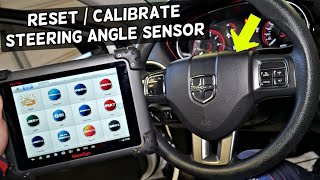

Shop the Parts Behind C2205
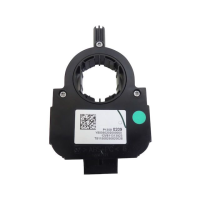
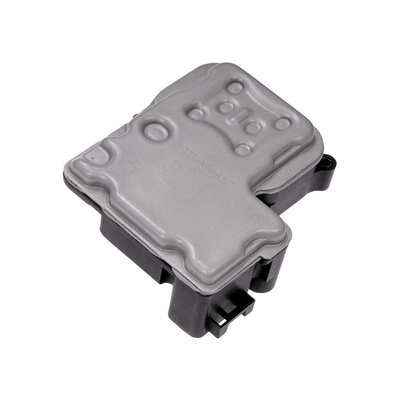
Below are the parts most often responsible for code C2205, ranked by how frequently each one is the actual culprit (per the diagnosis above). Tap any to see what we have for your vehicle.


The information in this article is provided for general reference and educational purposes only. Vehicle specifications, procedures, and part compatibility can vary by production date, trim level, and region. Always consult your vehicle's factory service manual and verify part numbers before purchasing or performing repairs. Safety-critical components such as airbags, seat belts, and braking systems should be installed by a qualified professional.
- 🧭 Diagnostic Flowchart
- 🎬 Helpful Videos
- 🛍️ Shop This Part
- What Does C2205 Mean?
- Can I Drive With C2205?
- Common Causes
- Symptoms
- Common Fixes & Costs
- Used vs. New Parts: Buying Guide
- What Happens If You Wait — Timeline
- Cost of Not Fixing It
- Diagnosis Steps
- When This Code Triggers (Freeze-Frame Conditions)
- Related Codes
- Climate & Environmental Factors
- How to Talk to a Mechanic About This Code
- Where to Take It: Dealer vs Independent vs Chain
- When to Walk Away From the Repair
- What Scan Tool You Need for This Code
- How to Clear the Code After You Fix It
- Will This Fail Emissions / State Inspection?
- Most Commonly Affected Vehicles
- Manufacturer-Specific Notes
- Real Owner Stories
- 2008 Chrysler 300 with 115,000 miles
- 2013 Jeep Wrangler JKU with intermittent horn and dash lights
- 2006 Jeep Commander with C2205 after clock spring replacement
- 2009 Ford Escape with loss of power steering
- How to Prevent This Code From Triggering
- Frequently Asked Questions
- Can I fix code C2205 myself?
- Why did the C2205 light come on only when I turn the wheel?
- Can a bad wheel alignment cause code C2205?
- Is there a recall for C2205 on my Jeep?
- What is the difference between a steering angle sensor and a clock spring?
- Will replacing the battery clear a C2205 code?
- Can I pass a state inspection with code C2205?
- Why did the light appear after hitting a pothole?
- What are common misdiagnoses for C2205?
- Is it safe to drive with code C2205?
- Key Takeaways
- 🎟️ Get 5% Off