

OBD-II Code C2209: Tire Pressure Monitor (TPM) Module Internal Failure
What C2209 means, why it triggers, and how to fix it
- Code C2209 indicates a critical internal electronic failure within the combined ABS and TPMS control module.
- You can drive the vehicle, but the lack of ABS and stability control increases skidding risks, requiring manual tire pressure checks every 2-4 weeks.
- Always unplug aftermarket 12V accessories like phone chargers and dash cams before diagnosing, as radio frequency interference frequently triggers this false code.
- The most cost-effective repair is often sending the original ABS module to a specialist for a $200-$400 rebuild, which avoids expensive dealer programming fees.
- Installing a brand-new ABS module costs $600-$1,500 and requires a bi-directional scan tool to program the unit to your vehicle's specific VIN.
What Does C2209 Mean?
Trouble code C2209 signifies the Tire Pressure Monitoring (TPM) module detected a critical error within its own internal circuitry. On most modern vehicles, the TPM function is integrated within the Anti-Lock Brake System (ABS) or Dynamic Stability Control (DSC) module. The vehicle's main computer disables this central module as a precaution, triggering dashboard warning lights.
Technical definition: The Tire Pressure Monitoring (TPM) Module continuously monitors its internal microprocessors. If it detects an internal fault or a voltage input below a specified threshold (e.g., under 8.0 volts for over 20ms), it sets DTC C2209.
Can I Drive With C2209?
Yes, But With Caution. You can drive your vehicle, as the code does not affect core engine or transmission functions. However, the entire safety system related to tire pressure, anti-lock brakes (ABS), and stability control is disabled. This eliminates warnings for low tires and increases the risk of wheel lock-up and skidding during hard braking. Manual tire pressure checks are essential until the system is repaired.
Common Causes
- Internal failure of the ABS/TPM Module (Very Common) — Solder joints crack or microprocessors fail from age and thermal stress, rendering the integrated ABS/TPM unit inoperable.
- Corroded wiring or connector pins (Very Common) — Moisture and road salt corrode the main ABS connector, causing voltage drops the module interprets as an internal failure.
- Poor power or ground connection (Common) — High resistance in a damaged power or ground wire starves the module of stable voltage, triggering a false internal fault.
- Radio frequency interference (Common) — Non-FCC-compliant aftermarket devices (cheap phone chargers, dash cams, LED lights) emit RF interference that disrupts the TPM module's radio communications, triggering a false fault code.
- Faulty Totally Integrated Power Module (TIPM) (Less Common) — On Chrysler, Dodge, and Jeep vehicles, a failing TIPM disrupts power delivery, causing phantom C2209 codes alongside other bizarre electrical issues.
- Low System Voltage (Less Common) — A weak battery, failing alternator, or temporary voltage drop during a hard engine start drops system voltage below the module's operating threshold.
- Outdated Module Software (Rare) — Software bugs cause erroneous internal fault codes, requiring a dealership flash update to resolve.
Symptoms
- Flashing then solid TPMS warning light — The TPMS light flashes for 60-90 seconds upon startup and then remains solidly lit, indicating a system malfunction rather than low tire pressure.
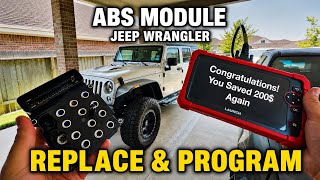
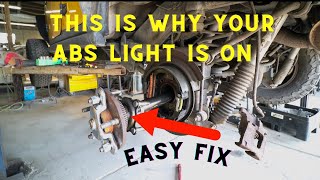
- ABS, Traction, or Stability Control Light On — Because the TPMS is integrated into the ABS/DSC module, its failure illuminates the warning lights for the Anti-Lock Brake System, Traction Control, and Electronic Stability Program. 🎬 See this quick tutorial on fixing Jeep ABS and traction lights.
- 'Service TPM System' message — The vehicle's information center displays a text warning such as 'Service TPM System' or 'Service ABS System'.
- Tire pressure readings show dashes — Displays that normally show individual tire pressures show dashes ('--') or a system error message.
- Erratic Speedometer — The ABS module processes wheel speed sensor data used by the speedometer; a module fault causes the speedometer to work intermittently or drop to zero.
- Cruise control is inoperative — The vehicle's main computer disables the cruise control system when a critical ABS/TPMS fault is detected.
Diagnostic Flowchart
Tap your situation to follow the diagnostic path that matches what you're seeing on this code.
Common Fixes & Costs
- Replace the ABS/TPM Module — Parts: $400-$1200, Labor: $150-$300, ~2.5 hr book time (Professional)
- Send Original ABS/TPM Module for Rebuild Service — Parts: $150-$500, Labor: $100-$200, ~1.5 hr book time (Intermediate)
- Repair Wiring or Clean Connectors — Parts: $10-$50, Labor: $150-$400, ~2 hr book time (Intermediate)
- Remove Interfering Aftermarket Electronic Devices — Parts: $0, Labor: $0, ~0.1 hr book time (DIY)
- Update ABS Module Software — Parts: $0, Labor: $100-$200, ~1 hr book time (Professional)
Used vs. New Parts: Buying Guide
When a used part is worth it: A used OEM module from a low-mileage donor vehicle is a cost-effective option for older vehicles where new parts are discontinued or prohibitively expensive. It is critical to match part numbers exactly.
Donor-vehicle mileage cap: roughly under 100000 miles for the part to have meaningful remaining life.
Donor quality checklist:
- Verify the part number is an exact match, as modules are highly specific.
- Source from a reputable salvage yard that offers at least a 30-90 day warranty.
- Avoid parts from vehicles with flood or fire damage, as this compromises electronics.
Decision logic:
- If The original module can be rebuilt by a reputable service → Choose a rebuild; it's the most reliable and cost-effective option as it requires no VIN programming.
- If Vehicle is older and budget is the primary concern → A used module is acceptable, but budget for professional programming.
- If The part is for a newer vehicle and long-term reliability is key → Buy a new OEM part or a high-quality remanufactured unit from a known brand.
Warranty tradeoff: Used parts typically have a 30-90 day warranty. Remanufactured parts often come with a 1-year to lifetime warranty. New OEM parts carry a 1-2 year warranty.
Worst-case if a used part fails: $250-$500 if a used part is dead on arrival or fails after the warranty period, covering repeat labor and programming fees.
What Happens If You Wait — Timeline
- Immediate: Code sets and the ABS, Traction Control, and TPMS warning lights illuminate. The vehicle's anti-lock braking, stability control, and low-tire pressure warning systems are disabled. (MPG impact: 0%% · Added cost: $0)
- 0-6 months: With the TPMS disabled, a slow tire leak goes undetected. Driving on a severely underinflated tire causes a sudden blowout at speed, potentially leading to a loss of vehicle control. (MPG impact: 0%% · Added cost: $150 - $2000+)
- Ongoing until inspection: The vehicle is taken for its annual state safety inspection. An illuminated ABS warning light results in an automatic inspection failure in most jurisdictions. (MPG impact: 0%% · Added cost: $500 - $1500)
- 1-12+ months: In some vehicle models, the internal short circuit in the ABS module prevents it from entering a low-power 'sleep' mode. This creates a parasitic drain that kills the battery overnight or over a few days. (MPG impact: 0%% · Added cost: $150 - $400)
Cost of Not Fixing It
- Immediate: Loss of ABS, traction control, and stability control functions. This results in an increased risk of skidding and loss of control during emergency braking or in adverse weather. (Added cost: Negligible)
- 0-6 months: No warning for a low tire pressure condition, increasing the risk of a blowout and potential accident. Continued driving leads to uneven tire wear if pressures are not manually maintained. (Added cost: $200-$800 (for tire replacement if a blowout occurs))
- 6+ months: The vehicle automatically fails any state safety inspection where an ABS or TPMS light is a criterion. In some cases, a continuously running ABS pump motor due to an internal short drains the battery. (Added cost: $150-$250 (for a new battery) + cost of eventual ABS module repair/replacement.)
Diagnosis Steps
- Read and Clear Fault Codes
Use an advanced OBD-II scanner capable of reading ABS/Chassis codes to confirm C2209 is present. Note any other codes (especially C2200 or U-codes), clear them, and cycle the ignition to see which codes return immediately.
Tools: OBD-II Scanner (with ABS capability) (Beginner) - Check for Electronic Interference
Unplug all aftermarket 12V accessories, such as phone chargers, dash cams, and power inverters. Clear the codes and drive to see if the fault returns.
Tools: None (Beginner) - Inspect and 'Wiggle Test' Wiring
Locate the ABS module. Visually inspect the wiring harness for chafing or damage. Disconnect the main connector and inspect for bent pins or green/white corrosion. Reconnect it, monitor live data on a scan tool, and wiggle the harness to expose intermittent shorts.
Tools: Flashlight, OBD-II Scanner (with live data) (Intermediate) - Perform a Voltage Drop Test
A standard voltage check is insufficient. With the module plugged in and ignition on, perform a voltage drop test using a multimeter. A reading above 0.5 volts on the power supply pin indicates high resistance in the power circuit. A reading over 0.2 volts on the ground pin indicates a bad ground connection.
Tools: Digital Multimeter, Vehicle-specific wiring diagram (Advanced) - Check for TSBs and Software Updates
Using the vehicle's VIN, check online databases for Technical Service Bulletins (TSBs) related to code C2209. The fix often requires a software update performed by a dealership.
Tools: VIN, Internet Access (Beginner) - Check CAN Bus Integrity
If communication codes (U-codes) are present, disconnect the battery and measure the resistance between the CAN High and CAN Low pins at the OBD-II port. A reading of approximately 60 ohms indicates the network is intact. 120 ohms means a terminating resistor is offline.
Tools: Digital Multimeter, Vehicle-specific wiring diagram (Advanced) - Replace or Rebuild the ABS/TPM Module
If all wiring and power/ground checks pass, the module itself has failed. Replace it or send it to a specialist for rebuilding. A new replacement requires VIN programming and system initialization with a bi-directional scan tool.
Tools: Hand tools, Bi-directional scan tool (Professional)
When This Code Triggers (Freeze-Frame Conditions)
- Vehicle Speed: 15-45 mph (The fault is often registered during normal city or suburban driving, not necessarily at highway speeds.)
- System Voltage: 13.5-14.5 Volts (The code typically sets when the charging system is operating normally, ruling out a simple low voltage condition as the immediate trigger.)
- ABS/TCS/ESP Status: Inactive (The internal fault is usually detected during a system self-check while driving under normal conditions, not during an ABS or traction control event.)
- Ignition Cycles Since Clear: 1 (For a hard fault, the code reappears on the first drive cycle immediately after being cleared.)
Related Codes
- C2200 — This code for 'ABS Module Internal Failure' is the most common companion to C2209. Having both strongly confirms the entire module has failed.
- U0121 — 'Lost Communication With Anti-Lock Brake System (ABS) Control Module.' C2209 means the module is online but reporting its own failure. U0121 points more strongly to a power, ground, or total network failure.
- C102A — A failing ABS module can no longer properly read sensor inputs and falsely sets wheel speed sensor codes. If a sensor code appears with C2209, the module is the primary suspect.
- C2116 — Indicates 'ABS Pump Motor Low Voltage'. This code often appears with C2200/C2209 on Jeep models and points to a failure within the electronic and hydraulic ABS unit.
Climate & Environmental Factors
- Road Salt / High Humidity: Vehicles operated in the 'Salt Belt' or coastal regions are significantly more prone to this failure. Salt and moisture accelerate the corrosion of the ABS module's connector pins and internal circuit board components.
- Extreme Cold: Extremely cold temperatures cause temporary issues. The contraction of electronic components and solder joints creates intermittent open circuits, which often clear on their own once the vehicle warms up.
How to Talk to a Mechanic About This Code
Say this: "I have a C2209 code, and my ABS and traction control lights are on. I'd like to book a diagnostic appointment. Before replacing the ABS module, please perform a voltage drop test on the power and ground circuits and thoroughly inspect the main connector and wiring harness for corrosion or damage."
This signals that you understand the common failure points beyond the module itself. It directs the technician to perform crucial, low-cost diagnostic steps first, preventing them from immediately recommending an expensive module replacement that might not be necessary.
Avoid saying:
- 'My ABS light is on, can you fix it?'
- 'Just replace the ABS module.'
- 'Do whatever you think is best.'
Questions to ask before authorizing the repair:
- What were the results of the voltage drop test on the power and ground wires?
- Did you find any corrosion or damage to the connector pins or the wiring harness?
- If the module needs to be replaced, is the replacement a new, used, or rebuilt part?
- Does the replacement module require programming, and is that included in the quote?
- What is the warranty on the part and the labor for this repair?
Where to Take It: Dealer vs Independent vs Chain
- Dealer:
Best for: Vehicles under warranty, Complex programming for newer or German vehicles (BMW, Mercedes-Benz), When a specific Technical Service Bulletin (TSB) requires a dealer-only software flash
Downsides: Highest cost for parts and labor, often 1.5-2x more than an independent shop., May only offer a new module replacement ($1200+) rather than a more affordable rebuild option ($300-$500). (Typical cost: +75% vs. baseline) - Independent Shop:
Best fit for most vehicles, especially if you find a well-regarded local shop with modern diagnostic tools. They are more likely to explore cost-saving options like using a rebuilt module or repairing wiring.
Best for: Out-of-warranty vehicles where cost is a major factor., Shops that specialize in your vehicle's brand (e.g., a German auto specialist for a BMW)., Performing the essential wiring and connector diagnostics before module replacement.
Downsides: Quality and diagnostic capabilities vary widely. Ensure they have an advanced, bi-directional scan tool capable of ABS diagnostics and programming., May not have access to the very latest manufacturer software updates. (Typical cost: +0% vs. baseline) - Chain Shop:
AVOID for diagnosing a C2209 code. They are generally not equipped for the level of electronic diagnosis and programming required for this repair.
Best for: Simple, unrelated maintenance like oil changes or tire rotations.
Downsides: Technicians often lack the specialized training for complex electronic diagnostics., May lack the expensive, manufacturer-specific scan tools required for programming a new ABS module., High pressure to upsell leads to misdiagnosis (e.g., selling unnecessary wheel speed sensors). (Typical cost: -10% vs. baseline)
When to Walk Away From the Repair
If the total estimated repair cost for the C2209 fault exceeds 50% of the vehicle's current private-party market value, you should seriously consider selling the vehicle as-is or trading it in rather than repairing it.
- Car worth $4500, fix is $1500: Borderline. The repair is 33% of the car's value. Get a second opinion, and strongly consider the 'rebuild original module' option to save money before proceeding.
- Car worth $14000, fix is $1800: Fix it. The repair cost is only about 13% of the vehicle's value, which is well below the threshold.
- Car worth $2500, fix is $1500: Walk away. The repair cost is 60% of the car's value. It is not economically sensible to invest this much into an older, lower-value vehicle.
What Scan Tool You Need for This Code
Minimum: A scanner that can read and clear Anti-Lock Brake System (ABS) fault codes. A basic engine-only code reader will not see the C2209 code.
A generic OBD-II reader that only checks for engine codes is useless for this problem. It cannot communicate with the ABS module, so it reports 'No Codes Found' while your dashboard is lit up with warnings. You need a tool that specifically lists ABS/SRS system compatibility.
Budget: BlueDriver Pro (~$100) — Reads and clears ABS codes, allowing you to confirm C2209 is present. It also provides live data from wheel speed sensors, which helps in diagnosing if a sensor is faulty versus the module.
Mid-range: Foxwell NT510 Elite (~$180) — Provides full-system diagnostics, including ABS. Crucially, it offers bi-directional control to perform an 'Automated Bleed' after replacing a hydraulic unit and performs module initialization/calibration functions.
Professional: Autel MaxiCOM MK808 / MK808BT (~$450-600) — Offers full bi-directional control, advanced ABS bleeding functions, and the ability to perform the VIN programming ('ABS Initialization') required when installing a new module on many vehicles.
Rent vs buy: Most auto parts stores offer free code reading, but their loaner tools typically cannot read ABS codes. For this specific job, especially on a Jeep, buying a compatible OBD dongle and the JScan app ($24 license) is cheaper than paying for one hour of dealer diagnostic time and allows you to perform the final programming yourself.
How to Clear the Code After You Fix It
- Ensure all connectors are secure and the battery is reconnected.
- Use an ABS-capable OBD-II scan tool to clear the C2209 and any related fault codes from the chassis module.
- Perform the vehicle-specific initialization or calibration procedure if a new module was installed.
- Perform a test drive that includes speeds above 15-20 mph to allow the system to self-test and confirm the light stays off.
Drive cycle (~15 minutes): After clearing the code, start the engine and idle for 2 minutes. Drive the vehicle for at least 10-15 minutes, ensuring you reach speeds over 20 mph. Include several smooth stops and turns. The ABS/TPMS light remains off if the repair was successful.
Readiness monitors affected: This is a chassis code and does not directly affect emissions readiness monitors like the Catalyst or O2 sensor monitors.
Watch out for:
- Disconnecting the battery does not reliably clear a C2209 code from the ABS module's memory; a scan tool is required.
- If a new module was installed, failing to perform the VIN programming and calibration causes the code to return immediately.
- The light stays off at idle but returns as soon as the vehicle starts moving and the module performs its self-test; a test drive is mandatory.
Will This Fail Emissions / State Inspection?
No — by itself this code doesn't fail OBD inspection (but it can keep readiness monitors from setting, which causes a separate fail).
- California: An illuminated ABS or TPMS light causes a failure of the state's comprehensive Vehicle Safety Systems Inspection (VSSI), required for salvaged vehicles to be reregistered.
- New York: While an illuminated TPMS light alone does not cause a failure, an illuminated ABS light is a definitive failure for the annual safety inspection.
- Texas: An illuminated ABS warning light does NOT cause a failure of the Texas state safety inspection. However, an illuminated red 'BRAKE' warning light results in a failure.
Most Commonly Affected Vehicles
- Jeep Wrangler (JK) (2007-2018) — Extremely common failure. The ABS, ESP, BAS, and traction lights all illuminate. Replacement modules require programming, but this can be done with DIY-friendly tools like the JScan app.
- Chrysler 300 (2008-2012) — Highly susceptible. Often related to broader electrical issues on the platform, including TIPM failures and software glitches that require dealer updates.
- Dodge Charger, Grand Caravan (2008-2016) — Shares the same electronics and failure points as the Chrysler 300, including the problematic TIPM which causes this code.
- Jeep Grand Cherokee (2008-2013) — Uses a similar electronic architecture to other Chrysler products of the era, making them prone to ABS module and TIPM-related electrical faults.
- Ford F-150 (2009-2014) — Failure is frequently traced to corrosion in the wiring harness or at the main connector of the ABS module, which is exposed to the elements. A thorough wiring inspection is critical.
- BMW 3-Series (E90), 5-Series (E60), X-Series (2005-2013) — On BMWs, this fault points to the DSC (Dynamic Stability Control) module. Rebuilding the unit is the standard, most cost-effective repair.
- Ford Edge, Fusion, Escape (2015-2019) — Internal ABS module faults occur, but Ford frequently uses software updates to fix control module issues. Checking for TSBs is highly recommended.
- Jeep Compass (2007-2017) — Shares a similar ABS module design and failure pattern with the Jeep Wrangler, often logging code C2116 alongside module internal faults.
Manufacturer-Specific Notes
- Chrysler/Dodge/Jeep: Service manuals specifically advise removing any non-FCC compliant electronic components (like phone chargers) before diagnostics, as RFI is a known cause for this fault. The TIPM is also a frequent root cause for seemingly unrelated module failures.
- Ford: The location of the ABS module on trucks like the F-150 makes the harness connector highly vulnerable to water intrusion. Always inspect the wiring loom for hidden corrosion before condemning the module.
- BMW: The fault is almost never just a 'TPMS module'. It's an internal failure of the complex DSC module. Sending the original DSC unit to a specialist for rebuilding is the standard, most cost-effective repair.
- General: A common misdiagnosis is replacing the module when the actual fault is high resistance in the power or ground circuit. A voltage drop test is mandatory before ordering an expensive new module.
Real Owner Stories
2013 Jeep Wrangler JK at 75K miles - The DIY Fix
ABS, ESP, and Traction Control lights came on simultaneously. An advanced scanner (JScan) pulled C2200 and C2209. Clearing the codes resulted in them returning instantly.
What they tried:
- Cleaned all four wheel speed sensors - no change.
- Inspected the ABS module connector for corrosion - it was clean.
- Replaced the ABS module with a new Mopar part (~$550).
Outcome: After installing the new module, the owner used the JScan mobile app (~$24 license) and a $40 OBD2 dongle to perform the 'Initialize EBCM' function. This programmed the new module's VIN to the Jeep. All warning lights went out. Total cost was under $620, avoiding $200+ in dealer programming fees.
Lesson: For Jeep JK owners, investing in a capable scan tool like JScan makes this common repair a manageable DIY job, saving hundreds of dollars.
2011 BMW 328i (E90) at 110K miles - The Misdiagnosis
A trio of yellow warning lights appeared on the dash: DSC, ABS, and BRAKE. The car drove normally.
What they tried:
- A dealership quoted over $7,000 CAD to replace the entire DSC hydraulic unit and module.
- An independent BMW specialist noted the lights appeared after the owner's spouse hit a curb.
- The specialist performed a four-wheel alignment and recalibrated the steering angle sensor.
Outcome: A proper wheel alignment and steering angle sensor reset fixed the issue completely. The DSC system was getting conflicting data between the steering angle and wheel speed sensors, causing it to shut down and flag a fault. Total cost was ~$250.
Lesson: Always consider recent events. If the fault appeared after hitting a pothole or curb, the root cause is often mechanical (like alignment) or a damaged sensor wire, not a catastrophic module failure.
2018 Ford F-150 at 60K miles - The Unusual Root Cause
The owner experienced a parasitic battery drain. They noticed the ABS module 'clicked' every 60 seconds, drawing a large current, even with the truck off.
What they tried:
- Isolated the drain to the ABS module fuse.
- Swapped in a used ABS module, but the problem remained.
- Researched related electrical issues on forums.
Outcome: The owner discovered a short circuit within the dashboard's Electronic Parking Brake (EPB) switch was sending a constant signal that repeatedly woke up the ABS module. Replacing the faulty EPB switch (~$40) completely resolved the parasitic drain and the ABS module functioned normally.
Lesson: A module reporting a fault or acting erratically isn't always the source of the problem; it can be the victim of a faulty input from a completely different component.
2010 Dodge Charger at 95K miles - The Easy Fix
The C2209 code appeared along with ABS and TPMS lights after the owner plugged in a new, cheap, multi-port 12V phone charger.
What they tried:
- Initially thought the ABS module had failed.
- Read a service manual note about checking for radio frequency interference (RFI).
- Unplugged the new phone charger from the 12V outlet.
Outcome: After unplugging the charger and clearing the codes, the C2209 code did not return. The non-compliant charger emitted enough RFI to disrupt the ABS/TPM module's internal communications.
Lesson: Before beginning any expensive diagnosis, always unplug all aftermarket electronic accessories. A simple, non-compliant device creates complex, misleading symptoms.
How to Prevent This Code From Triggering
- Flush brake fluid every 2-3 years or 30,000 miles (Every 2-3 years) — Brake fluid absorbs moisture from the air. This moisture corrodes the delicate internal solenoids and valves of the ABS hydraulic unit, leading to mechanical seizure that is flagged as an electronic fault.
- Maintain a healthy and fully charged battery (Ongoing) — Electronic modules require a stable voltage to operate. Frequent low voltage conditions (below 12.4V) or voltage spikes from improper jump-starts corrupt software or damage sensitive microprocessors within the ABS module.
- Keep ABS module connectors clean and sealed (During any related service) — Moisture intrusion into the main electrical connector is a primary cause of pin corrosion, which creates high resistance and communication errors. Apply a thin layer of dielectric grease to the rubber weather seal (not the pins) to prevent water entry.
- Avoid driving through high water (As needed) — Submerging electronic components is a leading cause of failure. High water compromises wiring harnesses and connectors that are not designed to be fully waterproof, leading to shorts and corrosion.
- Limit frequent short trips (Daily habit) — Short drives (under 20 minutes) do not give the alternator enough time to fully recharge the battery, especially in cold weather. This leads to a chronically undercharged battery, stressing all vehicle electronics.
Frequently Asked Questions
What is the difference between a TPMS sensor and a TPMS module?
A TPMS sensor is the small, battery-powered device inside each tire that measures pressure. The TPMS module is the central computer (usually part of the ABS module) that collects signals from all sensors.
Can a dead battery in a tire sensor cause a C2209 code?
No. A dead sensor battery sets a different code specific to that sensor's location (e.g., C0075). The C2209 code is exclusively for an internal failure of the main control module itself.
I replaced the ABS module, but the C2209 code came back. What did I miss?
The most common misdiagnosis is overlooking a corroded wire or a pin with poor tension in the connector. The second most common issue is failing to properly program the new module to the vehicle's VIN.
Do I have to go to the dealer to program a new module?
Often yes, as manufacturer-specific tools are required. However, for popular vehicles like the Jeep Wrangler, affordable third-party apps like JScan can perform VIN programming. Rebuilding your original module bypasses the need for programming entirely.
Will a C2209 code cause me to fail a vehicle inspection?
In most jurisdictions with safety inspections, an illuminated TPMS or ABS warning light is an automatic failure. This issue must be repaired to pass inspection.
What's the difference between C2200 and C2209?
They both point to a failure inside the same physical part—the ABS module. C2200 is a general 'ABS Module Internal Failure' code, while C2209 specifically indicates the failure is in the Tire Pressure Monitoring System portion of the circuit board. Seeing them together definitively diagnoses a failed module.
Will this cause other warning lights like ABS or Traction Control to come on?
Yes. Because the TPMS, ABS, and Traction/Stability Control systems are handled by the same computer module, a C2209 fault disables all these functions and illuminates their respective warning lights.
Key Takeaways
- Code C2209 indicates a critical internal electronic failure within the combined ABS and TPMS control module.
- You can drive the vehicle, but the lack of ABS and stability control increases skidding risks, requiring manual tire pressure checks every 2-4 weeks.
- Always unplug aftermarket 12V accessories like phone chargers and dash cams before diagnosing, as radio frequency interference frequently triggers this false code.
- The most cost-effective repair is often sending the original ABS module to a specialist for a $200-$400 rebuild, which avoids expensive dealer programming fees.
- Installing a brand-new ABS module costs $600-$1,500 and requires a bi-directional scan tool to program the unit to your vehicle's specific VIN.
Helpful Videos
Shop the Parts Behind C2209
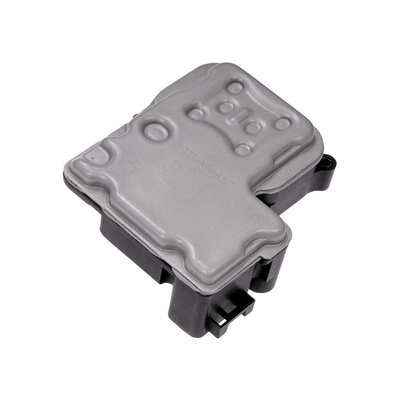
Below are the parts most often responsible for code C2209, ranked by how frequently each one is the actual culprit (per the diagnosis above). Tap any to see what we have for your vehicle.

The information in this article is provided for general reference and educational purposes only. Vehicle specifications, procedures, and part compatibility can vary by production date, trim level, and region. Always consult your vehicle's factory service manual and verify part numbers before purchasing or performing repairs. Safety-critical components such as airbags, seat belts, and braking systems should be installed by a qualified professional.
- 🧭 Diagnostic Flowchart
- 🎬 Helpful Videos
- 🛍️ Shop This Part
- What Does C2209 Mean?
- Can I Drive With C2209?
- Common Causes
- Symptoms
- Common Fixes & Costs
- Used vs. New Parts: Buying Guide
- What Happens If You Wait — Timeline
- Cost of Not Fixing It
- Diagnosis Steps
- When This Code Triggers (Freeze-Frame Conditions)
- Related Codes
- Climate & Environmental Factors
- How to Talk to a Mechanic About This Code
- Where to Take It: Dealer vs Independent vs Chain
- When to Walk Away From the Repair
- What Scan Tool You Need for This Code
- How to Clear the Code After You Fix It
- Will This Fail Emissions / State Inspection?
- Most Commonly Affected Vehicles
- Manufacturer-Specific Notes
- Real Owner Stories
- 2013 Jeep Wrangler JK at 75K miles - The DIY Fix
- 2011 BMW 328i (E90) at 110K miles - The Misdiagnosis
- 2018 Ford F-150 at 60K miles - The Unusual Root Cause
- 2010 Dodge Charger at 95K miles - The Easy Fix
- How to Prevent This Code From Triggering
- Frequently Asked Questions
- What is the difference between a TPMS sensor and a TPMS module?
- Can a dead battery in a tire sensor cause a C2209 code?
- I replaced the ABS module, but the C2209 code came back. What did I miss?
- Do I have to go to the dealer to program a new module?
- Will a C2209 code cause me to fail a vehicle inspection?
- What's the difference between C2200 and C2209?
- Will this cause other warning lights like ABS or Traction Control to come on?
- Key Takeaways
- 🎟️ Get 5% Off