

OBD-II Code C2210: ECU Overtemperature & Module Faults
What C2210 means, why it triggers, and how to fix it on your vehicle
- Code C2210 is a critical safety alert indicating the power steering control module has exceeded its 248°F (120°C) limit, causing sudden steering failure.
- Always read the full code suffix: C2210 on a Dodge Charger means power steering failure, but C2210-92 on a Jeep Renegade points to a parking brake or 4WD software issue.
- Never drive a vehicle with an active C2210 power steering fault, as the sudden loss of assist requires immense physical force to steer and prevents safe emergency maneuvers.
- Check the 50A power steering fuses and test the battery voltage (must be >12.4V) before authorizing a $1,500+ steering rack replacement.
- The most common repair is replacing the entire EPS rack or EHPS pump assembly, which costs between $1,200 and $2,500 and requires a professional post-repair alignment.
What Does C2210 Mean?
Code C2210 is a manufacturer-specific code indicating your vehicle's power steering control module is overheating. This computer, integrated into the electric (EPS) or electro-hydraulic (EHPS) power steering pump or rack, has detected an internal temperature exceeding a safe limit, typically 248°F (120°C). To protect itself from catching fire or melting, the module shuts down power assist, causing an immediate loss of steering control.
Technical definition: The formal definition of C2210 is 'ECU Overtemperature'. This indicates the Electronic Power Steering (EPS) or Electro-Hydraulic Power Steering (EHPS) control module has detected an internal temperature exceeding the maximum safe operating threshold of 120°C (248°F) on Ram, Dodge, and Chrysler vehicles. On other vehicles, it means 'ETM Hall Sensor Performance' (Jeep Renegade/Fiat 500X), 'Deployment Commanded' (Jeep airbags), or relates to the Sensotronic Brake Control (SBC) unit on Mercedes-Benz models.
Can I Drive With C2210?
No — Do Not Drive. Driving is not recommended. The most common meaning of C2210 is an overheating power steering control module, which causes a sudden, complete loss of power steering assist. A modern vehicle that loses power assist requires immense physical effort to control, especially at low speeds or in emergency maneuvers. This creates a severe safety risk. On models like the Jeep Renegade, the code indicates a parking brake or 4WD fault, but caution remains necessary.
Common Causes
- Failing Electric or Electro-Hydraulic Power Steering (EPS/EHPS) Unit (Very Common) — The control module is integrated into the power steering pump or steering rack assembly. An internal failure of the electric motor or electronics generates excessive heat, triggering the code just before the unit fails completely.
- Blown Power Steering Fuses (Common) — The power steering system draws high electrical current. A failing pump motor draws excessive amperage and blows the high-current fuses protecting it. This is an early sign that the pump itself is failing and requires immediate replacement.
- Weak Battery or Poor Electrical Connections (Common) — Modern electric power steering systems are extremely sensitive to voltage. A weak battery, a failing alternator, a loose battery terminal, or a corroded ground connection causes voltage drops. If system voltage drops below 10V, the module shuts down and logs faults.
- Corroded or Damaged Wiring Harness Connectors (Common) — The main wiring harness connector to the power steering module sits in an exposed location. Corrosion from water and road salt creates high resistance, leading to voltage drops and heat. Cleaning a corroded 10-pin connector behind the driver's headlight on a Jeep Compass frequently resolves this code.
- Faulty Rear Driveline Module (RDM) or Parking Brake Actuator (Common) — Specific to Jeep Renegade and Fiat 500X with code C2210-92. The fault is not in the power steering system but in a Hall effect position sensor within the 4WD system's Rear Driveline Module or the Electronic Parking Brake actuator. 🎬 Watch: A short explanation of the Jeep C2210-92 fault code. This requires a software update or a new actuator.
- Low or Incorrect Power Steering Fluid (EHPS systems) (Less Common) — On Electro-Hydraulic (EHPS) systems, low fluid levels force the pump to work harder, causing it to overheat. Using the wrong type of fluid (e.g., not using MS-11655 fluid in a specified Chrysler product) damages the pump and causes overheating.
- Failing Integrated Cooling Fan (Rare) — Some EHPS pumps feature a small, dedicated cooling fan. If this fan seizes, the control module quickly overheats under normal use, especially in hot weather or during low-speed maneuvers like parking.
Symptoms
- Complete Loss of Power Steering — The steering wheel suddenly becomes extremely heavy and difficult to turn. This happens intermittently, often after the car warms up for 15-20 minutes.
- Steering Works When Cold, Fails When Hot — The power steering feels normal upon startup but fails after driving as the components heat up. This points directly to an overheating module.
- Service Power Steering Warning Light — A warning message or light appears on the dashboard indicating a critical problem with the power steering system.
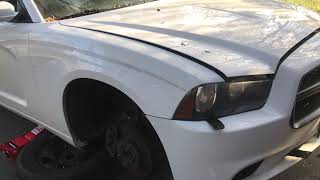
- Whining or Groaning Noise from Pump 🎬 Watch: Diagnosing Dodge Charger power steering leaks and pump noises. — A constant electric whining sound emits from the front of the vehicle. This noise is independent of engine RPM but changes pitch as you turn the wheel.
- Service Electronic Parking Brake or 4WD Light — On Jeep Renegade and Fiat 500X, code C2210-92 triggers warnings related to the parking brake or 4WD system, not the power steering.
- High Module Temperature Reading (scan-tool only — no driver-felt sign) — Using a scan tool, the live data for the power steering module shows a temperature approaching or exceeding the 120°C (248°F) shutdown threshold.
Diagnostic Flowchart
Tap your situation to follow the diagnostic path that matches what you're seeing on this code.
Common Fixes & Costs
- Replace Electric Power Steering Rack Assembly — Parts: $600-$1200, Labor: $500-$1000, ~4.5 hr book time (Professional)
- Replace Electro-Hydraulic Power Steering (EHPS) Pump Assembly — Parts: $450-$1200, Labor: $300-$500, ~2.5 hr book time (Professional)
- Replace Blown Fuses — Parts: $5-$20, Labor: $0-$50, ~0.1 hr book time (DIY)
- Software Update for Drivetrain Control Module (DTCM) — Parts: $0, Labor: $150-$250, ~1 hr book time (Professional)
- Replace Electronic Parking Brake Actuator — Parts: $70-$400, Labor: $150-$350, ~1.5 hr book time (Intermediate)
Used vs. New Parts: Buying Guide
When a used part is worth it: For modern EPS racks and EHPS pumps with integrated electronics, 'Used' from a junkyard is very high risk. 'Remanufactured' from a reputable supplier is the best budget-friendly alternative to new.
Donor-vehicle mileage cap: roughly under 60000 miles for the part to have meaningful remaining life.
Donor quality checklist:
- For remanufactured parts, choose suppliers that offer a multi-year warranty and have positive reviews.
- Match the part number EXACTLY. Verify interchangeability before purchase.
- Avoid parts from regions with heavy road salt use due to the high risk of corrosion on housings and connectors.
Decision logic:
- If The part is an integrated electronic assembly like an EPS rack or EHPS pump → Favor new OEM or high-quality remanufactured. Avoid used/junkyard parts due to high failure rates.
- If The vehicle is older (>10 years) and the cost of a new part is a significant portion of the vehicle's value → A remanufactured part with a solid warranty offers the best balance of cost and reliability.
- If The repair is safety-critical (like steering) → Prioritize reliability over cost. The price of a new part is less than the cost of a failure.
Warranty tradeoff: Used (junkyard): Typically 30-90 day warranty, covers part only. Remanufactured: 1-year to lifetime warranty is common, covers part only. OEM New: 1-2 year warranty, covers labor if installed by a dealer.
Worst-case if a used part fails: $500-$1800 if a used or cheap remanufactured part fails. This includes the cost of repeat labor, alignment, and a second replacement part.
What Happens If You Wait — Timeline
- 0-4 weeks: Intermittent failure. 'Service Power Steering' light appears during long drives or in hot weather. Steering becomes heavy, but returns to normal after the vehicle cools down. (MPG impact: 0%% · Added cost: $0)
- 1-3 months: Frequent failure. Power steering fails on almost every trip longer than 15 minutes. The whining from the pump (if EHPS) becomes constant. The system is under continuous thermal stress. (MPG impact: 0-1%% · Added cost: $0-$50 (Risk of being stranded))
- 3-6 months: Permanent failure. The power steering module or motor burns out. Steering is permanently heavy, making the vehicle unsafe. The high current draw poses a risk to other components. (MPG impact: 1-2% (due to increased alternator load)% · Added cost: $200-$1000 (Risk of wiring harness damage from heat))
- 6+ months (if driven): Cascading failure. The continuous high amperage draw from the seized/shorted pump motor destroys the vehicle's alternator. The vehicle stalls while driving or fails to start. (MPG impact: N/A (Vehicle likely disabled)% · Added cost: $500-$900 (Alternator replacement) + the original steering repair cost)
Cost of Not Fixing It
- Immediate: Sudden, complete loss of power steering assist creates a severe safety hazard. The steering wheel becomes extremely difficult to turn, increasing the risk of an accident. (Added cost: N/A (Safety Risk))
- Weeks to Months: On Dodge/Chrysler EHPS systems, a failing pump drawing excessive current destroys the vehicle's alternator, leading to a stall while driving (NHTSA Recall 17V-435). (Added cost: $500-$900 (Alternator Replacement))
- Ongoing: Continued operation of a failing pump causes further damage to wiring harnesses and connectors due to excessive heat and current draw. (Added cost: $200-$1000+ (Wiring Harness Repair))
Diagnosis Steps
- Read Trouble Codes & Note Suffixes
Use an OBD-II scanner to confirm C2210 is active. A professional-grade scanner is required to read manufacturer-specific codes and critical suffixes (e.g., C2210-92) from the Power Steering Control Module (PSCM) or Drivetrain Control Module (DTCM).
Tools: Professional OBD-II Scanner (Beginner) - Verify System Voltage and Battery Health
Test the battery and check the charging system. Ensure battery terminals are clean and tight. A weak battery or voltage below 12.4V causes high-draw systems like electric steering to fail and log false codes.
Tools: Multimeter, Battery Tester (Beginner) - Check Power Steering Fuses
Locate the under-hood fuse box and inspect all high-amperage fuses related to the power steering system. On a Dodge Charger, check fuses #3 (50A), #19 (50A), and #37 (10A). A blown fuse confirms a failing pump drawing too much current.
Tools: Owner's Manual, Fuse Puller or Pliers (Beginner) - Inspect Wiring and Connectors
Visually inspect the wiring harness and electrical connectors going to the power steering pump or rack. Look for corrosion, melted plastic, or damaged wires. On a Jeep Compass, thoroughly check the 10-pin connector behind the driver's side headlight.
Tools: Flashlight (Intermediate) - Inspect Power Steering Fluid (EHPS only)
If your vehicle has an Electro-Hydraulic (EHPS) system, check the power steering fluid level and condition. Ensure it is at the correct level and is the specific type recommended by the manufacturer (e.g., MS-11655).
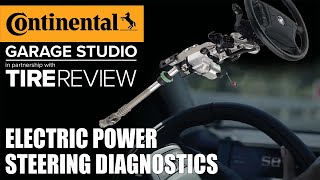
Tools: Rag, Flashlight (Beginner) - Monitor Live Data with Scan Tool 🎬 See these five expert tips for diagnosing electric power steering.
Access the live data stream for the Power Steering Control Module (PSCM). Monitor the PID for 'EPS Module Temperature'. The module shuts down if the temperature exceeds 120°C (248°F). Watching this temperature climb and trigger the fault definitively diagnoses a failing unit.
Tools: Professional OBD-II Scanner (Advanced) - Test Module Voltage Under Load
Connect a multimeter to the main power and ground terminals at the EPS/EHPS module connector. With the engine running, have an assistant turn the steering wheel lock-to-lock. If the voltage drops below 10.0V, it indicates a poor connection, corroded wire, or failing alternator.
Tools: Multimeter with back-probe pins (Advanced) - Measure Pump Motor Current Draw
Measure the amperage draw on the main battery cable feeding the EPS/EHPS unit. With the engine running, turn the wheel lock-to-lock. A sustained draw exceeding 70-80 amps confirms the electric motor is failing or seizing.
Tools: DC Inductive Amp Clamp (100A+) (Advanced) - Test EHPS Pump Flow & Pressure (EHPS only)
For Dodge/Ram EHPS systems, test the pump directly. The initial pressure at idle must be less than 862 kPa (125 psi). If the pressure is higher, a restriction exists. If flow readings are below specification while turning the wheel, the pump has failed.
Tools: Power Steering Analyzer Gauge Set (Advanced) - Professional Diagnosis
If simpler checks pass, take the vehicle to a professional. They use advanced scan tools to monitor real-time temperatures and perform required software updates (like TSBs for the Jeep Renegade) using manufacturer software like wiTECH.
Tools: Advanced Scan Tool (e.g., wiTECH) (Advanced)
When This Code Triggers (Freeze-Frame Conditions)
- EPS/EHPS Module Temperature: > 110°C (230°F) (Approaching the over-temperature threshold of 120°C.)
- Vehicle Speed: 0-10 mph (Stationary or low-speed maneuvers (e.g., parking, tight turns) which require high steering assist and generate maximum heat with low airflow.)
- Ambient Air Temperature: > 85°F (30°C) (High outside temperatures reduce the system's ability to dissipate heat, making overheating more likely.)
- System Voltage: 12.5-14.5V (Low system voltage (<12V) increases current draw and contributes to heat generation. Freeze frame data captures the voltage at the moment the fault sets.)
- Time Since Engine Start: 15-30 minutes (Fault occurs after the vehicle runs long enough for the failing component to heat-soak and reach its thermal limit.)
Related Codes
- C2217-00 — Appears with C2210 on Jeep Compass and Ram 1500 models, indicating an 'EPS Internal Failure'. Having both codes confirms the steering rack assembly has failed and requires replacement.
- C2210-92 — A critical suffix. On a Jeep Renegade or Fiat 500X, the '-92' changes the meaning entirely from an overheating issue to a Hall sensor plausibility failure in the 4WD or parking brake system.
- C2502-64, C2220-54 — Stored alongside C2210-92 on Jeep Renegades. They point to signal plausibility failures and internal ECU faults within the Drivetrain Control Module (DTCM), fixed via software update.
- C2200 — Indicates an internal failure of the ABS module on Chrysler/Dodge/Jeep vehicles. Unrelated to the C2210 overheating issue but causes similar chassis warning lights.
Climate & Environmental Factors
- High Ambient Temperature: Hot weather significantly increases the likelihood of C2210 triggering. The power steering system generates heat during operation, and high outside temperatures reduce its ability to cool down. This is especially true during low-speed, high-assist maneuvers like parking.
- Road Salt and Humidity (Corrosion): In regions where road salt is used, corrosion is a major factor. Moisture and salt penetrate weather seals on electrical connectors, causing high resistance. This resistance generates heat and causes voltage drops, triggering C2210. The 10-pin connector behind the driver's side headlight on the Jeep Compass is highly susceptible to this.
How to Talk to a Mechanic About This Code
Say this: "I have a C2210 code and the power steering fails when the car warms up. Please check the battery and charging system first, then use a scan tool to monitor the power steering module's temperature live data to confirm it's overheating. Also, please visually inspect the main electrical connector to the power steering unit for corrosion before quoting a full replacement."
This directs the technician to perform specific, efficient diagnostic steps. It prioritizes checking simple electrical issues (battery, corrosion) before assuming the most expensive part has failed, and asks for the definitive test (live temperature data) to prove the failure.
Avoid saying:
- 'My steering feels heavy.' (too vague)
- 'The power steering light is on, can you just fix it?' (invites guessing and upselling)
- 'I think I need a new power steering pump.' (Don't diagnose for the mechanic; describe the symptoms.)
Questions to ask before authorizing the repair:
- Did you confirm the module temperature exceeded the 120°C/248°F limit with a scan tool?
- Did you inspect the main power steering harness connector and ground points for corrosion or damage?
- If you are recommending a full rack or pump replacement, can you show me the old part and explain why it failed?
- Does the repair estimate include the mandatory post-repair procedures, like a four-wheel alignment and proxy alignment?
- What is the warranty on the new part and your labor?
Where to Take It: Dealer vs Independent vs Chain
- Dealer:
Recommended. The dealer has guaranteed access to the specific scan tools (wiTECH), TSBs, and procedures (Proxy Alignment) needed for a correct diagnosis and repair.
Best for: Vehicles under warranty or with a related recall/extended warranty (e.g., FCA X69, NHTSA 17V-435)., Jeep Renegade/Fiat 500X issues (C2210-92) that require a TSB software update with wiTECH., Complex electronic issues requiring manufacturer-specific diagnostic tools.
Downsides: Highest labor rates., Defaults to replacing an entire expensive assembly rather than diagnosing a simpler wiring fault. (Typical cost: +50% vs. baseline) - Independent Shop:
Good fit, with caution. A well-equipped independent shop is a cost-effective choice. Verify they have the diagnostic capability to perform a Proxy Alignment for Chrysler products before committing.
Best for: Out-of-warranty vehicles where the cause is likely a component failure (pump/rack)., Diagnosing and repairing common electrical issues like bad batteries, alternators, or corroded wiring.
Downsides: Shop must have advanced, manufacturer-specific diagnostic tools to read chassis codes and perform post-repair calibrations., Quality varies greatly; vet the shop by asking if they have experience with modern EPS/EHPS systems. (Typical cost: +0% vs. baseline) - Chain Shop:
AVOID. This code requires advanced diagnostic capabilities that are beyond the scope of a chain repair shop. They cannot correctly diagnose the root cause.
Best for: Simple, unrelated maintenance like oil changes or tire rotations.
Downsides: Technicians lack the specialized training and expensive equipment for complex electronic diagnostics., High pressure to upsell leads to incorrect diagnosis and replacement of unnecessary parts. (Typical cost: -10% vs. baseline)
When to Walk Away From the Repair
If the total estimated repair cost exceeds 40-50% of the car's Kelley Blue Book (KBB) private-party value, seriously consider selling the car as-is or trading it in.
- Car worth $10000, fix is $2200: Fix it. The repair cost is 22% of the car's value, which is well below the threshold.
- Car worth $5000, fix is $2200: Borderline. The repair cost is 44% of the car's value. Get a second opinion and assess the car's overall health before proceeding.
- Car worth $3000, fix is $2200: Walk away. The repair cost is over 70% of the vehicle's value. It is not economically sensible to perform this repair.
What Scan Tool You Need for This Code
Minimum: A scanner that reads manufacturer-specific Chassis (C-codes) and views live data PIDs for the Power Steering Control Module (PSCM).
A basic $20-$50 code reader only reads generic engine codes (P-codes) and will NOT see the C2210 code. To diagnose this issue, you must access the chassis modules and watch the 'EPS Module Temperature' live data.
Budget: BlueDriver Pro (~$100) — Connects to a smartphone app and reads manufacturer-specific codes (including C-codes). It allows you to view and graph live data, essential for monitoring the module temperature.
Mid-range: Foxwell NT510 Elite / NT530 (~$180) — Provides OE-level diagnostics for a specific brand. It reads all codes, views live data, and performs service functions like Steering Angle Sensor (SAS) calibration.
Professional: Autel MaxiCOM MK808 / MK906BT (~$500-1200) — A full bidirectional scan tool. It performs advanced functions like actuating components and performing a 'Proxy Alignment' on FCA vehicles, required after replacing the steering rack.
Rent vs buy: Buying a capable scanner is more cost-effective than paying for a single diagnostic hour at a shop. Free rental tools from auto parts stores are basic readers and will NOT be sufficient for this code. If a Proxy Alignment is needed, a professional-level tool is required.
How to Clear the Code After You Fix It
- Use a professional OBD-II scan tool to clear the C2210 code from the Power Steering Control Module (PSCM).
- For FCA vehicles (Jeep, Dodge, Chrysler, Ram), perform a 'Proxy Alignment' procedure to ensure the new module is recognized by the vehicle network.
- Perform Steering Angle Sensor (SAS) calibration.
- Perform a road test that includes turning the steering wheel lock-to-lock to confirm proper operation.
Drive cycle (~15 minutes): Start the vehicle and let it idle for 2 minutes. Drive for 10-15 minutes including several slow, full-lock turns (like in a parking lot) to load the system and confirm the fault does not return.
Readiness monitors affected: Not applicable. C-codes (Chassis) do not directly affect emissions readiness monitors.
Watch out for:
- Clearing the code without fixing the root cause results in the code returning as soon as the module overheats again.
- Failing to perform a Proxy Alignment on FCA vehicles after replacing a steering rack causes a flashing odometer and communication issues.
- Using a basic code reader that cannot access the PSCM fails to clear the manufacturer-specific code.
- Not calibrating the Steering Angle Sensor after replacement leads to Electronic Stability Control (ESC) faults.
Will This Fail Emissions / State Inspection?
No — by itself this code doesn't fail OBD inspection (but it can keep readiness monitors from setting, which causes a separate fail).
- California: While C2210 won't fail the OBD-II emissions plug-in test directly, an illuminated 'Service Power Steering' warning light is grounds for a safety inspection failure.
- New York: NYS vehicle safety inspection explicitly checks the power steering system. An illuminated power steering warning light is cause for immediate failure.
- Texas: The Texas safety inspection requires checking for visible leaks in the power steering unit. The underlying symptoms or a warning light leads to a failure.
Most Commonly Affected Vehicles
- Jeep Compass (2017-2021) — Prone to internal failure of the Electric Power Steering (EPS) rack assembly. Jeep issued TSB #19-002-17 for this issue. Always check for corrosion on the 10-pin connector behind the driver's headlight before replacing the rack.
- Dodge Charger (2011-2014) — Known for failures of the Electro-Hydraulic Power Steering (EHPS) pump. NHTSA Recall 17V-435 (FCA T36) was issued because the high current draw from the failing EHPS pump destroys the alternator, leading to a stall.
- Ram 1500 (2013-2016) — These trucks set a C2210 code when the EPS module temperature exceeds 248°F (120°C). Recall NHTSA 16V-167 (FCA S19) was issued for 2015-2016 models due to circuit board contamination causing a short and loss of steering assist.
- Jeep Renegade (2015-2018) — On this model, C2210-92 does NOT mean overheating. It indicates a Hall sensor fault in the 4WD or Electronic Parking Brake system, fixed with a software update per TSB #08-027-21 or by replacing the EPB actuator.
- Fiat 500X (2016-2018) — Shares a platform with the Jeep Renegade and is affected by code C2210-92, pointing to a software glitch in the 4WD/parking brake system addressed by TSB #08-110-17.
- Chrysler 300 (2011-2014) — Shares the same platform and problematic EHPS pump as the Dodge Charger. Included in NHTSA Recall 17V-435 for potential alternator failure due to the pump's high electrical demand.
- Mercedes-Benz SL-Class (R230) (2003-2012) — C2210 relates to the Sensotronic Brake Control (SBC) system, indicating a fault within the electro-hydraulic brake unit. MBUSA extended the warranty on this component to 25 years/unlimited miles.
Manufacturer-Specific Notes
- Dodge, Ram, Jeep (Compass), Chrysler: C2210 exclusively means the power steering control module is overheating. This is a critical safety issue addressed in TSB #19-003-12, TSB #19-002-17, and Recall 16V-167.
- Jeep (Renegade), Fiat (500X): C2210-92 means 'ETM Hall Sensor Performance'. It relates to the 4WD system's Rear Driveline Module or the Electronic Parking Brake actuator, resolved via TSBs #08-027-21 and #08-110-17.
- Hyundai / Kia: C2210 is NOT a valid diagnostic trouble code for Hyundai/Kia. It is part of a part number for a CV axle (49500-C2210). Searching for this 'code' leads to misdiagnosis.
- Mercedes-Benz: On models with SBC, C2210 is a fault code for the Sensotronic Brake Control pump, indicating the unit has failed. MBUSA extended the warranty on the SBC hydraulic unit to 25 years.
Real Owner Stories
2018 Jeep Compass with multiple warnings
Owner experienced 'service engine' and 'service power steering' messages, along with intermittent power steering failure. Codes C2210 and U110A were present.
Outcome: The actual cause was a corroded 10-pin wiring connector located behind the driver's side headlight. Cleaning the burnt and corroded plug resolved all warning lights and steering issues.
Lesson: Before replacing expensive components like the steering rack, inspect key wiring harness connectors in exposed areas for corrosion, especially in wet or salty climates.
2015 Jeep Renegade with C2210-92
Vehicle displayed a 'Service 4WD' light and a 'Service Parking Brake' warning. Scan tool showed active codes C2210-92 and C2220-54.
Outcome: The owner discovered Jeep TSB #08-027-21, which addresses these specific codes with a software update for the Drivetrain Control Module (DTCM). A dealership performed the reflash, fixing the issue.
Lesson: For Jeep Renegade/Fiat 500X, C2210-92 is almost never a power steering issue. Check for applicable TSBs before replacing hardware, as a $150-$250 software update solves the problem.
2014 Ram 1500 with intermittent power steering loss
At 67,000 miles, the truck lost power steering after 15-20 minutes of driving in hot weather. The steering worked again after the truck cooled down.
Outcome: The owner replaced the rack and pinion, solving the C2210 overheating issue. However, during the DIY replacement, the steering column's clockspring was damaged, leading to another $380 repair.
Lesson: Steering failure only when hot is a textbook sign of the C2210 overheating fault. Replacement of the rack is the fix, but be aware of the risk of causing collateral damage to sensitive components during DIY repair.
2012 Dodge Charger with whining noise and stiff steering
Owner heard a loud whining noise from the passenger side of the engine bay. The steering became intermittently stiff. The power steering fluid reservoir was leaking.
Outcome: Replacing the entire Electro-Hydraulic Power Steering (EHPS) pump assembly resolved the leak and the noise. The owner used the specified MS-11655 fluid and properly bled the system.
Lesson: On EHPS systems, a fluid leak is a critical warning. If the pump makes noise, the internal components are already damaged from running dry, and replacing just a seal will not be a lasting fix.
How to Prevent This Code From Triggering
- Maintain Battery and Electrical Connections (Every 6 months) — EPS and EHPS systems draw huge current (over 70A). A weak battery or corroded terminals cause voltage drops, forcing the motor to work harder, generate more heat, and fail prematurely.
- Check and Change EHPS Fluid (for applicable systems) (Check every oil change, change every 50,000 miles) — On electro-hydraulic systems, the fluid cools and lubricates the pump. Old, contaminated fluid loses its properties, causing the pump to run hotter. Always use the specified fluid, like MS-11655.
- Avoid 'Dry Steering' (Daily habit) — Turning the steering wheel while the vehicle is completely stationary puts the maximum possible load on the power steering system. Having the car roll slightly while turning reduces long-term stress on the motor.
- Inspect and Clean Exposed Connectors (Annually, especially in the Rust Belt) — Key connectors are often located in fender wells or behind headlights. Proactively inspecting and applying dielectric grease prevents corrosion that leads to high resistance and heat.
Frequently Asked Questions
Is it safe to drive with a C2210 code?
No, it is not safe if the cause is power steering related. The module shuts down without warning, making the steering wheel incredibly difficult to turn. This requires extreme physical force and prevents safe reactions in an emergency.
Why does my steering only fail when the car is hot?
A component inside the power steering pump or rack is failing electronically and generating excess heat. Once it passes its safe temperature limit (120°C / 248°F), the control module shuts it down to prevent a fire. After it cools off, it works again temporarily.
How much does it cost to fix code C2210?
For a Jeep Compass or Ram 1500, replacing the electric steering rack costs between $1,200 and $2,500. For a Dodge Charger, replacing the EHPS pump costs $750 to $1,700. For a Jeep Renegade with C2210-92, a software update costs $150-$250.
I have a Hyundai and was told I have code C2210. What does it mean?
For Hyundai and Kia, 'C2210' is not a diagnostic trouble code but is part of the part number for a left front CV axle (49500-C2210). The technician or parts store has misinterpreted a part number as a DTC.
Can I just clear the C2210 code?
You can clear the code with a scanner, but it returns immediately if the underlying fault is present. Clearing the code does not fix the problem. The code reappears as soon as the module overheats again.
What's the difference between C2210 and C2210-92?
On a Dodge Charger, C2210 means the power steering module is overheating. On a Jeep Renegade, C2210-92 means there is a 'Performance or Incorrect Operation' fault with a Hall sensor in the 4WD or parking brake system. The diagnosis and repair are completely different.
Could hitting a curb or pothole cause code C2210?
A hard impact damages physical steering components like tie rods or the steering rack, but rarely causes the control module to fail electronically. However, driving with bent suspension parts severely strains the power steering motor. This extra strain generates excess heat, eventually triggering the C2210 over-temperature code.
Why is it so hard to steer? My old car didn't have power steering and it was fine.
Cars designed without power steering use a different steering gear ratio and larger steering wheels to provide leverage. When a modern power steering system fails, you fight against the system's dead weight and an unfavorable gear ratio, requiring significantly more force.
Key Takeaways
- Code C2210 is a critical safety alert indicating the power steering control module has exceeded its 248°F (120°C) limit, causing sudden steering failure.
- Always read the full code suffix: C2210 on a Dodge Charger means power steering failure, but C2210-92 on a Jeep Renegade points to a parking brake or 4WD software issue.
- Never drive a vehicle with an active C2210 power steering fault, as the sudden loss of assist requires immense physical force to steer and prevents safe emergency maneuvers.
- Check the 50A power steering fuses and test the battery voltage (must be >12.4V) before authorizing a $1,500+ steering rack replacement.
- The most common repair is replacing the entire EPS rack or EHPS pump assembly, which costs between $1,200 and $2,500 and requires a professional post-repair alignment.
Helpful Videos
Shop the Parts Behind C2210
Below are the parts most often responsible for code C2210, ranked by how frequently each one is the actual culprit (per the diagnosis above). Tap any to see what we have for your vehicle.



The information in this article is provided for general reference and educational purposes only. Vehicle specifications, procedures, and part compatibility can vary by production date, trim level, and region. Always consult your vehicle's factory service manual and verify part numbers before purchasing or performing repairs. Safety-critical components such as airbags, seat belts, and braking systems should be installed by a qualified professional.
- 🧭 Diagnostic Flowchart
- 🎬 Helpful Videos
- 🛍️ Shop This Part
- What Does C2210 Mean?
- Can I Drive With C2210?
- Common Causes
- Symptoms
- Common Fixes & Costs
- Used vs. New Parts: Buying Guide
- What Happens If You Wait — Timeline
- Cost of Not Fixing It
- Diagnosis Steps
- When This Code Triggers (Freeze-Frame Conditions)
- Related Codes
- Climate & Environmental Factors
- How to Talk to a Mechanic About This Code
- Where to Take It: Dealer vs Independent vs Chain
- When to Walk Away From the Repair
- What Scan Tool You Need for This Code
- How to Clear the Code After You Fix It
- Will This Fail Emissions / State Inspection?
- Most Commonly Affected Vehicles
- Manufacturer-Specific Notes
- Real Owner Stories
- 2018 Jeep Compass with multiple warnings
- 2015 Jeep Renegade with C2210-92
- 2014 Ram 1500 with intermittent power steering loss
- 2012 Dodge Charger with whining noise and stiff steering
- How to Prevent This Code From Triggering
- Frequently Asked Questions
- Is it safe to drive with a C2210 code?
- Why does my steering only fail when the car is hot?
- How much does it cost to fix code C2210?
- I have a Hyundai and was told I have code C2210. What does it mean?
- Can I just clear the C2210 code?
- What's the difference between C2210 and C2210-92?
- Could hitting a curb or pothole cause code C2210?
- Why is it so hard to steer? My old car didn't have power steering and it was fine.
- Key Takeaways
- 🎟️ Get 5% Off