

OBD-II Code C2220: Control Module Internal or Calibration Error
What C2220 means, why it triggers, and how to fix it
- Code C2220 indicates a critical hardware failure or software corruption inside a control module, disabling safety systems like ABS and Traction Control.
- Chrysler, Dodge, Jeep, Subaru, and Hyundai vehicles trigger C2220 most frequently, with definitions ranging from ABS module failure to electronic parking brake faults.
- Check for Technical Service Bulletins (TSBs) before replacing parts; a $200 dealer software update fixes the C2220-54 code on 2015-2018 Jeep Renegades and Fiat 500Xs.
- Replacing a failed ABS module on Dodge and Jeep SUVs costs $1,200 to $1,500 and requires professional scan tools to program the new unit with your vehicle's VIN.
- Test your battery before assuming module failure, as voltage drops below 12.4V frequently cause control modules to log false internal calibration errors.
What Does C2220 Mean?
Code C2220 means a critical control module has detected an internal hardware failure, software corruption, or lost programming. This is not a simple sensor fault; it points to the brain of a system, such as the Anti-lock Brake System (ABS) or Drivetrain Control Module (DTCM). The module is signaling the main computer that it cannot be trusted because it cannot calibrate or operate correctly.
Technical definition: There is no universal SAE/ISO definition for C2220; its meaning is manufacturer-specific. Chrysler/Jeep/Dodge define it as 'ETM/DTCM/RDM Calibration Error - Missing Calibration' (often with a '-54' suffix) or an internal module fault. Hyundai defines it as 'Rear-LH Actuator Malfunction' for the Electronic Parking Brake, or relates it to a faulty clock spring. Fiat defines it as 'ETM Calibration Error'.
Can I Drive With C2220?
Yes, But With Caution. Yes, but with extreme caution because critical safety systems are offline. Base brakes function, but stopping distances increase, and skidding risk during panic stops or on wet/icy roads is significantly higher. Continued driving does not cause further component damage, but it invalidates insurance in an accident where ABS/ESC could have prevented a loss of control. Drive only to a repair shop.
Common Causes
- Software Glitch Requiring a Module Update (Very Common) — Outdated or corrupted software causes the module to lose calibration data. This software bug guarantees a C2220-54 code on 2015-2018 Jeep Renegades and Fiat 500Xs, requiring a dealer-installed flash update (TSB 08-110-17).
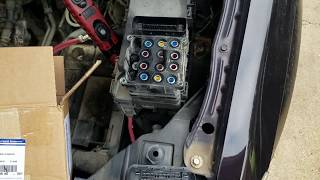
- Internal Control Module Failure (Very Common) — The Anti-lock Brake System (ABS) module or Drivetrain Control Module (DTCM) frequently fails internally. This known hardware defect plagues 2011-2018 Chrysler, Dodge, and Jeep vehicles, often triggering code C2200 alongside C2220. 🎬 Watch: Replacing and programming a Dodge ABS control module.
- Low Battery Voltage or Poor Ground Connection (Common) — A weak battery or corroded ground wire causes widespread communication errors. Control modules incorrectly log internal faults when operating below 12.4 volts.
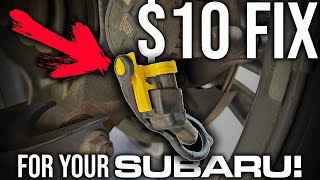
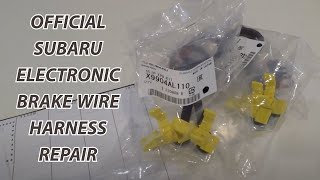
- Damaged Wiring or Corroded Connector (Less Common) — Heat, vibration, or moisture damages wiring harnesses and connectors. A brittle electronic parking brake connector clip on 2015-2018 Subarus breaks and triggers this code (TSB 06-87-22R). 🎬 Watch: How to repair the Subaru electronic parking brake harness.
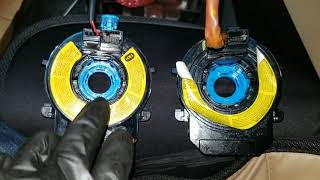
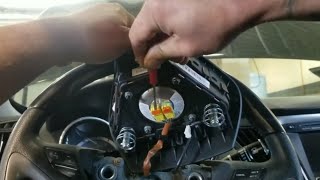
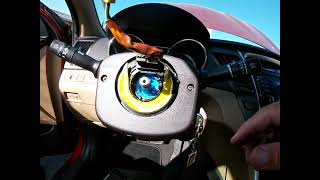
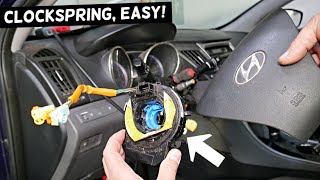
- Faulty Clock Spring / Steering Angle Sensor Circuit (Less Common) — A broken clock spring disrupts the steering angle sensor signal on 2011-2016 Hyundai and Kia models. The ABS/ESC module sets C2220 when it loses this critical calibration data.
- Mechanical Failure Preventing Calibration (Rare) — Worn mechanical parts, such as a rear differential clutch pack in 4WD vehicles, physically prevent the electronic module from calibrating the system.
- Use of Incorrect or Out-of-Spec Aftermarket Parts (Rare) — Installing out-of-spec aftermarket parts, like a steering knuckle, alters suspension geometry. This prevents wheel speed sensors from reading accurately, blocking ABS module calibration.
Symptoms
- ABS Light On — The Anti-lock Braking System warning light illuminates on the dashboard.
- Traction or Stability Control Light On — The traction control system (TCS) or electronic stability control (ESC) warning light illuminates, indicating the system is disabled.
- Brake Warning Light On — The main red 'BRAKE' warning light illuminates, often alongside the ABS light.
- 'Service 4WD' or Similar Message — A 'Service 4WD' message appears on the instrument cluster because the DTCM stored a C2220 code, disabling four-wheel drive.
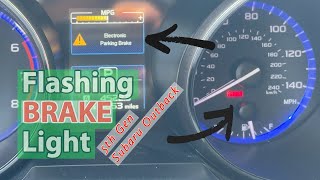
- Electronic Parking Brake (EPB) Warning Light — The EPB warning light flashes or stays solid on Hyundai and Subaru models where C2220 indicates a parking brake actuator fault.
Common Fixes & Costs
- Perform a Software Update at a Dealership — Parts: $0, Labor: $185-$285, ~1.5 hr book time (Professional)
- Replace the ABS Control Module
— Parts: $250-$1,100, Labor: $150-$300, ~1.5 hr book time
(Professional)
Dodge Durango (2011-2018): OEM
Jeep Grand Cherokee (2011-2018): OEM - Replace a Dead or Weak Battery — Parts: $150-$350, Labor: $25-$50, ~0.3 hr book time (DIY)
- Repair Damaged Wiring or Connector
— Parts: $10-$50, Labor: $100-$400, ~1 hr book time
(Intermediate)
Subaru Legacy/Outback (2015-2018): OEM - Replace Clock Spring Assembly
— Parts: $80-$250, Labor: $100-$200, ~1.2 hr book time
(Intermediate)
Hyundai Sonata (2014-2016): OEM 🎬 See this step-by-step guide for replacing a Hyundai clock spring.
Kia Optima (2014-2016): OEM
DIY vs Professional
- Perform a Software Update at a Dealership 🟢 Beginner
Tools: Manufacturer-specific diagnostic tool (e.g., FCA's wiTECH) with a valid subscription to their server. - Replace the ABS Control Module 🟢 Beginner
Tools: Professional scan tool with VIN programming and proxy alignment capabilities (e.g., Autel MaxiSys, wiTECH), hydraulic bleeding equipment, basic hand tools. - Replace a Dead or Weak Battery 🟢 Beginner
Tools: Basic hand tools (socket/wrench set). - Repair Damaged Wiring or Connector 🟢 Beginner
Tools: Multimeter, wire strippers, soldering iron or quality crimp tools, heat shrink tubing, TSB-specific parts if applicable. - Replace Clock Spring Assembly 🟢 Beginner
Tools: Steering wheel puller (sometimes), trim removal tools, socket set, torque wrench.
Used vs. New Parts: Buying Guide
When a used part is worth it: A used module is cost-effective for vehicles over 100k miles if you have access to professional programming tools.
Donor-vehicle mileage cap: roughly under 100000 miles for the part to have meaningful remaining life.
Donor quality checklist:
- Match the OEM part number exactly.
- Buy from sellers offering a 30-90 day warranty.
- Avoid modules from flood-damaged vehicles.
- Verify return policies for non-functional or VIN-locked modules.
Decision logic:
- If The fix is a known software update → Do not buy parts; get the dealer software flash.
- If Vehicle has under 80k miles → Buy a new OEM or remanufactured part for reliability.
- If Budget is the primary concern → Buy a used part, but factor in professional programming costs.
Warranty tradeoff: Used parts have 30-90 day warranties. New aftermarket parts offer 1-year warranties. New OEM parts carry 1-2 year warranties.
Worst-case if a used part fails: $300-$600 for repeat labor and programming if a used part arrives dead.
What Happens If You Wait — Timeline
- Immediate: ABS, Traction Control, and Electronic Stability Control (ESC) disable immediately. Conventional brakes remain functional. (MPG impact: 0%% · Added cost: $0. The primary cost is a major reduction in vehicle safety.)
- 0-3 months: Skidding risk during panic stops increases significantly. The vehicle fails state safety inspections. (MPG impact: 0%% · Added cost: $50-$150 (Cost of a failed inspection or potential traffic citation).)
- 3-12 months: The constant safety risk persists. Secondary systems relying on wheel speed data default to a safe/off mode. (MPG impact: 0%% · Added cost: $0. The risk of a costly accident remains the primary financial threat.)
- 12+ months: Moisture causing the initial fault corrodes caliper pistons and brake lines from the inside out. Safety systems remain offline. (MPG impact: 0%% · Added cost: $200-$1000+ (Potential cost of replacing calipers or brake lines due to neglect, in addition to the original C2220 fault).)
Cost of Not Fixing It
- Immediate: ABS, Traction Control, and Stability Control systems shut down. Skidding risk increases significantly during panic stops or on slippery surfaces. Insurance coverage is jeopardized in an accident. (Added cost: Potential cost of an accident.)
- 1-6 months: Continued operation poses a significant safety risk. No direct mechanical damage to other components is likely, but the primary risk of an accident remains. May fail mandatory state safety inspections. (Added cost: Cost of a failed inspection or a traffic citation in some jurisdictions.)
- 6+ months: The safety systems remain offline, posing a continuous hazard. In rare cases on 4WD vehicles, ignoring a calibration issue could lead to premature wear on drivetrain components if the system attempts to engage improperly, but this is not typical. (Added cost: Negligible additional component cost, but the safety risk is constant.)
Diagnosis Steps
- Check for Technical Service Bulletins (TSBs)
Search online for TSBs related to code C2220 for your specific vehicle. For the Jeep Renegade (TSB 08-110-17) or Subaru Outback (TSB 06-87-22R), a known software update or connector repair is the designated fix, saving hundreds over a misdiagnosis.
Tools: Computer with internet access (Beginner) - Read Manufacturer-Specific Codes
Use a professional-grade scan tool to read manufacturer-specific codes and suffixes (like C2220-54). This reveals the exact definition and related fault codes from other modules, preventing misdiagnosis.
Tools: Professional OBD-II Scan Tool (Intermediate) - Test the Battery and Check Grounds
Test the battery with a multimeter to ensure it has at least 12.4 volts with the engine off. Clean and tighten battery terminals. Inspect the main chassis ground strap for corrosion. Low voltage is the primary cause of false module communication faults.
Tools: Multimeter, basic hand tools (Beginner) - Inspect Module Wiring and Connector
Locate the relevant control module (e.g., ABS module, DTCM, or EPB actuator). Disconnect the battery, unplug the main connector, and inspect for bent pins, corrosion, or water intrusion. On 2015-2018 Subarus, check the plastic clips on the EPB connectors for breakage (TSB 06-87-22R).
Tools: Flashlight, basic hand tools (Intermediate) - Perform a Cranking Voltage Drop Test
Perform a voltage drop test to confirm electrical system stability under load. Connect a multimeter to the battery posts; voltage must stay above 9.6V while cranking. Test the ground circuit from the starter motor case to the negative battery post; the drop must be under 0.3V.
Tools: Digital Multimeter (Advanced) - Analyze Live Sensor Data
View the live data stream from the ABS or DTCM using an advanced scan tool. The Steering Angle Sensor must read 0° ± 5.0° with the wheel centered. All wheel speed sensors must report matching speeds within 1-2 mph while driving straight.
Tools: Advanced OBD-II Scan Tool (Advanced) - Perform a CAN Bus Network Test
Measure resistance between Pin 6 (CAN High) and Pin 14 (CAN Low) on the OBD-II port with the battery disconnected. A healthy network reads 60 ohms. A 120-ohm reading indicates a missing terminating resistor or broken wire.
Tools: High-impedance multimeter (Advanced) - Attempt a Module Initialization
Use an advanced scan tool to 're-initialize' or 're-learn' the control module. This resolves calibration glitches and is a mandatory step after replacing a module on Chrysler/Jeep/Dodge vehicles.
Tools: Advanced OBD-II Scan Tool with bi-directional controls (Advanced) - Confirm Module Failure
If TSBs are checked, voltage is stable, wiring is intact, live data is logical, and initialization fails, the control module has an internal hardware fault and requires replacement.
Tools: All tools from previous steps (Professional)
When This Code Triggers (Freeze-Frame Conditions)
- Vehicle Speed: 10-40 mph (During initial acceleration or city driving)
- System Voltage: 13.5-14.5 V (Normal operating voltage with engine running)
- Engine State: On (The fault is typically detected during the module's power-on self-test or initial drive.)
- Steering Angle: Variable (The fault can occur during a turn when the ABS/ESC system expects valid data from the steering angle sensor.)
Related Codes
- C2200 — This Chrysler/Dodge/Jeep code means 'Anti-Lock Brake Module Internal'. It confirms the ABS module has failed and requires replacement.
- C2202 — This 'Original VIN Mismatch' code appears after installing an unprogrammed ABS module. The new module requires electronic VIN programming to function.
- U0121 — This 'Lost Communication' code often accompanies C2220. If other modules show U0121, the ABS module has failed and gone offline.
- C2210-92 — This 'Hall Sensor Performance' code appears alongside C2220-54 on Jeep Renegades. Both are fixed simultaneously by the DTCM software update (TSB 08-110-17).
Climate & Environmental Factors
- Cold Weather: Extreme cold drops battery voltage during startup, triggering false module faults. It freezes moisture inside connectors, interrupting signals. Faults often clear once the vehicle warms up.
- High Humidity and Road Salt: Moisture and road salt penetrate unsealed wiring harnesses. This corrodes pins and wires, creating high resistance that triggers C2220 communication codes.
How to Talk to a Mechanic About This Code
Say this: "I have a C2220 code and the ABS/ESC lights are on. Before assuming the ABS module is bad, please check for applicable Technical Service Bulletins for software updates, as this is a known issue."
This signals you are an informed customer. It directs the shop away from an automatic $1,200 module replacement and toward cheaper software or wiring fixes.
Avoid saying:
- 'My ABS light is on, can you fix it?'
- 'Just replace the ABS module.'
- 'I have a C2220 code, I don't know what it means.'
Questions to ask before authorizing the repair:
- Did you check for TSBs related to software updates?
- How did you rule out a wiring or ground issue?
- Does the quote include VIN programming and calibration?
- What is the warranty on the part and labor?
Where to Take It: Dealer vs Independent vs Chain
- Dealer:
Best for: Vehicles with known software-related TSBs (e.g., Jeep Renegade)., Vehicles under warranty., Repairs requiring proprietary programming tools (wiTECH for Chrysler/Jeep/Dodge).
Downsides: Highest labor rates., Dealerships refuse to install customer-supplied or used modules. (Typical cost: +50% vs. baseline) - Independent Shop:
Conditionally Recommended. An independent specialist (especially for a specific brand) is a great choice if they confirm they have the advanced scan tools to program a new module. For a known software bug (Jeep/Fiat), the dealer is often the only option.
Best for: Out-of-warranty vehicles where the cause is a known hardware failure (e.g., bad module on a Durango, clock spring on a Sonata)., Diagnosing wiring or connector issues (like on a Subaru).
Downsides: Technicians lack the proprietary scan tools required for module-level programming and proxy alignments., Quality and expertise can vary widely; look for ASE certification and good reviews. (Typical cost: +0% vs. baseline) - Chain Shop:
AVOID. This code requires specialized knowledge and tools that are beyond the scope of typical chain repair shops. The risk of a costly misdiagnosis is very high.
Best for: Simple, related fixes like battery replacement.
Downsides: Technicians lack the proprietary scan tools required for module-level programming and proxy alignments., High risk of misdiagnosis, leading to unnecessary part replacement. (Typical cost: -10% vs. baseline)
When to Walk Away From the Repair
If the C2220 repair cost exceeds 40% of the car's private-party value, sell the vehicle as-is or trade it in.
- Car worth $4500, fix is $1500: Borderline. The repair is about 33% of the car's value. Get a second opinion to confirm the diagnosis before proceeding. Consider lower-cost options like a used module if possible.
- Car worth $10000, fix is $250: Fix it. This scenario likely represents a software update or a simple wiring fix, which is well below the threshold and restores critical safety features.
- Car worth $3000, fix is $1800: Walk away. The repair cost is 60% of the vehicle's value. It is not economically sensible to invest this much into an older, lower-value car for this single issue.
What Scan Tool You Need for This Code
Minimum: A scanner that can read and clear codes from the ABS/SRS/Traction Control modules. A basic engine-only code reader is not sufficient.
A standard $20 OBD-II reader only accesses the engine computer. It cannot read C2220 stored in the ABS or DTCM, making diagnosis impossible.
Budget: BlueDriver Pro Scan Tool (~$100) — Reads and clears manufacturer-specific ABS codes, provides freeze-frame data, and allows viewing of live data from wheel speed sensors. This is enough to confirm a sensor issue vs. a module code but offers no programming or special functions.
Mid-range: Foxwell NT630 Plus / Autel MaxiCOM MK808 (~$150-370) — Provides full-system diagnostics, reads manufacturer-specific codes with suffixes (like C2220-54), and offers bidirectional controls to perform an ABS bleed after hydraulic repairs. For Chrysler/Jeep/Dodge, a combination of an OBD adapter and the AlfaOBD software (~$50) can provide near-dealer level diagnostics, including VIN programming.
Professional: Autel MaxiSys MS906 Pro / Launch X431 Series (~$600-1500) — Offers full bidirectional control, module initialization, VIN programming, and proxy alignment procedures required for module replacement on many vehicles. These are professional-grade tools that replicate most dealer functions.
Rent vs buy: For a one-time diagnosis, buying a mid-range tool like the Autel MK808 or Foxwell NT630 Plus is often more cost-effective than paying for a single diagnostic hour at a dealership. Basic parts store loaner tools will likely not be able to read ABS codes. Buy if you plan to do your own maintenance; otherwise, pay for a professional diagnosis.
How to Clear the Code After You Fix It
- Reconnect the battery if disconnected during repair.
- Use a professional OBD-II scan tool to clear C2220 from all modules.
- Perform mandatory re-learn procedures (e.g., ABS Initialization, Proxy Alignment) with the scan tool.
- Drive the vehicle for 15-20 minutes at varied speeds to allow the module to pass its self-tests.
Drive cycle (~20 minutes): A specific drive cycle is often not required for ABS/ESC systems. After clearing the code, drive the vehicle for 15-20 minutes, including some turns and varied speeds (city and highway). The warning lights will extinguish if the repair was successful and the module passes its self-tests.
Readiness monitors affected: This code does not typically affect emissions readiness monitors like the Catalyst or O2 sensor monitors.
Watch out for:
- Using a basic code reader that cannot access the ABS module.
- Skipping mandatory VIN programming, causing the code to return instantly.
- Disconnecting the battery, which does not clear module memory.
Will This Fail Emissions / State Inspection?
Yes — this code typically fails an OBD-II emissions inspection.
- California: An illuminated ABS light is cause for a safety inspection failure, though it may not fail the OBD-II emissions (smog) check itself unless it's part of a hybrid vehicle's braking system. However, many inspection stations will not pass a vehicle with any active warning lights.
- New York: The NYS DMV vehicle safety inspection requires that the ABS warning light functions correctly (comes on during startup and then goes off). An illuminated ABS light is an automatic failure of the safety inspection.
- Texas: As part of the annual safety inspection, the ABS lamp must illuminate and then extinguish. If the ABS light stays on, the vehicle will fail the inspection.
Most Commonly Affected Vehicles
- Jeep Renegade (2015-2018) — Highly prone to a C2220-54 code caused by a software glitch in the Drivetrain Control Module (DTCM). The fix is a dealer software update per TSB 08-110-17, which applies to models built on or before Oct 5, 2017.
- Dodge Durango (2011-2018) — Commonly experiences internal ABS module failure, which can present as C2220 or the related C2200 code. The 2018-2019 models are subject to NHTSA recall 94B for ABS module faults.
- Jeep Grand Cherokee (2011-2018) — Shares its platform with the Dodge Durango and suffers from the same frequent ABS module failures and 4WD system calibration faults. The 2018-2019 models are also part of NHTSA recall 94B.
- Subaru Legacy, Outback, WRX (2015-2018) — Prone to EPB (Electronic Parking Brake) faults caused by a brittle or broken electrical connector on the brake actuator. This is a known issue addressed by TSB 06-87-22R, which provides for an improved connector clip and a 15-year extended warranty for the repair.
- Hyundai Sonata (2014-2016) — May set a C2220 code due to a faulty clock spring (spiral cable), which disrupts the steering angle sensor signal needed by the ESC/ABS system. The OEM part number is 93490-C2220. Hyundai has offered extended warranties on clock springs for many models of this era.
- Kia Optima (2014-2016) — As the platform-mate to the Hyundai Sonata, it is also susceptible to clock spring failures that can lead to a C2220 code.
- Fiat 500X (2016-2018) — Platform-mate to the Jeep Renegade. Can set a C2220-54 code for a calibration error in the Drivetrain Control Module, fixed by the same software update (TSB 08-110-17) as the Renegade.
- Hyundai Azera / i30 (2012-2017) — On these models, C2220 specifically points to a 'Rear-LH Actuator Malfunction' related to the electronic parking brake actuator.
Manufacturer-Specific Notes
- Chrysler / Dodge / Jeep / Ram: These vehicles suffer frequent ABS module failures (C2200/C2220). Replacements require VIN programming and a Proxy Alignment. NHTSA recalls 94B and 24V-415 address these failures on specific Durango and Grand Cherokee models.
- Jeep / Fiat: Code C2220-54 on the Renegade and 500X is a software bug, not a hardware failure. Replacing the DTCM before performing TSB 08-110-17 is a costly misdiagnosis.
- Hyundai: C2220 indicates a rear-left parking brake actuator fault on the Azera/i30, but points to a faulty clock spring on the Sonata. Hyundai offers a 15-year warranty extension (TXXJ) for Sonata clock springs.
- Subaru: A brittle EPB actuator connector triggers C2220 and disables EyeSight on 2015-2018 models. TSB 06-87-22R fixes this with a $10 retaining clip, covered by a 15-year warranty extension.
Real Owner Stories
2016 Jeep Renegade with C2220-54
Owner experienced 'Service 4WD' light and ABS/Traction control lights illuminating on the dash. No other driveability issues were noted, but 4WD was disabled.
What they tried:
- An independent shop diagnosed the code and recommended replacing the Drivetrain Control Module (DTCM) for over $1,000.
Outcome: Owner researched forums and found TSB 08-110-17. Took the vehicle to a Jeep dealership, which performed the software update (flash) for the DTCM. The total cost was around $220, and the codes were resolved.
Lesson: For a C2220-54 code on a Jeep Renegade or Fiat 500X, demand the software update TSB before replacing hardware. It is a known bug and a costly misdiagnosis.
2013 Dodge Charger with C2200/C2220
ABS, parking brake, and traction control lights were on for over a year. The owner found that letting the car idle for 10-15 minutes would sometimes make the lights go away temporarily.
What they tried:
- Unplugging and reconnecting the ABS module had no effect.
Outcome: The issue was diagnosed as an internal failure of the ABS module. Instead of buying a new module for $600+, the owner sourced a used module from a junkyard for under $100. They swapped only the electronic portion (attached with 4 Torx screws), which resolved the fault.
Lesson: A used ABS module is a cost-effective fix for Dodge/Chrysler/Jeep vehicles. Swapping only the electronic portion avoids hydraulic bleeding, but VIN programming is still mandatory.
2015 Subaru Outback with flashing EPB light
While driving at highway speeds, the electronic parking brake (EPB) warning light began to flash, and other lights like EyeSight also illuminated. The owner feared the parking brake would engage while driving.
What they tried:
- Pulled over to inspect the vehicle. After arriving at their destination, they secured the loose connector with a zip tie as a temporary fix.
Outcome: The cause was a loose electrical connector at the rear EPB actuator, a known issue due to a brittle plastic clip. The permanent fix is an inexpensive dealer part (Clip EPB Kit, #X9904AL110) per TSB 06-87-22R, which is a simple DIY installation.
Lesson: A flashing EPB light on 2015-2018 Subarus is usually a broken $10 connector clip, not a failed actuator. Check the connector before authorizing expensive repairs.
2011 Hyundai Sonata with multiple warning lights
ABS, ESC, and airbag warning lights were on, and steering wheel controls (cruise, radio) stopped working.
What they tried:
- A shop diagnosed a faulty clock spring.
Outcome: The owner replaced the clock spring assembly themselves. The repair restored function to the steering wheel controls and cleared the warning lights. Hyundai has an extended warranty (15 years/unlimited miles) for this part on many models, but some owners choose the DIY route.
Lesson: If a Hyundai/Kia displays C2220 alongside a dead horn, broken steering wheel buttons, and an airbag light, the clock spring has failed.
How to Prevent This Code From Triggering
- Perform a brake fluid flush every 2-3 years (Every 2-3 years) — Brake fluid absorbs moisture over time. This moisture corrodes internal ABS module valves, leading to seizure and electronic failure.
- Test battery health annually and replace proactively (Annually (especially before winter)) — Control modules require stable voltage. Weak batteries cause modules to fail power-on self-tests, logging false internal fault codes.
- Apply dielectric grease to critical connectors (When performing other nearby service) — Dielectric grease seals out moisture on exposed ABS and EPB connectors, preventing the pin corrosion that causes communication faults.
- Clean and check chassis ground connections (During battery or brake service) — Corroded main ground straps create unstable voltage across all modules, triggering C2220 communication errors.
Frequently Asked Questions
Can I reset the C2220 code myself?
You can clear the code with a scan tool, but it returns immediately if the underlying hardware failure, software bug, or bad connection is not fixed.
What does the '-54' mean on a Jeep code C2220-54?
The '-54' suffix means 'Missing Calibration'. This confirms the module lost its programming, requiring a dealer software re-flash on Jeep Renegades and Fiat 500Xs.
My mechanic wants to replace the module, but I read it could be software. What should I do?
Always ask if they checked for Technical Service Bulletins (TSBs). A $200 software update fixes the exact same symptoms as a $1,200 module replacement on many vehicles. Replacing hardware when a software fix exists is a costly mistake.
Can a weak battery really cause code C2220?
Yes. Control modules require stable voltage to operate. A dying battery provides inconsistent power during startup, causing the module to fail its self-test and log a false calibration error.
Why did my 'Service 4WD' light come on with this code?
The C2220 code indicates the Drivetrain Control Module (DTCM) has a calibration error. The vehicle disables the 4WD system as a safety precaution until the module is fixed.
What is a 'Proxy Alignment' and why is it needed?
A Proxy Alignment is a network-wide re-scan required on Fiat-Chrysler vehicles after replacing a module. It allows all computers to recognize the new module and establish communication. It requires an advanced scan tool.
Can I use a secondhand ABS module from a junkyard?
Yes, but it requires an exact part number match and professional VIN programming. Unprogrammed modules trigger a C2202 code and will not function. Some modules are 'VIN-locked' and cannot be reprogrammed.
Key Takeaways
- Code C2220 indicates a critical hardware failure or software corruption inside a control module, disabling safety systems like ABS and Traction Control.
- Chrysler, Dodge, Jeep, Subaru, and Hyundai vehicles trigger C2220 most frequently, with definitions ranging from ABS module failure to electronic parking brake faults.
- Check for Technical Service Bulletins (TSBs) before replacing parts; a $200 dealer software update fixes the C2220-54 code on 2015-2018 Jeep Renegades and Fiat 500Xs.
- Replacing a failed ABS module on Dodge and Jeep SUVs costs $1,200 to $1,500 and requires professional scan tools to program the new unit with your vehicle's VIN.
- Test your battery before assuming module failure, as voltage drops below 12.4V frequently cause control modules to log false internal calibration errors.
Helpful Videos
Shop the Parts Behind C2220
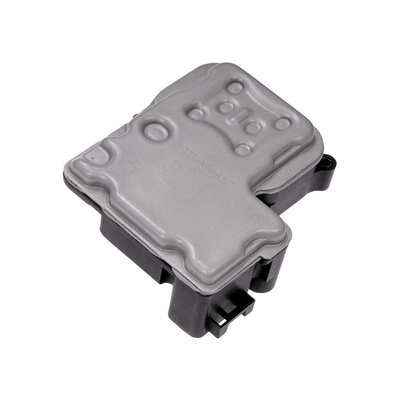
Below are the parts most often responsible for code C2220, ranked by how frequently each one is the actual culprit (per the diagnosis above). Tap any to see what we have for your vehicle.




The information in this article is provided for general reference and educational purposes only. Vehicle specifications, procedures, and part compatibility can vary by production date, trim level, and region. Always consult your vehicle's factory service manual and verify part numbers before purchasing or performing repairs. Safety-critical components such as airbags, seat belts, and braking systems should be installed by a qualified professional.
- 🎬 Helpful Videos
- 🛍️ Shop This Part
- What Does C2220 Mean?
- Can I Drive With C2220?
- Common Causes
- Symptoms
- Common Fixes & Costs
- DIY vs Professional
- Used vs. New Parts: Buying Guide
- What Happens If You Wait — Timeline
- Cost of Not Fixing It
- Diagnosis Steps
- When This Code Triggers (Freeze-Frame Conditions)
- Related Codes
- Climate & Environmental Factors
- How to Talk to a Mechanic About This Code
- Where to Take It: Dealer vs Independent vs Chain
- When to Walk Away From the Repair
- What Scan Tool You Need for This Code
- How to Clear the Code After You Fix It
- Will This Fail Emissions / State Inspection?
- Most Commonly Affected Vehicles
- Manufacturer-Specific Notes
- Real Owner Stories
- 2016 Jeep Renegade with C2220-54
- 2013 Dodge Charger with C2200/C2220
- 2015 Subaru Outback with flashing EPB light
- 2011 Hyundai Sonata with multiple warning lights
- How to Prevent This Code From Triggering
- Frequently Asked Questions
- Can I reset the C2220 code myself?
- What does the '-54' mean on a Jeep code C2220-54?
- My mechanic wants to replace the module, but I read it could be software. What should I do?
- Can a weak battery really cause code C2220?
- Why did my 'Service 4WD' light come on with this code?
- What is a 'Proxy Alignment' and why is it needed?
- Can I use a secondhand ABS module from a junkyard?
- Key Takeaways
- 🎟️ Get 5% Off