

OBD-II Code C2221: Electronic Limited Slip Differential (ELSD) Motor Fault
What C2221 means, why it triggers, and how to fix it — The Ultimate Guide
What Does C2221 Mean?
C2221 means your vehicle's main computer detected a problem with the electric motor controlling the rear differential. This motor, the Electronic Limited Slip Differential (ELSD) actuator, manages rear-wheel traction. When it fails, the computer shuts down the 4WD and safety systems. Note: On Hyundai or Kia, C2221 points to a Body Control Module (BCM) fault, and on Subaru, it is usually a misread Tire Pressure Monitoring System (TPMS) code.
Technical definition: Code C2221 is defined by Stellantis (Jeep/Dodge/Ram) as 'ELSD DTC Present'. The Drivetrain Control Module (DTCM) sets this master code when it detects an electrical or mechanical malfunction preventing the ELSD actuator motor from passing a self-test. It indicates that specific ELSD-related codes (like C148F or C1490) are stored in the ELSD module.
Can I Drive With C2221?
Yes, But With Caution. Yes, but it is not recommended. Your 4-wheel drive, anti-lock brake, and traction control systems are disabled, significantly reducing safety in poor weather. Continued driving with a binding differential causes accelerated rear tire wear, potentially forcing a premature $400-$800 tire replacement.
Common Causes
- Corrosion from Moisture Intrusion (Very Common) — The ELSD motor sits under the vehicle. Water and road salt bypass the seals, causing heavy internal rust and electrical shorts.
- Internal ELSD Motor Failure (Very Common) — The motor's internal components burn out, or deteriorating magnets create debris that jams the armature and seizes the bearings.
- Faulty Aftermarket Motor (Common) — Cheap aftermarket ELSD motors have an extremely high failure rate. The C2221 code frequently returns within weeks of installing a non-OEM alternative.
- Damaged Wiring or Loose Connector (Less Common) — Road debris or exhaust heat damages the wiring harness. Connector pins also corrode or bend, breaking the electrical connection to the motor.
- DTCM Software or Hardware Failure (Rare) — The Drivetrain Control Module (DTCM) itself fails or requires a software update. Early 2011-2014 Jeep Grand Cherokees had overly sensitive software that triggered false codes.
- Low Battery Voltage (Rare) — A weak battery or failing alternator drops system voltage below 12.4V, causing control modules to malfunction and set false codes.
Symptoms
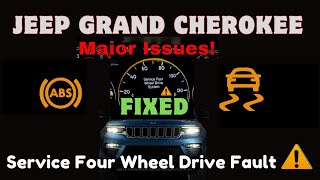
- "Service 4WD System" Warning Light — The primary indicator that the four-wheel-drive system is offline. 🎬 Watch: How to fix the Service 4WD system error message.
- ABS and Traction Control (ESC) Lights On — The ELSD integrates with stability systems; its failure disables ABS and traction control.
- Binding or Grinding on Tight Turns — A skipping or grinding sensation from the rear axle during slow, tight turns indicates the motor failed in a partially engaged state.
- Cruise Control Disabled — The vehicle disables cruise control as a fail-safe when drivetrain faults are active.
- Red 'Lightning Bolt' Throttle Light (Jeep/Dodge) — Stellantis vehicles sometimes illuminate the Electronic Throttle Control (ETC) light alongside ELSD faults.
Common Fixes & Costs
- Replace the ELSD Actuator Motor
— Parts: $250 - $900, Labor: $150 - $300, ~1.5 hr book time
(Intermediate)
: OEM
: OEM
: OEM - Clean Electrical Connector and Apply Dielectric Grease — Parts: $5 - $10, Labor: $50 - $150, ~0.5 hr book time (DIY)
- Replace Wiring Harness Pigtail
— Parts: $40 - $80, Labor: $150 - $300, ~1.5 hr book time
(Intermediate)
: OEM - Reprogram/Flash Drivetrain Control Module (DTCM) — Parts: $0, Labor: $100 - $250, ~1.0 hr book time (Professional)
- Replace Vehicle Battery — Parts: $150 - $300, Labor: $50 - $100, ~0.5 hr book time (DIY)
Used vs. New Parts: Buying Guide
When a used part is worth it: Buying a used ELSD motor is highly discouraged. This part fails frequently due to wear and elemental exposure. A used part likely has internal corrosion. It only makes sense if the budget is extremely tight and you accept the high risk of repeat failure.
Donor-vehicle mileage cap: roughly under 40000 miles for the part to have meaningful remaining life.
Donor quality checklist:
- Verify the donor vehicle was from a dry, salt-free climate.
- Obtain a part with at least a 90-day warranty.
- Match the part number exactly.
- Avoid parts showing external rust or physical damage.
Decision logic:
- If The part is for a primary vehicle and reliability is important. → Buy a new OEM (Mopar) or reputable aftermarket (Dorman) part.
- If The vehicle is over 10 years old and has over 150,000 miles. → A low-mileage used part from a trusted salvage yard is a high-risk budget option.
- If The cost of labor for installation is high. → Always buy new to avoid paying for the same labor twice.
Warranty tradeoff: Used parts offer a 30-90 day warranty on the part only. New aftermarket parts offer 1-year to lifetime warranties. New OEM parts carry a 1-2 year warranty, including labor if installed by a dealer.
Worst-case if a used part fails: $400 - $600 if a used part fails, representing repeat labor and sourcing another part.
Cost of Not Fixing It
- Immediate: 4WD, ABS, and Traction Control systems are disabled. Vehicle has significantly reduced traction in slippery conditions. Cruise control is disabled. (Added cost: $0)
- 1-6 months: If the motor fails in a partially-engaged state, it causes binding from the rear axle during tight turns, accelerating wear on the outer edges of the rear tires. (Added cost: $400 - $800 (for premature rear tire replacement))
- 6+ months: Continued driving with a binding differential puts constant stress on axle shafts, spider gears, and wheel bearings, accelerating wear on expensive driveline components. (Added cost: $500 - $2000+ (for axle or differential repairs))
Diagnosis Steps
- Read Fault Codes from ALL Modules
Use an advanced scanner to read the Drivetrain Control Module (DTCM). Confirm C2221 is present and check for specific ELSD codes like C1490 (Initialization Failure) or C148F (Circuit Out of Range).
Tools: Advanced OBD-II Scanner (e.g., Autel, JScan) (Beginner) - Inspect ELSD Motor and Connector
Locate the ELSD motor on the rear differential. Unplug the connector and inspect for green corrosion, moisture, or bent pins. Check the motor housing for heavy rust or cracks.
Tools: Flashlight, Safety Glasses (Beginner) - Test Motor Shaft for Mechanical Seizure
Remove the four bolts holding the motor to the differential. Attempt to spin the small gear shaft by hand. If it is stiff, gritty, or seized, the motor has failed internally.
Tools: Socket Set (Intermediate) - Measure Motor Circuit Resistance
With the motor unplugged, measure the resistance between the two pins on the motor. A healthy Jeep/Dodge ELSD motor reads 1.5 to 3.0 Ohms. 'OL' indicates an open circuit; 0 Ohms indicates a short.
Tools: Multimeter, OEM Specifications (Advanced) - Test Wiring Harness for Power and Ground
Turn the key on. Measure the harness-side connector for battery voltage on the power pin and continuity to ground on the ground pin. Low voltage indicates a wiring or DTCM issue.
Tools: Multimeter, Wiring Diagram (Advanced) - Check Battery and Charging Voltage
Measure battery voltage with the engine off (must be >12.4V) and running (must be 13.2-14.7V). Low voltage interrupts diagnostic procedures and causes false codes.
Tools: Multimeter (Beginner) - Calibrate the New Motor
After replacing the motor, use a bi-directional scanner to perform the 'ELSD Quicklearn' or 'Actuator Initialization'. Skipping this step guarantees the code will return.
Tools: Bi-Directional Scan Tool (Professional)
When This Code Triggers (Freeze-Frame Conditions)
- System Voltage: 13.2-14.5V (Engine running, charging system active)
- Vehicle Speed: 0 mph or 15-45 mph (During initial key-on self-test or during city driving)
- ELSD Motor Status: Fault (DTCM detects an out-of-range electrical value or failure to respond to a command)
- Ambient Temperature: Any (Fault occurs at any temperature, but is prevalent in extreme cold if moisture intrusion is a factor)
Climate & Environmental Factors
- High Humidity and Road Salt (Rust Belt): The ELSD motor is exposed to moisture and road salt spray. This accelerates corrosion of the housing, seals, and connector, leading to water intrusion and electrical shorts. Failures are highly concentrated in regions with harsh winters.
- Extreme Cold: Moisture that seeps past failing seals freezes, jamming the motor's mechanical components. Cold temperatures also increase electrical resistance, pushing a failing motor over the threshold to trigger a fault code.
How to Clear the Code After You Fix It
- Replace the faulty ELSD motor.
- Reconnect the battery if disconnected.
- Use a bi-directional scan tool to perform the mandatory 'ELSD Quicklearn' or 'Actuator Initialization' procedure.
- Clear the C2221 and related fault codes from all modules.
- Perform a complete drive cycle to verify the repair.
Drive cycle (~25 minutes): Cold start and idle for 3 minutes. Drive at a steady 30-45 mph for 10 minutes. Perform several smooth accelerations and decelerations. Idle for 3 minutes before shutting off.
Readiness monitors affected: Clearing chassis codes resets emissions readiness monitors, requiring a full drive cycle before an emissions test.
Before emissions retest: drive at least 50 miles to fully set monitors.
Watch out for:
- Skipping the mandatory 'ELSD Quicklearn' calibration causes the code to return immediately.
- Clearing the code with a basic reader without performing the calibration fails to fix the issue.
- Installing a cheap, defective aftermarket motor causes the code to persist.
Will This Fail Emissions / State Inspection?
Yes — this code typically fails an OBD-II emissions inspection.
- California: Automatic failure. The 'Service 4WD' light is a malfunction indicator. Clearing the code resets readiness monitors, requiring a 50-100 mile drive cycle before a retest.
- New York: Automatic failure. Any illuminated malfunction indicator light (including 'Service 4WD' or ABS) causes an emissions inspection failure.
- Texas: Failure in emissions counties. In safety-only counties, an ABS light alone passes, but the associated 'Service 4WD' light causes a failure.
Helpful Videos
Shop the Parts Behind C2221
Below are the parts most often responsible for code C2221, ranked by how frequently each one is the actual culprit (per the diagnosis above). Tap any to see what we have for your vehicle.



The information in this article is provided for general reference and educational purposes only. Vehicle specifications, procedures, and part compatibility can vary by production date, trim level, and region. Always consult your vehicle's factory service manual and verify part numbers before purchasing or performing repairs. Safety-critical components such as airbags, seat belts, and braking systems should be installed by a qualified professional.
- 🎬 Helpful Videos
- 🛍️ Shop This Part
- What Does C2221 Mean?
- Can I Drive With C2221?
- Common Causes
- Symptoms
- Common Fixes & Costs
- Used vs. New Parts: Buying Guide
- Cost of Not Fixing It
- Diagnosis Steps
- When This Code Triggers (Freeze-Frame Conditions)
- Climate & Environmental Factors
- How to Clear the Code After You Fix It
- Will This Fail Emissions / State Inspection?
- 🎟️ Get 5% Off