

OBD-II Code C2223: Comprehensive Diagnostic and Repair Guide
What C2223 means, why it triggers, and how to fix it, with a deep dive into Chrysler, Dodge, Jeep, and Ram vehicles
- Code C2223 on Stellantis vehicles indicates an internal ABS module failure, immediately disabling your anti-lock brakes and stability control.
- On 2020-2026 Ram 1500 trucks, C2223 is not an ABS fault; it flags an Electric Power Steering configuration error requiring a dealer-level software proxy alignment.
- Test your battery and alternator before replacing parts; voltage dropping below 12.4V is the leading cause of false C2223 module failure codes.
- Rebuilding your original ABS module costs $150-$350 and completely bypasses the expensive, complex VIN programming required when installing a new unit.
- Check NHTSA Recall 15V-675 if you drive a 2012-2015 Dodge Journey or minivan; a defective ground wire channels water directly into the ABS module, causing this exact failure.
What Does C2223 Mean?
Code C2223 is a manufacturer-specific code primarily used by Stellantis (Chrysler, Dodge, Jeep, Ram). It indicates the Anti-Lock Brake System (ABS) control module detected a severe, unrecoverable internal electronic failure during its self-diagnostic test. The computer managing your key safety systems has diagnosed itself as faulty.
Technical definition: For most Stellantis vehicles, C2223 signifies an internal electronic fault within the Anti-Lock Brake (ABS) control module, acting as a specific variant of the C2200 code. Critically, on 2020-2026 Ram 1500s, this code means 'ECU Configuration Mismatch' for the Electric Power Steering (EPS) module, requiring a software fix rather than an ABS repair.
Can I Drive With C2223?
Yes, But With Caution. Yes, but with extreme caution. Standard hydraulic brakes function, but the anti-lock (ABS), traction control (TCS), and electronic stability control (ESC) systems are disabled. This significantly increases the risk of wheel lock-up and skidding in emergency braking situations or on slippery surfaces. Limit driving to reaching a repair facility. Do not drive Ram trucks where this code indicates a power steering failure, as the heavy steering effort causes a severe loss of vehicle control.
Common Causes
- Low or Unstable System Voltage (Very Common) — The ABS module is highly sensitive to voltage drops. A weak battery (resting below 12.4V), a failing alternator, or intermittent charging issues starve the module of power, causing it to erroneously set an internal fault code.
- Water Intrusion into Module/Connector (Common) — On 2012-2015 Chrysler, Dodge, and Jeep models, a poorly sealed ground wire eyelet on the shock tower acts as a wick, channeling water directly into the ABS module's electrical connector. This causes severe corrosion and short circuits, addressed by NHTSA Recall 15V-675.
- Internal ABS Module Electronic Failure (Common) — Internal electronic components like microprocessors, memory chips, or solder joints on the module's circuit board fail due to age, thermal stress from heat cycles, and constant vibration.
- Incorrect Module Configuration After Replacement (Special Case) — On 2020-2026 Ram 1500s, this code triggers when a new Electric Power Steering (EPS) module is installed but not configured to the vehicle's VIN via a 'proxy configuration alignment'.
- Damaged Wiring Harness or Corroded Grounds (Less Common) — Frayed wires, spread pins in the harness, or degraded ground straps between the battery and chassis interrupt power and data signals. This unstable electrical environment tricks the module into reporting an internal fault.
- Software Corruption or Glitch (Rare) — The module's firmware becomes corrupted, causing it to fail its internal self-test. This requires a software re-flash performed by a dealer or specialist equipped with OEM software.
Symptoms
- ABS Warning Light On — The amber ABS light on your dashboard illuminates and remains on immediately upon startup.
- Traction/Stability Control (ESC/ESP) Light On — Because the traction and stability control systems are managed by the ABS module, their warning light (a car with squiggly lines) illuminates simultaneously.
- Inaccurate or Dead Speedometer — The ABS module translates wheel speed sensor data into the vehicle speed signal. A failed module causes the speedometer to read 0 MPH or behave erratically.
- Wheels Lock Up During Hard Braking — Without a functioning ABS, the wheels lock during a panic stop, causing the vehicle to skid and increasing stopping distances.
- Red Brake Warning Light On — The primary red 'BRAKE' warning light turns on, indicating a total failure of the electronic braking distribution system.
Diagnostic Flowchart
Tap your situation to follow the diagnostic path that matches what you're seeing on this code.
Common Fixes & Costs
- Replace a Weak Battery or Repair Grounds — Parts: $150-$250, Labor: $50-$150, ~0.5 hr book time (DIY)
- Repair Water Intrusion Point (Recall R61) — Parts: $0-$20, Labor: $0-$300, ~2 hr book time (Intermediate)
- Repair/Rebuild the Original ABS Module — Parts: $150-$350, Labor: $150-$250, ~1.5 hr book time (Intermediate)
- Perform Software Configuration/Re-flash — Parts: $0, Labor: $150-$300, ~1.5 hr book time (Professional)
- Replace the ABS Control Module with a New OEM Part — Parts: $650-$1200, Labor: $200-$400, ~2 hr book time (Professional)
- Replace with a Used ABS Control Module — Parts: $100-$300, Labor: $200-$400, ~2 hr book time (Professional)
Used vs. New Parts: Buying Guide
When a used part is worth it: A used ABS module is a budget option for older vehicles where a new part is prohibitive. It makes sense only if you have access to a professional shop capable of reprogramming a VIN-locked module from a donor car.
Donor-vehicle mileage cap: roughly under 100000 miles for the part to have meaningful remaining life.
Donor quality checklist:
- Match the OEM part number EXACTLY. Different numbers have different internal software.
- Source from a reputable salvage yard offering at least a 30-day warranty.
- Avoid parts from vehicles with flood or heavy collision damage.
- Confirm your mechanic has the tools to program a used module before buying.
Decision logic:
- If The original module can be repaired/rebuilt → Rebuild your original module. This is the best value, avoiding all programming issues.
- If Vehicle is newer or has low mileage and budget allows → Buy a new OEM part. It is the most reliable long-term solution.
- If Vehicle is old, budget is tight, and a capable programmer is available → A used part is a viable risk. Be prepared for potential failure or programming headaches.
Warranty tradeoff: Used parts typically have a 30-90 day warranty. Rebuilt modules often come with a 1-year to lifetime warranty. New OEM parts carry a 1-2 year warranty.
Worst-case if a used part fails: $300-$600 if a used part is dead on arrival, covering repeat labor for installation and programming attempts.
What Happens If You Wait — Timeline
- Immediate: ABS, Traction Control, and Stability Control warning lights illuminate. The safety systems are immediately disabled. The vehicle's standard hydraulic brakes remain functional. (MPG impact: 0%% · Added cost: $0)
- 0-3 months: Driving without ABS/ESC significantly increases the risk of skidding and loss of control in emergency braking. The speedometer becomes erratic, affecting transmission shifting. (MPG impact: 0%% · Added cost: Unquantifiable safety risk. The vehicle will fail annual safety inspections in states like New York.)
- 3-12 months: If water intrusion is the cause, corrosion spreads further into the main wiring harness. If a failing alternator is the cause, it eventually leaves the vehicle stranded. (MPG impact: 0%% · Added cost: $300-$1500 (Harness replacement or alternator failure).)
- In case of accident: In a collision where the lack of ABS/ESC was a contributing factor, insurance companies argue negligence in a claim dispute, especially if an open safety recall was ignored. (MPG impact: 0%% · Added cost: Potentially thousands in uncovered accident damages, liability, or increased insurance premiums.)
Cost of Not Fixing It
- Immediate: Total loss of Anti-lock Braking (ABS), Traction Control (TCS), and Electronic Stability Control (ESC) systems. Increased risk of wheel lock-up and skidding in panic stops. (Added cost: Unquantifiable safety risk; potential for collision.)
- 1-6 months: Continued operation without safety assists increases stopping distances and the likelihood of losing control. Potential for flat-spotting tires during a skid. (Added cost: $200-$800 (per tire if flat-spotted).)
- 6+ months: Driving with a known safety system defect is used to dispute an insurance claim in the event of an accident. (Added cost: Potentially thousands in uncovered accident damages or liability.)
Diagnosis Steps
- Verify Code with a Capable Scanner
Use an OBD-II scanner that reads Chassis ('C') codes to confirm C2223 is active. Note all other codes, especially communication codes (U0121) or configuration codes (B2204).
Tools: OBD-II Scanner (with ABS/Chassis capability) (Beginner) - Test the Battery and Charging System
Use a multimeter to ensure the battery has at least 12.4 volts with the engine off. With the engine running, check that the alternator charges between 13.7 and 14.7 volts. A weak power supply is the leading cause of false module failure codes.
Tools: Multimeter (Beginner) - Inspect Module Connector and Main Grounds
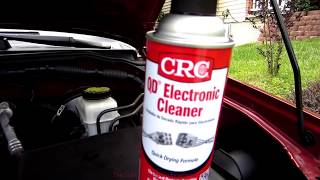
Disconnect the battery. Locate the ABS module and carefully disconnect its main electrical harness. Inspect for green/white corrosion, moisture, or bent pins. Clean the main battery-to-chassis and engine-to-chassis ground straps.
Tools: Socket Set, Flashlight, Wire Brush, Electrical Contact Cleaner (Intermediate) - Inspect All ABS-Related Fuses
Check your owner's manual for all fuses related to the ABS and Electronic Stability Control (ESC) systems. Visually inspect each one and test with a multimeter for continuity.
Tools: Owner's Manual, Fuse Puller, Multimeter (Beginner) - Confirm Power and Ground at the Module Connector (Voltage Drop Test)
Using a wiring diagram, identify the power and ground pins on the ABS harness. With the module connected and key on, back-probe the pins. Connect the positive multimeter lead to the battery positive and the negative lead to the power pin. The reading must be less than 0.2 volts. Repeat for the ground side. Readings above 0.2V indicate excessive resistance starving the module.
Tools: Multimeter, T-pins, Vehicle-Specific Wiring Diagram (Advanced) - Advanced Scan Tool Interrogation
Using a bidirectional scanner, attempt to actively communicate with the ABS module. Read live data (wheel speeds) or run module self-tests. If the module does not respond, it confirms a 'hard' failure.
Tools: Bidirectional Scan Tool (Advanced) - Check CAN Bus Network Integrity
If power and ground are good but communication is lost (U0121), check the CAN bus wires at the ABS connector. With the battery disconnected, measure approximately 60 ohms of resistance between the CAN High and CAN Low pins.
Tools: Multimeter (Expert) - Clear Codes and Final Test Drive
If all wiring, power, and grounds are confirmed good, the fault is internal to the ABS module. Reconnect everything, clear the codes, and perform a short test drive. If code C2223 returns immediately, the module must be repaired or replaced.
Tools: OBD-II Scanner (Beginner)
When This Code Triggers (Freeze-Frame Conditions)
- System Voltage: 11.5V - 14.5V (During self-test at startup or initial drive)
- Vehicle Speed: 0 - 10 mph (The ABS module performs its self-check when the vehicle begins to move.)
- Ignition Status: Key On (The code sets immediately upon key-on when the module fails its internal check.)
- Time Since Start: < 1 minute (Fault is detected very early in a drive cycle.)
Related Codes
- C2200 — The most common code for 'Anti-Lock Brake Module Internal Failure'. C2223 signifies the same fault, acting as a more specific internal error. Diagnosis and repair are identical.
- U0121 — Means 'Lost Communication With ABS Module'. If present with C2223, it confirms the module failed completely. If U0121 appears alone, the problem is in the power, ground, or network wiring to the module.
- C2116 — Indicates 'ABS Pump Motor Supply Low Voltage'. It is a consequence of a failed control module (C2223) that no longer powers the pump correctly.
- B2204 — Means 'ECU Configuration Mismatch'. Appears alongside ABS codes if a severe voltage drop causes multiple modules to lose configuration data. Cleared with a 'Reset ECU' procedure.
Climate & Environmental Factors
- High Humidity / Water Exposure: Moisture wicks through wiring harnesses or seeps past old seals, causing corrosion directly on the module's circuit board or connector pins. Regions with heavy rain and snow are highly susceptible.
- Cold Weather: Extreme cold increases electrical resistance and lowers battery output, causing a voltage drop that triggers a false code. The light sometimes clears on its own once the vehicle warms up.
- Thermal Cycles (Hot/Cold Swings): Repeated heating and cooling cycles cause expansion and contraction of electronic components inside the ABS module. Over many years, this stress leads to microscopic cracks and failed connections.
- Road Salt (Rust Belt Regions): Road salt accelerates corrosion of chassis grounds and wiring connectors. A corroded ground strap creates the unstable voltage conditions that lead to a false C2223 code.
How to Talk to a Mechanic About This Code
Say this: "I have an ABS light on and my scanner shows code C2223, indicating an internal module fault. Before quoting a module replacement, please verify the battery and charging system are healthy, check for open recalls like the R61 water intrusion issue, and confirm good power and ground at the module connector."
This signals you understand the common misdiagnoses for this code (bad battery, wiring issues) and directs the shop to perform a logical, cost-effective diagnosis instead of immediately jumping to the most expensive part.
Avoid saying:
- 'My ABS light is on, can you fix it?'
- 'The car says C2223, just replace the ABS computer.'
- 'Do whatever you think is best.'
Questions to ask before authorizing the repair:
- What was the battery's resting voltage and the alternator's charging voltage?
- Did you perform a voltage drop test on the main power and ground wires for the ABS module?
- Is there any evidence of corrosion in the module's electrical connector?
- What is the cost difference between having my original module rebuilt versus installing a new unit?
- Does the replacement module you're quoting require programming, and is that included in the price?
Where to Take It: Dealer vs Independent vs Chain
- Dealer:
Required for recalls and software-specific fixes. For out-of-warranty standard failures, they are the most expensive option.
Best for: Vehicles under warranty or with an active recall (e.g., R61)., 2020-2026 Ram 1500s where the code requires a 'proxy alignment' software procedure., Complex programming of a new OEM module.
Downsides: Highest labor rates and parts costs., Unwilling to install customer-supplied parts or use rebuilt modules. (Typical cost: +50% vs. baseline) - Independent Shop:
Best fit for most common C2223 scenarios (internal failure on an out-of-warranty vehicle), provided you find a shop with proven electrical expertise.
Best for: Out-of-warranty vehicles where cost is a major factor., Diagnosing foundational electrical issues (battery, grounds, wiring)., Installing a rebuilt or customer-supplied module.
Downsides: Diagnostic skill varies greatly; ensure they are strong in electrical diagnostics., Lacks the latest dealer-level software for programming new modules. (Typical cost: +0% vs. baseline) - Chain Shop:
AVOID for initial diagnosis of C2223. Only use for a simple, confirmed battery replacement.
Best for: Battery testing and replacement if confirmed to be the root cause.
Downsides: Technicians lack advanced diagnostic training for complex module or network issues., High pressure to sell parts leads to misdiagnosis and unnecessary replacement of the expensive module. (Typical cost: -10% vs. baseline)
When to Walk Away From the Repair
If the estimated repair cost exceeds 40-50% of the car's private-party value, sell the vehicle as-is or trade it in.
- Car worth $3500, fix is $1700: Walk away. The repair cost is nearly 50% of the vehicle's value.
- Car worth $15000, fix is $1800: Fix it. The repair is a small fraction of the car's value and restores a critical safety system.
- Car worth $2000, fix is $450: Fix it. Using a cost-effective rebuild service keeps the repair cost well below the threshold and makes the car safe and sellable.
What Scan Tool You Need for This Code
Minimum: An OBD-II scanner that reads and clears Chassis (C) codes, specifically for ABS. A basic engine-only code reader will not see this code.
A standard $20 code reader only communicates with the engine control module (Powertrain codes). It cannot access the ABS module, making it completely blind to C-codes like C2223.
Budget: Ancel BD310 or Foxwell NT301 (~$60) — Confirms the C2223 code is present and clears it after a repair. Allows you to begin the diagnosis but lacks advanced functions.
Mid-range: Xtool D7 or Foxwell NT630 Plus (~$350) — Offers full-system diagnostics including ABS live data. Crucially, it provides bidirectional control to perform an 'ABS bleed' after hydraulic work and handles the 'ABS Initialization' needed for a replacement module.
Professional: Autel MaxiCOM MK808S or AlfaOBD Software (~$450 (Autel) or 50 (AlfaOBD software + adapter)) — Full bidirectional control and service functions. An Autel MK808S performs most necessary programming. For Stellantis vehicles, AlfaOBD is powerful software that performs the dealer-level 'Proxy Alignment' required for Ram EPS/ABS module swaps.
Rent vs buy: Auto parts stores offer loaner tools capable of reading ABS codes, but quality varies. For a one-time fix, renting is ideal. If you plan to do your own maintenance, a mid-range scanner is a worthwhile investment.
How to Clear the Code After You Fix It
- Reconnect battery if disconnected for repair.
- Use an ABS-capable OBD-II scan tool to erase the C2223 fault code.
- Perform a test drive that includes at least one key cycle (off and on) and driving above 10 mph to allow the module to re-run its self-test.
Drive cycle (~15 minutes): After clearing the code, start the vehicle and let it idle for 1 minute. Drive for 5-10 minutes, including several stops and turns. Drive at a steady speed above 25 mph for at least 2 minutes. Park, turn the vehicle off, wait 30 seconds, and restart. The ABS light remains off if the repair was successful.
Readiness monitors affected: Not directly an emissions monitor, but clearing codes resets all OBD-II readiness monitors.
Before emissions retest: drive at least 50 miles to fully set monitors.
Watch out for:
- Using a basic code reader that cannot access or clear Chassis ('C') codes.
- Simply disconnecting the battery does not reliably clear the code from the ABS module's memory.
- The code returns immediately if the root cause (bad module, poor wiring, low voltage) is not corrected.
Will This Fail Emissions / State Inspection?
No — by itself this code doesn't fail OBD inspection (but it can keep readiness monitors from setting, which causes a separate fail).
- California: An illuminated ABS light does NOT cause a failure on a standard smog check. However, a salvage vehicle requiring a 'Brake and Lamp Inspection' fails for a non-operational ABS system.
- New York: An illuminated ABS warning light indicates a safety system failure and WILL cause the vehicle to fail the annual safety inspection.
- Texas: An illuminated amber ABS light does NOT fail the safety inspection. However, an illuminated RED 'BRAKE' warning light will.
Most Commonly Affected Vehicles
- Dodge Grand Caravan (2012-2020) — Highly susceptible to internal module failure. Models from 2012-2015 share the platform prone to the water intrusion issue via a ground wire, often triggering C2200.
- Chrysler Town & Country (2012-2016) — Identical to the Grand Caravan, these minivans suffer from the same ABS module failures, including the water intrusion vulnerability outlined in recall R61.
- Dodge Journey (2012-2015) — Explicitly named in NHTSA recall 15V-675 (FCA recall R61) for a defect where water enters the ABS module through the wiring harness, causing failure.
- Jeep Grand Cherokee (2011-2021) — ABS module failure is a widely reported problem. Replacement modules vary based on adaptive cruise control and other options.
- Dodge Durango (2011-2020) — Built on the same platform as the Grand Cherokee, it suffers from similar ABS module and electrical system vulnerabilities leading to this code.
- Dodge Charger (2010-2014) — Internal ABS module failure, setting codes C2200 and C2223, is a well-documented problem on these rear-wheel-drive sedans.
- Ram 1500 (2020-2026) — CRITICAL NOTE: On these trucks, C2223 means 'ECU Configuration Mismatch' for the Electric Power Steering (EPS) module, not an ABS fault. It requires a software configuration procedure detailed in TSB S2519000009.
Manufacturer-Specific Notes
- Chrysler/Dodge/Jeep (FCA/Stellantis): Recall R61 (NHTSA 15V-675) addresses a defect on 2012-2015 Dodge Journey and related minivans. A ground wire eyelet wicks water into the ABS module connector, causing failure. The fix seals the eyelet and replaces the module.
- Ram (FCA/Stellantis): TSB S2519000009 clarifies that C2223 on 2020-2026 Ram 1500s is an 'ECU Configuration Mismatch' in the Electric Power Steering (EPS) module. The fix is a 'proxy configuration alignment' procedure, not parts replacement.
- Chrysler/Dodge/Jeep (FCA/Stellantis): Replacement ABS modules are 'VIN-locked'. They must be programmatically configured to the vehicle's specific VIN. Failure to do so results in the module not functioning.
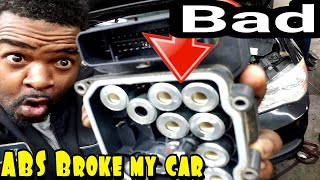
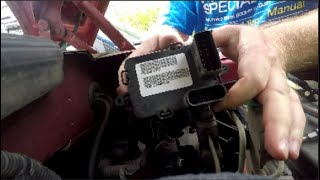
- Chrysler/Dodge/Jeep (FCA/Stellantis): The electronic control module unbolts and separates from the hydraulic control unit (HCU) block. This allows module replacement or repair without opening hydraulic brake lines, avoiding complex ABS brake bleeding procedures.
Real Owner Stories
2013 Dodge Grand Caravan at 110K miles
ABS, ESP, and Brake lights all came on suddenly. The speedometer was also working intermittently.
Outcome: Replaced the old battery. After clearing the codes, all warning lights went out and did not return. The speedometer began working correctly again.
Lesson: Always test the battery and charging system before condemning an expensive electronic module. Voltage instability is the primary cause of false internal failure codes.
2012 Dodge Journey at 85K miles
The owner received safety recall notice R61 regarding potential ABS module failure due to water intrusion. Soon after, the ABS and ESC lights illuminated.
Outcome: Under recall R61, the dealer sealed the ground wire harness to prevent future water entry and replaced the damaged ABS module at no cost to the owner.
Lesson: Check for open recalls on your vehicle. A known issue like this is repaired for free at a dealership, saving over $1,000.
2010 Dodge Charger with C2200/C2223
ABS, traction control, and stability control lights were on. The vehicle failed a state safety inspection due to the ABS light.
Outcome: The owner replaced only the electronic portion of the ABS module, avoiding opening brake lines. A bidirectional scan tool was used to perform the 'ABS Initialization' procedure to program the new module, restoring function.
Lesson: Replacing the electronic module without opening hydraulic lines is a viable DIY repair, but a replacement module requires a programming procedure with a capable scan tool to work correctly.
2021 Ram 1500 with 30K miles
After replacing the electric power steering rack, the truck had no power steering assist and code C2223 was active.
Outcome: The dealership technician used the wiTECH scan tool to perform the 'Restore EPS ECU Configuration' procedure per a Technical Service Bulletin. This synced the new module with the truck's VIN, resolving the code.
Lesson: On newer Ram trucks, C2223 is NOT an ABS code. It points to a software configuration issue with the power steering module requiring a specific software procedure.
How to Prevent This Code From Triggering
- Maintain a healthy battery and clean terminal connections (Annually) — The ABS module is extremely sensitive to low or unstable voltage. A weak battery is the leading cause of false C2223 codes. Regularly cleaning terminals prevents voltage drops that damage electronics.
- Seal known water entry points and apply dielectric grease (Once, or inspect annually) — For vehicles under Recall R61, sealing the shock tower ground eyelet prevents water from wicking into the ABS harness. Applying dielectric grease to the ABS connector seals repels moisture and prevents pin corrosion.
- Perform a brake fluid flush (Every 24-36 months) — Brake fluid absorbs moisture from the air. This moisture causes corrosion inside the delicate valves of the ABS hydraulic unit and control module, leading to seizure or electronic faults.
- Inspect and clean main chassis and engine ground points (Every 30,000 miles or during major service) — Corroded ground straps create an unstable electrical environment, starving the ABS module of a clean ground reference and causing it to report a false internal failure.
Frequently Asked Questions
What is the difference between code C2223 and C2200?
They both indicate an internal ABS module failure and require identical diagnostic steps. C2200 is the general code, while C2223 flags a more specific internal error detected during the module's self-test. Treat them as the exact same problem.
Is C2223 always an ABS code?
No. On 2020-2026 Ram 1500 trucks, C2223 refers to a configuration error in the Electric Power Steering module. Always verify the code's exact definition for your specific year, make, and model.
What is the most common misdiagnosis for code C2223?
The most costly mistake is replacing the ABS module without testing the vehicle's electrical foundation. A weak battery or bad chassis ground creates voltage instability that causes a perfectly good module to set a false internal failure code. Test the battery and charging system first.
Do I have to bleed the brakes if I only replace the electronic part of the ABS module?
No. On most affected vehicles, the electronic control module unbolts from the hydraulic pump block (HCU) without opening any brake lines. This allows you to remove the module for repair without needing a complex ABS brake bleeding procedure.
Should I buy a new, used, or rebuilt ABS module?
Rebuilding your original module is the best value because it costs $150-$350 and completely avoids complex VIN programming. New modules are reliable but cost over $1,000, while used modules carry a high risk of premature failure and still require programming.
Can a bad wheel speed sensor cause code C2223?
No. A bad wheel speed sensor generates its own specific code, such as C0034 for the right front wheel. Code C2223 exclusively flags a fault detected inside the ABS control module itself.
What special tools are needed to diagnose C2223?
You need a multimeter and an OBD-II scanner capable of reading Chassis (C) codes. For a definitive diagnosis, a bidirectional scanner and a vehicle-specific wiring diagram are essential for testing power, ground, and CAN bus integrity.
Key Takeaways
- Code C2223 on Stellantis vehicles indicates an internal ABS module failure, immediately disabling your anti-lock brakes and stability control.
- On 2020-2026 Ram 1500 trucks, C2223 is not an ABS fault; it flags an Electric Power Steering configuration error requiring a dealer-level software proxy alignment.
- Test your battery and alternator before replacing parts; voltage dropping below 12.4V is the leading cause of false C2223 module failure codes.
- Rebuilding your original ABS module costs $150-$350 and completely bypasses the expensive, complex VIN programming required when installing a new unit.
- Check NHTSA Recall 15V-675 if you drive a 2012-2015 Dodge Journey or minivan; a defective ground wire channels water directly into the ABS module, causing this exact failure.
Helpful Videos

Shop the Parts Behind C2223
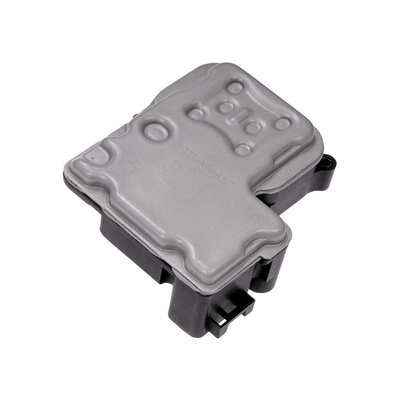
Below are the parts most often responsible for code C2223, ranked by how frequently each one is the actual culprit (per the diagnosis above). Tap any to see what we have for your vehicle.



The information in this article is provided for general reference and educational purposes only. Vehicle specifications, procedures, and part compatibility can vary by production date, trim level, and region. Always consult your vehicle's factory service manual and verify part numbers before purchasing or performing repairs. Safety-critical components such as airbags, seat belts, and braking systems should be installed by a qualified professional.
- 🧭 Diagnostic Flowchart
- 🎬 Helpful Videos
- 🛍️ Shop This Part
- What Does C2223 Mean?
- Can I Drive With C2223?
- Common Causes
- Symptoms
- Common Fixes & Costs
- Used vs. New Parts: Buying Guide
- What Happens If You Wait — Timeline
- Cost of Not Fixing It
- Diagnosis Steps
- When This Code Triggers (Freeze-Frame Conditions)
- Related Codes
- Climate & Environmental Factors
- How to Talk to a Mechanic About This Code
- Where to Take It: Dealer vs Independent vs Chain
- When to Walk Away From the Repair
- What Scan Tool You Need for This Code
- How to Clear the Code After You Fix It
- Will This Fail Emissions / State Inspection?
- Most Commonly Affected Vehicles
- Manufacturer-Specific Notes
- Real Owner Stories
- 2013 Dodge Grand Caravan at 110K miles
- 2012 Dodge Journey at 85K miles
- 2010 Dodge Charger with C2200/C2223
- 2021 Ram 1500 with 30K miles
- How to Prevent This Code From Triggering
- Frequently Asked Questions
- What is the difference between code C2223 and C2200?
- Is C2223 always an ABS code?
- What is the most common misdiagnosis for code C2223?
- Do I have to bleed the brakes if I only replace the electronic part of the ABS module?
- Should I buy a new, used, or rebuilt ABS module?
- Can a bad wheel speed sensor cause code C2223?
- What special tools are needed to diagnose C2223?
- Key Takeaways
- 🎟️ Get 5% Off