

OBD-II Code C2227: ABS Control Module Fault
What C2227 means, why it triggers, and how to fix it
- Code C2227 is a companion code indicating a general ABS fault; you must scan for the hidden primary code to find the actual broken part.
- Over 80% of C2227 codes stem from a faulty wheel speed sensor, damaged wiring, or a corroded tone ring.
- On Hyundai and Kia models, C2227 triggers when calculated brake temperatures exceed 932°F (500°C); let the vehicle sit for 60 minutes before replacing parts.
- Driving is possible, but your ABS and Electronic Stability Control are completely disabled, increasing stopping distances significantly on wet roads.
What Does C2227 Mean?
Code C2227 is a general companion fault code, most commonly used by Jeep, Dodge, and Chrysler. It means the main computer detects a separate, specific problem within the Anti-lock Braking System (ABS). It acts as a flag telling you, "The ABS has a problem; now scan for the primary ABS code to find out exactly which component failed. 🎬 Watch: How to diagnose ABS lights with or without a scanner."
Technical definition: The official SAE/ISO definition for C2227 varies by manufacturer. For Fiat-Chrysler Automobiles (FCA), it is defined as 'ABS Disabled ECU' or 'ABS DTC(s) Present,' indicating the Antilock Brake System Module has an active Diagnostic Trouble Code stored. For Hyundai and Kia models, it means 'Excessive Temperature Of Brake Disc,' where the system calculates brake rotors exceed 932°F (500°C) from extended traction control use. For manufacturers like Ford, Chevrolet, and Honda, C2227 is not a valid ABS code; they use P2227 for an unrelated barometric pressure sensor fault.
Can I Drive With C2227?

Yes, But With Caution. Yes, but with extreme caution. Your Anti-lock Braking System (ABS) and Electronic Stability Control (ESC) are completely disabled. This means your wheels lock up and skid during a panic stop, significantly increasing stopping distance on wet or loose surfaces. Drive cautiously, increase following distance, and seek repair immediately.
Common Causes

- Faulty Wheel Speed Sensor or Wiring (Very Common) — A wheel speed sensor provides critical data to the ABS module. If a sensor fails or its wiring breaks, the ABS module sets a specific code for that sensor (e.g., C0031) and simultaneously triggers the general C2227 code. This is the root cause in the vast majority of cases. 🎬 See this step-by-step guide to replacing a wheel speed sensor.
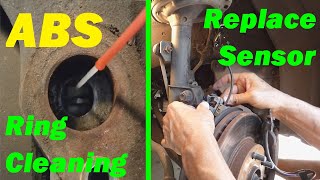
- Damaged or Corroded ABS Tone Ring (Common) — Each wheel has a toothed tone ring that the wheel speed sensor reads. If this ring cracks, rusts heavily, or loses teeth, it sends an erratic signal. The ABS module interprets this as a sensor fault, setting a primary code and the C2227 companion code. Rust buildup between the axle and the ring is the primary cause of cracking.
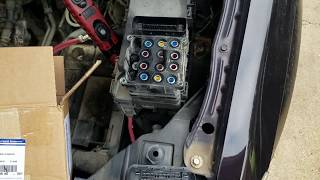
- Failing ABS Control Module (Common) — The ABS module fails internally due to electronic component breakdown or solder joint failure. 🎬 Watch: How to replace a failing Dodge or Chrysler ABS module. This sets an internal failure code (like C2200) alongside C2227. On some vehicles, a severe physical shock from hitting a pothole triggers immediate module failure.
- Power Loss or Bad Ground Connection (Less Common) — The ABS module requires stable voltage and a solid ground. A weak battery dropping below 10.5V, or a corroded main ground wire (like ground G910A on Jeep/Ram frames), causes communication errors and incomplete module shutdowns, triggering this code.
- Faulty Steering Angle Sensor (SAS) (Less Common) — The ABS/ESC system uses the Steering Angle Sensor to determine driver intent. The SAS is integrated into the clockspring assembly in the steering column. A failing clockspring disrupts the SAS signal, forcing the ABS system to disable itself and set C2227.
- Aftermarket Electronic Device Interference (Rare) — On modern vehicles like the Jeep Wrangler JL, aftermarket OBD-II devices or software tuners (e.g., a Tazer) utilize features like 'Brake Hold'. These features intentionally manipulate the ABS system and trigger C2227 as a byproduct of their operation.
- Software Incompatibility or Glitch (Rare) — Following a module replacement, software update, or electronic rear brake service, an incompatibility or failure to properly re-initialize the ABS system triggers this code. It requires a bidirectional scanner to perform the initialization routine.
Symptoms

- ABS Light On — The ABS warning light on your dashboard illuminates immediately and stays on.
- Traction Control / ESC Light On — The Electronic Stability Control or traction control light illuminates, as these systems require a functioning ABS to operate.
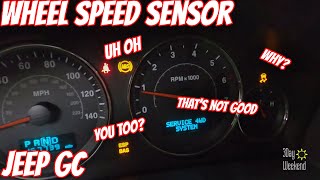
- Service 4WD Light On — On 4x4 vehicles, particularly Jeep and Ram models, an ABS fault disables the four-wheel-drive system and triggers a 'Service 4WD' dashboard message.
- Disabled Cruise Control — The vehicle disables cruise control and adaptive cruise control as a safety precaution when an ABS fault is active.
- Noticeable Change in Braking Dynamics — Under hard braking or on slippery surfaces, wheels lock up and skid. The brake pedal feels less responsive or lacks the typical ABS pulsation during emergency stops.
Diagnostic Flowchart
Tap your situation to follow the diagnostic path that matches what you're seeing on this code.
Common Fixes & Costs
- Replace a Faulty Wheel Speed Sensor — Parts: $35-$250, Labor: $75-$150, ~1.0 hr book time (DIY)
- Repair Damaged Wiring or Clean Ground Connection — Parts: $5-$30, Labor: $125-$250, ~1.5 hr book time (Intermediate)
- Replace Damaged ABS Tone Ring — Parts: $20-$150, Labor: $150-$350, ~2.0 hr book time (Intermediate)
- Remanufacture/Repair the ABS Control Module — Parts: $150-$600, Labor: $150-$300, ~1.5 hr book time (Intermediate)
- Replace the ABS Control Module — Parts: $800-$2800, Labor: $150-$300, ~2.0 hr book time (Professional)
Used vs. New Parts: Buying Guide
When a used part is worth it: For a simple wheel speed sensor, buy new. For an expensive ABS control module, a remanufactured unit or a used OEM part is a highly sensible option to save significant money.
Donor-vehicle mileage cap: roughly under 100000 miles for the part to have meaningful remaining life.
Donor quality checklist:
- For ABS modules, verify the part number exactly. Used modules must be reprogrammed with your vehicle's VIN.
- Remanufacturing your original module is the best choice, as it avoids the need for VIN programming entirely.
- Avoid used wheel speed sensors from rust belt vehicles, as corrosion is their primary failure mode.
- Ensure the seller offers at least a 90-day warranty.
Decision logic:
- If The fix is a wheel speed sensor and the new part is under $100 → Buy new for the warranty and peace of mind.
- If The fix is the ABS control module and a new one costs over $1000 → Send your original module to a specialized service for remanufacturing to save money and avoid programming hassles.
- If The fix is the ABS control module and yours is physically destroyed → Buy a used module, but factor in $150-$300 for professional VIN programming labor.
Warranty tradeoff: Used parts typically have a 30-90 day warranty. New aftermarket parts offer 1-year to lifetime warranties. Remanufacturing services often provide 1 to 5-year warranties.
Worst-case if a used part fails: $250-500 if a used ABS module is faulty or cannot be programmed, covering wasted diagnostic and programming labor.
What Happens If You Wait — Timeline
- 0-2 weeks: ABS, ESC, and Traction Control warning lights illuminate. Safety systems are disabled. Normal braking functions, but without anti-lock capability. (MPG impact: 0%% · Added cost: $0 (Safety risk is the primary cost))
- 2 weeks - 3 months: Continued operation with disabled safety systems. Secondary features like Cruise Control and the 4WD system disable, reducing vehicle utility. (MPG impact: 0%% · Added cost: $0 (Unless an accident occurs due to lack of ABS))
- 3-6+ months (If root cause is a bad wheel bearing): If a failing wheel bearing triggered the code, ignoring it allows the bearing to degrade. A humming noise progresses to a grinding sound and steering wheel vibration. (MPG impact: 1-5%% · Added cost: $50-$150 in wasted fuel and uneven tire wear.)
- Catastrophic Failure (If root cause is a bad wheel bearing): The ignored wheel bearing completely fails, potentially seizing or causing the wheel to separate from the vehicle at speed. (MPG impact: N/A% · Added cost: $400-$1500 for bearing, hub, axle, and suspension replacement.)
Cost of Not Fixing It
- Immediate: Loss of Anti-lock Braking System and Electronic Stability Control. This significantly increases the risk of wheel lock-up and skidding during emergency braking. (Added cost: Up to the total cost of an at-fault accident.)
- 1-6 months: Continued operation without ABS/ESC functionality. This disables cruise control and all-wheel drive systems. There is no direct escalating mechanical damage from ignoring the light itself. (Added cost: Negligible, unless an accident occurs.)
- 6+ months: If the root cause is a failing wheel bearing creating an erratic tone ring signal, ignoring it leads to total bearing failure and potential wheel separation. (Added cost: $400 - $800 per wheel bearing replacement.)
Diagnosis Steps
- Scan for All Trouble Codes
Use an advanced OBD-II scanner capable of reading manufacturer-specific ABS codes. Because C2227 is a companion code, you MUST find the primary code (like a specific wheel speed sensor fault) to identify the actual broken component.
Tools: Advanced OBD-II Scanner (Beginner) - Check for Brake Overheating (Hyundai/Kia)
If diagnosing a Hyundai or Kia and C2227 is the only code, it indicates 'Excessive Temperature Of Brake Disc.' Allow the brakes to cool for 60 minutes. Clear the codes and test drive gently. If the code stays off, it was triggered by aggressive driving, not a part failure.
Tools: None (Beginner) - [PRO TIP] Analyze Live Data PIDs
Using an advanced scan tool, monitor the live data for all four wheel speed sensors. Drive slowly in a straight line. All sensors must read within 1 MPH of each other. A sensor reading 0 MPH, lagging, or spiking erratically instantly pinpoints the faulty wheel.
Tools: Advanced OBD-II Scanner (with Live Data) (Intermediate) - Check Battery Voltage and Ground Wires
Verify the battery maintains above 12.4 volts at rest and doesn't drop below 10.5V during cranking. Locate the main ground wire for the ABS module (e.g., ground G910A on Jeep/Ram passenger frame rails). Unbolt it, wire-brush the terminal and frame, and re-secure it tightly.
Tools: Multimeter, Socket Set, Wire Brush (Beginner) - Inspect Wheel Speed Sensor and Tone Ring
Based on the primary code or live data, lift the corresponding wheel. Inspect the sensor's wiring harness for chafing or melting. Inspect the tone ring on the axle or hub for cracks, missing teeth, or heavy rust buildup that pushes the ring away from the sensor.
Tools: Flashlight, Jack and Jack Stands (Intermediate) - Test Wheel Speed Sensor with a Multimeter
Disconnect the sensor. For passive (2-wire) sensors, measure resistance; a good sensor reads 800-2,500 Ohms. Spin the wheel and check for generating AC voltage (100-250mV). For active (3-wire) sensors, verify 5V or 12V reference voltage and ground, then back-probe the signal wire to watch voltage toggle as the wheel turns.
Tools: Multimeter, Jack and Jack Stands, Back-probe kit (Intermediate) - [PRO TIP] Perform Oscilloscope Test on Wheel Speed Sensor
Connect an oscilloscope to the sensor's signal wire. Spin the wheel. Passive sensors produce a clean sine wave; active sensors produce a digital square wave. Dropouts, noise, or inconsistent wave amplitudes confirm a bad sensor or a damaged tone ring.
Tools: Oscilloscope, Breakout Leads or Back-probes (Advanced) - [PRO TIP] Perform Pin-Out Test at ABS Module Connector
If a sensor tests bad at the wheel, perform a continuity test from the wheel connector to the main ABS module connector. This verifies the wiring harness integrity. Testing voltage directly at the ABS module pins confirms exactly what signal the computer receives.
Tools: Multimeter, Wiring Diagram, Pin-out Chart, T-pins (Advanced) - Diagnose the ABS Module
If no other codes exist, all sensors and wiring test perfectly, grounds are clean, and C2227 returns immediately upon clearing, the ABS module has failed internally. This is definitively confirmed if code C2200 is also present.
Tools: Advanced OBD-II Scanner, Multimeter (Advanced)
When This Code Triggers (Freeze-Frame Conditions)
- Vehicle Speed: 15-55 mph (The fault triggers when the vehicle is in motion, as the module actively compares wheel speed sensor data. Discrepancies set the code.)
- Wheel Speed Mismatch: > 2-3 mph difference (The ABS module continuously compares all four wheels. A sensor reporting a significantly different speed for a set duration flags a fault.)
- Battery Voltage: 12.5-14.8V (If voltage drops below 10.5V during startup, it causes a communication error. If voltage is stable while driving, it confirms a sensor or wiring issue.)
- Brake Pedal Status: Not Applied (The fault is frequently recognized during steady-state driving without brake application, pointing directly to an erratic sensor or tone ring signal.)
Related Codes
- U0415 — This code for 'Implausible Data Received From ABS' sets in the engine computer when C2227 is active. U0415 is a symptom; diagnose the cause of C2227 to clear both.
- C0031 - C0050 — These are specific wheel speed sensor codes. You will almost always find one stored alongside C2227. Fixing the issue causing the C00xx code resolves C2227.
- C2200 — 'ABS Module Internal Failure.' Seeing this code alongside C2227 confirms the ABS module itself has failed, rendering external sensor diagnosis unnecessary.
- C0063 — 'Steering Angle Sensor Performance/Signal.' If the clockspring fails, it disables the ABS system and triggers the C2227 companion code.
Climate & Environmental Factors
- Road Salt / Corrosion (Rust Belt): Salt spray accelerates corrosion under the ABS tone ring, causing it to swell and crack. It also corrodes sensor wiring and builds rust under the sensor mount, pushing it away from the ring and weakening the signal.
- Cold Weather: Extreme cold makes wire insulation brittle and prone to cracking. Packed snow and ice physically block the sensor's view of the tone ring, causing a temporary fault that clears when the ice melts.
- Humidity and Moisture: Driving through deep puddles forces water into failing wire insulation or unsealed connectors, causing electrical shorts and signal degradation.
How to Talk to a Mechanic About This Code
Say this: "I have an ABS light on and my scanner shows code C2227. I know this is a companion code. I need a diagnostic to identify the primary fault. Please start by reading all ABS codes and checking live wheel speed sensor data."
This signals to the shop that you understand C2227 requires proper diagnosis, not blind parts replacement. It directs them to find the specific wheel sensor code and prevents them from immediately quoting a $1,500 ABS module.
Avoid saying:
- 'My ABS light is on, can you fix it?' (Too vague, invites expensive guesses)
- 'I think I need a new ABS module.' (Never suggest the most expensive fix first)
- 'Just do whatever it takes to get the light off.' (This is an open invitation for upselling)
Questions to ask before authorizing the repair:
- What was the primary ABS code you found alongside the C2227?
- Did you test the wheel speed sensor with a multimeter or scope, or just read the code?
- If recommending an ABS module: What specific tests did you perform to rule out a wiring, ground, or sensor issue? Was there a C2200 internal failure code?
- If you have a Jeep/Ram: Did you inspect the main ABS ground G910A on the frame rail?
- Will this repair require any special programming or initialization?
Where to Take It: Dealer vs Independent vs Chain
- Dealer:
Necessary for module programming and initializations. Overkill for a simple sensor replacement.
Best for: Vehicles under warranty., Repairs requiring module programming or system initialization., Diagnosing known manufacturer-specific issues covered by recalls.
Downsides: Highest labor rates and parts costs., Defaults to replacing an entire module when a cheaper remanufacture is possible. (Typical cost: +50% vs. baseline) - Independent Shop:
Best fit for most C2227 scenarios. They diagnose and replace sensors affordably and handle the removal of an ABS module for remanufacturing.
Best for: Out-of-warranty vehicles where the cause is a common wheel speed sensor or wiring failure., Vehicle owners seeking a better cost-to-value balance., Shops specializing in your vehicle's brand.
Downsides: Diagnostic skill varies widely. Vet them based on reviews and ASE certifications., May lack the expensive scan tools needed for programming a new module. (Typical cost: +0% vs. baseline) - Chain Shop:
Use with caution. Acceptable if you have a primary code for a specific sensor. Avoid for initial diagnosis of C2227.
Best for: Simple, clear-cut repairs like replacing a single wheel speed sensor when you already know which one is bad.
Downsides: Technician skill is highly variable., Lacks advanced diagnostic tools for complex ABS issues., High pressure to upsell unnecessary services. (Typical cost: -10% vs. baseline)
When to Walk Away From the Repair
If the estimated repair cost exceeds 40-50% of the car's private-party value, pause and evaluate your options.
- Car worth $5000, fix is $350: Fix it. This is a minor repair and a small fraction of the car's value.
- Car worth $5000, fix is $2500: Walk away. The repair cost is 50% of the car's value. It is not economically sound.
- Car worth $15000, fix is $2500: Borderline. The repair is expensive but well below the 50% threshold. Consider the car's overall condition.
What Scan Tool You Need for This Code

Minimum: A scanner that reads and clears Anti-lock Braking System (ABS) fault codes and views live data for wheel speed sensors.
A basic $20 engine code reader CANNOT see 'C' (Chassis) codes. It shows 'No Codes Found' even with the ABS light on. You must read the primary ABS fault code to fix the vehicle.
Budget: BlueDriver Pro, Autel AP200, JScan (for FCA) (~$60-120) — These bluetooth scanners access ABS modules to read codes and graph live wheel speed sensor data. This is enough to diagnose the most common failures.
Mid-range: Autel MX808/MK808, Foxwell NT630 Plus (~$250-400) — Provides a dedicated tablet and adds bidirectional controls. Performs automated ABS brake bleed procedures after hydraulic work.
Professional: Autel MaxiSys Series, Launch X431 (~$1000-2500) — Full bidirectional control, including VIN programming for replacement modules and running special initialization routines. Required for replacing an ABS module.
Rent vs buy: Auto parts stores rent basic engine code readers for free, but these DO NOT work for C2227. You must buy a scanner with ABS capability.
How to Clear the Code After You Fix It
- Reconnect the battery if it was disconnected during repair.
- Use an advanced OBD-II scan tool to access the ABS module and clear the fault codes. Basic engine code readers cannot clear 'C' codes.
- Perform the ABS drive cycle to verify the repair and ensure warning lights remain off.
Drive cycle (~15 minutes): Start the vehicle and idle for 2 minutes. Drive in a straight line, accelerating above 20 mph to allow the ABS module to verify plausible data from all sensors. Continue driving for 10 minutes, including turns. The ABS light turns off automatically once the module confirms correct sensor readings.
Readiness monitors affected: This is a chassis code and does not affect emissions readiness monitors. However, an illuminated ABS light causes an automatic failure in states with mandatory safety inspections.
Watch out for:
- Using a basic OBD-II scanner that cannot communicate with the ABS module.
- Clearing the code without fixing the root cause; the code returns immediately upon driving.
- Forgetting that FCA vehicles require multiple key cycles and vehicle 'sleep' periods to clear codes after fixing a power or ground-related fault.
Will This Fail Emissions / State Inspection?
No — by itself this code doesn't fail OBD inspection (but it can keep readiness monitors from setting, which causes a separate fail).
- California: An illuminated ABS light does not cause a smog check failure. However, a lit red brake warning light is a safety failure.
- New York: An illuminated ABS warning light is grounds for immediate failure of the annual safety inspection.
- Texas: An illuminated ABS light will NOT cause a failure of the state safety inspection. The manual explicitly states ABS lights are not a reason for rejection.
Most Commonly Affected Vehicles
- Jeep Grand Cherokee (2011-2022) — Prone to this code from wheel speed sensor faults, ABS module failures, and a loose G910A ground. 2018-2019 models are subject to a major ABS module recall.
- Dodge Durango (2011-2022) — Shares a platform with the Grand Cherokee and suffers identical issues, commonly logging C2227 with a specific wheel speed sensor fault. Included in the 2018-2019 ABS recall.
- Ram 1500/2500/3500 (2013-2023) — Often appears with a 'Service 4WD' light. Frequently caused by a faulty wheel speed sensor or the loose G910A ground noted in FCA TSBs.
- Chrysler 300 (2011-2022) — Frequently triggered by a failing rear wheel speed sensor or internal ABS module fault.
- Jeep Wrangler (JL) (2018-2024) — Triggered by standard ABS faults or by using aftermarket electronic tuners (like a Tazer) that manipulate the brake system.
- Hyundai Sonata, Azera, Genesis (2011-2019) — C2227 typically means 'Excessive Temperature Of Brake Disc.' It is a temporary system disablement due to heavy traction control use, not a part failure.
- Kia Optima, Sorento, Cadenza (2011-2020) — C2227 indicates 'Excessive Temperature Of Brake Disc' from aggressive driving. Letting the brakes cool resolves the issue.
- Mazda Mazda3 (2010-2013) — The ABS module is highly susceptible to internal failure after a significant physical shock, such as hitting a large pothole.
Manufacturer-Specific Notes
- Jeep/Dodge/Chrysler/Ram: C2227 is almost always a secondary code indicating a more specific ABS code is stored. FCA TSBs note that a loose G910A ground causes this code and requires multiple vehicle sleep cycles to clear after repair.
- Hyundai / Kia: C2227 means 'Excessive Temperature Of Brake Disc.' This is a calculated warning that the brakes exceed 932°F (500°C). Letting the brakes cool for 60 minutes resolves the issue without parts replacement.
- Jeep/Dodge: 2018-2019 Grand Cherokee and Durango models were recalled for a faulty ABS module that allows the vehicle to start and shift out of park without pressing the brake pedal.
- Jeep (Grand Cherokee WK2/WL): Performing a rear brake job without using the electronic 'Brake Service Mode' sets codes C2227 and C0050, requiring a dealer-level scan tool to re-initialize the ABS system.
- Mazda: The ABS module fails internally after a significant physical shock. If the code appears immediately after hitting a pothole and sensors test fine, the module is destroyed.
Real Owner Stories
2005 Jeep Grand Cherokee with ABS/ESP/BAS lights
Multiple warning lights (ABS, Traction Control, Service 4WD) illuminated simultaneously. Cruise control was disabled.
Outcome: Replacing the left front wheel speed sensor for $40 and clearing the codes permanently resolved all warning lights.
Lesson: A cascade of warning lights often points to a single, inexpensive wheel speed sensor. An advanced scanner is mandatory to pinpoint the exact wheel.
2014 Ram 1500 with multiple 'Service' messages
The truck displayed 'Service Electronic Stability Control' and 'Service 4WD System', and refused to shift into 4WD. A shop pulled codes U0415 and C2227.
Outcome: The actual root cause was a loose main ground connection for the ABS module (Ground G910A on the passenger frame rail). Cleaning and tightening the ground resolved all issues.
Lesson: On FCA trucks, C2227 accompanied by a 'Service 4WD' light requires an immediate inspection of the main ABS ground wire before replacing any parts.
2015 Hyundai Sonata with ABS/TCS lights after spirited driving
ABS and Traction Control lights illuminated after aggressive driving on a winding road with heavy brake and traction control use.
Outcome: The owner parked the car and let the brakes cool for an hour. Upon restarting, the code vanished. The system triggered the code because calculated brake disc temperatures exceeded 932°F (500°C).
Lesson: For Hyundai and Kia vehicles, C2227 is often a temporary safety feature preventing brake overheating, not a component failure. Let the brakes cool completely before attempting repairs.
How to Prevent This Code From Triggering
- Clean ABS Tone Rings During Brake Service (Whenever brakes are serviced) — Rust and debris fill the gaps between tone ring teeth, blocking the sensor's signal. Cleaning them with a wire brush prevents erratic readings.
- Apply Dielectric Grease to Sensor Connectors (When replacing a sensor) — Dielectric grease seals electrical connectors from moisture and road salt, preventing the corrosion that causes intermittent signal failures.
- Grease the Sensor Body on Installation (When installing a new wheel speed sensor) — Applying anti-seize to the plastic body of the sensor prevents it from seizing in the knuckle due to rust, making future removal possible without destroying the part.
- Regularly Wash Vehicle Undercarriage (Monthly, especially in winter) — Washing away road salt reduces corrosion on exposed tone rings, sensor wiring harnesses, and critical ground connections.
Frequently Asked Questions
Can I just clear the C2227 code and keep driving?
You can clear it, but it returns immediately because it triggers from a hard fault in the ABS system. You must fix the primary problem, like a bad sensor, to permanently resolve the code.
Why did the C2227 code appear right after I changed my brake pads?
On many modern cars, the system requires a special 'service mode' before compressing caliper pistons. If skipped, the ABS module detects an unexpected piston position and sets a fault. This requires a special procedure with a bidirectional scan tool to fix.
Is it safe to drive with the ABS and traction control lights on?
Your normal brakes still work, but you lose anti-lock and stability control functions. This means your wheels lock up and skid during a panic stop. Drive cautiously, increase following distance, and schedule a repair immediately.
My scanner only shows C2227 and no other codes. What now?
This means your scanner is a basic model unable to read manufacturer-specific codes from the ABS module. You need an advanced scan tool that communicates with the ABS system to find the hidden primary code causing C2227.
Can a bad clockspring cause the C2227 code?
Yes, indirectly. A bad clockspring causes the Steering Angle Sensor (SAS) to fail. Since the Electronic Stability Control system relies on the SAS, a fault there disables the ABS system and stores code C2227.
My scanner shows P2227 for the engine. Is that related to the C2227 ABS code?
No, they are completely different codes. C2227 is a Chassis code for an ABS system fault, primarily on FCA vehicles. P2227 is a standardized Powertrain code for a barometric pressure sensor issue.
The shop says I need a new ABS module for $1,500, but the only code is C2227. Are they guessing?
Replacing the ABS module is a last resort. Because C2227 is a companion code, the shop must first diagnose the primary code, such as a wheel speed sensor fault. If they haven't tested sensors, wiring, and grounds, ask for the primary code before authorizing a $1,500 replacement.
My ABS lights flashed after I installed a tuner/programmer. Is it related?
Yes, aftermarket electronic devices with brake-related features trigger this code. For example, a 'Brake Hold' feature on a Jeep Wrangler tuner logs C2227 as part of its normal operation. Disable the device to see if the fault clears.
Can a bad battery cause code C2227?
Yes, a weak battery causes communication errors between modules. If the ABS module fails to shut down or power up correctly due to voltage dropping below 10.5V, it sets this fault code.
Key Takeaways
- Code C2227 is a companion code indicating a general ABS fault; you must scan for the hidden primary code to find the actual broken part.
- Over 80% of C2227 codes stem from a faulty wheel speed sensor, damaged wiring, or a corroded tone ring.
- On Hyundai and Kia models, C2227 triggers when calculated brake temperatures exceed 932°F (500°C); let the vehicle sit for 60 minutes before replacing parts.
- Driving is possible, but your ABS and Electronic Stability Control are completely disabled, increasing stopping distances significantly on wet roads.
Helpful Videos
Shop the Parts Behind C2227
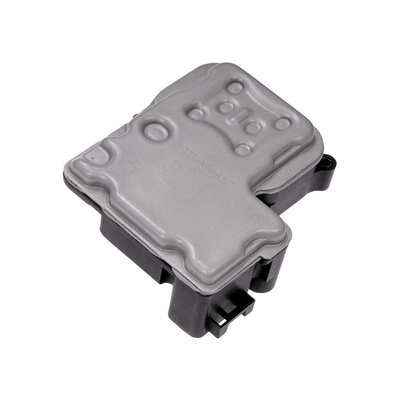
Below are the parts most often responsible for code C2227, ranked by how frequently each one is the actual culprit (per the diagnosis above). Tap any to see what we have for your vehicle.


The information in this article is provided for general reference and educational purposes only. Vehicle specifications, procedures, and part compatibility can vary by production date, trim level, and region. Always consult your vehicle's factory service manual and verify part numbers before purchasing or performing repairs. Safety-critical components such as airbags, seat belts, and braking systems should be installed by a qualified professional.
- 🧭 Diagnostic Flowchart
- 🎬 Helpful Videos
- 🛍️ Shop This Part
- What Does C2227 Mean?
- Can I Drive With C2227?
- Common Causes
- Symptoms
- Common Fixes & Costs
- Used vs. New Parts: Buying Guide
- What Happens If You Wait — Timeline
- Cost of Not Fixing It
- Diagnosis Steps
- When This Code Triggers (Freeze-Frame Conditions)
- Related Codes
- Climate & Environmental Factors
- How to Talk to a Mechanic About This Code
- Where to Take It: Dealer vs Independent vs Chain
- When to Walk Away From the Repair
- What Scan Tool You Need for This Code
- How to Clear the Code After You Fix It
- Will This Fail Emissions / State Inspection?
- Most Commonly Affected Vehicles
- Manufacturer-Specific Notes
- Real Owner Stories
- 2005 Jeep Grand Cherokee with ABS/ESP/BAS lights
- 2014 Ram 1500 with multiple 'Service' messages
- 2015 Hyundai Sonata with ABS/TCS lights after spirited driving
- How to Prevent This Code From Triggering
- Frequently Asked Questions
- Can I just clear the C2227 code and keep driving?
- Why did the C2227 code appear right after I changed my brake pads?
- Is it safe to drive with the ABS and traction control lights on?
- My scanner only shows C2227 and no other codes. What now?
- Can a bad clockspring cause the C2227 code?
- My scanner shows P2227 for the engine. Is that related to the C2227 ABS code?
- The shop says I need a new ABS module for $1,500, but the only code is C2227. Are they guessing?
- My ABS lights flashed after I installed a tuner/programmer. Is it related?
- Can a bad battery cause code C2227?
- Key Takeaways
- 🎟️ Get 5% Off