

OBD-II Code C2243: Brake Pressure Sensor 'A'/'B' Correlation
What C2243 means, why it triggers, and how to fix it
- Code C2243 typically indicates a failed internal brake pressure sensor within the ATE MK60 ABS module, common on 2006-2013 VW, Audi, BMW, and Ford vehicles.
- On 2016-2017 Kia and Hyundai models, C2243 is a false flag for brake issues; TSB SA317B/C proves it actually requires a $65 transmission inhibitor switch replacement.
- Never buy a brand-new $2,000 ABS module without first checking if your original unit can be repaired by a mail-in rebuild service for under $350.
- Driving with C2243 disables your Anti-lock Braking System (ABS) and Electronic Stability Control (ESC), increasing emergency stopping distances by up to 50%.
What Does C2243 Mean?
Code C2243 means the ABS or Electronic Brake Control Module (EBCM) detects a correlation error with the brake pressure sensors. These sensors measure exactly how hard you press the brake pedal. The code triggers when the signals from these sensors contradict each other or conflict with the brake pedal switch data.
Technical definition: While manufacturer definitions vary, C2243 generally stands for 'Brake Pressure Sensor A/B Correlation'. The ABS module flags this when signals from multiple brake pressure circuits fail to match. This points to a failed sensor, damaged wiring, or a faulty module. On specific Kia/Hyundai models, it indicates a CAN communication failure originating from a faulty transmission range switch.
Can I Drive With C2243?
No — Do Not Drive. Driving is not recommended. This fault completely disables your Anti-lock Braking System (ABS) and Electronic Stability Control (ESC). Without ABS, your wheels lock during panic stops, causing a complete loss of steering control and increasing stopping distances by over 50%. Disabled ESC removes the vehicle's ability to correct a skid, dramatically increasing rollover risk. While your base hydraulic brakes still function, emergency handling becomes dangerously unpredictable.
Common Causes
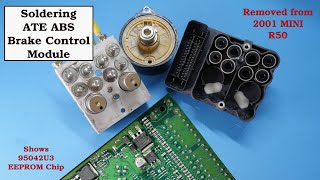
- Internal ABS Module/Pressure Sensor Failure (Very Common) — The internal brake pressure sensor fails, sending erratic or zero data. On vehicles with the ATE MK60 ABS system (common in VW, Audi, BMW, Ford), this sensor is permanently integrated into the hydraulic control unit and fails due to microscopic wire fractures from thermal cycling. 🎬 See how an ATE MK60 ABS module is repaired and soldered.
- Faulty Transmission Range (Inhibitor) Switch (Common) — On 2016-2017 Kia and Hyundai models, C2243 is a CAN communication code, not a brake fault. A failing transmission inhibitor switch sends incorrect gear position data to the network, triggering this code per TSB SA317B/C. 🎬 Watch: How to replace the transmission inhibitor switch on Kia/Hyundai models.
- Wiring Harness or Connector Damage (Common) — Wiring leading to the ABS module corrodes, frays, or loosens, causing an open or short circuit. This frequently occurs at the main ABS module connector due to water and road salt intrusion.
- Incorrectly Adjusted Brake Pedal Switch (Less Common) — If the brake pedal switch is misaligned, the computer registers hydraulic pressure without a corresponding 'pedal pressed' electrical signal, causing an immediate correlation fault.
- Low or Contaminated Brake Fluid (Rare) — Severely degraded brake fluid or air in the master cylinder alters hydraulic pressure dynamics, leading to correlation errors between the sensors.
Symptoms
- ABS Warning Light Illuminated — The dashboard ABS light turns on immediately and stays on.
- Traction/Stability Control Light Illuminated — The ESC or StabiliTrak warning lights illuminate because these systems rely entirely on functional brake pressure sensors.
- Increased Emergency Stopping Distance — The vehicle skids and takes significantly longer to stop during hard braking because the ABS cannot pulse the brakes.
- Intermittent No-Start Condition — On Kia and Hyundai models affected by the inhibitor switch TSB, the vehicle intermittently fails to crank.
- Brake Lights Inoperative or Stuck On — The brake lights fail to illuminate when pressing the pedal, or remain stuck on constantly due to conflicting switch signals.
Diagnostic Flowchart
Tap your situation to follow the diagnostic path that matches what you're seeing on this code.
Common Fixes & Costs
- Rebuild or Replace ABS Hydraulic Control Unit — Parts: $250-$350 (Rebuild), $1500-$2500 (New OEM), Labor: $150-$300, ~2.0 hr book time (Professional)
- Replace Transmission Inhibitor Switch — Parts: $30-$80, Labor: $75-$150, ~0.8 hr book time (Intermediate)
- Repair Wiring or Connectors — Parts: $10-$50, Labor: $150-$300, ~1.5 hr book time (Intermediate)
- Replace External Brake Pressure Sensor — Parts: $100-$250, Labor: $85-$150, ~1.0 hr book time (Intermediate)
- Brake Fluid Flush and Bleed 🎬 Watch: A step-by-step guide to performing a proper ABS brake bleed. — Parts: $20-$40, Labor: $100-$150, ~1.0 hr book time (DIY)
DIY vs Professional
- Rebuild or Replace ABS Hydraulic Control Unit — Beginner: no
- Replace Transmission Inhibitor Switch — Beginner: yes
- Repair Wiring or Connectors — Beginner: no
- Brake Fluid Flush and Bleed — Beginner: yes
Used vs. New Parts: Buying Guide
When a used part is worth it: A used ABS module makes sense only if a mail-in rebuild service is unavailable and a new OEM unit exceeds $1,500. You must verify the used module's part number matches exactly and budget for dealership programming.
Donor-vehicle mileage cap: roughly under 80000 miles for the part to have meaningful remaining life.
Donor quality checklist:
- Exact part number match (do not rely on year/make/model alone).
- Purchased from a reputable dismantler offering a 90-day warranty.
- Donor vehicle was not involved in a flood or fire.
Decision logic:
- If Your original module can be repaired by a mail-in service (e.g., ModuleMaster) → Choose the rebuild service. It costs under $350, upgrades the faulty internal components, and requires zero reprogramming.
- If A new OEM part is under $800 → Buy new for maximum reliability and warranty coverage.
- If A rebuild is impossible and new is $2,000+ → Buy a used module, but secure a shop willing to program a used part to your VIN before purchasing.
Warranty tradeoff: Used parts offer 30-90 days. Rebuilt units offer 1-year to lifetime warranties. New OEM parts offer 1-2 years.
Worst-case if a used part fails: $600 to cover wasted labor, diagnostic time, and reprogramming fees if the used module is dead on arrival.
What Happens If You Wait — Timeline
- Immediately: ABS and Stability Control lights illuminate. Systems are disabled. Code C2243 is stored. (MPG impact: 0%% · Added cost: $0. The primary cost is the critical loss of safety systems.)
- 1-3 months: If caused by an internal module fault, the ABS pump motor may run continuously even with the key off, draining the battery. (MPG impact: 0%% · Added cost: $50 for jump starts or battery charging.)
- 3-12 months: A continuously running ABS pump motor burns itself out. Wiring corrosion spreads to adjacent pins, causing complex electrical shorts. (MPG impact: 0%% · Added cost: $200-$500 for a burned-out pump motor or increased diagnostic labor.)
Cost of Not Fixing It
- Immediately: ABS and Electronic Stability Control (ESC) are disabled. Wheels lock up during panic stops, causing a total loss of steering control and drastically increasing crash risk. (Added cost: Potential for a major collision, resulting in insurance deductibles or total vehicle loss.)
- 1-6 months: Driver complacency sets in as you ignore the warning lights. The critical safety systems remain offline, posing a constant, severe risk during evasive maneuvers. (Added cost: Uneven tire wear (flat spotting) occurs if wheels lock up during heavy braking.)
- 6+ months: If the root cause is a wiring short, it spreads to adjacent pins, damaging the ABS module beyond repair and causing parasitic battery drains. (Added cost: $1500+ to replace a fried ABS module that could have been saved by a simple wiring repair.)
Diagnosis Steps
- Check for TSBs and Scan All Modules
Use an advanced scanner to read all Chassis ('C'), Powertrain ('P'), and Communication ('U') codes. Search for Technical Service Bulletins (TSBs) for your specific year/make/model. If you drive a 2016-2017 Kia/Hyundai, TSB SA317B/C dictates replacing the transmission inhibitor switch immediately.
Tools: Advanced OBD-II Scanner, TSB Database Access (Beginner) - Monitor Brake Pressure Live Data
View live data for the brake pressure sensor(s) on your scanner. With your foot off the brake, pressure must read 0 Bar/PSI. As you press the pedal, pressure must rise smoothly to 100+ Bar (1450+ PSI). A sensor stuck at a high value (e.g., 250 Bar) or showing 0 Bar regardless of pedal effort confirms a failed sensor.
Tools: Advanced OBD-II Scanner (Intermediate) - Test the Brake Pedal Switch
While viewing live data, verify the brake pedal switch parameter changes from 'Off' to 'On' the exact millisecond you press the pedal. A delayed or missing signal causes a correlation fault with the pressure sensor.
Tools: Advanced OBD-II Scanner (Intermediate) - Visually Inspect ABS Wiring and Connectors
Disconnect the main wiring harness at the ABS module. Inspect the pins for green corrosion, moisture, or pushed-out terminals. Verify the main ground wire attached to the chassis is tight and rust-free.
Tools: Flashlight, Contact Cleaner (Beginner) - Test Kia/Hyundai Inhibitor Switch Resistance
For affected Kia/Hyundai models, disconnect the inhibitor switch. Measure resistance between the specified pins for P, R, N, and D gears using a multimeter. Infinite resistance or out-of-spec readings confirm the switch is dead.
Tools: Digital Multimeter, Service Manual (Advanced) - Test Sensor Circuit Voltage
If your vehicle uses an external pressure sensor, backprobe the connector. Verify a 5V reference, a ground reading under 0.1V, and a signal wire that scales from ~0.5V (pedal released) to ~4.5V (pedal floored). A dead signal wire confirms a failed sensor.
Tools: Digital Multimeter, Backprobe Pins, Wiring Diagram (Advanced)
When This Code Triggers (Freeze-Frame Conditions)
- Vehicle Speed: 0-15 mph (Triggers during the initial ABS self-test at key-on or during low-speed active system checks.)
- System Voltage: 11.5-14.5V (Sets reliably when charging voltage is normal. Low voltage triggers unrelated communication codes.)
- Brake Pedal Status: On/Off (Detected when the ABS module sees a discrepancy between the physical brake pedal switch and hydraulic pressure readings.)
Related Codes
- C0131 — The GM equivalent for a 'Pressure Sensor Circuit Malfunction'. It points to the exact same physical failure (internal sensor in the ABS module) but uses a different code designation.
- P0504 — Indicates a 'Brake Switch A/B Correlation' fault. If live data shows the brake pedal switch is erratic but hydraulic pressure is normal, P0504 is the cause. If switch data is clean but pressure is illogical, C2243 is the culprit.
- C1288 — A generic code for 'Brake Pressure Sensor Circuit Failure'. C2243 is a correlation failure, while C1288 is a direct electrical failure (open/short). If both are present, C1288 is the root cause.
- P0705 — Transmission Range Sensor Circuit Malfunction. On affected Kia/Hyundai vehicles, seeing P0705 alongside C2243 guarantees the transmission inhibitor switch is the root cause, not the brakes.
Climate & Environmental Factors
- Thermal Cycles (Hot/Cold): The primary killer of the ATE MK60 ABS unit. Repeated expansion and contraction from engine heat causes the microscopic bonding wires inside the integrated pressure sensor to fatigue and snap.
- Road Salt and Humidity: Salt spray heavily corrodes the ABS module's external wiring harness connector and chassis ground points, creating high electrical resistance that mimics an internal module failure.
How to Talk to a Mechanic About This Code
Say this: "I have an ABS light on and my scanner shows code C2243. I'd like to book a diagnostic appointment. Please check for any relevant TSBs first. Then, check the live data from the brake pressure sensor to see if it's stuck before recommending a full module replacement. I'm also interested in the cost difference between a new module versus a rebuild service."
This directs the technician to perform a logical diagnosis instead of replacing the most expensive part. Mentioning TSBs and rebuild options prevents them from selling you a $2,000 module when a $300 rebuild or $65 switch is the correct fix.
Avoid saying:
- 'My ABS light is on, can you just fix it?'
- 'I think I need a new ABS computer.'
Questions to ask before authorizing the repair:
- Did you find any Technical Service Bulletins (TSBs) for my vehicle related to this code?
- What did the live data for the brake pressure sensor show?
- What is the cost for a new OEM part versus having my original module rebuilt?
- Does the estimate include performing an ABS bleed with a scan tool?
Where to Take It: Dealer vs Independent vs Chain
- Dealer:
Best for: Vehicles under warranty., Cases where a known TSB or recall exists.
Downsides: Highest cost, often 1.5-2x more than an independent shop., Will always recommend a brand new, expensive module instead of a rebuild. (Typical cost: +75% vs. baseline) - Independent Shop:
Best fit. A qualified independent shop accurately diagnoses the issue and works with you on cost-saving measures like module repair services.
Best for: Out-of-warranty vehicles where cost is a major factor., Arranging a module rebuild service, which is the most cost-effective fix.
Downsides: Shop must have an advanced, bidirectional scan tool to perform the ABS bleed procedure. (Typical cost: +0% vs. baseline) - Chain Shop:
AVOID. This is an advanced electronic diagnostic job. The risk of misdiagnosis or an incomplete repair is high.
Best for: Basic brake pad and rotor replacements.
Downsides: Technicians lack advanced diagnostic training for complex electronic faults., Often lack the bidirectional scan tools required for an ABS bleed. (Typical cost: -10% vs. baseline)
When to Walk Away From the Repair
If the estimated repair cost exceeds 40-50% of the car's Kelley Blue Book (KBB) private-party value, consider selling the car as-is.
- Car worth $4000, fix is $2200: Walk away from the dealer quote. Seek a second opinion on a module rebuild (~$450 total) before giving up.
- Car worth $8000, fix is $450: Fix it. A module rebuild is a cost-effective repair that restores a critical safety system.
What Scan Tool You Need for This Code
Minimum: A scanner that reads Anti-lock Brake System (ABS) codes and displays live data from the ABS module.
A basic $20 code reader only checks engine codes and will not see Chassis codes like C2243. You need ABS live data to confirm the sensor failure.
Budget: BlueDriver Pro (~$100) — Reads ABS codes and displays live pressure sensor data for diagnosis. Cannot perform the ABS bleed.
Mid-range: Foxwell NT630 Plus / Innova 5610 (~$150-350) — Includes full ABS live data plus the critical bidirectional 'ABS Bleed' function required after replacing the module.
Professional: Autel MaxiCOM MK808S (~$450-600) — Full bidirectional control, ABS automated bleed, and module programming capabilities.
Rent vs buy: Rent for diagnosis, buy for repair. Parts store loaner tools read ABS codes but cannot perform the mandatory 'ABS Bleed'. If replacing the module yourself, you must buy a mid-range scanner.
How to Clear the Code After You Fix It
- Perform the physical repair with the battery disconnected.
- Reconnect the battery and use an OBD-II scan tool to clear all Chassis ('C') codes.
- Perform an 'Automated ABS Bleed' using a bidirectional scan tool if the hydraulic unit was replaced.
- Test drive the vehicle above 20 mph to allow the ABS module to complete its dynamic self-test.
Drive cycle (~15 minutes): Start the engine and idle for 2 minutes. Accelerate smoothly to 45 mph and hold for 3 minutes. Perform three firm (but not panic) stops from 45 mph to 0 mph to test brake pressure correlation. Accelerate to highway speeds and cruise for 5 minutes.
Readiness monitors affected: Chassis codes do not directly affect emissions readiness monitors., However, disconnecting the battery during repair resets all emissions monitors to 'Not Ready'.
Before emissions retest: drive at least 50 miles to fully set monitors.
Watch out for:
- Failing to perform the scan-tool-initiated 'ABS Bleed' after replacing the module leaves air in the valves, causing a dangerously spongy pedal.
- Clearing the code without fixing the hardware guarantees the code returns the moment the vehicle exceeds 10 mph.
Will This Fail Emissions / State Inspection?
No — by itself this code doesn't fail OBD inspection (but it can keep readiness monitors from setting, which causes a separate fail).
- California: An illuminated ABS light or Chassis code C2243 does not cause a smog test failure. The test strictly checks Powertrain ('P') codes and emissions monitors.
- New York: The ABS light is an advisory item, not a failure point for the annual safety inspection. It will pass the NYVIP3 emissions test.
- Texas: The OBD-II inspection fails vehicles for Powertrain codes commanding the Check Engine Light. It ignores Chassis codes like C2243.
Most Commonly Affected Vehicles
- Audi A3, TT (2006-2013) — Equipped with the ATE MK60 ABS system, notorious for internal brake pressure sensor failure.
- Volkswagen GTI, Jetta, Rabbit, Golf (2006-2010) — Uses the ATE MK60 ABS unit, highly prone to this specific internal sensor fault.
- BMW 3-Series, 1-Series, Z4 (2006-2013) — Frequently experience brake pressure sensor failures within the DSC/ABS module.
- Kia Sorento, Optima, Sportage, Forte, Sedona (2016-2017) — C2243 is a CAN communication code pointing to a faulty transmission inhibitor switch, per TSB SA317B/C.
- Ford Focus, C-Max, Fusion (2008-2012) — Prone to pressure sensor faults within the ATE MK60 ABS system.
- Mazda 3 (2007-2012) — Develops this fault due to the failure of the brake pressure sensor inside the ABS control unit.
- Volvo C30, S40, V50, C70 (2004-2013) — Uses the ATE MK60E ABS/DSTC system, suffering from the same internal sensor failure.
- Chevrolet Cobalt, HHR, Spark, Trax (2005-2022) — Known for brake pressure sensor failures inside the Brake Pressure Modulator Valve (BPMV), though GM more commonly uses code C0131 for this.
Manufacturer-Specific Notes
- Hyundai / Kia: On 2016-2017 models, TSB SA317B/C proves C2243 is a CAN communication code caused by a faulty transmission inhibitor switch. Do not replace brake components on these vehicles without checking the switch first.
- ATE MK60 Systems (VW, Audi, BMW, Ford): Vehicles from 2004-2015 using this system suffer massive failure rates of the internal brake pressure sensor. The sensor cannot be bought separately; the entire ABS module must be rebuilt or replaced.
- General Motors (GM): GM vehicles experience the identical physical fault (failed internal brake pressure sensor) but trigger code C0131 instead of C2243. The diagnosis and rebuild process remain identical.
Real Owner Stories
2008 VW Jetta with 115K miles - Classic ATE MK60 Failure
ABS and Traction Control lights illuminated suddenly. Brakes felt normal.
What they tried:
- Shop scanned C2243 and quoted $2,200 for a new ABS module.
- Owner researched online and found ATE MK60 rebuild services.
Outcome: Owner paid the shop to remove the module, shipped it to a rebuilder for $250, and paid the shop $200 to reinstall and bleed the brakes. Total cost was $450 instead of $2,200. Lights are off and ABS works perfectly.
Lesson: Rebuilding your original ABS module is vastly cheaper than replacing it and avoids expensive dealership programming fees.
2017 Kia Sorento at 75K miles - The TSB Red Herring
ABS lights illuminated, gear indicator flashed, and the car occasionally refused to start.
What they tried:
- First mechanic scanned C2243 and quoted $1,800 for an ABS module.
- Owner sought a second opinion at a Kia specialist.
Outcome: The specialist checked TSB SA317B/C, confirming C2243 is caused by a faulty transmission inhibitor switch. The $65 switch and $120 in labor fixed all warning lights and starting issues.
Lesson: On 2016-2017 Kia/Hyundai vehicles, C2243 is almost never a brake problem. Always check for TSBs before approving expensive brake repairs.
How to Prevent This Code From Triggering
- Flush brake fluid every 2-3 years, regardless of mileage. (Every 2-3 years) — Brake fluid absorbs moisture. This moisture corrodes the delicate internal valves and sensors of the ABS module, leading to expensive failures. Fresh fluid prevents this.
- Clean and protect the ABS module connector. (Every 30K miles) — In salt-belt regions, corrosion on the main electrical connector causes high resistance faults that mimic internal module failure. Dielectric grease seals out moisture.
Frequently Asked Questions
Can I replace just the brake pressure sensor?
On most affected vehicles (like those with ATE MK60 systems), the sensor is permanently integrated into the ABS hydraulic control unit and cannot be replaced separately. You must repair or replace the entire ABS module. A small number of older vehicles use external, replaceable sensors.
Is it safe to drive with code C2243?
No. While your standard hydraulic brakes will work, your ABS and stability control systems are completely disabled. This causes wheels to lock up during panic stops, leading to a dangerous loss of steering control.
What is the ATE MK60 and why does it fail?
The ATE MK60 is a common ABS unit used by VW, Audi, BMW, and Ford from 2004-2015. It suffers from a design flaw where microscopic internal wires connecting the pressure sensor break due to thermal cycling and vibration. Fixing this requires sending the unit to a specialized rebuild service.
Do I need a scan tool to bleed my brakes?
Yes. If you replace the ABS module, you must use a bidirectional scan tool to activate the internal ABS pump and cycle the solenoid valves. Failing to perform this 'automated bleed' leaves air trapped in the system, resulting in a spongy and unsafe brake pedal.
What are the most common misdiagnosis mistakes?
The biggest mistake is confusing Chassis code C2243 with Powertrain code P2243 (an O2 sensor fault). Another major error is replacing a $2,000 ABS module on a 2016-2017 Kia/Hyundai when a known TSB proves a $65 transmission switch is the actual culprit.
Will clearing the code fix the problem?
No. Clearing the code only turns off the dashboard lights temporarily. Because C2243 represents a hard physical failure in a sensor or wire, the ABS module will detect the fault and trigger the code again during its next self-test.
Key Takeaways
- Code C2243 typically indicates a failed internal brake pressure sensor within the ATE MK60 ABS module, common on 2006-2013 VW, Audi, BMW, and Ford vehicles.
- On 2016-2017 Kia and Hyundai models, C2243 is a false flag for brake issues; TSB SA317B/C proves it actually requires a $65 transmission inhibitor switch replacement.
- Never buy a brand-new $2,000 ABS module without first checking if your original unit can be repaired by a mail-in rebuild service for under $350.
- Driving with C2243 disables your Anti-lock Braking System (ABS) and Electronic Stability Control (ESC), increasing emergency stopping distances by up to 50%.
Helpful Videos

Shop the Parts Behind C2243
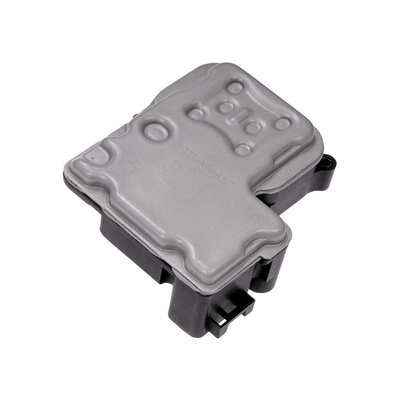
Below are the parts most often responsible for code C2243, ranked by how frequently each one is the actual culprit (per the diagnosis above). Tap any to see what we have for your vehicle.




The information in this article is provided for general reference and educational purposes only. Vehicle specifications, procedures, and part compatibility can vary by production date, trim level, and region. Always consult your vehicle's factory service manual and verify part numbers before purchasing or performing repairs. Safety-critical components such as airbags, seat belts, and braking systems should be installed by a qualified professional.
- 🧭 Diagnostic Flowchart
- 🎬 Helpful Videos
- 🛍️ Shop This Part
- What Does C2243 Mean?
- Can I Drive With C2243?
- Common Causes
- Symptoms
- Common Fixes & Costs
- DIY vs Professional
- Used vs. New Parts: Buying Guide
- What Happens If You Wait — Timeline
- Cost of Not Fixing It
- Diagnosis Steps
- When This Code Triggers (Freeze-Frame Conditions)
- Related Codes
- Climate & Environmental Factors
- How to Talk to a Mechanic About This Code
- Where to Take It: Dealer vs Independent vs Chain
- When to Walk Away From the Repair
- What Scan Tool You Need for This Code
- How to Clear the Code After You Fix It
- Will This Fail Emissions / State Inspection?
- Most Commonly Affected Vehicles
- Manufacturer-Specific Notes
- Real Owner Stories
- 2008 VW Jetta with 115K miles - Classic ATE MK60 Failure
- 2017 Kia Sorento at 75K miles - The TSB Red Herring
- How to Prevent This Code From Triggering
- Frequently Asked Questions
- Can I replace just the brake pressure sensor?
- Is it safe to drive with code C2243?
- What is the ATE MK60 and why does it fail?
- Do I need a scan tool to bleed my brakes?
- What are the most common misdiagnosis mistakes?
- Will clearing the code fix the problem?
- Key Takeaways
- 🎟️ Get 5% Off