

OBD-II Code C2280: Multi-System Fault Guide
The Ultimate Guide to Diagnosing and Fixing C2280: Steering Sensors, 4x4 Systems, and More
- C2280 is manufacturer-specific: it flags a 4x4 Power Transfer Unit (PTU) wiring fault on Jeep/Fiat vehicles, and a Steering Angle Sensor (SAS) failure on most other brands.
- On 2019-2024 Jeeps, moisture in the PTU connector causes over 90% of C2280-92 codes; fix this by splicing a new $50-$150 pigtail harness per TSB 21-057-24.
- Never replace a $300 Steering Angle Sensor without first checking live data; a faulty $50 wheel speed sensor frequently triggers a false C2280 code.
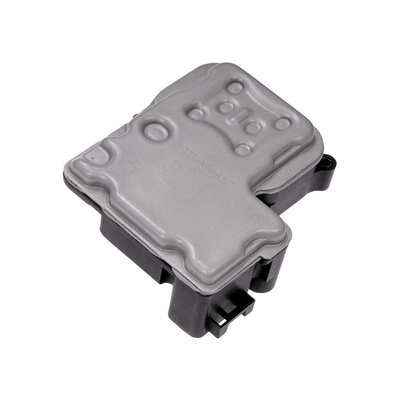
- If your ABS control module fails, sending the original unit to a rebuild service for $200-$400 avoids the $1,500+ cost and dealer programming required for a new module.
What Does C2280 Mean?
C2280 is a manufacturer-specific Chassis code indicating a fault in a critical safety or drivetrain system. On Ford, GM, and Subaru vehicles, it flags a Steering Angle Sensor (SAS) failure. On modern Jeep, Fiat, and Chrysler vehicles, it points to an electrical short in the 4-wheel-drive Power Transfer Unit (PTU). Note: This automotive code is unrelated to the common C++ programming error 'C2280'.
Technical definition: The Society of Automotive Engineers (SAE) leaves C2280 manufacturer-defined. Common definitions include 'Steering Sensor Signal Fault' or 'Eda Current - Performance Or Incorrect Operation' (Jeep/Fiat 4x4). Suffixes like '-92' indicate a 'Performance or Incorrect Operation' failure, pointing to a component operating outside its expected electrical range.
Can I Drive With C2280?
Yes, But With Caution. Yes, but with extreme caution and for short distances. This code disables critical safety systems like Anti-lock Brakes (ABS) and Electronic Stability Control (ESC). Without ABS, your wheels lock during a panic stop, increasing stopping distance by 20% on wet surfaces and causing a complete loss of steering control. An unresolved electrical short can also destroy a $2,000 ABS module if ignored.
Common Causes
- Moisture in Power Transfer Unit (PTU) Wiring (Jeep/Fiat) (Very Common) — On 2019-2024 Jeep Compass, Cherokee, and Renegade models, Technical Service Bulletin (TSB) 21-057-24 identifies moisture intrusion into the PTU wiring harness connector as the primary cause. Corrosion alters current readings from the electronic disconnect actuator, triggering a C2280-92 code.
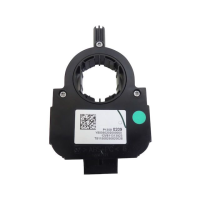
- Faulty Steering Angle Sensor (SAS) (Very Common) — On non-Stellantis vehicles, the sensor measuring the steering wheel's position and rotation speed fails internally. This sends corrupt data to the ABS and stability control modules, disabling them.
- Steering Angle Sensor Requires Calibration (Common) — After a wheel alignment, battery replacement, or steering repair, the sensor loses its zero position. The system sets this code because the sensor's readings conflict with wheel speed data, even though the hardware is perfectly fine.
- Faulty Wheel Speed Sensor or Damaged Tone Ring (Common) — A bad wheel speed sensor or a cracked ABS tone ring provides incorrect speed data for one wheel. The ABS module compares this faulty data to the correct steering angle and wrongly flags the steering sensor, making this a frequent misdiagnosis.
- Failed ABS Control Module (Less Common) — The ABS module fails internally due to cracked solder joints from heat cycles and vibration. It misinterprets good sensor data or loses communication entirely, setting C2280 alongside communication codes like U0121.
- Damaged Clock Spring Assembly (Less Common) — The steering angle sensor is often integrated into the clock spring assembly. Delicate internal ribbon cables fatigue and break from steering wheel rotations, severing the connection to the SAS.
- Water Intrusion into Body Control Module (Ford F-150) (Less Common) — On 2007-2014 Ford F-150s, water from a leaking windshield drips onto the Body Control Module (BCM). This causes widespread electrical chaos. It is often confused with C2280 because a main BCM connector is labeled 'C2280F'.
- Low Battery Voltage or Poor Grounds (Rare) — A weak battery (below 12.2V) or a corroded chassis ground causes unpredictable communication errors between modules, generating spurious fault codes including C2280.
Symptoms
- Traction Control / Stability Control (ESC) Light On — The dashboard light indicating the traction or stability control system is disabled illuminates immediately.
- ABS Light On — The Anti-lock Braking System warning light illuminates alongside the ESC light.
- 'Service 4WD' Message (Jeep/Fiat) — The instrument cluster displays a message to service the 4-wheel-drive system, and 4WD is disabled as a fail-safe.
- Brakes Lock Up During Hard Stops — With ABS disabled, the wheels lock and skid during an emergency stop, significantly increasing stopping distance.
- Steering Feels Heavy or Unstable — A failed SAS causes electric power steering to feel heavy. The car feels 'darty' because the stability system stops making micro-corrections.
- ADAS Features Disabled — Advanced Driver-Assistance Systems like lane-keeping assist and adaptive cruise control rely on steering angle data and disable themselves entirely.
Diagnostic Flowchart
Tap your situation to follow the diagnostic path that matches what you're seeing on this code.
Common Fixes & Costs
- Repair Corroded PTU Wiring Connector (Jeep/Fiat) — Parts: $30 - $150, Labor: $200 - $500, ~1.5 hr book time (Intermediate)
- Replace Steering Angle Sensor and Calibrate — Parts: $100 - $350, Labor: $150 - $500, ~2.5 hr book time (Advanced)
- Replace Wheel Speed Sensor — Parts: $40 - $120, Labor: $100 - $200, ~0.8 hr book time (Beginner)
- Send ABS Control Module for Repair — Parts: $200 - $600, Labor: $150 - $300, ~2.0 hr book time (Intermediate)
- Replace ABS Control Module Assembly — Parts: $800 - $2,200, Labor: $200 - $400, ~2.5 hr book time (Professional)
- Replace Power Transfer Unit (PTU) (Jeep) — Parts: $2,200 - $3,000, Labor: $800 - $1,200, ~6.5 hr book time (Professional)
Used vs. New Parts: Buying Guide
When a used part is worth it: For an ABS Control Module, repairing your original unit is best. If unrepairable, a used part is cost-effective if you can program it. For Steering Angle Sensors, always buy new due to the wear-and-tear nature of the part.
Donor-vehicle mileage cap: roughly under 60000 miles for the part to have meaningful remaining life.
Donor quality checklist:
- Match the part number exactly. Superseded numbers may not be compatible.
- Verify the donor vehicle was not involved in a flood or fire.
- Ensure the seller offers at least a 90-day warranty.
Decision logic:
- If The part is a Steering Angle Sensor or integrated clock spring → Buy new. The labor to replace it is too high to risk using a part with unknown remaining life.
- If The part is an ABS Control Module and your original is repairable → Send your original module for repair to avoid the cost of VIN programming.
- If The part is an ABS Control Module and your original is not repairable → Buy a used module from a low-mileage donor, but budget for professional programming.
Warranty tradeoff: Used parts typically come with a 30-90 day warranty. Aftermarket new parts offer 1 year to lifetime warranties. OEM new parts carry a 12-month/12,000-mile warranty.
Worst-case if a used part fails: $500-1000 if a used part fails after installation, accounting for repeat labor.
What Happens If You Wait — Timeline
- 0-1 month: Warning lights illuminate and critical safety systems disable. For Jeeps, high resistance from initial corrosion in the PTU connector stores the C2280-92 code. (MPG impact: 0%% · Added cost: $0)
- 1-6 months: On Jeeps, moisture wicks past connector seals and corrodes the copper wiring inside the harness. On other vehicles, intermittent false activations of traction control cause unexpected braking. (MPG impact: 0-2%% · Added cost: $50-$300)
- 6-12 months: The Jeep PTU wiring harness degrades significantly, risking a short that damages the PTU's internal electric motor. Persistent electrical faults stress the ABS control module's internal electronics. (MPG impact: 1-4%% · Added cost: $400 - $1,500)
- 12+ months: Catastrophic failure. The internal motor of the Jeep PTU burns out, or the ABS control module fails entirely. The repair becomes a multi-thousand dollar job. (MPG impact: 2-5%% · Added cost: $3,000 - $4,500+)
Cost of Not Fixing It
- Immediate: Critical safety systems (ABS, ESC, 4WD) are disabled. Increased risk of skidding and loss of control in emergency maneuvers. (Added cost: 0)
- 1-6 months: For Jeep/Fiat, moisture migrates from the connector into the PTU wiring harness. For other vehicles, intermittent electrical faults stress the ABS control module. (Added cost: $300 - $800)
- 6+ months: On Jeeps, a simple wiring issue cascades into a complete failure of the Power Transfer Unit (PTU), requiring full replacement. (Added cost: $3000 - $4500)
Diagnosis Steps
- Perform a Full Vehicle Code Scan
Use a professional-grade OBD-II scanner to read Chassis (C) and Network (U) codes from all modules. Note the C2280 suffix (e.g., -92) and any communication codes like U0121. Diagnose communication codes first.
Tools: Advanced Bi-Directional Scanner (Beginner) - Analyze Live Sensor Data (SAS and Wheel Speed)
Watch the Steering Angle Sensor PID. It must read 0° (+/- 5°) when straight and change smoothly as you turn. If it sticks or jumps, the sensor is faulty. Next, drive under 10 mph and watch all four wheel speed sensors. If one reads 0 or is erratic, you have found a misdiagnosed root cause.
Tools: Advanced Bi-Directional Scanner (Intermediate) - Inspect Wiring and Connectors (Jeep/Ford Specific)
For Jeep/Fiat with C2280-92, unplug the Power Transfer Unit (PTU) main electrical connector and inspect for green/white corrosion. For Ford F-150s, remove the passenger kick panel and inspect the Body Control Module (BCM) for moisture or rust stains.
Tools: Flashlight, Pick Tool, Trim Removal Tools (Intermediate) - Attempt Steering Angle Sensor Calibration
On level ground with the engine running, turn the steering wheel all the way to the left lock, then the right lock, then return to center. Use a scan tool to finalize calibration and clear codes. If C2280 returns immediately, a hardware fault exists.
Tools: Advanced Bi-Directional Scanner (Intermediate) - Check Battery Voltage and System Fuses
Ensure battery voltage is above 12.4 volts with the engine off. Locate and visually inspect all fuses related to the ABS, Stability Control (ESC), and 4WD systems in both the engine bay and interior fuse panels.
Tools: Multimeter, Fuse Puller (Beginner) - [PRO TIP] Test SAS Power, Ground, and Signal Circuits
Unplug the SAS connector. Apply 12V to the SAS power supply pin at the ABS module, and connect a headlamp bulb between the power and ground pins at the sensor connector. If the bulb is dim, high resistance exists. For analog sensors, back-probe the signal wires; voltage must change smoothly as the wheel turns.
Tools: Multimeter, Back-probe Pins, Headlamp Bulb, Wiring Diagram (Advanced) - [PRO TIP] Analyze ABS Sensor Waveform with an Oscilloscope
Connect an oscilloscope to the wheel speed sensor's signal wire. Spin the wheel to verify a clean, consistent square or sine wave. Erratic waveforms or dropouts definitively prove a failing sensor or damaged tone ring, ruling out the SAS or ABS module.
Tools: Oscilloscope, Back-probe Pins (Professional)
When This Code Triggers (Freeze-Frame Conditions)
- Vehicle Speed: 25-55 mph (The fault registers during steady-state driving when the system performs routine self-checks and compares sensor inputs.)
- Steering Angle: > 5 degrees (The code triggers during or immediately after a turn, when the ABS module compares the steering angle to differential wheel speeds and finds a mismatch.)
- System Voltage: 13.2-14.5 V (The code reliably sets when the charging system functions normally. Low voltage (<12.2V) causes spurious codes, but C2280 typically sets under normal voltage.)
Related Codes
- U0121 — Means 'Lost Communication With ABS Module.' If present with C2280, the ABS module is offline. You MUST diagnose the module's power and ground first.
- C0051 — Means 'Steering Wheel Position Sensor.' If you have both, it strongly points to the SAS or its wiring. C2280 is often a secondary code triggered by C0051.
- C0710 — Means 'Steering Wheel Position Signal.' On GM vehicles, this is a dead giveaway for a faulty steering wheel position sensor.
- C121A — Means 'Steering Angle Sensor Not Initialized.' This is a direct command to perform a calibration before replacing any parts.
- C2270-77 — Jeep/Fiat specific code for 'PTU Electronic Disconnect Actuator Sensor - Commanded Position Not Reachable.' Points directly to the PTU wiring fault.
Climate & Environmental Factors
- High Humidity and Moisture: Moisture is the primary driver for C2280 on Jeep/Fiat vehicles, causing the PTU connector to corrode. It also worsens water intrusion issues on Ford F-150s with leaking windshields.
- Cold Weather and Road Salt: Low system voltage (<12.2V) in cold weather triggers spurious codes. Road salt dramatically accelerates the corrosion of underbody wiring, particularly the PTU harness and wheel speed sensors.
How to Talk to a Mechanic About This Code
Say this: "I have a C2280 code. For a Jeep/Fiat: 'Please inspect the PTU wiring connector for corrosion per TSB 21-057-24 before quoting a PTU replacement.' For other makes: 'Please check live data from the steering angle sensor and all four wheel speed sensors before recommending a new steering sensor.'"
This language directs the technician to the most likely, and often cheapest, first diagnostic step, preventing them from immediately quoting an expensive component replacement.
Avoid saying:
- My ABS light is on, can you fix it?
- Just replace the sensor the code is for.
- I think I need a new ABS module.
Questions to ask before authorizing the repair:
- Did you find corrosion on the Jeep's PTU connector, or was the wiring harness damaged?
- Can you show me the live data from the steering angle sensor and wheel speed sensors?
- If the steering angle sensor needs replacement, does the quote include the cost of calibration?
- If you are recommending an ABS module, have you confirmed it has power and ground?
Where to Take It: Dealer vs Independent vs Chain
- Dealer:
Recommended for Jeep/Fiat TSB work and new module programming. For other causes, an independent shop is more cost-effective.
Best for: Vehicles under warranty., Diagnosing the Jeep/Fiat PTU wiring issue., Replacing and programming a new ABS control module.
Downsides: Highest labor rates and part costs., Quick to recommend full component replacement instead of a wiring repair. (Typical cost: +50% vs. baseline) - Independent Shop:
Best overall fit for most C2280 scenarios. Vet the shop to ensure they have advanced diagnostic tools.
Best for: Out-of-warranty vehicles where cost is a factor., Diagnosing and replacing a steering angle sensor or wheel speed sensor., Performing the Jeep PTU wiring pigtail repair.
Downsides: May not have the specific bi-directional scanner needed for SAS calibration on all models. (Typical cost: +0% vs. baseline) - Chain Shop:
AVOID for initial diagnosis. The complexity of C2280 is beyond the scope of most chain shops.
Best for: Simple wheel speed sensor replacement if you have already diagnosed the issue yourself.
Downsides: Lack the advanced diagnostic tools for complex electrical issues like C2280., High pressure to upsell leads to misdiagnosis. (Typical cost: -10% vs. baseline)
When to Walk Away From the Repair
If the estimated repair cost exceeds 40-50% of the car's private-party value, seriously consider selling or trading in the vehicle.
- Car worth $15000, fix is $750: Fix it. This is a standard repair cost for a vehicle of this value.
- Car worth $8000, fix is $4200: Walk away. The repair cost is over 50% of the vehicle's value.
- Car worth $4000, fix is $1800: Borderline. At 45% of the car's value, get a second opinion before proceeding.
What Scan Tool You Need for This Code
Minimum: A scanner that reads Chassis (C) codes and views live data for the Steering Angle Sensor and all four wheel speed sensors.
A basic $20 engine code reader cannot access the ABS module. It will not see the C2280 code or live sensor data.
Budget: BlueDriver Pro (~$90) — Reads and clears ABS codes and displays live data for steering angle and wheel speed sensors. It does NOT perform SAS calibration.
Mid-range: Foxwell NT630 Plus (~$150) — Reads codes, views live data, and performs Steering Angle Sensor (SAS) calibration. This is highly recommended for DIYers tackling this code.
Professional: Autel MaxiCOM MK808 (~$500-1200) — Provides full bi-directional control to calibrate the SAS and activate the ABS pump for advanced testing and bleeding procedures.
Rent vs buy: Buying a mid-range tool like the Foxwell is a smart investment, as the SAS calibration function is essential after repairs.
How to Clear the Code After You Fix It
- Use an OBD-II scan tool capable of reading Chassis codes to clear the fault.
- Perform the Steering Angle Sensor calibration procedure if applicable.
- Perform the ABS system initialization drive cycle.
Drive cycle (~20 minutes): After clearing the code, idle for 2 minutes. Drive forward, making left and right turns. Accelerate to over 15 mph in a safe area, then apply the brakes firmly to activate the ABS pump. Repeat 3 times. Drive for 10 minutes above 40 mph.
Readiness monitors affected: This is a Chassis (C) code, which does not directly affect emissions readiness monitors., An illuminated warning light (ABS, ESC) causes an automatic failure of most state safety inspections.
Before emissions retest: drive at least 50 miles to fully set monitors.
Watch out for:
- Using a basic engine code reader that cannot access or clear Chassis (C) codes.
- Forgetting to perform the SAS calibration after replacing a sensor, causing the code to return immediately.
Will This Fail Emissions / State Inspection?
Yes — this code typically fails an OBD-II emissions inspection.
- California: An illuminated ABS/ESC warning light constitutes a safety inspection failure. The vehicle will not pass the overall inspection.
- New York: An illuminated ABS warning light is grounds for an automatic failure of the state's safety inspection.
- Texas: Any illuminated warning light related to the OBD system is a red flag for inspectors and can be grounds for failure.
Most Commonly Affected Vehicles
- Jeep Compass, Cherokee, Renegade (2019-2024) — Highly susceptible to C2280-92 due to moisture in the PTU wiring harness, detailed in TSB 21-057-24.
- Ford F-150 (2007-2014) — Prone to ABS module failure and water intrusion into the Body Control Module (BCM). The BCM issue is often misidentified because a key connector is named 'C2280F'.
- Fiat Toro, 500X (2018-2022) — Shares the same 4x4 powertrain and PTU wiring design as the Jeep Renegade, making it prone to identical moisture damage.
- Chevrolet / GMC Silverado / Sierra 1500 (2007-2013) — The 'Service StabiliTrak' message is frequently caused by a failed steering angle sensor or loss of calibration.
- Subaru Outback, Forester, BRZ (2006-2020) — Frequently logs steering angle sensor faults that disable the Vehicle Dynamics Control (VDC) system. The sensor is often part of the clock spring.
- Kia / Hyundai Sorento, Santa Fe (2011-2015) — Known for internal ABS module (HECU) failures that cause sensor input faults. Check for open recalls related to HECU fire risks.
Manufacturer-Specific Notes
- Jeep / Fiat / Chrysler (Stellantis): C2280-92 almost always means 'Eda Current - Performance Or Incorrect Operation' and points to the 4x4 PTU. The cause is moisture in the wiring connector per TSB 21-057-24. Do not diagnose the steering system.
- Ford: The term 'C2280' also refers to a specific connector family on the Body Control Module (BCM), such as C2280F. Searches often lead to forum posts about water-damaged BCMs, which is a separate issue from the diagnostic trouble code.
- Kia / Hyundai: Millions of 2011-2019 era vehicles were recalled for faulty ABS/HECU modules that leak brake fluid internally, causing an electrical short and fire risk. Park outside until the recall repair is performed.
- Chevrolet / GMC: The primary symptom is a 'Service StabiliTrak' message. A U-turn often triggers the message if the steering angle sensor is failing.
Real Owner Stories
2021 Jeep Compass with C2280-92
At 40,000 miles, the 'Service 4WD' light illuminated with code C2280-92. The dealer quoted a full PTU replacement for over $4,000.
What they tried:
- The owner referenced TSB 21-057-24 and insisted the technician inspect the PTU wiring harness connector first.
Outcome: The technician found heavy green corrosion in the connector. They replaced and sealed the connector pigtail for under $500, permanently resolving the code.
Lesson: For a C2280-92 on a modern Jeep/Fiat, demand an inspection of the PTU wiring connector for corrosion before authorizing a $4,000 PTU replacement.
2011 Chevy Silverado with 'Service StabiliTrak'
The 'Service StabiliTrak' message appeared intermittently during sharp U-turns, accompanied by the ABS light.
What they tried:
- The owner used a scan tool to watch live data from all four wheel speed sensors, which read perfectly.
- They monitored the Steering Angle Sensor (SAS) live data. While turning the wheel, the angle reading erratically dropped to zero.
Outcome: Live data proved the SAS was failing internally. The owner replaced the SAS and performed a scan tool calibration, fixing the issue.
Lesson: Never guess between a wheel speed sensor and a steering angle sensor. Use a scan tool's live data to watch both; the faulty sensor will clearly drop out or jump.
2014 Ford F-150 with multiple ABS/Traction lights
At 77,000 miles, the ABS, Brake, and Traction Control lights illuminated. The dealer diagnosed a failed ABS module and quoted $1,200.
What they tried:
- The owner removed the electronic portion of the ABS module themselves and mailed it to a specialized rebuild service for $300.
Outcome: The repaired module was reinstalled, clearing all codes. No dealer programming was required.
Lesson: Having your original ABS module repaired is a highly cost-effective, DIY-friendly option that avoids expensive dealer programming.
How to Prevent This Code From Triggering
- Apply Dielectric Grease to Vulnerable Connectors (During any related service or inspection) — Applying dielectric grease to the seals of connectors like the Jeep PTU harness creates a barrier against moisture and road salt, directly preventing corrosion.
- Perform Regular Brake Fluid Flushes (Every 2-3 years or 30,000 miles) — Brake fluid absorbs moisture, causing internal corrosion within the expensive ABS hydraulic control unit. This is critical for Kia/Hyundai models with recall notices for ABS fires.
- Inspect for and Seal Water Leaks (Ford F-150) (Annually or if you notice a damp carpet) — Water dripping from a leaking windshield seal destroys the Body Control Module. Proactively sealing leaks prevents a $2,000 repair bill.
Frequently Asked Questions
Can a bad wheel alignment cause code C2280?
Yes. If the steering wheel is off-center after an alignment, the SAS reports a turn while the car drives straight. This conflict triggers C2280 until recalibrated with a scan tool.
What is the most common misdiagnosis for C2280?
Replacing the expensive Steering Angle Sensor when a cheap wheel speed sensor is the actual culprit. Always check live data from all four wheels before condemning the SAS.
My steering angle sensor was replaced, but the code came back. What now?
Verify a scan tool calibration was performed after installation. If calibrated, check for a broken clock spring ribbon cable or load-test the sensor's power and ground wires.
What is a 'clock spring' and how is it related to C2280?
It is a rotary electrical connector behind the steering wheel that powers the airbag and steering buttons. The SAS is often integrated into it; a broken internal ribbon cuts power and triggers C2280.
What does the '-92' mean after C2280 on my Jeep?
It is a Failure Type Indicator meaning 'Performance or Incorrect Operation.' It confirms the module receives a signal, but the current draw is outside the expected range, pointing directly to wiring corrosion.
Can I just clean the corroded connector on my Jeep PTU?
Cleaning is only a temporary fix because corrosion destroys the pins and internal wire seals. TSB 21-057-24 requires replacing the connector pigtail for a permanent, watertight repair.
Why are my ABS, Traction Control, and 4WD lights all on at the same time?
These systems share data to function. A single fault like a bad SAS or PTU forces the main computer to disable all related safety systems simultaneously to prevent unpredictable handling.
Key Takeaways
- C2280 is manufacturer-specific: it flags a 4x4 Power Transfer Unit (PTU) wiring fault on Jeep/Fiat vehicles, and a Steering Angle Sensor (SAS) failure on most other brands.
- On 2019-2024 Jeeps, moisture in the PTU connector causes over 90% of C2280-92 codes; fix this by splicing a new $50-$150 pigtail harness per TSB 21-057-24.
- Never replace a $300 Steering Angle Sensor without first checking live data; a faulty $50 wheel speed sensor frequently triggers a false C2280 code.
- If your ABS control module fails, sending the original unit to a rebuild service for $200-$400 avoids the $1,500+ cost and dealer programming required for a new module.
Shop the Parts Behind C2280
Below are the parts most often responsible for code C2280, ranked by how frequently each one is the actual culprit (per the diagnosis above). Tap any to see what we have for your vehicle.



The information in this article is provided for general reference and educational purposes only. Vehicle specifications, procedures, and part compatibility can vary by production date, trim level, and region. Always consult your vehicle's factory service manual and verify part numbers before purchasing or performing repairs. Safety-critical components such as airbags, seat belts, and braking systems should be installed by a qualified professional.
- 🧭 Diagnostic Flowchart
- 🛍️ Shop This Part
- What Does C2280 Mean?
- Can I Drive With C2280?
- Common Causes
- Symptoms
- Common Fixes & Costs
- Used vs. New Parts: Buying Guide
- What Happens If You Wait — Timeline
- Cost of Not Fixing It
- Diagnosis Steps
- When This Code Triggers (Freeze-Frame Conditions)
- Related Codes
- Climate & Environmental Factors
- How to Talk to a Mechanic About This Code
- Where to Take It: Dealer vs Independent vs Chain
- When to Walk Away From the Repair
- What Scan Tool You Need for This Code
- How to Clear the Code After You Fix It
- Will This Fail Emissions / State Inspection?
- Most Commonly Affected Vehicles
- Manufacturer-Specific Notes
- Real Owner Stories
- 2021 Jeep Compass with C2280-92
- 2011 Chevy Silverado with 'Service StabiliTrak'
- 2014 Ford F-150 with multiple ABS/Traction lights
- How to Prevent This Code From Triggering
- Frequently Asked Questions
- Can a bad wheel alignment cause code C2280?
- What is the most common misdiagnosis for C2280?
- My steering angle sensor was replaced, but the code came back. What now?
- What is a 'clock spring' and how is it related to C2280?
- What does the '-92' mean after C2280 on my Jeep?
- Can I just clean the corroded connector on my Jeep PTU?
- Why are my ABS, Traction Control, and 4WD lights all on at the same time?
- Key Takeaways
- 🎟️ Get 5% Off