

OBD-II Code C2327: Front Left Wheel Speed Sensor Signal Erratic
An Expert's Guide to Diagnosing and Fixing C2327
- Code C2327 indicates an erratic signal from the front left wheel speed sensor, immediately disabling your ABS and traction control systems.
- Before buying parts, remove the sensor and wire-brush the hub's mounting surface; rust buildup here alters the sensor's air gap and causes a large percentage of these faults.
- Use a scan tool to graph live data under 10 mph; a healthy sensor reads within 0.5 mph of the other three wheels, while a faulty circuit shows erratic jumps or dropouts.
- Expect to pay between $140 and $350 for a shop to replace the sensor, but costs exceed $600 if the tone ring is damaged and requires a full wheel hub replacement.
What Does C2327 Mean?
Code C2327 means the ABS module is receiving an unstable or jumping signal from the front left wheel speed sensor. The computer detects this erratic data and disables the ABS system because it cannot trust the sensor's input. Unlike a 'missing signal' code, C2327 indicates a signal is present but noisy, inconsistent, or illogical compared to the other wheels.
Technical definition: C2327 is a manufacturer-specific code (predominantly Ford) translating to 'Front Left Wheel Speed Sensor Signal Erratic'. The Anti-lock Brake System (ABS) control module flags this when the front left sensor's signal fluctuates illogically (e.g., jumping from 10 mph to 40 mph and back) while the other three wheels show a steady speed.
Can I Drive With C2327?
Yes, But With Caution. Yes, but drive with extreme caution. Your Anti-lock Braking (ABS) and Traction/Stability Control systems are disabled. During a hard stop, your wheels will lock up, significantly increasing stopping distances and causing a loss of steering control. The risk is highest on wet, icy, or loose surfaces. Diagnose and repair the issue immediately to restore your vehicle's safety systems.
Common Causes
- Damaged or Corroded Wiring/Connector (Very Common) — The wire leading from the sensor to the ABS module frequently gets stretched, rubbed through by suspension components, or broken. Connectors also fill with moisture and corrode, leading to an intermittent signal. This is a highly documented issue on Ford trucks and SUVs.
- Faulty Front Left Wheel Speed Sensor (Very Common) — The sensor itself fails internally over time. Due to its location near the wheel, it endures constant exposure to water, dirt, road salt, and extreme temperature fluctuations.
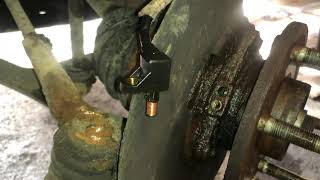
- Rust Buildup Causing Incorrect Air Gap (Common) — Heavy rust and corrosion build up on the hub's mounting surface underneath the sensor. This physically pushes the sensor further away from the tone ring, increasing the air gap and causing a weak or erratic signal at low speeds.
- Damaged, Dirty, or Rusted Tone Ring (Common) — The sensor reads a toothed ring (tone ring) that spins with the wheel. If this ring cracks, loses teeth, or accumulates heavy rust and metallic brake dust, the sensor cannot generate a clean, consistent reading.
- Failing Wheel Hub Bearing Assembly (Less Common) — Many modern vehicles integrate the tone ring into the wheel hub bearing. If the bearing fails and develops excessive play (wobble), it constantly alters the gap between the sensor and the ring, creating an erratic signal.
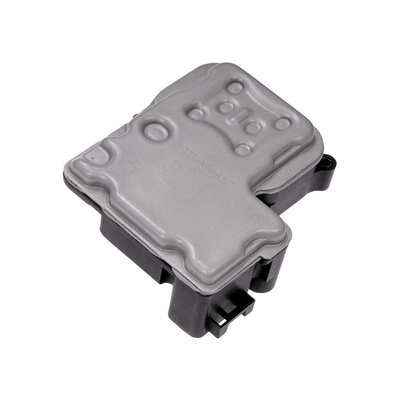
- Faulty ABS Control Module (Rare) — The ABS computer itself occasionally fails and misinterprets good sensor data. This is a diagnosis of exclusion and is only considered after thoroughly testing the sensor, wiring, and tone ring.
Symptoms
- ABS and Traction/Stability Control Lights Illuminated — The most immediate symptom. Because these safety systems share the same wheel speed sensors, their warning lights illuminate simultaneously on the dashboard.
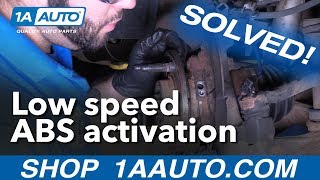
- Unwanted ABS Activation at Low Speeds — The brake pedal pulses or the ABS pump runs at speeds under 10 mph (like pulling into a parking spot). The erratic signal tricks the computer into thinking a wheel is locking up on ice.
- Cruise Control Disabled — Vehicles use wheel speed sensor data to operate cruise control. As a fail-safe, the system disables cruise control when a sensor fault is detected.
- Harder Brake Pedal Feel During Panic Stops — Without ABS intervention, the brake pedal feels harder during emergency braking, and the wheels will lock up and skid.
- Mismatched Wheel Speed on Scan Tool (scan-tool only — no driver-felt sign) — When viewing live data, the front left wheel speed drops out or jumps around erratically while the vehicle moves at a steady speed.
Diagnostic Flowchart
Tap your situation to follow the diagnostic path that matches what you're seeing on this code.
Common Fixes & Costs
- Clean Sensor Mounting Surface and Tone Ring — Parts: $0-$10, Labor: $75-$150, ~0.8 hr book time (DIY)
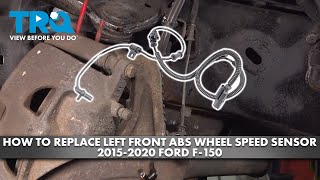
- Replace Front Left Wheel Speed Sensor — Parts: $40-$150, Labor: $100-$200, ~1.0 hr book time (DIY)
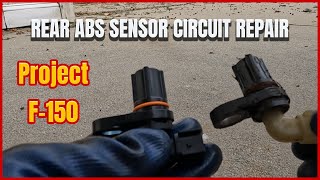
- Repair Damaged Wiring or Connector — Parts: $10-$50, Labor: $125-$250, ~1.5 hr book time (Intermediate)
- Replace Wheel Hub Bearing Assembly — Parts: $150-$400, Labor: $200-$400, ~2.0 hr book time (Intermediate)
- Replace ABS Control Module — Parts: $500-$1500, Labor: $150-$300, ~2.0 hr book time (Professional)
DIY vs Professional
- Clean Tone Ring and Sensor Mounting Surface 🟢 Beginner
Tools: Jack, jack stands, lug wrench, socket set, wire brush, file, brake cleaner. - Replace Front Left Wheel Speed Sensor 🟢 Beginner
Tools: Jack, jack stands, lug wrench, socket set (typically 8mm or 10mm), penetrating oil, torque wrench. - Repair Damaged Wiring or Connector 🟢 Beginner
Tools: Soldering iron, heat shrink tubing, wire strippers, multimeter, vehicle-specific wiring diagram. - Replace Wheel Hub Bearing Assembly 🟢 Beginner
Tools: Large socket for axle nut (e.g., 36mm), breaker bar, torque wrench capable of high torque (150+ ft-lbs), hub puller, basic hand tools.
Used vs. New Parts: Buying Guide
When a used part is worth it: For a wheel speed sensor, a used OEM part from a low-mileage vehicle is a budget-friendly option for an older car. For a wheel hub bearing assembly, buying used is never recommended as it is a critical wear item and labor costs are too high to risk an early failure.
Donor-vehicle mileage cap: roughly under 60000 miles for the part to have meaningful remaining life.
Donor quality checklist:
- Verify the part number matches exactly.
- Inspect the sensor wiring and connector for any signs of damage or corrosion.
- Avoid parts from vehicles in the Rust Belt, as corrosion is a primary cause of failure.
Decision logic:
- If The required part is a wheel hub bearing assembly → Always buy new from a reputable brand (e.g., Timken, SKF, MOOG). The risk and cost of repeat labor with a used part is too high.
- If The required part is a wheel speed sensor and the vehicle is newer or under 100K miles → Buy a new OEM or high-quality aftermarket sensor (e.g., Bosch, NTK) to ensure reliability and avoid repeat repairs.
- If The vehicle is old (>150K miles), budget is the top priority, and you are doing the labor yourself → A used OEM sensor is a viable risk; be prepared for the possibility that it may fail prematurely.
Warranty tradeoff: Used parts from a salvage yard typically have a 30-90 day warranty. Aftermarket new parts often come with a 1-year to limited lifetime warranty. New OEM parts carry a manufacturer's warranty, typically 12 months.
Worst-case if a used part fails: $200-$500 if a used hub or sensor fails shortly after installation, primarily due to the cost of repeating the labor.
What Happens If You Wait — Timeline
- Immediate: ABS, Traction Control, and Stability Control lights illuminate. The safety systems are disabled. The vehicle's base braking system remains functional. (MPG impact: 0%% · Added cost: $0. The primary cost is the immediate and significant reduction in vehicle safety.)
- Weeks to Months: Continued operation without safety systems. Other features like Cruise Control or AWD remain disabled. If the cause is a bad bearing, symptoms like humming or grinding begin or worsen. (MPG impact: 0-1%% · Added cost: $0 if the cause is electronic. If it's a bad bearing, the cost is the price of a hub replacement ($400-$800) before it causes more damage.)
- 2-6+ months (if caused by bad wheel bearing): If the root cause is a failing wheel bearing, ignoring it allows for excessive play. This causes the brake rotor to wobble, leading to uneven brake pad wear and potential damage to the brake caliper. The grinding noise becomes severe. (MPG impact: 1-3%% · Added cost: $1000-$2000. The cost escalates as a completely failed bearing damages the hub, knuckle/spindle, and surrounding brake components.)
- Variable (catastrophic failure): Worst-case scenario from an ignored wheel bearing: the bearing seizes completely. This causes the wheel to lock up while driving or separate from the vehicle, leading to a total loss of control. (MPG impact: N/A% · Added cost: $5000-$20000+. This represents the cost of collision repair, extensive suspension damage, or a total loss of the vehicle.)
Cost of Not Fixing It
- Immediate: ABS and Traction Control systems are disabled. You face an increased risk of skidding and longer stopping distances in emergency situations, especially on wet or icy roads. (Added cost: $0)
- 1-6 months: Other systems relying on wheel speed data, such as cruise control or All-Wheel Drive (AWD), remain disabled. No direct mechanical damage occurs to other components because the systems fail-safe to off. (Added cost: $0)
- 6+ months: The primary cost remains the significantly elevated risk of a collision due to the lack of driver safety aids. The financial consequence of an at-fault accident easily exceeds $10,000. (Added cost: $10000+)
Diagnosis Steps
- Read Live Data with a Scan Tool
Connect an ABS-capable OBD-II scanner and graph the signals from all four wheel speed sensors. Drive slowly (under 10 mph) in a straight line. A healthy sensor reads within 0.5 mph of the others. If the front left sensor's speed jumps erratically or drops to zero, you have confirmed the fault is in that specific circuit.
Tools: ABS-capable OBD-II Scanner (Beginner) - Visual Inspection & Wiggle Test
Raise and secure the front left of the vehicle. Inspect the sensor and wiring harness for chafed wires, loose connectors, or debris. While a helper watches the live data graph on the scanner, physically wiggle the sensor's wiring harness from the wheel back to the frame. If the signal cuts out when you move a specific section, you have located an intermittent wire break.
Tools: Jack, Jack Stands, Flashlight, ABS-capable OBD-II Scanner (Intermediate) - Inspect Tone Ring and Sensor Mounting Surface
Remove the wheel and the wheel speed sensor (usually an 8mm or 10mm bolt). Look inside the mounting hole at the tone ring for cracks, missing teeth, or heavy rust. Crucially, use a wire brush to clean the sensor's mounting surface on the hub down to bare metal. Rust here increases the sensor's air gap and is a primary cause of C2327.
Tools: Jack, Jack Stands, Lug Wrench, Socket Set, Wire Brush, Flashlight (Intermediate) - Check Wiring for Continuity and Shorts
Disconnect the wiring harness from both the sensor and the ABS module. Use a multimeter set to continuity (beep mode) to verify a complete circuit on each wire. Test for a short by checking for continuity between the two wires, and between each wire and the vehicle's frame (ground). Any unintended continuity indicates a wiring fault requiring repair.
Tools: Multimeter, Vehicle-specific Wiring Diagram (Advanced) - Multimeter Sensor Testing
For older passive (2-wire) sensors, measure resistance; it should be 800-2,500 ohms. Set the multimeter to AC Volts, spin the wheel by hand, and look for at least 50-700 mV. For modern active (2 or 3-wire) sensors, back-probe the connector with the ignition on to verify 5V or 12V supply voltage. Set the meter to DC Volts, slowly turn the wheel, and watch the voltage toggle between a low state (e.g., 0.7V) and high state (e.g., 1.4V).
Tools: Multimeter, Back-probe Kit, Jack, Jack Stands (Advanced) - Advanced: Oscilloscope Waveform Analysis
If multimeter tests are inconclusive, use an oscilloscope to view the sensor's output waveform. A healthy active sensor produces a clean square wave; a passive sensor produces a sine wave. An erratic signal shows up as missing waves, electrical noise, or inconsistent voltage peaks. A damaged tone ring tooth appears as a repeating dropout in the pattern.
Tools: Oscilloscope, Back-probe Kit (Professional)
When This Code Triggers (Freeze-Frame Conditions)
- Vehicle Speed: 5-45 mph (The code typically sets during low-speed maneuvers or steady-state driving when one sensor's reading illogically deviates from the others.)
- System Voltage: 12.0-14.8V (Normal operating voltage; the fault is rarely triggered by a voltage issue unless the alternator is actively failing.)
- ABS/Traction Control Status: Active/Enabled (The system must be enabled for the module to monitor sensors and detect a fault.)
Related Codes
- C0031 — The generic SAE code for 'Front Left Wheel Speed Sensor Circuit'. C2327 is a more specific manufacturer version. C0031 is a general electrical fault, while C2327 specifically indicates the signal is present but erratic, pointing toward mechanical issues like a damaged tone ring.
- C1233 — A Ford-specific code for 'Front Wheel Speed Sensor Input Signal Missing'. C1233 points to a complete loss of signal (broken wire, dead sensor), while C2327 means a bad signal is still being received.
- C1155 — A Ford code for 'Front Wheel Speed Sensor Input Circuit Failure'. Often appears with C2327. If paired with C2327, the cause is likely a physical issue (tone ring, bearing) creating both a circuit fault and an erratic signal.
- C1145 — The Ford code for the 'Front RIGHT Wheel Speed Sensor Input Circuit Failure'. It is the direct equivalent to C1155 but for the opposite side of the vehicle.
- U0121 — Means 'Lost Communication With ABS Control Module'. If present with C2327, it points to a larger problem than the sensor circuit, such as a failing ABS module, bad ground, or CAN bus network issue.
Climate & Environmental Factors
- Rust Belt / Winter Climates: Road salt and moisture dramatically accelerate corrosion. This causes rust buildup on the hub's mounting pad (increasing the sensor air gap), swells or cracks the tone ring, and penetrates wiring connectors to cause intermittent signals.
- High Humidity / Heavy Rain: Moisture works its way into non-sealed connectors or areas where wiring insulation is compromised. This causes shorts or high resistance in the circuit, leading to an erratic signal without the visible rust seen in colder regions.
How to Talk to a Mechanic About This Code
Say this: "I have an ABS light and a C2327 code, which points to an erratic signal from the front left wheel speed sensor. I'd like to book a diagnostic. Before replacing the sensor, please check the live data from all four wheels, inspect the wiring harness for chafing near the suspension, and check for rust buildup on the sensor's mounting surface on the hub."
This signals to the mechanic that you've done your research and understand the common causes beyond a simple sensor failure. It directs them to perform a thorough diagnosis, preventing them from replacing a good sensor when the real problem is a cheap-to-fix wiring or rust issue.
Avoid saying:
- 'My ABS light is on, can you just fix it?'
- 'I think I need a new wheel speed sensor.'
- 'Just do whatever you think is best.'
Questions to ask before authorizing the repair:
- Did you graph the live data from all four sensors? Can you show me how the front left sensor is behaving differently?
- Did you find any chafing or damage on the wiring harness?
- Did you clean the rust from the hub's sensor mounting surface and did that change the reading?
- If you are recommending a wheel hub replacement, can you show me the play in the bearing or the damage to the tone ring?
- What is the warranty on the parts and labor for this repair?
Where to Take It: Dealer vs Independent vs Chain
- Dealer:
A safe, but most expensive, option. Good for complex cases, but overkill for common wiring or rust issues.
Best for: Vehicles under warranty, Complex electrical issues involving the ABS module or CAN bus communication, When you want a guaranteed OEM part and repair process
Downsides: Highest labor rates and part costs, May be quicker to replace a whole assembly (like a hub) rather than attempting a more nuanced wiring or cleaning repair (Typical cost: +50% vs. baseline) - Independent Shop:
Best fit for this code. A trusted independent mechanic has the experience to diagnose the common failure points (wiring, rust, bearing) without defaulting to the most expensive fix.
Best for: Most out-of-warranty vehicles, Diagnosing common, well-documented issues like this one, Getting cost-effective repairs like wiring splices or hub cleaning
Downsides: Quality and expertise vary greatly. Vet shops by reading reviews and checking for ASE certifications. (Typical cost: +0% vs. baseline) - Chain Shop:
Use with caution. Acceptable if you have already diagnosed the problem yourself and are certain it's just a bad sensor. Avoid for initial diagnosis, as they may miss the true cause and lead to repeat repairs.
Best for: Simple, clear-cut part replacements
Downsides: Technician skill varies widely, High pressure to upsell services, Less likely to perform detailed electrical diagnostics or cleaning; may just replace the sensor and hope it fixes the problem. (Typical cost: -10% vs. baseline)
When to Walk Away From the Repair
If the estimated repair cost for the worst-case scenario (e.g., wheel hub or ABS module replacement) exceeds 40-50% of your car's private-party value, it's time to weigh your options.
- Car worth $4000, fix is $1800: Walk away. The repair cost is approaching half the car's value. This is a significant investment in an older vehicle that may have other pending issues.
- Car worth $12000, fix is $800: Fix it. This repair cost is well below the threshold and restores a critical safety system, preserving the vehicle's value.
- Car worth $2500, fix is $600: Borderline. This is a tough decision. If the rest of the car is in excellent condition, it may be worth it. Get a second opinion before proceeding.
What Scan Tool You Need for This Code
Minimum: An OBD-II scanner that reads Anti-lock Brake System (ABS) codes and displays LIVE DATA for all four wheel speed sensors simultaneously.
A basic $20 engine code reader will NOT see chassis codes like C2327. Without the ability to view live data, you cannot see the erratic signal from the faulty sensor in real-time, making it impossible to diagnose whether the problem is the sensor, wiring, or a mechanical issue like a bad bearing.
Budget: Autel MaxiCheck ML629 / ANCEL BD310 (~$80) — These tools read and clear ABS codes and show live data streams. The ANCEL BD310 uses a smartphone app which is very intuitive for graphing the wheel speeds to spot the erratic one.
Mid-range: Innova 5610 / Launch CRP919E BT (~$350) — Provides much more detailed live data, including graphing capabilities to easily compare all four wheel sensors. These tools often have bidirectional controls, which help test the ABS module and pump.
Professional: Autel MaxiCOM MK808S / Launch X431 Series (~$500-1200) — Offers dealership-level diagnostics. They provide very fast, detailed, and recordable live data graphing. If the ABS module needs replacement, these tools have the programming and coding functions required to complete the job.
Rent vs buy: For a one-time fix, many auto parts stores like AutoZone have a loaner tool program. You must specifically ask for an advanced scanner that reads ABS live data, not the basic code reader they keep at the counter. If the loaner tool can't perform this function, buying a budget pick is a worthwhile investment.
How to Clear the Code After You Fix It
- Use an ABS-capable OBD-II scan tool to erase the C2327 fault code from the ABS module.
- Turn the ignition off, then back on.
- Perform a short test drive, ensuring the vehicle speed exceeds 15 mph to allow the ABS module to verify the repair.
Drive cycle (~10 minutes): After clearing the code, start the vehicle and drive for 5-10 minutes, including gentle turns and stops. The ABS light remains off if the repair is successful. The system performs a self-test upon startup and continuously monitors the sensors while driving.
Readiness monitors affected: None
Watch out for:
- Disconnecting the battery does not reliably clear a C-prefix code from the ABS module and resets all emissions readiness monitors.
- The code returns almost immediately if the underlying mechanical or electrical fault is not properly fixed.
- Basic $20 code readers that only access the powertrain control module (PCM) cannot read or clear ABS codes.
Will This Fail Emissions / State Inspection?
No — by itself this code doesn't fail OBD inspection (but it can keep readiness monitors from setting, which causes a separate fail).
- California: An ABS light will not fail the California Smog Check. The inspection does not check for chassis (C-prefix) codes.
- New York: An illuminated ABS warning light causes an automatic failure of the annual New York State safety inspection.
- Texas: An amber ABS warning light does not cause a failure of the Texas state safety inspection. However, an illuminated red 'BRAKE' warning light results in failure.
Most Commonly Affected Vehicles
- Ford F-150 (2004-2014) — Extremely common. The sensor wiring is routed too tightly and rubs against the upper control arm or suspension components, causing an intermittent short or break in the wire.
- Ford Explorer (2002-2010) — Often caused by failure of the wheel hub bearing, which has an integrated tone ring. Note that 2002-2005 and 2006-2010 models use different hub assembly part numbers.
- Ford Expedition (2003-2014) — Shares a similar front suspension and hub design with the F-150, leading to the exact same common wiring and sensor failures.
- Lincoln Navigator (2003-2014) — Mechanically identical to the Ford Expedition, experiencing the same high rate of wheel speed sensor wiring issues.
- Chevrolet Silverado 1500 (2007-2013) — Will likely show equivalent code C0035. A very common cause is rust building up on the hub underneath the sensor, pushing it out and increasing the air gap (addressed in TSB 08-05-25-001).
- Chrysler/Dodge 300, Charger (2008-2020) — These vehicles suffer from identical symptoms. Failures are common and stem from the sensor, wiring, or a fragile tone ring that is part of the axle or hub assembly.
- Subaru Outback, Forester (2015-2021) — Known for similar symptoms (ABS/EyeSight lights) caused by faulty wiring connectors or, in 2019-2021 models, a failing Thermo Control Valve that disrupts electronics.
- Volkswagen Jetta, Golf (2011-2018) — Frequently suffer from wheel speed sensor failures that produce generic codes and identical symptoms. Issues stem from the sensor, wiring, or fuse box corrosion.
Manufacturer-Specific Notes
- Ford: On F-150 and Expedition models, the sensor wire notoriously rubs against the upper control arm or stretches during tight turns. Always inspect the harness carefully for chafing or stress marks near suspension components.
- General Motors (Chevrolet/GMC): On Silverado and Sierra trucks, the most frequent cause is rust buildup on the hub's sensor mounting pad. This increases the air gap, causing signal loss at low speeds and incorrect ABS activation. TSB 08-05-25-001 addresses this exact issue.
- Chrysler/Dodge/Jeep: On RWD models like the Chrysler 300 and Dodge Charger, the tone rings are a common failure point. They become brittle, crack, or swell with rust, causing an erratic signal.
Real Owner Stories
2011 Chevy Silverado with C0035 (equivalent to C2327)
ABS and Stabilitrak lights came on. At low speeds (<10 mph) when braking, the ABS pump activated and the pedal pulsed. No issues at highway speed.
What they tried:
- Initially replaced the front left wheel speed sensor, but the problem persisted.
Outcome: Removed the sensor again and thoroughly cleaned the hub's mounting surface, which had a significant layer of rust. After cleaning the rust off to bare metal and reinstalling the same sensor, the code cleared and did not return. The low-speed ABS activation stopped.
Lesson: Don't just replace the sensor. The most common issue on GM trucks is rust buildup increasing the air gap. Cleaning the hub surface is a critical and often successful first step before spending money on parts.
2008 Ford F-150 with C2327
ABS light was on intermittently for weeks, then stayed on permanently. No other symptoms were noticed during normal driving.
What they tried:
- A mechanic scanned the code and recommended replacing the front left wheel speed sensor.
- After replacing the sensor, the code immediately returned.
Outcome: A different mechanic performed a 'wiggle test' on the wiring harness while watching live data. They found the signal dropped out when the wire near the upper control arm was moved. The wiring had rubbed through its insulation. A new pigtail connector was spliced in for about $150 in labor, solving the problem.
Lesson: On Ford trucks, the wiring harness is a very common failure point. Always perform a thorough visual inspection and a wiggle test before condemning the sensor or hub. A new sensor won't fix a broken wire.
2007 Dodge Charger with ABS/ESP lights
ABS and ESP lights appeared after backing into a concrete pillar at low speed. The car drove fine, but the lights remained on.
What they tried:
- The body shop fixed the cosmetic damage but couldn't clear the ABS light.
- A dealer diagnosed a bad wheel bearing.
Outcome: The minor impact was enough to damage the wheel bearing, which on this car integrates the tone ring. Replacing the front wheel hub assembly ($400+ part and labor) cleared the lights and resolved the issue.
Lesson: Even a minor impact or hitting a significant pothole damages a wheel bearing or its integrated sensor/tone ring. If the code appears immediately after such an event, suspect physical damage to the hub assembly.
How to Prevent This Code From Triggering
- Clean hub mounting surfaces during brake service. (Every time brakes are replaced.) — Brake dust and rust accumulate on the hub. Cleaning the sensor mounting pad during a brake job removes rust that increases the sensor air gap, a primary cause of this code in the Rust Belt.
- Apply dielectric grease to the sensor connector. (When replacing a sensor or if the connector is inspected.) — Dielectric grease seals the connector from moisture, preventing the corrosion of pins and wires that leads to intermittent and erratic signals.
- Inspect and secure wiring harnesses. (During every oil change or tire rotation.) — Vibration and suspension movement cause wiring to rub against sharp edges of the frame or suspension components. A quick visual check for chafe marks and ensuring harnesses are secured with zip ties prevents future wire breaks.
- Perform regular undercarriage washes in winter climates. (Monthly during winter/road salt season.) — Road salt is highly corrosive and accelerates the rusting of hubs, tone rings, and connector pins. Regularly washing the undercarriage removes salt and slows this degradation.
Frequently Asked Questions
Can I just clear the C2327 code and keep driving?
You can clear the code, but it returns as soon as the ABS module detects the erratic signal again (usually within a few wheel rotations). Clearing the code does not fix the underlying mechanical or electrical problem. Your ABS remains inactive until repaired.
What's the difference between C2327 and C0035?
C0035 is the generic OBD-II code for a 'Front Left Wheel Speed Sensor Circuit' fault. C2327 is a manufacturer-specific code (primarily Ford) specifying that the signal is 'Erratic' rather than just a general circuit failure. An erratic signal often points to mechanical issues like a bad tone ring, rust buildup, or bearing play.
Why does my ABS activate when I'm braking gently at low speeds?
At low speeds, a faulty sensor might momentarily report 0 mph while the other wheels report 5 mph. The ABS computer interprets this difference as the front left wheel locking up on ice. It activates the ABS pump to 'release' the brake, causing the pedal to pulse under your foot.
Can a bad wheel bearing cause the C2327 code?
Yes. On many modern vehicles, the tone ring is built directly into the wheel bearing assembly. If the bearing develops excessive play or wobble, it constantly changes the distance between the sensor and the tone ring, creating an unstable signal that triggers the code.
The shop wants to replace the whole wheel hub. Is that necessary?
It is often necessary. Many vehicles integrate the tone ring into the sealed wheel hub and bearing assembly. If the tone ring is cracked, heavily rusted, or if the bearing itself has failed, you must replace the entire $150-$400 hub assembly to fix the issue.
What are common misdiagnosis mistakes for C2327?
The most common mistake is replacing the wheel speed sensor without testing the wiring harness for chafing. Another major pitfall is failing to clean the sensor's mounting surface on the hub, as a thin layer of rust alters the air gap and causes the code. Always test the circuit and clean the mount before buying parts.
Key Takeaways
- Code C2327 indicates an erratic signal from the front left wheel speed sensor, immediately disabling your ABS and traction control systems.
- Before buying parts, remove the sensor and wire-brush the hub's mounting surface; rust buildup here alters the sensor's air gap and causes a large percentage of these faults.
- Use a scan tool to graph live data under 10 mph; a healthy sensor reads within 0.5 mph of the other three wheels, while a faulty circuit shows erratic jumps or dropouts.
- Expect to pay between $140 and $350 for a shop to replace the sensor, but costs exceed $600 if the tone ring is damaged and requires a full wheel hub replacement.
Helpful Videos
Shop the Parts Behind C2327
Below are the parts most often responsible for code C2327, ranked by how frequently each one is the actual culprit (per the diagnosis above). Tap any to see what we have for your vehicle.



The information in this article is provided for general reference and educational purposes only. Vehicle specifications, procedures, and part compatibility can vary by production date, trim level, and region. Always consult your vehicle's factory service manual and verify part numbers before purchasing or performing repairs. Safety-critical components such as airbags, seat belts, and braking systems should be installed by a qualified professional.
- 🧭 Diagnostic Flowchart
- 🎬 Helpful Videos
- 🛍️ Shop This Part
- What Does C2327 Mean?
- Can I Drive With C2327?
- Common Causes
- Symptoms
- Common Fixes & Costs
- DIY vs Professional
- Used vs. New Parts: Buying Guide
- What Happens If You Wait — Timeline
- Cost of Not Fixing It
- Diagnosis Steps
- When This Code Triggers (Freeze-Frame Conditions)
- Related Codes
- Climate & Environmental Factors
- How to Talk to a Mechanic About This Code
- Where to Take It: Dealer vs Independent vs Chain
- When to Walk Away From the Repair
- What Scan Tool You Need for This Code
- How to Clear the Code After You Fix It
- Will This Fail Emissions / State Inspection?
- Most Commonly Affected Vehicles
- Manufacturer-Specific Notes
- Real Owner Stories
- 2011 Chevy Silverado with C0035 (equivalent to C2327)
- 2008 Ford F-150 with C2327
- 2007 Dodge Charger with ABS/ESP lights
- How to Prevent This Code From Triggering
- Frequently Asked Questions
- Can I just clear the C2327 code and keep driving?
- What's the difference between C2327 and C0035?
- Why does my ABS activate when I'm braking gently at low speeds?
- Can a bad wheel bearing cause the C2327 code?
- The shop wants to replace the whole wheel hub. Is that necessary?
- What are common misdiagnosis mistakes for C2327?
- Key Takeaways
- 🎟️ Get 5% Off