

OBD-II Code C2402: Motor Electrical Circuit Failure
What C2402 means, why it triggers, and how to fix it
- C2402 indicates a motor circuit fault, most commonly pointing to a defective ABS/HECU module in Hyundai/Kia vehicles or a failed 4WD transfer case motor in Ford/GM trucks.
- For Hyundai and Kia owners, immediately check your VIN for open safety recalls, as this code is linked to a severe engine compartment fire risk requiring you to park outside.
- Never replace an expensive control module without first performing a voltage drop test; a drop exceeding 0.2V on the power wire confirms a cheaper wiring harness failure.
- Choosing a mail-in remanufacturing service for a faulty ABS module costs between $240 and $450, saving over $1,000 compared to a new dealer replacement and avoiding VIN reprogramming fees.
What Does C2402 Mean?
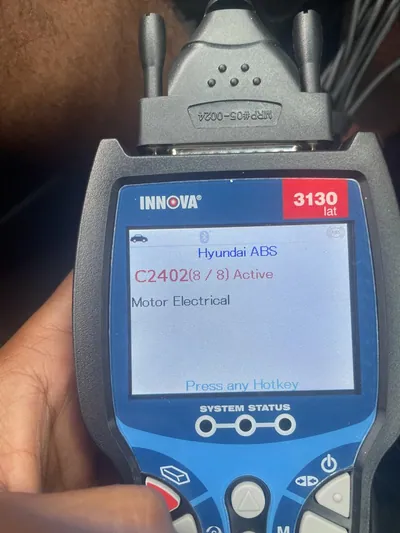
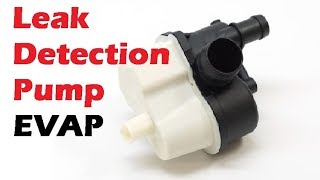
C2402 signifies a control module detected an electrical fault within a specific motor's circuit. The exact component depends entirely on the manufacturer. In Hyundai and Kia vehicles, it indicates a fault in the ABS pump motor circuit. In Ford or GM vehicles, it points to the transfer case shift motor for the four-wheel-drive system. On certain BMW and Toyota models, the equivalent P2402 code indicates a fault with the EVAP system's leak detection pump.
Technical definition: The SAE/ISO definition for C2402 varies by manufacturer, typically reading 'Pump Motor Electric Circuit Faulty' (Hyundai/Kia) or 'Transfer Case Contact Plate Circuit Short' (Ford/GM). The relevant control module monitors the voltage, current, and integrity of the motor's electrical circuit. It triggers this code when it detects an open circuit, a short to ground or power, a locked motor drawing excessive amperage, or an out-of-range voltage reading during startup self-tests.
Can I Drive With C2402?
Yes, But With Caution. You can drive, but your Anti-lock Braking System (ABS) and Electronic Stability Control (ESC) are disabled. Your regular hydraulic brakes function, but stopping distances increase and the risk of skidding during hard braking is high. For affected Hyundai and Kia models, a documented fire risk exists even with the vehicle off; park outside and away from structures until repaired.
Common Causes

- Internal failure of the ABS/HECU module (Very Common) — On millions of Hyundai and Kia vehicles, the Hydraulic Electronic Control Unit (HECU) has a structural defect allowing moisture intrusion. This creates an internal electrical short on the circuit board, triggering the code and causing major safety recalls.
- Failed transfer case shift motor (Ford/GM) (Common) — The electric motor that shifts the transfer case between 2WD and 4WD fails internally. The motor seizes, or the internal contact plates that report the motor's position to the computer degrade.
- Corroded or broken wiring harness (Common) — Wires and connectors leading to the ABS module or transfer case motor are exposed to the elements. They corrode, break, or melt against hot exhaust components, interrupting the electrical signal and power supply.
- Blown ABS motor or transfer case fuse (Common) — A dedicated high-amperage fuse (30A or 40A) protects the motor circuit. A surge from a failing, seized motor or a direct short circuit blows this fuse, cutting all power.
- Failed EVAP/DMTL Pump (BMW, Toyota) (Less Common) — On some BMW and Toyota models, the code P2402 points to the Diagnostic Module Tank Leakage (DMTL) pump. This pump fails electrically, triggering a 'motor circuit high' fault and a Check Engine Light.
- Low or Unstable Battery Voltage (Rare) — A weak or improperly connected battery provides insufficient voltage to control modules during startup self-tests, causing modules to erroneously flag electrical circuit faults.
Symptoms

- ABS warning light is on — The dashboard light for the Anti-lock Braking System stays illuminated constantly.
- Traction Control (ESC/ESP) light is on — Traction and stability control systems rely on the ABS hardware; its failure disables these features and turns on their warning lights.
- 4x4 or 'Check 4x4' light is on (Ford/GM) — If the code relates to the transfer case, a warning indicates a problem with the four-wheel-drive system.
- Inability to shift into or out of 4WD (Ford/GM) — The vehicle ignores commands from the 4WD selector switch, remaining stuck in its current mode (e.g., 2H or 4H).
- Grinding or buzzing noise during startup — A failing ABS pump motor makes a brief, abnormal buzzing or grinding noise during the initial system self-check right after starting the engine.
- Check Engine Light is on (BMW/Toyota EVAP) — If the code is the P-variant (P2402) related to the EVAP system's DMTL pump, the Check Engine Light illuminates instead of the ABS light.
Diagnostic Flowchart

Tap your situation to follow the diagnostic path that matches what you're seeing on this code.
Common Fixes & Costs
- Replacing the ABS/HECU Module Assembly
— Parts: $900-$2200, Labor: $150-$350, ~2.0 hr book time
(Professional)
: OEM
: OEM - Repairing or Remanufacturing the ABS/HECU Module — Parts: $240-$450, Labor: $150-$300, ~1.5 hr book time (Professional)
- Replacing the Transfer Case Shift Motor (Ford/GM)
— Parts: $150-$400, Labor: $100-$200, ~1.0 hr book time
(Intermediate)
: OEM
: OEM - Repairing the ABS/Transfer Case Wiring Harness — Parts: $10-$50, Labor: $150-$300, ~2.0 hr book time (Intermediate)
- Replacing the ABS Motor Fuse — Parts: $5-$20, Labor: $0, ~0.1 hr book time (DIY)
Used vs. New Parts: Buying Guide
When a used part is worth it: A used ABS/HECU module or transfer case motor is cost-effective for older vehicles where new parts are disproportionately expensive or discontinued. Exact part number matching is mandatory.
Donor-vehicle mileage cap: roughly under 80000 miles for the part to have meaningful remaining life.
Donor quality checklist:
- Verify the part number on the used component matches your original part exactly.
- Purchase from a reputable auto recycler offering at least a 90-day warranty.
- Inspect the part for physical damage, corrosion, or cut wires before installation.
- Ensure the electrical connector matches perfectly, as pinouts vary by year.
Decision logic:
- If The vehicle is a Hyundai/Kia under a safety recall for this issue → Do not buy any part; contact a dealer immediately for the free recall remedy.
- If The part is an ABS/HECU module and the vehicle is not recalled → Use a professional mail-in remanufacturing service for your original module to save money and avoid VIN programming issues.
- If The vehicle is older (>10 years) and budget is the primary concern → A used part with a good warranty is a reasonable choice, but budget for potential dealer programming fees.
Warranty tradeoff: Used parts offer 30-90 day warranties. Remanufactured parts often include 1-year to lifetime warranties. New OEM parts carry a 1-year/12,000-mile warranty.
Worst-case if a used part fails: $300-$600 if a used part is faulty or requires unanticipated dealer programming, covering repeat labor and diagnostic fees.
What Happens If You Wait — Timeline
- 0-4 weeks: ABS/ESC/4x4 warning lights illuminate. The C2402 code is set and returns immediately after being cleared. No other symptoms are perceived during normal driving. (MPG impact: 0%% · Added cost: $0)
- 1-6 months (Hyundai/Kia Fire Risk): For affected Hyundai/Kia models, the internal electrical short poses a constant fire risk, continuously present from day one of the failure. (MPG impact: 0%% · Added cost: $20,000+ (Potential total vehicle loss from fire))
- 1-12 months: The vehicle operates without ABS and ESC, increasing accident risk. Intermittent wiring issues worsen due to vibration and corrosion, potentially requiring a full harness replacement. A seized transfer case motor becomes permanently stuck. (MPG impact: 0%% · Added cost: $500 - $1,500 (Wiring repair escalates to harness replacement))
- 6+ months: Catastrophic failure. The initial problem (e.g., a corroded wire) causes the expensive control module to fail from sustained voltage irregularities, turning a cheap fix into an expensive one. (MPG impact: 0%% · Added cost: $1,200 - $2,500 (Cost of replacing the entire ABS module or transfer case assembly))
Cost of Not Fixing It
- Immediate: Loss of ABS and Electronic Stability Control (ESC). Increased risk of wheel lock-up and skidding in emergency braking or adverse weather. (Added cost: N/A)
- 0-6 Months (Hyundai/Kia): For recalled Hyundai and Kia models, a persistent risk of an engine compartment fire exists even when parked and turned off, potentially leading to total vehicle loss. (Added cost: $20,000+ (Potential vehicle loss))
- 1-12+ Months: Continued driving causes complete failure of the ABS module or leaves a 4WD transfer case permanently stuck in one mode, turning a repairable issue into a full replacement. (Added cost: $1,200 - $2,500 (Cost to replace a completely failed module versus a cheaper wiring repair))
Diagnosis Steps
- Verify Code and Context
Use an advanced OBD-II scanner to confirm C2402. Identify which module set the code (e.g., ABS, TCCM). Note any other codes. For example, C2402 combined with C1604 (ECU Hardware Error) on a Kia confirms a failed HECU.
Tools: Advanced OBD-II Scan Tool (Beginner) - Check Battery and Fuses
Ensure battery voltage is 12.4V+ (engine off). Locate the specific high-amperage fuse (30A-40A) for the ABS motor or transfer case in the engine bay. Visually inspect it and test for continuity. If blown, a severe short exists.
Tools: Multimeter, Fuse Puller (Beginner) - Inspect Wiring and Connector
Visually inspect the wiring harness leading to the ABS module or transfer case motor. Look for melting near exhaust, corrosion, chafing, or broken wires. Unplug the main connector and check for corroded or backed-out pins.
Tools: Flashlight, Inspection Mirror (Intermediate) - Perform a Motor Actuation Test
Use a bi-directional scan tool to command the ABS pump or transfer case motor to turn on. If the motor runs, the motor and main circuits are functional, pointing to an intermittent issue or module monitoring fault. If it doesn't run, a hard fault exists.
Tools: Bi-directional Scan Tool (Intermediate) - Perform a Voltage Drop Test
Connect a multimeter between the battery positive and the power supply pin at the component connector. With the circuit under load (activating the motor via scan tool), the reading must be under 0.2V. Repeat for the ground side (battery negative to ground pin); it must be under 0.1V. Higher readings confirm wiring or ground failure.
Tools: Multimeter with long leads, Vehicle-specific Wiring Diagram, Bi-directional Scan Tool (Advanced) - Perform an Amperage Draw Test
Clamp a low-amp probe around the main power wire to the motor. Activate the motor. A healthy ABS pump shows a brief spike (15-25A) settling to a stable running current (4-8A). A seized motor shows a massive, prolonged draw. An open circuit shows zero draw.
Tools: Low-amp Probe, Oscilloscope or Clamp Ammeter, Bi-directional Scan Tool (Professional) - Isolate the Fault to the Component
If fuses are good, voltage drop tests confirm solid power/ground, and the motor fails to actuate or draws incorrect current, the fault is isolated to the component itself (ABS module assembly or transfer case motor). Replace or remanufacture the unit.
Tools: Basic Hand Tools (Professional)
When This Code Triggers (Freeze-Frame Conditions)
- System State: N/A (Triggers during the initial self-test immediately after ignition ON, or upon reaching 10-15 mph for the first time in a drive cycle.)
- Battery Voltage: 11.5V - 14.5V (Typically sets during normal operating voltage ranges, confirming a hard component fault rather than a low-voltage anomaly.)
- Vehicle Speed: 0 mph or < 15 mph (Sets when the ABS module performs its startup self-test at key-on or first low-speed movement.)
- Fault Status: Present / Active (Indicates a 'hard' electrical fault detectable as soon as the circuit is checked, rather than under specific driving loads.)
Related Codes
- C1604 — An 'ECU Hardware Error' code. Seeing C1604 alongside C2402 confirms the ABS module has failed internally and requires replacement or repair.
- C2112 — A 'Valve Relay Error' code. Seeing C2112 and C2402 together suggests a systemic failure of the HECU, such as a bad power supply or internal short affecting multiple circuits.
- P1867 — A Ford-specific code for 'Transfer Case Contact Plate General Circuit Failure'. Having both codes confirms the transfer case shift motor assembly is faulty.
- C1200-C1212 — Wheel speed sensor codes. Seeing multiple sensor codes alongside C2402 indicates a central ABS module processor failure generating false codes.
Climate & Environmental Factors
- High Humidity / Salt Belt Regions: Road salt and high humidity accelerate corrosion of wiring harnesses, ground connections, and ABS/HECU module seals, causing internal short circuits. This is the primary driver of Hyundai/Kia HECU failures.
- Extreme Heat Cycles: Engine bay thermal stress causes solder joints on internal circuit boards to crack and fail over time, leading to intermittent electrical faults.
How to Talk to a Mechanic About This Code
Say this: "I have an ABS light and a C2402 code, which points to a motor circuit fault. Before replacing any major components, please perform a full electrical check, including testing the main ABS fuse, checking for power and ground at the module connector, and inspecting the wiring harness."
This prevents a shop from immediately quoting an expensive module replacement. It directs them to perform lower-cost diagnostic steps first, which often reveal a cheaper problem like a broken wire or bad ground.
Avoid saying:
- 'My ABS light is on, can you fix it?'
- 'The car says C2402, just replace the part.'
- 'I think the ABS module is bad.'
Questions to ask before authorizing the repair:
- Did you perform a voltage drop test on the power and ground circuits to rule out a wiring issue?
- If recommending a module replacement, is a remanufactured unit an option to save on cost?
- Does the replacement module require programming, and is that included in the quote?
- If the fuse was blown, what was the root cause that made it blow?
Where to Take It: Dealer vs Independent vs Chain
- Dealer:
Essential first stop for Hyundai/Kia owners due to the fire-risk recall. For others, it's a pricey but reliable option if programming is required.
Best for: Hyundai/Kia vehicles to perform free safety recall repairs., Vehicles under warranty., Complex repairs requiring manufacturer-specific module programming.
Downsides: Highest labor rates and part costs., Defaults to replacing the entire expensive module assembly rather than exploring repair options. (Typical cost: +50% vs. baseline) - Independent Shop:
Best overall fit for out-of-warranty vehicles. They are more likely to perform a wiring repair than a dealer.
Best for: Out-of-warranty vehicles where cost is a major factor., Diagnosing and repairing common wiring or fuse issues., Installing customer-supplied remanufactured parts.
Downsides: Diagnostic skill varies; ensure the shop has a strong electrical technician., May lack dealer-level tools for programming new modules. (Typical cost: +0% vs. baseline) - Chain Shop:
AVOID for C2402 diagnosis. They lack the in-depth electrical testing capabilities required.
Best for: Simple fuse replacement.
Downsides: Technician skill and equipment are rarely suited for complex electrical faults., High risk of incorrect diagnosis, leading to unnecessary parts replacement. (Typical cost: -10% vs. baseline)
When to Walk Away From the Repair
If the estimated repair cost for the C2402 fault exceeds 50% of your car's private-party value, consider alternatives.
- Car worth $4000, fix is $2100: Walk away. The repair cost is over half the car's value.
- Car worth $15000, fix is $2500: Fix it. The repair cost is significant but preserves the safety and value of the car.
- Car worth $6000, fix is $400: Fix it. A $400 repair for a wiring issue or used transfer case motor is well worth the investment.
What Scan Tool You Need for This Code
Minimum: A scanner that reads and clears Anti-Lock Brake System (ABS) codes. Basic engine-only readers CANNOT see Chassis 'C' codes like C2402.
A $20 generic OBD-II reader only accesses the engine control unit. You will see 'No Codes Found' while your ABS light is on.
Budget: BlueDriver Pro (~$100) — Reads and clears ABS codes on major brands, allowing you to confirm the C2402 fault. It lacks bi-directional control.
Mid-range: Foxwell NT630 Plus / Innova 5610 (~$150) — The sweet spot for DIY diagnosis. Offers bi-directional control to perform an 'actuation test' commanding the ABS pump motor to turn on. Includes the 'ABS bleed' function required after replacing a module.
Professional: Autel MaxiCOM MK900 (~$500-800) — Provides full OE-level diagnostics, VIN programming on new modules, advanced live data, and guided diagnostic testing procedures.
Rent vs buy: Renting is not a good option. Most auto parts store loaner tools are basic readers that cannot access ABS codes. You must purchase at least a mid-range tool with bi-directional ABS functions.
How to Clear the Code After You Fix It
- Reconnect all components and ensure the battery is fully charged.
- Use an advanced OBD-II scan tool to access the specific control module (ABS or TCCM) and erase the C2402 code.
- Cycle the ignition off for 10 seconds, turn it back on, and start the engine to force a new self-test.
- Verify the ABS or 4x4 warning lights turn off after the initial bulb check.
Drive cycle (~15 minutes): Start the vehicle cold and idle for 2-3 minutes. Drive in mixed city conditions with several stops, then accelerate to highway speeds (over 45 mph) for 5 minutes. The warning lights must remain off.
Readiness monitors affected: None. This is a chassis code (C-code) and does not affect emissions readiness monitors.
Watch out for:
- Using a basic engine code reader that cannot access or clear codes from the ABS or 4WD control modules.
- Assuming the fix worked without cycling the ignition, which is required for the module to re-run its self-test.
- Clearing the code without repairing the hard fault, causing it to return immediately.
Will This Fail Emissions / State Inspection?
No — by itself this code doesn't fail OBD inspection (but it can keep readiness monitors from setting, which causes a separate fail).
- California: An illuminated ABS light does not fail the smog inspection, but technicians refuse dynamometer testing for safety reasons, effectively blocking certification.
- New York: An illuminated ABS warning light is grounds for failing the annual safety inspection at most stations.
- Texas: An illuminated ABS light fails the annual safety inspection. Note: Safety inspections are eliminated for non-commercial vehicles in most counties as of 2025.
Most Commonly Affected Vehicles
- Hyundai Tucson (2005-2018) — Prone to internal failure of the Mobis-made ABS/HECU module.
- Kia Sportage (2008-2019) — Shares the faulty ABS/HECU module design. TSB SC138 Rev 1 lists C2402 as a primary code requiring HECU replacement.
- Ford F-150 (2004-2024) — The transfer case shift motor is a common failure point. Replacement motors often require swapping connector pins.
- Hyundai Elantra (2007-2012) — Experiences the same ABS motor electrical failure. Verifying the correct part number based on transmission type is crucial.
- Kia Ceed (2006-2018) — Affected by the widespread ABS/HECU pump motor defect, leading to permanent faults.
- Chevrolet Aveo (2004-2011) — Code C2402 relates to failures within the ABS control module or its associated wiring.
- BMW 3-Series (E90) (2006-2011) — Code P2402 indicates a fault with the EVAP system's DMTL pump, not the ABS system.
- Kia Carnival / Sedona (YP) (2015-2020) — C2402 relates to an electrical fault in the Electric Parking Brake (EPB) motor, separate from the primary ABS/HECU.
Manufacturer-Specific Notes
- Hyundai/Kia: Associated with a massive safety recall for an ABS/HECU module defect causing engine compartment fires. Dealers install new, lower-amperage fuses to prevent overcurrent conditions.
- Ford/GMC: C2402 points to the four-wheel-drive system, not the brakes. It signifies a circuit fault with the transfer case shift motor or its internal position sensor.
- BMW/Toyota: The code P2402 is for the EVAP system's DMTL pump, causing a Check Engine Light, not an ABS light.
- Kia: On the Carnival/Sedona (YP), C2402 relates to an electrical fault in the Electric Parking Brake (EPB) motor, requiring diagnosis of the EPB module.
Real Owner Stories
2007 Hyundai Tucson with 211k miles
ABS warning light was on. A scan tool showed only code C2402.
What they tried:
- A technician checked for power at the ABS module connector and found no voltage, even though the 40A fusible link was good.
Outcome: Visual inspection revealed a corroded and broken power wire six inches from the ABS module. Repairing the wire permanently fixed the issue.
Lesson: Don't assume the expensive module is bad. A simple wiring failure is a common cause and must be ruled out with a multimeter before ordering parts.
2005 Hyundai Accent 1.5L
ABS light on with code C2402. The 30A ABS motor fuse was blown.
What they tried:
- Replacing the fuse cleared the code, but the fuse blew again during hard braking.
Outcome: The owner confirmed the ABS motor drew excessive current (up to 35A) using an ammeter. The smell of burnt electronics confirmed an internal short. Replacing the ABS unit resolved the problem.
Lesson: If a high-amperage fuse blows repeatedly, a seized or shorted motor is drawing too much current. Do not keep replacing the fuse; test or replace the motor.
2008 Hyundai Tiburon
ABS light on, initially with codes for all four wheel speed sensors, changing to only C2402.
What they tried:
- The owner suspected a wiring issue or a failed ABS module, knowing four sensors rarely fail simultaneously.
Outcome: The combination of wheel speed sensor codes and C2402 pointed to a central module failure. Replacing the HECU resolved all codes.
Lesson: Multiple, seemingly unrelated codes from the same system point to a failure of the central control module or its main power/ground, not individual components.
How to Prevent This Code From Triggering
- Perform regular brake fluid flushes (Every 2-3 years or 30,000 miles) — Brake fluid absorbs moisture over time, corroding sensitive metallic components inside the ABS/HECU module. Fresh fluid prevents internal corrosion and seized motors.
- Clean and protect electrical connectors (During any under-hood or under-vehicle service) — Applying dielectric grease creates a barrier against moisture and road salt, preventing pin corrosion that causes high resistance and electrical faults.
- Regularly wash the vehicle's undercarriage (Seasonally, especially after winter in 'Salt Belt' regions) — Road salt and de-icing brines are extremely corrosive. Washing them away minimizes chemical attacks that lead to broken wires and poor grounds.
- Engage the 4WD system periodically (for Ford/GM) (Once a month for a short distance) — Periodically engaging the 4WD system lubricates internal gears and prevents the electric shift motor from seizing due to inactivity.
Frequently Asked Questions
Is it safe to drive with code C2402?
Your normal brakes work, but ABS and traction control are disabled, increasing skidding risks. For millions of affected Hyundai/Kia vehicles, a severe fire risk exists even when parked. Park outside away from structures and get it inspected immediately.
Will clearing the code fix the problem?
No. C2402 indicates a hard electrical fault that returns as soon as the control module runs its next self-test. You must repair the underlying circuit or motor issue.
I replaced the ABS fuse and it blew again. What now?
A repeatedly blowing fuse confirms a direct short to ground or a seized motor drawing excessive current. Stop replacing the fuse to prevent wiring damage. The ABS module or transfer case motor requires testing and likely replacement.
What are the most common misdiagnosis mistakes for C2402?
The biggest mistake is replacing the expensive ABS module without verifying power, ground, and wiring integrity first. Another pitfall is ignoring manufacturer-specific definitions, such as diagnosing brakes on a Ford when C2402 relates to the 4WD system.
My C2402 is on a Hyundai/Kia. Is my car part of the recall?
Hyundai and Kia recalled millions of vehicles for this exact issue due to engine fire risks. Enter your VIN on the NHTSA website to check if your vehicle is included. The dealer provides a free remedy, often installing a new relay kit or lower-amperage fuse.
Can I replace the ABS module myself?
Replacing an ABS module is a professional-level job requiring you to disconnect hydraulic brake lines and bleed the entire system. It also requires a high-end scan tool to cycle the ABS pump and program the new module's VIN. Stop DIY and tow to a shop if you lack these tools.
The mechanic wants to replace the whole ABS module, but I see repair services online. What's the difference?
Replacing the module with a new dealer unit costs $1,200 to $2,500. Mail-in repair services fix the internal circuit board faults on your existing module for $240 to $450. Repairing saves money and eliminates the need for expensive VIN reprogramming.
What does 'intermittent fault' mean for C2402?
An intermittent fault means the problem is not present constantly, often caused by a loose connection, chafed wire, or failing internal component. These require catching the system in the act of failing to diagnose accurately. An actuation test that works once but fails later is a classic sign.
Key Takeaways
- C2402 indicates a motor circuit fault, most commonly pointing to a defective ABS/HECU module in Hyundai/Kia vehicles or a failed 4WD transfer case motor in Ford/GM trucks.
- For Hyundai and Kia owners, immediately check your VIN for open safety recalls, as this code is linked to a severe engine compartment fire risk requiring you to park outside.
- Never replace an expensive control module without first performing a voltage drop test; a drop exceeding 0.2V on the power wire confirms a cheaper wiring harness failure.
- Choosing a mail-in remanufacturing service for a faulty ABS module costs between $240 and $450, saving over $1,000 compared to a new dealer replacement and avoiding VIN reprogramming fees.
Helpful Videos
![What is P2402 Engine Code [Quick Guide]](https://img.youtube.com/vi/gDqLLN9YOcI/mqdefault.jpg)

Shop the Parts Behind C2402
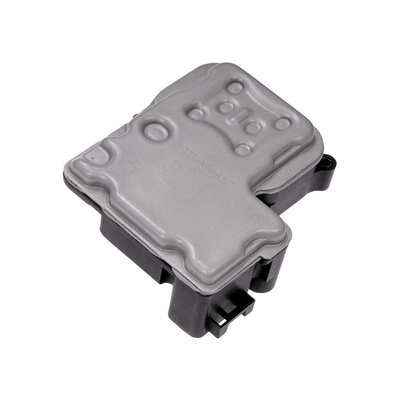
Below are the parts most often responsible for code C2402, ranked by how frequently each one is the actual culprit (per the diagnosis above). Tap any to see what we have for your vehicle.



The information in this article is provided for general reference and educational purposes only. Vehicle specifications, procedures, and part compatibility can vary by production date, trim level, and region. Always consult your vehicle's factory service manual and verify part numbers before purchasing or performing repairs. Safety-critical components such as airbags, seat belts, and braking systems should be installed by a qualified professional.
- 🧭 Diagnostic Flowchart
- 🎬 Helpful Videos
- 🛍️ Shop This Part
- What Does C2402 Mean?
- Can I Drive With C2402?
- Common Causes
- Symptoms
- Common Fixes & Costs
- Used vs. New Parts: Buying Guide
- What Happens If You Wait — Timeline
- Cost of Not Fixing It
- Diagnosis Steps
- When This Code Triggers (Freeze-Frame Conditions)
- Related Codes
- Climate & Environmental Factors
- How to Talk to a Mechanic About This Code
- Where to Take It: Dealer vs Independent vs Chain
- When to Walk Away From the Repair
- What Scan Tool You Need for This Code
- How to Clear the Code After You Fix It
- Will This Fail Emissions / State Inspection?
- Most Commonly Affected Vehicles
- Manufacturer-Specific Notes
- Real Owner Stories
- 2007 Hyundai Tucson with 211k miles
- 2005 Hyundai Accent 1.5L
- 2008 Hyundai Tiburon
- How to Prevent This Code From Triggering
- Frequently Asked Questions
- Is it safe to drive with code C2402?
- Will clearing the code fix the problem?
- I replaced the ABS fuse and it blew again. What now?
- What are the most common misdiagnosis mistakes for C2402?
- My C2402 is on a Hyundai/Kia. Is my car part of the recall?
- Can I replace the ABS module myself?
- The mechanic wants to replace the whole ABS module, but I see repair services online. What's the difference?
- What does 'intermittent fault' mean for C2402?
- Key Takeaways
- 🎟️ Get 5% Off