

OBD-II Code C2500: Invalid Chassis Sensor 'A' Signal
What C2500 means, why it triggers, and how to fix it
- Code C2500 lacks a universal definition; it indicates a faulty longitudinal acceleration sensor on Fords and Chryslers, but flags a front-facing camera failure on newer Nissans.
- A failed longitudinal acceleration (or 'Dynamics') sensor is the root cause in 80% of cases, instantly disabling your ABS and Electronic Stability Control.
- Inspect the sensor connector under the center console for liquid spill corrosion and check for manufacturer software updates before spending $300+ on a replacement sensor.
- Driving with C2500 is possible but increases stopping distances on wet roads by up to 37% due to disabled ABS.
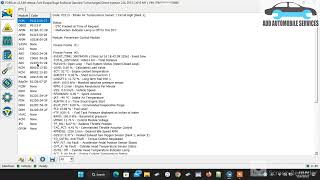
- Basic $20 code readers cannot see C2500; you must use an advanced OBD-II scanner capable of reading Chassis (C) codes and performing a Zero Point Calibration.
What Does C2500 Mean?
Code C2500 is a manufacturer-specific code indicating the vehicle's computer detects an invalid or missing signal from a chassis control sensor. This typically points to the longitudinal acceleration sensor, which measures forward and backward G-forces to manage the ABS and stability control systems.
Technical definition: There is no universal SAE definition for C2500. Ford defines it as 'Longitudinal Acceleration Sensor Circuit Malfunction,' while Chrysler points to the 'Dynamics Sensor' assembly. On newer Nissans, this code flags a front-facing ADAS camera fault. Always verify the exact definition using your vehicle's service manual.
Can I Drive With C2500?
Yes, But With Caution. Yes, you can drive the vehicle, but your Anti-lock Braking (ABS) and Electronic Stability Control (ESC) systems are disabled. This increases stopping distance on wet surfaces by up to 37% and raises the risk of losing control in an emergency. Exercise extreme caution to prevent wheel lockup, and schedule repairs immediately.
Common Causes
- Faulty Longitudinal / Dynamics Sensor (Very Common) — The sensor measuring the vehicle's forward and backward G-forces fails internally from age, moisture, or vibration, sending incorrect data to the ABS module.
- Corroded Wiring or Water Intrusion (Common) — Because the sensor often sits on the floor pan under the center console, spilled drinks or sunroof leaks seep into the connector. This corrodes the pins and shorts the signal circuit.
- Software Glitch Requiring Module Update (Common) — On modern vehicles (specifically Ford and Ram), a software anomaly in the ABS or Powertrain Control Module triggers this code. The sensor is perfectly fine, but the module requires a dealer reflash.
- Low Battery Voltage (Less Common) — System voltage dropping below 12.0V during engine cranking causes communication glitches between modules, triggering false C2500 codes.
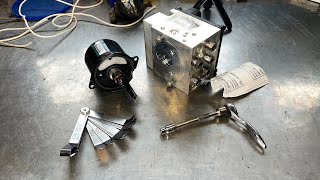
- Faulty ABS/ESC Control Module (Less Common) — The main computer for the brake and stability systems fails internally. Ford TSBs note that if C0062 is the only code present alongside C2500, the ABS module itself is the culprit. 🎬 See how to program and calibrate a replacement ABS module.
- Sensor Requires Recalibration (Rare) — Replacing suspension parts, the ABS module, or the sensor itself requires a 'Zero Point Calibration'. Skipping this step forces the computer to reject the sensor's readings.
- Physical Misalignment of Sensor (Rare) — A bent mounting bracket or improperly seated sensor skews the G-force readings, triggering performance-related codes alongside C2500.
Symptoms
- ABS Warning Light Illuminated — The Anti-lock Braking System warning light stays on continuously.
- Traction/Stability Control Light Illuminated — The ESC/Traction Control light (a car with squiggly lines) remains lit.
- Stability System Disabled Message — The dashboard displays 'Service AdvanceTrac', 'Service ESC', or 'Hill Start Assist Not Available'. 🎬 Watch: Understanding the 'Service AdvanceTrac' message on Ford vehicles.
- Hard Brake Pedal or Premature Pulsation — Without ABS, the brake pedal feels harder to press, or pulsates prematurely as wheels lock up during moderate braking.
- Unstable Handling During Cornering — The vehicle feels loose or unstable during turns because the electronic stability control is inactive.
Diagnostic Flowchart
Tap your situation to follow the diagnostic path that matches what you're seeing on this code.
Common Fixes & Costs
- Replace Longitudinal / Dynamics Sensor — Parts: $100 - $450, Labor: $150 - $250, ~1.5 hr book time (Intermediate)
- Repair or Clean Wiring and Connectors — Parts: $10 - $50, Labor: $100 - $250, ~1.5 hr book time (Intermediate)
- Perform Module Software Update — Parts: $0, Labor: $100 - $200, ~1 hr book time (Professional)
- Replace ABS/ESC Control Module — Parts: $500 - $1200, Labor: $150 - $300, ~2.5 hr book time (Professional)
DIY vs Professional
- Replace Longitudinal / Dynamics Sensor — Beginner: no
Tools: Socket set, trim removal tools, advanced bidirectional scan tool. - Repair or Clean Wiring and Connectors — Beginner: yes
Tools: Electrical contact cleaner, dielectric grease, soldering iron, multimeter. - Perform Module Software Update — Beginner: no
Tools: Dealer-level scan tool or J2534 pass-thru device with software subscription. - Replace ABS/ESC Control Module — Beginner: no
Tools: Flare nut wrenches, brake bleeder, professional scan tool.
Used vs. New Parts: Buying Guide
When a used part is worth it: Buying a used dynamics sensor is highly risky. It only makes sense if the vehicle is over 15 years old, the new part is prohibitively expensive, and you source it from a non-flood donor vehicle.
Donor-vehicle mileage cap: roughly under 60000 miles for the part to have meaningful remaining life.
Donor quality checklist:
- Verify the donor vehicle was not a flood or fire victim.
- Match the part number exactly, including suffix letters.
- Inspect the connector pins for any signs of corrosion.
Decision logic:
- If The new OEM or high-quality aftermarket part is available for under $300 → buy new. The reliability is worth the cost for a critical safety component.
- If The vehicle is over 15 years old and the budget is extremely tight → a used part from a low-mileage, non-corroded donor is a viable but risky option.
- If The part requires programming to the vehicle (like an ABS module) → buy new or use a professional remanufacturing service to avoid VIN-lock issues.
Warranty tradeoff: Used parts carry a 30-90 day warranty covering only the part. New OEM parts carry a 1-2 year warranty.
Worst-case if a used part fails: $200 - $500 if the used part is faulty, requiring a second round of labor and diagnostics.
What Happens If You Wait — Timeline
- 0-1 week: ABS and ESC warning lights illuminate. The computer disables these safety systems after a failed self-test. (MPG impact: 0%% · Added cost: $0 (Safety risk is immediate))
- 1 week - 3 months: Operating the vehicle without ABS or stability control increases the risk of an accident in an emergency maneuver. (MPG impact: 0%% · Added cost: $0 (Risk of accident cost is unquantifiable))
- 3-12 months: If caused by water intrusion, moisture wicks up the wiring harness, corroding other connectors or damaging the ABS control module. (MPG impact: 0%% · Added cost: $500 - $1,500 (Cost if the ABS module is damaged))
- 12+ months: Ignored water leaks rust the floor pan and destroy multiple electronic modules under the carpet. (MPG impact: 0%% · Added cost: $2,000 - $5,000+ (Cost to repair widespread water damage))
Cost of Not Fixing It
- Immediate: Total loss of Anti-lock Braking (ABS) and Electronic Stability Control (ESC), significantly increasing the risk of skidding during emergency maneuvers. (Added cost: N/A (Safety Risk))
- 1-6 months: The ongoing safety risk persists. A faulty sensor providing erratic data causes momentary, inappropriate brake application or instability. (Added cost: $0)
- 6+ months: If the root cause is a water leak, prolonged neglect destroys other electronic modules, floor pans, and wiring harnesses. (Added cost: $1500 - $5000+ (if water intrusion is ignored))
Diagnosis Steps
- Read Codes and Check Battery Voltage
Use an advanced scanner to confirm C2500 and note any U-codes (communication loss). Test the battery with a multimeter; voltage below 12.4V causes false chassis codes. Resolve U-codes and battery issues first.
Tools: Advanced OBD-II Scanner, Digital Multimeter (Beginner) - Visual Inspection and Wiggle Test
Locate the sensor (usually under the center console or front seat). Inspect for liquid spill corrosion. While monitoring live data on your scanner, gently wiggle the wiring harness. If the data drops out, you have a wiring fault.
Tools: Flashlight, Trim Removal Tools, Advanced OBD-II Scanner (Beginner) - Check Live Sensor Data
Access the live data stream for the longitudinal acceleration sensor. On level ground, the reading must be stable near 0.0 m/s². A reading stuck at a high number or fluctuating wildly indicates a failed sensor or circuit.
Tools: Advanced OBD-II Scanner (Intermediate) - Test Sensor Circuit with Multimeter
Unplug the sensor. With the ignition on, test the connector for a 5V reference signal, a solid ground (<0.1V), and a signal wire reading around 2.5V. A 0V or 5V reading on the signal wire confirms a short or open circuit. If the circuit is perfect but live data is bad, replace the sensor.
Tools: Digital Multimeter, Vehicle-Specific Wiring Diagram, Back-Probe Kit (Advanced) - Check for Software Updates
Before replacing expensive modules, check manufacturer TSBs. Use a high-end scan tool or contact a dealer to verify if an ABS or PCM software update resolves the C2500 logic error.
Tools: High-End Bi-Directional Scanner or Dealer Tool (Professional) - Perform Zero Point Calibration
If you replaced the sensor, module, or suspension parts, you must perform a 'Zero Point Calibration' on a perfectly level surface using a bidirectional scanner. Skipping this guarantees the code returns immediately.
Tools: Advanced Bi-Directional Scanner (Advanced)
When This Code Triggers (Freeze-Frame Conditions)
- Vehicle Speed: 10-30 mph (The fault sets at low to moderate speeds during initial vehicle movement or during a turn.)
- System Voltage: 11.5V - 14.5V (A reading below 12.0V points towards a battery or charging issue causing a false code.)
- Brake Pedal Status: Off (The code sets during a system self-test without driver input, not necessarily during braking.)
- Steering Angle: Varies (The fault triggers during a turn when the sensor's reading is expected to change but remains static.)
Related Codes
- C0062 — The generic SAE definition for 'Longitudinal Acceleration Sensor.' If you see this alongside C2500, it confirms the sensor fault. On Fords, C0062 alone indicates a bad ABS module.
- C123C — Chrysler code for 'Dynamics Sensor Mounting Performance.' Indicates the sensor is physically loose or installed at the wrong angle, rather than electrically faulty.
- C1952 — Indicates 'Yaw Rate Sensor Circuit Open.' Since yaw and longitudinal sensors share a housing, seeing both codes confirms a total sensor failure or shared power/ground loss.
- U0121 — Indicates 'Lost Communication With ABS Module.' Diagnose this network fault first. C2500 is merely a symptom of the ABS module being offline.
Climate & Environmental Factors
- Road Salt (Winter Climates): Salt spray contaminates undercarriage sensors and wiring harnesses, accelerating corrosion and causing intermittent signal dropouts.
- Interior Liquid Spills: Because the sensor is often mounted under the center console, spilled drinks seep directly into the connector, causing immediate shorts and long-term pin corrosion.
How to Talk to a Mechanic About This Code
Say this: "I have an ABS/ESC light on, and my scanner shows code C2500. I'd like to schedule a diagnostic to confirm the cause. Please check for TSBs and inspect the sensor connector for corrosion before recommending a sensor replacement."
This directs the technician to follow a logical diagnostic path instead of immediately replacing the most expensive part, protecting you from paying for an unnecessary sensor replacement.
Avoid saying:
- 'My ABS light is on, can you fix it?' (Too vague, invites a parts cannon approach)
- 'I think I need a new ABS sensor.' (Invites unnecessary parts replacement)
- 'Just do whatever it takes to turn the light off.' (Open invitation for upselling)
Questions to ask before authorizing the repair:
- Did you find a TSB for this issue on my vehicle?
- What were the results of the live data test for the sensor?
- Did you inspect the wiring and connector for corrosion?
- Does the new part require a 'Zero Point Calibration', and is that included in the quote?
Where to Take It: Dealer vs Independent vs Chain
- Dealer:
Recommended if a software update is the likely cause or if the vehicle requires proprietary tools for diagnosis and calibration.
Best for: Vehicles under warranty, Cases requiring a known software update (TSB), Complex diagnostics on European vehicles (Jaguar, Mercedes-Benz), Module replacement requiring proprietary programming
Downsides: Highest labor rates, Quick to replace entire modules when a simple wiring repair suffices (Typical cost: +50% vs. baseline) - Independent Shop:
Best fit for most common scenarios, providing the best balance of cost and expertise.
Best for: Out-of-warranty vehicles with common failure causes, Straightforward sensor replacement and wiring repairs
Downsides: May lack access to the latest manufacturer-specific software for reflashing modules. (Typical cost: +0% vs. baseline) - Chain Shop:
AVOID for initial diagnosis. The risk of misdiagnosis is high, and they are less likely to correctly handle the required post-installation calibration.
Best for: Simple, unambiguous repairs where the diagnosis is already certain.
Downsides: Technician skill varies widely., Often lack the advanced, bi-directional scan tools needed for calibration., Unwilling to perform detailed wiring diagnostics. (Typical cost: -10% vs. baseline)
When to Walk Away From the Repair
If the estimated repair cost for the C2500 code exceeds 40-50% of the car's private-party value, pause and consider your options.
- Car worth $5000, fix is $800: Fix it. This is a reasonable cost to restore critical safety systems.
- Car worth $4000, fix is $1800: Borderline. Get a second opinion to ensure the diagnosis is correct before proceeding.
- Car worth $2500, fix is $1500: Walk away. It is not economical to invest this much into an older, lower-value vehicle.
What Scan Tool You Need for This Code
Minimum: A scanner capable of reading and clearing manufacturer-specific Anti-lock Brake System (ABS) codes (C-codes).
A standard $20 OBD-II reader only communicates with the engine computer. Code C2500 is stored in the ABS module. Without C-code capability, your scanner reports 'No Codes Found' despite the ABS light being on.
Budget: BlueDriver Pro (~$100) — Reads and clears ABS/chassis codes on most major brands and displays live sensor data to verify acceleration sensor readings.
Mid-range: Foxwell NT630 Plus / Autel AL619 (~$150) — Specifically designed for ABS diagnostics, offering live data and basic bidirectional controls to test ABS actuators.
Professional: Autel MaxiCOM MK808S / Launch X431 Series (~$450-1200) — Provides full bidirectional control essential for performing the mandatory 'Zero Point Calibration' after replacing the sensor or module.
Rent vs buy: Auto parts stores offer free scans to read the code. However, if you perform the repair yourself, you MUST buy a bidirectional tool capable of Zero Point Calibration.
How to Clear the Code After You Fix It
- Perform the specific repair (e.g., replace sensor, clean wiring).
- Perform a Zero Point Calibration with a bidirectional scan tool on a level surface.
- Use the scan tool to clear the C-code from the ABS module.
- Turn the ignition off, wait 10 seconds, then turn it back on.
Drive cycle (~10 minutes): Drive the vehicle for 10 minutes, making several left and right turns and exceeding 25 mph. The ABS system performs a self-test upon startup and initial movement. If the light stays off, the repair is successful.
Readiness monitors affected: Chassis codes do not affect emissions readiness monitors.
Watch out for:
- Skipping the Zero Point Calibration causes the light to return immediately.
- Using a basic OBD-II reader fails to clear Chassis (C-codes).
- Clearing the code without fixing the root cause results in an instant hard fault.
Will This Fail Emissions / State Inspection?
No — by itself this code doesn't fail OBD inspection (but it can keep readiness monitors from setting, which causes a separate fail).
- California: An ABS light passes the smog check but fails the comprehensive 'Brake and Lamp Inspection' required for revived salvage vehicles.
- New York: An illuminated ABS warning light is an automatic failure for the annual safety inspection.
- Texas: The ABS light is noted but passes the safety inspection. However, an illuminated main 'Brake' warning light causes a failure.
Most Commonly Affected Vehicles
- Ford Focus, Kuga, Mondeo, F-Series (2008-2019) — Uses a sensor cluster for AdvanceTrac. For 2011-2014 F-Super Duty trucks, a lone C0062 code points to a faulty ABS module per SSM 44205, not the sensor.
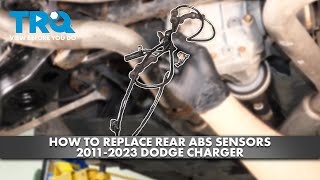
- Dodge / Chrysler Charger, 300, Grand Caravan, Durango (2011-2023) — Uses a 'Dynamics Sensor' (Part # 56029549AD). Failure is highly common due to liquid spills under the center console corroding the connector.
- Dodge Ram 2500/3500 (2017-2022) — Symptoms of a bad chassis sensor are often caused by a PCM software glitch, resolved with a dealer update per TSB 08-094-19.
- Nissan Sentra, Rogue (2020-2024) — Codes in the C2500 range relate to the front-facing ADAS camera, not chassis dynamics. TSB NTB20-061a addresses camera aiming and malfunctions.
- Jaguar XF, XJ, F-Type (2008-2024) — C2500 is a proprietary code requiring a dealer-level diagnostic tool (IDS/SDD) to interpret correctly.
- Toyota / Lexus Camry, Highlander, RX350, IS250 (2007-2024) — Highly sensitive to needing a 'Zero Point Calibration' after any suspension or alignment work to prevent stability codes.
- Chevrolet / GMC C/K Series, Silverado, Sierra (1988-2007) — Disambiguation: The C2500 DTC is often confused with the C2500 truck model. The truck model frequently suffers from unrelated ABS light issues.
- Mercedes-Benz Various Models with ESP (2005-2024) — A fault in the combined yaw rate and lateral acceleration sensor module is a common cause for the ESP light.
Manufacturer-Specific Notes
- Ford: C2500 points to the Longitudinal Acceleration Sensor. However, SSM 44205 states that if C0062:62 is the only code present on 2011-2014 F-Super Duty trucks, replace the ABS module, not the sensor.
- Chrysler/Dodge/Jeep: TSB #9100263 highlights that communication loss codes are often due to a poor connection at the Dynamics Sensor caused by spilled drinks. Always inspect this connector before replacing the sensor.
- Nissan: For recent models, C25xx codes relate to the ADAS front camera. TSB NTB20-061a addresses camera aiming issues and directs technicians to a different diagnostic path if C2500-49 is stored.
- Jaguar: The definition for C2500 is proprietary. Diagnosis requires a dealer-level scan tool (IDS/SDD) to access the correct diagnostic procedures.
- Ram: TSB 08-094-19 for 2017-2019 models points to a software fix for chassis sensor symptoms. A recall (NHTSA 24V-896) also addresses a faulty Hydraulic Control Unit causing ABS/ESC loss.
Real Owner Stories
2012 Ford F-150 with 'Service AdvanceTrac' Message
The truck displayed AdvanceTrac and wrench lights. A basic code reader showed no codes.
What they tried:
- Replaced all four ABS wheel speed sensors, but the light remained.
- Wiggled and re-seated a large wiring harness located above the parking brake assembly inside the cab.
Outcome: Securing the loose wiring harness cleared the message. The problem was an intermittent connection, not a faulty sensor.
Lesson: Always check known wiring weak points before replacing parts. On F-Series trucks, the harness near the parking brake triggers stability warnings.
2014 Dodge Charger with ABS/ESC lights after liquid spill
ABS and ESC warning lights stayed on. The owner recalled spilling a soda in the center console weeks earlier.
What they tried:
- A shop quoted $800+ to replace the 'Dynamics Sensor'.
- The owner removed the center console trim and found the sensor's electrical connector corroded from dried soda.
Outcome: The owner cleaned the connector pins with electrical contact cleaner and applied dielectric grease. The codes cleared and did not return. Total cost was under $20.
Lesson: On Dodge/Chrysler vehicles, the dynamics sensor sits under the center console. Always inspect the connector for spill corrosion before replacing the sensor.
2019 Ford F-150 with multiple dash lights and no codes
The truck displayed 'Service Advancetrac' and disabled cruise control. A basic OBD-II scanner pulled no codes.
What they tried:
- Upgraded to an advanced tool (FORScan) to properly diagnose the ABS module.
- Discovered a faulty wheel speed sensor invisible to the basic scanner.
Outcome: Replacing the wheel speed sensor fixed the issue. Ford TSB 20-2046 also points to a software glitch for similar issues on 2018-2019 models.
Lesson: A standard $20 code reader only reads engine codes. For ABS and ESC faults, you must use an advanced scanner capable of reading C-codes.
How to Prevent This Code From Triggering
- Apply Dielectric Grease to Connectors (During any related repair or inspection) — Seals out moisture and road salt from metal pins, preventing the corrosion that causes high resistance and signal loss.
- Regularly Clean Vehicle Underbody (Monthly in winter climates) — Removes road salt that accelerates corrosion on sensor housings and wiring harnesses.
- Address Interior Spills Immediately (As needed) — Prevents liquids from seeping into the center console and shorting the dynamics sensor connector.
- Perform a 'Zero Point Calibration' After Alignments (After any suspension or alignment work) — Ensures the system has an accurate baseline, preventing false fault codes.
Frequently Asked Questions
I searched for C2500 and all I see is the Chevy truck. What's the difference?
The 'Chevrolet C2500' is a 3/4-ton truck model. The 'C2500' diagnostic trouble code is an unrelated fault code that appears on various makes and models. Your vehicle has the fault code, not the truck model.
What is a 'Zero Point Calibration' and why is it important?
A Zero Point Calibration uses a scan tool to teach the vehicle's computer the sensor's neutral position on a perfectly level surface. This establishes the baseline for 0 G-force and 0 degrees of rotation. Without it, the system assumes the car is sliding when driving straight, triggering false activations and fault codes.
Can I perform a Zero Point Calibration at home?
For most modern vehicles, a bidirectional scan tool is required to initiate the procedure. While older Toyotas allowed a paperclip jumper method, attempting this on modern cars causes electrical damage. You must use the proper tool.
Can I use a cheaper aftermarket sensor?
Aftermarket sensors are a common source of repeat failures due to strict calibration requirements. Given the critical safety function of this sensor, using an OEM part (Mopar, Motorcraft) is highly recommended to ensure reliability.
Will I pass a state inspection with the C2500 code?
No. In jurisdictions with safety inspections, an illuminated ABS or stability control warning light results in an automatic failure. The fault must be repaired.
Will clearing the code make it go away?
Clearing the code turns the lights off temporarily, but this is a 'hard fault'. The code returns immediately as soon as the computer runs its self-test and detects the ongoing electrical or mechanical issue.
My mechanic replaced the sensor but the light came back. What now?
This is a common misdiagnosis pitfall caused by skipping the mandatory Zero Point Calibration after installation. Alternatively, the root cause is a software glitch requiring a dealer update or a wiring fault. Perform a detailed circuit test and check for TSBs before replacing additional parts.
Key Takeaways
- Code C2500 lacks a universal definition; it indicates a faulty longitudinal acceleration sensor on Fords and Chryslers, but flags a front-facing camera failure on newer Nissans.
- A failed longitudinal acceleration (or 'Dynamics') sensor is the root cause in 80% of cases, instantly disabling your ABS and Electronic Stability Control.
- Inspect the sensor connector under the center console for liquid spill corrosion and check for manufacturer software updates before spending $300+ on a replacement sensor.
- Driving with C2500 is possible but increases stopping distances on wet roads by up to 37% due to disabled ABS.
- Basic $20 code readers cannot see C2500; you must use an advanced OBD-II scanner capable of reading Chassis (C) codes and performing a Zero Point Calibration.
Helpful Videos
Shop the Parts Behind C2500
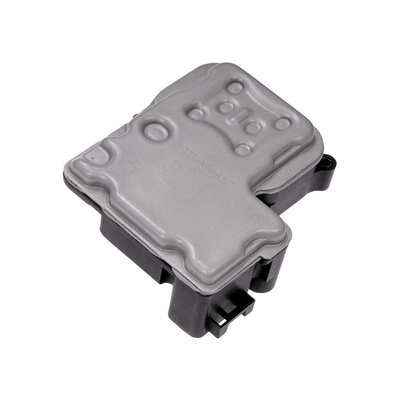
Below are the parts most often responsible for code C2500, ranked by how frequently each one is the actual culprit (per the diagnosis above). Tap any to see what we have for your vehicle.


The information in this article is provided for general reference and educational purposes only. Vehicle specifications, procedures, and part compatibility can vary by production date, trim level, and region. Always consult your vehicle's factory service manual and verify part numbers before purchasing or performing repairs. Safety-critical components such as airbags, seat belts, and braking systems should be installed by a qualified professional.
- 🧭 Diagnostic Flowchart
- 🎬 Helpful Videos
- 🛍️ Shop This Part
- What Does C2500 Mean?
- Can I Drive With C2500?
- Common Causes
- Symptoms
- Common Fixes & Costs
- DIY vs Professional
- Used vs. New Parts: Buying Guide
- What Happens If You Wait — Timeline
- Cost of Not Fixing It
- Diagnosis Steps
- When This Code Triggers (Freeze-Frame Conditions)
- Related Codes
- Climate & Environmental Factors
- How to Talk to a Mechanic About This Code
- Where to Take It: Dealer vs Independent vs Chain
- When to Walk Away From the Repair
- What Scan Tool You Need for This Code
- How to Clear the Code After You Fix It
- Will This Fail Emissions / State Inspection?
- Most Commonly Affected Vehicles
- Manufacturer-Specific Notes
- Real Owner Stories
- 2012 Ford F-150 with 'Service AdvanceTrac' Message
- 2014 Dodge Charger with ABS/ESC lights after liquid spill
- 2019 Ford F-150 with multiple dash lights and no codes
- How to Prevent This Code From Triggering
- Frequently Asked Questions
- I searched for C2500 and all I see is the Chevy truck. What's the difference?
- What is a 'Zero Point Calibration' and why is it important?
- Can I perform a Zero Point Calibration at home?
- Can I use a cheaper aftermarket sensor?
- Will I pass a state inspection with the C2500 code?
- Will clearing the code make it go away?
- My mechanic replaced the sensor but the light came back. What now?
- Key Takeaways
- 🎟️ Get 5% Off