

C2502-64 on 2017-2018 Jeep Compass: Signal Plausibility Failure Explained
On a 2017-2018 Jeep Compass, code C2502-64 is almost always caused by a software glitch in the Drivetrain Control Module (DTCM). The primary fix is a software update from a Jeep dealer, as specified in TSB #08-010-22. Do not replace hardware before checking for software updates. This issue is also common on its platform-mates, the Jeep Renegade and Fiat 500X.
- Code C2502-64 is a 'messenger' code; it means another system has a problem or the DTCM software is misinterpreting data. Your first step is to find the primary code in the engine, transmission, or ABS module.
- The most common cause on the 2017-2018 Compass and its platform-mates (Renegade, 500X) is a known software issue in the Drivetrain Control Module (DTCM).
- Consult a Jeep dealer or qualified shop about TSB #08-010-22. A simple software update, which costs around $150-$250, often resolves the issue without replacing any parts.
- Do not replace expensive components like the ABS module or DTCM before having the software checked and updated.
What's Unique About the 2017-2018 Jeep COMPASS

For this generation of Jeep Compass and its platform-mates (Jeep Renegade, Fiat 500X), this code is strongly linked to manufacturer-issued Technical Service Bulletins (TSBs). Unlike many trouble codes that point to a specific failed part, C2502-64 on this vehicle is very frequently a software calibration issue within the Drivetrain Control Module (DTCM). The module's original software is overly sensitive and can set this code, sometimes accompanied by a hum or chatter noise when the 4WD system disconnects, even when no major mechanical failure has occurred.
Diagnostic Flowchart

Tap your situation to follow the diagnostic path that matches what you're seeing on this vehicle.
Symptoms You May Notice

- ABS warning light on
- Traction control (ESC) warning light on
- Check Engine Light may be on (due to the primary fault)
- A hum, chatter, or growl noise between 30-45 mph (48-72 kph)
- Service 4WD message on the dash 🎬 Watch: Diagnosing ABS and 4WD warning lights on a Compass
- Flashing odometer (if a Proxi alignment is needed)
- Replacing the ABS module or DTCM without first checking for software updates.
- Replacing wheel speed sensors without confirming a specific wheel speed sensor fault code.
- Attempting to diagnose the C2502 code directly, instead of treating it as a secondary code and looking for the primary fault in other modules.
- Replacing the battery without testing the auxiliary battery (if equipped), as a bad aux battery can drain a new main battery.
Most Likely Causes

- Outdated Drivetrain Control Module (DTCM) Software 🔴 High Probability Jeep issued TSB #08-010-22 specifically to address this code with a software update, indicating it was a known issue from the factory that also affects its platform-mates.
How to confirm: A Jeep dealer or a shop with FCA's wiTECH scan tool can check the current software calibration ID on the DTCM and see if an update is available per TSB #08-010-22.
Typical fix: Reprogramming (flashing) the DTCM with the latest software version, followed by a Proxi Alignment.
Est. part cost: $0 - Fault in Another System (Primary Code) 🟡 Medium Probability The code's definition confirms it's set when the DTCM receives a fault message from the TCM, PCM, or ABS modules. A fault in one of those systems (e.g., a failing thermostat causing code P0128) can trigger the C2502-64 as a secondary code.
How to confirm: Perform a full system scan with an advanced OBD-II scanner. Look for codes in the Engine (PCM), Transmission (TCM), and ABS modules. The C2502 code is the symptom; the other codes are the disease.
Typical fix: Repair the issue indicated by the primary trouble code. This could be anything from a faulty wheel speed sensor for an ABS code to a transmission solenoid for a TCM code.
Est. part cost: $50-$500+ - Weak or Failing Battery ⚪ Low Probability Modern vehicles with multiple communicating modules, including the Compass, are highly sensitive to system voltage. A weak or failing main or auxiliary battery can cause communication glitches and trigger implausible signal codes across various modules. Owners on forums for the similar Jeep Renegade platform have reported this code appearing after a battery dies.
How to confirm: Test the battery with a digital battery tester that can measure voltage and cold cranking amps (CCA). A healthy battery should be above 12.4V at rest and hold voltage under load. On models with an auxiliary battery for the start/stop system, it must also be tested, as a failing aux battery can drain the main one.
Typical fix: Replace the vehicle's 12V main battery and/or auxiliary battery. It is often recommended to replace both at the same time.
Est. part cost: $150-$450
Rare But Worth Checking
- Faulty Intelligent Battery Sensor (IBS) or Wiring:
Diagnosis Steps
- Perform a full vehicle scan using an advanced OBD-II scanner capable of reading manufacturer-specific codes from all modules (DTCM, TCM, PCM, ABS, etc.).
- Identify any primary fault codes stored in the Engine (PCM), Transmission (TCM), or ABS modules. The diagnosis should focus on these codes first.
- If no other codes are present, check with a Jeep dealer if TSB #08-010-22 is applicable to your vehicle's VIN. This TSB involves a software update for the DTCM.
- Test the battery and charging system. Ensure the battery is fully charged (above 12.4V) and the alternator is providing stable voltage (typically 13.5-14.5V) when the engine is running. Crucially, test the auxiliary battery if equipped.
- If a primary code was found (e.g., for a wheel speed sensor), diagnose and repair that component first.
- If the TSB is performed, ensure the technician completes all steps, including the Proxi Alignment procedure after reprogramming the DTCM.
- After repairs are made or the DTCM is updated, clear all codes from all modules.
- Perform a test drive, ideally including speeds between 30-45 mph, to confirm the code and symptoms do not return.
Parts You'll Likely Need
- Drivetrain Control Module (DTCM) Reprogramming — This is not a physical part, but a service. It is the most common fix, as specified by Jeep's own Technical Service Bulletin to correct software logic.
OEM price range: $150-$250
Aftermarket price range: N/A
Related Codes That Often Appear With This One
- U0402 — This code means 'Invalid Data Received From Transmission Control Module.' It often appears with C2502 because the DTCM is flagging the implausible data it's getting from the TCM.
- P2504 — This code indicates 'Charging System Voltage High'. An electrical system issue like this can cause communication errors between modules, leading to the C2502 plausibility fault. [OWNER COMPLAINT ODI #11398064]
- P0128 — This code for 'Thermostat Rationality' indicates the engine isn't reaching operating temperature as expected. A Reddit user reported this code appearing alongside C2502-64, showing how an engine fault can trigger a plausibility code in the drivetrain module.
Technical Service Bulletins (TSBs) & Recalls
- 08-010-22: Flash: Drivetrain Control Module (DTCM) Updates. Addresses C2502-64 and associated noises by reprogramming the DTCM. This bulletin supersedes TSB 08-095-18. 🎬 See a quick technical breakdown of the C2502-64 code
- 08-110-17: Flash: Drivetrain Control Module (DTCM) Diagnostic and System Improvements. An earlier TSB that also addressed C2502-64 on the related Jeep Renegade and Fiat 500X platforms.
Platform-Specific Known Issues
- A known software calibration issue can cause this code to set, accompanied by a hum or chatter from the 4WD system between 30-45 mph. This is addressed by TSB #08-010-22.
- This issue is shared with the Jeep Renegade and Fiat 500X, which are built on the same platform and use the same control modules.
Mechanic-Grade Diagnostic Values
- CAN Bus Network Resistance — expected: Approximately 60 ohms between CAN-C High (Pin 3) and CAN-C Low (Pin 11) at the OBD-II connector with the battery disconnected.. Failure: A reading of 120 ohms indicates a missing terminating resistor or an open circuit. A reading near 0 ohms indicates a short between the CAN lines.
- Yaw Rate Sensor Live Data — expected: Reading should be close to 0 deg/s when the vehicle is stationary on level ground. The value should change smoothly and logically when making turns during a test drive.. Failure: A stuck value, erratic jumping, or a value that doesn't correspond to the vehicle's rotation indicates a faulty sensor or wiring issue.
Scan Tool Commands That Help
- wiTECH (or compatible FCA tool): Proxy Configuration Alignment (Proxi Alignment) — This is mandatory after reprogramming or replacing any module on the CAN bus, including the DTCM. It synchronizes the configuration of all modules with the Body Control Module (BCM). A flashing odometer is a key indicator that this procedure is needed. It may also be required after a significant power loss event, such as a battery replacement.
- wiTECH (or compatible FCA tool): Restore Vehicle Configuration — Often performed before a Proxi Alignment, this function restores the vehicle's factory configuration settings from the BCM to other modules. It's a necessary step when a new module is installed to ensure it knows the vehicle's specific options.
Wiring & Ground Locations
- Drivetrain Control Module (DTCM) — On many Fiat-Chrysler platforms of this era, including the Grand Cherokee, the DTCM is located under one of the front seats in a floor cubby. While less documented for the Compass specifically, this is the most likely location.. This is the module that stores code C2502. Physical access is needed to check its connectors for corrosion or damage, which could cause communication faults. A TSB for other models has been issued just to disconnect and reconnect DTCM connectors to ensure a good seat.
- Yaw Rate / Dynamics Sensor — Typically located as close to the vehicle's center of gravity as possible. This is often under the center console or under the front passenger seat. Its proximity to the DTCM could mean they share a wiring harness path or ground point, making them susceptible to the same environmental issues (e.g., water intrusion).. A faulty Yaw Rate Sensor can send implausible data to the ABS/ESC module, which then broadcasts a fault status over the CAN bus, triggering code C2502-64 in the DTCM. It is a potential primary fault.
- Main Chassis Grounds — Key ground points are located in the engine bay near the battery, on the alternator, and inside the cabin, often behind kick panels.. Poor grounding between modules can cause floating voltages and communication errors on the CAN bus, leading to plausibility codes like C2502. Verifying clean and tight main grounds is a fundamental step in diagnosing any network code.
Real Owner Repair Stories
- Reddit user on r/JeepRenegade (2015 Jeep Renegade Trailhawk (sister platform)) — Codes U0402 and C2502-64, intermittent check engine light.
❌ Tried (didn't work) Battery replacement
✅ What actually fixed it A TCM/DTCM firmware update performed by the dealership. The user noted it was a known issue where the TCM would 'flood canbus with garbage'. - Forum reports for platform-mates (Jeep Compass / Renegade) — C2502-64, Service 4WD light, ABS/ESC lights, flashing odometer.
❌ Tried (didn't work) Clearing codes without repair
✅ What actually fixed it A 'Proxi Alignment' procedure was required after replacing the vehicle's battery. The power interruption caused the modules to lose synchronization, which was resolved by running the scan tool routine. - Go-Parts article citing forum data (2022-2025 Jeep Compass (newer generation, but relevant principle)) — Code C0063 (Yaw Rate Sensor Performance), ESC light.
❌ Tried (didn't work) Assuming the sensor was bad and replacing it first.
✅ What actually fixed it A software update to the ABS module was the primary fix specified in a TSB. In cases where software was current, replacing the Yaw Rate Sensor and then performing an 'ABS initialization routine' with the wiTECH tool resolved the issue. This shows how a sensor in the stability system can be the root cause, but often requires calibration after replacement.
OEM Part Supersession History
56038985AA→56038985AB— Part revision or manufacturer change for the Yaw Rate / Dynamics Sensor.
Heads up: Using an incorrect or outdated sensor may cause immediate ESC/ABS faults. It is critical to verify the correct part number for the vehicle's VIN.
Helpful Videos
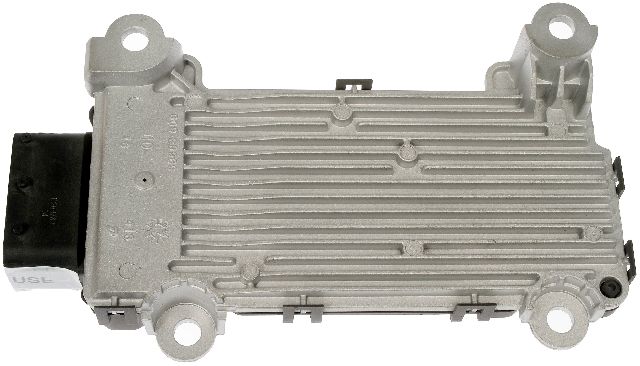
We Have This Part in Stock

The information in this article is provided for general reference and educational purposes only. Vehicle specifications, procedures, and part compatibility can vary by production date, trim level, and region. Always consult your vehicle's factory service manual and verify part numbers before purchasing or performing repairs. Safety-critical components such as airbags, seat belts, and braking systems should be installed by a qualified professional.
- Jeep COMPASS:
- 🧭 Diagnostic Flowchart
- 🎬 Helpful Videos
- 🛍️ Shop This Part
- What's Unique About the 2017-2018 Jeep COMPASS
- Symptoms You May Notice
- Most Likely Causes
- Rare But Worth Checking
- Diagnosis Steps
- Parts You'll Likely Need
- Related Codes That Often Appear With This One
- Technical Service Bulletins (TSBs) & Recalls
- Platform-Specific Known Issues
- Mechanic-Grade Diagnostic Values
- Scan Tool Commands That Help
- Wiring & Ground Locations
- Real Owner Repair Stories
- OEM Part Supersession History
- 🎟️ Get 5% Off