

OBD-II Code C2503: Forward Camera Aiming Incomplete
What C2503 means, why it triggers, and how to fix it
- Code C2503 indicates a missing or incomplete forward camera calibration, not a broken camera.
- Fixing this code requires $15,000+ in specialized ADAS targeting equipment, making it strictly a dealer or professional shop repair.
- Over 80% of C2503 codes trigger immediately after a windshield replacement or wheel alignment where the shop skipped the mandatory recalibration.
- Driving with C2503 disables Automatic Emergency Braking (AEB), increasing your risk of a rear-end collision by up to 50%.
What Does C2503 Mean?
The C2503 code means your car's main computer detected the forward-facing camera's calibration process is incomplete or failed. This camera is a critical sensor for Advanced Driver-Assistance Systems (ADAS). The computer is explicitly stating the camera is not properly aligned to 'see' the road, other vehicles, and lane markings, forcing the shutdown of related safety features.
Technical definition: C2503 is a manufacturer-specific chassis code defined by Nissan, Mitsubishi, and others as 'Camera Aiming Incomplete'. It indicates the multi-sensing front camera's calibration was interrupted, failed, or the stored data is corrupt. It frequently stores with a '-54' suffix (e.g., C2503-54), meaning 'Missing Calibration', confirming an aiming procedure fault rather than an internal hardware failure.
Can I Drive With C2503?
Yes, But With Caution. You can drive the vehicle, but critical safety features like Automatic Emergency Braking (AEB), Lane Departure Warning (LDW), and Adaptive Cruise Control are disabled. Research shows ADAS features like AEB reduce front-to-rear crashes by 50%. Driving with this code active means operating the vehicle with a significantly reduced margin of safety, increasing your liability in the event of an accident.
Common Causes
- Recent Windshield Replacement (Very Common) — The forward camera mounts directly to the windshield. Replacing the glass requires removing and reinstalling the camera, which mandates a recalibration. Skipping this step is the primary trigger for the C2503 code.
- Wheel Alignment or Suspension Changes (Common) — Altering the vehicle's ride height, rake, or wheel alignment directly changes the camera's viewing angle of the road. A camera recalibration is required after these services to synchronize its perspective with the new geometry.
- Outdated Camera Control Unit Software (Common) — On specific models like the 2020 Nissan Sentra, a known software glitch causes this code even with a correct calibration. Technical Service Bulletin (TSB) NTB20-061a addresses this exact issue with a mandatory software update.
- Incorrect Calibration Procedure or Unstable Voltage (Common) — The ADAS aiming procedure requires precise target setup and stable battery voltage (12.0V-15.5V). Incorrect target placement, using the wrong scan tool, or voltage drops during the process cause the calibration to abort and flag an 'incomplete' status.
- Use of Non-OEM Aftermarket Windshield (Less Common) — Aftermarket windshields often have subtle variations in glass thickness, optical clarity, or camera mounting bracket position. These deviations prevent the camera from calibrating correctly, causing a persistent C2503 code.
- Physical Obstruction or Damage to Camera's View (Less Common) — Dirt, debris, toll stickers, or cracks on the windshield block the camera's line of sight. A persistent obstruction interferes with the calibration self-test and triggers the code.
- Damaged Camera Mounting Bracket (Rare) — The bracket holding the camera to the windshield can bend or seat incorrectly. Early 2020 Nissan Sentras had a problematic bracket design requiring physical modification (shaving 0.3mm off the feet) for proper alignment.
Symptoms
- Automatic Emergency Braking (AEB) Warning Light — The instrument panel illuminates a warning light for the AEB or Forward Collision Mitigation system, indicating the feature is disabled.
- Lane Departure Warning (LDW) Malfunction Message — The dashboard displays a specific warning message stating the Lane Departure Warning system is unavailable.
- Adaptive Cruise Control (ACC) Inoperative — Advanced cruise control functions (like ProPILOT Assist) that rely on the forward camera to maintain following distance are completely disabled.
- Traffic Sign Recognition (TSR) Malfunction — The vehicle stops displaying detected speed limits or road signs on the instrument cluster.
Diagnostic Flowchart
Tap your situation to follow the diagnostic path that matches what you're seeing on this code.
Common Fixes & Costs
- Forward Camera Recalibration — Parts: $0, Labor: $250-$600, ~1.5 hr book time (Professional)
- Camera Control Unit Software Update — Parts: $0, Labor: $150-$250, ~1 hr book time (Professional)
- Windshield Replacement with OEM Glass — Parts: $500-$1000, Labor: $300-$500 (includes mandatory calibration), ~2.5 hr book time (Professional)
- Physical Modification of Camera Mount (per TSB) — Parts: $0, Labor: $100-$200 (in addition to calibration), ~0.9 hr book time (Professional)
- Replacement of Forward Camera Unit
— Parts: $250-$800, Labor: $300-$650 (includes mandatory calibration), ~2 hr book time
(Professional)
Nissan Sentra (2020): OEM
Mitsubishi Outlander (2018-2022): OEM
Used vs. New Parts: Buying Guide
When a used part is worth it: Buying a used forward camera is not recommended. These are sensitive components, and a used part from a collision vehicle carries unseen damage. The mandatory professional recalibration costs the same regardless of the part's source.
Donor-vehicle mileage cap: roughly under 40000 miles for the part to have meaningful remaining life.
Donor quality checklist:
- Verify the donor vehicle was not in a front-end collision.
- Ensure the part number is an exact match for your VIN.
- Purchase from a seller offering a warranty and return policy.
Decision logic:
- If The cost of a new OEM camera is less than $500 → buy new. The risk of a used part outweighs the minimal savings.
- If A new OEM part is back-ordered → a used part from a low-mileage, non-collision donor is a viable alternative.
- If The issue requires a software update or physical mount modification (e.g., 2020 Sentra) → do not buy any part. The existing camera only needs the TSB procedure.
Warranty tradeoff: Used parts offer a 30-90 day warranty. A new OEM part installed by a dealer carries a 12-month/12,000-mile warranty on parts and labor.
Worst-case if a used part fails: $400-800 for a second round of labor and recalibration if the used camera fails.
What Happens If You Wait — Timeline
- Immediate: Code C2503 sets. Dependent ADAS features (AEB, LDW) instantly disable. Warning lights illuminate. (MPG impact: 0%% · Added cost: $0)
- First Drive: The vehicle operates with a reduced safety margin. Rear-end collision risk increases by 50%. (MPG impact: 0%% · Added cost: $0)
- 1-6 months: A preventable accident occurs. The cost of ignoring the code is realized through insurance deductibles and repairs. (MPG impact: 0%% · Added cost: $500 - $15,000+)
Cost of Not Fixing It
- Immediate: All dependent ADAS safety features (AEB, LDW, Adaptive Cruise) are disabled. The vehicle is mechanically safe, but operates with a significantly reduced safety margin. (Added cost: $0)
- 0-6 months: Increased risk of collision. Ignoring the fix forfeits the 50% reduction in rear-end crashes provided by AEB, potentially leading to an avoidable accident. (Added cost: $500 - $25,000+ (deductibles, repairs, total loss))
- 6+ months: Continued operation with disabled safety systems increases legal liability. If proven the driver ignored safety warnings, financial responsibility for accident damages magnifies. (Added cost: Potentially unlimited)
Diagnosis Steps
- Review Recent Vehicle Service History
Check service records for recent windshield replacement, wheel alignment, suspension work, or tire size changes. If any of these occurred, the cause is a missing ADAS camera recalibration.
Tools: Service records (Beginner) - Read the Full Diagnostic Code with Suffix
Use a professional-grade OBD-II scanner to read chassis codes. Confirm C2503 and look for a suffix like '-54' (Missing Calibration). This suffix focuses the diagnosis entirely on the aiming procedure rather than a hardware fault.
Tools: Professional OBD-II Scanner (Intermediate) - Check for Relevant Technical Service Bulletins (TSBs)
Search for TSBs related to C2503 for your specific VIN. For example, Nissan TSB NTB20-061a dictates a software update and physical bracket modification. Skipping this step leads to hours of failed calibration attempts.
Tools: TSB database subscription (Beginner) - Inspect Windshield and Camera Mount
Clean the windshield in front of the camera. Verify there are no stickers, cracks, or chips blocking the lens. Ensure the camera is securely seated in its bracket and the glass is OEM or an exact equivalent.
Tools: Glass cleaner, flashlight (Beginner) - Check Control Module Software Version
Navigate to the ADAS control module using an OEM-level scan tool. Compare the current software part number to the latest version specified in TSBs. Update the software before attempting recalibration.
Tools: OEM-level scan tool (Advanced) - Verify System Voltage
Connect a dedicated, stable power supply to the vehicle. ADAS modules are highly sensitive to voltage drops. Maintain a constant voltage between 12.0V and 15.5V throughout the entire diagnostic and calibration process.
Tools: Multimeter, stable power supply unit (Intermediate) - Inspect Wheel Alignment
Verify the vehicle's wheel alignment and ride height meet manufacturer specifications. An out-of-spec alignment makes a successful camera calibration impossible.
Tools: Alignment rack (Advanced) - Analyze Live Data
View the ADAS control unit data stream. Check the 'Calibration Status' parameter. A status of 'Incomplete', 'Failed', or 'Required' confirms the C2503 code. Proceed to professional recalibration.
Tools: OEM-level scan tool (Advanced)
When This Code Triggers (Freeze-Frame Conditions)
- Vehicle Speed: 0 mph (During initial system self-check at startup.)
- System Voltage: 11.5-12.5V (Key-On, Engine-Off during pre-check.)
- Calibration Status Flag: Incomplete/Required (Set when the module checks its stored calibration status and finds it missing or corrupt.)
Related Codes
- C1F6B — On Nissan vehicles, C1F6B-54 ('Camera Unit Malfunction') appears alongside C2503-54. They are triggered by the same software/hardware fault and resolved with the exact same TSB procedure.
- U3000 — A general control module code. U3000:54 ('Missing Calibration') is functionally identical to C2503. However, U3000:49 ('Internal Electronic Failure') points to a faulty camera module requiring replacement.
- C2500 — Indicates an internal camera electronic failure (C2500-49). If this code is present, standard calibration procedures and TSBs for C2503 do not apply; the camera unit must be replaced.
- U0415 — Invalid Data Received From ABS Control Module. The camera relies on accurate vehicle speed data. An ABS fault triggers secondary ADAS codes and must be diagnosed first.
Climate & Environmental Factors
- Extreme Temperatures: Extreme heat or cold alters the physical alignment of the camera mounting bracket due to the expansion and contraction of surrounding plastics and glass.
- High Humidity / Rain: Condensation on the inside of the windshield or camera lens obstructs the view, triggering faults and interfering with dynamic calibration.
- Snow and Ice: Buildup on the windshield directly in front of the camera completely blocks its view, disabling ADAS functions and failing calibration self-checks.
- Sunlight and Glare: Direct sunlight overwhelms the camera's sensor, making it difficult to detect lane lines and causing dynamic calibration procedures to fail.
How to Talk to a Mechanic About This Code
Say this: "I have a C2503 code, meaning 'Forward Camera Aiming Incomplete'. My ADAS warning lights are on. Can you confirm you have the necessary ADAS targets and OEM-level software to perform a recalibration for my [Vehicle Make, Model, Year]?"
This proves you understand the issue requires specialized equipment, prompting the shop to confirm their capabilities and saving you a wasted diagnostic fee.
Avoid saying:
- 'My AEB light is on, can you check it?'
- 'I think my camera is broken.'
- 'Just fix whatever is wrong with the safety system.'
Questions to ask before authorizing the repair:
- Is the calibration cost included in the windshield replacement quote?
- Do you offer ADAS calibration as a package with an alignment?
- Have you checked for Technical Service Bulletins related to this code?
- Will you provide a post-scan report showing the calibration status is 'Complete'?
Where to Take It: Dealer vs Independent vs Chain
- Dealer:
Highly Recommended. Dealerships guarantee access to the latest software, OEM scan tools, and exact calibration targets.
Best for: Vehicles under warranty, Cases requiring specific TSB software updates or physical modifications, Complex cases where previous calibration attempts failed
Downsides: Highest labor rate, Less flexible on pricing (Typical cost: +40% vs. baseline) - Independent Shop:
Acceptable, with caution. Only use an independent shop if they explicitly advertise ADAS calibration and confirm they have the specific equipment for your vehicle.
Best for: Out-of-warranty vehicles needing straightforward post-alignment calibration, Shops explicitly certified for ADAS service
Downsides: Many lack the $15,000+ ADAS equipment., May lack access to the latest OEM software updates. (Typical cost: +0% vs. baseline) - Chain Shop:
Not Recommended for diagnosis. Only use for initial glass or alignment service after confirming they can complete the mandatory calibration.
Best for: Windshield replacement, ONLY if they perform the calibration in the same appointment.
Downsides: Technician skill and ADAS equipment availability vary dramatically., Most tire/alignment chains cannot perform ADAS calibration. (Typical cost: -10% vs. baseline)
When to Walk Away From the Repair
If the estimated repair cost for the C2503 code and related repairs (like a new OEM windshield) exceeds 40-50% of the car's value, weigh your options.
- Car worth $5000, fix is $2200: Walk away. The cost to restore safety features is nearly half the car's value. Sell as-is.
- Car worth $18000, fix is $450: Fix it. This is a standard cost for maintaining critical safety features.
- Car worth $8000, fix is $1800: Borderline. Get a second opinion from an ADAS specialty shop before proceeding.
What Scan Tool You Need for This Code
Minimum: A professional, bi-directional scan tool with manufacturer-specific ADAS calibration software. This is NOT a DIY-level code.
Basic $100 code readers lack the software to initiate ADAS calibration. Clearing the code without calibrating causes it to return instantly.
Budget: None (~$0) — No scanner under $100 performs ADAS calibration.
Mid-range: Foxwell NT710 (~$350) — Reads the C2503 code but CANNOT initiate forward camera static calibration, which requires an expensive ADAS frame.
Professional: Autel MaxiSYS MS906PRO w/ ADAS Software (~$2000-3500) — Communicates with the camera module and provides step-by-step calibration instructions. Must be paired with a physical calibration frame ($5,000+).
Rent vs buy: Rent or Buy is not an option. This repair requires a professional shop with a complete ADAS calibration system.
How to Clear the Code After You Fix It
- Perform successful static and/or dynamic calibration using an OEM-level scan tool.
- Use the scan tool to clear the C2503 code from the ADAS control module.
- Cycle the ignition off, wait 10 seconds, then turn it back on to confirm warning lights remain off.
Drive cycle (~20 minutes): Dynamic calibration requires driving on well-marked roads at 40-60 mph for several miles. After a static calibration, a short test drive verifies all ADAS functions are restored.
Readiness monitors affected: None. C2503 is a chassis code and does not affect emissions readiness monitors.
Watch out for:
- Clearing the code with a generic scanner fails; the code returns instantly because the 'incomplete calibration' status remains unresolved.
- Attempting a dynamic calibration drive without clearing the fault code prevents the system from entering learning mode.
Will This Fail Emissions / State Inspection?
No — by itself this code doesn't fail OBD inspection (but it can keep readiness monitors from setting, which causes a separate fail).
- California: This code does not cause a smog check failure. California focuses on emissions-related P-codes. A chassis code is not part of the inspection.
- New York: C2503 does not fail the NYS emissions inspection, which checks for illuminated check engine lights and emissions codes.
- Texas: Texas does not check chassis codes. The vehicle passes emissions as long as the check engine light is off.
Most Commonly Affected Vehicles
- Nissan Sentra (2020) — Addressed by TSB NTB20-061a. Vehicles built before 01/31/2020 require shaving 0.3mm from the camera mount feet plus a software update. Vehicles built between 02/01/2020 and 05/29/2020 require only the software update.
- Mitsubishi Outlander / Outlander PHEV (2018-2022) — Highly susceptible to this code after windshield replacement or alignment. The 2022 redesign introduced more advanced ADAS, making precise calibration critical.
- Nissan Rogue (2019-2023) — Features Nissan Safety Shield 360 as standard. Calibration is strictly required after alignment or windshield service.
- Nissan Titan (2020-2022) — The 2020 refresh made Safety Shield 360 standard across all trims, increasing the volume of vehicles requiring camera calibration.
- Infiniti QX50 (2019-2022) — Heavily features ProPILOT Assist technology, which is disabled by code C2503. Shares diagnostic procedures with Nissan.
- Toyota Corolla Cross (2023) — A similar issue is addressed by Customer Support Program 25TC03, involving a software update for the Forward Recognition Camera to prevent Pre-Collision System faults.
Manufacturer-Specific Notes
- Nissan: Per TSB NTB20-061a, technicians must physically shave 0.3mm of material from the camera's mounting feet on early 2020 Sentras to ensure correct alignment before reprogramming.
- Mitsubishi: The aiming procedure requires the M.U.T.-III SE scan tool and is hyper-sensitive to the vehicle being on perfectly level ground with exact target placement.
- Jeep/Dodge/Chrysler: On FCA vehicles, C2503 means 'Instrument Panel Cluster Absent'. This highlights the necessity of using a scanner that correctly identifies manufacturer-specific definitions.
- General Motors (GM): ADAS module calibration is protected by a Secure Gateway Module. This requires an authenticated scan tool with a valid GM subscription to initiate calibration.
Real Owner Stories
2020 Nissan Sentra at 45,000 miles
Multiple ADAS warning lights appeared one week after a windshield replacement by a national auto glass chain.
What they tried:
- Returned to the glass chain, who claimed they lacked Nissan calibration equipment.
Outcome: Took the car to a Nissan dealership. They identified C2503-54 and performed the recalibration for $450. The lights cleared and safety features restored.
Lesson: Confirm the auto glass installer performs mandatory ADAS recalibration before authorizing the windshield replacement.
2019 Mitsubishi Outlander at 62,000 miles
AEB lights illuminated permanently with code C2503 after installing four new tires and performing a wheel alignment.
What they tried:
- The tire shop cleared the code, but it returned instantly.
- A general mechanic failed a calibration attempt with an aftermarket scanner.
Outcome: A Mitsubishi dealer explained that alignment changes require camera recalibration. They performed the service for $380, resolving the code.
Lesson: ADAS recalibration is mandatory after suspension work or wheel alignments. Standard tire shops rarely have this equipment.
2020 Nissan Sentra (early build) at 30,000 miles
TSR and LDW malfunction messages appeared randomly with no recent repairs. Code C2503-54 was stored.
What they tried:
- An independent shop charged for multiple failed recalibration attempts.
Outcome: A Nissan dealership applied TSB NTB20-061a, shaving the camera mount and updating the software for $250. The problem was permanently fixed.
Lesson: Always check for TSBs. A simple recalibration fails if underlying software and hardware issues remain unaddressed.
How to Prevent This Code From Triggering
- Keep the windshield area in front of the camera clean (Weekly or as needed) — Dirt, bugs, and ice obstruct the camera's view, leading to system deactivation. Use a soft microfiber cloth and mild soap.
- Avoid placing stickers or mounts near the camera (Always) — Objects on the windshield block the camera's line of sight, causing system errors.
- Insist on ADAS recalibration after specific services (After every windshield replacement or wheel alignment) — These services alter the camera's position. Proactive recalibration prevents the C2503 code.
Frequently Asked Questions
Can I fix the C2503 code myself?
No, this is not a DIY repair. Fixing this code requires expensive, specialized ADAS calibration equipment, a professional-grade scan tool, and a controlled environment. It must be done by a qualified dealership or an ADAS-certified repair shop.
How much does it cost to fix code C2503?
The cost is almost entirely labor for the calibration procedure, averaging $250 to $600. If a software update is needed, expect to pay $150 to $250. Replacing the camera itself pushes the total cost past $1,200.
Will my check engine light be on with a C2503 code?
No, the check engine light is reserved for powertrain issues. Instead, you will see specific warning lights and messages on your dashboard related to the disabled driver-assist systems. Look for AEB, LDW, or general 'ADAS Error' indicators.
The glass shop replaced my windshield and now I have this code. Are they responsible?
Yes, ADAS recalibration is a mandatory step after any modern windshield replacement. A reputable auto glass shop either performs this service themselves or explicitly informs you it is required immediately. Contact them to have the calibration performed as part of the original job.
Can a simple wheel alignment cause the C2503 code?
Absolutely. Any change to your car's suspension or alignment alters the camera's angle relative to the road, triggering the C2503 code. A camera recalibration is the mandatory procedure to restore functionality after an alignment.
What are common misdiagnosis mistakes for C2503?
The most common mistake is repeatedly attempting calibration without checking for TSBs that require a software update first. Another major pitfall is failing to connect a stable power supply to the vehicle, causing voltage drops that abort the process.
Does the type of windshield really matter for the C2503 code?
Yes, critically. An aftermarket windshield often lacks the exact optical clarity or camera bracket placement specifications of the Original Equipment Manufacturer (OEM). These small differences make a successful calibration impossible, requiring OEM glass for a permanent fix.
What does the '-54' at the end of the code mean?
For Nissan and Mitsubishi, the '-54' suffix means 'Missing Calibration' or 'Aiming Incomplete'. This suffix confirms the root problem is a failure in the calibration process itself. It rules out an internal electronic fault with the camera hardware.
Key Takeaways
- Code C2503 indicates a missing or incomplete forward camera calibration, not a broken camera.
- Fixing this code requires $15,000+ in specialized ADAS targeting equipment, making it strictly a dealer or professional shop repair.
- Over 80% of C2503 codes trigger immediately after a windshield replacement or wheel alignment where the shop skipped the mandatory recalibration.
- Driving with C2503 disables Automatic Emergency Braking (AEB), increasing your risk of a rear-end collision by up to 50%.
Shop the Parts Behind C2503
Below are the parts most often responsible for code C2503, ranked by how frequently each one is the actual culprit (per the diagnosis above). Tap any to see what we have for your vehicle.
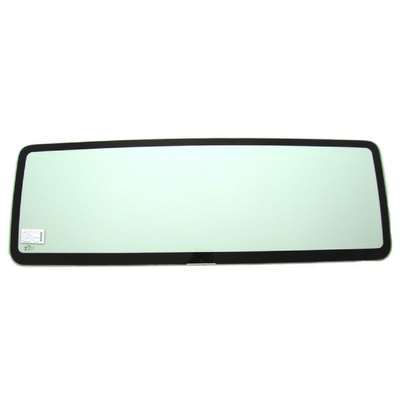


The information in this article is provided for general reference and educational purposes only. Vehicle specifications, procedures, and part compatibility can vary by production date, trim level, and region. Always consult your vehicle's factory service manual and verify part numbers before purchasing or performing repairs. Safety-critical components such as airbags, seat belts, and braking systems should be installed by a qualified professional.
- 🧭 Diagnostic Flowchart
- 🛍️ Shop This Part
- What Does C2503 Mean?
- Can I Drive With C2503?
- Common Causes
- Symptoms
- Common Fixes & Costs
- Used vs. New Parts: Buying Guide
- What Happens If You Wait — Timeline
- Cost of Not Fixing It
- Diagnosis Steps
- When This Code Triggers (Freeze-Frame Conditions)
- Related Codes
- Climate & Environmental Factors
- How to Talk to a Mechanic About This Code
- Where to Take It: Dealer vs Independent vs Chain
- When to Walk Away From the Repair
- What Scan Tool You Need for This Code
- How to Clear the Code After You Fix It
- Will This Fail Emissions / State Inspection?
- Most Commonly Affected Vehicles
- Manufacturer-Specific Notes
- Real Owner Stories
- 2020 Nissan Sentra at 45,000 miles
- 2019 Mitsubishi Outlander at 62,000 miles
- 2020 Nissan Sentra (early build) at 30,000 miles
- How to Prevent This Code From Triggering
- Frequently Asked Questions
- Can I fix the C2503 code myself?
- How much does it cost to fix code C2503?
- Will my check engine light be on with a C2503 code?
- The glass shop replaced my windshield and now I have this code. Are they responsible?
- Can a simple wheel alignment cause the C2503 code?
- What are common misdiagnosis mistakes for C2503?
- Does the type of windshield really matter for the C2503 code?
- What does the '-54' at the end of the code mean?
- Key Takeaways
- 🎟️ Get 5% Off