

OBD-II Code C2514: A Tale of Two Systems - Brakes or Steering
What C2514 means, why it triggers, and how to fix it on Mercedes-Benz and Subaru vehicles
- Code C2514 indicates a critical safety failure: a 90% loss of braking power in Mercedes-Benz vehicles or a total loss of power steering in Subarus.
- For Mercedes-Benz owners, stop driving immediately and call a dealership with your VIN to verify if your SBC hydraulic unit is covered under the 25-year, unlimited-mileage warranty extension.
- For Subaru owners experiencing cold-weather steering failure, replacing the separate EPS control module (approx. $650) is the most common fix, rather than replacing the entire $1,500 steering rack.
- Never attempt to drive with an active C2514 code; tow the vehicle to a shop equipped with manufacturer-specific diagnostic tools (like STAR/Xentry for Mercedes) to properly cycle the electronic valves.
What Does C2514 Mean?
C2514 is a manufacturer-specific code. For Mercedes-Benz, it signals a hydraulic fault in the Sensotronic Brake Control (SBC) system, specifically the left front separation valve. For Subaru, it indicates a power supply failure to the torque sensor in the Electric Power Steering (EPS) system.
Technical definition: Mercedes-Benz: 'Hydraulic fault: A7/3y1 (Left front separating valve)'. Subaru: 'Torque Sensor Power Supply Failure'.
Can I Drive With C2514?
No — Do Not Drive. Driving is extremely dangerous. Mercedes-Benz SBC brake failures revert to a basic hydraulic mode with only front-wheel braking at 10% power, making stopping nearly impossible. Subaru EPS failures cause a complete loss of power steering, making the wheel too heavy for safe emergency maneuvers. Tow the vehicle immediately.
Common Causes
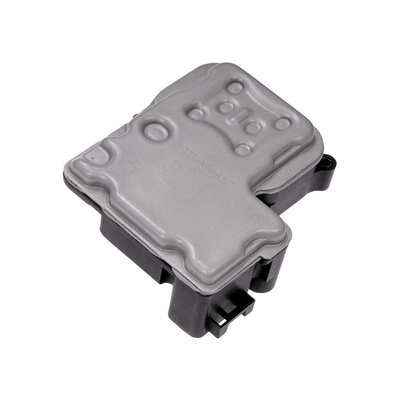
- Failed Sensotronic Brake Control (SBC) Hydraulic Unit (Mercedes-Benz) (Very Common) — This causes 90% of C2514 codes on affected Mercedes models. The internal electric pump, pressure accumulator, or internal valves wear out over time, leading to a total loss of hydraulic pressure.
- Failed EPS Control Module / Internal Relay (Subaru) (Very Common) — On Subarus, the electronic control module managing the power steering fails internally. In cold climates, condensation freezes on an internal relay, preventing it from supplying power to the torque sensor at startup.
- Failed Steering Rack / Torque Sensor (Subaru) (Common) — The torque sensor, which dictates how much steering assist to provide, is built into the steering rack. Failure of this sensor or the rack assembly itself triggers this code.
- Trapped Air from Improper Brake Bleeding (Mercedes-Benz) (Common) — The SBC system is highly sensitive to air and requires a specialized computer (STAR/Xentry) to bleed properly. Attempting a traditional brake bleed leaves air trapped in the lines, immediately causing pressure faults like C2514.
- Low Battery Voltage or Charging System Fault (Both) (Less Common) — Both the SBC and electric power steering systems are high-draw electronic modules requiring stable voltage. A weak battery or failing alternator causes voltage drops during startup, triggering control module faults.
- Damaged Wiring or Connectors (Both) (Less Common) — Corroded connectors or damaged wires leading to the SBC unit on a Mercedes or the power steering module on a Subaru interrupt power and data signals.
- Seized Brake Caliper Piston (Mercedes-Benz) (Rare) — A stuck piston in the left front brake caliper prevents proper hydraulic pressure release. The SBC unit interprets this mechanical restriction as an internal hydraulic valve fault.
- Failed Wheel Speed Sensor (Subaru) (Rare) — An erratic wheel speed sensor sends incorrect data to the Vehicle Dynamics Control module, forcing the Power Steering Control Module into a limited assist safety mode.
- Faulty Brake Light Switch (Mercedes-Benz) (Rare) — A malfunctioning brake light switch sends incorrect pedal position signals to the SBC control unit, occasionally leading to hydraulic error codes.
Symptoms
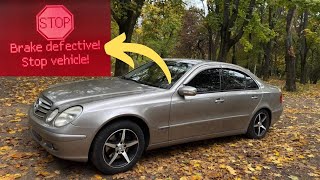
- Red 'Brakes Defective' Warning on Dash (Mercedes-Benz) — The instrument cluster displays a stark red warning message indicating a critical failure in the braking system, accompanied by a loud, continuous beeping alarm. 🎬 Watch: See what the Mercedes brake failure warning looks like.
- Very Hard Brake Pedal with Poor Stopping Power (Mercedes-Benz) — The SBC system reverts to a basic hydraulic mode with no power assist. The pedal becomes extremely firm, and braking force is reduced by 90%, applied only to the front wheels.
- Steering Warning Light On (Subaru) — An amber warning light shaped like a steering wheel illuminates on the dashboard, indicating an Electric Power Steering (EPS) system failure.
- Steering is Very Heavy and Hard to Turn (Subaru) — With the electric assist disabled, turning the steering wheel requires significant physical effort, making the vehicle nearly impossible to maneuver at low speeds.
- Intermittent Loss of Power Steering in Cold Weather (Subaru) — Power steering fails on cold starts but restores itself as the engine bay warms up, pointing directly to a freezing relay inside the EPS module.
- Brake Pedal Pulsates or Vibrates Violently (Mercedes-Benz) — The SBC pump runs continuously or cycles erratically when the pedal is pressed, causing the pedal to push back aggressively against your foot.
Diagnostic Flowchart
Tap your situation to follow the diagnostic path that matches what you're seeing on this code.
Common Fixes & Costs
- Replace SBC Hydraulic Unit (Mercedes-Benz) — Parts: $800-$1600, Labor: $375-$500, ~2.5 hr book time (Professional)
- Replace EPS Control Module (Subaru) — Parts: $400-$600, Labor: $150-$250, ~1 hr book time (Intermediate)
- Replace Electric Power Steering Rack Assembly (Subaru) — Parts: $900-$1400, Labor: $400-$700, ~3.5 hr book time (Professional)
- Bleed Brake System with Diagnostic Tool (Mercedes-Benz) — Parts: $25-$50, Labor: $175-$300, ~1.5 hr book time (Professional)
- Refurbish/Rebuild SBC Pump (Mercedes-Benz) — Parts: $350-$1000, Labor: $300-$500, ~2.5 hr book time (Professional)
- Repair Damaged Wiring or Connectors (Both) — Parts: $10-$100, Labor: $150-$600, ~2.5 hr book time (Intermediate)
Used vs. New Parts: Buying Guide
When a used part is worth it: For a Mercedes SBC pump, a used part is extremely risky and never recommended. For a Subaru EPS module or rack, a used part from a low-mileage donor is a cost-effective option.
Donor-vehicle mileage cap: roughly under 60000 miles for the part to have meaningful remaining life.
Donor quality checklist:
- Verify the exact part number matches; superseded parts are common.
- For Subaru parts, avoid donors from cold, humid climates.
- Ensure the donor vehicle was not scrapped due to electrical or flood damage.
- For SBC pumps, a remanufactured unit from Bosch is the minimum safe alternative to new.
Decision logic:
- If The part is a Mercedes SBC pump → Buy new OEM or a quality remanufactured unit. Check for 25-year warranty coverage first.
- If The part is a Subaru EPS rack or module and the vehicle has >120K miles → A used part from a verified low-mileage donor is a reasonable risk to save money.
- If The part is a Subaru EPS module known for cold-weather failure → Buy a new, updated OEM part to ensure the permanent fix is applied.
Warranty tradeoff: Used parts typically have a 30-90 day warranty. Remanufactured parts carry a 1-year to limited lifetime warranty. New OEM parts have a 1-2 year warranty.
Worst-case if a used part fails: $500-$1000 if a used part fails shortly after installation, requiring repeat labor costs.
What Happens If You Wait — Timeline
- Instant: A critical system self-test fails upon startup. A red 'Brake Defective' (Mercedes) or amber 'Steering' (Subaru) warning light illuminates. The system immediately enters fail-safe mode. (MPG impact: 0%% · Added cost: $0)
- 0-5 Minutes (First attempt to drive): Driver experiences the failure directly. Mercedes braking power is reduced by 90%. Subaru steering becomes incredibly heavy. The vehicle is unsafe to operate. (MPG impact: N/A% · Added cost: $200-$500 (Cost of a mandatory tow truck). Potential for thousands in accident damages if driving is attempted.)
- 1 Day - 1 Week: The vehicle is disabled. No further mechanical degradation occurs as the vehicle cannot be driven. (MPG impact: N/A% · Added cost: $700-$2500 (The unavoidable base cost of diagnosis and repair for the failed component).)
- 1+ Week: No additional damage occurs to the vehicle itself. The primary costs are consequential rental car fees and loss of use. (MPG impact: N/A% · Added cost: $350+ (Rental car fees added to the final repair bill).)
Cost of Not Fixing It
- Immediate: Catastrophic loss of vehicle control. Mercedes braking power is reduced by 90%, leading to a high risk of collision. Subaru steering becomes extremely heavy, making emergency maneuvers impossible. (Added cost: Total loss of vehicle, injury, or death.)
- Short-term: The vehicle is undrivable and poses an extreme safety hazard. There are no further cascading mechanical failures, as the primary failure is already critical. (Added cost: Towing and repair costs are unavoidable.)
- Long-term: Not applicable. The vehicle cannot be operated safely. (Added cost: N/A)
Diagnosis Steps
- Read the Fault Codes with a Manufacturer-Specific Scanner
Use an advanced OBD-II scanner to confirm C2514. A manufacturer-specific scanner (STAR/Xentry for Mercedes or Subaru Select Monitor) is mandatory to read the correct sub-codes essential for accurate diagnosis.
Tools: Advanced OBD-II Scanner (Beginner) - Check Battery and Charging System Health
Use a multimeter to check battery voltage (12.6V engine off) and alternator output (13.7-14.7V engine running). Perform a load test to ensure the battery isn't dropping below 10.5V under load, which triggers these specific codes.
Tools: Multimeter, Battery Load Tester (Beginner) - Check SBC Pump Actuation Count (Mercedes-Benz)
Using a STAR/Xentry tool, check the SBC control unit's 'actuation count' (Bremsenzaehler). If the pump has exceeded its 300,000-500,000 actuation limit, it sets code C249F and fails to build pressure, triggering C2514.
Tools: Mercedes STAR/Xentry Diagnostic Tool (Advanced) - Monitor Torque Sensor Power Supply Voltage (Subaru)
Using a professional scan tool, monitor the 'Torque Sensor Power Supply Voltage' live data. The specified value is 8±0.4 V. A 0V reading confirms a faulty EPS Control Module or wiring issue.
Tools: Professional Scan Tool (Advanced) - Visual Inspection for Leaks and Wiring Damage
Inspect the brake fluid level and look for leaks around the Mercedes SBC unit. For Subaru, inspect the wiring harness connected to the EPS rack and control module for corrosion or physical damage.
Tools: Flashlight (Beginner) - Monitor SBC System Pressure (Mercedes-Benz)
View live data for the SBC control unit. Operating pressure must be between 100 and 140 bar (1450-2030 PSI). If pressure drops rapidly or fails to build, the pump or accumulator has failed.
Tools: Mercedes STAR/Xentry Diagnostic Tool (Advanced) - Monitor EPS Motor Current and Torque Sensor Angle (Subaru)
Monitor 'EPS Motor Current' and 'Torque Sensor Angle'. A constant 0A motor current while turning indicates a lack of assist. An erratic torque sensor angle indicates a failed sensor inside the rack.
Tools: Professional Scan Tool (Advanced) - Test EPS Module Internal Relay (Subaru)
If C2514 appears with C2532 in cold weather, use a heat gun on a low setting to gently warm the EPS control module. If power steering returns after warming, the internal relay is freezing and the module requires replacement.
Tools: Heat Gun, Scan Tool (Professional) - Check for Seized Caliper Piston (Mercedes-Benz)
Observe pressure readings for the left front caliper while commanding activation via the scan tool. If pressure builds but the wheel doesn't brake, suspect a mechanically seized caliper rather than an internal SBC fault.
Tools: Mercedes STAR/Xentry Diagnostic Tool, Floor Jack, Jack Stands (Professional)
When This Code Triggers (Freeze-Frame Conditions)
- System Voltage: 10.5-12.0V (During engine crank or with high electrical load, a voltage drop triggers the fault.)
- Outside Air Temperature (Subaru): < 32°F (0°C) (Fault sets on a cold start in freezing temperatures due to internal module condensation.)
- Vehicle Speed: 0 mph (The fault is detected during the system's power-on self-test before the vehicle moves.)
- Engine RPM: 0 or during crank (0-400 RPM) (The fault is logged when the ignition is turned on or during engine start-up.)
Related Codes
- C249F (Mercedes-Benz) — Indicates the SBC pump has reached its pre-programmed service life limit. A worn-out pump (C249F) leads to a real hydraulic failure (C2514). C2514 cannot be cleared until the underlying hydraulic issue is fixed.
- C2511, C2512, C2513 (Subaru) — Point to specific failures within the power steering torque sensor itself. C2514 points to the power supply FOR the torque sensor. If you only have C2514, the external control module is the likely culprit.
- C2131 (Mercedes-Benz) — Indicates a fault with the SBC pressure reservoir. A failing reservoir forces the pump to overwork, eventually leading to a general pressure loss that triggers C2514.
- C2532 (Subaru) — Indicates an internal failure of the ECU within the power steering control module. The internal failure (C2532) causes the power cut to the torque sensor (C2514). Seeing them together confirms the EPS module has failed.
Climate & Environmental Factors
- Cold Weather: The primary trigger for C2514 in Subarus with a separate EPS module. Condensation freezes on an internal power relay, cutting power to the torque sensor. The issue often resolves as the engine bay warms up.
- High Humidity: Contributes to condensation formation inside the Subaru EPS control module, increasing the likelihood of failure in freezing temperatures.
- Low Temperatures (General): Cold weather causes battery performance to drop. A cold-induced voltage drop during startup triggers control module faults in both SBC and EPS systems.
How to Talk to a Mechanic About This Code
Say this: "For a Mercedes: 'My vehicle is showing a C2514 brake fault. Before authorizing a paid diagnosis, could you please run my VIN to check for coverage under the 25-year SBC pump extended warranty?' For a Subaru: 'I have a C2514 steering code. The steering failed [only in the cold / all the time]. Can you please diagnose whether it's the separate EPS control module or the entire rack, and check for any related TSBs?'"
For Mercedes, this directs the shop to a potential no-cost fix. For Subaru, it guides the technician toward the most common failure points and prevents them from defaulting to the most expensive repair.
Avoid saying:
- 'My red brake light is on, can you fix it?'
- 'My steering is just heavy.'
- 'Just do whatever it takes to fix the light.'
Questions to ask before authorizing the repair:
- For Mercedes (if not warranty): 'What was the SBC pump actuation count? Did you confirm it wasn't just trapped air or a seized caliper?'
- For Subaru: 'What was the live data reading for the Torque Sensor Power Supply Voltage? Is my model one with a separate or integrated EPS module?'
- Will the repair include all necessary procedures, like the SBC bleed procedure for Mercedes or a wheel alignment for a Subaru rack replacement?
- What is the warranty on the replacement part and the labor?
Where to Take It: Dealer vs Independent vs Chain
- Dealer:
Essential first stop for Mercedes to check warranty. A safe, but expensive, choice for out-of-warranty repairs on either make.
Best for: Mercedes-Benz: The mandatory first stop to check for 25-year SBC warranty coverage., Subaru: Vehicles still under factory or extended warranty., Complex electronic diagnostics requiring proprietary tools.
Downsides: Highest labor rates., Defaults to replacing large assemblies instead of smaller components. (Typical cost: +50% vs. baseline) - Independent Shop:
Excellent choice for Subaru if the shop is reputable. For Mercedes, only use an independent that specializes in German cars and possesses the required diagnostic equipment.
Best for: Out-of-warranty Subaru repairs., Mercedes repairs IF the shop is a certified European specialist with STAR/Xentry tools., Owners seeking a better price and more personal service.
Downsides: Quality and expertise vary widely., A general mechanic without the right tools cannot fix a Mercedes SBC system. (Typical cost: +0% vs. baseline) - Chain Shop:
AVOID. These shops are not equipped to handle the specialized nature of either the Mercedes SBC brake system or Subaru's specific EPS failures.
Best for: Tires, batteries, and oil changes.
Downsides: Technicians lack specialized training for complex systems like SBC or EPS., High risk of misdiagnosis (e.g., replacing a Subaru rack instead of the module)., Do not possess the required proprietary software for Mercedes SBC service. (Typical cost: -10% vs. baseline)
When to Walk Away From the Repair
If the estimated repair cost exceeds 40-50% of the car's private-party market value, consider selling or trading in the vehicle instead of repairing it.
- Car worth $4000, fix is $2200: Walk away. The repair cost is over 50% of the car's value. This is a classic scenario for an older Mercedes E-Class where the SBC pump fails out of warranty.
- Car worth $13000, fix is $2000: Fix it. The repair cost for a Subaru steering rack is significant but well below the 40% threshold.
- Car worth $7000, fix is $750: Fix it. The cost to replace a separate Subaru EPS module is a relatively small percentage of the vehicle's value.
What Scan Tool You Need for This Code
Minimum: A tool that reads manufacturer-specific chassis codes (C-codes) and displays live data for the specific system (SBC or EPS).
A generic $20 reader cannot identify code C2514 or read critical live data like 'SBC actuation count' or 'Torque Sensor Power Supply Voltage'. For Mercedes, it cannot perform the required SBC deactivation/activation for service.
Budget: BlueDriver Pro (~$100) — Reads the manufacturer-specific code definition and views live data streams on a Subaru. It CANNOT perform the bidirectional controls needed for the Mercedes SBC brake repair.
Mid-range: Foxwell NT510 Elite (with brand-specific software) (~$180) — Offers OE-level diagnostics, including reading live data like Subaru's torque sensor voltage and Mercedes' SBC pressure. It has the bidirectional capability to properly deactivate and bleed the Mercedes SBC system.
Professional: Autel MaxiCOM MK808 / iCarsoft CR Max (~$500-800) — Provides full professional-level bidirectional control. Performs advanced functions like steering angle calibration (Subaru) and SBC pump actuation tests (Mercedes).
Rent vs buy: For a Subaru, rent a scanner from an auto parts store for initial diagnosis. For a Mercedes, you MUST buy a capable tool (like the Foxwell or Autel) because bidirectional deactivation functions are required to perform the repair.
How to Clear the Code After You Fix It
- For Mercedes, the SBC system must be re-activated and bled using a STAR/Xentry diagnostic tool.
- For Subaru, use a standard OBD-II scan tool to clear the code from the EPS module.
- Perform a steering angle sensor calibration if the rack or module was replaced.
- Perform a short test drive, turning the steering wheel lock-to-lock to confirm the repair.
Drive cycle (~15 minutes): For Mercedes, the reset is procedure-based with the scan tool, not drive-cycle based. For Subaru, a 15-minute drive with several turns confirms the fix. A cold start verifies a cold-related module fix.
Readiness monitors affected: Not applicable. C-codes do not affect emissions readiness monitors.
Watch out for:
- For Mercedes, failing to properly deactivate the SBC system before the repair and reactivate/bleed it after results in an immediate return of the code and a non-functional brake system.
- For Subaru, replacing a steering component and failing to calibrate the steering angle sensor causes new codes to appear.
- Clearing the code without fixing the underlying hydraulic or electrical fault causes the code to return instantly.
Will This Fail Emissions / State Inspection?
No — by itself this code doesn't fail OBD inspection (but it can keep readiness monitors from setting, which causes a separate fail).
- California: While a 'C' code does not cause an emissions test failure, the illuminated brake or steering warning light causes a failure of the mandatory safety inspection.
- New York: An illuminated brake system warning light is grounds for an automatic safety inspection failure.
- Texas: The vehicle fails the safety inspection if there are visible leaks in the power steering system or if the brake warning lamp is illuminated.
Most Commonly Affected Vehicles
- Mercedes-Benz E-Class (W211) (2003-2006) — Equipped with the first generation of the Sensotronic Brake Control (SBC) system. The SBC pump was discontinued for the 2007 facelift.
- Mercedes-Benz SL-Class (R230) (2003-2006) — Uses the SBC system that triggers C2514. Covered by the 25-year warranty extension.
- Subaru Outback (2015-2019) — The control module is integrated into the steering rack assembly. Addressed by TSB #04-17-17R.
- Subaru Legacy (2015-2019) — Shares the same integrated electric power steering system as the Outback.
- Subaru Forester (2014-2018) — Affected by the separate EPS control module failing in cold weather. Updated part number is 34710SG052.
- Subaru Crosstrek / XV Crosstrek (2013-2017) — Shares the separate EPS control module issue. Updated part is 34710FJ252.
- Mercedes-Benz CLS-Class (W219) (2006-2006) — Based on the W211 platform and uses the problematic SBC system covered by the warranty extension.
- Hyundai i20 (2008-2020) — Known for similar EPS failures logging codes like C1604, resulting in heavy steering.
- Mercedes-Benz SLR McLaren (C199) (2005-2009) — Utilizes the SBC system and is included in the 25-year extended warranty coverage.
Manufacturer-Specific Notes
- Mercedes-Benz: Mercedes extended the warranty on the SBC hydraulic unit to 25 years with unlimited mileage (NHTSA Action #10015699). Always check with a dealer using your VIN before paying for a repair.
- Subaru: Subaru issued TSB #04-24-18 acknowledging that EPS failure in cold weather is caused by a faulty EPS control module. An updated module is the specified repair.
- Subaru: On 2015+ Outback/Legacy models, the EPS module is integrated into the steering rack. On 2014-2018 Foresters, it is a separate component under the hood. Misdiagnosing this leads to replacing the wrong part.
- Mercedes-Benz: The SBC system must be electronically deactivated with a specialized scan tool before performing any brake service. Failure to do so causes the system to build 2030 PSI unexpectedly, trapping air and causing C2514.
Real Owner Stories
2014 Subaru Forester with 73,000 miles in freezing weather
Power steering warning light came on and steering became impossible to turn on a 1°F day.
What they tried:
- The owner was stranded and sought advice online.
- A dealer technician diagnosed the issue remotely based on the classic cold-weather failure symptom.
Outcome: The cause was identified as condensation freezing inside the EPS control module (TSB #04-24-18). The permanent fix was replacing the module with an updated part for $500. A temporary fix to get home was letting the engine run for 20 minutes to thaw the module.
Lesson: If your Subaru's power steering fails only in very cold weather, it is almost certainly the separate EPS control module. Do not replace the entire steering rack.
2005 Mercedes-Benz E55 AMG after DIY SBC unit replacement
Owner replaced the SBC unit due to a service life error. After installing a new Bosch unit and pressure bleeding the brakes, the car logged a new C2514 fault for the left front separator valve.
What they tried:
- Pressure bled the system with a standard Motive bleeder.
- Verified that the front left wheel was not braking at all.
- Assumed the brand new Bosch unit was defective.
Outcome: The owner discovered that the front calipers on his specific AMG model have two bleed screws. After using a STAR diagnostic tool to electronically cycle the valves and bleeding the second screw, the C2514 code cleared permanently.
Lesson: The Mercedes SBC system is notoriously difficult to bleed. Improper bleeding is the leading cause of C2514 after a repair. Always use a diagnostic tool for the procedure.
2003 Mercedes-Benz E220 with a seized rear caliper
Brakes were getting hot and smelly. Owner replaced pads and rotors, but the left rear caliper remained stuck, causing the wheel to heat up excessively.
What they tried:
- The owner performed a standard brake job, cleaning guide pins.
- This fixed the right side, but the left side caliper was seized internally.
Outcome: The owner replaced the seized caliper. The critical step was deactivating the SBC system electronically before the repair and performing a pressure bleed with a diagnostic tool afterward to prevent triggering hydraulic faults.
Lesson: A mechanical fault, like a seized caliper piston, is sometimes misinterpreted by the complex SBC system as a hydraulic valve fault. Rule out mechanical binding before condemning the expensive SBC unit.
2016 Subaru Crosstrek with total power steering failure
Owner experienced a complete loss of power steering and the dealer read code C2532 (ECU Failure) alongside C2514.
What they tried:
- The dealer first replaced the entire steering rack and connectors, but the problem persisted.
- Further electrical diagnosis was required after the $1,800 initial repair failed.
Outcome: The actual cause was a blown 80-amp main fuse for the EPS system. This unusual root cause was missed during the initial diagnosis.
Lesson: Always perform basic electrical checks first. A simple blown fuse or a bad battery mimics the symptoms of a catastrophic component failure, leading to costly misdiagnoses.
How to Prevent This Code From Triggering
- Change brake fluid every 2 years or 20,000 miles (Mercedes-Benz) (Every 2 years) — Brake fluid absorbs moisture from the air, which corrodes the delicate internal valves of the SBC unit and leads to premature failure. Using fresh DOT 4+ fluid is critical.
- Maintain a healthy battery and charging system (Both) (Annual check) — SBC and EPS systems are high-draw modules sensitive to low voltage. A weak battery causes voltage drops during startup, triggering fault codes and potentially damaging the control modules.
- Perform periodic physical brake inspection (Mercedes-Benz) (Every 10,000 miles) — A stuck caliper piston goes undetected electronically until it causes a hydraulic fault code. Physical inspection catches a seized caliper before it mimics an SBC failure.
- Ensure proper wheel alignment (Subaru) (Annually or after hitting a major pothole) — Poor alignment forces the EPS system to work harder to maintain straight-line tracking, putting extra strain on the steering rack and its integrated electronics.
- Keep engine bay electronics clean and dry (Subaru) (As needed) — For models with a separate EPS module under the hood, ensuring plastic covers are intact prevents moisture ingress that leads to cold-weather relay freezing.
Frequently Asked Questions
Is it safe to drive my car with code C2514?
No, it is extremely dangerous. Mercedes vehicles lose 90% of their braking ability, and Subaru steering becomes too heavy to manage. The vehicle must be towed.
Why does this one code mean two different things?
Manufacturers use 'C' (Chassis) codes for their specific systems. Mercedes used C2514 for SBC brakes, while Subaru used it for electric steering.
My Mercedes is old. Do I really have to pay thousands to fix the brakes?
You might not have to. Mercedes extended the warranty on the SBC hydraulic unit to 25 years, regardless of mileage. Contact a dealership with your VIN to verify coverage.
Can I just reset the SBC counter myself to fix the light?
Resetting the C249F service counter with a cheap tool is highly dangerous and does not fix mechanical wear. Resetting a worn-out unit causes sudden, complete brake failure without warning. C2514 is a hard hydraulic fault that requires a mechanical repair before the code can be cleared.
For my Subaru, does the whole steering rack need to be replaced for a sensor code?
It depends on the model. On newer Subarus (2015+ Outback), the module is integrated into the rack, requiring full replacement. On models like the 2014 Forester, the module is separate and can be replaced on its own.
My Subaru power steering only fails when it's very cold. What does that mean?
This is a classic symptom of a failing EPS control module, caused by internal condensation freezing on a relay. Once the engine bay warms up, the relay thaws and restores steering. The permanent fix is replacing the module with an updated Subaru part.
What are the most common misdiagnoses for C2514?
For Mercedes, replacing the SBC unit when the cause was trapped air from an improper brake bleed. For Subaru, replacing the entire steering rack when the fault lies with a separate EPS control module.
Key Takeaways
- Code C2514 indicates a critical safety failure: a 90% loss of braking power in Mercedes-Benz vehicles or a total loss of power steering in Subarus.
- For Mercedes-Benz owners, stop driving immediately and call a dealership with your VIN to verify if your SBC hydraulic unit is covered under the 25-year, unlimited-mileage warranty extension.
- For Subaru owners experiencing cold-weather steering failure, replacing the separate EPS control module (approx. $650) is the most common fix, rather than replacing the entire $1,500 steering rack.
- Never attempt to drive with an active C2514 code; tow the vehicle to a shop equipped with manufacturer-specific diagnostic tools (like STAR/Xentry for Mercedes) to properly cycle the electronic valves.
Helpful Videos
Shop the Parts Behind C2514
Below are the parts most often responsible for code C2514, ranked by how frequently each one is the actual culprit (per the diagnosis above). Tap any to see what we have for your vehicle.


The information in this article is provided for general reference and educational purposes only. Vehicle specifications, procedures, and part compatibility can vary by production date, trim level, and region. Always consult your vehicle's factory service manual and verify part numbers before purchasing or performing repairs. Safety-critical components such as airbags, seat belts, and braking systems should be installed by a qualified professional.
- 🧭 Diagnostic Flowchart
- 🎬 Helpful Videos
- 🛍️ Shop This Part
- What Does C2514 Mean?
- Can I Drive With C2514?
- Common Causes
- Symptoms
- Common Fixes & Costs
- Used vs. New Parts: Buying Guide
- What Happens If You Wait — Timeline
- Cost of Not Fixing It
- Diagnosis Steps
- When This Code Triggers (Freeze-Frame Conditions)
- Related Codes
- Climate & Environmental Factors
- How to Talk to a Mechanic About This Code
- Where to Take It: Dealer vs Independent vs Chain
- When to Walk Away From the Repair
- What Scan Tool You Need for This Code
- How to Clear the Code After You Fix It
- Will This Fail Emissions / State Inspection?
- Most Commonly Affected Vehicles
- Manufacturer-Specific Notes
- Real Owner Stories
- 2014 Subaru Forester with 73,000 miles in freezing weather
- 2005 Mercedes-Benz E55 AMG after DIY SBC unit replacement
- 2003 Mercedes-Benz E220 with a seized rear caliper
- 2016 Subaru Crosstrek with total power steering failure
- How to Prevent This Code From Triggering
- Frequently Asked Questions
- Is it safe to drive my car with code C2514?
- Why does this one code mean two different things?
- My Mercedes is old. Do I really have to pay thousands to fix the brakes?
- Can I just reset the SBC counter myself to fix the light?
- For my Subaru, does the whole steering rack need to be replaced for a sensor code?
- My Subaru power steering only fails when it's very cold. What does that mean?
- What are the most common misdiagnoses for C2514?
- Key Takeaways
- 🎟️ Get 5% Off