

OBD-II Code C2580: Front Radar Sensor Internal Fault
The Definitive Guide to C2580: What It Means, Why It Triggers, and How to Fix It
- Check your dashboard for the 'Unavailable Front Radar Obstruction' message; driving with a C2580 code disables Automatic Emergency Braking, increasing your risk of a rear-end collision by up to 50%.
- Before authorizing repairs, demand the shop verify if the C2580 code is 'CURRENT' or 'PAST'; Nissan TSB NTB21-106B dictates that 'PAST' codes require a simple $50-$150 code clear, not a parts replacement.
- Inspect the radar sensor mounting bracket behind the front bumper, as a minor 5 mph parking lot bump easily bends this $50-$150 part and triggers the code without leaving visible exterior damage.
- Never attempt to replace the forward radar sensor yourself, as the mandatory ADAS calibration requires specialized targets and costs $300-$600 at a properly equipped professional shop.
What Does C2580 Mean?
Code C2580 indicates an internal electronic fault within the forward-facing laser/radar sensor, a cornerstone of your Advanced Driver Assistance Systems (ADAS). When this code triggers, the vehicle disables safety features like Automatic Emergency Braking (AEB), Predictive Forward Collision Warning (PFCW), and Intelligent Cruise Control (ICC) as a precaution and displays a dashboard warning.
Technical definition: Code C2580, typically appearing with a -49 suffix (C2580-49), means the LASER/RADAR control unit failed its internal self-diagnostic check. Primarily used by Nissan and Infiniti, it flags a hard fault within the distance sensor's control module that prevents operation.
Can I Drive With C2580?
Yes, But With Caution. Yes, the vehicle is drivable, but critical safety features like Automatic Emergency Braking (AEB) and Intelligent Cruise Control (ICC) are disabled. Insurance Institute for Highway Safety (IIHS) studies show AEB reduces rear-end crashes by 50%. Driving with this system inactive significantly increases collision risk, especially in stop-and-go traffic.
Common Causes
- Transient or 'Ghost' Fault (Very Common) — Heavy rain, snow, or car wash residue temporarily glitches the system. Nissan TSB NTB21-106B instructs technicians to simply clear this code if found in the 'PAST' history, as no repair is needed.
- Misaligned Radar Sensor or Bracket (Very Common) — A minor 5 mph bump from a parking block or road debris bends the sensitive mounting bracket out of alignment, triggering a 'CURRENT' fault without leaving visible bumper damage.
- Obstructed Radar Sensor (Common) — Mud, snow, bug splatter, or a poorly placed aftermarket license plate bracket blocks the sensor's field of view, escalating an obstruction warning into a C2580 fault. 🎬 Watch: How to clear the front radar obstruction warning
- Failed Forward Radar Sensor (Common) — The electronic components inside the sensor fail due to constant vibration and weather exposure. The C2580-49 sub-code specifically points to this internal failure.
- Weak or Failing 12V Battery (Less Common) — Particularly on the Nissan LEAF, a weak 12-volt auxiliary battery causes voltage drops that trigger a C2580 code during system self-checks.
- Damaged Wiring or Connector (Rare) — Moisture intrusion or corrosion in the sensor's wiring harness connector causes a poor connection, mimicking a complete sensor failure.
- Improper Service or Aftermarket Modifications (Rare) — Installing aftermarket grilles or bull bars obstructs the radar. Attempting to service the sensor without manufacturer-specified ADAS calibration tools also triggers this fault.
Symptoms
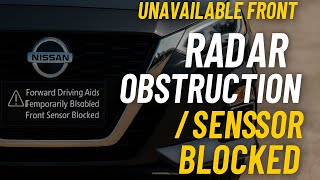
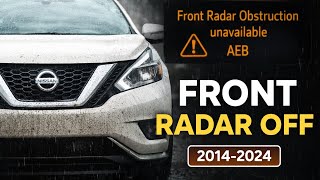
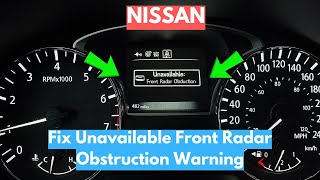
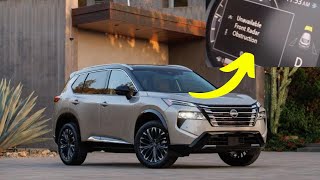
- 'Unavailable Front Radar Obstruction' Message — A direct message appears on the dashboard information display indicating the front radar is unavailable.
- Automatic Emergency Braking (AEB) Warning Light — A yellow warning light for the AEB or Forward Collision Warning (FCW) system illuminates permanently.
- Intelligent Cruise Control (ICC) is Inoperative — The adaptive cruise control system refuses to engage. Standard cruise control may also be disabled.
- Phantom Braking Events — An erratic sensor causes the vehicle to brake suddenly and unexpectedly before the system fully deactivates itself.
Diagnostic Flowchart
Tap your situation to follow the diagnostic path that matches what you're seeing on this code.
Common Fixes & Costs
- Erase 'PAST' Fault Code — Parts: $0, Labor: $50-$150, ~0.5 hr book time (Professional)
- Radar Sensor Alignment and Calibration — Parts: $0, Labor: $300-$600, ~2.5 hr book time (Professional)
- Replace Damaged Sensor Bracket
— Parts: $50-$150, Labor: $400-$800 (includes calibration), ~3.5 hr book time
(Professional)
Nissan Sentra (2016-2019): OEM - Replace Forward Radar Sensor
— Parts: $700-$1500, Labor: $400-$800 (includes calibration), ~4.0 hr book time
(Professional)
Nissan Rogue / Altima (2019+): OEM
Nissan Sentra (2018-2019): OEM - Replace 12V Auxiliary Battery — Parts: $150-$300, Labor: $50-$100, ~0.5 hr book time (DIY)
Used vs. New Parts: Buying Guide
When a used part is worth it: A used OEM radar sensor from a reputable seller is viable for older, higher-mileage vehicles where a new $1,000+ part exceeds 20% of the car's value.
Donor-vehicle mileage cap: roughly under 80000 miles for the part to have meaningful remaining life.
Donor quality checklist:
- Match the part number exactly, verifying interchangeability with a dealer.
- Buy from a seller guaranteeing the part was not removed from a front-end collision vehicle.
- Inspect the used sensor for housing cracks or connector damage.
Decision logic:
- If The vehicle is under warranty and has no physical impact damage → Use a new OEM part covered by the manufacturer.
- If A new OEM sensor plus calibration exceeds 30% of the vehicle's value → Purchase a guaranteed-functional used OEM sensor to save money.
Warranty tradeoff: Used parts offer 30-90 day warranties, which may not reveal intermittent issues. New OEM parts carry standard 1-year manufacturer warranties.
Worst-case if a used part fails: $400-$800 if a used part is faulty, representing the non-refundable labor for installation and mandatory calibration.
What Happens If You Wait — Timeline
- Immediate: Code C2580 sets. A warning light illuminates, and critical safety features like Automatic Emergency Braking (AEB) and Intelligent Cruise Control (ICC) disable instantly. (MPG impact: 0%% · Added cost: $0 in parts, but the risk of a rear-end collision increases significantly.)
- 0-3 months: The driver becomes accustomed to the disabled safety features. In the event of an at-fault accident, an insurance investigation reveals the known, unrepaired safety defect. (MPG impact: 0%% · Added cost: Potential for insurance claim denial or increased liability due to negligence of a known safety issue.)
- Pre-failure / Intermittent: Before failing completely, an erratic sensor occasionally causes 'phantom braking' events, where the vehicle brakes suddenly and dangerously for no reason. (MPG impact: 0%% · Added cost: High risk of causing a rear-end collision due to unexpected phantom braking.)
- 6+ months: No further mechanical damage occurs. The issue remains isolated to the disabled ADAS. The warning light causes the vehicle to fail state safety inspections in jurisdictions like New York. (MPG impact: 0%% · Added cost: Cost of failed safety inspections and ongoing elevated accident risk.)
Cost of Not Fixing It
- Immediate: Automatic Emergency Braking (AEB) and Intelligent Cruise Control (ICC) are disabled. The risk of a rear-end collision increases significantly. (Added cost: $0 in parts, but high potential cost from an accident.)
- 1-6 months: Increased driver liability in the event of an accident, as an insurance investigation reveals a known safety defect was ignored. (Added cost: Potential for higher insurance premiums or non-coverage of an at-fault accident.)
- 6+ months: In rare pre-failure scenarios, a faulty sensor causes phantom braking, creating a severe safety hazard. (Added cost: The cost of an accident caused by phantom braking ranges from a deductible payment to totaling the vehicle.)
Diagnosis Steps
- Clean the Front Sensor Area
Thoroughly wash and dry the front emblem and lower bumper area. Remove all dirt, snow, ice, or bug splatter to rule out physical obstruction.
Tools: ['Microfiber cloth', 'Mild soap', 'Water'] (Beginner) - Scan for 'PAST' or 'CURRENT' Code Status
Use a professional scan tool to access the ADAS module. Determine if C2580 is 'CURRENT' or 'PAST'. If 'PAST', erase the code and test drive per Nissan TSB NTB21-106B. Do not replace parts.
Tools: ['Professional Scan Tool (e.g., Nissan CONSULT, Autel, Launch)'] (Advanced) - Visually Inspect the Sensor and Bracket
Look closely at the sensor and mounting bracket for physical damage, bent metal, or witness marks on the inside of the bumper. Slight damage causes a misalignment fault.
Tools: ['Flashlight', 'Trim removal tools (if bumper removal needed)'] (Intermediate) - Test the 12V Battery Under Load
Test the 12V battery under load, especially on EVs. A reading below 11.0V with the power on indicates failure and causes false ADAS codes.
Tools: ['Digital Multimeter', 'Battery Load Tester'] (Intermediate) - Verify Power and Ground at the Sensor
Back-probe the sensor's electrical connector. Check for 12V at the power pin and near-zero resistance to ground. Wiggle the harness to check for intermittent connection drops.
Tools: ['Multimeter', 'Back-probe kit'] (Advanced) - Check CAN Bus Resistance
Disconnect the 12V battery. Measure resistance between Pin 6 and Pin 14 on the OBD-II port. A healthy reading is 60 ohms. 120 ohms indicates a circuit break.
Tools: ['Multimeter'] (Advanced) - Check Sensor Alignment (Professional Only)
A professional shop uses specialized targets to check radar aim. Misalignment is a primary cause of 'CURRENT' codes after minor bumps.
Tools: ['ADAS Calibration Frame and Targets', 'Professional Scan Tool'] (Professional) - Scope the CAN Signal (Professional Only)
Use an oscilloscope to check the CAN bus signal at the sensor connector for clean, mirroring square waves to rule out network communication breakdowns.
Tools: ['Oscilloscope', 'Back-probe kit'] (Professional)
When This Code Triggers (Freeze-Frame Conditions)
- Vehicle Speed: 20-70 mph (The fault logs during steady-state driving, not necessarily during a braking event.)
- Fault Priority: 2-4 (out of 8) (Indicates a medium-priority fault; it disables safety systems but does not affect engine operation.)
- Outside Temperature: Any (Faults occur in any weather but spike during heavy rain, snow, or direct sunlight interference.)
Related Codes
- C1A17 — Indicates an 'ICC SENSOR MALFUNCTION' and groups with C2580 in Nissan TSB NTB21-106B. Both point to the same internal electronic fault.
- C1A16 — Indicates the front radar is OBSTRUCTED. A persistent physical blockage logs C1A16, which eventually triggers the C2580 internal fault code.
- U1000 — Indicates a loss of CAN communication. If present with C2580, it points to a wiring network issue rather than an isolated radar sensor failure.
Climate & Environmental Factors
- Heavy Rain and Snow: Significantly attenuates the radar signal, causing the system to temporarily fault and log an obstruction code.
- Humidity and Fog: Forms a film of water on the sensor's protective cover, leading to signal loss and intermittent faults.
- Direct Sunlight: Driving directly into a low sun temporarily blinds the optical camera systems working with the radar, logging a temporary fault.
How to Clear the Code After You Fix It
- Reconnect the 12V battery if disconnected.
- Use a professional scan tool to access the ADAS module and clear the C2580 code.
- Perform the mandatory static and/or dynamic calibration procedure if the sensor or bracket was replaced or adjusted.
- Test drive to verify AEB and ICC systems engage safely.
Drive cycle (~20 minutes): Drive for 20 minutes, including steady highway speeds above 40 mph, allowing the system to perform self-checks. If the fault was temporary, the light stays off.
Readiness monitors affected: This is a Chassis code and does not affect emissions readiness monitors.
Watch out for:
- Using a basic OBD-II reader that cannot access the ADAS module to clear the code.
- Failing to perform the mandatory sensor calibration after replacing the bracket. The system remains locked out without it.
- Assuming the code is cleared just because the dashboard light is off; the fault remains stored in history.
Will This Fail Emissions / State Inspection?
No — by itself this code doesn't fail OBD inspection (but it can keep readiness monitors from setting, which causes a separate fail).
- New York: An illuminated malfunction indicator light for a required safety system like AEB is grounds for failing the annual safety inspection.
- Texas: As of 2025, non-commercial vehicles only require emissions testing in select counties, so C2580 will not prevent registration. Commercial vehicles still require safety inspections and will fail.
Most Commonly Affected Vehicles
- Nissan Rogue (2014-2024) — Highly susceptible to sensor misalignment from minor front-end impacts. Part numbers supersede frequently.
- Nissan Altima (2019-2024) — The sensor sits behind the Nissan emblem; keeping the emblem clean is the primary diagnostic step.
- Nissan Sentra (2020-2024) — Bent mounting brackets from minor impacts are a frequent issue requiring bracket replacement and recalibration.
- Nissan LEAF (2018-2024) — Extremely sensitive to 12V auxiliary battery health. Proactive replacement every 3 years prevents false codes.
- Nissan Armada (2017-2024) — Subject to TSB NTB21-106B. The lower bumper sensor location makes it prone to debris damage.
- Infiniti QX60 / QX80 (2016-2024) — Shares ADAS hardware with Nissan. Diagnosis procedures are identical, though dealer labor rates are higher.
Manufacturer-Specific Notes
- Nissan / Infiniti: TSB NTB21-106B dictates that if code C2580-49 is found in the 'PAST' history, technicians must erase it without replacing parts, acknowledging temporary glitches are common.
- Mitsubishi: Code C2580-55 indicates the distance sensor configuration is incomplete, requiring a setup procedure, while C2580-48 points to a general malfunction.
Real Owner Stories
2018 Nissan Sentra with hidden front-end damage
Owner experienced a constant beeping and an 'unavailable front radar obstruction' message that started intermittently and became persistent.
Outcome: A repair shop discovered previous, poorly repaired front-end damage. The radar sensor was loosely attached with zip ties, which failed and caused the fault. The fix required properly mounting the sensor and performing a $400 calibration.
Lesson: A clean cosmetic appearance easily hides underlying structural issues from a previous accident. Always inspect ADAS sensor mounting points on used vehicles.
2021 Nissan Rogue quoted $3,000 for repair
The front collision warning light became constant. The dealer quoted nearly $3,000 for a potential repair.
Outcome: The estimate included $250 for a bracket, $1,100 for a sensor, and $750 for labor, plus calibration. The owner learned the expensive sensor was actually fine; only the bracket and calibration were needed.
Lesson: A bent bracket from a minor parking lot bump is a common cause and voids warranty coverage. Always demand a detailed quote breakdown and ask to try replacing just the bracket first.
2019 Nissan Altima with warnings after a car wash
The AEB warning light appeared after driving through a car wash but disappeared after the car dried.
Outcome: This was a 'ghost' fault caused by temporary soap residue obstruction. Following Nissan TSB NTB21-106B, a technician cleared the 'PAST' history code with no parts replaced.
Lesson: Never approve a sensor replacement without confirming the code is 'CURRENT'. Insist the shop follows TSB NTB21-106B, as many C2580 faults are temporary.
2018 Nissan LEAF with cascading electronic glitches
The C2580 code appeared alongside other seemingly unrelated electronic dashboard warnings.
Outcome: Replacing the weak 12V battery resolved the C2580 code and all other gremlins. The ADAS system is highly sensitive to the low voltage provided by a failing battery.
Lesson: On electric vehicles like the Nissan LEAF, a weak 12V battery is the primary suspect for electronic fault codes. Test the battery before paying for ADAS diagnostics.
How to Prevent This Code From Triggering
- Clean the front radar sensor area regularly (During every car wash or when visibly dirty) — Keeping the sensor's location (the grille emblem or lower bumper) free of dirt, snow, and ice prevents the system from logging obstruction codes that escalate into a C2580 fault.
- Use a soft microfiber cloth and mild soap (Whenever cleaning the sensor) — Abrasive brushes scratch the sensor's protective cover (radome). Scratches distort the radar beam and cause permanent alignment errors.
- Request an ADAS inspection after any front-end impact (After hitting a parking block, curb, or debris) — The mounting bracket is highly sensitive. Catching a slight misalignment early and performing a calibration prevents the system from locking out and requiring more extensive diagnostics.
- Proactively replace the 12V battery on EVs (Every 3 years for a Nissan LEAF) — ADAS modules are extremely sensitive to voltage drops during self-checks. A fresh 12V battery prevents false C2580 codes.
Frequently Asked Questions
Can I fix code C2580 myself?
You can perform initial checks like cleaning the sensor area and testing the 12V battery. However, any repair requiring sensor replacement or alignment mandates expensive, specialized ADAS calibration equipment. Stop DIY and go to a shop if the code is 'CURRENT' and cleaning doesn't work.
What are the most common misdiagnosis mistakes for C2580?
The most costly mistake is replacing the radar sensor without checking if the code is 'CURRENT' or 'PAST'. Per Nissan TSB NTB21-106B, a 'PAST' code simply needs clearing. Another error is replacing a good sensor when a slightly bent $50 mounting bracket is the actual culprit.
Why did the light come on after a car wash or in the rain?
Heavy rain, snow, or soap residue temporarily blocks the radar sensor's view. This triggers an obstruction code and sometimes a 'ghost' C2580 fault. The fault often clears itself or moves to 'PAST' history once the sensor dries.
My bumper has no visible damage, so why is the sensor misaligned?
The sensor's mounting bracket requires precise alignment within fractions of a degree. A minor 5 mph impact from a parking block or road debris easily bends the bracket without leaving a mark on the flexible plastic bumper cover.
Why is the repair quote from the dealer over $2,000?
An OEM radar sensor costs between $900 and $1,500. The mandatory ADAS calibration requires specialized targets and a controlled environment, adding $400 to $800 in labor. If the mounting bracket is also damaged, parts and labor increase further.
What does the '-49' at the end of the code mean?
The '-49' sub-code definitively points to an internal electronic failure within the radar sensor's control unit. When flagged as a 'CURRENT' code, it strongly indicates the sensor requires replacement.
Is C2580 covered by a recall or warranty?
There is no universal safety recall for this code. If the fault stems from an internal electronic failure with no impact damage, the warranty covers it. Dealers will deny warranty coverage if they find evidence of misalignment from a minor collision or road debris.
Key Takeaways
- Check your dashboard for the 'Unavailable Front Radar Obstruction' message; driving with a C2580 code disables Automatic Emergency Braking, increasing your risk of a rear-end collision by up to 50%.
- Before authorizing repairs, demand the shop verify if the C2580 code is 'CURRENT' or 'PAST'; Nissan TSB NTB21-106B dictates that 'PAST' codes require a simple $50-$150 code clear, not a parts replacement.
- Inspect the radar sensor mounting bracket behind the front bumper, as a minor 5 mph parking lot bump easily bends this $50-$150 part and triggers the code without leaving visible exterior damage.
- Never attempt to replace the forward radar sensor yourself, as the mandatory ADAS calibration requires specialized targets and costs $300-$600 at a properly equipped professional shop.
Helpful Videos
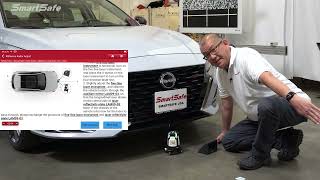
Shop the Parts Behind C2580
Below are the parts most often responsible for code C2580, ranked by how frequently each one is the actual culprit (per the diagnosis above). Tap any to see what we have for your vehicle.



The information in this article is provided for general reference and educational purposes only. Vehicle specifications, procedures, and part compatibility can vary by production date, trim level, and region. Always consult your vehicle's factory service manual and verify part numbers before purchasing or performing repairs. Safety-critical components such as airbags, seat belts, and braking systems should be installed by a qualified professional.
- 🧭 Diagnostic Flowchart
- 🎬 Helpful Videos
- 🛍️ Shop This Part
- What Does C2580 Mean?
- Can I Drive With C2580?
- Common Causes
- Symptoms
- Common Fixes & Costs
- Used vs. New Parts: Buying Guide
- What Happens If You Wait — Timeline
- Cost of Not Fixing It
- Diagnosis Steps
- When This Code Triggers (Freeze-Frame Conditions)
- Related Codes
- Climate & Environmental Factors
- How to Clear the Code After You Fix It
- Will This Fail Emissions / State Inspection?
- Most Commonly Affected Vehicles
- Manufacturer-Specific Notes
- Real Owner Stories
- 2018 Nissan Sentra with hidden front-end damage
- 2021 Nissan Rogue quoted $3,000 for repair
- 2019 Nissan Altima with warnings after a car wash
- 2018 Nissan LEAF with cascading electronic glitches
- How to Prevent This Code From Triggering
- Frequently Asked Questions
- Can I fix code C2580 myself?
- What are the most common misdiagnosis mistakes for C2580?
- Why did the light come on after a car wash or in the rain?
- My bumper has no visible damage, so why is the sensor misaligned?
- Why is the repair quote from the dealer over $2,000?
- What does the '-49' at the end of the code mean?
- Is C2580 covered by a recall or warranty?
- Key Takeaways
- 🎟️ Get 5% Off